

 2
2 2
2 1
1


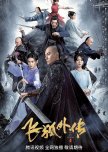
Amazing fights and story since beginning of ep 1
I’m not so fond of modern wuxia, although in the 90s I watched lots of movies about the themes so common in this genre. I’m an idealist, so the core values and main themes resonate with me. I also like adventures, subtle love, complex and/or tragic characters, and layered stories. In modern times, with modern aesthetics, I hadn’t found anything that really really caught my attention in wuxia: sometimes the production is good, yeah, but there’s no soul; sometimes the acting just doesn’t click and the fighting isn’t strong enough to make a lasting impression; sometimes the love story is too sweet or too romantic? I’ve tried the most famous ones of recent years and dropped them all… until I crossed paths with Qin Jun Jie in Heroes (2024). I was sold by his acting and charisma and then I found Side Story of Fox Volant. Imagine my joy when I saw Lin Yu Shen was also in it—an actor whose dramas I haven’t seen much of, but also like.So, I’ve already told you two excellent reasons to watch this show:
- Qin Jun Jie (Hu Fei, and also plays his father, Hu Yidao) is the young protagonist on his path of growth;
- Lin Yu Shen (Miao Reng Fen), the mature, tragic, and almost unbeatable best martial art master of the jianghu - the world of martial arts.
The acting, the charisma they both ooze, and the physical effort they put into the fight sequences are amazing - their scenes together are a delight because of the extra chemistry they exude .
Of course, choreography and direction are crucial in these types of scenes, and in general, the whole drama is excellent in this regard, with at least one good and entertaining fight in each episode. You also have female warriors or martial artists, with agency, personality and technique, but nothing can compete with the close-combat sword fights of the two male protagonists, who are totally believable in their roles. You can tell they trained. In this regard, the opening fight and the one in episode 22 are, for me, the best in a drama where almost every fight is top-notch. I found myself smiling and jumping out of my seat like a child from pure enjoyment. The camerawork was excellent here.
The fights are sometimes quick and sometimes rightly long, but always intense; sometimes brutal, but always entertaining—and in all cases, a pleasure to watch. What did I like the most? The unbeatable hero is presented in a way that makes you totally believe he really is the best and unbeatable—you’ll understand when you see it. The director definitely knows how to create an aura and make you root for a character, lol.
You´ll find some slow-motion, but they aren´t overused and what I liked about them is that they’re mostly reserved for moments outside the fights. My favorite, of course, is the one near the end—and you’ll know it when you see it.
The music enhances the story, the scenes, and the fights. Both the opening and ending themes capture the spirit and tone of the show. The opening one is inspiring, adventurous, and grandiose, but my favorite is the ending one—bittersweet, melancholic, and beautiful. So yeah, you more or less know what to expect now...and by the end of ep 1.
The pace is fantastic, and with the exception of 2 or 3 eps in the middle, it keeps you hooked non-stop. All the characters have a part to play, the plot is cohesive, and the production and acting is solid. One important thing: you have to keep in mind the time setting and genre, as there’s a lot of Confucianism, Buddhism, and wuxia values/principles/ideas that may seem difficult when seen from a Western and modern perspective. Perhaps the Qing Dynasty style might be discouraging for some, but when the acting is so good—have I mentioned how charismatic the two main male actors are?—you soon forget about it, and you’ll even find some characters attractive.
Hope you enjoy this show as much as I do if you like this genre or similar kinds of stuff!!
Was this review helpful to you?
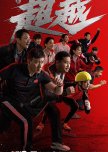
An inspiring sports drama about a Winter Olympic discipline
Sport dramas are difficult to make in my opinion, for several reasons. First of all, scripts have to strike a balance between the technical and the human aspects to create compelling storytelling for a general audience. Second, the technical requirements present a difficult dilemma to producers and directors: do you go for athletes with hopefully decent acting skills, or do you choose real actors and train them in the basics of the sport while finding ways to film great sports scenes that remain believable? Beyond**,** a drama about the history of Chinese Olympic short-track speed skating from the 1990s to the 2022 Beijing Olympics, manages to overcome both challenges quite comfortably.The story starts in 2014 with a young girl determined to compete and win gold medals at the highest level in the sport. Her father and coach were both former national athletes who now coach the next generation. This provides the perfect excuse to tell the struggles and dreams of those athletes back in the 1990s while balancing them with the state of the sport in the 2010s, before naturally culminating in China hosting the Winter Olympics.
From technical and medical conditions to infrastructure, training methods, and the creation of an ecosystem capable of nurturing young talent across different parts of the country before reaching the national team, everything is covered in a very solid way, with a particular emphasis on friendship, mentorship, and the lives of athletes.
The story set in the 1990s revolves around three friends whose lives represent the three main paths within the sport: the outstanding talent who finds himself alone at the top, the good athlete who simply isn't good enough to compete among the very best, and the one who is forced to abandon his passion because of an accident.
On the other hand, the story set in more recent times revolves around teamwork and the individual challenges each athlete faces in the pursuit of gold. The coaches, the former athletes themselves, serve as the link between both timelines and highlight both the evolution of the sport and the contrast between past and present from a national perspective.
One aspect that is sometimes even more touching than the series itself, at least for me, is the brief segment at the end of each of the 29 episodes dedicated to interviews with real short-track speed skating athletes and coaches, sharing their own personal stories; you can genuinely feel their passion and love for the sport. The team behind the cameras used this material to write the script, so each episode's central theme is paired with a real-life testimony told by the people who actually lived it.
The pace is really good, with an excellent intertwining of human relationships and the various sporting situations throughout the whole drama. The focus on the core groups of friends, both in the past and the present, helps us as viewers connect with and become invested in their stories, although I felt that, during the last third of the series, this focus shifted somewhat and lost part of the strong hook it had.
At that point, the drama begin introducing short stories about other members of the national team that, while being representative of the diverse conflicts and struggles modern athletes face and are still interesting in their own right, don't quite have the same emotional impact as the core characters I had grown to cherish.
I'd also like to highlight the casting and directing choices, because the resemblance between the younger and older versions of the characters is fantastic. You can immediately tell who is who in each timeline, and the performances of both the seasoned actors and the younger cast make that continuity feel completely natural. Among the latter, I'd particularly like to mention Teresa Li and Liu Yi Tie, whom some of you may know from The Long Season; they're quickly becoming two of my favourite very young actors.
All in all, it's a very inspiring story about the determination, passion, and sacrifices these elite athletes make in pursuit of their dreams, while also offering an insightful look at the advances in sports science and technology, as well as the importance of public policies that support athletic development.
I wouldn't have expected to become so invested in a drama about a sport I'd barely watched in my life, but I did.
Was this review helpful to you?
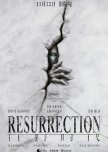
Marvellous
I was trying to watch this movie since its release in Cannes and as the saying goes, "When there's a will, there's a way". I finally made it, and it totally surpassed my wildest expectations.I'm in awe. Conceptual, innovative, visually stunning, complex, with multi-layered narratives and three subjects very close to me: Cinema, Chinese history in the 20th century, and Buddhism. Also, an ode to art and cinema as a collective dream, as a form of exploration in a society that worships technology and pure rationality. On top of all that, there's the sheer mastery of the film's technical language. I honestly have no words.
The dream/illusion is obviously the main theme, no matter from what perspective you approach it. One of the things that, in my opinion, makes this movie truly a masterpiece is that, besides its compelling cinematic language, it has several layers and multiple meanings that allow you to enjoy it regardless of whether you grasp one, two, or more of them, or of the interpretations you give them. To talk about it would be endless, and it would indeed require a discussion. I'm still processing everything I've seen.
This is the second time I've come across an audiovisual project structured around Buddhism while simultaneously exploring other, similar narratives or related themes. Coincidentally, or perhaps not, both were Chinese and released in 2025.
To watch and rewatch many times, for whatever reason you choose. ..if you like/are familiar or interested in at least one of the subjects mentioned above.
Wow, simply Wow.
Was this review helpful to you?
This review may contain spoilers
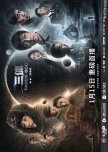
Three Body (Anniversary version), a hard sci-fi story that goes deep into human nature
It's difficult to summarize this series without giving spoilers and ruining much of the joy of watching it, as it's designed for the viewer to slowly discover the truth and experience the unfolding events and emotions alongside the protagonists. So, I'm sharing my spoiler-free impressions in the first part and using spoiler tags in the second one, with some reflections about the story.Based on the first book of the acclaimed sci-fi trilogy The Three-Body Problem by Liu Cixin, the story starts with the mysterious deaths of prominent scientists around the world and follows our main duo: police officer Shi Qiang and nanophysicist Wang Miao as they investigate them and a series of increasingly strange events that challenge everything humans think they know.
This investigation eventually leads to a shocking discovery: an impending alien invasion from Trisolaris, a star system struggling to survive in its chaotic orbit, and humanity's fractured response to this discovery. The story unfolds across two main timelines: the past, set in the 1960s during the Cultural Revolution, and the present, around 2010.
The series: general thoughts
Being hard sci-fi, the series weaves a wide range of scientific, philosophical, metaphysical, environmental, and other theories and concepts into the story, particularly in the first half, which may feel dense or demanding at times. If you haven't read the books — my case — and even if you're familiar with the concepts, you might need to pause, slow down, and process everything that's being presented.
The second part of the series flows more smoothly, with more action mixed into the overall tense atmosphere as the previous mysteries start coming to light, while hinting that an even more threatening new phase is coming, mainly setting the stage for what's to come in future seasons.
I started watching the original 30-episode series, but it felt like a snooze-fest, mainly because many scenes seem to be a bit longer than they might require. "Artificially prolonged" is the best way to describe the feeling. So, I switched to the 26-episode Anniversary version available from episode 3 onward. Now the pace was perfect for me, and if you still haven't seen it, or dropped the previous one but still want to give it another try, I strongly recommend going straight to this new director's edition.
Which brings me to my main caveat with Three Body: the production is solid but I'm conflicted about the direction. While I constantly wanted to know what would happen next, I wasn't particularly drawn to or blown away by any technical aspect; on the contrary, besides the sometimes stretched takes, I think the choices were competent but conventional, with even a few cheap emotional beats scattered among a few beautifully composed scenes.
I do give credit to director Yang Lei since I know this kind of material is genuinely difficult to translate to the screen, and I´m still wondering whether such an average approach is exactly what this interesting and compelling story needs. Three Body feels somehow lacking in places, but those shortcomings didn't matter at all by the time the drama ended, and I found myself loving it. Contrary to love at first sight, this was the deep appreciation and love that comes through immersion and time; the more I watched, the more I enjoyed it and wanted more.
So, do I recommend this Anniversary version of Three Body? Absolutely. The story is compelling and complex, and if you like or are a fan of hard sci-fi with deep meanings, it's a must-watch without a second thought. In fact, the second and third books are now at the top of my reading list because I want to know how it continues and ends.
The Story: My Reflections on What Struck Me the Most (Full Spoilers)
I understand the impact of traumatic experiences on individual choices, but the story brings up a very important aspect: the scale of retaliation. In Ye Wenjie's case, it´s totally out of proportion. A deeply personal traumatic event leads to an action that represents the extinction of humankind forever.
Even if you stretch yourself in extreme mental gymnastics to understand her immediate response upon receiving the message back then, the disproportion of her revenge, the nature of her following actions, and the fact that she has remained the same ever since, are a clear sign of the danger of hate and the catastrophic consequences of lacking emotional and spiritual evolution in a human being. In the end, she has far surpassed the monstrosity of what and who she hates, becoming something worse. I'm totally on Shi Qiang's side here — there's no excuse.
And that brings me to the following reflection. The drama discusses how power, knowledge, and responsibility intersect, but meanwhile the intellectual point of view is widely brought into dialogues, and this discussion is framed from a cultural/societal worldview; the spiritual side of human beings is explicitly ignored and embodied instead by Wang Miao and Shi Qiang. I'm not talking about a religious approach nor about compassion toward the invaders, but rather an ethical and metaphysical one, as part of the individual and collective spiritual development.
I'm not sure whether the story lacks this aspect, or whether the blunt, explicit avoidance of compassion and love is intentional, meant to show the imbalance of a merely intellectual, aseptic approach, and trusting the audience will notice they are symbolized in those two characters.
Wang Miao is the moral and ethical anchor among those of higher intelligence (the elite) who blends wisdom and compassion; Shi Qiang is the absolute ethical one. The later embodies the idea that you don't need superior intellect to distinguish right from wrong: he protects lives, and he protects humankind. Without specialized knowledge, he is still the smartest guy in the room; he knows when and how to surround himself with the right and good people, and he is capable of sacrificing himself for the greater good.
Lastly, linked to the above, hubris is the other thing that strikes me most, a trait that has the power of destruction and turns wisdom into ignorance. So, I distinguish three groups here.
Evans is an interesting figure who mirrors Ye Wenjie. While empathy towards sentient beings, except humans, is the origin of his motives, I find him more honest within his own logic. He is fully conscious of who he is and what he wants to achieve, although still with a level of naivety and blindness — why would an invader willing to destroy a species spare others, eventually? Ye Wenjie, on the contrary, builds herself out of selfishness and individualism, not only feeling superior to the rest but also detaching from life; she deceives herself, unconsciously, and the ETO members, on many levels, consciously.
Finally, ETO members embody the most common form of hubris: not only are they being manipulated by both factions' leaders without realizing it, but they also deceive themselves about the whole picture: why on earth would the intellectual elite of the world think that the explicit warning of an invasion by a superior form of intelligence, and the destruction of humankind, would spare them? And that's without even mentioning the utter contempt in their minds and hearts for people of "ordinary" intelligence.
To sum up, knowledge isn't wisdom, and wisdom without compassion is shortsighted. Something that's been in the air for centuries.
Was this review helpful to you?
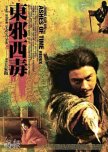
This past month I’ve had the opportunity to revisit WKW’s work, and I came across this 2008 Redux version (edited to correct year), in which the director rearranged certain elements. While watching it, I realized that all the scenes had remained fresh in some dark chamber of my mind, because as they appeared on screen, the memories came flooding back — yet I still couldn’t predict the following scenes. Quite an experience!
Now, with more knowledge of Chinese and Eastern culture in general, I realize this is WKW’s version of how Eastern Heretic, Western Venom, and Northern Beggar came to be, and I have even less doubt than before that Xu Bing is a great admirer of Wong Kar-wai. Having seen the trailer for his upcoming Remnants of Gold, I can clearly see the homage to Ashes of Time.
Another director who, I can tell, has liked Wong Kar-Wai filmography is Yu Xiaochen, the director of Back to the Origin, who must also admire Christopher Doyle’s cinematography, as he worked as a cinematographer himself before making his directorial debut.
And it also turned out that I did know Jacky Cheung from his glorious days — I just didn’t realize it lol.
Was this review helpful to you?
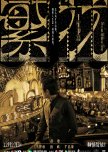
Wong Kar-wai’s first series - a must watch unique drama
As one professional review described it in the trailer, Blossoms Shanghai is the spiritual sequel to Wong Kar-wai's films, in the format of a TV series. And it's quite an accurate description, because you'll find the filmmaker's distinctive signature throughout the whole drama, adapted to the series format and with a rhythm and tone that are somewhat more uplifting than in his films.If you like, enjoy or love Wong Kar-wai's portfolio, there's no doubt you'll like Blossoms Shanghai. The uniqueness of it all: the cinematography, movie-like quality, acting, incredible soundtrack, meticulous production, camera work, and storytelling, all worth the experience. On the contrary, if you like linear, very talkative and straightforward narratives, this might not be for you.
While in his movies the emotions linger with you long after they finish, the series format simply lets you dive into them throughout its 30 episodes, but ultimately lets you go at the end. Because if there's a difference between WKW's first series and his movies, it is not only the slightly faster pace but also the more positive overall tone and ending. The first 5 to 7 episodes set the premise, but then the drama finds its rhythm and keeps it up until the end; it all makes sense and wraps up nicely.
The technical aspects are, of course, magnificent and very personal in flavour, with the director's recurrent elements also present here: silences, looks and gestures that speak more than words, mirror frames, the role of lighting and soundtrack, slow-mo for certain takes, voice-over narration, you name it.
Acting is top notch and you wouldn´t expect less from this cast: Hu Ge, Xin Zhi Lei, Ma Li, Dong Yong, Wu Yue, Huang Jue and many more. Even my initial cavils with the monotone high-pitched voice of Tiffany Tang faded away and she grew on me eventually, although she never made it into my list of favourites.
Also, the fragmented storytelling that's one of Wong Kar-wai's signatures is here too. The story starts in the middle of the narrative told from the protagonist's perspective, and you'll only have the full picture by the end of the drama.
In that regard, the whole series is wrapped in a warm light that carries you to a world that no longer exists, as in a dream or a remembrance of things past that feels real, yet tamed by someone's lens. This is a love letter to Shanghai, to the blossoming side of the city and that era in the 90s, and the Shanghainese dialect adds to that atmosphere and to the overall flavour of the drama. There's no point in looking for the less positive side of that period here; WKW has no intention whatsoever of talking about it.
This is the story of the swag, savvy and handsome Ah Bao, who decided to surf the wave of China's financial and economic awakening in the late 80s and early 90s, and his journey from a fabric worker to a millionaire in the stock market and textile-retail industry in Shanghai during those years. Along the way, he crossed paths with business competitors and established several meaningful relationships, especially with three women – two of them involved in the restaurant industry – who were also striving to find not only love but their place in this new world.
This is told around WKW's common topics: unrequited love and longing, memory, nostalgia, the passage of time, loneliness, missed connections, the fleeting nature of happiness and human relationships. The difference this time is the addition of business aspects, and it's worth noting that Blossoms Shanghai leans heavily into them too.
All the characters in the drama, even the minor ones, are fleshed out. You have "antagonists", but there are no purely good or bad people; they're mostly multifaceted people with dreams, ambitions and struggles whose interests often merge or collide. You learn to cherish all of them, and every one has their moment of "glory".
Among them, I just want to give a special shout out to the female "laoban" restaurant gang and their leader Lu Mei Lin, and the three waitress-managers; while among the "main" ones my favourites were Mr. Jiang, Ling Zi and the precious Mr. Fan, besides, of course, Ah Bao.
And let me finish this review highlighting my favourite part among many favourite parts of Blossoms Shanghai: episode 14.
This feels like a Wong Kar-wai short film within the 30-episode series, something that only a creative mind like this director's could imagine and execute in such an exquisite way that you wish to rewatch it on loop for quite some time. It’s also a pivotal point in the story that gives meaning to the rest, but that you could also watch independently and still fall in love with it. Jackie Cheung and his "Broken Heart" – or "Stolen Heart" – adds to the magic.
----------
NOTE: The drama is now available worldwide on MUBI (plus Criterion on USA and Canada)
The drama is also available in Mandarin. I prefer the original Shanghainese version.
Was this review helpful to you?
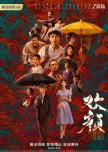
A wuxia-ish Republican-era road trip with bold Tarantino vibes
It took me a while to organize my thoughts about this drama, just like it took me a while to watch it, despite despite being only 18 episodes long. But that doesn't mean the drama is bad, slow, or convoluted. On the contrary, maybe it's simply because Fearless Blood is an out-of-the-ordinary cdrama.It's packed with such intensity, violence, and absurdity, right in line with Tarantino's best films, but it's also firmly rooted in its own Chinese tradition of wuxia and Republican dramas, so trying to sum it up was quite a struggle.
What’s it about? It tells the story of Xu Tian, a young man from Southeast Asia who goes north to Shanghai to support the revolutionary cause and get married. Along the way, he is helped by five distinctive, larger than life characters who structure the chapters or stages of the road trip, while Xu Tian experiences his transition from a naive young man into a fully grown adult.
Built around a road-journey structure set in the Republican era, it explores wuxia themes such as personal growth, obsessions, injustice, corruption, ambition, greed, rebellion, and bonds. Through the parallelism of the journey, that uses every possible means of transportation - from trains to animal-drawn carts, bicycles, and cars - the drama unfolds all kinds of relationships: father and son, frenemies, friendship, romantic love, marital companionship, colleagues, comrades, and enemies.
From the very beginning, nothing is allowed to unfold neatly. Chaos and anarchy run through the narrative via unexpected decisions, sudden turns, and characters who seem to exist solely to complicate plans. The humor is dark and absurd and, together with the storytelling, constantly reminded me of the spirit of Tarantino's films.
It is directed and written by Xu Bing, who was already among my top directors and screenwriters, and this drama only consolidates that position. His work remains bold, creative, and intellectually engaged, supported by solid production values and a star-studded, seasoned cast. In Fearless Blood, my favorites were many: Liao Fan (Old Sun), Zhang Jing Wei (Ma Tian Fang), Song Han Huan (Wu Da or Seven), and especially Wu Xiao Lian as the melancholic gambler Yu Zhou, whom I absolutely loved.
For sure, this is not a drama made for binge-watching; you’ll need breaks, despite wanting to know what will happen next. It’s a story to be savored slowly, from the first scene to the ending credits — and the same goes for the soundtrack. As Yu Yi Xiu, played by Edward Zhan, says: “Let me enjoy a bit longer”
To sum up, this show is violent, absurd, reflective, unapologetically dense, and gripping all at the same time. It won’t be for everyone, but for those willing to sit with its chaos, it offers a uniquely unsettling and rewarding experience in C-dramaland.
Was this review helpful to you?
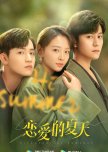
An unexpected realistic portrait of love and relationships in adult life
I had chosen Discovery of Romance in the first place because of the main male lead—an excellent actor, Qin Jun Jie—and although I already knew the female lead, Janice Wu, she hadn’t really stood out to me until now. Here, she’s really good and believable. Of the three main protagonists, the second male lead is the weakest. With a different casting choice, things might have been a bit more interesting and the overall score would´ve been higher. His acting isn't good.This is a story of second chances, growth, and life, told in an engaging way, with the three main protagonists breaking the fourth wall from time to time. The first 10 to 13 episodes are comedy gold. In the middle part, the tone begins to shift as we learn more about everyone involved, and the final stretch (episodes 20 to 26) ... well, be prepared, it’s touching.
That said, this show is not for everyone. It's a “kind of love triangle” without really being one, since that first encounter pushes the ex to fight for the girl to come back to him—a difficult task, considering the female lead is in a relationship that checks all the boxes, at least on paper. As I said, the first 10 to 13 episodes are gold—I have so many many many favorite hilarious moments. Then the tone slowly changes, and by the end, it becomes deeply emotional – although ends in a high note again.
The protagonists are entering their 30s, and that’s clearly the target audience: people in their 30s and older. You need to have lived a bit, to have experienced life's ups and downs, heartbreaks, failures, longings, and struggles beyond your 20s, to fully appreciate, understand, and reflect on what’s happening, both in general and within each character, and why they make the choices they do.
There are no purely good or bad people here, just human beings being human: imperfect, selfish, immature, arrogant, insecure, caring, ambitious, sweet. They made choices, and they hurt themselves and others in the process. Some will grow more than others. That’s real life. They’re not perfect or always likable, but you won´t hate anyone. I think this is the drama’s strongest point together with the acting and the chemistry between Qin Jun Jie and Janice Wu. It feels real, with real people. And because of that, it's by no means perfect—but it’s solid and genuinely good.
I won’t spoil the ending. I was pleasently surprised, because I didn’t expect to find such a real and touching drama.
Side notes:
The friends/side characters follow the trend of early 2020s dramas, with a slightly cartoonish tone, but nothing you can’t handle. Overall, the acting is solid across the cast—except for two characters who are just boring to watch. I skipped some of their scenes (very personal preference, of course, as this review).
The English title is bad. The Chinese title is much more accurate—it plays with the name of the female lead and the ideas/situations of love. I guess in those years “Romance” and “Love” were trending, and “Blossom” wasn’t on anyone’s radar yet.
Was this review helpful to you?
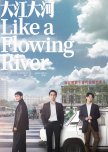
Outstanding drama about an iconic and unprecedented decade – the 80s.
Like a Flowing River is a splendid drama depicting an iconic and unprecedented decade – the 80s - in a grounded and human way. It's difficult to portray all the changes that China went through during these first ten years of the Reform and Opening Up while capturing both the grand picture and the daily lives of ordinary people, but somehow this drama manages to do it.In 1978, after years of a centralized planned economy and being closed off to the world, China began an unprecedented transformation in history that has impacted the world beyond imagination, with changes still continuing into the 21st century. These first two decades lasting until 2000 are known as the Reform and Opening Up*.*
In Like a Flowing River we see the first part of this transformation - from 1978 until 1988 - , while the second and third seasons cover the following years. Set in eastern China, we experience what the Reform and Opening Up meant through the lives of the three main protagonists: a university graduate who will enter the production industry, a local Party leader in rural areas, and a private entrepreneur.
The Execution
Based on a novel, the adapted script is so well written that I took notes on many life lessons to remember, reflect on, and apply to my own life. The excellent performances from the whole cast, led by Wang Kai, Yang Shuo and Tong Yao, do full justice to the characters and the story, under the magnificent direction of Kong Sheng and Huang Wei. It was produced by Daylight Entertainment – and as always, if DE is involved, you can rest assured the final product will be of high quality, even if it's not necessarily your taste.
I love the storytelling. There’s no messy start, no reliance on flashbacks, no constant jumping between multiple characters and storylines from the beginning that prevent you from connecting with them or that make you struggle to follow each storyline. Instead, everything is presented in a clear and smooth way, without oversimplifying. Nothing feels fake or forced, also doesn’t shy away from hardship, whether from the previous or the current period.
The Story
I mean, a drama that can make you eagerly want to watch the next episode while dealing with seemingly dry themes, at least deserves a try.
Starting in 1978 with the restoration of the Gaokao, the National University Entrance Exams - which marked the ending of the Maoist-era recommendation system -, we see throughout 48 episodes how the collective farming, which had been pushing people into poverty, was replaced with a family-based land leasing system where farmers could sell the surplus on the open market, the legalization of private businesses – yes, they were forbidden before –, and the government promoting rural enterprises collectively owned by townships and villages.
The drama also depicts how state-owned enterprises gained autonomy in production, pricing, and profit retention, and even shows the introduction of the dual-track price system, allowing goods to be sold at both state-set plan prices and higher market prices, gradually shifting toward market mechanisms. And of course, we see how the quality of life was gradually improving.
Not only do we see the main transformations through the intertwined lives of the three protagonists and their relationships, but we also understand what they meant, the challenges they represented, and we also get invested emotionally in the characters’ struggles and achievements! Outstanding indeed.
Final thoughts
Two things to highlight: my love for a secondary character, Xun Jian Xiang (played by Zhao Da); and the overall positive feeling that runs through the story. The words from A Nai, the author of the novel on which the drama is based, sum it up perfectly:
"We are so fortunate to be able to catch up with the era of China's rising fortune. I don't want to fail this era. I'm blessed to be living in an unprecedented era of change."
Despite its length, I didn't want Like a Flowing River to end. This drama entered, without hesitation, my all-time favourites list and luckily, seasons 2 and 3 covering the remaining years until the end of the '90s are already out!
Was this review helpful to you?


