

 2
2 2
2 1
1


This review may contain spoilers
Where Wounds Become Strength and Two Hearts Learn to Beat as One
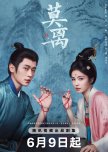
The First Jasmine begins as what appears to be another arranged-marriage political drama but gradually reveals itself to be a remarkably layered story about trauma, justice, power, and healing. Set in the fictional Dachu Dynasty with Tang-inspired aesthetics, the drama follows Ye Li, a woman released from eight years of isolation on Lishan Mountain to marry the politically disgraced and crippled Prince Ding, Mo Xiuyao.
Although it embraces familiar historical romance tropes, the series distinguishes itself through meticulous character writing, emotional maturity, and philosophical depth. Rather than relying on plot twists alone, it builds its story through psychological realism and carefully developed relationships.
YE LI: TRAUMA, REVENGE, AND HEALING
Ye Li is one of the strongest female protagonists in recent historical dramas. Calm, intelligent, and calculating on the surface, she is deeply scarred by the tragedy on Lishan Mountain, where she watched her family and friends die during the plague while remaining powerless to save them.
Bai Lu portrays this duality beautifully. Her hallucinations of the dead are presented not as supernatural events but as believable manifestations of unresolved trauma. The drama never sensationalizes her suffering, instead showing how trauma fragments the mind while allowing someone to continue functioning outwardly.
Her revenge is never driven by blind hatred. The four straw figures she keeps symbolize carefully planned justice rather than impulsive violence. Even her decision to eliminate Empress Dowager Guo Jin last demonstrates patience and political understanding. As the story progresses, revenge gradually transforms into healing as she learns to reclaim agency and build meaningful relationships again.
MO XIUYAO: STRENGTH BEYOND PHYSICAL POWER
Cheng Lei delivers one of his finest performances as Mo Xiuyao. After years of political humiliation, disability, and grief, he remains remarkably restrained, expressing pain through subtle expressions rather than exaggerated emotion.
His character challenges the traditional image of the invincible male lead. Although physically crippled, he possesses extraordinary intelligence, leadership, and emotional maturity. His recovery is satisfying not because he becomes physically powerful again, but because the audience has already learned to admire him before he ever stands.
His relationship with Ye Li develops naturally through trust, mutual respect, and shared suffering. Moments such as quietly caring for each other, cooking together, or simply watching the moon become far more meaningful than dramatic romantic declarations.
EMPRESS DOWAGER GUO JIN: A TRAGIC RULER
Guo Jin is arguably the drama's most fascinating character. Unlike conventional villains, she genuinely improves Dachu through tax reforms, women's education, infrastructure, and social policies. Yet every achievement comes at the cost of countless innocent lives.
Her final conversations with Ye Li explore one of the drama's central questions: does successful governance justify immoral methods?
Ye Li's grandfather once described Guo Jin as talented but lacking benevolence. She understood power but never fully understood compassion. This distinction becomes the philosophical heart of the series, separating effective rule from humane leadership.
Supporting Characters and Moral Ambiguity
The drama refuses to divide its characters into simple heroes and villains.
Mo Jingli's childhood trauma explains—but never excuses—his obsession with power. His final realization that he genuinely loved Ye Li despite originally viewing her as a political asset gives his downfall emotional weight.
Even Xu Wanzhou's controversial decisions stem from desperate attempts to save lives rather than selfish ambition. Throughout the series, good intentions repeatedly produce devastating consequences, creating a world filled with moral ambiguity instead of absolute right and wrong.
Supporting characters such as Lin Tinglan, Qin Cang, Li Feibai, Lady Yusheng, Wen Ran, and Feng Zhiyao all receive satisfying emotional arcs that strengthen the overall narrative rather than existing solely to support the protagonists.
THE CHESSBOARD PHILOSOPHY
Chess serves as the drama's central metaphor. Ye Li's grandfather teaches her about "solitary pieces"—pieces that become isolated from the rest of the board.
This metaphor defines several major characters. Guo Jin isolates herself through power, Mo Jingli through ambition, and Ye Li through trauma. Each discovers that isolation ultimately leads to emptiness, while genuine strength comes from connection and trust.
Rather than celebrating individual achievement, the series argues that relationships are what ultimately give life meaning.
TRAUMA AND RECOVERY
One of the drama's greatest achievements is its portrayal of psychological trauma.
Ye Li's hallucinations, emotional detachment, and gradual healing feel authentic rather than melodramatic. Recovery is portrayed as a slow process supported by understanding, patience, and love rather than miraculous transformation.
Similarly, Mo Xiuyao's hidden disability symbolizes emotional wounds carried in silence. Both protagonists learn that healing requires vulnerability rather than isolation.
The Lishan plague itself is particularly heartbreaking because it has no mastermind behind it. Sometimes tragedy simply happens, making the story's exploration of grief feel even more realistic.
FEMALE AGENCY
The series incorporates meaningful feminist themes without becoming preachy.
Women consistently demonstrate intelligence and leadership. Ye Li repeatedly outmaneuvers experienced politicians. Guo Jin transforms the country through reforms. Lin Tinglan pursues her career independently, while Princess Lingyun and Wen Ran each display remarkable resilience.
However, the drama also acknowledges that female authority often requires tremendous sacrifice. It celebrates women's achievements while recognizing the unequal burdens imposed by society.
THE SLOW-BURN ROMANCE
The romance succeeds because it develops naturally.
Ye Li and Mo Xiuyao begin as political partners before gradually becoming emotional anchors for one another. Their relationship is built through everyday acts of care rather than endless misunderstandings or exaggerated romantic gestures.
Their emotional confessions feel earned because they emerge after episodes of shared hardship. Cheng Lei and Bai Lu rely heavily on subtle acting, making small expressions often more powerful than dramatic speeches.
Secondary romances are equally meaningful. Feng Zhiyao and Princess Lingyun represent love destroyed by politics, while Li Feibai and Lady Yusheng explore freedom, choice, and respect rather than possession.
PERFORMANCES
Cheng Lei gives a career-defining performance. His physical acting convincingly portrays disability, while his emotional restraint makes scenes of vulnerability especially powerful.
Bai Lu delivers one of her most emotionally nuanced performances. Ye Li could easily have become another stereotypical "strong female lead," but Bai Lu instead creates someone whose strength exists alongside profound psychological fragility.
The supporting cast consistently elevates the material, ensuring even secondary characters leave lasting impressions.
PRODUCTION
Visually, the drama favors a restrained style. Warm domestic scenes contrast effectively with the colder political settings, while the dreamlike cinematography during Ye Li's hallucinations subtly reflects her psychological state.
Fight choreography is elegant without becoming excessive, and the soundtrack complements emotional moments without overwhelming them.
Although some CGI backgrounds appear artificial, these issues rarely undermine the overall experience.
## STRENGTHS
* Rich psychological characterization.
* Excellent performances from Bai Lu and Cheng Lei.
* Thoughtful exploration of trauma and healing.
* Mature political and philosophical themes.
* Organic slow-burn romance.
* Strong pacing with very little filler.
## WEAKNESSES
* Some visual effects feel noticeably artificial.
* A few minor supporting characters remain underdeveloped.
* The political resolution is slightly rushed compared to the careful buildup.
The First Jasmine stands out because it treats its audience with intelligence. Rather than relying solely on romance or palace intrigue, it explores grief, justice, political morality, and the importance of human connection with surprising maturity.
Its greatest strength is its refusal to simplify people into heroes or villains. Nearly every major character exists within shades of grey, making their choices feel deeply human. Combined with excellent performances, thoughtful writing, and one of the most satisfying slow-burn romances in recent historical dramas, the series delivers both emotional impact and philosophical depth.
Despite a few production flaws and a somewhat rushed ending, The First Jasmine remains one of the strongest historical dramas of the year. It proves that familiar genre conventions can still produce something memorable when supported by careful writing, nuanced performances, and characters whose emotional journeys feel genuinely earned.
Although it embraces familiar historical romance tropes, the series distinguishes itself through meticulous character writing, emotional maturity, and philosophical depth. Rather than relying on plot twists alone, it builds its story through psychological realism and carefully developed relationships.
YE LI: TRAUMA, REVENGE, AND HEALING
Ye Li is one of the strongest female protagonists in recent historical dramas. Calm, intelligent, and calculating on the surface, she is deeply scarred by the tragedy on Lishan Mountain, where she watched her family and friends die during the plague while remaining powerless to save them.
Bai Lu portrays this duality beautifully. Her hallucinations of the dead are presented not as supernatural events but as believable manifestations of unresolved trauma. The drama never sensationalizes her suffering, instead showing how trauma fragments the mind while allowing someone to continue functioning outwardly.
Her revenge is never driven by blind hatred. The four straw figures she keeps symbolize carefully planned justice rather than impulsive violence. Even her decision to eliminate Empress Dowager Guo Jin last demonstrates patience and political understanding. As the story progresses, revenge gradually transforms into healing as she learns to reclaim agency and build meaningful relationships again.
MO XIUYAO: STRENGTH BEYOND PHYSICAL POWER
Cheng Lei delivers one of his finest performances as Mo Xiuyao. After years of political humiliation, disability, and grief, he remains remarkably restrained, expressing pain through subtle expressions rather than exaggerated emotion.
His character challenges the traditional image of the invincible male lead. Although physically crippled, he possesses extraordinary intelligence, leadership, and emotional maturity. His recovery is satisfying not because he becomes physically powerful again, but because the audience has already learned to admire him before he ever stands.
His relationship with Ye Li develops naturally through trust, mutual respect, and shared suffering. Moments such as quietly caring for each other, cooking together, or simply watching the moon become far more meaningful than dramatic romantic declarations.
EMPRESS DOWAGER GUO JIN: A TRAGIC RULER
Guo Jin is arguably the drama's most fascinating character. Unlike conventional villains, she genuinely improves Dachu through tax reforms, women's education, infrastructure, and social policies. Yet every achievement comes at the cost of countless innocent lives.
Her final conversations with Ye Li explore one of the drama's central questions: does successful governance justify immoral methods?
Ye Li's grandfather once described Guo Jin as talented but lacking benevolence. She understood power but never fully understood compassion. This distinction becomes the philosophical heart of the series, separating effective rule from humane leadership.
Supporting Characters and Moral Ambiguity
The drama refuses to divide its characters into simple heroes and villains.
Mo Jingli's childhood trauma explains—but never excuses—his obsession with power. His final realization that he genuinely loved Ye Li despite originally viewing her as a political asset gives his downfall emotional weight.
Even Xu Wanzhou's controversial decisions stem from desperate attempts to save lives rather than selfish ambition. Throughout the series, good intentions repeatedly produce devastating consequences, creating a world filled with moral ambiguity instead of absolute right and wrong.
Supporting characters such as Lin Tinglan, Qin Cang, Li Feibai, Lady Yusheng, Wen Ran, and Feng Zhiyao all receive satisfying emotional arcs that strengthen the overall narrative rather than existing solely to support the protagonists.
THE CHESSBOARD PHILOSOPHY
Chess serves as the drama's central metaphor. Ye Li's grandfather teaches her about "solitary pieces"—pieces that become isolated from the rest of the board.
This metaphor defines several major characters. Guo Jin isolates herself through power, Mo Jingli through ambition, and Ye Li through trauma. Each discovers that isolation ultimately leads to emptiness, while genuine strength comes from connection and trust.
Rather than celebrating individual achievement, the series argues that relationships are what ultimately give life meaning.
TRAUMA AND RECOVERY
One of the drama's greatest achievements is its portrayal of psychological trauma.
Ye Li's hallucinations, emotional detachment, and gradual healing feel authentic rather than melodramatic. Recovery is portrayed as a slow process supported by understanding, patience, and love rather than miraculous transformation.
Similarly, Mo Xiuyao's hidden disability symbolizes emotional wounds carried in silence. Both protagonists learn that healing requires vulnerability rather than isolation.
The Lishan plague itself is particularly heartbreaking because it has no mastermind behind it. Sometimes tragedy simply happens, making the story's exploration of grief feel even more realistic.
FEMALE AGENCY
The series incorporates meaningful feminist themes without becoming preachy.
Women consistently demonstrate intelligence and leadership. Ye Li repeatedly outmaneuvers experienced politicians. Guo Jin transforms the country through reforms. Lin Tinglan pursues her career independently, while Princess Lingyun and Wen Ran each display remarkable resilience.
However, the drama also acknowledges that female authority often requires tremendous sacrifice. It celebrates women's achievements while recognizing the unequal burdens imposed by society.
THE SLOW-BURN ROMANCE
The romance succeeds because it develops naturally.
Ye Li and Mo Xiuyao begin as political partners before gradually becoming emotional anchors for one another. Their relationship is built through everyday acts of care rather than endless misunderstandings or exaggerated romantic gestures.
Their emotional confessions feel earned because they emerge after episodes of shared hardship. Cheng Lei and Bai Lu rely heavily on subtle acting, making small expressions often more powerful than dramatic speeches.
Secondary romances are equally meaningful. Feng Zhiyao and Princess Lingyun represent love destroyed by politics, while Li Feibai and Lady Yusheng explore freedom, choice, and respect rather than possession.
PERFORMANCES
Cheng Lei gives a career-defining performance. His physical acting convincingly portrays disability, while his emotional restraint makes scenes of vulnerability especially powerful.
Bai Lu delivers one of her most emotionally nuanced performances. Ye Li could easily have become another stereotypical "strong female lead," but Bai Lu instead creates someone whose strength exists alongside profound psychological fragility.
The supporting cast consistently elevates the material, ensuring even secondary characters leave lasting impressions.
PRODUCTION
Visually, the drama favors a restrained style. Warm domestic scenes contrast effectively with the colder political settings, while the dreamlike cinematography during Ye Li's hallucinations subtly reflects her psychological state.
Fight choreography is elegant without becoming excessive, and the soundtrack complements emotional moments without overwhelming them.
Although some CGI backgrounds appear artificial, these issues rarely undermine the overall experience.
## STRENGTHS
* Rich psychological characterization.
* Excellent performances from Bai Lu and Cheng Lei.
* Thoughtful exploration of trauma and healing.
* Mature political and philosophical themes.
* Organic slow-burn romance.
* Strong pacing with very little filler.
## WEAKNESSES
* Some visual effects feel noticeably artificial.
* A few minor supporting characters remain underdeveloped.
* The political resolution is slightly rushed compared to the careful buildup.
The First Jasmine stands out because it treats its audience with intelligence. Rather than relying solely on romance or palace intrigue, it explores grief, justice, political morality, and the importance of human connection with surprising maturity.
Its greatest strength is its refusal to simplify people into heroes or villains. Nearly every major character exists within shades of grey, making their choices feel deeply human. Combined with excellent performances, thoughtful writing, and one of the most satisfying slow-burn romances in recent historical dramas, the series delivers both emotional impact and philosophical depth.
Despite a few production flaws and a somewhat rushed ending, The First Jasmine remains one of the strongest historical dramas of the year. It proves that familiar genre conventions can still produce something memorable when supported by careful writing, nuanced performances, and characters whose emotional journeys feel genuinely earned.
Was this review helpful to you?


