
 Editorials
 2
2 2
2 1
1 2
2 1
1 1
1 1
1 1
1 1
1 1
1 1
1 1
1 1
1 1
1 1
1 1
1


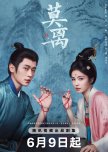
The Shape Survival Leaves Behind
There is a difference between surviving something and learning how to live after it. The First Jasmine is most interesting when it lingers in that distance.Ye Li has survived so much that survival itself has become a way of being. She watches before she trusts, prepares before she rests, and carries an almost unsettling degree of self-control. The drama sometimes asks us to believe more of her than it convincingly earns, particularly once the truth about Li Shan Academy is revealed. The distance between the girl who endured those years and the remarkably capable, educated and socially composed woman we later meet is never fully bridged.
Still, Ye Li never felt emotionally empty to me. Bai Lu gives her restraint a history. Her trauma lingers in habits, hesitation and vigilance, in the strange difficulty of accepting happiness when one has become much better acquainted with loss. I did not always believe everything the plot allowed Ye Li to survive or accomplish, but I often understood the emotional logic behind the woman she had become.
This is where the drama is strongest. Not when Ye Li is being exceptionally capable, but when it allows that capability to become complicated. Strength can protect a person, but it can also become the only way they know how to exist. Healing here is not becoming softer or forgetting what happened. It is discovering that survival does not have to remain a permanent state.
Mo Xiuyao is part of that process, but not its entirety. Their marriage grows through familiarity, reliability and trust, and I found something quietly moving in watching two people accustomed to carrying themselves alone slowly allow another person to share the weight. The romance is restrained—occasionally more restrained than even I thought necessary—but the affection between them always felt present. At the same time, the drama already has trauma, revenge, politics and competing loyalties to resolve, and some romantic detours take more space than the larger story can comfortably afford.
That is perhaps the drama's central weakness. It wants to be many things, and I often found myself appreciating its individual parts more than the whole they eventually formed.
The political story can be absorbing, particularly when private grief begins shaping public decisions, and the supporting characters give the world much of its emotional weight. Yet certain histories remain incomplete, some developments are stronger in anticipation than explanation, and the final stretch never quite reaches the emotional force of what came before it. More than once, I understood exactly what a scene was reaching for without being fully carried there.
What stayed with me most was the drama's understanding that moving forward is not the same as leaving the past behind. The dead remain. Trauma remains. The person one had to become in order to survive remains too. Healing is simply the possibility that what happened yesterday may stop deciding everything that happens tomorrow.
I also found more pleasure than expected in simply looking at this drama. Its colours are subdued, its light gentle, and faces are allowed the small textures and imperfections that make people feel present rather than perfected. It quietly added to my affection for a world that often felt more lived in than polished.
On writing alone, The First Jasmine sits somewhere between a 7 and 7.5 for me. It is thoughtful but uneven, emotionally perceptive in places and frustratingly incomplete in others. It tries to hold healing, revenge, politics, romance and loss in the same hands, and occasionally drops something while reaching for something else.
Yet my feelings for it are warmer than that number suggests. Perhaps half a point belongs to the performances, perhaps some to the quiet pleasure of a visual world that still feels human. Mostly, it belongs to those moments when The First Jasmine stops trying to be everything at once and simply watches people learning how to live with what cannot be undone.
So I will leave it at an 8.
Was this review helpful to you?

Polished, Pleasant… and a Little Too Careful
I understand why Love Between Lines drew attention. It’s visually clean, consistent in tone, and has an interesting dual-world premise: the blurred lines between a murder-mystery roleplay and real-life interactions give it a clever hook. Some of the quieter, character-driven moments are working well, and the drama feels safe and approachable. The atmosphere is soft and inviting, and it’s easy to settle into.Where it falters is emotional weight. The romance is gentle and agreeable, but rarely compelling. Emotional beats are suggested rather than explored, and conflicts resolve before they can truly settle in. At times, uneven pacing and editing smooth over moments that might have benefited from lingering a little longer. For a story centered on intimacy and connection, the chemistry remains curiously restrained: I understood why the leads were drawn to each other, but I rarely felt it.
The writing hints at deeper themes, vulnerability, self-protection, the divide between persona and reality, but tends to play it safe. It prefers comfort over tension, smoothness over friction. As a result, the experience stays pleasant, but light. Nothing is particularly wrong, yet little truly lingers once it’s over.
This is why the high rating feels slightly inflated. The drama is polished, coherent, and easy to finish, but for viewers used to plays where performances and storytelling generate real emotional pull, this may feel too careful for its own good. I spent much of the drama waiting for the emotional hook to arrive, and it never did. For me, in generous terms, it settles at 7/10 — pleasant and occasionally charming, but emotionally lighter than the praise suggests.
If you’re looking for something calm, cozy, and aesthetically pleasing, Love Between Lines does its job. Just don’t go in expecting sparks to fly, or emotions to hit hard; this one prefers to stay safely between the lines.
Was this review helpful to you?
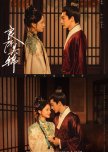
A Slow Burn With Detours
A Splendid Match is one of those dramas that made me feel more than I expected while also frustrating me more than I wanted.The opening episodes set an interesting premise. Gu Jinzhao’s return to the family that abandoned her immediately gives the story strong emotional stakes, and scenes like her calmly burning the expensive gifts sent by the father who discarded her establish a protagonist carrying years of hurt beneath carefully controlled composure. Ren Min handles these moments particularly well. She understands restraint, which makes Gu Jinzhao’s resentment feel accumulated rather than melodramatic.
One thing I consistently appreciated is that the drama generally respects its own characters. Most people behave in ways that feel consistent with who they are, and conflicts don`t rely on exaggerated stupidity or forced malice simply to manufacture tension. Jin Zhao’s characterization occasionally softens and wavers in the latter half more than the earlier episodes seem to promise, yet even in those moments I rarely lost sight of the emotional wounds and pressures shaping her decisions. In a genre where emotional chaos is often mistaken for storytelling, this still felt refreshing.
The drama works best when it focuses on emotional relationships rather than plot mechanics. The romance between Gu Jinzhao and Chen Yanyun develops gradually and, thankfully, avoids becoming overly exaggerated. Ci Sha brings enough quiet warmth and restraint to make the relationship believable, particularly in smaller moments where concern replaces grand romantic gestures. Some of the stronger scenes come not from dramatic declarations, but from trust slowly accumulating through shared difficulties, quiet support, and emotional consistency. Moments where Chen Yanyun quietly supports Gu Jinzhao without overtaking her agency worked better for me than the drama’s larger romantic beats.
Ye Xian also deserves mention, particularly because the drama clearly positions him as emotionally important to Gu Jinzhao’s journey. Without saying too much, parts of the emotional triangle worked better for me emotionally than structurally. The character is well performed, adding emotional tension and, at times, quiet sadness, though some later developments feel more compressed than fully explored.
I also appreciated the supporting cast. Family disappointment, obligation, resentment, guilt — several actors manage to give emotional credibility to scenes that could have easily collapsed into repetitive melodrama. Even when the writing circles familiar emotional territory, the performances often help keep the emotional stakes grounded.
Visually, the drama deserves some credit too. The softer coloring, rainy atmosphere, and more natural texture felt refreshingly restrained compared to many recent idol costume dramas where everyone seems polished into emotional porcelain. Nothing here felt distractingly artificial, which wordlessly helped several emotional scenes feel more convincing.
At times, the rather generic music choices pulled me out of scenes that might have impacted more strongly otherwise, even when the performances were already doing much of the emotional work.
My frustrations ultimately came from the structure.
After a promising beginning, the plot gradually begins revisiting similar emotional conflicts without deepening them. Certain romantic complications feel more delaying than necessary, the pacing slows considerably in the middle, and just when the story finally seems ready to emotionally expand, the ending rushes through developments that arguably needed more room to breathe. Ironically, this became another drama that felt too slow in the middle and too hurried at the finish line. This feels like one of those dramas that would have benefited from another 8–10 episodes, allowing several emotional payoffs more room to resonate.
It never fully became as strong as its best moments suggested it could be. But despite its frustrations, I found myself caring more than the drama’s uneven writing perhaps deserved.
And that is also what makes it a difficult one to rate. Structurally, I would probably place it closer to a 7. Subjectively, however, the experience landed somewhere closer to a 7.5–8, so 7.5 ultimately felt like the fairest middle ground.
Those looking for faster pacing, bigger twists, or emotional intensity driven primarily by spectacle may find it harder to connect. But viewers willing to meet the drama where it succeeds — in quieter emotional moments, gradual relationship-building, and characters whose emotional choices internally feel understandable — may find quite a bit to appreciate here.
Was this review helpful to you?
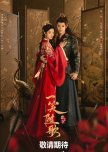
When fate meets a face-smoothing app
It’s a beautiful production that sometimes forgets beauty isn’t the same as soul.The story has bite — duty, revenge, loyalty — and the leads deliver those themes with enough restraint to keep it believable. Li Qin, especially, carries her scenes with a balance of pride and ache that suits her role perfectly.
But the over-polished visuals create a distance: every emotion feels half-frozen behind a filter. It’s like watching intensity through frosted glass — you see the shape, not the heat. The same attention that went into the lighting and costumes could’ve gone into letting the performances breathe a little more.
Still, when Fated Hearts hits its rhythm, it’s immersive. The politics add depth, the romance unfolds naturally, and the cinematography — when it stops trying to be ethereal — is genuinely striking. The second half loses some oomph and character development barely exists, but if you’re all about the visuals, you can look past it.
Overall, an entertaining watch if you enjoy stylized storytelling with enemies turned lovers dynamics Just be ready to occasionally wish someone would turn the beauty filter down two notches.
Was this review helpful to you?
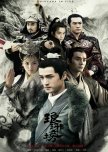
Masterful, Meticulous, Unforgettable
My second rewatch, and somehow it still floors me. I don’t know if I’ve ever seen a drama that hits me like Nirvana in Fire does. Even knowing every twist, every heartbreak, it still leaves me breathless. This isn’t just a story you watch; it’s a world you step into, and it grabs you in a way that’s hard to shake.At its core, it’s the story of Lin Shu, a man shaped by loss and betrayal, who returns under a new identity to bring justice to the people who destroyed his family. But it’s not revenge that drives him — it’s precision, patience, and a vision for a fairer world. Watching him navigate the corrupt court, the schemes, the impossible choices, you feel every calculated step and the cost it takes on his heart. The way the plot unfolds is meticulous and satisfying; every line of dialogue, every glance, every subtle strategy builds a story that is as clever as it is heartbreaking.
Hu Ge as Lin Shu/Mei Changsu is utterly mesmerizing. He doesn’t need to shout or gesture wildly; every expression, every quiet look is layered with meaning. You feel the weight of the years he’s endured, the longing, the grief, and the restraint. The relationships feel real: the friendship with Prince Jing, the loyalty of his companions, the echoes of love he can’t reclaim; it all lands with devastating authenticity.
What makes Nirvana in Fire extraordinary isn’t just the acting or the story. It’s how every element works together: the cinematography, the music, the pacing. It’s elegant, restrained, yet cinematic — the kind of craft that makes the court intrigues feel alive, tense, and inevitable. Even the “villains” are human, with motives and flaws, which makes every twist feel earned, not contrived.
This is a drama for anyone who loves intelligence, emotional depth, and characters who feel alive. It’s not about flashy romance or over-the-top spectacle; it’s about people, choices, and consequences. It moves slowly sometimes, but that’s exactly what makes it so gripping: it trusts the audience to follow, to think, to feel.
I can only hope we see another drama with this level of care and heart someday. Until then, Nirvana in Fire still feels like it stands in a league of its own — a story that makes your chest ache and your mind spin.
Was this review helpful to you?
This review may contain spoilers
Sparrow Bones, Phoenix Hearts
Key to the Phoenix Heart does not owe its strength to novelty. Its ingredients are familiar: a feared general with a ruined reputation, a politically arranged marriage, an old military injustice, concealed loyalties and a court already measuring its possible heirs. But familiarity of material is not the same as mediocrity of execution. What makes the drama memorable is the care with which those familiar pieces are presented and allowed to gather meaning.At its centre are two people whose lives have already been claimed by other people’s designs. Xiao Wuyi, heir to Jing’an and the feared “Demon General,” carries the disgrace of a military disaster that sent thirty thousand soldiers to their deaths and begins tracing the corruption beneath it. Xie Jiayu, the mechanically gifted adopted daughter of Grand Tutor Xie Huaigui, is sent into his household as both bride and bargaining piece. Their contractual marriage begins as another move on someone else’s board, but draws them into the same struggle over military power, succession and grievances inherited from an older generation. What grows between them is not an escape from politics, but a private allegiance within it.
This is best approached as a political drama with a strong ensemble and a romance running through it like a steady current. It offers little physical intimacy, but gives considerable attention to the way trust becomes attachment: through shared danger, mutual respect and the repeated choice to stand beside one another. For viewers who find that kind of intimacy at least as compelling as kisses, the relationship can be unexpectedly rewarding.
The Chinese title, 雀骨, literally means “Sparrow Bone”: something seemingly fragile, yet held together by a structure stronger than it appears. The image belongs to both leads. Jiayu enters Jing’an as a pawn but never remains one, while beneath Wuyi’s fearsome reputation lies a failing body sustained by an unyielding sense of duty. Neither is quite what the court assumes, and neither bends easily to the future others have chosen for them.
Jiayu’s knowledge of mechanisms, forging and military equipment gives her a real place in the political narrative. She understands not only that weapons decide wars, but how they are made, compromised and turned into profit at the expense of soldiers’ lives. Ai Mi brings an appealing directness to the role that sits naturally beside Wuyi’s reserve. The writing occasionally makes Jiayu less perceptive than her established intelligence suggests, but she never feels like a heroine whose importance begins and ends with being loved by Wuyi. Her abilities continue to shape her future beyond the court.
Wuyi remains the character around whom the drama gathers most naturally. The reputation of the “Demon General” is neither false nor the whole truth: he can be ruthless, calculating and frighteningly decisive, yet his severity is inseparable from grief. He refuses to let the human cost of that corruption become an abstraction, even while recognising that those within his reach are merely the exposed roots of something buried much deeper.
Hou Minghao preserves these contradictions particularly well. His strongest moments often arrive between words: affection surfacing before Wuyi remembers to conceal it, relief softening him when the people he cares about are safe, or weariness briefly escaping the composure on which his survival depends.
The same tension gives the political struggle its shape. Wuyi is capable enough to rule and burdened enough to accept responsibility, which the court repeatedly mistakes for ambition. Around him, military reform becomes inseparable from succession, loyalty sometimes has to disguise itself as betrayal, and inherited grievances begin directing the future of the state. The throne matters, but the more interesting question is what power demands from those considered fit to hold it, and how much of themselves they must surrender in return.
His relationship with Jiayu offers a quieter counterweight. They become close by learning how the other moves through danger: he respects her choices even when they hurt him, while she tends his wounds without demanding that vulnerability become confession. Their intimacy lies in accumulated acts of trust, in the freedom to leave and the hope of being chosen again.
The drum becomes the loveliest expression of that bond. Jiayu first uses its rhythm to guide Wuyi when his sight fails; after war, separation and lost memory, he sends that same rhythm through the crowd to find her. A battlefield signal becomes their private language, preserving what they mean to one another even before memory can give it a name.
The women give the drama much of its warmth. Wuyi’s supposed “harem” initially appears to confirm the image of a powerful womaniser, only to reveal a chosen household whose women are not arranged as rivals competing for his attention. The older actresses are particularly good, lending the wider story a warmth and history that feel lived rather than merely explained.
Li Lejun represents the darker face of devotion. She understands the harm she causes and continues because she has placed Li Mao’s future above her own moral survival. Ma Qiuyuan keeps the frightened, loyal sister visible beneath the political operative, allowing the character to remain tragic without making her innocent.
Merxat Yalkun gives the Eagle King enough force to make Northern Qin feel like a real threat. Riley Wang fares less well as Li Mao. His apparent estrangement from Wuyi, concealed loyalty and shifting political position require layers that neither the compressed writing nor the performance fully brings into focus. Some of his most important turns consequently feel more abrupt than emotionally revealing.
Peter Ho’s performance as the Grand Tutor also frustrated me, particularly because I have seen stronger work from him in the past. Yet the character’s political project leads to one of the drama’s most bitter ironies. He arranges marriages, identities and other people’s lives around his faith in bloodline and succession, only for a late revelation to reframe the foundation beneath those calculations. It makes his ruthlessness look smaller, sadder and more futile in retrospect.
For twenty-eight episodes, Key to the Phoenix Heart carries an ambitious amount of story. The political plot remains largely coherent, most revelations grow from information already planted, and the antagonists have motives that extend beyond obstructing the leads. The drama rarely requires everyone to become foolish merely to reach its next reversal.
Its shorter length nevertheless works against it at times. Some supporting arcs move from one decisive moment to the next without allowing much aftermath, while occasionally uneven editing makes the transitions feel more abrupt than they should. The memory-loss plot is the clearest concession to convenience, although it passes quickly and leads to a reunion that feels emotionally earned. A little more patience near the end would have given the losses, betrayals and political realignments greater weight.
What elevated the drama for me was not any single revelation, but the confidence with which it told its story. Key to the Phoenix Heart has something of an older long-form drama’s patience—not because it feels dated, but because it trusts story, performance and emotional accumulation. The camera knows when to remain still. Scenes are not broken into endless reaction shots, and emotion is not underlined until the audience has no room left to experience it independently. The drama does not raise its voice merely to ensure that it has been heard.
Even the relatively light filtering contributes to that confidence. Faces retain pores, stubble and fatigue. The actors do not appear sealed away from dust, illness or time; they look as though events have passed over them and left traces behind.
That confidence does not make the drama flawless. Its premise is familiar, its pacing is sometimes too compressed, and not every performance is equally convincing. Some of the makeup sits awkwardly against the otherwise natural visual treatment, but I would still take visible artifice over faces smoothed into featurelessness by aggressive filtering. A few lapses in logic and narrative shortcuts leave certain developments less persuasive than they should be. On construction alone, I would probably place it somewhere around an 8.
Yet I find it impossible to leave it there. Somewhere between the battlefield drum and the sunlit stillness of that final courtyard, these characters stopped feeling like pieces in a political story and became people whose happiness I needed to see protected. The drama did not force that attachment through spectacle or manipulation. It trusted its characters, lowered its voice and allowed me to arrive there on my own.
Lately, very few dramas in this corner of the genre have reached me this deeply. Its shortcomings are real, but they are not the whole of what it achieved. What lingers is the rare feeling of having cared without reservation. For me, that is worth a 9.
Was this review helpful to you?

A Grown-Up Romance in the Disguise of a Xianxia
I didn’t expect to love this drama this much, and yet here I am on my second rewatch. And not because it was loud or groundbreaking, but because it was quietly powerful in all the right ways. The Legend of Shen Li might not scream for your attention, but it earns your heart. Piece by piece.Let me walk you through why this is the xianxia drama that finally got so many things right.
💥 1. THE STORY: Slow Burn, High Reward
The setup seems familiar: two beings, each bearing immense history and power, meet again in the mortal world. One hides his identity beneath a calm, almost ordinary exterior. The other, battle-hardened and on the run, falls into his life by sheer twist of fate. But instead of delivering melodrama for the sake of it, this story lets things unfold with care.
This isn’t a whirlwind romance. It’s a slow build based on trust, healing, and emotional honesty. The plot respects your intelligence. There's no chaos for chaos' sake. There’s just a quiet, well-paced story about two people who’ve already endured enough and are finally allowed to want peace — and to find it in each other.
🎭 2. CHARACTERS: Strength in Stillness
Shen Li (Zhao Liying)
She is everything a lead in this genre should be. Fierce, funny, strategic, and emotionally layered. She’s a warrior through and through — commanding armies, standing her ground, sacrificing herself not out of self-pity but duty. And yet, she’s never cold. Zhao Liying plays her with sharp clarity and softness at once. You feel her fatigue, her love, her internal battles. And even when she falls, she does it on her terms.
Xing Zhi (Lin Gengxin)
I’ll say this: Lin Gengxin isn’t always the most expressive actor. But here that exact restraint makes the character work. Xing Zhi is a powerful ancient being who’s tired of power, tired of bloodshed, and simply wants to live quietly. And yet he steps up the moment it counts. His stillness is never blank, it’s worn. You can tell he’s lived too long, lost too much. And when he finally chooses her, it means everything.
Their dynamic is everything I love in a pairing: mutual respect, steady trust, no toxic jealousy, and no power imbalance. And the chemistry? It isn’t firework-lusty, it’s emotional tension that builds, then simmers, then settles. You believe in them. You root for them. Not because they’re fated, but because they choose each other over and over again. The romance is slow-burn and emotionally mature, unfolding in subtle gestures, quiet trust, and small emotional shifts. That restraint can be misread as "lack of chemistry", however, Xing Zhi’s character is deliberately restrained: He’s ancient, emotionally fatigued, and not prone to impulsive passion. He doesn't act with typical romantic drama intensity.
Lin Gengxin played him with stoic control, as someone who carries a deep weariness and careful emotional distance, and that’s exactly what the role called for. So yes, it’s supposed to feel calm and quiet. Their romance isn’t hot-and-heavy, it’s warm-and-healing.
Zhao Liying’s performance is more emotionally expressive: Because Shen Li is bold, sharp, and reactive, she stands in contrast to his restraint. This contrast is intentional, it's what creates their dynamic. For some viewers, that emotional imbalance may feel like a mismatch. For me, it’s where the pairing works: Shen Li’s openness keeps pressing against Xing Zhi’s restraint until, gradually, they meet somewhere in the middle
💬 3. DIALOGUE & THEMES: For the Soul, Not for the Clickbait
This drama doesn’t try to bait you with overused “I’ll die for you” lines. It gives you scenes where someone quietly turns the world upside down just to let the person they love live freely.
It’s about mutual respect, partnership, and emotional healing. There’s no jealousy arc, no dull misunderstandings stretched over 10 episodes. Just two people learning how to hold space for each other. Themes like redemption, freedom, duty, and choosing peace over power are threaded throughout, gently, not forcefully.
🎨 4. VISUALS & WORLD-BUILDING: Grounded Elegance
While not as CGI-polished as some blockbusters, Legend of Shen Li shines in its set design and atmosphere. The mortal realm has this nostalgic, almost Studio Ghibli-style warmth. And the immortal realm is regal, quiet, mournful.
Some might say the effects are “dated”, I say they’re charming in their restraint. They don’t try to overdo it. The focus is always on the characters, not spectacle.
⚠️ 5. THE "WEAKNESSES": Or Why the Flaws Aren’t Really Flaws
Yes, the pacing is slow at times. Yes, it’s more about healing than high-stakes battles. Yes, Lin Gengxin’s acting is restrained. But here’s the twist: That’s exactly what makes this drama what it is. Not every story needs to be a tragedy to be profound. Not every love needs to burn to be unforgettable. This drama whispers where others scream, and it lands harder because of it. It’s for viewers who want a slow, tender burn that leaves a permanent mark on your heart.
📉 6. WHY IT’S PARTLY OVERLOOKED: And Why That’s a Shame
It might not be a household name like Eternal Love or Ashes of Love, and that’s perheps because:
- It wasn’t too aggressively marketed.
- It doesn’t cater to flashy expectations.
- It unfolds slowly and requires emotional investment.
But those who watched it to the end, most will tell you it’s one of the most fulfilling romance dramas in years. It delivers a complete emotional arc — not rushed, not tragic, and not insulting your intelligence.
🌟 FINAL THOUGHTS : Who Should Watch This?
If you’re looking for:
--A powerful, battle-scarred female lead who doesn’t need saving
-- A male lead who’s emotionally grounded and protective without being controlling
--A romance that builds on trust and healing, not just attraction
--A happy ending that feels earned
…then The Legend of Shen Li is your next favorite.
This isn’t just another fantasy romance. It is not flawless, but it’s a rare drama that trusts its characters and its audience to understand that love doesn’t have to be loud to be unforgettable.
More xianxias like this, please. Fewer love triangles. Fewer scream-fests. Just this kind of quiet power, emotional sincerity, and layered romance.
Was this review helpful to you?
Checkmate of Desire
The Double is the kind of drama that drags you in with a single, devastatingly elegant move: a story of betrayal, vengeance, and unexpected alliances. It’s visually arresting, every frame composed like a painting, every costume and set carefully designed to signal wealth, power, and danger. But beyond the eye candy, it’s the slow, deliberate unfolding of Xue Fangfei and Duke Su’s game of wits and hearts that keeps you hooked.What makes this drama sing are the performances. Wu Jinyan as Xue Fangfei channels raw, controlled intensity, her expressions carrying grief, anger, and cunning beyond words. Wang Xingyue’s Duke Su is the perfect counterpart: commanding, sharp, yet capable of subtle warmth that reveals his depth without undermining his dominance. Together, they are a force of nature, a fire tempered by strategy, chemistry sparking in every glance and calculated pause.
The revenge plot is precise and satisfying. There’s no wandering from its purpose, no sudden lapses into senseless melodrama. Every betrayal feels personal, every victory earned. While the story is full of plot holes and stretches historical believability, the way the narrative is arranged invites you to suspend disbelief and get carried away on this game of vengeance. Watching Xue Fangfei methodically reclaim what was stolen from her — and at times shield those she cares for — is gripping in ways that make the audience complicit in her schemes. And yet, amid all the plotting, the romance simmers beautifully. It never feels rushed, nor does it derail the main story. The love grows with careful tension, as if every move on this chessboard has emotional stakes that could ignite at any moment.
Supporting characters add texture without overwhelming the leads. Some villains initially appear flat, but later layers reveal motivations and flaws that make them interesting, while their eventual punishment remains wickedly satisfying. Even minor players leave an impression, contributing to a sense that this world exists beyond the immediate revenge.
It’s not flawless: pacing wobbles in the later episodes, some subplots overstay their welcome, and the finale doesn’t quite hit with the intensity the story sets up. These minor issues prevent it from reaching its full potential, but they hardly diminish the magnetism of the central narrative.
By the end, The Double delivers a rare combination: a story that is both visually intoxicating and emotionally potent, a revenge drama where the lead couple’s slow-burning bond is just as compelling as the machinations that surround them.
8.5/10 for enjoyment. Razor-sharp tension, smoldering chemistry, and a revenge that bites, even if a few pacing slips and ending issues stop it from hitting a full 9.
Was this review helpful to you?
Love, Time, and the Weight of Waiting
In a sea of xianxia that look grand but feel hollow, Love and Destiny is a reminder of what emotional payoff actually looks like. It holds up beautifully on a rewatch.Yes, it’s longer, and I know the usual argument: this could’ve been done in 40 episodes. It probably could have, but I’m glad it wasn’t. The extra time lets the emotions settle, the relationships grow naturally, and the payoff actually feels earned. The relationship between Jiu Chen and Ling Xi has room to breathe. Their bond isn’t rushed or assembled through shortcuts; it’s built through shared time, misunderstandings, sacrifice, and growth. Compressing it would’ve flattened the emotional journey rather than improved it.
What truly anchors the drama is the acting. Chang Chen and Ni Ni don’t just play their roles, they inhabit them. The emotions live in the pauses, the restrained expressions, the quiet shifts in tone. Jiu Chen’s composed strength paired with Ling Xi’s sincerity creates a relationship that feels lived-in, not performative. Their chemistry is understated but deeply convincing, and it’s the reason the story works even when the plot slows down.
Are there draggy stretches? Sure. And the final arc does compress some threads more than ideal. But compared to many recent xianxia, where visuals do all the heavy lifting and relationships feel shallow or repetitive, Love and Destiny actually rewards patience. Themes of duty, love, sacrifice, and personal growth hit because the writing treats its characters like people, not tropes.
I originally rated this an 8.5/10. After sitting through several recent “epics” that look fancy but feel emotionally hollow, I’m comfortable revising it to a 9. If you’re looking for a xianxia with mature characters (structurally, not just chronologically), earned romance, and the kind of emotional satisfaction you feel after finishing a long journey, this one is still very much worth your time.
Was this review helpful to you?
When Hearts Entwine, Fate Intervenes, and Nine Layers of Emotion Unfold
Blossom is one of those dramas that catches you off guard, sits down quietly in the corner, and then suddenly start living in your head rent-free. It’s a true dark horse, not overy flashy but it works, and it stays with you.🌸 The chemistry between the leads: Off the Charts.
That slow burn tension, that soft yearning wrapped in careful restraint, it’s all there. The romance is not loud or clingy. It grows in moments of shared silence, trust, sacrifice, and all the little gestures that slowly break down their emotional armor. The emotional tension between the leads is so palpable it feels like a third main character at times. The ML carries the emotional weight of the drama like a pro; stoic, loyal, quietly intense. His performance was layered and truly compelling.
🎭 Acting & Characters
Li Yunrui (ML) blew me away here. His portrayal of a quiet, loyal, and internally broken man felt so grounded and sincere. He’s soft-spoken but intense in the right scenes; his eyes carry more story than most monologues in other dramas.
Meng Ziyi (FL) often criticized for limited expressiveness, shows a lot of potential. Yes, she could still loosen up a bit (ok, a lot) facially, but her character — calm, smart, not driven by impulse — was a breath of fresh air. She held her own, and their dynamic made it work beautifully.
And the best part is that they actually feel like two adults falling in love. No childish misunderstandings every five minutes, no forced bickering just to build tension.
🎬 Direction, Visuals & Mood
The directing surprised me in the best way. Some camera angles were so well-framed, you could freeze the screen and hang it on your wall. The color palette is soft, elegant, not overly stylized, but fitting the emotional tone. No cartoonish CGI or overused effects, just carefully constructed scenes and atmosphere.
You can tell the director gave the actors room to breathe, especially in emotional scenes, the performances feel lived-in, not choreographed. That natural pacing really allows for character depth.
🌀 Plot & Pacing
This isn't a plot-driven rollercoaster. It's more about relationships, trust, hidden pain, and loyalty. There’s enough mystery and light palace intrigue to keep it engaging, but it always circles back to the emotional core. Side characters aren’t just filler, they have arcs, choices, and moments that add depth to the narrative. It’s clear care was taken to flesh them out, even if not all threads tie up neatly. The fantasy elements are light and could’ve been more fleshed out, and yes, the last 10 episodes slow down a bit, but emotionally, the payoff is rewarding.
It’s not a drama about big twists, it’s about subtle shifts.
💬 Final Thoughts:
What sets Blossom apart is its slow and steady pacing, favoring internal tension and subtle politics over dramatic twists or flashy action. While it has its flaws, especially in writing and character agency, that may make it less polished than some other dramas, it remains highly rewarding for viewers who appreciate mature emotional storytelling, nuanced characters, and a quietly magnetic romance.
The drama explores the emotional cost of second chances, not just the strategic advantage. What some viewers see as “passivity” or “lack of action” is actually a deliberate focus on emotional realism and internal struggle, and it might be enjoyable for those who like its genre or are not too harsh on typical cliche tropes.
Blossom asks for patience, but those who lean in will discover a deeply resonant story, a rare gem amid a sea of flashy, over-the-top dramas. It’s a slow burn worth savoring.
I just wish the drama had kept a title closer to the original novel "Nine Layers of Purple" – it’s so much more unique and evocative. The title “Blossom” feels generic and overused in the cdrama world, especially when this story clearly stands out in tone and atmosphere. A more faithful or creative adaption of the original title would’ve helped it stand out even more.
Was this review helpful to you?
For the Romantics Who Don’t Mind Getting Lost in the Mist
💫 Pure eyecandy for romantics and dreamers — one of those dramas you rate with your heart, not your brain.If you’re here for logic-tight plotting or fast-paced action, this might not be your cup of tea. But if you’re in the mood for a soft, colorfully shot fantasy romance that makes your inner romantic sigh, this one’s worth the watch.
The charm
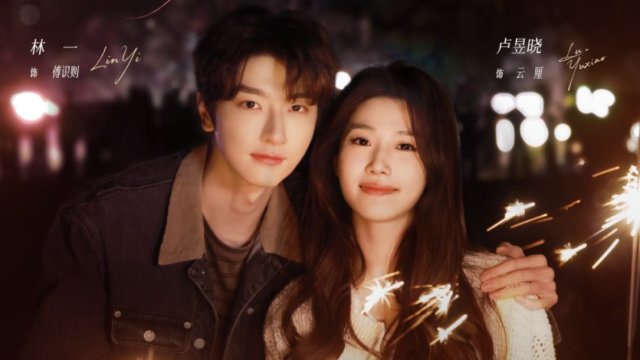
Hou Minghao and Lu Yuxiao have real chemistry. Ji Bozai and Ming Yi’s connection feels quietly magnetic: it’s in the way they look at each other, the small smiles, the unspoken understanding. Their relationship grows slowly but with genuine emotional weight, and when the story lets them breathe, it’s easy to get swept up.
The visuals are stunning: a world wrapped in mist, poetic shots, and flowing robes that make you pause just to take it in. You can tell a lot of care went into the atmosphere. It’s soft fantasy at its most visually romantic.
The not-so-perfect bits
The deception and misunderstandings… oh boy. They drag way too long. You just want to shake them and say, “Talk openly, please.” It drags way more than necessary, and the payoff comes late enough that some emotional tension feels stretched thin.
Also, Ji Bozai (Hou Minghao) deserved more screen time; sometimes the side characters’ subplots took over, and while a few were fun, it did make the pacing uneven.
What makes it still worth it
Despite the flaws, Love in the Clouds has heart. It’s not a groundbreaking story, but the romance hits in a lovely, wistful, and emotionally satisfying way. The gentle yearning, and two leads whose chemistry makes you forget about logic for a bit (if you can see past the mist of deception).
Final thoughts
If you’re strict about clichés, this story might test your patience. There are plenty of witholding the truth long-stretched moments that can keep you from fully enjoying it. I actually put the drama on hold twice because of that, and while I eventually finished it, it left a bit of a bitter aftertaste.
Still, I have to admit, I was in the mood for this kind of soft, romantic fantasy, and the leads’ chemistry pulled me back in. The acting is solid all around (both leads and supporting cast), and the romance scenes are beautifully executed, even if the story’s emotional logic doesn’t always hold up.
I’d call it a 7.5/10 —close to an 8 for the romance, visuals and chemistry alone — but the lack of a single truly honest conversation until far in prevented me from fully falling in love with it.
Was this review helpful to you?
What Do You Carry Across a Desert?
Three hundred thousand taels of missing gold, a massacred family and far too many people who seem to know something about both.That is more or less where Remnants of Gold begins. Zhang Luyao is looking for the truth about what happened to her family, Pu Ying is following an investigation of his own, and somewhere between them sits a much older story involving soldiers, old loyalties and a fortune nobody seems to have actually enjoyed.
It sounds like a mystery about missing gold. For a while, it is.
But the further the story goes, the less interesting the gold becomes.
Part of that is because of the people gathering around it. Zhang Luyao is intelligent, guarded and formidable, but thankfully not written as someone whose intelligence prevents her from making bad decisions. Xin Zhilei gives her a wonderful stillness; she can look exhausted by the world and still be the most dangerous person in the room.
Yu Hou is much messier. Chen Kun makes him selfish, charming, cowardly, lost and loyal without making any of it feel contradictory. He wants money because money means freedom, or at least he thinks it does. The problem is that he keeps forming attachments that make walking away considerably harder than he planned.
Pu Ying is quieter. Yin Fang gives him an appealing steadiness, although the writing never opens him up quite as much. And then there is Ban Cha, who appears with his wine and salt and the general air of a man who has wandered into everyone else's emergency by accident.
By then, the gold has collected an increasingly strange jianghu around it. Ha Bingzhong, Tie Futu, Xiaofang, Pingping, Seventeen, Tang Zheng, the Qin Demons... almost everyone arrives with an old debt, a private motive or some piece of history nobody thought worth mentioning earlier.
I liked that. A strange habit, an old grievance, a few lines of dialogue, and someone who appeared ten minutes ago can feel as though they have been wandering around this world for years.
Sometimes, though, there really isn't much more than the suggestion.
Thirteen episodes keep the story lean, but they also leave several characters somewhere between memorable minor figure and plot mechanism. Xiaofang and Pingping matter, yet their fates very conveniently push other characters where the story needs them to go. Tang Zheng arrives carrying enough history for another drama, while the Qin Demons are wonderfully strange and also suspiciously useful when needed.
Despite finding these people interesting, I never became deeply attached to most of them. The drama keeps us at a certain distance, letting people reveal themselves through what they do, what they remember and what they refuse to explain. I suspect some of that is intentional. Sometimes it works. At other times, especially when characters start dying, I understood why something mattered before I necessarily felt that it mattered.
Xu Bing's direction can be similarly uneven. He likes taking his time, and often I liked taking it with him. People sit and drink, conversations circle around what nobody wants to say, and silences are allowed to last.
But sometimes a scene continues after it has already made its point, while something much more important is treated so elliptically that I wondered whether I had missed a scene somewhere. This becomes particularly noticeable toward the end, when thirty years of grudges, loyalties and unfinished business suddenly have to come together in very little time. Some deaths feel inevitable. Others feel rather more like somebody needed to die so somebody else could finally make a decision.
The desert location work is one of the drama's strengths. It looks dry, empty and unpleasant to cross. The fights have weight, people get dirty and exhausted, and there is a roughness to the whole thing that suits this world. Some of the sets are much less convincing, especially beside those landscapes.
I liked the sense that these people had lives before we met them. They are selfish, loyal, petty, stubborn, occasionally foolish and not always easy to place neatly on one side of anything. Even when the writing didn't give me quite enough of them, it usually left me wanting to know more.
And somewhere along the way, I stopped wondering who would end up with the 300,000 taels of gold, or whether there was ever any gold to find. After enough time in this desert, even the gold begins to feel like a story someone once told.
I wanted to know what would happen to the people still looking for it.
There is quite a bit here that bothered me, but I can already see myself watching it again someday. So despite all my complaints, I'm giving it an 8.5.
Was this review helpful to you?
Shadow Love: Sparks Between Shadows
Shadow Love starring Song Yi as General Li Shuang and Cheng Lei as Jin An/Duan Ao Deng, blends romance, intrigue, and personal growth into an engaging story.Romance & Chemistry
Li Shuang (Song Yi) is composed, serious, and carries the weight of responsibility with poise, while Jin An (Cheng Lei) brings playful energy, charm, and emotional warmth. Their contrasting personalities make their interactions compelling: Li Shuang’s discipline paired with Jin An’s liveliness creates natural tension and chemistry. Their romance develops organically, with moments of humor, loyalty, and heartfelt connection that keep viewers invested despite narrative unevenness.
Acting & Characterization
Song Yi delivers a strong performance as the composed and authoritative Li Shuang, showing subtle emotional depth in key moments. Cheng Lei stands out with his acting versatility, emboding three different personalities with layered charm; playful, loyal, stern and vulnerable, making him endearing and engaging. The dynamic between the two leads elevates the drama, even when the story’s pacing falters. Secondary characters are serviceable but less memorable.
Story & Plot
Adapted from Jiu Lu Fei Xiang’s novel, the story explores themes of love, identity, and duty. While intriguing, some plot elements feel too predictable or unevenly paced. Subplots, including political intrigue and secondary characters’ arcs, are underdeveloped, leaving minor threads unresolved. Still, the narrative provides a satisfying blend of romance, tension, and occasional suspense.
OST & Visuals
The soundtrack enhances key romantic and emotional scenes without overpowering them. Costume design is visually rich, reflecting rank, personality, and story context, though occasionally overly stylized.
While the OST is great, the CGI is a complete mess. Cheng Lei’s character transformations were somewhat undercut because the CGI failed to convincingly portray his various personas. While his acting brought them to life, the poorly executed effects diminished part of the viewing experience.
Watch Shadow Love if you enjoy:
Costume romances with meaningful character dynamics
Chemistry between contrasting leads
A mix of humor, devotion, and lighthearted tension
While the story sometimes falters and subplots feel undercooked, the romance stays enjoyable enough to make this a pleasant watch — as long as you don’t take the plot too seriously and just go with the vibes.
Was this review helpful to you?
A Splendid Bloom in Poisoned Soil
What I appreciated most about "The Road to Splendor" was the care given to why people behave as they do. Its characters are all trying to build lives within the same poisoned soil of family pressure, social expectations and limited choices, yet what grows from it is different in each of them. Not every decision is reasonable or forgivable, but most can be traced back to something: lost opportunities, fear, ambition or the need to survive.This is already apparent in the opening episodes. Zhao Ling and Fu Tingyun are introduced through separate storylines that establish their intelligence in different ways. Zhao Ling survives as a salt smuggler by thinking quickly and taking advantage of whatever situation presents itself. Fu Tingyun is more measured. She has been educated to understand people, reputation and the rules governing a noble household. Their early encounters work because neither is made foolish so the other can appear clever.
Fu Tingyun’s life in the Fu household initially seems secure, but everything she has been given has a purpose. Her family has invested in her because a good marriage may reverse its decline. The tragedy is that the grandmother’s affection is not entirely false. She does care for Fu Tingyun, but that care remains tied to the interests of the family. Once Fu Tingyun’s reputation is ruined and the marriage is lost, the grandmother chooses the family over the granddaughter she raised.
Fu Tingyun’s maid choosing to remain beside her was deeply moving, while Fu Tingyun’s attempt to save herself was made deliberately difficult to watch. She is not rescued while lying there. She participates in her own survival, even when that means eating something revolting to force the poison from her body. The scene strips away the dignity she has been trained to preserve and leaves only her determination to live.
Madame Zuo is another example of the drama looking beyond the obvious role assigned to a character. She could easily have remained an unstable sister-in-law whose only function was to harm the Tingyun. Instead, we learn what brought her to the Fu family and what kept her there. She entered through a ghost marriage while still young, traded years of her life for financial security and the promise that her brother would be supported, and gradually watched those promises narrow into resentment.
Her suffering does not make her actions acceptable, but it makes them coherent. She knows what the Fu family’s chastity arches have cost its women, yet she is still prepared to sacrifice Fu Tingyun if doing so will secure her brother’s future. Madame Zuo was the strongest performance in the drama for me because her anger never felt detached from the life behind it.
Yu Jingxiu is similarly shaped by control. His mother has planned not only his marriage and career but seemingly the ambitions of the next generation as well. I understood why he wanted to escape her, but the way he pursued that freedom was cowardly. He lacked the courage to oppose her directly and instead destroyed Fu Tingyun’s reputation, used Fan Yake and treated the lives of people beneath him as expendable. The drama gives him a reason without turning that reason into an excuse.
These early character threads gave the later political story a strong foundation. The salt reforms were especially engaging because the conflict involved practical interests rather than empty court intrigue. Money, drought, official advancement and family alliances all influenced the choices being made.
Zhao Ling and Fu Tingyun made complete sense to me as partners. He understands danger and the world beyond respectable society; she understands institutions and the people operating within them. Their trust grows through experience, and I believed they would risk their lives for one another. The romantic side was less convincing. I sometimes felt their dependence and loyalty more strongly than their affection, particularly in the later episodes.
I thought both leads gave solid performances without being outstanding. Ding Yuxi has natural charisma, but some of his early mannerism, the lowered gaze, tilted posture, felt a little too deliberately maintained. His performance improved later when Zhao Ling became quieter and more emotionally isolated.
Deng Enxi seemed to understand Fu Tingyun’s defences better than her softness. She was strongest when fear or humiliation forced the character to fight for her composure. Elsewhere, the performance could feel less certain, especially when the confidence of the voice exceeded what was visible in her expression. Fu Tingyun’s pride and intelligence were always clear; the tenderness beneath them was not.
The production is beautiful, particularly its use of real locations, architecture and landscape. At the same time, the smoothing was too heavy for my taste, and a few scenes seemed so carefully composed that they lost some spontaneity. The physical world often felt authentic, while the actors occasionally appeared visually separated from it.
Overall, this was an 8 out of 10 for me. The romance and performances did not affect me as deeply as I had hoped, but the story remained engaging because its characters had understandable histories and its conflicts grew naturally from the world they inhabited. "The Road to Splendor" may not have been exceptional, but it was thoughtful, well made and far more substantial than many recent costume romance dramas. The soil surrounding these characters was poisoned long before they arrived; what interested me was seeing what each of them chose to grow into.
Was this review helpful to you?
This review may contain spoilers
What We Choose Not to Take
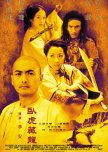
I rewatched this on Netflix recently, and it immediately took me back to those wuxia movies I used to watch with my dad. Half asleep, half understanding the plot, but fully absorbed in the feeling. That slightly dreamy, slightly melancholic atmosphere that sticks even when the details fade, firmly rooted in a different era of filmmaking.Coming back to it now, I understand the story much better, but strangely, it still works in much the same way. It’s less about what happens, and more about what stays with you afterward.
The setup is pretty simple. Li Mu Bai, a legendary swordsman, decides he’s done with the martial world and asks Shu Lien to deliver his sword, the Green Destiny, as a kind of final goodbye. Of course, that doesn’t go as planned; the sword gets stolen, and suddenly this quiet exit turns into a chase that pulls everyone back into a world they were trying to leave behind.
That’s where Jen (Yu Jiaolong) comes in.
At first, she comes across as the familiar restless noble girl, dissatisfied with the life arranged for her. But the more you watch, the more it becomes clear that her struggle isn’t just about restriction, it’s about direction. She’s highly skilled, trained in secret, capable in ways she shouldn’t be, but that ability doesn’t stabilize her. If anything, it pushes her further off balance. It’s like giving someone wings before they’ve learned where to land.
Her dynamic with Shu Lien is one of the most interesting parts. Shu Lien sees right through her, sees both the potential and the recklessness, and tries, in her own way, to guide her. But Jen doesn’t want guidance. She wants freedom, without limits, without consequences. And the film keeps quietly asking: what does that kind of freedom even look like?
Meanwhile, there’s this entire undercurrent with Jade Fox, Jen’s mentor, who represents something darker: bitterness, resentment, someone who was shut out of the martial world and never really moved past it. You start to see how Jen could easily end up the same way, just with better sword skills.
And then there’s Li Mu Bai and Shu Lien.
Their story almost seems like it belongs to a different movie: quieter, older, heavier. They’ve known each other for years, clearly care about each other, and yet nothing ever happens. Not because it couldn’t, but because they chose not to. Honor, loyalty, timing, whatever it is, they let it pass. Watching their relationship feels like looking at a road not taken for too long.
The action reflects all of this rather than distracting from it. The rooftop chase feels like Jen testing how far she can push her freedom. The famous bamboo forest scene isn’t just visually striking—it plays out almost like a conversation neither side knows how to resolve. Jen moves like she doesn’t want to be held by anything at all. It’s less about who wins and more about what each of them represents.
And then the ending.
Jen goes to Wudang Mountain with Lo, the one person who represents a different kind of life for her: simpler, maybe more honest. He tells her that story again, about the man who jumped off the mountain and had his wish granted because he believed. And she just… jumps.
And that moment can mean a lot of things. Maybe she believes in the legend. Maybe she wants freedom in the only way she can define it. Or maybe she’s just tired of not belonging anywhere: too wild for one world, too constrained for another. It doesn’t feel like a triumphant ending, and it's not meant to be. It feels more like someone finally letting go, even if we don’t know what that leads to.
What stood out to me most on rewatch is how little the film insists on anything. It doesn’t guide you through every emotion or spell out its themes. It leaves space, but that space can also create distance. Some moments feel intentionally understated, while others feel just out of reach, especially if you’re looking for a more direct emotional connection. Like a conversation that ends without a clear conclusion, but stays in your head anyway. The movie doesn’t meet you halfway; you have to go to it, and not every viewer will respond to that approach.
Visually, it holds up effortlessly. It’s more like it doesn’t age because it never tried to look trendy in the first place. Natural light, real movement, no over-processing. it feels closer to something you remember than something you just watched.
A strong 8.5 upped up to a 9, not just for the fantasic action or the layered story, but for the way it lingers around questions of choice, consequence, and what people leave undone.
Was this review helpful to you?


