

 1
1 1
1 2
2



The stigmas that exist for the LGBT+ community in sports and schools
'Summer Indigo' doesn't simply aim to tell a love story or delicately portray the subtle emotional changes and growth of the male protagonists.Its main objective, in presenting two gay teenagers belonging to a judo team, facing the stigmas that exist for the LGBT+ community in sports, is much more ambitious: to talk about how sexual orientation is treated in sports, how this taboo subject in this world directly affects the daily lives of athletes, the transformative power of sports, and the importance of creating truly inclusive spaces within the sports community.
In a world where homosexuality has closed many doors and denied opportunities for this reason alone, the South Korean vertical series directed by Kim Won-sik and Lee Doo-young follows in the footsteps of films such as the New Zealander 'Punch' (Welby Ings, 2022), 'Handsome Devil' (John Butler, 2017), or series such as the American 'Love, Victor' (Isaac Aptaker and Elizabeth Berger, 2020-2022), the British 'Heartstopper' (Alice Oseman, 2022-2024) or the South Korean 'Blue of Winter' (2022) and 'Let Free the Curse of Taekwondo' (Hwang Da Seul, 2024), among others, to introduce the viewer to LGBT+ sports characters fighting against bullying and discrimination, while telling a romance between two teenagers that does not end in tragedy, but revitalizes first love as a pure and innocent feeling that can overcome the obstacles that may arise.
However, the main difference between the Playlist series and the aforementioned series and films lies in the laws protecting and recognizing LGBT+ people, or the lack thereof, and the social environment: while in those societies there is greater recognition and freedom for homosexual people, with some gay athletes even coming out without fear of losing their status as athletes, members of this community in South Korea face prejudice, discrimination, and other barriers to social inclusion that their non-gay counterparts do not experience.
PLOT
This romantic youth sports drama follows Seon Woo, the youngest member of the school judo club who trains under the supervision of the troubled coach Lee Tae-Kuy. But when the freshman announces he has decided to leave the club due to an underlying concern and because he cannot bear the bullying from his captain, Lee Chang-seok, he is required to follow tradition: defeat an upperclassman. However, Seon Woo becomes frustrated when, by chance, the judoka he is to defeat is the national judo star, Gong Taehyung.
As they get to know each other, Taehyung, who is only interested in judo, becomes increasingly attracted to Seon Woo, and, under the username "Oscar", confides his worries to an anonymous friend named "Summer", whom he meets every night via chat.
However, the young judoka, who was once Chang-seok's best friend until he felt his efforts had been trampled on by Taehyung when he let him win a match a year earlier, soon discovers that "Summer" is actually Seon Woo. Upon learning that Seon Woo intends to leave the club, Taehyung will do everything possible to prevent him from leaving.
And of course, despite the magnitude of their feelings, they must hide their attraction, as the revelation could destroy them, drive them away from the sport, and cause them to drop out of the club and school. This, in turn, is a reflection of the complexities that exist in sports, especially in contact sports, in addition to the sexist comments about the discomfort of having a homosexual in the locker room an idea that is erroneous and a result of the brands imposed on the gay community.
While Park Seon Woo's story isn't entirely about coming out —he acknowledged being gay from the opening scenes—it is a coming-of-age series. The teenager's journey will be one of accepting love and, more importantly, of himself as a person capable of loving and being loved by the very boy he's fallen in love with.
BULLYING
The main focus of the series is to break down the stigma surrounding mental health, especially among adolescents and in schools, where bullying is becoming increasingly prevalent, especially given the lack of awareness campaigns on the subject in South Korea.
The terrible experience of being bullied by the homophobic Lee Chang-seok makes Seon Woo question Oscar's identity and Taehyung's intentions, as well as his own.
The judo team captain manages to confuse Seon Woo when, after discovering the story behind the online chats, he steals Oscar's identity to impersonate him and deceive Summer. To achieve this, he resorts to threatening the award-winning athlete: "If you tell Seon Woo that you are Oscar, I will reveal to the students at school that you are both gay". However, after achieving his goal of leaving the club after defeating Taehyung, Seon Woo returns to protect him from Chang-seok.
The main character has now lost his fear of the club captain: "Once you've seen the worst in someone... there's nothing left to fear".
The relationship that builds between the two protagonists makes the viewer believe in true love.
As the youngest member of a judo club, Seon Woo faces several challenges in accepting his gender identity: the expectations of a judoka, the expectations of the coach, the expectations of his teammates, and the expectations of Taehyung.
For his part, Taehyung will have a coming-out story. As he continues training for future competitions, he finds himself increasingly interested in spending time with Seon Woo, to the point that for him the happiest moment of the day is when he starts chatting every night at 11:21 PM with his teammate under the name Summer.
The journey of discovering his sexuality goes hand in hand with the genuine emotional connection he gradually builds with Seon Woo through shared moments, deep conversations, and challenges they overcome together.
While he seeks to strengthen his relationship with Seon Woo, he takes his time to understand how he truly feels about himself and others. Taehyung doesn't hide his feelings, but he fears that revealing to others that he has developed feelings for his teammate would hurt him, as well as Seon Woo, who has confessed to Oscar that if someone found out his secret, he would drop out of school. "Who do you think you are to care so much about me? Just say it, I like you", Seon Woo will ask Taehyung.
To which he will reply "What if I tell the truth? You, a judo athlete who can't even land properly, who breaks his leg like a damn bird, who just admitted to liking a boy... if I say I like you, then what will happen to us?".
The bullying then not only affects Seon Woo as the club captain's favorite victim, but Taehyung will have to hide his crush to avoid becoming a future victim.
When the protagonists are filmed affectionately embracing in a video by Chang-seok, who seeks to blackmail Taehyung into dropping out of competitions so he can have a chance at the awards podium, the two are forced to navigate isolation and homophobia.
The coach, the only adult in the story, has a secondary role, but a fundamental one, especially towards the end of the series. The downside to this character is that, in addition to representing an obstacle to teenage love, he is a corrupt coach who asks the club captain to steal Taehyung's judo notebook. When his son fails to do so, he demands that he try to make him proud as a father by winning a gold medal, even if he doesn't play "fair game" in doing so.
In turn, he will demand that Taehyung manipulate the upcoming match, losing to Lee Chang-seok, even though a defeat could mean his continued presence on the national judo team. Unable to achieve his goals this way, he will try to do so by exposing the relationship between the two protagonists. This means that Seon Woo and Taehyung will also suffer harassment and discrimination from the coach.
CAST AND PERFORMANCES
The series features a compelling performance by Choi Ri Ho as the coach and father of the club captain, who turns his scenes into truly emotional sequences. His ambitious, homophobic, and hurtful character complements the depth built by the performance of talented actor Lee Ui-seop, and the equally capable newcomers Kim Ji-yool and Yoo Seong-yoon, who play Gong Taehyung, Park Seong Woo, and Lee Chang-seok, in that order.
This isn't the first time Lee Ui-seop (who played Kim Geon Ju in 'Business as Usual') has appeared in a BL series to denounce the bullying suffered by South Korean LGBT+ teenagers. In 'Taming the Bad Boy' (2024), the series that marked his acting debut, he plays a student who, after falling in love with a classmate, suffers discrimination and hatred from many of those around him. Here we find another compelling homophobic character, played by actor Byeon Jeong Hyeon.
While both leads are convincing with their performances, the prize goes to Yoo Seong-yoon as the villain who manages to redeem himself through his guilty conscience. His performance as the homophobic club captain is invaluable because it sheds light on the centuries-old culturally rooted homophobia, a chronic condition that affects us all to a greater or lesser degree.
It draws the attention of viewers to much that is expressed on social media expressing that homophobic characters should not have a place in LGBT+ productions. What a huge mistake! Homophobes exist. They are everywhere. Harassment and discrimination are real. We must make the stigmas visible. To raise awareness, we must capture homophobia in audiovisual media, often engendered by repressed gay people who are unable to accept themselves.
Contrary to what many believe, well-written and well-acted homophobic characters can raise awareness about the problems facing the LGBT+ community and bring about inclusive change in society in general and sports in particular, in order to overcome discrimination.
IN CONCLUSION
The series serves as a coming-of-age story and a sports history, as well as a mirror that highlights what it can mean for queer youth in sports when small minds prevail. It will tug at your heartstrings, and it's a series you won't want to miss.
And as for the vertical format, accept it, reader. It's here to stay.
Was this review helpful to you?

We are in the 90s of the last century. We are in a quiet rural town during the Heisei era. We are facing a story of acceptance and self-discovery during adolescence, but far from the romanticism of most of the series based on manga that I usually review here, telling us a hard, stark and bittersweet story. This is a coming-of-age drama that explores the pressures to conform and the power of friendship.
The beginning of 'Smells Like Green Spirit', the LGBT+ themed drama series, is engaging. We are introduced to a high school student being chased by several of his schoolmates.
Mishima, an androgynous teenager who defies social norms of sexuality, with his very long hair, delicate beauty and marked feminine features, lives in two different worlds: while the Sun shines in the sky, his classmates give free rein to their homophobia and is systematically tortured for "appearing to be gay." At night, in the silence of his house, once his mother goes to bed, we can distinguish a boy who is clear that he likes boys, something he hides and, faced with the economic impossibility of buying other cosmetic products, he only applies lipstick taken from his mother's bag, while he enjoys dressing the clothes of the woman who sleeps a few meters away from him.
His colleagues harass and physically and psychologically attack him because of his femininity, calling him in the most derogatory ways alluding to his sexuality. But he doesn't care, he's happy being the way he is.
All this reveals two of the pillars of the work. But be careful, this is not a more or less classic story that revolves around transsexuality.
But that bittersweet existence takes a radical turn when he discovers by accident that the hatred that Makoto Kirino, one of his staunchest harassers, professes towards him, is not only the result of the education received by a heteronormative family or from living in a society that does not accept diversity and that makes someone who is different hate themselves for not fitting into a supposed canon of "normality", but that they have much more in common than what appears at first glance and that this hatred is actually a desire to have the freedom to be like him.
In this way, the fatherless young boy will discover that, like him, Kirino is gay and likes to cross-dress, but he has hidden this side of him due to his conservative mother, who cannot accept he son's true nature. In this sense, since his childhood, in his environment, Kirino has been raised listening to prejudices and stereotypes of rejection or hatred towards LGTB+ people. Having integrated these values into your system, the construction of your identity has been marked by those beliefs. For this reason, he considers that a part of him is not worthy of acceptance and recognition, so he must hide, compensate, repair... his sexuality.
This is how the series borders on that controversial stereotype that behind every homophobe there is someone repressing their authentic sexuality. However, Kirino's story is so well done that it is difficult not to empathize and feel sorry for him, and even understand the pain that not accepting oneself can lead to something terrible. Kirino is ultimately, unlike Mishima, a poor confused teenager with his head in a mess.
Although it is true that this stereotype also comes into play with another character with whom one does enter into more delicate terrain that is much more controversial, and I will not go into detail about it so as not to give away spoilers.
Once the moment of initial terror of being discovered has passed, Kirino experiences the relief of being able to show himself as he is to another person who does not judge him and understands him. Being able to talk and share their problems without having to hide will be the first step for the two to begin to weave a beautiful friendship based on the secrets they hide from the world. And in this way we discover the other pillar on which the series is based.
These two teenagers must face a hostile social environment, allies who are wolves in sheep's clothing, and, what's worse, the possibility of frustrating their families' expectations. They must not only hide from others, but also hide from themselves.
All this, while we are presented with a Japan far from the typical view and the images of cities of futuristic technology mixed with ancient traditions. A much "dirtier and darker" Japan, for a story that usually appears darker than what we get from there, where the main character suffers daily harassment by teenagers like him, while others are forced to hide who they are out of fear to receive the same bullying that Mishima suffers.
While Mishima benefits from having a loving and understanding mother, Kirino struggles to reconcile her sexuality with her oppressive and patriarchal upbringing.
Kirino quickly opens up to Mishima, when they both meet during free hours on the school roof and outside the educational grounds, and can be who he really is without having to hide, although in front of his classmates he has to continue pretending contrary. However, he slowly begins to change the way he treats Mishima in front of others as he begins to accept himself.
It is surprising that Mishima does not feel or express any type of resentment towards his harassers and that he quickly finds in Kirino a being similar to the one who forgives all the bad times he put him through.
Thanks to the friendship with Mishima, Kirino's character transforms into a totally different person. If it is true that his attitude at the beginning is inexcusable and unjustifiable, as you begin to interact more with Mishima you discover his past and who he really is, making it easier to connect with him.
Through Mishima we observe the story and see how Tarō Yumeno, another of his bullies, a classmate and one of the main players in the school basketball club, is actually a boy who hides behind the façade of the bully, and who always makes fun of Mishima, to hide his true feelings.
Falling in love with Mishima is easy; He is so tender, so close, that you can't help but love him, sympathize with his character, let yourself be carried away by his antics, identify with a being that is certain of knowing who he is, even if he has to hide it.
And as these three young people begin to discover who they are, struggling to define themselves, they will make difficult decisions that will shape the rest of their lives.
'Smells Like Green Spirit' presents a heartbreaking character study anchored by a confident and convincing performance by Araki Towa, Sono Shunta and Fujimoto Kodai, actors who play Mishima Futoshi, Kirino Makoto and Yumeno Taro, respectively.
Araki Towa shines in her role, which she plays with delicacy and melancholy.
It is interesting how the story mixes comic situations that will brighten your day with other moments of extreme drama that will break your heart, while telling a story whose characters explore different ways of living sexuality and gender identity. Without a doubt, they are characters that anyone can empathize with.
Screenwriter Arai Yuuka takes the cake by adapting the manga of the same name written and illustrated by Saburō Nagai, serialized in Fusion Product's Comic Be between 2011 and 2013, collected in two tankōbon volumes, which allows the viewer to take a look at how complicated it is. a time that is complex in itself like adolescence, when one also does not fit into what is considered normal. As in the original work, the narrative text not only allows a very honest story to be translated into moving images, but also skips many stereotypes associated with BL manga.
The series addresses topics such as transvestism, while emphasizing that being a transvestite does not mean being transsexual, and that, in turn, this is not linked to sexual orientation.
Linking family history makes it feel even more intimate and personal, especially when one of them's mother is a widow and the other is single, and they have raised their children with so much love that their descendants want to care for them in the same way.
Sawada Ikuko addresses all these complex issues with commendable delicacy and lucidity. He raises the questions but does not decide, does not judge, does not take sides.
It is also true that with a cast like this it makes it very easy for the viewer. In addition to the aforementioned actors, Abe Aran joins as Professor Yanagida, Sakai Miyuki as Futoshi's mother, Kanai Miki as Sawada Ayako, Kaji Masaki as Edokawa Toshihiko, Katada Hiyori as Fujii Rinka, among others. That is to say, the stellar performances of the entire cast, especially the young people who turn from rivals to friends, anchor the story.
With an outstanding soundtrack, whose musical themes are inserted in such a way that they become the perfect complement to the story, the Japanese director succeeds in maintaining her closeness with his main character at all times, especially in that climactic moment when Mishima and Kirino They look into each other's eyes for the first time and scrutinize their souls.
There are some clichés often found in LGBT+ stories, but for the most part, Sawada Ikuko creates a totally original drama that is worth watching. Bearing the weight of emotional trauma and gay shame, the three boys need more than a hug to get them through. But there is a hopeful message, tinged with painful sadness. 'Smells Like Green Spirit' teaches an important lesson that will reach many young people who struggle with their sexual preferences, especially those who live among family members who are intolerant towards LGBT+ people.
As a result, the series doesn't flinch from contemplating the unfortunate reality of hate and intolerance, but also reflects and celebrates the other side of humanity.
This is a bittersweet series that reinforces the idea that there are good people who will love and accept you no matter who you are. The audiovisual demonstrates great empathy for those who have to hide who they are throughout their lives, or part of it, even if that eventually turns them into melancholic beings.
It is a deeply personal story, which speaks of young queer people who have the luxury of searching for their identity and discovering who they are from an early age, and those who must keep part of their identity hidden for fear of losing their family or receiving hate from the community.
There are moments in this queer story that are truly terrifying and other moments are tender and pure.
For all that has been said, the series stays with the viewer after the final credits of the first three episodes of the 9 that the MBS and TVK audiovisual have.
A splendid and bittersweet story as well as a tough love story. Yes, of love, because self-acceptance can only be fulfilled with a lot of love.
Was this review helpful to you?

Of loves between men and forbidden romances in the Forbidden City
'A Frozen Flower' (Ssang-hwa-jeom) is a historical drama set in the 14th century, in a time of war for power and palace intrigues in which the need to produce an heir forces Gong Min, the king of Goryeo , to make a decision that will have dramatic and unexpected consequences on himself and everyone around him.Faced with the discovery of a plot to assassinate him and seize the throne, the king must secure an heir, but here the conflict arises: the monarch has no pleasure in women and loves Hong Lim, his faithful general, the only person he accepts in his litter.
Given the circumstances, she decides that her lover takes his place in the queen's bed and fertilizes her, all under the greatest secrecy and discretion. And there the next problem arises: Hong Lim falls in love with No Guk, the queen, a role played by Song Ji Hyo ('The Witch's Diner'), despite being reluctant at first because he has never slept with a woman, but no. can disobey the king.
The grand historical setting and political plots are clearly overshadowed by the central story.
We are faced with a story of a king in love with his chief of the imperial guard, who has been instilled since childhood that one must please the king in every way. For that reason, he is shocked when he receives the king's order.
Neither the queen nor Hong Lim have a choice. They are puppets of royal power, so they obey without any other alternative. As in a kind of sacrifice, the queen has to have sex with a stranger. But here is precisely the key to the story: if she has never had sex, he doesn't know what it's like to have sex with someone of the opposite gender to his.
After the initial impact, both discover an unknown, unexplored sensual side. What at first is a repugnant obligation soon becomes a discovery of the senses that leaves the three completely perplexed.
A passionate and irresistible desire will push the queen and Hong Lim to face great risks, endangering both their loyalty to the king and their own lives in a story that grows in tension with each scene. And the king will not sit idly by and will explode in anger and seek revenge, because there is nothing that hurts a lover more than having what he considers his own taken from him, and even more so if you are the one in power.
Hong Lim is caught between his desire for the queen and his loyalty to the king. A simple misstep could be considered treason. And they both run this danger.
In my opinion, the female character is the one who bears the brunt, since in the end she loses the two men in her life who, although they never loved her, only used her. His only consolation, besides having loved, is the son he fathered.
Ranked 44th among the best South Korean films of all time, according to the FA rankings, the viewer will be struck by the explicit and realistic sexual scenes, whether between Jo In Sung in his role as Hong Lim, whom we remember for his tender and sweet image in the series 'Shoot for the Stars', with Joo Jin Mo ('Empress Ki'), an actor who plays the king, or between his lover and the queen. And in 2008, at the time of filming, all the romantic scenes in South Korean series and films had the characteristics of being very modest and subtle, more of suggesting than showing. Even today they are not free from this peculiarity, much less if it involves sex between men.
The topic of homosexuality and the love relationship between a king and a member of his imperial guard is not something new or unreal. Historical documents prove it. What is interesting about the film is the decisions that the lovers make and how these lead them to a tragic destiny. This is how the film explores other themes, such as the importance of decisions, the weight of carrying their consequences and regret (or not).
With three nominations for the Blue Dragon Film Awards (South Korea) in 2009, the director does an excellent job of obtaining facial and body expressions from the actors between the feminine and the masculine with total naturalness. The face of Jo In Sung will remain in cinema history as the king scorned and wounded in his self-love for the person he loves madly.
Based on a film text by the director himself, the South Korean filmmaker Yoo Ha, known for his work in films such as 'Gangnam 1970', 'Once Upon a Time in High School' and 'A Dirty Carnival', among others, the feature film recreates a love triangle between the king, his subject and lover, and the queen, or more precisely, a forbidden romance in the Forbidden City.
The film will soon make the viewer understand the complex situation that involves the three protagonists, and how it escapes the hands of the young couple involved, since, when she also falls in love with the head of the imperial guard, they will begin to have dates clandestinely behind the king's back, who, upon learning of the events, must intervene drastically, venting his fury like any jilted lover.
The king, in the end, lets himself be carried away by his obsessive love. Frustrated, more than by his inability to procreate a child, by having to share the body and heart of his lover, making him the villain, since Hong Lim will blame him for everything that happened.
In addition to the solid performances, the impeccable script and the magnificent direction, we must highlight the love story, the plot tension, the dazzling display of costumes, makeup, hair, very consistent with the time, and a full-blown art direction, in addition to a photograph, in the hands of Choi Hyun-gi, clear, luminous, even in closed and dark spaces, such as the lovers' darkened bedrooms, and perfect camera framing, all in order to embellish this historical fiction.
Kim Jun-seok's exquisite music, including diegetic music, that is, that performed by the protagonists themselves or the rest of the cast in public and private royal festivities and celebrations, introduces the viewer to that oriental world in which there is no shortage of combat with swords and other bladed weapons and martial arts fights.
'A Frozen Flower' is, in short, a film whose main theme is simply love.
Was this review helpful to you?

This review may contain spoilers
Tawan (Key Patiphan Namsamut) and Tunn are a young couple who, from the moment they met, had a great connection, but over time their relationship changes and experiences stages that bring out the true being of each one. Tunn is the "perfect" man for Tawan with whom he shared beautiful moments of his life. However, as time goes by, he begins to discover a new side of Tunn, who enters a circle of abusive and violent attitudes to the point of chaining him to the bed, making communication with others impossible and preventing him from going outside, even to go to work or university.
With this plot pretext, the director of the Thai medium-length film 'Limerence' manages to crudely teach us that we should not ignore the red flags in a relationship, and that at the first blow or violent attitude, we have to report it and get out of there; Although saying it seems easy and not many can make the decision, it is important to see and analyze the message it offers us in its little less than 60 minutes.
Love, "true" love, is not exempt from bringing tears and jealousy, but the truth is that it should give us peace and not suffering.
The film teaches us to understand that when it comes to interpersonal relationships, we cannot force the other to love us the same because at the end of the day, love is organic and born alone, so no matter how much we love someone, that person does not is obliged to respond to us in the same way (even if we have given our best).
Getting out of a toxic attitude is understanding the previous point, having the empathy to accept that the other loves us with what they have, and if we do not receive what we expect and according to what we give, the best thing is to leave their life without burdening them blame the other.
The importance of the film, far from showing a toxic relationship, is to tell the viewer what we should not fall for the person with whom we share a life.
Tawan held on for a long time until he decides to escape the relationship, however, will this way be the right way?
Also, wouldn't the story be different if behind the cameras, the harassed person is the harasser? What if after the lights are turned off and the filming equipment is removed, the perpetrator is the victim and the tortured person is actually the executioner?
Was this review helpful to you?

This review may contain spoilers
What news will the creators provide to keep the public's interest alive?
Since its announcement, the public was divided between those who wanted or expected an additional chapter that would delve into the story of all the couples in the series, especially that of Khemthis (Shogun Paramee Thesdaroon) and Wela (First Piyangkul Saohin), and between those who look for unpublished behind-the-scenes images and other elements that serve to enhance the drama.That is, the fans of 'Deep Night' showed their interests and doubts in: whether the content of the special episode would simply collect unpublished conversations from the actors and the filming and post-production team or would also reveal details that were not revealed in the series.
However, 'Deep Night Special Episode' does not satisfy either of them.
"Special" only has the name and a few minutes in which we can see, quickly, and without much depth, the evolution of the main couple a year after the events narrated in the series.
Then, the audience will once again witness more or less memorable scenes from the 8 official episodes of the series, recreated in the voice of Wela, and the incorporation of some new scene that does not contribute to complementing the story, infusing it with expressionism and affecting the viewer.
Due to some of Khemthis's actions in the first minutes, such as preparing breakfast and going to wake up Wela so that they can both enjoy that moment of everyday life at home, the audience might think that the story would be told from the vision of the character played by Shogun (which would be very significant), but we will quickly understand that it is not going that way.
The public will not find on this occasion an episode that reveals interesting behind-the-scenes images that have never been revealed, in which we could see the main couple and the rest of the cast having fun and being close on the set, or playing scenes that make them laugh, cry or express your love, friendship or work relationship at the club.
Nor will we be able to appreciate the long-awaited recordings of the cast's memories before and behind the camera, the answers to fans' questions or the expressions of gratitude from the actors and actresses to the technical and post-production team, which help the audience to have a clearer view of the making of 'Deep Night' and the efforts of the filmmaking team.
The special episode previously sparked interest in the public, eager to appreciate a series of passionate kissing scenes between Shogun and First that have never been broadcast, as well as many other romantic moments that did not officially appear in the series when it aired, but we will have We have to be content with the imagination.
Nor does the special episode please those viewers who think that adding too many kissing scenes is unnecessary, as they consider that this can "overwhelm" the audience, and expect, instead, more of the actors' honest exchange.
Likewise, fans interested in witnessing the cast and producers thank the audience for their love and attention to 'Deep Nigh' and promises to deliver better quality hybrid products in the future will also be left wanting.
Will this special episode mark the definitive and official end of the series?
On May 9, 2024, the day before the premiere of 'Deep Night Special Episode', another LGBTIQ+ themed series premiered a product with the same objective. In 'You Are Mine Special', its creators present an incredible closing to the Taiwanese drama 'You are Mine', from 2023, which pleases its viewers, as it delves into the progress of the relationship between Yao Shun Yu (Hsiao Hung) and Xia Shang Zhou (Parker Mao).
The public's reaction was immediate, and, despite recognizing that it is the perfect ending to the love story between the company's manager Xia and the company's new employee, viewers ask for more.
This explains, without a doubt, that while 'You Are Mine Special' reaches a rating of 8.1 points on MDL and other platforms, 'Deep Night Special Episode' only reaches 6.9 points.
When the magic of discovering new faces in the world of entertainment in general and Thai BL in particular, such as Shogun Paramee Thesdaroon, or being able to examine the latest work performed by already known actors, such as Seagames Teerapat Angkanit or Tanya Tanyares Engtrakul, they are no longer sufficient; chen the expectations of explaining to the audience about the work of the hosts when they are auctioned to entertain the clients who demand escort services with sexual content at the Deep Night Club have not been met, what is left to say to this series? What news will the creators provide to keep the public's interest in Thai drama alive?
Was this review helpful to you?

While Kai asks Jie not to travel to another country as this would mean an immense distance between the two, Jie points out that if Kai becomes a pastor the relationship would also be compromised due to the Catholic Church's opposition to homosexual relationships.
'Icarus' (伊卡洛斯的翅膀 / 'Yi Ka Luo Si De Chi Bang' is a 2017 LGBT+ themed romantic drama, written, directed and edited by filmmaker Alan Chen, which tells us through the characters and their conflicts an authentic myth of our times: that of Icarus, one of the shortest and, at the same time, most complex classical myths.
Produced by Shao-Han Wen and with photography by Meng Chen Hung, the short film tells us that Kai lives trapped with his father, a pastor played by actor Chin-Liang Liao, not on the island of Crete, but in a Taiwanese church. But when he falls in love, Jie is the sun that illuminates his life. However, the more he wants to reach out to his boyfriend, the more he falls into the embrace of the heat.
After Kai learns of his lover's plans, his first reaction is to paint Icarus falling because his wax-glued wings cannot withstand the heat of the sun. When Jie asks him "What did you think about when you drew this?" Kai responds with two questions: "When are you going abroad?" I mean, will our feelings for each other disappear?" It is evident that Kai has come to the conclusion that the path Jie has chosen may result in the end of the existing relationship between the two. But doesn't Kai's decision have the same destructive power?
However, like the story of the myth, the short film leaves us with a variety of interpretations and meanings. These include the one about young people who do not control their impulses and crash immediately, or the one that tells us about an ingenious father and his unfortunate son, both victims of their own ambition.
With Daedalus unable to save his son, many see the story of Icarus as a warning about the dangers of ambition or lack of moderation. Some interpret the story from a more positive perspective, emphasizing the importance of living life fully, even when there are consequences.
Having the Taiwanese Catholic Church as a background, some could assume the film text as a metaphor for what can happen to people when they stray from the path of righteousness, assuming that the Church represents this, since 'Icarus' was filmed two years before the approval of Equal Marriage in Taiwan. At that time (also today) both the Taiwanese Catholic and Protestant Churches were campaigning to prevent this law from being approved, while supporters of same-sex marriage supported its approval and signing. This reflected the divisions of a society with deeply held traditional family values.
The film makes common cause with supporters of equal marriage, bringing a homosexual couple into a church, in fact, one of the boys the son of the pastor or priest, and the other an active participant in it.
Others see Icarus as a symbol of punished youthful recklessness, or the symbol of the rebellion of young people with respect to their parents, but also as a symbol of the innate curiosity of youth, the attraction of risk, the pleasure of adventure, of the interest in learning, of the fever to rise to the top.
Was this review helpful to you?

A tribute to a pioneering figure in Taiwan's LGBTQ+ community
When they go to visit Mickey, their terminally ill former English teacher, two men and a woman remember their youth, when they began their friendship during their high school years.After saying goodbye to the sick man, they return to the old intensive school to remember their years of study and their rebellious youth. Suddenly, quickly, colorfully and festively, the story goes back in time, to 1994.
At this point in the footage we have been identifying the main characters of the Taiwanese youth romantic drama 'After School', from 2023, by director and screenwriter Blue Lan, about coming of age.
Cheng Heng, the main narrator, is a teenager and only child who aspires to be a filmmaker, although his father insists that he study mathematics to become a teacher. Enrolled in Success Cram School, he takes remedial lessons to help improve his grades. However, instead of paying attention to his studies, he spends most of the day interrupting lessons and playing pranks, such as calling the school secretary, using his voice to make sexual advances, or setting fire to the school and provoking a fire with the consequent evacuation of students, teachers and administrators.
Cheng Hsiang is Cheng Heng's friend and also a troublemaker. He is the typical cute boy in the class, and many of his classmates dream of being his boyfriend, with the exception of the class beauty, Chen Sih, whom Cheng Heng has a crush on.
In addition to games and studies, the two boys share a bed in Cheng Heng's house, since his parents have taken him in, knowing of his poverty. They practically do everything together, from sharing a toothbrush to joking about their dirty, semen-stained underwear.
Ho Shang, an obedient and rule-abiding student, is the third in the company, known as the three musketeers of success, although not always of his own free will. Son of Wang, the director of the intensive school, is dragged by the two best friends in their misdeeds. We will soon learn the reason: when the exasperated principal wants to expel Cheng Heng and Cheng Hsiang, his wife will remind him how Ho Shang, in elementary school, was bullied by the older students, and the duo always protected him.
As we anticipated, Cheng Heng believes that studying at school will allow her to be close to Chen Sih, a girl with a strong character who defends herself. However, Cheng Heng is too nervous to ask her out.
With a main arc in the usual teen romantic comedy style, we follow the friends in their teenage pranks, falling in love and family relationships, used mainly for laughs, in an approach that takes up most of the film's 124-minute running time. .
Based on true events, when Mickey, a new substitute teacher with progressive ideas about teaching and society in general, takes over the classroom, the two young people discover a mentor who finally offers them proper guidance about their lives, by talking to them about romantic relationships and sexuality and teaching them to understand homosexuals and themselves.
Mickey openly addresses issues of sexuality education in the classroom and beyond, and encourages his students to think freely. Upon learning that he also dreams of being a filmmaker, Cheng Heng will admire the professor even more and will have him as a role model, interested in adopting his rich philosophy of life.
An embarrassing home accident causes Cheng Heng to suffer a burn in his groin. This will be the reason why students begin to speculate that Cheng Heng and Cheng Hsiang may have a romantic relationship.
However, this same event will also serve as a pretext for Mickey, aware of the rumors, to offer advice and guidance to a student who is currently going through a period of doubts and insecurities regarding his sexuality.
Meanwhile, Chen Sih begins dating the trio, Ho Shang fights with his parents over his two friends, Cheng Hsiang experiences a homosensual awakening, and Cheng Heng becomes more open to sexuality under Mickey's positive influence.
Michael's appearance permeates an atmosphere of freedom and fun. In truth, his dream is other than working as a teacher. The "awakening" he will generate in the students, in completely different directions, that eventually occurs due to his influence, takes the narrative down a completely new path. The story unfolds in a surprising way, this being one of the best aspects of the entire film, which should definitely be attributed to the way Blue Lan handles the twists.
At this point, the comedy transforms into drama, which reaches greater intensity as the story progresses, to the point that the last part, which also returns to the opening scene, borders on the melodramatic. Although this last aspect does not always work well, the truth is that 'After School' never abandons its intention to entertain.
At this point, multiple LGBTQ+ characters and stories are introduced into the story. The film puts homosexuality in the spotlight. However, despite exploring many relevant topics with the goal of educating and raising awareness among viewers, the stories barely scratch the surface instead of highlighting complex experiences. On the other hand, for the moment they perpetuate superficial stereotypes.
There is an excessive abuse of melodramatic scenes, especially when Cheng Heng's parents catch their son watching a gay porn video (which causes the incident noted above) and then catch him in a pose that suggests he is kissing his friend, for example. which his parents overreact while crying, lashing out at the two boys, condemning their son and expelling Cheng Hsiang from the house where they took him in.
The director, Blue Lan, seems well-intentioned. He dedicates his autobiographical film to Mickey Chen, his real-life mentor, an esteemed figure and pioneer in Taiwan's LGBTQ+ community. 'After School' pays tribute to someone who was instrumental in producing documentaries focused on queer and gender issues, actively participating in street protests advocating for equal rights for gays and lesbians.
Kipo Lin's editing results in a fast and fairly adequate narrative, although the extensive flashbacks to scenes already presented could have been avoided.
Comments on LGBT rights in the country of the time are quite frequent, without ignoring the simplicity of the messages and not describing gay issues with sufficient nuances. Even so, they address problems such as the pressure that adolescents felt in the 90s of the last century from their parents (they still suffer today) to succeed on the "correct" path, that is, the heterosexual one, the heteronormative, interpreted as studying in a good school, being able to enroll in the best university, getting an excellent job after graduating and getting married and having a magnificent family, especially with many children.
In that conservative and heteronormative society, concepts like homosexuality definitely have no place. Much less homosexual marriage, recognized only in the country 25 years after the events narrated in the film.
This approach adds depth to the story and reinforces the film's positive intentions, although the overall attitude here remains "light" to the point of becoming idyllic at times. In general, Blue Lan does not significantly lose its sense of measure.
The performances fit perfectly with the narrative style of the story. While the character played by Zhan Huai Yun exhibits impressive chemistry with Chiu Yi Tai's Cheng Hsiang, who is equally good, also in the way he handles his coming of age, even though the former's role is reduced to that of best friend.
Charlize Lamb as Chen Sih provides the necessary female element in the story as a bone of contention who eventually shapes the lives of the young people as well, in another quite attractive presence in the film.
Blue Lan himself plays Cheng Heng quite convincingly, both in the humorous and dramatic moments.
While Hou Yan Xi as Mickey is excellent in the role of the progressive teacher/mentor, Chien He Wu as Ho Shang promises a meatier journey, stealing the show at times, particularly after his transformation, when he finally spreads his wings. and he dares to fly without caring about his father's prejudices, but there is not enough development of his character and his conflicts.
On the other hand, the convincing bromance between Cheng Heng and Cheng Hsiang delves into romantic territory when they share a moment of intimacy, but the result does not meet the audience's expectations, failing to delve into feelings or portray the romantic nuances of the relationship. Despite addressing LGBT+ themes, the film avoids telling a homosexual love story. The cinematography follows brilliant paths, in an approach that coherently adapts to the narrative.
'After School' lacks a good script. Its poor writing reiterates all the predictable tropes. Sentimental messages fail to strike the viewer's nerve. We have seen this film about rebellious young people and mentors who guide their students on other occasions with better results.
The film highlights the importance of finding a mentor in life, a guide and educator that young people can look up to.
Mickey's arrival in the classrooms also eventually moves in the same direction of providing moments of reflection, but also of fun, adding to the narrative of the film, but the "awakening" of the young people, in completely different directions, which eventually occurs With the teacher's help, he takes the narrative down a completely new path. Frankly, the way the story unfolds is as surprising as it gets, in one of the best aspects of the entire movie, which should definitely be attributed to the way Blue Lan handles the twists.
Despite being cliched and cheesy at times, 'After School' is still a very entertaining film that manages to present its commentary eloquently, although its greatest feature comes from the fact that it will repeatedly leave the viewer with a smile on their face.
Was this review helpful to you?

Saunas to hide gay sex from public view in Taiwan, despite having gay marriage recognized?
If you type "gay massage" in one of the internet search engines, you may be surprised by the numerous private spas in Taiwan that offer gay-friendly professional masseuse services in the field of physical and tantric massage.There are not a few customers, of all races, ages and body types, as the managers of these establishments assure in online promotional advertisements and on printed posters placed in public places, who go daily to these centers where they can Select to your liking, among the handsome male masseuses, from which of them you want to receive first-class sensual massages. They even "marry" this sex worker, and every time they visit the sauna they will request the services of their favorite masseuse.
Cinema has told stories about the world of massages in the gay environment. The 2005 Filipino film 'Masahista' ('The Masseur'), by Brillante Mendoza and with a script co-written with Boots Agbayani Pastor, paves the way to present stories about boys who work as masseuses in a sauna with homosexual clientele.
This film was followed by others such as "Spa Night", a 2016 American independent drama film, written and directed by Andrew Ahn, and set in Los Angeles, California, which follows the story of a closeted Korean-American gay teenager who accepts a He works at a Korean spa to help his struggling family and discovers an underground world of gay spa sex that both scares and excites him.
'The Younger', the 2014 Taiwanese medium-length film, presents the story of Chen Hao (Chen Hao-Chin), about twenty years old, poor and without financial resources, who is forced by circumstances to work as a masseuse in a local restaurant. sauna type in the Sanchong district, where homosexual people go.
Unintentionally, the young man enters a prostitution ring that uses a massage parlor as a cover. In it he discovers that the 'extra services' offer large sums of money. He makes the decision to work after not receiving a response to his request to the Taiwanese government for assistance for low-income people. In addition to not finding a suitable job, his grandmother, Chen Hao Zhi, suffers from Alzheimer's, and the young man cannot pay the high medical bills, food for her, or his own support.
Initially, the attractive young man accepts a job at the spa, but discovers that his colleagues, instigated by the owner of the establishment, offer special services that are not included in the massage program.
At this point it would be good to ask ourselves: Why do these saunas continue to exist today in which Taiwanese homosexuals seek sex hidden from public view, when, since 2019, the legislation of that island recognizes marriage for same-sex couples?
The objective of today's gay spas on Taiwanese soil are the same as in 2014, when 'The Younger' was filmed: in addition to offering a means of subsistence to their sex workers while they "entertain" the clientele, these centers serve as a more liberal and tolerant universe to hide the transgression of traditional Taiwanese values by its homosexual clients in a society that, even today, after homosexuality and gay marriage have been legalized, coming out is still not well received in most conservative Taiwanese families, who reject the homosexuality of their children.
Even though equal marriage and same-sex sexual relations are legal; LGBT+ people and households headed by LGBT+ couples are not yet eligible for the legal protections available to opposite-sex couples. That is to say, despite the evident achievements in the matter, discrimination against gays, lesbians, bisexuals, transsexuals and other members of the community continues in Taiwan.
Chen Hao will face a moral dilemma for doing what he does. In that fight, who will be the winner? Ethics, his status as a kind and hard-working young man, or the need to get ahead? How many examples like this are there in real life both in Taiwan and the rest of the world? Isn't it the function of cinema, and art in general, to entertain, but also to show our realities, no matter how hard they are?
Initially, the boy refuses to offer these services requested by the regulars, but if he seeks to receive more generous tips to be able to get ahead with his life and that of his grandmother, he understands that he cannot limit himself to normal massages, but has to contribute the "extra" that his clients and, especially, his boss demand from him. This is how he gives in and earns illegal money, "on the outside", through unspecified erotic services.
However, his work makes him discover that he has an instinctive desire for the male body, so he begins to enter into relationships, bringing chaos and complications to his life.
Or would it be correct to say two lives? Yes, the young man lives two parallel lives: an exemplary grandson with economic problems who seeks to empower himself with a decent job, and a gay prostitute immersed in a world of saunas that offer homosexual services.
However, the creators of the medium-length film will not leave the boy to his fate and will not allow him to go down the drain into a much colder and darker hell, and throughout the dramatic changes he will experience, they will ensure that Let us be aware, as viewers, of Chen Hao's difficult situation by maintaining unconditional empathy with the character, whom they will seek to save despite his mistakes and bad decisions.
The boy falls in love with one of the clients, who also seems to have feelings for him, with whom he experiences, in one of the massage sessions, a brief, but first, warm and tender sexual experience. When the owner of the establishment discovers what happened, pressure increases for the young man, already open to having sex with men, to provide the same sexual service to other clients.
With images of explicit sex, the colors in dark tones, sepia and yellow, serve to define the narrative, identify the mood of the characters, and even manipulate the viewer's attention, to expose the grandmother's illness and the insecurities and the naivety of the young man, while he has sexual encounters with several men who come to the sauna looking specifically for him, keeping his life and his work in an erotic limbo from which he wants to get out, but which sucks him back to the bottom.
In this microcosm, the film wants to show us the drive of a young man who would do anything to keep his grandmother healthy, and how in the process he discovers his sexual orientation.
The obsession with the beloved client, the idea of the need to escape due to his rejection of the work he does, the desert sensation, of aridity, that surrounds the life of the protagonist, and the representation of otherness, are represented in a strong symbolic load. behind the yellowish walls used in the film.
In this journey about life, the discovery and acceptance of sexual identity, the film intersperses two parts: one in which the protagonist boy takes care of his beloved grandmother, the only relative with whom he lives, and another that is his I work as a masseuse.
In this kind of tribute to saunas, those places so frequently associated with the homosexual world and where very diverse things happen, Chen Hao embarks on a journey of discovery, facing the pain of being powerless to guarantee the health and life of his loved one, but above all to questions about love, life and survival.
Was this review helpful to you?
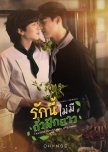
It is a story in the tone of a romantic comedy that unfolds through the eyes of Plawan, a young man eager to find his place in the world, influencer in financial trouble and model lover of pad kaprao, a typical Thai dish, which, for one high sum of money, he must fulfill the secret mission of infiltrating the competitors of a cooking contest to become the successor of the restaurant owner, a serious and severe-looking chef, with great culinary skills, who will make the protagonist go crazy with love when he smells the aroma of sautéed basil that permeates his clothes and his body.
On his journey, Plawan will discover his first love, while exposing himself to harsh criticism from the chef for not having culinary skills, and tries to pretend to be the person he is not to fulfill a hidden agenda: win the contest and then give the restaurant to Methas (Benz Atthanin Thaninpanuvivat), a rich businessman who dreams of destroying the premises and turning the place into a shopping center area.
Meeting the chef will shake up the life of this young man who discovers, among plates, pans, stoves and a basil patch on the restaurant's roof, a melting pot of unique and diverse characters, who will become part of his chosen family.
For its part, the rigid and perfect world of the perfectionist Oab, a strict chef and not prone to banality and nonsense, is turned upside down from the moment Plawan bursts into his life. This is how you will also find out your true sexual preferences.
This is a solid project, since on the one hand there is the web novel "No Beans and Love Me More", by Ninepinta, which I think tells a beautiful love story, and on the other hand there is the direction of Nui Suttasit, a great director who has participated in several LGBT+ projects, such as the famous anthology 'Club Friday', since his debut behind the camera in 2012, precisely with the film of the same name.
In 'This Love Doesn't Have Long Beans', Nui Suttasit preserves several of the distinctive features of her authorial work, while constructing a story worthy of her legacy. The series resembles other works in the career of prolific creators, while presenting echoes of their previous filmography.
Perhaps the most pronounced similarity is with 'Bangkok Love Stories 2: Innocence', his most popular and well-known series in the West, due to the dramatic structure and the movement towards a fantasy and dream world starring homosexual or presumably heterosexual characters who discover their true nature. sexuality.
However, the reverberations are not limited to this, and the director's usual concerns are added to the series' discourse, such as self-discovery, acceptance, coming out, multiple partners, friendship, family, best friend relationships, love triangles, work environment, workplace romance, heir male protagonists, social networks, cooking, multiple courses of food, the clash between tradition and modernity, usually from the adaptation of novels, another distinctive feature of his work.
All added to the unmistakable sound of the soundtrack composed by Chachamon Thunyaon, and which includes titles such as "Stop", "You Fill My Heart" and "Let Me Say".
The director, who throughout his career has had very diverse characters, in the case of the series wanted to approach it with respect and a gender perspective, with a lot of love and without caricaturing. Knowing that each work has part of its creator, and that it is a famous novel that he would adapt, he foresaw at all times needing the series to appeal to a large audience, which is why it is filmed in an attractive way and with a lot of music and excellent photography to show an attractive story for the characters.
The screenwriters have extensive experience in the BL universe, writing scripts that would later be brought to the screen. 'Pit Babe' is one of the series written by Kanokphan Ornrattanasakul ('Catch Me Baby', 'Dead Friend Forever – DFF''); Issaraporn Kuntisuk (Dead Friend Forever – DFF', 'Be My Favorite'), and Fleur Irene Insot, who now join forces again not only to design the characters, build conflicts and a dramatic progression of the series 'This Love Doesn't Have Long Beans', but also to return to the public some of the members of that 2023 drama starring Pavel Naret Promphaopun and Pooh Krittin Kitjaruwannakul.
The way of playing with the nostalgia and tenderness of first love is a success in the narrative line that is created, showing adequate doses of realism and viscerality. The director is correct in the construction of the script and complies with what was planned, an element that could end up attracting the public after viewing it.
The cast is made up of talented actors and actresses, several of them already with experience playing LGBT+ characters.
Pon Thanapon Aiemkumchai stars in the series as Plawan, one of the actors who already have experience in productions of this theme and genre. The actor made his acting debut playing Bay, the main character of the BL series 'The Moment', in 2020, which was followed by its second part: 'The Moment Since'. He would then participate in the two seasons of 'Gen Y', in 'Make a Wish', and in the drama 'Pit Babe', in 2023.
There, his character, Jeff, explores his sexuality alongside Alan, the owner of the race track and sports car repair shop, a character played by Sailub Hemmawich Kwanamphaiphan, an actor who in 'This Love Doesn't Have Long Beans' assumes the role of Oab. This actor is natural in front of the camera, which creates a hypnotic effect on the viewer. Furthermore, he knows how to perfectly use the intensity of expressiveness, which makes him one of the best performances in Thai drama.
Thanapon Aiemkumchai draws a protagonist in whom an interesting emotional web is woven once he discovers his sexuality. His role in the series is fundamental, since the greatest dramatic burden falls on him. In this way, the actor takes advantage of non-verbal expressiveness, showing the chiaroscuros that run through the nature of his character.
In addition, he has that sordid touch for having agreed to compete in a contest for money, knowing in advance that Oab expels from the event anyone committed to whom he wishes to use the restaurant grounds for something so foreign to his dreams. This gives his character some edges, which are highlighted and developed in the script.
In a way, his character can remember other performances he has given throughout his career, which is why it gives a remarkable result.
In the midst of their personal experiences, Auto (Lee Asre Watthanayakul), Pansib (Tiger Tanawat Hudchaleelaha), and Kluea (Aon Kasama Khamtanit), the other three finalist competitors, experience the friendship and love of the protagonists. The youthful cast offers freshness and vitality to the series.
Nubnueng (Michael Kiettisak Vatanavitsakul), Oab's friend, will always be at his side with the most accurate advice, while Khaosuay (Belle Jiratchaya Kittavornsakul), the chef's ex-girlfriend, will return from abroad and test the budding romance between Plawan and Oab.
Separate paragraph for two attractive actors with great potential: Garfield Pantach Kankham, who takes on the role of JJ, a young physiotherapist friend of Plawan, and Benz Atthanin Thaninpanuvivat, the actor who plays Methas. Both will make up a beautiful couple in the process of being built when the first has to go to treat a sprained ankle suffered by the rich businessman. Both are ready to become a ship that stars in numerous BL series.
Garfield, who in 'Pit Babe' takes on the role of Kenta, is remembered for his debut as a protagonist in the 2017 series 'D'Cup', also with an LGBT+ theme, as well as his role as Top in 'Dew the Movie', from 2019, a feature film in which he plays Lew's boyfriend. Fans of this actor remember him for his work in the acclaimed series 'I Promised You the Moon'.
For his part, Benz Atthanin Thaninpanuvivat, who played Kim in 'Pit Babe', is followed by a large audience after his leading role as Praram (Pralak) in the BL drama 'En of Love: This Is Love Story' , from 2020, without forgetting that his acting debut takes place in another series of this genre, 'Theory of Love', the popular audiovisual of 2019, starring Gun Atthaphan Phunsawat and Off Jumpol Adulkittiporn.
Ingenious, elegant, the series shows great care in each scene, allowing us to easily forget some of its inevitable clichés.
The technical realization follows the patterns of the BL genre series, but from a dynamic that has no intention of innovating, but rather of offering a visually attractive product. The photographic direction does not make any mistakes and there is creativity and visual quality in this section. The artistic direction stands out for its successes.
Another audiovisual parameter that stands out is the use of color. A sensitivity can be seen in the choice of the visual palette and what it conveys to the public. On the other hand, the editing of the series follows a conventional system, supported by flashbacks, which has a remarkable finish.
In summary, 'This Love Doesn't Have Long Beans' is a series that starts from an interesting base with potential, and gains in intensity as the episodes go by and delves deeper into the narrative construction of its story.
Was this review helpful to you?

It's not so much a story of coming of age, but rather one of sensitivity
It happens without warning. It lands on the beardless and scrawny body of a young Nie Xiao Zhi, who wanders through the gardens and lytchee fields of his parents' family plantation on one of the islands of Zhejiang, a province in eastern China, and seeps into his veins, possessing him and leaving him without reserve with the force of an electric shock.Unequivocal and inescapable, first love unfolds on the screen of 'Secrets Happened on the Litchi Island' ('Li Zhi Shu Xia Re Lie Dao') just a few minutes from its start, but it permeates the 120 minutes divided into seven episodes of approximately 15 minutes each, a series that shakes off the prejudices and common obstacles of homosexuality in its historical and social context, to tell a story of friendship, love, and admiration in all its splendor. In my case, it was a rediscovery of sexual awakening that caught me off guard despite the media hype and invaded me like summer days for a teenager, where the only goal is calm, carefree enjoyment.
'Secrets Happened on the Litchi Island' gives us a sensational romance starring one of the couples of the year: Liu Yihe and Hu Yi Chen, who, personally, I like as much as the duo formed by New and Pide, the two actors who played Fou4Mod and Chian in that order, in 'GelBoys', and Ahn Ji Ho and Lee Sang Jun, who gave life to Lee Hee Su and Kim Seung Won, respectively, in 'Heesu in Class 2'. Both shine independently, but when they share the scene the chemistry is explosive. The first thing that caught my attention was the beautiful filmography, the exquisite cinematography, the symbolism, a language steeped in that mixture of Confucianism, Taoism, and Buddhism, known as Humanism, the key to Chinese philosophy and the cultural thought of that gigantic country, from the most ancient times to the present day, and the aesthetics that immerse you in history.
SETTINGS AND FILMING LOCATIONS
Although the camera also rolls in Guangdong, Moganshan, and the Dongguan Jianyuzhou Cultural Park, most of the scenes were filmed in Zhejiang, with its rural interior, urban centers along the East China Sea, and the picturesque West Lake, where the labyrinth of islands, islets, gardens, stone bridges, and historical sites act as a winding guide for the protagonists through the secrets that await them in a summer that could very well have been the last or be the next.
Xiao Zhi arrives at this place, fulfilling his promise to Xiao Long, his older brother, to participate in the summer camp as a teaching assistant.
The meeting place and boiling love are a modern building surrounded by ruins that serve as a shelter where children play during summer vacation, the dining room, the outdoor garden that serves both as a recreation and play area and as a place where they will have snacks and lunch, and the lychee plantations, which will later be key in several scenes that must already be part of the history of Chinese and, why not, global LGBT+ dramas.
But of all of them, there are three places that inspire the most tenderness and intrigue in me: Nie Xiaozhi's room, which he will share with the boy who will steal his heart and which gives us clues about the younger Xiao's complex character; the bathroom where our main character suffers from embarrassment with his naked body submerged in the bathtub, when the person he has fallen in love with, without asking permission, undresses in front of him to shower as if it were the most normal thing in the world; and the pool where this other young man's swimsuits will drip with the remains of each dive before they are surprised by the sudden rain.
A TRIBUTE TO DAVID HOCKNEY
The paintings the protagonists discuss are from the work of British painter, designer, set designer, printer, and photographer David Hockney. This alone is enough to reveal the character of two young university students with unusual culture and interests.
The effect is as precious as it is effective: it gives the impression that the parents of the shy, artistic, and always deep in thought Xiao Zhi (whom we will never see) have built a summer retreat just so their youngest son can meet and fall in love with their eldest son's best friend.
Undoubtedly, several scenes in the series pay homage to David Hockney, famous for his obsession with pools, rain, and water. The scenes of the young man swimming underwater toward a standing figure in a luxurious garden are a reference to his work "A Portrait of an Artist (Pool with Two Figures)", whose sale established the painter, born in 1937, as the most expensive living artist in the world. We can find references to two other Hockney works in "Secrets Happened on the Litchi Island". I'm referring to "We Two Boys Together Clinging" and "Domestic Scene, Los Angeles". In the latter, while one of the men is bathing, the other rubs his back... or perhaps, out of embarrassment, prefers to turn his back on him.
THE SLOW JOURNEY OF DISCOVERY, FRIENDSHIP, AND LOVE
This context, which already captivates even the most skeptical viewer, discreetly witnesses the first encounter between Xiao Zhi and his dark object of desire. He answers to the name of Chen Li, a handsome, charming, carefree, and curious university student who visits Xiao Long, the older brother of the Xiao family, during the summer weeks to help him with his work at the summer camp. Xiao Zhi shares not only his room and bathroom with him.
The plot unfolds primarily from Xiao Zhi's point of view. The camera follows him impatiently to show what he sees, his dreams and erotic desires.
After the subtle and unfortunate ambient introduction (as Xiao Zhi's cell phone will break as soon as it touches the island), the two lull us on a slow journey of discovery, friendship, connection, and love.
The love between Xiao Zhi and Chen Li begins slowly; They circle around each other, slowly closing the gap, allowing the initial indifference to disguise their interest to finally disappear. Although both have no experience in love, they are imbued with a deep feeling that leads them to shake up their lives.
Xiao Zhi ends up being much better at that game; he's assertive, self-confident, and able to stand up to his homophobic college classmates. He grows increasingly curious about his brother's friend. Chen Li still has to navigate the path of discovery and acceptance, which ultimately leads him to hurt the boy he loves and himself.
The series is very good at capturing the lazy ebb and flow of summer days, with the drowsiness and exposed body parts covered in blue and red garments (as well as paintings on the walls and various objects in those colors), which become a new symbol to identify the two protagonists.
Everyone seems to be moving in slow motion at the summer camp, with the exception perhaps of the children, who never miss a chance to play. Xiao Zhi's quiet hesitation balances the playful charm and carefree confidence of the boy she's fallen in love with. This languor fits well with the rhythm of Chen Li and Xiao Zhi's relationship, which evolves over meals, bicycle rides, playing under trees, climbing to the top of bushes to pick ripe lychee fruit, sitting on the stone structures surrounding the pool, and conversations laden with lyricism, symbolism, art and philosophy, which actually serve as an overture to the romance.
The first download occurs when Chen Li, somewhat taller and more muscular, presses his fingers into Xiao Zhi's back, neck, and ears, under the guise of applying mosquito repellent.
I can't remember the last time a scene managed to raise the hairs on my neck in just a second, so full of the intended stimulation yet so worried about the outcome of that touch.
In the friendship forged by our two protagonists, there is no hypocrisy; just two people learning to love, with their fears of accepting themselves, with doubts about whether the other loves them, giving way to mistakes and misunderstandings, but ultimately with the possibility of understanding who they are, what they desire, and with it, the value of forgiveness and commitment.
THE TIMELINE
The first five episodes tell us about the early stage of the relationship between Xiao Zhi and Chen Li, in which everything is pure (and at times extreme) desire on the part of the younger of the two. Chen Li seems willing to distance himself from his fears of coming out as gay. It's symbolic how the series shows that the lychee trees weren't filled with fruit while they were at summer camp, indicating that Chen Li wasn't yet ready to embrace his gender identity. And it is in this transition of observer that Xiao Zhi soon encounters passion.
Hu Yi Chen's performance as Xiao Zhi, in this first part of the series, is unsurpassed. Because he says little, and the few words he uses are rudimentary, but his inner self experiences moments of exuberant brilliance. He is falling in love. That's why the young actor must express everything with his gaze, which is emerging into life, into new experiences, dethroning the familiar to land with bewilderment (but certain) in the land of novelty.
Then, a time jump occurs. We leave the island with the protagonists, but they will walk their separate ways for three more years. We first notice the change not in Xiao Zhi's tears of frustration and bitterness, but in the shift in the color palette. It's no longer as bright and ethereal as it was at the beginning of the series. With distance, the shadows and chiaroscuros increase.
The non-linear timeline adds depth and allows for key memories and emotions to be revealed in layers. It's a structure that, while confusing for some viewers at first, ultimately pays off.
Xiao Long isn't the older brother any gay boy would wish for upon coming out, as he tries to separate the boys under the guise of protecting them, or perhaps out of ignorance of the feelings his brother has stirred in his best friend. In any case, the series' approach seeks to reflect the obstacles many queer youth face in their process of self-acceptance and discovery, when, in many cases, their own loved ones attack them. However, there will be no homophobia, nor will there be rejection of the brother or friend for their sexual identity.
The series lets the use of time work on many levels: to build the ever-deepening bond between the two protagonists, to co-opt the viewer step by step into the story, and so that when the two merge in a kiss and embrace toward the end, what Aristotle called catharsis occurs: giving viewers the chance to redeem their own passions by seeing them represented on screen.
LYRICISM, SYMBOLISM, MAGIC
'Secrets Happened on the Litchi Island' shows all the escapes and encounters; Xiao Zhi's advances and Chen Li's steps back as each moves in circles ever closer to the other. The two don't always say (can't or won't) what they really think. Then the director of the series speaks for them by making their desire evident in the cheerful countryside, in the greenery of the lychee plantation, in the bustle of the summer camp, in the water that one dries from the other's body, in the precious liquid that flows from the shower, falls from the sky in the form of rain, drips from the trees in the middle of a downpour, or in one of the two young people swimming in the pool while the other watches ecstatically.
The lyricism is seductive, like Xiao Zhi, fragile and joyful. 'Secrets Happened on the Litchi Island' isn't so much a coming-of-age story, with the loss and diminished innocence that entails, but rather a story about sensitivity. In that way, it's more about the creation of a new man who, as the plot suggests, is liberated by a pleasure that simultaneously establishes a sexual identity.
There are two scenes, among the best in world queer cinema. One is the dream. Xiao Zhi and Chen Li run together, hand in hand. They kiss passionately. The darkness of the night is broken several times by the light from their pursuers' flashlights. When the darkness is broken, the two young people, confused and fearful, are forced to separate. Then, they hold hands again, run, flee, show their triumphant love… This is an unequivocal message about the need to hide that many queer youth are forced to face under the prejudiced gaze of society.
The other scene is the passionate kiss at the end. A kiss that stops the world to create a new one, an unforgettable kiss, a kiss that is the prelude to something more. A kiss that makes you salivate and yearn to experience something like this. A kiss not from the heart, but from something more powerful: instinct. Suffice it to say that by then, the lychee plants had blossomed, and the boys were sending each other the fruits. So much symbolism in a small cardboard box!
All that remains is to suggest you watch the bonus episodes, which reflect small snippets of the couple's life after they get together.
Was this review helpful to you?

The ending of 'Lost in the Wood' isn't the problem. Your need for a happy ending is.
This is one of those series that usually generates consensus: a masterpiece, even though the two protagonists don't end up together: a boy who loves deeply, and is loved in return, and yet decides to leave in pursuit of his dreams. A choice shaped by his personal history, duty, desire... and by everything that comes with being a young man who, from a very early age, has been preparing to obtain a scholarship and go to Japan to train as a professional. I'd like to show the layers I find beneath that final decision. Because love doesn't always win. Nor does it need to.It's clear that many viewers are upset that the series doesn't have a happy ending. And not just any ending, but the happy ending we all "want to see". That Fifa, the cheerful and outgoing 18-year-old, gives up his dreams of studying Art and Creative Design in Japan and decides to stay at Hem's cabin, hopping on his motorcycle to watch the sunsets together, and continue delivering food to the locals. But no. He doesn't. And that, for many, seems unforgivable.
I understand that the obsession with the "happy ending" goes way back. It's instilled in us from childhood with stories, movies, songs. And yes, it's comforting. But TV shows, when they get serious, sometimes remind us that life doesn't always end well, that there are choices that hurt, loves that can't be, and goodbyes that don't always bring us back together. And that, precisely, is what the ending of 'Lost in the Wood' does: it grabs you inside, squeezes your heart, and leaves you thinking. Not about what happens, but about what doesn't happen. Sad endings serve that purpose: to make us look at the world without sugarcoating.
Some people claim that "happy endings are unfinished stories", but it's true that there's a certain honesty in those outcomes that don't try to sugarcoat reality. We'd all prefer to remember the image of Sarawat and Tine in '2gether' or that of Doctor Bun and Tutor Tan in 'Manner of Death', but there's no denying that Wang and Intawut's final image in '180 Degree Longitude Passes Through Us' has a lot of truth, at least a plausible truth. In this latest series, as in 'Lost in the Wood', greatness lies in surrender, realism lies in not consummating. In letting love hang suspended, untouched, like a photograph left untouched lest it spoil.
In 'Lost in the Wood,' the story is over. Not as we would like, but perhaps as it should have been. Fifa —the character who has the power to bring back memories of a GelBoys with his black nail polish and muddy white sneakers— ends up saying goodbye to the family-owned elephant farm and sanctuary, where he agreed to go for three months, seeing it as a good opportunity to prove he's ready for college dorm life in a distant country. He says goodbye to the elephants and the people he's grown to love in such a short time, because he knows what that entails. Because he doesn't live in a fantasy. Because his world wouldn't be complete if he didn't make his dreams come true.
However, seeing Fifa's decision as pure resignation is, to say the least, reductionist. We're not dealing with a superhero driven by duty, but with a boy who chooses to leave. And that's the point.
One of the keys lies in the idea of preserving the memory. Fifa knows that the time he shared with Hem in the shade of the forest is unforgettable. That it was probably the most luminous thing that has ever happened to he. But he also knows that if he stays with him, that perfect love could be corrupted. Turn into another routine. Another disappointment. He'll constantly wonder about her shattered dreams, about what would have happened «if I...». So he decides to freeze it in time. Make it eternal. Keep it like a secret gem.
For his part, Hem is not indifferent to the harm he would cause if he declared his love, if he demanded that Fifa stay by his side. Therefore, although it pains us, his decision does not imply cowardice. It is not an absence of love. It is a consciousness.
Jeab Napassarin Prompila, the director, shows this with elegance: the shots focused on Fifa's face, he broken gaze, the tension in him hands as he grabs the guitar and throws it over the shoulder before closing the door behind he, the tears streaming down he face as he leaves Hem the mask as a souvenir, the psychological torture he suffers when, in an act of farewell and, why not, a declaration of love, he brings he lips close to Hem's to offer him a kiss, the only kiss they will both experience, while he lover pretends to sleep... everything points to a brutal internal struggle.
There is no one forcing him to leave. There is no blackmail from any of his family members. There are unspoken words, unspoken declarations... There is a silence full of meaning. And a decision that hurts.
I insist, we may disagree with Fifa, we may think he should stay in Hem's arms, we may yell at him for abandoning his idea of traveling to Japan to follow his dreams, we may even, why not, get angry at him; but the series never says that this is the right decision; it only says that it's the one our main character made.
And, of course, we can't ask Hem to run after him, to take the next flight to Tokyo, to renounce the respect and admiration he earned in his work. That would be disrespecting the decision of a young man torn between two loves: romantic and professional, and choosing, however he can. The series doesn't judge him or absolve him. It simply follows his steps. And that makes it more real. Because there's no clear lesson.
What 'Lost in the Wood' does stealthily, but effectively, is blowing up the rules of the romance game on television. Because yes, we're dealing with a story of obvious love, even if it's not declared... but there's no happy ending, no kiss in the rain, no two boys watching the rainbow every rainy sunset in the mountains, no promise of "we'll see each other again". What there is is a renunciation. And not for lack of love.
BL is a genre that usually prizes passion above all else. This story opts for the exact opposite: containment... containment and tension, maintaining it all until the end credits. And that, in itself, is transgressive. Because there's nothing rarer in Boys' Love stories than a young man in love who decides not to act in the name of desire, in the name of love.
And the best part is that the series doesn't do it with a trick. There's no surprising plot twist or tear-jerking final speech. The transgression lies in its simplicity: two people who meet, transform... and separate. Because life is like that. Because not everything is rosy. Because there isn't always a second chance.
Instead of offering an escapist fantasy, 'Lost in the Wood' settles into an uncomfortable reality. A relationship where one of the boys decides to reject his dreams and the other demands that he do so in the name of love isn't always possible, and where passion would have to confront every day the eternal doubt of what would have happened to their lives if FIFA had stayed, if he hadn't set out to make his dreams come true, if Hem had urged him to give up everything he'd achieved with effort and talent. Subversion doesn't come in the form of a dramatic breakup, but rather a painful acceptance.
'Lost in the Wood' doesn't need sermons or morals. What it offers is something more uncomfortable and, for that very reason, more valuable: a love story that never comes to fruition, a boy who loves deeply but decides to pursue his dream, while the other respects and accepts his decision.
I believe that, even with minimally serious analysis, we can't criticize series simply because they don't end the way we want them to. It's one thing to question the decisions of directors, producers, and screenwriters —that editing that ends up confusing the audience, that script that fails to develop the characters, that pacing that doesn't fit with the narrative, that music so loud it prevents us from hearing the dialogue— and quite another to reproach them for not following the path "you" wanted them to follow.
I'm one of those who oppose telegraphed series, chewed over and explained to the point of exhaustion. I wish that as viewers, we would make an effort to see all the nuances and layers that complex series have. It's easy to analyze the mechanism, but harder to explain why this series is so deeply moving: why Ton Tonhon Tantivejakul and Arm Varot Makaduangkeo have turned it into a wonderful television love story, playing Fifa and Hem, respectively.
The emotional high point of 'Lost in the Wood' is the relinquishment, when Fifa comes down the stairs of the treehouse where she's lived with Hem and, with tears in her eyes, acknowledges that saying goodbye to the people she cares about isn't among her virtues. This moment, and not the moment when the characters first look into each other's eyes and discover their inner selves, is the passionate climax of the series.
'Lost in the Wood' isn't about love, but about an idea. The series begins with the information that two boys met and fell in love, but decided not to spend the rest of their lives together. The implication is: had they acted on their desire, they wouldn't have deserved such love.
Almost everyone knows the story by now. The novel of the same name, written by theneoclassic, adapted by Kesiny Pontam, has been a huge bestseller both in Thailand and around the world. Its captivating story offers the fantasy of a "lost bunny" who believes his perfect life is ruined when he has to fulfill family obligations. While waiting for the 129,600 minutes of his life away from his routine in the big city to end, and waiting for confirmation of whether or not he has won a scholarship, he witnesses how a "ferocious lion", or rather a virile stranger with a mustache that gives him a certain air of class, wisdom, authority, maturity, and power, waits for him with open arms at the foot of a tree to prevent him from falling, while he tries to get an internet connection to send an urgent message.
SLOW-SMOTHERED LOVE
Fifa and Hem's relationship isn't one of perfect beginnings or lightning-fast love at first sight; it's not one of hasty declarations or one in which an exchange of glances marks the beginning of a romance as frenetic as the world we inhabit, where there's no time for stumbles, doubts, or reflection, and where "I love yous" are thrown around with absolute ease, like sentimental confetti.
The protagonists' love is one of those that simmer over a slow fire, where emotional intimacy is based on building a genuine emotional connection that begins in friendship, in which both come to feel seen, heard, and understood.
It's as if the two have agreed on the rhythm of the relationship, where shared moments (even some of them filled with animosity and arguments), deep conversations, and challenges that they overcome together prevail. And it couldn't be any other way.
First, both partners are aware of the age difference, that one has a certain emotional maturity and life experiences, while the other lacks.
Therefore, the success of the relationship will depend on the extent to which the two share similar values, beliefs, and goals; support each other in achieving personal goals; foster commitment, trust, and intimacy in the relationship; and resolve problems constructively.
Secondly, both are aware of the culture shock they face. One is so rural, the other so urban. One is accustomed to the rigors of work and life in a rural area, without electricity or internet access, and the other, with a supermarket five minutes from home, now needing to change their lifestyle and cultural context for extremely different ones.
Thirdly, both are aware that Fifa is only planning to be there for three months, so it would be difficult for them to accept the idea of establishing a lasting relationship.
And finally, both are aware that they have so little in common that they never feel lonelier than when they are together.
How then can a couple make it work, when they have different lifestyles, unequal hobbies, incompatible life plans, such disparate ideas about love and the type of relationship they want...
IN CONCLUSION
Four key points to summarize this very funny, beautiful, and hopeful series: counting time, as Fifa usually does, 322 minutes of love under the treetops in the middle of summer, and two leading stars who bring great chemistry to the series. And a fifth, Nammon's farewell as a supporting actor, before we can see him as the lead in the highly anticipated "Pass to Your Voice" and "Restart," expected to be released in 2025.
I conclude this review, convinced that, like FIFA, once you enter the forest, you'll never be the same when you return...
Was this review helpful to you?

This review may contain spoilers
Nam Yi and Jae Min's love and happiness can only be defeated by a single monster
Memorable performances, a perfect script and direction, a beautiful soundtrack, to which are added addictive kisses and a palpable chemistry that transcends the screen, are the main characteristics of the South Korean miniseries 'Blue Boys' (블루보이즈/Beulru Boijeu), also known as 'The Guy Inside Me', a demonstration that you don't need a big budget or long and numerous episodes to tell a moving story.In just four chapters each lasting about 10 minutes on average, the miniseries, starring Lee Hoo Rim in the role of Kim Nam Yi, and Choi Seung in the role of Choi Jae Min, addresses topics such as the process of finding the true love, communication, understanding through experiences, homophobia, social class differences, friendship, job search, meeting friends, among others.
Lovers of LGBTIQ+ themed stories will feel at ease with the interactions of the two actors, who very well enhance the value of the entire story with their tender and captivating chemistry.
After a one-night stand, the outgoing and self-confident Nam Yi and the shy and insecure Jae Min, two former high school classmates who meet again three years after graduation, have developed feelings for each other and dream with a life together.
More open to demonstrations of affection and love in public, Nam Yi is not afraid to take Jae Min's hand and kiss him in the streets, but the latter boy will resist, as he fears the rejection of a conservative society, like that of Korea from the South, with strong patriarchal and heteronormative traditions, where homosexuals have difficulties fitting in.
After overcoming conflicts and misunderstandings, the love and happiness of Nam Yi and Jae Min can only be defeated by a single monster: the fear that South Koreans experience of being exposed as homosexuals, the fear of being excluded and discriminated against.
So Ri (Lee Soo Ha), a girl jealous of Jae Min for not having been able to conquer Nam Yi, will be in charge of inoculating Jae Min with the poison: "If a man dates another man and there are rumors about it, can you continue working in the company as if nothing had happened?" Nam Yi wouldn't have these problems because he comes from a wealthy family, but..."what would happen to you?", Ri will remind him.
In this way, the happy ending everyone expected does not come. Reality prevails.
And so the viewers will understand the true objective of 'Blue Boys', which is none other than to make a criticism, very intelligent, very subtle, of the discrimination that exists in South Korea against LGBTIQ+ people, since the members of said community face legal challenges and discrimination not experienced by the rest of South Koreans.
Gay sexual activity is legal as long as it takes place indoors, but Gay Marriage or Equal Marriage or other forms of legal partnership are not available to same-sex couples.
I allow myself spoilers to explain my point of view.
Was this review helpful to you?

In the things that pass, for those that stay
Kim Dong Ah is a teenager who seems to have been born frozen in the cold winter, and becomes obsessed with things that have not changed and are static, as if frozen, after his parents' divorce. His mother's love, which he thought would last forever, changed, and that change had a great impact not only on Dong Ah's family but also on his own life. With his mother gone, his father, wounded, became violent.In order not to hurt himself and to avoid hurting others, Dong Ah thought that it was best not to change and not let anyone into his life, for fear that one day this person would decide, like his mother, to abandon him.
With his large round eyes, poorly defined face and dark, bushy eyebrows, he has a deep voice and a dry expression and humor. He has had to leave school.
But suddenly, Song Yeon Woo comes into his life, a young man, also 18 years old, with a very warm character, who finds it natural to smile and is friendly towards others. Yeon Woo always approaches Dong Ah with a smile, and little by little he breaks the wall of sadness and coldness that he has built around him. Who is this person who seems to show everything about himself without hiding anything, but whose true feelings Dong Ah is unaware of? How is it possible that this boy, so different from him and as warm as spring, can make him feel unknown emotions? Is Yeon Woo a figment of Dong Ah's imagination?
With this interesting and intensely powerful story, Kim Yeo-rim, the writer and director of the short film 'The Winter Child', exposes how people, emotions and relationships pass over time. Time melts the frozen and freezes the melted. But there are things that human beings need to hold on to so that they do not escape.
In the director's own words, the film sends a message of comfort to those who are suffering in the midst of numerous changes, to those who hold on to something that may be painful: it is okay to let go and move on. It is necessary that painful things pass by, so that those that give us happiness and warmth remain forever, like the fire at the end of the short, in contrast to the ice/winter motifs that are maintained in most of the audiovisual.
Starring Hyun Woo Ahn and Woo Joo Hwang in the leading roles, and the cinematography by Gyu-ri Lee and Park Jeong-hyeon, the short film captivates the viewer.
'The Winter Child' seems to generate a lot of opinions among contributors to this forum. Of course, this is a film in which there is no promise of a vision of gay life, as most viewers expect when reading the labels "Gay Male Lead" and then "LGBT+." The film takes an introspective view of the soul of a young man. The movie has a way of staying with us even when it's over.
Kim Yeo-rim makes Dong Ah one of the most complex characters in recent films. This is a young man who is difficult to understand on a simple level.
The image of Yeon Woo melting Dong Ah's icy exterior and her ironclad belief that she can't change anything in her life will haunt me forever. Yeon Woo is the person who comes into his life to help him come out of his shell.
However, the ending may leave many viewers with more questions than answers: Is returning to the same beginning a good change? Is it preferable to stay in one place or seek changes that allow us to free ourselves from what causes us pain? Or instead, is it preferable to change by killing your previous self? Could Yeon Woo be a figment of Dong Ah's imagination? Could it be your inner voice that refuses to remain still, unchanging, unchanged?
Although 'The Winter Child' will divide opinions, the film deserves to be seen due to the complexity and care that the director puts into the story, and the excellent performances of its protagonists.
Was this review helpful to you?

Yes, we already saw him lead the cast of 'Love in The Air' (2022), but there they were the secondary couple, while in 'Wedding Plan' (2023) they played roles of little weight in the story and little presentation on screen. On both occasions they left us wanting more.
The opportunity to show off their acting skills, their beautiful faces and physical attributes comes from Ne Neti Suwanjinda, the director who has always chosen them to put them in front of the camera since the entertainment industry, very intelligently and correctly, paired them, to tell us the love story between Tongrak, a writer looking for inspiration for his most recent novel, and Mahasamut, a resident of an island in the south of Thailand who was tasked with taking care of the visitor.
In the first two episodes of the series (those that have been viewed for this review), the protagonists will find themselves trapped in a stormy, fiery and sensual relationship full of sex and endless days and nights, where love will set the course of their lives new lives while both fight to achieve their respective dreams.
'Love Sea' is a new-adult dramatic and romantic series with an aspirational LGBTIQ+ theme narrated in a dynamic, vibrant way and with a realistic treatment of the most current youth conflicts, all accompanied by beautiful and cheerful music and exquisite cinematography.
Based on the novel of the same name by prolific BL MAME screenwriter and director Orawan Vichayawannakul, whom Net called on now as on other occasions, the series tells the spectacular and improbable story of Tongrak (played by Peat) and Mut (role assumed by Fort), two young dreamers with nothing in common, whose destinies cross unexpectedly.
Tongrak has it all, a good financial position and enjoys success after publishing several novels, some of them brought to television as BL series. But despite this, he lives in a state of constant frustration caused by several unresolved problems in his life and by currently suffering from writer's block. Furthermore, he does not believe in love, considering that it only lives in the imagination.
The journey of Peat's character is the most interesting one made, since in his contact with Mut we can see his reproach for being ashamed of his past and the wounds of his soul that have yet to heal. Thus, the creation of Tongrak and its motivations are very interesting and gain the public's favor.
For his part, Mut is a humble young man, who carries the trauma caused by having been expelled from home by his father at the age of 15 and, despite having to resort to pretending about himself to others in order to make his way in life and get a roof over his head and a plate of food, he has become a leader of the locals and the force behind the local people.
Each one, in their own way, faces an existential crisis that can lead them to failure, to lose what they have achieved so far, so they have no choice but to join forces and embark on the same path that will lead them to know each other better and perhaps...
United by destiny, when their lives intersect, they embark on a transformative journey together that represents both an escape from their complicated presents and traumatic pasts and a search for love, happiness and their place in the world. These are questions that almost all of us have experienced, or on which almost all of us have reflected, at some point in our lives. Especially in our twenties, which is the age that Mut and Tongrak are around, and the time when doubts about our present and our future are most crowded.
For her part, MAME cannot hide her happiness. Although at first his style left us with some red flags, such as 'Love By Chance' or 'TharnType', today he seems to have found his voice by giving an evolution to his stories to keep fans of the genre happy, especially with that HOT touch that all BL fans love.
The ForthPeak junction, a visual and spiritual gift for so many viewers around the world, would give good returns to the creators of the series, especially through a drama that has its main strength in the clarity with which this story is conceived on paper, the pulse with which the direction channels them through the setting on screen, and the way the two actors defend it, in characters with characterological richness and infinite nuances that only they know how to add in their assumption.
One of the great things about 'Love Sea', and one that the production team cared a lot about, was showing the paradisiacal environment and the natural settings that serve as the setting for the erotic-existential journey of two young people in love and that provide truth and essence, because if there is a place that wins by a landslide, it is that southern Thai island, the meeting place of the protagonists and where their romance takes place. Having been able to record in that place is one of the great achievements of the drama, since it is integrated in an outstanding way into its DNA.
'Love Sea' effectively combines the conventions of the romantic genre and a fresh visuality by placing the narrative heroes in a natural and paradisiacal environment, which also takes center stage, to which is added the bill of the presentation and farewell, and the curtains of Transition.
So far, the performance of actresses and actors has been, in general, high, and the combination of young figures with other already established ones was among the most successful. It was especially appreciated to once again enjoy Forth Kashane Pichetsopon, Ja Phachara Suansri, Boss Chaikamon Sermsongwittaya, Noeul Nuttarat Tangwai, An Oliver Poupart, Jinjuta Rujirakumthonchai Liu, Ivy Phattaree Tassananakajit and Chanya Amarit Duval. Kevin Tray will provide his voice as Conner.
The best thing about the MAME-Net binomial's staging lies in its way of capturing the love and physical contact between Mut and Tongrak, materialized in the hugs, kisses and sex they share in different situations: at the bottom of the ocean , on board a moving yacht or during their sexual encounters both on the sand of the beach and in the resort room, where the eyes, lips, hands... the entire body of one travels over the body of the other and vice versa. The latent desire between them is subtly filmed through gestures and glances, which communicate everything that is not expressed verbally. But how much is there left to express when in one way or another everything has been said... or almost everything?
The direction knows how to give credibility to the sex scenes and the dialogues exhibit enough youthful nihilism and naturally.
Fort and Peat consolidate themselves as a ship with great aspirations to continue being one of the most anticipated by the public, and as two actors with attitudes in abundance after 'Wedding Plan' or especially 'Love in the Air'. Their respective Mut and Tongrak work from the beginning because of their talent and also because their characters' status as people called to surpass themselves gives them the strength to stand out dramatically.
Was this review helpful to you?

My "guilty pleasure": why do I need 'Sangmin Dinneaw'?
That "guilty pleasure" thing is something I've never liked. Mainly, because any movie or series that makes me have a good time being guilty has very little. However, sometimes any film or television product that manages to make me forget reality for a while is welcome.We all have that little guilty pleasure when it comes to series. That series that you love to watch even though it doesn't fit into your canons of taste. You know you shouldn't watch it either because it's bad or because your best friend told you to watch both seasons of 'To My Star' by Hwang Da Seul at once, or to repeat 'The On1y One', the LGBT+ television gem by Taiwanese filmmaker Liu Kuang Hui, but even so, you decide to continue with the series and enjoy it like there was no tomorrow, consuming episode after episode.
Some series have simply been the best accompaniment to disconnect from everyday life, and others have captured me because of the topic they deal with.
For this very reason 'Sangmin Dinneaw' has been one of my guilty pleasures during the evenings of these last Sundays, when a broken ankle has me tied to the bed.
So to combat the impossibility of going out, I ended up getting hooked on the Thai romantic comedy directed by Thitipan Raksasat. It's not that I felt especially guilty watching it, it must be said, it is true that it does not fit the type of fiction that I usually consume. And I did well taking the risk.
Sometimes, you end up with your brain so fried after the entire student or work day that all you want is to be able to see something without pretensions. And look, without any kind of shame and dishonor, I tell you that the BL series starring Choi Sang Min as Sang Min, and Petch Ratana Aiamsaart as Dinneaw, fulfills what I was looking for these days.
Don't look at me wrong. I am neither committing any crime, nor am I attacking any norm regarding audiovisual enjoyment. There is a time for everything. To see what's new from Backaof Aof Noppharnach, the latest installment by Filipino JP Habac, the next trendy romantic drama starring Fandy Fan after 'A Balloon's Landing' (which I owe a review), the future project that War ý Yin Anan They are brought up after delighting me with 'Jack & Joker U Steal My Heart!', or to remember the work of Golf Tanwarin Sukkhapisit.
And if you think not, remember that you are taking away the most beautiful and democratic thing about movies and series: there is a product out there for each and every one of us. Let's not forget that we are talking about entertainment and, precisely for that reason, we should not force ourselves to watch something we do not want to see simply because we have to.
Well, because of 'Sangmin Dinneaw' I haven't made any progress on other series I had pending. The series is to blame for the fact that I haven't taken advantage of that time to catch up and advance my long list of things that have been postponed, but at the same time I had a great time with Sangmin and Dinneaw. The two of them and the four friends is the best thing that could have happened to me during these weeks with their extravagant episodes.
Although the character of Dinneaw caused me problems at first, little by little his shy but suggestive interpretation has won me over. Because, deep down, in the eight episodes that make up the series, what is important in the character ends up being themes such as transformation and identity, discovery and acceptance.
If you don't know what it's about, I'll tell you that 'Sangmin Dinneaw' follows two young people, childhood friends, one South Korean and the other Thai, who meet again after being separated for ten years.
In all that time, Sangmin never contacted the people who lovingly welcomed him in Thailand when he was a child, and now he returns wrapped in a halo of mystery, without revealing the reason for his trip, but his frequent phone calls and having to take a medication several times a day indicate that something is disturbing your life.
Although neither of the two young protagonists masters the other's language well, they are magically able to communicate with each other. And not only with each other, since the visitor must talk to all the inhabitants of the town and the tourists who arrive at the hotel run by Orn, Dinneaw's mother (a role played correctly by actress Koy Naruemon Phongsupap), a middle-aged widow who maintains a very close relationship with his only descendant.
Soon we will meet two other fundamental characters in the story. I'm talking about Pop Arthit (Joke Chaloemdet Thammawut), the owner of a classic herbal liquor bar, and Tor (Non Ratchanon Kanpiang), Dinneaw's best friend and a meat dumpling seller at the market where he also works. Dinneaw selling crafts made in a family-owned pottery workshop.
In a cozy rural environment near the city of Ayuddhaya, the story also explores the relationship between mother and son, the pursuit of dreams, first love, and friendship.
Everyday life will lead the two main characters to reconnect with their shared past, and they will gradually discover a deeper connection that transcends friendship.
In short, morbidity is assured, since Sainam (Little Siravit Imsee), the owner of a hotel in Amphawa, is a negative character who will not hesitate to use his economic power to try to conquer Dinneaw with bad tricks; his two friends Pop and Tor have their romantic encounters, despite the second being unilaterally in love with Dinneaw, while a hot third couple will make us laugh.
But yes, the quota of silly humor, eccentric characters and comically extravagant scenarios that I had planned to see in 2025 and possibly the next 100 years are already given to me by Earth and his character Heng in 'Ossan's Love Thailand', and even with scenes and much more finished and polished situations, why do I need Pony (Sutirod Seepech?
But if I already have the inappropriate behavior and workplace harassment of a boss towards his subordinate with Yamnarm Chakrit with his Kongdech against the main character in 'Ossan's Love Thailand', why do I need Sainam?
If I already have two childhood friends who discover they have a connection beyond friendship through Max and Tul in 'Together With Me', why do I need Sangmin and Dinneaw?
If I already have Gim (Lookwa Pijika Jittaputta), a loving mother with a close relationship with her son Gun (Fourth) in 'My School President', why do I need Orn and Dinneaw?
If I already have Nuea (Rattanamongkol Nutchapon) dressed in a typical Thai woman's costume in 'Grey Rainbow', why do I need Sangming?
Yes, I already have two boys who really love each other celebrating their first Loy Kathrong together, and they even have to celebrate it days before the night of the full moon of the twelfth month of the traditional Thai lunar calendar, because on those two days of festivities they will be distanced physically because each one is in different cities, as happened to Achi (New) and Karam (Tay Tawan) in 'Cherry Magic 30', why do I need Sainam and Dinneaw, when Does the second not love the first?
If I already have a boy wrapped in a towel when leaving the bathroom in front of his platonic love, as Arc (Force) shows himself before Arm (Book) in the first episode of 'Perfect 10 Liners'... why do I need Sangmin and Dinneaw?
If I already have love triangles, like the one between Match (Jet), Mix (Jame) and Ryu (Big) in 'My Mate Match'... why do I need Sangmin, Dinneaw and Tor?
If I already have Matteo (Alan Campana) and Shokun (Bigboss) enjoying the pleasures and dangers of BDSM in 'Hit Bite Love'... why do I need Ryktor (Krin Preechachaisurat) and Guy (Boom Thunpisit Larpsumritphon)?
Above all, when I am not convinced by Sainam's manipulation of Dinneaw to get him to go to work at his hotel because: who would guarantee that the boy would try to prevent the tourist's bag from being stolen, causing him to be fired from his job?
Could it be that the classic Thai dance of the six cross-dressing boys ties me to the series? The mystery that surrounds the Korean visitor? The plots so exaggeratedly ridiculous? To know if I will get to know what happens at night between Pony and his stuffed animal? The lightness and lightness of the series? The performances of the actors and actresses? The chance to see images of the ancient capital of Thailand for more than 400 years, the three rivers that surround it: Chao Phraya, Lopburi and Pa Sak? See if they show images of the archaeological zone and its ancient ruins, including the Ayutthaya Historical Park, recognized as a World Heritage Site by UNESCO in 1991? Is it because I need to know what happened to the gecko attached to the towel that covered Saingnam when he left the bathroom?
I admit it, I have no filter. The series has caught me and I think I won't resist until I see the last episode.
Review update after the 6th episode:
The series changed its tone from being a comedy to being a dark drama (and in this case I make a negative review, since the transition was very violent, aggressive I would even say, with a fairly big mood change in episode 6). With the change of register or tone, the series breaks with the harmony of the narrative.
- Subplot involving memory loss, medical negligence, and pressuring a patient to undergo highly dangerous invasive surgery when the patient has repeatedly expressed that he does not want to undergo it? The way in which doctors should seek patient approval fails here.
- A love story between two doctors who arrived at the last minute?
- A mysterious illness that Sangmin has had for years that causes headaches and could only be cured with surgery, otherwise he would die of a headache?
- A surgery that can only be obtained in Thailand and not in North Korea, which motivated Sangmin to travel?
- Why wasn't Sangmin's presence at Dinneaw's house based on his nostalgia, his desire to return to a place where he was once happy, and there, suddenly, his health problems reappear?
- Tor suddenly falls in love with Athit and agrees to stop being friends with benefits and become boyfriend and girlfriend?
- Did you have brain surgery and the patient did not shave his head or at least part of it? The computer/laser guided system like the one the doctor described in episode 6 would be used in the operation would need to remove a section of the patient's scalp/skull. I find this to be a strange brain surgery for a strange post-traumatic brain injury.
- Sangmin not only lost his memory, but apparently became unable to distinguish between a person and a dog, and starts acting like a chimpanzee?
- A veteran doctor with years of experience who demonstrates that he does not have communication skills with the patient's family in one of the most important medical procedures after a surgical intervention?
- Why was the scene not used to, through the specific knowledge, skills and abilities of the main doctor, inform the viewer about the strange disease, the surgical procedure and the current and possible future status of the patient?
- New characters arriving at the last minute, with their own stories and nothing to do with the main plot? In a long series it could be justified, but not in one with only 7 episodes.
- Too many stories and characters that have no purpose other than to fill screen time.
-What do Ryktor and Guy contribute? Initially, the character of the first, forcing his boyfriend to have sexual relations with him despite his refusal, provided a certain humorous nuance that benefited the series. But today I could say that even if they had never been on the show, it would still work.
- Sainam in love with Dinneaw but in dark arrangements to acquire the hotel he runs with his mother?
- Why did Hanna side with Sangmin's mother, when everything seems to indicate that she knows about the violent relationship between mother and son?
- Breakdown of patient confidentiality?
- A mother, homophobic by the way, who has never worried about her son and today travels to Thailand from South Korea to look for him and take him home, without worrying about his state of health and whether he can take a plane trip after undergoing surgery?
Was Sangmin's attitude while third parties were discussing their immediate future and hitting each other was to look into the air and count sheep?
- Dinneaw suffering sudden and repeated fainting, then recovering quickly after a brief nap in Tor's arms? All this to show Athit's jealousy?
- Electrocute a patient through his clothing during cardiac arrest in the middle of a surgical operation?
- What happened to the butterfly? What is the story behind this? Sangmin poisoned?
- The suspense of the series finale totally destroyed thanks to the preview?
If the rest for my fractured ankle lasts another month...
Was this review helpful to you?


