

 1
1 1
1 2
2



An essential Chinese political-erotic drama
The images run before my eyes once again. I resist filling the blank page with my ideas. I fear that on this occasion, as on so many others, I will not be able to say everything about this political-erotic drama full of nuances and trust, that something will get stuck in my throat and I will not be able to express what I feel correctly.Next to me lies, open to its last page, a volume of the story by writer Wang Xiao Bo, who became co-writer, which tells a story of oppression and torment set in a time and place where people were criminals if they were part of the community LGBT+. To understand what happens before my eyes, I need to drink from its most intimate and pure essences. That's why I go to the book as well as the movie.
I think I see A Lan before me touring the two parks, the East Palace, the West Palace, with its public bathrooms, more than in search of sex with other homosexuals, trying to bump into the policeman he has fallen in love with. . It all happens there, behind the Forbidden City, behind the doors of the Palace, in Beijing.
It's 1996 and Zhang Yuan, the Sixth Generation filmmaker, comes to my aid to tell me the story about a repressed and latent homoerotic relationship between a "master and a slave". I enjoy the intense and dark author's chamber piece that leads me to learn about the relationship between an openly gay writer and a police officer who refuses to accept himself because he is overcome by a strong internalized homophobia.
I glimpse Xiao Shi, the handsome man with big hands, those hands that A Lan loves so much, how he fulfills the young gay writer's dreams of being arrested and interrogated by a police officer, it doesn't matter to him if it's for "vandalism".
I witness Xiao Shi go from initial repulsion to fascination and finally attraction. I judge that the accusation of intolerance is not intended to be limited to the Chinese government, but rather to that which is manifested in all parts of the world regardless of the political regime of a given country.
I distinguish before me eros, death and sensuality walking the avenues towards sadomasochism. I sense a possible reconciliation and even the beginning of a romantic relationship between the gay writer and his captor.
I discover in Jian Zhang's beautiful photography how two worlds collide. I notice the back and forth, the initial imbalance of power between victim and executioner. I notice how the power dynamic changes between these two people over the course of a single night, in the middle of an interrogation.
I experience that the writer, from his playful kiss that left the policeman perplexed, to the confrontation between the two moments before the final credits roll, never gives up or shows signs of self-pity.
The images run before my eyes once again, and allow me to appreciate that the effeminate and masochistic, who may seem submissive, transforms, towards the middle of a film that equally transforms into both a power game and a gender performance, upon receiving the freedom granted by Xiao Shi to tell the story of his life.
I enjoy how he manages to turn the interrogation room into his own stage, where he is not only able to spread his wings and fly, but also to shout his love to the police officer.
I evaluate the analysis of gender and sexuality, the replay between pain and pleasure. I recognize myself, like so many others, in the feelings expressed in this film. I appreciate how A Lan can express that she could be a man or a woman, a goddess or a prostitute, the thief in love with her jailer.
I watch as the prisoner assumes the position of power and completely dominates (and even hypnotizes) his captor and all the spectators. And if there is one complaint, it is the script, for not giving a writer, like A Lan, more power over his words to counterattack the uniformed man, and only repeatedly using a single reason: "It's not disgusting. It's love. You can find me despicable, but my love is not".
I appreciate in the film the use of Piaget's genetic psychology and his atmospheric Fassbinder.
I allow myself another regret, the last one, I assure you, but one that affects the film not being much better than it already is: unfortunately, Hu Jun does not always seem to know what to do, how to function in front of the cameras, while his interest in the life story of the homosexual man he interrogates is not given the necessary nuance.
However, I vibrate as I listen to A Lan reply to the policeman, "You've been asking me this whole time. Why don't you ask yourself?" In this way, 'East Palace, West Palace' returns to itself the institutional inquisition that pursues queerness, asking about its own queer nature.
I open my eyes as the film plays with the limits and rules of attraction and seduction as one man's story becomes another's gateway.
I compare the film with that experience that we have all had of risking everything for the opportunity to be ourselves, whether in the search for love, sex, happiness, or simply those moments of connection with other people who can feel like oneself.
I sharpen my senses about how the film also explores the complicated relationship between gay men and the desire to feel loved by those in power, both in the figure of a law enforcement official and in that of the rich daddy that the writer once followed to his house, to receive the burning of the lit cigarette butt in his chest.
I believe that by turning the police interrogation process into seduction, Zhang Yuan's film subverts expectations as expected, and crosses the borders between pain and pleasure, between hate and love.
I distinguish that the emotional structure of the story and the enthusiasm that Si Han and Hu Jun put into expressing their lines make this film moving, beautiful, and shocking. It is a triumph for those who were handcuffed and imprisoned for their sexual identity.
I estimate that it is in that moment, as well as during the 90 minutes of footage, that we can appreciate queer cinema at its maximum expression of gay liberation, a political cinema at its most subversive and resistant, while analyzing how malleable the presentation of the human being to the world. Because the film also fulfills its objective of functioning as an intriguing experiment on the clash between the State and personal space, between the public dimension and private life.
The images run before my eyes once again, and I notice how the cut scenes, in magnificent and precise flashbacks, fill in the missing story of the mysterious writer's past of suffering.
I thus learn about A Lan's hidden desires at school, her relationship with her mother, the sad existence of "Omnibus" (Vicki Zhao), her classmate that anyone can ride; the public shame that the homosexual suffers, his first sexual experience, his furtive encounters in abandoned places with other gay men; how pain has led him to be the person he is, how he has preferred pain rather than being ignored...
In this way I understand the dreamlike epiphanies of the androgynously stylized Chinese theater, whose images also roll before my eyes.
I do not lose sight of the fact that through questions and answers the tumultuous life of the person questioned since his childhood is narrated, the difficulties that come with being homosexual in China, and how the brief intimate scenes of A Lan's life blur the feelings of the man who wear uniform.
I resist the idea that this gay film was written and directed by a straight filmmaker, especially since the portrayal of the queer character is riddled with stereotypes.
However, I applaud that 'East Palace, West Palace' escapes the stereotypical view of narcissistic heterosexual directors, and doesn't tell us one more tearjerking trope about the story of a sad, lonely queer man who has been oppressed all his life and accidentally falls for himself. falls in love with the apparently "straight" police officer who tortures him, because one of the strengths of the film is to present as the protagonist a homosexual character who has almost disappeared in conventional cinema on a global scale due to the horrific process of assimilation of the community and gay culture.
In this sense, Zhang Yuan uses all the queer expressions and traits that are most irritating to heterosexuals. He never sugarcoats the young writer's life and experience of sexuality, to interrogate the very core of homophobia and internalized homophobia, that self-hatred that the character played by Hu Jun feels towards himself.
I see the loud cry for help, both political and sexual, which in this case go hand in hand.
I see the amazing and moving performance of the real-life gay man. I was amazed to learn that Si Han was there as part of the technical team and was only chosen because the supposed protagonist dropped out at the last minute.
The images run before my eyes once again. Contrary to the way Western critics try to frame the film, I don't think the film criticizes the "authoritarian government". Firstly, there are no major differences between how an American LGBT+ film from the 90s criticizes the way society and the state approach homosexuality and what Zhang Yuan's film examines.
That's not to say it's all the same, but simply that certain sections of the public would like to use what was shown in 'East Palace, West Palace' as evidence of some specifically unique and more terrible oppression in China.
The truth is that just by watching the film, I do not feel or see the supposed repression that Western propaganda seeks to impose, ignoring, in the process, the realities of nearby countries. Clear example of political motivation.
I resist the idea that the topics presented are intended to explicitly attack China. However, obviously the film does talk about what is accepted and what is not accepted within any society, in this case the Chinese one.
But A Lan himself raises his voice at this, and expresses (paraphrasing): "we are all different and we walk at our different paces, but we are identical." That is, the repression suffered by the main character throughout his life can be similar to that suffered by any homosexual in any heteronormative and patriarchal society.
Even in societies that are supposedly more liberated with respect to homosexuality, such as the United States, from the beginning of 2023 until today there has been an unparalleled process of legislative violence and regression in the human rights of LGTB+ people.
I am referring to the approval of anti-LGBT+ laws by different states that openly limit different facets of the rights of said community, which aim to put the members of this group back in the closet, and which will begin in 2022 when Ron DeSantis, the governor of Florida, approved the Don't Say Gay Bill, whose text prohibits teaching any educational content related to sexual orientation or gender identity to students between 3 and 17 years old, and requires that the educational curriculum necessarily define he sex as "determined by biology and reproductive functions" and gender as "binary, stable and fixed".
I believe it is necessary to make these distinctions because too often legitimate criticism is used by opponents as incendiary ammunition. It would be an injustice to this film if it were used like this.
The images flash before my eyes once again, and I hear Min Xiang's music, while the audience gives a standing ovation to 'East Palace, West Palace' at its premiere at the Mar del Plata Film Festival in Argentina, in November 1996, and at the 1997 Cannes Film Festival.
Was this review helpful to you?

Their world turns upside down when Yates (Markus Paterson), Grey's crush, returns from the United States. Grey's heart races at the chance to rekindle his old love, but his plans are derailed when Yates unexpectedly confesses his feelings for Jonas.
By enlisting Gray's help to win Jonas's heart, Yates puts Gray in a love triangle he never saw coming. As the plot unfolds, Gray is faced with a crucial decision: support Yates in her conquest of Jonas or take the opportunity to rekindle her own love story and prove that love knows no stereotypes.
This is another film about a boy (or three) facing his sexuality and searching for love and happiness. In reality, a film that dealt well with this topic would be novel, but that is not the case. And what bothers me the most is that it is directed and written by Iván Andrés Payawal and Ash Malanum, respectively, the filmmakers of 'Gameboys', 'Gameboys: The Movie', among other series and films, and the lovers of series and feature films LGBT+ Filipinos (and universals, why not?) recognize what this means.
What bothers me the most is that it stars Tommy Alejandrino, whom I loved in his role as Nikko in 'The Day I Loved You', Kiel Aguilar, who stole my heart playing Dave in 'Osmosis' and Jerome in 'Our Story', and Markus Paterson, who still steals my smiles and sighs since I discovered him in the role of Simon in 'Hello Stranger: The Movie', three actors who, with a better script and better constructed characters, would have made the film hit the mark.
'Pretty Boys' is a simple story with fairly flat characters. The girl in love with the confessed homosexual, the three declared homosexual boys who are not sure of anything or are too silent or declare their love so superficially that they do not move anyone, the members of the technical team of the play who contribute nothing to the story... All very topical and, deep down, a reflection of a reality.
The problem is that such a serious topic requires being treated in another way, at least with credible characters. Furthermore, the story seems to be in a nebula, since the protagonist's objective seems to change with each scene; and suddenly, everything happens in the last four, maybe two minutes, leaving only dissatisfaction.
The film is entertaining, but it doesn't contribute anything because not even the director knows what he wants to tell.
Was this review helpful to you?
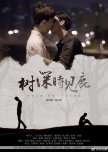
Zhang Yun He is one of the world-renowned Chinese film directors who have portrayed homosexuality in their films, series and short films. His work joins others, such as 'River Knows Fish Heart', 'East Palace, West Palace', 'Spring Fever', 'For Love, We Can', 'Looking for Rohmer', 'Wu Yan – Speechless', ' Shanghai Panic', 'Kinematic Theory', 'The Raccoon', 'The Ambiguous Focus', which also address gender issues and sexual diversity in that Asian country.
'Find You in the Crowd', whose original title is 'Seeing Deers When the Trees Are Deep' (樹深時見鹿), revolves around Shen Lu Sheng, a senior college student, who is unable to recognize who is in love with a boy, his friend, the junior student Chen Jing Nian, who did have the courage to express her love for him.
This infatuation is the cause of the harassment that Shen Lu Sheng suffers from his schoolmates, which adds to the hostility that for family reasons he had already been a victim of since childhood. All this has caused him to have low self-esteem.
The film tells us about feelings, the passage of time and the protagonist's regrets for not confessing his feelings. 'Find You in the Crowd' speaks of a very everyday intrinsic truth in the lives of many homosexuals in the world, who remain silent, live repressed and do not accept their true nature. Many will be able to see themselves reflected in the character and the story told.
When Shen Lu Sheng is faced with the feelings he awakens in Chen Jing Nian, he hesitates to acknowledge his love and does not dare to face his own feelings honestly.
Starring Chen Wei (Chen Hao) and Tian Jun Zhang, in the roles of Shen Lu Sheng and Chen Jin Gian, respectively, the film is based on an original script written by Yan Xingjun and Zhang Yun He himself.
Also known as 'Shu Shen Shi Jian Lu', the film begins when the two friends meet again after some time, and discover that their feelings for each other are still intact.
From here on, the precise and frequent flashbacks will take us to know the intimate relationship between Shen Lu Sheng and Chen Jin Gian from when they were children to the present.
Filmed in Shanghai in 2017, the creators make good use of the monologue to expose Chen Jin Gian's feelings. In this way, the character guides the viewer on an introspective journey, revealing the feelings he hides and the desire to be able to confess his love to his best friend and the person he is in love with. Along the way, the protagonist discovers himself and questions himself for not having been sincere.
Equally notable is the cinematography, the color palette and the music, which as a whole reflect the tone of the film and expose the moods of the characters.
The ending is neither happy nor sad, as it is an open ending, as the story continues in 'Find You in the Crowd 2'.
Was this review helpful to you?
When homophobia wins the game
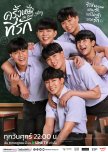
'The Best Story' (Thai: ครั้งหนึ่งที่รัก) is a Thai BL and LGBT-themed television series broadcast between July 9 and 23, 2021. Played in its lead roles by Wanarat Ratsameerat (War) as Best, and Anan Wong (Yin) as Dew, the series depicts a romance between two young high school students.Directed by Ratthapon Keawmeesri (Heavy), the central thread of the three-episode series is the way in which both boys begin to forge an emotional relationship and the obstacles they must face. Four other teenagers also appear: Brigght (Prat Itthichaicharoen) and Ray (Thanakom Minthananan (Win), Best's best friends; and Dave (Nadol Lamprasert - Bonz) and Tar (Patsapon Jansuppakitkun - Bever), Dew's inseparable comrades.
From the Line TV network, 'The Best Story' addresses topics such as romance, homosexuality, emotional diversity, secondary education, friendship, homophobia, youth and its way of relating, or personal evolution.
I don't intend to give much spoilers beyond what I have to say due to the focus of the review.
We are faced with a sweet, tender and brief love story, both for the length of time it lasts and for the brevity of the series, which follows the code of the best Thai BL: the main character, usually a high school or university student, He secretly falls in love with a fellow student, but does not dare to confess his feelings. Both boys will deepen their friendly relationship in the hope of declaring their love for each other. But this moment, expected by everyone, never comes.
While the shy Best does not confess because he believes that Dew loves a girl and, therefore, his feelings are not reciprocated, Dew does not confess his feelings for Best either, first also due to his shyness, and then to passivity, hopelessness and the fear of his mother's homophobia.
This light but realistic teenage romantic drama stands out for its evocative music and the good acting of the two protagonists, whose on-screen chemistry shows emotional physical interactions full of naturalness, warmth and positivity.
The romance is palpable in the small everyday moments that manage to convey the affectionate relationship of the characters played by War and Yin, whom we have previously seen starring in the 2020 Thai BL drama 'En of Love: Love Mechanics', where they also play a romantic couple. This same series also features the participation of the actors who play Ray, Bright and Tar in supporting roles.
An aside to talk about the magnificent cinematography. Despite having few settings, such as the classrooms, the school hallways and courtyards, Best's bedroom or the kitchen-dining room of Dew's house, the camera work is indisputable to make the viewer feel the emotions of his characters. characters with immense closeness and authenticity, with memorable intimate frontal and side shots with the characters looking into the lens or walking in front of it.
But Heavy's work is not only good in its colorimetry; It is also outstanding in terms of planning and use of the frame, bringing together the vast majority of the attention centers of the shots at the same point to ensure that the subsequent assembly of the series is legible at all times.
But, as I said from the title of the review, this focuses on homophobia and intolerance, and not only for being present in the series, but for coming out victorious over love.
Although everything seemed to indicate that the main couple would have a happy ending, related to the confession of love by one of the two boys, presumably Best because he was the one we knew from the beginning is in love with Dew, the truth is that later We know that this also corresponds to your feelings.
However, the romance is spoiled by the actions of the only two female characters in the series: Fern (Masa Marisa Kittelberger), the girl in love with Dew and not reciprocated by him, and Dew's mother.
Dew nobly rejects Fern, his friend and fellow student, who has been secretly in love with him for some time. Once again, Dew is honest with her, and confesses to being in love with a boy. Everything indicates, after the pleasant and confidential conversation held by the two, that Fern would respect Dew's sexuality and support him in his relationship with Best.
However, Fern betrays the friendship and trust placed in her by Dew by confessing her most intimate feelings, and full of hatred, homophobia, jealousy and meanness, she goes to Dew's homophobic and also intolerant mother to "save her son." of the influence of the homosexual Best". Is he doing it out of spite? So that Dew won't be happy with the person he loves? Why does she think that abruptly outing him will make the boy love her? Did he have the right to reveal Dew's sexuality?
If we do not know the answers to the first questions, it is true that, in relation to the last question, no one would ever act ethically; That is to say, it is not right or fair to violate someone's privacy, to remove them from the drawer, especially when it is motivated by petty and selfish interests.
Why does Dew's mother react so cruelly to the rumor that her son might be gay? Will you listen to your son? Will he also oppose any homosexual relationship of his son in the future, when Dew is of age? Will he continue to throw him out of the house with each new gay relationship? Will he ever accept his son? Will she be willing to prevent his happiness for life?
And Dew? Why don't you defend your love? Why accept your parent's decisions, which lead to the loss of your future and happiness?
If until that moment, the story was tender and cute, from this moment on, already in the final moments, homophobia prevents the two boys, who admit that they love each other, from being able to have their happy ending. The romance between Best and Dew can't even begin.
Dew, practically expelled from his home by his mother, will only be left to write partial sentences on social networks that say: "I like-", but without daring to complete the phrase with a "I like you", much less place the name of who they are addressed to.
What is the intention of the creators in giving this ending to the series? Will it be a denunciation of the reality suffered by the Thai LGBT+ community, and in which society and the family, especially parents, have a great responsibility? Or to promote the viewer's debate and reflection on such cruel and real topics as homophobia and intolerance, or jealousy and betrayal? Only if these were the reasons, the outcome of the series seems good to me.
While it is true that Thai BL series have contributed to the Southeast Asian nation being seen as a welcoming place for homosexuals, it does not mean that its laws are egalitarian or that it is truly respectful of the rights of members of the LGBT+ community. . As a general rule, Thai society in general and parents in particular do not accept the homosexuality of their children, and in some cases they even expel them from home.
The harsh reality is that lesbian, gay, bisexual and transgender people in Thailand may face legal situations not experienced by non-LGBT residents. Same-sex sexual activity is legal, but such couples and households headed by same-sex couples do not have the same legal protections as heterosexual couples. It is estimated that around eight percent of the Thai population, five million people, are part of the LGBT demographic.
In 2013, the Bangkok Post states that "while Thailand is seen as a tourist haven for same-sex couples, the reality for locals is that the law, and often public sentiment, is not so liberal."
For its part, a 2014 report from the United States Agency for International Development and the United Nations Development Program notes that LGBT people "still face discrimination that affects their social rights and employment opportunities," and "They face difficulties in gaining acceptance of non-traditional sexuality, although the tourism authority has been promoting Thailand as a gay country."
A decade later nothing has changed. There is still constant and systematic discrimination against Thai minorities, including the LGBTI community. Despite the country having a law against discrimination against sexual minorities, there are legal gaps that still allow the stigmatization of said human group.
As I point out in the title, homophobia may have won the game, depending on the series, but it will not win the fight for human rights. Hate may win some battles, but the final victory will be love's.
Was this review helpful to you?

The end of the trilogy: reasons for debate and controversy
The trilogy by Korean director Leesong Hee-il, known as 'One Night, Two Days', (백야), began with the short film 'One Night, later expanded to a 75-minute film entitled 'Baekya' ('지난여름, 갑자기 '/'White Night' and followed by the short 'Suddenly Last Summer' (지난 여름, 갑자기/'Jinanyeoreum, gapjagi'), concludes with the medium-length film 'Namjjokeuro Ganda' ('Going South' /남쪽으로 간다), all from 2012, and narrating three unconnected gay-themed stories together.The strength of Leesong Hee-Il's cinematography, by itself, and continually, finds an audience for his works. Not only because of the naturalness and simplicity, at the same time as the complex way of exposing homosexuality and human relationships and conflicts, which allows us to reinterpret the essence of the South Korean LGBT+ collective (equally global), from the perspective of some of its representatives, but also in the elegance of the language, the cinematographic resources, the intelligence of the film narrative and the intellectual and human wisdom that flows with astonishing clarity and directness.
It is, furthermore, and above all, the director's ability to build powerful stories due to their humanism, which penetrate the personal imagination, especially of the members of said community, never to abandon it again.
Who who has seen the trilogy does not suffer as their own the desperation and anguish of a gay person who drags, like a heavy burden, the emotional and spiritual suffering, more than physical, caused by a homophobic attack and today, after years , returns to the scene of the events to continue judging the society that did nothing to condemn barbarism, only for the fact that the victim is a homosexual? Who has not wanted to be the companion of said person in the search not only for love, but also, and above all, for the necessary spiritual peace and answers that give meaning to their life, during a long, cold night in Seoul?
Who was not on the cruise ship that crosses the Han River while a boy, a minor, blackmails his teacher, 17 years older, whom he threatens to get out of the closet if he does not give in to his demands to spend a few hours on a hot day in his side? Who has not understood the dilemma in which the teacher struggles, caught between desire and responsibility, between desire and ethics, between good and evil? Who has not forgiven the student for blackmailing the teacher, after seeing him suffer and at the same time shout his love and happiness, while, excited, he talks to the fish or makes the teacher listen to his favorite music after placing the headphones over his ears? ears? Who has not made their own the suffering, pain and anguish, but also the joy and the touch of happiness, of each and every one of the characters that inhabit their stories?
'Going South' follows two men on a journey that, despite the short's title, has no defined direction or destination. Gi-Tae (Kim Jae-Heung) and Jun-Young (Chun Shin-Hwan) met during their mandatory two-year stint in the Korean army. From the first seconds, the existence of a secret to be revealed around these two people and their respective internal struggles becomes evident.
Its director once again exposes a constant dichotomy in the relationships of its protagonists, but now elevates it to a higher plane by placing its narrative heroes involved in the South Korean army. Shocking are the deeply subtle, uncomfortable, and highly problematic questions it raises about homosexual relationships, military service in particular, and that nation's society as a whole.
While Jun-Young, now demobilized, hides or completely denies his homosexuality, Gi-Tae, who still has some time left to graduate, is not afraid to acknowledge it and even enjoys celebrating it, despite completing his military service in a nation where, according to article 92 of its Military Penal Code, it considers sexual relations between members of the same sex as "sexual harassment", punishable by a maximum of one year in prison.
Jun-Young is taking Gi-Tae back to base after his last leave. The atmosphere around them is overloaded by the demands of one and the refusal of the other to give in. Jun-Young is quite harsh on his friend during the ride.
The characters in the medium-length film inhabit a space where they meet somewhere in the middle. It is at this moment that the director uses the camera lens to "steal" the characters' emotions and show human complexities.
One having realized that he does not want to continue the sexual relationship with his friend and asks him not to contact him again, the other is not willing to let him go, and clings to him. Inadvertently, the soldier takes the opportunity to put sleeping pills in Jun-Young's coffee. As soon as the drugs take effect, he takes the wheel and heads south, or nowhere in particular.
When Jun-Young finally wakes up, he is furious, but also furious is Gi-Tae, who confronts his former lover/friend about his broken promises.
The fight, both emotional and physical, reveals two aspects to consider: on the one hand, Jun-Young completely denies not only his former feelings for Gi-Tae, but also his homosexuality. Jun-Young dismisses his previous relationship, alleging that he had sexual encounters with his friend out of the need to fill the void of soldier's loneliness, something common for soldiers while doing military service.
And secondly, Gi-Tae is clearly losing control and has crossed the line. His erratic, illegal behavior is not justifiable, and yet we sympathize with him more than with Jun-Young, because his pain is so tangible.
Initially calm and serene, Gi-Tae's feelings are increasingly expressed through physical things, such as photographing Jun-Young in the middle of making love for the last time, not to blackmail him but to materially record the feelings that his lover does not want to admit with words. He subsequently gets into a wild mud fight with Jun-Young that nearly ends in blood and he drinks bottle of beer after bottle. His state of increasing intoxication leads him to dance alone like a lunatic in a dark highway tunnel, while music blares from the car speakers.
You can't blame Jun-Young for wanting to distance himself from Gi-Tae, who has major emotional issues that may run deeper than this particular rejection. And yet, one must ask: how desperate must one be to go AWOL from one's military base and nearly kidnap another person, acts that can only have serious repercussions?
Open-ended like all parts of Leesong Hee-ill's trilogy, 'Going South' feels more gloomy and suffocating than the two previous films, denying the viewer a journey towards the spiritual peace and happiness they dreamed of, at least from one of the characters.
As in the rest of the three pieces, the film tells a story of great visual and auditory beauty, but perhaps the most important thing is the emotional depth. The raw honesty of the film's narrative – centered on the often deeply problematic feelings of its characters, all asking difficult but very real questions – is commendable.
The finished compositional gear, the composition between musical form and film text brought to the screen, the treatment of time and changes in point of view, are formal innovations that demonstrate the filmmaker's vocation to always renew himself, supporting the three pieces that make up the trilogy, which reflect on the human condition, the complexities of the human being, the responsibilities and ethics of the gay man of our days, the homophobic ambushes that stalk him at every step, the feeling of emptiness caused by the so-called epidemic of loneliness gay, the emotional and mood disorders of homosexual men, the constant search for happiness, which implies, in turn, the fight for their human rights, and the encounters between the individual and the collective.
Note: The reviews of the remaining pieces of the trilogy, in MDL, can be found on the page dedicated by the virtual platform to each of them.
Was this review helpful to you?

Unrequited affection, transformative friendship, the mystery of hidden love
Adolescence is fertile ground for fiction. It's that time in our lives when emotions run high. Every obstacle is the end of the world. Every sexual or romantic attraction leads to hours and hours of thinking in bed. Every photo or comment on social media saves us or plunges us into the abyss of life. Insecurities bring out the worst in us. Waking up in the morning means facing the existential crisis of understanding one's place in the world. And, at the same time, anything is possible.If we consider that it is scientifically proven that childhood is that key stage for every person, where the intellectual and emotional foundations on which their success or failure as an adult depend are formed, it is clear that Lee Hee Su, the young protagonist of 'Hee Su in Class 2', has all the makings of a rather happy future.
Someone who is aware that, as small, fleeting beings in a universe we don't understand and will probably never understand, we will also be unable to know what the future holds, tells us that we are in the presence of an awake, curious, and thoughtful teenager who seems to have his ideas very clear.
Offering sound love advice to his classmates, even though he doesn't dare apply it to his own love life; talking about crushes when he doesn't even know what to do with his own; being part of an almost utopian universe (that of youth and school) where those who had never paid attention to him begin to seek him out for love advice, where Hee Su himself is the first to be surprised when he realizes that "his special talent" can solve relationship problems, and where love entails not knowing that we won't find love with the person we think we love, but with someone we would never have imagined, this was the best thing that could happen to a boy who keeps the secret of being in love with Joo Chan Young, his best friend. If we add to this the fact that his heterosexual crush, unaware of the feelings he awakens in Hee Su, takes every opportunity to talk to him about girls, including Ji Yu (Park Yoo Hyun), his favorite singer and schoolmate whom he likes so much, it could very well be a trigger for the deepening frustration of having to hide his crush.
And although at times it seems as if his world could collapse with a complex family environment, with absent parents and three single sisters, one of them suffering from heartbreak, everything will change when an unexpected person enters his life.
South Korean female director Park Kyung Min makes her television debut with a coming-of-age story, a youth drama that raises questions about unrequited affection, transformative friendship, the mystery of hidden love, self-discovery, unexpected relationships, and the search for acceptance in a school environment with the freshness of student life.
Far from being just another of the hundreds of LGBT+-themed productions that are increasingly appearing on television channels and digital media, 'Heesu in Class 2' surprises with a complexity and attention to detail that transcends its genre, with its fresh and emotional take on what it means to find one's own path in the midst of adolescence. Ahn Ji Ho, after winning critical and popular acclaim for his roles in the series "Nobody Knows" (2020), "Night Has Come" (2023), and "Begins Youth" (2024), and the films "Along with the Gods: The Last 49 Days" (2018) and "Rebound" (2023), once again showcases his artistic talent in his portrayal of Hee Su, a dreamy, clever, but socially awkward young man whose identity at school has been reduced to being "Chan Young's friend". Kim Seung Won is a destabilizing element in his life. Unlike Chan Young, the neighbor and class president is reserved, shy, studious, and somewhat clumsy, especially around the main character.
Lee Sang Jun, known for his performance as a soldier in the second season of 'Squid Game' (2024) and his appearance in television productions such as 'Beauty and Mr. Romantic' (2024) and 'Blue Birthday' (2021), plays a character whose serious demeanor and intense glances, interpreted as signs of rejection, initially confuse Hee Su. However, he manages to draw him out of Chan Young's shadow when the two meet in the School Guidance Club and begin to interact more. In addition to sharing activities at school, Hee Su discovers that Seung Won is her neighbor, and on more than one occasion, they end up talking through their bedroom windows. This unexpected bond brings them closer, showing Hee Su a different perspective on affection and companionship, something she had never considered outside of her devotion to Chan Young.
The series, which at times reminds me of 'Sex Education' (Laurie Nunn), becomes a kind of healing sanctuary and an unprejudiced adolescent audiovisual. While in the 2019 Netflix series, Otis (Asa Butterfield) decides to use the sexual knowledge acquired through his mother, a renowned sex therapist, to help students and transform their environment, here Lee Hee Su achieves the same results, but resorts to repeating some of the love clichés contributed by her sister, who has also failed to find happiness in love.
This approach is simple and daring, but it results in a series with a completely natural tone, very funny, very well developed, and unfolding quite realistically. It's a reflection of life that normalizes the normalization of certain topics, discussing human and adolescent psychology, and often drawing on the main character's knowledge of astronomy and the cosmic universe.
I have to admit it. I've rarely seen two actors like Ahn Ji Ho and Lee Sang Jun so accurately portray the emotions, awkwardness, and emotional intensity of those first loves and relationships.
Their performances are very genuine in capturing personal growth and self-discovery. As the characters get to know each other, a maturation process occurs through their romantic experiences, centered more on silences, secrets, glances, restrained gestures, unspoken words...
The series beautifully portrays the school as a social center. The school environment created is the perfect setting for adding drama and tension to the characters' romantic adventures. It's also beautiful in depicting the drama of friendship, how friends influence romantic decisions and add complexity to the story with loyalty, jealousy, and support.
Another element we shouldn't overlook is the family dynamic. Lee Hee Su lives with three sisters. Much of the action takes place in their home, while these four characters share experiences and conversations. The series is exquisite in showing how family influence can influence the way the characters approach love. The relationships between Hee Su and her sisters, Lee Hui Jae (Park Kyung Hye), Lee Hui Jeong (Kim Han Na), and Lee Hui Sin (Jung Ye Nok), generate tension and push the protagonist to make important decisions. Other issues we shouldn't forget are how conflicts and dramas inform the romantic stories of Hee Su and Kim Seung Won, on the one hand, and Joo Chan Young and Choi Ji Yu (Kim Do Yeon), on the other. Love triangles, misunderstandings, rivalries, and breakups keep these two stories captivating and full of emotional twists and turns.
Shin Ho Sik (Jeon Yeong In), Hee Su's friend and classmate, is another character audiences will enjoy, as they empathize with a boy who discovers love in a classmate after the girl he's been in love with rejects him.
Ahn Ji Ho's performance is superb. His character struggles with his insecurities, his sexual identity, self-esteem issues, and emotional ups and downs (whether joy, heartbreak, or confusion) as he tries to figure out who he is. Through his insecurities, viewers can understand how this boy deals with love and relationships with everyone around him.
Some vilify the series for not being faithful to the original. I haven't read the eponymous webtoon by Lily Zuzu, published in 2018 by Lezhin Comics, on which it is based, so I can't speak to its virtues or defects as an adaptation, but the creators have the freedom to discard the so-called Literal Adaptation and Condensed Adaptation, to avail themselves of the Interpretive Adaptation, which allows greater creative freedom when adapting the original work.
The truth is, I have no doubt that those who can't do anything, teach. And those who have never experienced love begin to give advice about love. That's the essential premise of the series.
A work with a wonderful rhythm, with perfect and magnificent performances, with a well-written plot that works to create a dynamic that moves the work forward with enormous doses of fun, profound discourses, and brilliant acting. It takes advantage of its themes and has a refreshing perspective on the world and art, with wholesome messages and great naturalness, but above all, it is a very funny series with 45-minute episodes, something unusual in South Korean BL series, which amaze us and make us enjoy the entire length of the series, without the typical filler. A work that gets to the point with what it wants to show and how it wants to entertain us for a few hours.
Along the way, Hee Su resolves the sentimental doubts of both his schoolmates and himself. 'Hee Su in Class 2' has managed to break the prevailing heteronormativity, allowing the visibility of sexual orientations and their expression in young characters, which represents a breakthrough in a country as conservative and patriarchal as South Korea. It offers one of the best scenes of support between a queer character and another queer character ever on television: the moment when Hee Su overhears a girl talk about her feelings for another woman. And, while it vindicates friendship in all its forms (between boys and girls, between gays and straights, from equality and difference), it offers a valuable deconstruction of toxic masculinity. This, I would say, is its most stimulating legacy.
Was this review helpful to you?

Does the fact that an idol lives a romance mean that he loves his followers and fans less?
Who hasn't had the fantasy of a musical idol falling in love with you? What would happen if you fell in love with the fashionable youth idol when you are tasked with documenting his latest concert as part of a boy group? What would happen if in the midst of the band's dissolution you became its leader's closest confidant?'ThamePo Heart That Skips a Beat', the Thai romantic drama directed by Mui Aticha Tanthanawigrai ('The Shipper', 2020), tells the story of Po (Est Supha Sangaworawong, 'Love by Chance Season 2: A Chance to Love', 2020), a young filmmaker who finds work in an entertainment company as director of a documentary that will record the latest performance of the popular boy group Mars, and is bewitched by the charms of Thame (William Jakrapatr Kaewpanpong), the band's singer and dancer, as well as his heart and soul.
And it's art that unites Thame and Po, in a way. Each one from their own line (Thame in the musical area, Po in the cinematographic arts), and they come together at a middle point that leads them to love, while one is about to leave the band to debut solo in South Korea due to a misunderstanding with the other members of the group, and the other must capture the group's final concert in images and sounds.
Both the work behind the script and Est's inspirational and empowered performance add to the narrative of the series substantially. The fact that the protagonist is a young man who has left his happiness and future on hold during the time he was dating someone who led him to be in the background in the relationship, turns a premise disconnected from reality into a very more earthly and empathetic. One that allows the viewer to understand more about the phenomenon of invisibility that some people suffer when they are part of the lives of public figures, such as artists. But if Po, his character, is leaving one of these relationships, he runs the risk of falling into another, when his path crosses that of Thame.
They are both heartbroken and need to heal. Will they find comfort in each other? Can they share their loneliness and sadness? In addition to their passions for music and directing work, will love be what heals them? Will the band's fate be to disband once Thame becomes a solo artist, leaving his bandmates behind? Is this Thame's dream or is it an action undertaken by internal conflicts that can be overcome? Will Po manage to overcome the trauma of having been a "shadow" in her relationship with her ex-boyfriend? Will Po be able to prevent the group from dissolving? I ask myself these and other questions, and I hope to have answers in the final episode.
Against all logic, the series does not raise the curtain on the meticulous process of creating a global musical sensation, but on the imminent separation of the iconic world-class boy band, made up, in addition to Thame, of Dylan (Hong Pichetpong Chiradatesakunvong), Nano (Lego Rapeepong Supatineekitdecha), Jun (Nut Thanat Danjesda) and Peeper (Tui Chayatorn Trairattanapradit).
The series does not raise the curtain on the meticulous process of creating a global musical sensation, but on the imminent separation of the iconic world-class boy band, made up, in addition to Thame, of Dylan (Hong Pichetpong Chiradatesakunvong), Nano (Lego Rapeepong Supatineekitdecha ), Jun (Nut Thanat Danjesda) and Peeper (Tui Chayatorn Trairattanapradit).
With a script by PingPong Suwanun Pohgudsai ('Cherry Magic', 2023-2024), Kannika Tovaranonte ('Gen Y', 2021), and the director himself, the series is a GMMTV production aimed at showcasing the five members of the group LYKN boys, winners of the Best New Artist award at the Komchadluek Awards 2024, who on screen show their skills as singers and dancers.
Combining their talent and charisma with exemplary physical discipline, William, Hong, Lego, Nut and Tui drive the viewer crazy with their songs, dances and stage movements. After starring in the short film 'No Worries', in 2023, and the documentary 'LYKN Day1 to Debut', the five members of LYKN more than reaffirm their acting and musical abilities.
From the first frame in which he appears, William is not only able to fill the screen, but he also manages to perfectly convey the energy of his character and the very particular circumstances in which he finds himself. Something that really manages to captivate the viewer and make the journey that the character goes through much more transcendental for them.
The series not only tells a romance between Po and Thame, or the story of the idol band, but also reflects on the price of success, the importance of friendship and the need to balance notoriety and privacy in a relationship couple. With convincing performances, this series promises to be an unmissable event for lovers of BL and music in general.
Est manages to portray the young film director who must carry out the mission of filming the documentary of the Mars farewell concert, while deals with the recent breakup with his ex-boyfriend Earn (Pepper Phanuroj Chalermkijporntavee), the trauma left in him by a toxic relationship in which, after helping or achieving success, he was despised by the person he he loved, and the feelings that Thame, the handsome and seductive leader of the band, awakens in him.
But the series explores other topics in depth: Why can't trainees and stars have romantic relationships during the first five (or three) years after their debut? Can idols have a private life? Does the fact that an idol has a romantic relationship mean that he loves his followers and fans less? Why, in the face of harassment campaigns, must pop stars publish humiliating apologies, often handwritten, in front of television cameras and on social networks, after being accused of "betraying" their fans? Why are idols subjected to strict behavioral controls and standards that are impossible to meet so that record companies can sell the idea of a perfect idol to the public?
Why aside from verbal warnings, will there also be a "no love" clause in their management contracts? What would happen to violators of this rule? Shouldn't they pay a fine for breach of contract, and in more serious cases, they could even be fired? Aren't these bans primarily related to companies' interest in protecting stock prices and revenues? When rookie idols prepare or have just debuted, aren't they subjected to rigorous checks of their mobile phones, including conversation logs and information? Isn't it a reality that even to call your own parents, you have to get consent from the agency? Can an idol maintain a romantic relationship with someone of the same gender?
Through the love relationship of the two protagonists (and some other members of their group) the series explores how in the rigorous and meticulous world of entertainment, where the culture of entertainment demands perfection and prudence, how for the competitive entertainment industry the main thing is its income through popular groups. Loyal fans will spend money on albums, related goods, and concerts. For this reason, talent agencies often remind idols that they "should not be in a romantic relationship," as the loss of fan support can have a significant negative impact on the company and the idols.
Through the public's reaction, the series exposes how fans often project their personal feelings onto the idols they like, treating these idols as their "boyfriends or girlfriends," which can cause confusion between reality and fantasy.
The audiovisual also portrays how fans consider their idols as the center of their lives, how they follow their idols, in whom they invest a large amount of time and money, since they make their debut, and how they feel a deep "sense of betrayal" if they were to find out that their favorite artist "starts dating someone."
Without a doubt, music is the other main protagonist. In addition to "All I Need", by LYKN, other musical themes by a real band created for the series are played, such as "I Remember", in the voice of Victor Lundberg, and "Destined", a song performed by Tui Chayatorn, among others.
The lyrics of the songs turn out to be a decent summary of the series: "How could we fall so quickly and let ourselves go? It's time to give up. Now that it's over, there's nothing to say 'cause, I guess we've said it all," we signals the breakdown of Po and Earn's relationship, but then, like a pleasant foreshadowing, we will hear: "You stole my heart in the blink of an eye. I've been yours since the first time we met. All I need is you!" ", as a sign of the birth of a new romance, while the audience claps their hands and sings the song.
Likewise, Thame performs a song with the other members of the band, and then acts alone on stage, and sings a song in which he expresses: "...although all the dreams we had did not turn out as planned," and Dylan, Nano, Jun and Peeper retire, leaving only the leader of the group on the stage, it is a prediction of what the viewer could expect in the series if they do not solve the group's internal problems.
In my opinion, the creators have sought to make the story seem as authentic as possible and ensure that the actors who are members of LYKN were integrated into the plot in a real way. The five boys have this type of integrity, which must be of great help, since in the progression of the series in general, they are in charge of writing, performing and dancing the songs that we hear intertwined with the love story between Thame and Po.
I am convinced by the romance of this couple. Yes, they are diametrically opposed in some aspects but at the same time very similar in others. The fact that their relationship makes them grow individually enriches the plot. Examples? We can see it when Thame tries to better understand Po's passion for art. Likewise, when Po tries to look at Thame as the man he is and not the famous singer.
In this sense, how I would like them both to learn a lot about themselves and their sexuality through their relationship with each other, that they both make the other better on a personal level, and that together they can keep the band together.
Was this review helpful to you?

Spell and rainbow
Spell and rainbowI remember that in Journalism Techniques, one of the Journalism subjects, the teacher told us to write imaginary interviews with personalities from the field of science, culture, art, sports, politics... who, due to various circumstances, could not be interviewed, since whether due to death, distance, etc.
I will try to return to my old classes for this subject.
In the Japanese BL series 'Miseinen Mijukuna Oretachi wa Bukiyo ni Shinkochu', Jin has emerged as a memorable leading character admired by the audience. His identity as a model high school student who has the purpose of living life as a spectator, his melancholic and lonely character, his desire to break molds and get ahead on a journey of self-discovery and acceptance, have captured the attention of viewers, who value their authenticity, talent and bravery.
Motojima Junsei, the actor who plays Minase Jin, has demonstrated a remarkable ability to portray this complex character. At only 19 years old, he has forged a solid career in the television and film fields.
In film he has stood out for playing Ichinose Hotaro / Kamen Rider Gotchard in the 'Kamen Rider Gotchard' universe, while on television he appeared in productions such as 'Hayabusa Shobodan', 'Kamen Rider Geats' and 'Shigatsu no Tokyo wa...'. In the latter, a 2023 BL series, he played the young Yagami Ryunosuke. The actor confesses that all his works have forged his ability to tackle challenging roles with depth and authenticity.
We talked about Jin and the Japanese BL series with Motojima Junsei in an exclusive interview for CinemaBL.
AA— How would you define Jin?
MJ— Jin is originality, love, honesty, magic, light... As an actor, I consider him to be the most beautiful character I have had to play on television so far. He is a model student. Studious. Work hard. His priority is to have his own house and his own car in the future. He knows that the only way to achieve his dreams is to go to a top university. He is fine with his repetitive daily routine of school and studying. He is an honor student who is indifferent to others, and has been living his school life avoiding any interaction with class troublemakers, especially Hirukawa Haruki. Jin is a fascinating young man who takes the viewer from hatred to love and becomes one of the pillars of the plot. Although he projects an image of absolute control over his life and his environment, he hides deep emotions and vulnerabilities.
AA—And Haruki is…?
MJ—Haruki, a character played with high marks by Kamimura Kenshin, a talented actor with solid experience in film and television, is my companion on a journey in which we will both discover and accept our true identity. Jin has been raised to hate people like Haruki. But Haruki, unintentionally, enters her life, which in a way, is perfect. This is the trigger for the series. One day, while Jin is taking a shortcut through a troubled neighborhood to return home, he sees Haruki, his classmate. Since he is not the type of person Jin would mix with, considering him, due to the upbringing received by his absent mother, the type of individual who grows up to become a criminal, Jin tries to continue on his way, until he discovers that Haruki is receiving a beating from his father.
"Something in Jin tells him that this is not his problem, that he should have nothing to do with Haruki. But at the same time a voice inside him screams that it is inevitable that their paths will cross... I would say that feeling of boredom that Jin has, it is Haruki who needs to get rid of him. Finally, they begin to relate.
AA— Why do you think the public begins to empathize with Haruki and stop seeing him as the villain of the story?
MJ— Haruki's character grows from the connection with Jin. In truth, they both grow as people. Both Haruki and Jin, who has the best values in the series, let go of the anti-values they carry and incorporate new, very positive values. When Haruki is around Jin he becomes a different person. He is talkative, attentive, talks about his taste in movies, shares secrets never revealed to others about what he likes or doesn't like about movies, about his life... Jin's father is a film director. This connects you even more by having another topic of conversation.
"Haruki is always prepared to give Jin his world. He cannot contain what boils in him, what overflows him, but everything will be step by step until he gets rid of the mists of doubt about the unknown, from fear of family, to school, to society in general that tells you that loving a person of the same gender is not correct, it is prohibited, it is illegal. Step by step, it will be like that, until the paths converge. Deep down, they are very similar. After discovering the secret of Haruki, the two quickly become intimate. This relationship, sad but beautiful, is what the series narrates."
AA— What strikes Jin about Haruki?
MJ— His vulnerability, his true “self,” so different from how he had represented it in his head. After witnessing the domestic violence carried out by his father, Jin manages to understand that the bruises on his face are not from the fights that he considered would cause them. As he tries to walk away, from his mind he cannot get the image of the Haruki he saw, so different from the one at school... Haruki is truly, like him, a tender, lonely and lost boy. They both come from different origins. Both had different types of education or upbringing. On the other hand, Haruki suffers from the marginalization to which he is subjected by his fellow students due to his reputation as a violent boy, his attitude of rebellion and disobedience towards teachers...
AA— In your opinion, what is the message that is transmitted to the viewer through this character?
MJ— Before answering that question, let me tell you that the events narrated in the webtoon "Our Youth", by Hi Nun, the original manhwa and which the series adapts for television, take place in South Korea between 2009 and 2014. In 'Miseinen Mijukuna Oretachi wa Bukiyo ni Shinkochu' is set, of course, in Japan and in 2018. Multiple details were changed slightly to match with Japanese reality, but ultimately the series captures the spirit of the original work, which is the romance of two teenagers set in a country where youth is marked by violence and loneliness, while, figuratively speaking, everyone They float in a rough sea where no one expects them to engage with each other.
"Now, my message with Jin is that a better world is possible, where people are respected and each person's sexual preference is not an important factor. Sexual preference is a personal issue that only concerns the person and not He should belittle or devalue anyone, much less humiliate. His sexual identity does not define his personality; what really define Jin is his values and feelings.
"I would like the public to reflect that sexual preference should not be a reason for humiliation, mistreatment or exclusion. People should be valued for their human quality, which is the most important thing. I think these stories should be represented more on television, although it will not be an easy battle, since Japanese youth have lived for decades in a society guided by homophobia, patriarchy and heteronormativity. However, as these stories are incorporated into the media and our culture, the japanese will leave becoming familiar with them, as long as they are given the right treatment. A change is needed because the world needs to be better and people need to love and respect each other.
The series seeks to demonstrate that while some people can overcome their suffering and move forward in life, others allow themselves to be consumed by it."
AA— How much did the character of Haruki contribute to the realization of your role?
MJ— Working with Kenshin was wonderful. He is an actor who offers all his knowledge. He is attentive and takes care of all the details of his performance and that of others. He is very protective of everyone around him. Sharing a scene with him was very comfortable. There were never any problems or disagreements between us.
"Whenever we could contribute something to the characters we did it, we sat down and tried to explain the reasons for Jin's rejection of Haruki when he tried to kiss him, his love for Jin, his father's abuse... which undoubtedly made our performances much more convincing. We did the casting together, but we already knew each other through mutual friends who introduced us at one of their performances with the vocal dance group "One N' Only", to which Kenshin belongs. And then we met in the premiere of the BL series 'Ossan's Love Returns', in January of this year, in which he plays Hao, one of the secondary characters. We have been friends since then, since before filming began. This has also served to enhance the chemistry, the close bond established between the two."
We left the conversation for a few moments. You cannot not answer the incoming call. I turn off my phone, while I hear, nearby, the voice of Motojima Junsei who, from his phone, agrees with a producer to finalize details to star in another BL series.
This is the moment when I let my thoughts escape: Where, if not from love, do those kisses come from that one tries to steal from the other? At what moments do their words and laughter grant us their elf? Where, if not from love, do doubts emerge, the confusion of one feeling rejected, but not despised, by the other? Where, if not from love, is the hurried heartbeat, as if it wanted to escape from the chest of the one who rejected the kisses? Where do they come from, if not from love, those ideas that vividly express that one cannot live away from the other, no matter how much one tries to keep the walls around him high?
Laughing, he returns to his solid armchair in front of me. We continue:
AA— How has the public reception been? Have you received any feedback that surprised you?
MJ— I remember that, while I was recording the series, I was talking with my friends, and one of them told me: "You know that there will be many people who will love you and many people who will hate you, who will make war on you." I answered yes, that I was prepared for that and that I wanted to play the character. I was aware that this could happen.
"Really, the response from the public has been, for me, surprising, with a capital letter. I never imagined that Jin would receive so many acceptances, and I am very happy about it. The message I wanted to convey has arrived. People have stopped seeing a boy in love with another boy to begin to see a man with an immense inner world and enviable human qualities. This has surprised me and made me very happy and I hope that, throughout the series, this perception will change keep.
"On the other hand, making harassment visible is important. It is necessary to promote a culture of peaceful coexistence and respect for diversity in all its expressions: sexual identity, origin, skin color, social status, physical and intellectual abilities, ideology... "
AA—In terms of the evolution of the character, what can we expect from Jin in the next episodes?
MJ— As for the next chapters and Jin's evolution, I can't tell you much, because otherwise Shibata Keisuke and Makino Masaru, the directors, will gut me. Ha ha ha. I can tell you about both of them that they fight against harassment and bullying, a complex phenomenon that affects emotional and academic well-being at all levels of education and throughout society. About the character, I can only say that he is not going to disappoint the audience. Jin will remain true to himself. That's all I can say.
AA—Finally, how would you describe the current and future state of Japanese BL series?
MJ— “Boys’ Love” is in good health. The genre has captured the hearts of millions of fans around the world. It quickly jumped from the initial Japanese manga and anime to dozens of annual series and films. Not only in Japan. Other Asian countries, such as Thailand, China, Taiwan, Vietnam, South Korea, the Philippines, among others, film productions of this content. The proliferation of the genre has given rise to a rich and diverse range of productions that celebrate love. It is a phenomenon that combines romance, drama and culture in a unique and charming way.
"But what is fundamental is their cultural and social impact. BL series not only offer entertainment; they also play a crucial role in the visibility and acceptance of LGBT+ relationships in Japan and throughout Asia. By portraying stories of love and struggle that resonate with For many people, these series foster greater understanding and empathy towards sexual and gender diversity. In addition, BL has created a global community of fans who manage to connect and share their love for these stories, breaking cultural and geographical barriers.
"Or at least that's how I understand it. One more step towards diversity and hopefully, these stories will be standardized in the rest of the markets."
While, already at home, days later, I watch the next episode of the series, I think about the last words of Motojima Junsei: "BL series provoke a kind of enchantment in millions of human beings in the world. It is as if the director, screenwriters, actors and others involved, like magicians, will pronounce a magical spell that encourages the majority to entertain, to fight for the rights of LGBT+ people.
Was this review helpful to you?
More than friends in a homophobic country whose army punishes homosexuals with triple humiliation
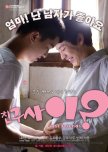
'Just Friends?' (친구사이? / Chingu sai?), a South Korean short film that follows two young people who are not just friends, but something more.Starring Lee Je-Hoon and Yeon Woo-jin (sometimes credited by his former stage name, Seo Ji-hoo), the short film follows the secret romance between Seok Yi, a college student who works part-time at a restaurant and faces the dilemma of whether to leave school to focus on his culinary aspirations or fulfill his mandatory military service, and Min Soo, a young soldier who is serving in the armed forces.
For some time they have planned to enjoy a romantic weekend, and Seok Yi travels to the city near the South Korean capital where the military base is located to meet Min Soo again and be able to carry out his plans, but they will not go as planned. While they are enjoying their meeting, Min Soo's mother appears, who has also gone to visit her son and is unaware of the bond between the young people.
When the mother (Lee Seon-joo) asks him about their relationship, so as not to reveal the truth, Min Soo replies, "...we are just friends."
With his mother, Min Soo has a close relationship. We'll see how she playfully makes fun of him, asking him if he's not going to sleep on her chest, and reminds him that he used to call her "boob mom," and he responds that's how he acted when he was little, and then confesses to Seok Yi , who sleeps next to him after missing the last train, who as a child used to sleep on his mother's chest to cheer himself up.
In this way, Kim Jho Gwang-soo, as writer and director, is weaving a story in this short film of the youth romantic comedy-drama genre with an LGBT+ theme that, released in 2009, aims, in addition to telling us about another cycle of release coming out of the closet, showing, with naturalness and simplicity, the relationship between gay men and their families in a conservative society where parents consider any homosexual act a crime.
It is also proposed to denounce homophobia within the Army and South Korean society in general, as well as to make visible the risks, including criminal ones, to which homosexuals are exposed in the military forces of said country.
The denunciation of institutionalized homophobia in the army is shown in a very subtle way. After arriving at the military base in Cheorwon to meet her boyfriend, after traveling from Seoul, Seok Yi has to fill out a contact form in which she must state, among other details, what relationship she has with the person she is contacting what a visit
Elated to be able to see Min Soo after a while, when answering this question in the official document he writes the word "lover". Realizing the risks that his mistake entails for both him and the soldier, he tries to obtain a new form to write "friend" and thus circumvent any suspicion about the type of relationship that both maintain, but when he fails to obtain it, he is forced to carefully cross out what is written and in its place draw the other word.
Homophobia will haunt them throughout the short film, which lasts about 30 minutes. The fear of suffering from it if they are exposed as homosexuals is shown in various ways, and the two lovers will have the urgent need to hide their homosexuality to comply with what a conservative country with strong patriarchal and heteronormative traditions demands of them.
For example, Seok Yi strikes up a conversation with Chae Eun (Lee Chae Eun), a girl on the bus in which he makes the trip and with whom he will be very careful to avoid pronouns when referring to her boyfriend. He will show her a homemade cherry candy he made himself to share with her boyfriend. However, at the moment he delivers the gift to Min Soo, he notices the presence of the girl, who is watching the lovers from a nearby table. Seok Yi's hasty reaction is to snatch the dessert from Min Soo's hands and put it back in a bag, as he had assured the young woman moments before on the road that it was a gift for her partner.
Internalized homophobia as an accompaniment to homophobia is also reflected. Seok Yi will reject Min Soo when he approaches him to kiss him in public and will not shake his hand in the street so as not to be a victim of hatred and intolerance, and will tell the girl who returns with him to Seoul: " Today I also hate being a man!" This is how he expresses feeling harassed and excluded by his loved ones and society.
In its second part, 'Just Friends?' It is filled with joy, enthusiasm and hope. While Min Soo sings a sad but hopeful song to her mother that reflects the feeling that despite liking men she will become happy with the person she loves, we will see the two lovers reunited again, after Min Soo obtains a period of leave from military service.
He will go to look for Seok Yi at work and both will walk the streets of Seoul showing their love in public.
Min Soo has found the exact words to describe the person he will introduce to his mother: "I want you to meet my boyfriend."
The lovers are ready to combat the discrimination that awaits them, after acquiring a mutual, shared feeling that allows them to overcome the feeling of shame and self-exclusion.
'Just Friends?' It has a happy ending that proudly celebrates the love, identity and struggle of homosexuals for their freedom and happiness, and it is something to celebrate doubly, since the short film is a pioneer in South Korea by reflecting a homosexual relationship in a country where Today, in the 21st century, there is resistance to recognizing equal marriage, and even more so against the backdrop of that country's army.
South Korea is a conservative society and the only developed economy in the world in which consensual sexual relations between two men are a crime under military law, and if discovered and charged, every officer or soldier potentially faces a triple humiliation: a sentence penal, an exclusion from the army for unworthiness and a forced coming out of the closet in the face of society and his parents, who describe themselves as "conservative and devout Christians", as the short film clearly reflects on Min Soo's mother.
Intentionally and intelligently, Kim Jho Gwang-soo places one of his protagonists involved in the army of a nation in which, according to article 92.6 of its Military Penal Code, soldiers who have homosexual relations face two years in prison and forced labor if convicted by a court-martial.
Based on his own personal experiences as a gay man, the director and screenwriter expressed, "I wanted to create a real gay film with 99.9% purity, after observing that many Korean films in the past contained misleading depictions of homosexuals." Kim also stated that after completing her 2009 short, 'Boy Meets Boy', which focuses on a first romantic encounter of two teenagers, she wanted to create a successor that involved more mature themes.
Produced by the company Generation Blue Films, in collaboration with Korean Gay Men's Human Rights Group Chingusai, which shares the same name as the film's Korean title, 'Just Friends'? It had its world premiere at the 14th Pusan International Film Festival on October 10, 2009. Before its theatrical release on December 17 of the same year, it was screened at the 35th Seoul Independent Film Festival. The following year, the work was screened at film festivals in Italy, the United States, Japan and Hong Kong.
With music by Kim Dong-wook, photography by Kim Myeong-Joon and editing by Nam Na-yeong, the film, due to its subject matter, has been involved in a rating and censorship controversy.
Before its release, the Korean Media Rating Board (KMRB) called the film's trailer "harmful to youth." In November 2009, KMRB gave the film a "restricted to teens" (19+) rating, citing "sexual situations" and "risk of imitation."
This decision generated criticism from artists, intellectuals, and politicians, who argued that the KMRB was reviewing homosexual-themed films with different criteria than heterosexual-themed films.
In September 2010, the film's producers, Generation Blue Films and Chingusai, filed an administrative contentious lawsuit against the KMRB, asking the Seoul Administrative Court to cancel the film's classification. The court ruled in favor of the plaintiffs on September 9, stating that the film "provides understanding and education about minorities." Despite this, 'Just Friends?', 15 years after its release, continues to be condemned by the most conservative members of a society who still claim that the film contains scenes that "would provoke sexual curiosity in young people."
'Just Friends?' has other values, being Kim Jho Kwang-soo's second film work as director and screenwriter, the second collaboration between this filmmaker and screenwriter Min Yong Keun, and presenting for the second time Min Soo and Seok Yi, two characters that the The previous year he introduced them to form the protagonist couple of the short film 'Boy Meets Boy', also following up Min Soo in 'Love 100°', another short film he authored, from 2010.
Was this review helpful to you?

Modern, real, entertaining and, above all, addictive
Although the series begins on a somewhat dramatic note, with two university students involved in a fight that leads to the inevitable hospital medical attention of one of them after receiving a blow, the story, in a fast, colorful and fun way, shows us, in tone of a youthful romantic comedy, one of the love plots between boys, set in a university, like the ones we are used to in BL series.After the painting that is ready to be sent to an exhibition after sleepless nights becomes useless when it is hit by a soccer ball, Pheem will confront Phum, the extroverted, brilliant, stubborn and popular, but arrogant college soccer player, guilty of the in a bad way, and in a fit of anger he hits him.
Phum then demands compensation from him. But since the mischievous and playful second-year Fine Arts student, who dreams of one day having an art gallery in which to exhibit his own works, cannot pay the medical bills, they will ask him to be at their service and attend to all their needs. whims. But there will be a pact between the two: "No one will ever be able to know that one is a slave and the other is a master."
But Pheem will also demand that the "punishment" not last two months, but until he finishes redoing the damaged painting.
Thus begins the story of Pheem and Phum, the protagonists of the Thai series 'We Are', an adaptation of Parawi's novel of the same name.
When the future civil engineer, embarrassed by having been beaten in front of others, begins a plan of revenge against Pheem, at the same time as his demands as a master increase, his feelings begin to slowly grow.
The world is small and a university is even smaller. Being students at the same university, faced every day in their status as master-slave, leads the two young people to collide with each other again and again until both boys fall in love.
Phum's affectionate and tender behavior, the constant emission of "doubtful" vibrations, the sexual tensions created around the two, have not gone unnoticed by Pheem, who feels attracted to his "master" from the moment he meets him known.
In that daily struggle of who dominates who, underneath everything, the two have begun, perhaps without realizing it, as an involuntary act, to take care of each other.
Through the eyes of Pheem, the main narrator, the viewer will be able to enjoy the birth and evolution of the romance between two a priori incompatible people who, however, enter into a love relationship that, like all relationships, has a lot of imperfections, but this It will not discourage them in their efforts to find happiness side by side.
The main plot follows this young man in his university years, in which, surrounded by his friends, who are other young people his age, he discovers love for the first time and also himself.
Likewise, we see that a new character is introduced, Kluem, who will show to be interested in Peem. His appearance will provoke jealousy in Phum, but it will help him recognize in himself the feelings that he slowly develops every day for the arts student.
The main arc of the series begins in the usual youth romantic comedy style, with the boys' characteristic pranks; studies, which sometimes we are terrible at; falling in love, which in many cases is the first in life; coming of age, the transition from adolescence to early youth, the joys and difficulties that young people must face, friends who ignore us or, on the contrary, annoy us to no end, but are always present with his wise advice; the song that seems to save us time and time again from "sinking", the parents who do not understand us, the work that will come (or not) in the future, the differences in social classes... all these themes used mainly in function to provoke laughter, but also to make you reflect.
Starring PondPhuwin, a ship formed by actors Naravit Lertratkosum, who plays Phum, and Phuwin Tangsakyuen, in the role of Pheem, whom we have already seen together in 'Fish Upon The Sky', 'Never Let Me Go' and more recently In 'Our Skyy 2', the drama brings us characters with the classic cliché of "strangers to friends and friends to lovers." Phum and Pheem are two beings who are finding themselves and discovering their most intimate desires.
But theirs will not be the only romance. In addition to Phum and Pheem, as a plus, we have the expected secondary romance between WimmySatang, a couple made up of Thanawin Pholcharoenrat (Winny), as Q, the mentor, and Kittipop Sereevichayasawat (Satang), as Toey, the apprentice, who in 'My School President' left us wanting more.
Q, Pheem's best friend and who likes to sing in a night bar, has been Toey's inspiration to decide to study Fine Arts. Secretly, he has been in love with the final year student of that major for some time. Admiring his talent and personality has led him to love him, but Q is unable to see the signs that are constantly coming to him. Will Toey have the chance to confess his love? Has Q really been so blind? These two will also have an agreement: Q will demand from Toey: "Don't tell anyone that you are my apprentice."
And also a third BL romance, that of AouBoom, a duo made up of Thanaboon Kiatniran (Aou), as Tan, the cheerful Engineering student, and Tharatorn Jantharaworakarn (Boom), as Khaofang, a sensitive and shy young man from the Faculty of architecture. In this relationship, Tan will ask Phum to help him flirt with his brother in exchange for the location where he can find Pheem. And Phum, despite initially telling him that he is not the ideal boyfriend for his brother, will agree to help his friend in order to take revenge for the humiliation received.
There will also be a fourth romance: that of MarcPoon, the duo made up of Natarit Worakornlertsith (Marc), as Shane, and Poon Mitpakdee, as Pun. This relationship deepens as the two friends grow closer and get to know each other even more as they try to trick Q into believing that Shane is in love with Toey, in order to get him to declare his love. Although these three couples are secondary, they manage to win the hearts of the viewers.
The series highlights the different side of each of the four couples, their journey of discovery and acceptance. The eight young people will not fail to make you fall in love. As you get to know the four couples and see how the relationship between them evolves, you will be able to decide which one has stolen your heart the most and why.
These friends are what any human being would need to accompany them on a journey to discover falling in love and sex.
Although in principle it reminds us of other productions of this type, Thai fiction forges its own path of authenticity. In addition, it stands out for the construction of the characters that enchant from the first moment and the way the story is portrayed.
Although 'We Are' plays with the most modern ideas to portray teenagers in fiction, each of them enjoys a unique authenticity and demonstrates the sensitivity of Siwaj Sawatmaneekul (New), director, screenwriter and actor, to write their journeys of self-discovery. There are no "token" characters here, used in many television shows to call themselves diverse. We see young people exploring love and sexuality outside of heteronormativity.
We are faced with one of those series capable of attracting passionate followers around the world for its frank and sensitive representation of what today's teenagers face: first love, life at university, sex, self-discovery, most of all of age, youth traumas, inclusion, sexuality, neurodiversity and the best friends who help them get ahead.
With a vast body of work within the genre, with titles such as 'Love by Chance', 'Until We Meet Again' and 'Make It Right', among many others, New Siwaj Sawatmaneekul gives us one of those romantic and fun series with very good characters outlines that hook the public immediately.
Modern, real, entertaining and, above all, addictive, this series joins others with themes of first youth and first love, with the university as its setting, which has always had a negative connotation, since many ( (not to say all of us) it is difficult for us to admit that we have become hooked on some of these dramas, due to their ability to entertain the viewer from beginning to end.
Was this review helpful to you?

This review may contain spoilers
THE FADING OF THE DAY INTO TWILIGHT IS NOT THE END, BUT THE BEGINNING OF LIFE AND LOVE
'Last Twilight' is a coming-of-age story of self-discovery that will surprise and excite you through the two young protagonists, played by Jitaraphol Potiwihok (Jimmy) as Mork, and Tawinan Anukoolprasert (Sea) as Day, whom we have already seen leading the cast artistic of “Viceversa” and “Our Skyy 2”. With this, their third leading role, the young actors seek to consolidate themselves as a ship within GMM25.Written and directed by Noppharnach Chaiwimol (Aof), renowned director, screenwriter, producer and actor who has dramas such as 'My School Presidente' and 'Moonlight Chicken', both from 2023, among others, presents us with a story that not only seeks to make LGBTQ+ people visible, but also seeks to represent blind and visually impaired people, as well as the reintegration of the individual into society after spending time in prison.
Has Aof realized the dramatic potential of blindness and visual impairment to bring us a story on the subject? The social image of blind people has gone through different phases and, to a certain extent, has overcome the usual negative and stereotypical attitudes. Television is also responsible for the perceived public image of disability. Therefore, the representation of blind people in television programs contributes to the general perception that society has of this group.
Will it be Day's destiny to inspire pity, compassion and marginalization? Will the story focus on his struggle to overcome his limitations? Will the series revolve around the facet of his rehabilitation from a hopeful perspective? Is it intended to offer the image of a person who rehabilitates himself and lives a life that tries to get closer to the most normal that his circumstances allow? Will a story prevail in which the blind character seeks social integration? How to make a story with these characteristics, when in current filmography it is rare to see the person with a disability like any other person? Isn't it due to the fact that audiovisual productions show disability as a medical issue rather than from a social perspective? How to succeed in the process?
Aof has drawn on the changes produced in the way visual disability is represented in film and television. He also knows how society has evolved in its understanding of disability.
Taking all of the above into account, it would be appropriate to ask ourselves: to what extent does the series portray a blind character from a positive perspective? To what extent does it represent, and therefore promote, the progressive inclusion of visually impaired people in society? Is one of the purposes of 'Last Twilight' to contribute to enhancing the general perception that society has of disability? Does Day have a fully developed personality or is her character fundamentally defined by her disability? Does the series reflect Day's character as a unique and distinctive personality or is his disability the main focus of the plot? Is Day's personality unique because his character expresses the desire for independence and not wanting to be pitied?
What is Day's level of inclusion in the community? (considering that this includes areas such as inclusive education, employment, residential environment, community participation, recreation and social activities). What are Day's interpersonal relationships like with the people around him? Will your character move away from the stereotypes with which the visually impaired have been reflected in film and television?
TECHNICAL-ARTISTIC ASSESSMENT
Aof makes a triumphant return behind the cameras to create an entertaining product that had a sufficient dose of credibility in its cast for this plot to revolve between cold and warmth, between detachment and tenderness, suffering and illusion, discouragement. and optimism, darkness and light, although the viewer can, at times, decipher the story for themselves, including the final twist. I don't even doubt that this is one of the reasons why 'Last Twilight' is watchable and enjoyable. It is in its own way dreamy, in its own way hopeful, thanks to Jimmy and Sea's chemistry and the questions it seeks to answer.
With a pair of irresistible protagonists and a straightforward love-overcomes-adversity story, 'Last Twilight' hits the spot for the BL fan market. Others will also be able to enjoy it. Aof tries to fight for the desire that his work show a universal feeling, that knows no genres, and is close to anyone.
Although present, sex is not the mainstay of the relationship. Instead, Aof highlights looks, words, silences, gestures as a connection of feelings. In this sense, the series moves away from a common cliché in gay-themed cinema, which rarely seems concerned with delving into the emotions of its characters from a perspective that does not necessarily imply an immediate sexual attraction.
Without superficialities or exaggerated fuss, 'Last Twilight' tells a romance without causing discomfort and trying to find a universality that brings it closer to a majority audience. The series will touch the hearts of many people because it comes with a suggestive and different narrative when we talk about love stories and gender issues.
The mixture of captivating fiery and total trust between the two men is represented in the photograph, totally serene and at the same time always active, but very subjective.
There is no doubt: the public is faced with an irrefutable fairy tale that can win many followers due to the lyrical way of capturing the concerns of youth. Its episodic rhythm allows us to easily access this story about identity and sacrifices, about breakups and reunions, about pain and hopes.
The series cleverly emphasizes the sensual aspects of a coming-of-age story. Strokes of humor, tearfulness, self-improvement, sacrifice and fantasy give a welcome texture to the softness of the romantic novel. Audiovisual in general works despite its formulaic layout and loose ends.
This ambitious series, well shot, without shame, manages to maintain the charm of a plot made to please lovers of the genre. Premiered on November 10, 2023, the entertainment production company is committed to continuing to be a pioneer and leader in the creation of BL series, both originals and adaptations, with 'Last Twilight'.
Also in its good work with the cast, in addition to the aforementioned leading actors, Aof has other well-known faces in the company, such as Tipnaree Weerawatnodom (Namtan), as Phojai, Mohk's ex-girlfriend and friend; Pakin Kunaanuwit (Mark), as Nigh, Day's brother; Premsinee Ratanasopa (Cream), as Ramon, Day's mother; Thipakorn Thitathan (Ohm), as August, Day's sports partner and first love interest; Rachanun Mahawan (Film), as Gee, Day's friend and badminton partner, Kunchanuj Kengkarnka (Kun), as On, Day's friend and also a blind person, among others.
The series follows the love story of a young athlete who has lost his sight after suffering a traffic accident, and his caregiver. When Mhok, burdened by debt, agrees to be the caretaker of a blind boy named Day, they will both know true love. The two characters maintain a complex relationship, since each one is tied to a problematic reality.
The protagonists of this youth drama that promises and at times declines with a predictable course of events, brim with charisma. The story, which could have been told better, has plenty of heart. I would criticize him for saying that he is rich and he is poor, because to political correctness it would seem like just another melodrama.
Not exempt from melodramatic clichés, the program is original. Its director avoids the pitfalls of the typical audiovisual production of homosexual initiation, and presents us with a beautiful and tender story that will inevitably make you fall in love. Mohk and Day's relationship demonstrates that many people in the LGBT+ community are united by their sexuality, but they are also united by love, and it is a love that they have fought for and won.
Playing on the series' title and the name of one of its two protagonists, contrary to the fading of day into twilight, the effervescent nature of young love is deftly captured in 'Last Twilight'.
PLOT
Day, a player on the Thai national youth badminton team, has begun to lose his sight after suffering a traffic accident. Faced with the impossibility of having a normal life, he accepts Mohk as his caregiver because he senses that Mohk does not feel sorry for him. As the young people begin to get to know each other and get closer, Day will know that in approximately 180 days he will lose his vision completely.
Day considers that his disability represents a burden on his family and society, as he is unable to take care of himself. Hence the need to have care personnel and supervision by a psychic. He believes himself incapable of living a successful life. That is why he permanently abandons his studies and sports, and withdraws from his friends, from whom he hides his blindness.
Day has been rejecting all of his previous caregivers, because he does not want a person by his side who treats him like a sick person and feels sorry for him. After losing much of his vision and thus his autonomy, Day begins to treat everyone with disdain and turns his warm and kind personality into a colder and more distant one. He practically lives locked in his room and maintains contact only with his mother, on whom he is very dependent, his brother and his friend On. He blames Night for the tragedy he experiences. He will meet his father, as he divorced his mother when Day was still a child and was raised without his father's presence.
“I don't know what he looks like, all I know is that Mohk is the only one who doesn't feel sorry for me. “It doesn't make me feel like a disabled person,” says the character played by Sea to those close to him, while Mohk reads him the novel that gives the series its title and they strengthen ties.
That's why Day opts for the mechanic who was involved in a fight and just got out of jail after serving a one-year sentence for a misdemeanor. He will hide the fact that he has a criminal record and that is why he cannot find work in his profession.
Mohk will understand the challenges that a blind person faces.
This is how Mohk will initially become Day's mentor, guide and protector. He understands, like no other person around him, his need to relate to the physical and social world. It teaches you techniques to orient yourself and move in space, as well as to acquire habits of personal autonomy. His primary priority is for Day to know and accept his visual situation. For this, communication and complicity between the two is vital. He judges that Day needs empathy from his peers, above all.
His eyes are going to be Day's eyes. Your voice gives you confidence. Mohk will be in charge of creating soundscapes that will allow Day to imagine the world around him. Their hands, intertwined or attached to the rope as they run, create an imperceptible route that Day automatically makes his own.
Mohk is the first to discover that he is in love, but he keeps his love a secret. Some of the reasons why Day may feel insecure about himself will be the same reasons why Mohk begins to love him.
This relationship will be tested when August, Day's friend, reappears and enters his life once again. The dormant feelings are reborn and Day will confess to Mohk that he has had feelings for his sports partner for a long time. Initially, the caretaker will help Day chase August, but August will end up recognizing that he sees Day as just a friend.
That's when Mohk will confess his love, but Day is still heartbroken. It needs time to heal. The bonds between the two protagonists will continue to strengthen as one cares and the other grows as a person, until Day finally opens up to love. Physical attraction will soon turn into a deeper emotional bond.
From two different worlds, although, at first glance, they do not seem to be the most suitable person for each other, little by little they will get along until they forge a friendship as solid as it is unexpected. This will give way to an unusual love relationship that makes sparks fly and light up the night.
Mohk would become to Day the same as the rose to Antoine de Saint-Exupéry's little prince: although it resembles the other roses in every way, his rose is unique because he has chosen it. And like the fox in that novel, it will allow itself to be “tamed” by its caretaker. Mohk will take responsibility for what he has tamed, while Day will take responsibility for his rose. The strategy used will be the same one proposed by the fox. They will sit on the floor at first a little far from each other. They will look at each other out of the corner of their eyes and say nothing. But every day they will be able to sit a little closer...
By domesticating it, then, they need each other. Mohk will be unique to Day, while Day will be unique in the world to Mohk. This is how Day will come to understand that happiness must be understood as a reward and not as an end. As the main character in 'The Little Prince', Day will understand that no one is ever happy where they are.
Mohk will be someone capable of taking care of everyone, not just Day. She recovers her sister's car, her only legacy when she died, and defends Pohjai from her abusive boyfriend and gives her shelter in her house. He will take care of her unborn child. Meanwhile, he will find work as a chef to prove that he can protect Day. Pohjai will become an accomplice in the passion shared by these two boys.
For Mohk there will only be one situation in which he feels unable to help his lover: he cannot save Day from completely losing her vision. Day will compensate, if it can be said that way, for his dedication and love, choosing his face as the last thing he sees before being totally blind. Mohk will cry out of rage and helplessness at not being able to help him under these circumstances. However, their destinies will be inextricably linked forever.
The trite phrase “love at first sight” has no place in the relationship between the mechanic turned caregiver and the blind athlete. In matters of love, the first has more experiences, while the second is a self-conscious person because, on the one hand, he has never been able to see the face of the boy he loves, and on the other, this is his first love experience, which he would have to add that the same is with a man.
The two characters are totally different, but that won't stop them from loving each other. In addition to the differences in social classes, one of them is still suffering from disappointment in love, while the other, a heterosexual boy who is very popular with women, is not happy because he has not been able to find the right person. They both need to regain the strength of love.
As they find love in each other, Day also gains independence, gaining self-confidence. That pathetic and pitiful person who believed that because of his disability he would be incapable of living a successful life, ceases to exist. In other words, stop being your own worst enemy. Smile again. Little by little, his bitterness will give way to joy and the desire to see all the sunrises.
But Day will face a dilemma: would he allow a beloved, free-spirited person like Mohk to end up tied to a disabled person? Was I being selfish? Wouldn't the right thing be to let him go so he can live his life without a burden like he is? “You want to push me aside even knowing that I love you. Grab your dreams and live them with me. Don't let them survive us,” is the message from Mohk, who sadly sees how the boy he loves abandons him. Will they travel different paths? Will the same love separate them? Will Day understand the meaning of the phrase “What is essential is invisible to the eye,” said by the fox to the little prince?
Was this review helpful to you?

Antiheroes, villains and wild beasts
Inspired by the comedy "The Taming of the Shrew" by English writer, poet and playwright William Shakespeare, the Thai BL series 'The Heart Killers' brings back four popular and talented actors: Kanaphan Puitrakul, Khaotung Thanawat Rattanakitpaisan, Dunk Natachai Boonprasert, and Joong Archen Wiraphakul, who play Kant, Bison, Style, and Fadel, in that order.The series addresses themes such as love, courtship, disguise, deception and crime, while love arises both in the case of Bison and Kant, and in that of Fadel and Style. However, unlike Shakespeare's work, whose secondary plot serves as a counterpoint to the main plot, in the Thai series both stories balance and measure equally, that is, there is no preeminence of one over the other.
Directed by Jojo Tidakorn Pookaothong, the story is not set in the Italian city of Padua nor are we in the 16th century, but in Bangkok, in the present. Instead of Katharina, the main character, it is Bison, a young man with a boisterous, stubborn, disobedient and indomitable personality, but also famous for being attractive. This in principle would not have any mystery nor would it be transcendent for the series, except for the detail that the father of this young woman, Baptista Minola, does not want to marry his youngest daughter, Bianca, until Katharina, or rather, Bison, does not has found a boyfriend.
But the story, which has a script by Kanokphan Oraratanasakul, Issaraporn Kuntisuk and Fleur Irene Insot, known for writing 'This Love Doesn't Have Long Beans', will bring us other changes: instead of Baptista, it will be Bianca herself... or better yet said, Fadel, Bison's intelligent, handsome and responsible brother, who will oppose Bison having a boyfriend until he himself finds the right person to love.
Fadel, who is the complete opposite in character of his older brother, has never shown interest in any of the men who have disputed his love in the past.
Protector of his brother, Fadel scares away all the suitors who are interested in Bison, to the dismay of the latter, who has just succumbed to the charms of the handsome man... no, don't be hasty, he is not Petrucio, but Kant, a young man with a strong character and intelligent, who will have the courage to pretend to Bison.
The love, which is taking shape between the two lovers, will pose a serious problem: will Fadel accept Kant when he himself has decided not to allow his brother to have a boyfriend until his heart also trembles with passion?
Faced with this dilemma, Kant and Bison, who is devoted to annoying others, especially Fadel, will plan to find a suitor for him. And who wouldn't be a better choice than... stop there, it's not Lucentio, but Style, the happy and smiling automotive mechanic and Kant's best friend.
Style must fulfill the task of helping the two lovers as much as possible to get Fadel to accept Kant as Bison's boyfriend, so the three of them develop a plan: Style will pursue and woo Fadel until he makes him yearn for her him and in this way allows Bison to also have a boyfriend. But when Style sees Fadel he falls in love, and he will try to win him over, but to do so he will not have to pretend to be a Latin teacher.
But the most interesting twist in the story is that both Bison and Fadel are two hitmen. As you hear, dear reader: while the authorities are not clear how to respond to organized crime in the Thai capital, these two young antiheroes are a curious solution. These brothers are hired to murder drug traffickers, rapists, corrupt politicians, dishonest businessmen...
If in "The Taming of the Shrew" that would be the main approach of the work, the Thai series brings other ingredients. Of course, in both one and the other, various situations of entanglements and abundant witty dialogues await us in which verbal wit undoubtedly becomes the most forceful of weapons.
Owners and workers by day in a hamburger restaurant, Bison and Fadel are, by night, two expert shooters and assassins. While the first dreams of not spending his entire life chasing criminals, the second believes it is necessary to carry out, for life, his mission of exterminating all villains.
But who is Kant? Is he really in love with Bison or does he have a hidden agenda? Kant is a young tattoo artist who has a history of being a car thief. He was caught by the Police some time ago for this crime. In order to have his criminal record archived and even be lucky enough to see it disappear completely, he must complete undercover police missions. Otherwise, they could reopen their case and end up in jail, so Babe (Kenji Kanthee Limpitkranon), his younger brother, would lose his only protector in life.
In this way, Kant will be forced to be an informant and spy for the Police on the same parasites of society that Bison and Faude eliminate daily.
And it turns out that, at the request of Chris (Peter Tuinstra), the police agent handling his case, Kant will have to secretly investigate the brothers Bison and Fadel, suspected of being the two hitmen who have taken the law into their own hands.
It is interesting how the series rewrites the work of the Elizabethan playwright that deals with the theme of "taming a brave woman by her husband", giving it a personal touch that does not leave anyone indifferent. The dialogues are full of wit and the wordplay is remarkable. That's something I love about Jojo, who plays with language and shapes it as he pleases to create series considered true gems of the BL genre with insightful, intelligent and even cynical characters, as he demonstrated in 'Only Friends', 'Never Let Me Go', 'The Warp Effect', 'Our Skyy 2', 'Nobody Happy', among others.
It is also striking how instead of machismo, the submission of the woman to the designs of the husband, marriage and the struggle between the sexes that permeates Shakespeare's work, 'The Heart Killers' takes an unexpected turn to address topics such as crime, flirting and a pitched battle between different personalities or characters.
As in "The Taming of the Shrew," the Thai series notes the ingenious use of duplicates. The contrast between the two brothers, the two love stories, the day divided into two, the different dreams of Bison and Fadel about their futures, the two scenarios that will involve one the laborious life as a front in the hamburger restaurant and the other the crime, among others, all aimed at giving rise to an agile and continuous dramatic counterpoint that very effectively helps the two romantic stories intertwine in an effective way.
In addition to a battle between totally opposite personalities, 'The Heart Killers' is a battle between wits, all the themes: seduction, crime, the relationships between best friends and between the two brothers, the professional tasks of the protagonists, namely that of a tattoo artist, a car mechanic, a chef and a restaurant worker, all of this to give rise to a display of deceptions and tricks, and the winner is always the one who demonstrates the greatest practical intelligence in all matters.
Furthermore, 'The Heart Killers' is a series of transformations that relies on the conventional resources of intrigue comedy; disguise, deception and false identities.
As far as the characters are concerned, above all I would like to highlight the two brothers, since the contrast in their personalities is overwhelming. On the one hand there is Bison, who has a lot of character and does not always agree with what is said to him and, in part, likes to bother others. Meanwhile, Fadel is very serious, responsible, and has always managed to maintain his composure... until Style enters his life.
Khaotung is a convincing actor. He has had meteoric growth since his debut as an actor in the 2018 series 'Cause You're My Boy', in 2018. The construction of his character allowed him to deliver a performance full of subtleties, where Bison's surly and indomitable character contrasts with the moments of introspection and the decisions that lead him to confront his most intimate feelings.
First once again demonstrates his talent, that each role he plays is comfortable for him, despite the challenges, the volume of work, and the archetypal experiences that he has to express on screen, no matter how new they may be for him.
Both make up a dream ship. Their interactions are natural. They know each other well, after being a couple in 'Only Friends', 'The Eclipce' and 'Our Skyy 2'. On this occasion, not only are their sex scenes a gift for the viewer.
Joong Archen Wiraphakul's Fadel is the most important character in this rising star's promising career until today. In his social accounts, the actor, model and singer recognizes that the recognition and affection of the public is the greatest reward received, in addition, what he has been able to grow and learn as an actor and person during the process. I never imagined seeing him "masturbate" in front of the cameras.
But of the four, Dunk has the most growth from a role prior to this. To my surprise, his Style overflows with provocation, sexuality and impudence. As an actor, he has been able to increase his acting skills through training and giving his best in each project. His evolution as an actor is based on extracting valuable lessons from each experience to apply them in future projects.
In the series he had to face things that he had never experienced, such as harassing Fadel, speaking with brazenness and determination, adopting a much sexier pose than on previous occasions, no longer in a university uniform, but in a car mechanic's outfit, T-shirts and shorts and occasion clothes. He had to face situations he had never experienced and search the depths of his emotions to interpret them. For this reason, I consider that 'The Heart Killers' and Style have been a school in his life.
Dunk and Joong Archen are also two actors who have managed to get along after pairing up in 'Star and Sky: Star in My Mind', 'Star and Sky: Sky in Your Heart', 'Our Skyy 2' and 'Hidden Agenda'.
Only the first two episodes have aired. I'll come back later to update the review.
Was this review helpful to you?

From 'The Hidden Moon', Thailand and its BL dramatic universe
From 'The Hidden Moon', Thailand and its BL dramatic universeEverything seems to indicate that the Thai series 'The Hidden Moon' does unequivocal justice to its name. In its frames there are many mysteries and secrets hidden in the light of the moon and the viewer must unravel them as the episodes go by.
Many like the exciting journey full of visual elegance provided by this series directed by Intorn Lokaew, director of 'Low Frequency' (2023) and producer of the romantic comedy and musical 'Hug Jao E Lee', from 2022. The first episode, the only one broadcast so far, shows a drama that is carefully detailed and has all the shots and frames perfected for an elegant audiovisual presentation.
It is no secret that the BL (Boys' Love) genre productions of the Southeast Asian nation have, for more than a decade, stolen popularity in the market, and have become an international cultural phenomenon thanks to their plots that show attractive couples, in bucolic landscapes and with a message about being true to oneself.
When and how did it all start? Why so many followers? One might also wonder about the "magic" exerted by production companies like GMM25 or Dee Hup House. However, in the face of so many doubts, a great certainty delivers a blow of reality: with lovers or detractors, the world does not remain indifferent to the consumption of a solid and intelligent industry.
For example, the number of BL produced in Thailand increased from 19 between 2014 and 2018 to 75 in 2022. And it continues to grow at present. These television series are popular even in more conservative countries, such as India, Indonesia and Malaysia, although their followers must hide it, because if they say so publicly they may suffer sociocultural and religious pressures.
Thanks to these series, in Thailand the LGBT community enjoys more visibility and tolerance than in previous times, and it is expected that before the end of 2024, equal marriage will be legalized after being approved by the Senate of that country on June 18 of this year, with 130 votes in favor, 4 against and 18 abstentions, in its third and final reading.
Despite their popularity, these series do not realistically reflect the lives of people in this community in Thailand, where activists believe there is still work to be done to change mentalities. The life of gay men in Thailand can be quite tragic, as they still face discrimination and harassment.
Returning to the series: 'The Hidden Moon' demonstrates the television charms attributed to the Southeast Asian nation. As for the form, it is useless to deny the hypnotic effect of its image. The colors speak for themselves of a seductive Thailand, although sometimes greyish, always beautiful. The instrumental music penetrates the memory with an indescribable power, while the luxurious, but terrifying and mysterious old two-story house in the middle of the forest, at the foot of a mountain, welcomes the conflicts of its protagonists: Mas, the son of the owner of the place, and Khen, a writer who arrives in Chiang-Mai with the aim of writing about an old mansion.
However, his journey becomes a supernatural experience when, after suffering a car accident, he begins to experience inexplicable events. It is in this context that Khen meets Mas to tell us an exciting story, full of emotions and twists.
Said like that, it seems like the making of any Thai series of the BL genre. Precisely, these attractions that serve as eye drops are part of that group of characteristics that support the formula for success, but are only the visual and artistic components repeated? Although the exoticism of a distant country, populated by people with apparently perfect physiques, manages to connect with a vast audience, the classic plot lines of a romantic drama, in this case fantastic and supernatural period drama, are not left behind; that is, its content.
A production team featuring an energetic new copywriter travels to Chiang Mai to compose stories about two-story Thai houses in the country's northern region; a mysterious woman in a room at the end of the hall; an atmosphere that makes your hair stand on end; ghostly encounters on rainy days; terrifying events that surround those present in the mansion; the story of the two Moons at a different time orbiting together in the darkness of the night sky; the supernatural ability to see and hear things that should not be seen or heard, including the son of the owner of the house in the past, the person whose name means moon is just like him; bittersweet love, heartbreak, beautiful historical setting, a deep relationship wrapped between supernatural events and cruel secrets; A couple made up of a modern-day boy who, after a car accident, travels to the past, precisely to a time during the First World War, to have a romance with a ghost, come together in this period series "Duean Prang".
These are topics that scare us in our lives but that we love to see on the big screen or television. Supernatural mystery series, suspense, ghostly apparitions and disappearances without answers are engaging like no other, and if you add romance to this, the delicious dish is served.
A maxim of series is that they engage, and for that to happen there is nothing better than suspense, intrigue and a good mystery to solve. If there is a genre that we love, it is these that combine all of the above. What's more pleasurable than the feeling of that edge-of-your-couch tension interspersed with sequences of high-stakes action and romance?
Now we have so much to choose from that many go unnoticed without us knowing their existence.
Thailand resorts to these ingredients again and again, because ultimately they capture the taste and attention of a viewer rooted in the typical plots that, despite reinventions of the genre, will always be there.
It is worth remembering the different socio-historical context, conservative and inclined to patriarchal laws, as well as the role of women in society and the controversial emotional and family relationships. These situations can accompany an afternoon coffee, but we should not "enjoy" them uncritically.
Starring David Matthew Roberts (in his acting debut) and Kin Thanachai Sakchaicharoenkul ('Love Hurts', 2023), in the roles of Mas and Khen, respectively, the romantic, dramatic and fantasy genre series is an adaptation of the novel " The Hidden Moon" (เดือนพราง), by Violet Rain.
The series is produced by the renowned Dee Hup House, known for its success in series such as 'Step By Step' (2023), 'Something In My Room' (2022) and 'Lovely Writer' (2021).
In the series, Khen does not travel alone with Mas. The production team of which he is a part and who travels to Chiang Mai is made up of Bing (Santa Napakawat Kettreekorn), Toh (Tonkla Patittada Photajareon), Thaen (Jimmy Nuttapong Phaojinda) and Nanwha (Bam Panichada Kongsawanya), while Sompho Meme Kansuda Chanakeeree, Aisaeng (Pom Kamonpop Kaewdiao), all newcomers, and Khampuan (Tian Atcharee Buakhiao), an actress remembered for giving life to Mei in 'I Feel You Linger in the Air', join the journey in the mysterious house. They all defend their roles with conviction.
The script for this series is written by Kak Supicha Anantachat ('In Time with You').
Beyond the depth or intentions, the nuances of society or particular thematic moments are not completely ignored. Such is the case of 'I Feel You Linger in the Air', a series released in 2023 based on the novel of the same name by the same author of 'The Hidden Moon', and 'Dead Friend Forever - DFF' (2023 – 2024), two series coming from the powerful Thai BL industry. If you view them, you will find entertainment close to the novel dilemmas enjoyed in 'The Hidden Moon'.
I'll come back later to update the review.
Was this review helpful to you?

'The Rebound' exudes sensuality in a love and sports triangle
Beyond the media hype, the posters and trailers that teased a sensual love triangle between Ping Krittanun Aunchananun (who plays the naive but combative Zen) and Meen Nichakoon Khajornborirak (as the problematic Ryu), the truth is that it is difficult to imagine that a BL series set in the world of basketball is so sexy, addictive and exciting.This is the umpteenth work by the acclaimed filmmaker Golf Tanwarin Sukkhapisit, who has already left half measures and whose productions, in the coming of age category, have become a success, especially after the commotion caused by Great Sapol Assawamunkong and Inn Sarin Ronnakiat in 'Wandee Goodday'.
'The Rebound' is like a basketball game in which much more is at stake than a sports award or a university scholarship, and throughout the series we will discover what it entails. Masterfully, its creators dose the information to continually keep us on the edge of our seats, wanting to know more, spying on each key scene in the characters' lives, anticipating each of their movements and adjusting our expectations to each revelation, precisely, as if we were playing. a basketball game.
The writers choose a non-linear narrative, through flashbacks placed with the precision of a three-point basket from the semicircle. Each one explores the lives of the two protagonists until they separated and how each of their choices influences the present, in which many things happen at the same time. This is a series that uses racconto intelligently, that is not afraid of fragmented narrative and the possibility of narrating the past from the present.
What is disputed on the playing field is not only the love between the boys or sporting success, but the honesty between two lifelong friends who have feared to accept each other in their completeness and this led them to confront their own contradictions. Although at first reading it may seem that sexuality is what gets in the way of this friendship, in reality it is precisely the repression of sexual desire that triggers all conflicts.
'The Rebound' grows with each new revelation, and, like a good basketball game, the excitement of reaching the middle of the series at the time of writing this review comes from unraveling everything that happened before and how it will affect the tension further. forward. For this reason, and for the excellent staging and the conviction of the actors with their characters, we can enjoy the audiovisual without having to find more meaning than the apparent one.
The series is partially superficial (although not empty), and doesn't tell you more than what its premise suggests, and that's a very good thing. It is a series about basketball, repressed desire and first love, the one that we make possible to be the only one or, failing that, the one that remains alive in our memories for a lifetime. It is also about how the two protagonists can finally accept each other in all their fullness.
It also touches on human fragility and man's struggle for survival and improvement. As Ryu puts it: "Basketball taught us to love others, and helped us love ourselves."
In that, the series is similar to a basketball game, or the very act of playing it: playing it always means the same thing, with the same rules and assumptions, but the how is what matters most, the how is infinite. 'The Rebound' says little, but it says it very well, and Suthipong Teerasakul, the director of photography, plays an important role in this.
For our sake, the style of the series is very Tanwarin Sukkhapisit: carefully crafted shots, current pop music and some hip hop at full volume, characters reacting impulsively, the tandem between pleasure and restriction, desire and taboo. There is no restricted and subtle eroticism, quite the opposite.
The director lets the scenes with greater erotic tension last longer than necessary, she films them with fixed angles, quite stable shots, with a certain fixation on symmetry and a rigid composition. Beautify sex.
The MeenPing ship, in its best series, immerses us in a story that shows the codes of the explosive and popular sport of basketball and also a story full of moments of sexual tension, love, self-discovery and acceptance.
Meen and Ping have created a dream couple over time. It must be taken into account that they have been developing a stable relationship on a professional level for more than four years, starring in two previous series: 'Ai Long Nhai' (2020) and My Dear Gangster Oppa' (2023). This has allowed greater rapport and comfort in the performances. They have proven to be two actors who constantly renew themselves, who reinvent themselves for the public. The peculiar way of expressing themselves in front of the cameras makes them icons for BL lovers.
The non-binary Thai director did not disappoint. We are also not afraid to affirm that this could become one of the most acclaimed series by the public and critics of 2024. In each pass of the ball, in each shot on the basket, in each new quarter period of ten minutes each, in each trip from the camera in a subjective position (as if the viewer were a ball) we know that chaos is imminent.
First let's put ourselves in context. The story begins in 2024, and moves to the rhythm of a basketball game, with each pass to the past to introduce us to the lives of the two protagonists, and back to the present time. That is why we must also go back two or three years, just when Ryu and Zen were part of a school team in that sport, but they separated for reasons that little by little the viewer will come to know.
The objective behind the musical choice, in which the music composed by MAIYARAP for the series stands out, especially his single "The Rebound", was clearly to show the dynamism behind the simple fact that five players try to score a ball as long as an equal number of people try to avoid it: there is power, there is action, but not only that, the soundtrack is destined to make it very clear to us that, in their world, basketball players are true rock stars.
It is possible to feel it when Ryu enters the playing field, confident and imposing; but also every time Zen and Ryu's gazes meet; in scenes of street or school games, or in training, with those beats that put our hearts into overdrive.
Despite not being a protagonist, Frank Thanatsaran Samthonglai occupies a fundamental place in the story, because in this love triangle, the explosion to which we are exposed does not work without its three points.
The arc of Atom, his character, is to be able to be close to the boy who works part-time as a waiter or delivery man, precisely in a cafe run by the director of the series. If Ruy can't stay away from Zen, Atom can't stay away from him either.
Despite being the third wheel, it is not possible to hate him. Firstly, because by playing on a team opposite to that of the protagonists, when he prepares desserts with Zen's grandmother or emerges half-naked from the pool, he is a Greek god. It is impossible to watch him on the screen in a character that we are not used to seeing among those he usually plays and not feel complete admiration; secondly because it seems he alone pulled the strings so that Zen and Ryu finally looked at the tangible sexual tension that always existed between them and made the latter finally open up to love. In short, its role is to be a catalyst for romance between the protagonists. That brings us to the next point.
The small details of queer coding, like true works of art, present in every frame in which the protagonists are, and the obvious sexual tension of this pair of friends. Let's start with the opening scene, in which Ryu, fleeing from some pursuers, bumps into Zen on the street and both, after meeting again after a while, run with complicity and desire in their eyes despite the danger.
From here on, the constant and incisive flashbacks will reveal a very intimate relationship between Ryu and Zen, lost in time, when in the showers, after a match, naked, both share what, without a doubt, is the most homoerotic scene in the game. year: one applies soap to the other's body and vice versa, and in a moment they look at each other, their eyes show desire, passion, love. They bring their faces closer, and about to kiss, Ryu pushes Zen away a little roughly, after having activated all the alarms of straight cis men.
His reaction is logical: Ryu, the street basketball player, is confused and hesitates to admit his feelings for Zen, the team captain.
This will not be the only scene, as there will be frequent exchanges of glances on and off the court that will increase the sexual tension, evidenced in the contact of their hands, which are continuous and consecutive as is that of the hands of players with the ball, confront each other for possession of the ball or share attempts to score points through shots, drives to baskets or dunks, while trying to avoid baskets from the opposing team by stealing the ball or making blocks, or when a shot towards the basket fails, and they must try to catch the rebound, as will the players of the opposing team.
Not to mention the scene when Zen looks at Ryu full of love and desire while demanding an explanation of why he abandoned him some time ago or asks him, regarding basketball, if he is going to allow someone, for money, to have to say if they have to win or lose a game, or when they travel, one close to the other's back, on a motorcycle, with one's arms surrounding the waist of the driver, which will make us remember other BL series, such as ' My Ride'.
Or the scene in which they listen to music sitting on the school roof and then run like children – as if the world, or anyone else, mattered – and they merge not only in a hug, but also in a suggestive twist of body, one very close to each other, or when they also hug on the landing of an abandoned building while fleeing from the police who are chasing them for participating in a clandestine game, since Ryu is being forced to go against his will to pay a debt.
The important thing about reviewing these scenes is that they also talk about a neuralgic topic: toxic masculinity, but also about friendship and real love, despite everything.
It is evident that all this happens with a well-defined objective: there would not be a story to tell if they had assumed the love that united them, that same love that led them to separate, to competition and toxic rivalry, to get involved in a species of love-hate-and love again relationship. Only Golf could make basketball look sexy in a series.
Later, when Zen is surprised by Ryu when he accepts being one of the new players on the school team that is in danger of being dissolved, and decides to risk everything on the field - even the ultimate consequences to achieve his dreams, which were initially that of obtaining a scholarship that allows him to get out of poverty and help his grandmother in her old age, now it will be that of both of us being champions side by side on the same team – he also manages to become the Greek hero that we didn't know we were looking for .
On the other hand, and this is the true message that we want to rescue from this series: Real love also allows camaraderie, vulnerability and competition. When one of them faces their worst fears or the possibility of failure, the other is ready to receive them with open arms and help them move forward together.
Was this review helpful to you?

From that moment on, he decides to dedicate all his energy to fighting against that reality, to preserve his heterosexuality at any price and not to let himself be carried away by the seductive reality in which he lives... until he falls in love with a boy, Kikuchi (Asahi Itō). , who rejects him just at the moment when our protagonist declares his love for him.
Directed by Ryuichi Honda and Tatsuya Aoki, and scripts written by Izumi Kawasaki, the series has two previous seasons: the first, premiered on TV Asahi in March 2021, and the second broadcast in March 2022.
Erina Koyama returns to take charge of the music. Meanwhile, the seven-member dance vocal group GENIC performs the theme song: "New Game!!".
The drama is not exactly a BL series but a parody of the genre, celebrating and subverting the most common Boys Love tropes.
Will the protagonist manage to fall in love? Will Kikuchi return to Mob's life, after rejecting him to return to Igarashi, her handsome boyfriend? Will Mob open his mind again after the initial setback and finally find love in a boy? Will Mob prefer to continue being a supporting character? Will he let the other couples, including his brother Ayato and his boyfriend Toujou, be the center of attention while he chooses to stay out of it? Will he decide to maintain his identity as a passerby or will he once again become the protagonist of the BL world?
The drama is a live-action adaptation of the manga series "Zettai BL ni Naru Sekai VS Zettai BL ni Naritakunai Otoko" (絶対BLになる世界VS絶対BLになりたくない男), created by Konkichi (紺吉) and initially released in November 2018 on pixiv Comic, and subsequently published by Shodensha's Feel Comics FC Jam label, currently reaching four compilation volumes.
In addition to the actors already mentioned, the cast is reinforced by Yūtarō Goto in the role of Ayato (excellent in the LGBT+ romantic comedy-drama 'Zenra Meshi'), playing the role of Mob's younger brother; Akihisa Shiono as Toujou, Ryō Sekoguchi as Hatano, Wada Hayate as Mayama, Yuya Tominaga as Jōji, a schoolmate of Mob, and many other Japanese actors and actresses.
The introduction of many secondary characters and guest artists, as well as irrelevant plots, which do not contribute much to the general approach, in order to keep the audience entertained, works against it. It is common practice in most series, but sometimes it gets twisted.
And here, to make matters worse, these gloating largely undermine the cohesion and coherence of the proposal. In fact, the creators did not hesitate to violate the initial conceptions of some secondary characters, in order to adapt them to the emerging needs of the narrative.
Let's hope that in this installment the shot is rectified and it manages to close with sufficiently attractive conclusions to sustain the expected adventures of the protagonist, which will surely be taken up in a later season.
However, the viewer has had to forgive many inconsistencies and more or less drastic or hasty solutions, of various characters and conflicts, and especially of the initial approach, since the series does not manage to fully embrace the madness of the original premise present in the sleeve. It is true that, for example, it manages to make fun of the BL topics contained in Konkichi's work, but the drama in all seasons has stayed with the most conventional ones and has left aside the truly ridiculous ones that would elevate the final result.
I am referring, for example, to everything related to attractive male ghosts that one can only get rid of by hiring the services of an exorcist (equally attractive, of course), something that also happens frequently to Mob in the manga, but It has not been incorporated into the series, and this has an impact on the story.
It is also regrettable that while the manga is made up of very short chapters that go to the essence of the main plot, in the series, despite the fact that each episode has an average duration of 25 minutes and is divided into two segments, it is not possible to the same effect of immediacy that it would have if they were a series of short sketches.
This season may hold surprises, associated with the fate of the character played by Inukai Atsuhiro, a charismatic and ductile actor who in moments of humor achieves hysterical reactions, exaggerated expressions and clownish gestures, but in moments of greater drama he reinvents himself in gesture and restraint.
If someone asked me: What's so special about the series? I would answer that I can't help but compare this one with the previous two seasons:
- A romantic drama that radiates a humorous vibe from the first season.
- A series that sacrifices its humor to show more romance and sentimentality in each installment.
- A comedy that draws attention for its exaggerated reactions and scenarios, such as Mob employing the strategy of "sacrificing" anyone who is nearby instead of being the new love interest or target of the young people in love who surround him and who try to win him over, or the frequent extravagant moments such as finding an attractive stranger unconscious on the street and suggesting that others take him home to recover, something that Mob admits happens to him several times a month and that always happens long wishing him that someone else would take care of the young man and that they would be happy together.
- A protagonist who gains maturity in each season, especially by abandoning his initial outright rejection of BL and gaining understanding of the loves between boys.
- Greater romantic interaction between the characters than in previous seasons.
-The idea of Mob continuing to break the fourth wall.
- It offers a unique possibility of making the public enjoy a plot so absurd that it gives rise to a multitude of ridiculous and quite funny situations that mercilessly mock all the clichés and common places of mangas and BL series.
- Inukai Atsuhiro's solid performance and his extraordinary expressive force.
- The hope that the many supporting actors and guests will become more memorable characters by having greater developments in their personalities and backstory.
Was this review helpful to you?


