
 Editorials


This review may contain spoilers
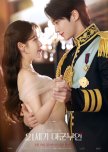
Perfect Crown arrives as a romantic comedy on the surface, but beneath its polished royal aesthetic lies a character-driven narrative that thrives on emotional restraint, symbolic progression, and the gradual unfolding of intimacy between its leads. While it may not reinvent the romcom genre, it succeeds in refining familiar tropes through execution, chemistry, and emotional pacing.At its core, the drama is anchored by its central relationship between Hui Ju and Grand Prince Ian. Rather than relying on instant romance or overt melodrama, the story builds their connection through layered interactions, situational tension, and emotional withholding. This slow-burn approach is arguably one of the drama’s greatest strengths. The relationship does not feel externally manufactured; instead, it evolves organically through shared experiences, conflict resolution, and emotional recognition.
Hui Ju’s character arc is particularly noteworthy. She begins the series as a highly ambitious, self-sufficient woman defined by control, intellect, and emotional guardedness. Her evolution, however, is not framed as a loss of strength but a redefinition of it. The drama carefully dismantles her emotional barriers not through weakness, but through choice. Her vulnerability becomes an act of agency rather than submission, especially in the latter half of the series where her priorities shift from ambition-driven survival to emotionally driven protection. This transformation is one of the most compelling aspects of the narrative because it is neither abrupt nor idealized; it is earned through cumulative emotional weight.
Grand Prince Ian, on the other hand, represents restraint as both identity and burden. His characterization leans heavily into emotional suppression, strategic thinking, and internal conflict. He is not written as a traditionally expressive male lead, which led to some polarized reception. However, this restraint is intentional and thematically aligned with his narrative position. His arc revolves around power that is deliberately unused, authority that is morally complicated, and a man constantly balancing duty against desire. The subtlety in his performance style is therefore not a limitation, but a structural choice that aligns with his psychological framing.
Where the drama excels most significantly is in its romantic chemistry. IU and Byeon Wooseok deliver a pairing that relies less on explicit confession and more on visual communication, silence, and microexpression. Their dynamic thrives in subtext—glances held too long, pauses that carry meaning, and physical distance that gradually collapses over time. This kind of chemistry is difficult to manufacture artificially and becomes one of the primary emotional engines of the series. It is also what elevates otherwise familiar romcom beats into something more immersive.
From a production standpoint, Perfect Crown demonstrates strong visual cohesion. The cinematography emphasizes symmetry, framing, and tonal softness, reinforcing the fairytale-like interpretation of its royal setting. Costume design also plays a symbolic role, particularly in Hui Ju’s wardrobe progression. The transition from bold, statement-heavy outfits to more refined, structured silhouettes mirrors her internal shift from self-protective ambition to relational grounding. Similarly, the subtle coordination between the leads’ styling reinforces their emotional alignment without needing explicit dialogue.
The supporting cast also contributes meaningfully to the narrative structure. The younger monarch figure adds emotional contrast and moral grounding, while the Queen Mother’s presence introduces controlled tension and thematic weight regarding legacy and power dynamics. Even secondary characters, though limited in screen time, serve functional roles in reinforcing the central themes of duty, loyalty, and emotional cost.
However, the drama is not without its limitations. At times, the writing leans on familiar romcom and palace-drama conventions without fully subverting them. Certain political conflicts resolve more conveniently than expected, and some narrative threads feel secondary to the romance rather than fully integrated into the broader world-building. Additionally, viewers seeking tightly structured political intrigue or high-stakes realism may find the tonal balance uneven.
There is also the question of pacing consistency. While the emotional arc is generally well-maintained, certain mid-to-late episodes prioritize relationship progression over narrative expansion, which may reduce tension for viewers more invested in plot complexity than emotional payoff.
A particularly compelling dimension of the drama emerges in how Hui Ju functions as the true catalyst of Ian’s transformation. While Ian is positioned within the narrative as a figure of restraint, power, and internal conflict, it is Hui Ju who ultimately becomes the force that redefines his direction. Her presence does not merely soften him—it redirects him. Ian’s so-called “revolution” is not political in the traditional sense; it is emotional and existential. Everything he refrains from becoming, everything he chooses to endure rather than conquer, is shaped by the meaning Hui Ju holds in his life. In many ways, she is not just his love interest but the axis upon which his decisions pivot. His revolution is not about overthrowing systems, but about choosing her within them.
Despite these critiques, the emotional core of Perfect Crown remains remarkably intact. Its success lies not in structural innovation, but in emotional clarity. The drama knows exactly what it wants to be—a romantic narrative centered on transformation through love—and commits to that identity without excessive deviation.
Ultimately, what lingers most is not the political framework or plot mechanics, but the emotional journey of its characters. The idea that Ian’s revolution, both literal and metaphorical, is intrinsically tied to Hui Ju reframes the entire narrative as one of emotional devotion rather than power acquisition. Love, in this context, is not ornamental—it is catalytic.
FINAL THOUGHTS
Perfect Crown may not be flawless, but it remains cohesive in intent, emotionally resonant in execution, and deeply memorable in its character portrayal. A special appreciation goes to IU and Byeon Wooseok for their exceptional performances as Hui Ju and Grand Prince Ian—their chemistry and emotional depth served as the true emotional anchor of the entire drama. I also extend my sincere gratitude to the supporting cast for their meaningful contributions in enriching the story’s world and emotional texture. Overall, Perfect Crown is not just a drama I enjoyed—it is one I find myself certain I will return to, time and time again, whenever I wish to relive its warmth, romance, and emotional impact.
Was this review helpful to you?
This review may contain spoilers
"Love that Waited, Pain that Endured: The First Frost’s Silent Strength"
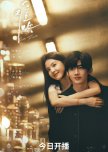
In a television landscape often dominated by conventional storytelling, The First Frost emerges as a breath of fresh air — a drama that trades fast-paced plots for emotional depth, and grand romantic gestures for quiet, patient love. It is a drama about trauma, recovery, and the slow journey of healing, all wrapped within the emotionally rich romance between Sang Yan and Wen Yifan.The love story between Sang Yan and Wen Yifan is not one born of fantasy, but of real, lived emotional experiences. Their reconnection is marked by unhealed wounds and years of silence, and what follows is a process of rediscovering each other through empathy, patience, and emotional intelligence.
Sang Yan, portrayed with understated brilliance by Bai Jingting, is not your typical romantic hero. He is steady, warm, emotionally intelligent, and, most importantly, patient. His love for Wen Yifan is never performative; it’s quiet yet powerful, rooted in understanding and genuine care. His journey — from a heartbroken teenager confused by a painful breakup to a man willing to set aside his pride to protect the woman he loves — is a masterclass in nuanced emotional writing. Bai Jingting brings layers to the character: vulnerability, restraint, and fierce devotion. His performance, particularly in pivotal scenes such as Episode 27, is a standout — communicating anguish, fear, and love with just a glance.
Zhang Ruonan as Wen Yifan delivers a quietly devastating performance. Wen Yifan is a complex character — traumatized, guarded, yet fiercely trying to survive in a world that has not been kind to her. Ruonan’s portrayal captures this duality: the dead-eyed stares of someone numbed by pain, and the flickers of warmth when she begins to trust again. Her arc — from a woman running from her past to someone finally learning to stand tall in spite of it — is executed with grace and empathy. Zhang Ruonan makes Wen Yifan not only believable but deeply relatable, especially to those who’ve known what it means to live with invisible wounds.
The core of The First Frost lies in how it explores healing not as a grand moment of catharsis, but as a slow, often painful, and deeply personal process. Wen Yifan’s trauma is not something love instantly cures, and Sang Yan’s devotion is never about "fixing" her. Instead, the drama beautifully illustrates what it means to hold space for someone else’s healing. Their relationship is defined not by romantic highs but by emotional intimacy: shared silence, gentle confrontation, late-night conversations, meals cooked and eaten in quiet company. They grow, stumble, and slowly learn how to coexist with their pain while reaching for something better together.
Flashbacks to their youth further enriches their bond, showing the youthful innocence they lost and the maturity they gain. Sang Yan’s POV moments at the end of several episodes serve as emotional anchors that allow us to fully empathize with his quiet but unyielding love.
Visually, The First Frost is a work of art. The cinematography — soft, grounded, often wistful — perfectly mirrors the emotional tone of the drama. The use of natural lighting, muted color palettes, and subtle framing adds texture to each moment, especially during emotionally charged scenes. The soundtrack deserves its own praise — emotionally resonant, unobtrusive, and deeply tied to character beats. The opening song, which initially feels skippable, grows on you and eventually becomes a part of the storytelling itself.
The directing and writing team clearly approached this project with deep care. There’s a remarkable attention to detail — from character expressions to scene transitions — that reflects their understanding of the source material and their commitment to doing it justice. While the supporting characters add texture, though the balance between the main and secondary arcs falters at times. The second storyline, particularly the Qiao Qiao-Haoan dynamic, feels underdeveloped, and the drama could’ve benefited from showing more of Qiao Qiao’s emotional landscape. Despite these hiccups, they do not undermine the power of the central story.
FINAL THOUGHTS
The First Frost is not a story for those in search of lighthearted entertainment or fast-moving plotlines. It is a drama for those willing to sit in silence, to feel deeply, and to embrace the messy reality of healing. Bai Jingting and Zhang Ruonan deliver some of the best performances of their careers, breathing life into two flawed, beautiful characters. And behind them, a production team whose dedication is felt in every frame.
In a world that often celebrates grand gestures and instant resolutions, The First Frost reminds us that true love is found in understanding, patience, and the quiet act of staying.
To the cast and crew, especially Bai Jingting, Zhang Ruonan, the director, writers, and everyone who made this story possible—thank you. You didn’t just make a drama. You told a story that stays with us long after the screen fades to black.
“Wen Shuangjiang, I’ve finally waited long enough for you.” — Sang Yan
Was this review helpful to you?


