

 132
132 248
248 23
23 2
2 5
5 6
6 10
10 5
5 7
7 6
6 4
4 10
10 5
5 2
2 7
7 40
40 3
3 5
5 4
4 2
2 1
1 4
4 5
5 5
5 2
2 6
6 30
30 38
38 13
13 23
23


A Love Letter to Life, Loss, and the Stories We Leave Behind
OVERVIEW:In the poignant tale of "Our Movie," a once-celebrated film director finds himself mired in a profound creative drought, his passion for storytelling eroded by years of commercial compromises and personal regrets. Enter an aspiring actress, vibrant yet shadowed by a terminal illness that grants her a finite window to chase her dreams. She approaches him with an audacious proposal: to cast her as the lead in a deeply personal film that blurs the lines between fiction and their unfolding realities. As they collaborate on this makeshift production, what begins as a professional arrangement evolves into an intimate exploration of love, loss, and the redemptive power of art. The narrative unfolds through a series of tender, introspective moments where the characters confront their vulnerabilities head-on. The ML, stoic and introspective, grapples with reclaiming his artistic voice, while the FL infuses every scene with a defiant zest for life, turning their shared project into a metaphor for seizing fleeting joys amid inevitable sorrow. Themes of mortality weave seamlessly into the fabric of their romance, not as a maudlin device, but as a catalyst for profound growth, urging both protagonists to rewrite their narratives before time runs out. Ultimately, "Our Movie" crafts a narrative that resonates as a heartfelt ode to human connection, reminding us that even in the face of endings, the act of creation can forge something enduring and beautiful.
_____________________
COMMENTARY:
From the very first moment I hit play, it felt like this quiet pull, you know? Not the kind of drama that blasts you with over-the-top twists, but something subtler, like a gentle wave that slowly drags you under until you're fully immersed. I remember settling in with my coffee, expecting maybe a light romance with some film industry flair, but nope . . . it snuck up on me with this raw, honest look at life slipping away, and suddenly I was feeling all these things I didn't even know I had bottled up. The way the story unfolds, with the ML who's all bottled-up and lost in his own head, and FL who's bursting with life even though she's facing the end. . . it mirrored something in me, like how we all put off our dreams until it's almost too late. I felt this immediate connection to her energy; she's got this defiant spark, pushing through her illness with such grace and humor that it made me smile through tears more times than I can count. And him? His stoic vibe, that quiet intensity . . . it reminded me of people I know who hide their pain behind a facade of control. Watching them collide, it was like seeing two broken pieces fit together in the most unexpected way.
As I kept watching, the emotions just built up layer by layer. There were moments where I'd pause just to catch my breath because the heartache was so real, so palpable. It's not just about romance; it's this deep dive into what it means to truly live when you know time's running out. I felt this overwhelming sense of urgency mixed with melancholy . . . like, why do we wait for a wake-up call to chase what we love? The FL's vibrancy, her way of turning everyday moments into something poetic, it inspired me, but it also wrecked me. I'd find myself thinking about my own life during breaks, wondering if I'm really making the most of it or just going through the motions like the director was at the start. His journey, reclaiming his passion through their collaboration, hit hard too. It felt therapeutic, almost, watching him open up, layer by layer, shedding that creative slump. But oh, the themes of mortality? They weave in so seamlessly, not hammering you over the head, but lingering like a soft shadow. It made me reflect on loss in my own life, how love doesn't just vanish when someone's gone; it echoes in the stories we tell.
Visually, this thing is a feast . . . the cinematography pulled me in deeper with every frame. Those lingering shots on rain-slicked streets or cluttered editing rooms, the way colors shift from muted grays to warmer tones as their bond grows . . . it all felt like art imitating life, or maybe the other way around. I loved how it borrowed that French New Wave style, with jump cuts and nonlinear bits that made the narrative feel alive, unpredictable. It wasn't flashy, but elegant, like the drama was its own movie within a movie. And the OST? Forget it . . . those tracks would swell at just the right moments, turning a simple glance or confession into something that punched me right in the chest. I'd rewind scenes just to soak in the music layered over the visuals, feeling this mix of warmth and sorrow wash over me. It was healing in a weird way, like a hug that also stabs you a little, reminding you that pain and joy are intertwined.
The acting, though . . . that's what elevated everything for me. The ML, with his stoic, enigmatic presence, he didn't need big speeches; his eyes said it all, that internal struggle bubbling under the surface. I became such a fan of his nuanced performance; it felt so real, like he was drawing from some deep well of regret and rediscovery. And FL? She shone so brightly, bringing this radiant vulnerability that made her character feel alive, not just a trope. Her energy was intriguing, fresh - sometimes whimsical, sometimes heartbreakingly raw. Their chemistry wasn't the explosive kind; it was slow-burn, built on shared vulnerabilities and quiet understandings. Watching them navigate their feelings, from professional distance to something deeper, it stirred up all these emotions in me - hope, fear, tenderness. There were times I'd laugh at her subtle humor, like those little comedic touches amid the heaviness, and then bam, I'd be tearing up at how she faced her reality with such poise. It made me appreciate how the story balanced whimsy and heartbreak, never tipping too far into melodrama.
Deeper in, the meta layers really got to me . . . how their project blurs fiction and reality, turning art into therapy. It made me think about how we all rewrite our stories to find meaning, especially in the face of grief. The way it explores love disappearing or lingering after loss? That question haunted me, leaving me with this wistful ache. I'd finish a session feeling wrecked but also released, like I'd sobbed out some pent-up stuff. It's not a fluffy watch; it's the opposite of fancy plots - slow, slice-of-life melo about life, death, and connection. Yet, it reminded me we're blessed, even in chaos, to have moments of beauty. The side stories, like the crew dynamics or family backstories, added richness without overwhelming, making the world feel lived-in.
By the time it wrapped up, I was a mess . . . traumatized in the best way, but so glad I stuck with it. It changed how I look at things, urging me to live fully, passionately. Not as sad as I feared, but devastatingly brilliant, a work of quiet power that stays with you.
____________________
FINAL THOUGHTS:
As I sit back and reflect on Our Movie, after being swept up in its tender narrative, pouring out the whirlwind of emotions it stirred in me, and gushing over all the things I loved, I’m left with a quiet sense of gratitude and awe. This drama wasn’t just a show I watched; it was an experience that settled into my bones, leaving me changed in ways I’m still unraveling. It’s rare for a story to feel so intimate yet so universal, like it’s speaking directly to you while echoing truths everyone grapples with. My final thoughts are a mix of reverence for its beauty, appreciation for its imperfections, and a deep personal connection that makes me want to carry its lessons forward.
What lingers most is how Our Movie made me confront the fragility of life without drowning me in despair. The way it balanced heartbreak with hope felt like a gift . . . it didn’t shy away from the pain of loss, but it also showed how love, art, and human connection can make even the fleeting moments eternal. I found myself thinking about my own choices, the dreams I’ve shelved, the people I hold dear. It’s not that the drama gave me answers, but it asked the right questions: Am I living fully? Am I telling my own story with courage? Those questions hit hard, and I’m grateful for the nudge to reflect on them. The romance at its core, built on vulnerability and quiet understanding, reminded me that love doesn’t need grand gestures to be profound - sometimes it’s in the small, shared moments that you find something worth holding onto.
The visual and emotional tapestry of this drama is what I’ll carry with me most. Those cinematic shots, the swelling OST, the way every frame seemed to whisper about life’s fleeting beauty . . . it all wove together to create something that felt like a love letter to storytelling itself. I keep replaying scenes in my head, like the quiet confessions or the way they poured their hearts into their film, and I feel this ache mixed with warmth. It’s the kind of story that makes you want to call someone you love, pick up a passion you’ve neglected, or just sit with your thoughts and appreciate being alive. I’m already itching to rewatch it, to catch the nuances I might’ve missed, to feel that mix of a hug and a knife to the chest all over again.
In the end, Our Movie is a masterpiece of the heart. It’s a reminder that our stories, no matter how short or imperfect, matter. It left me wrecked, inspired, and profoundly grateful. I’d recommend it to anyone who’s ready to feel something real, to let a story break them open and put them back together. It’s not just a drama; it’s a mirror, a muse, and a quiet call to live with passion before the credits roll.
Was this review helpful to you?
This review may contain spoilers
The Premise Runs Out of Money
Cashero presents itself as a deft combination of superhero spectacle and social commentary, but the series ultimately falters due to its lack of narrative clarity and discipline. What begins as an intriguing and socially attuned premise deteriorates into a confused and unevenly written drama.The story follows Kang Sang-ung, a timid civil servant whose distant and abrasive father leaves him with an unwanted supernatural ability. Sang-ung can access extraordinary physical strength only when carrying physical cash. The greater the amount of money on his person, the stronger he becomes, yet every use of the power directly consumes that cash. Within the South Korean context, where housing insecurity and financial anxiety shape the lives of many young adults, the metaphor is immediately resonant.
Sang-ung has no desire to become a hero. His ambitions are modest and personal, focused solely on saving enough money to buy an apartment with his girlfriend, Kim Min-suk, an accountant. Acts of altruism are something he actively avoids, and only external pressures force him into reluctant intervention.
In its early episodes, Cashero gestures toward a compelling ethical dilemma. The tension between personal survival and social responsibility is briefly explored through the mechanics of Sang-ung’s power. Because his strength depends entirely on liquid cash rather than credit cards, every sudden influx of money becomes a ticking clock. The question of whether he can secure his savings before being compelled into action initially provides narrative urgency.
This tension is squandered almost immediately. A prolonged early arc centered on an unexpected bag of cash exhausts the concept in one stroke, leaving little room for escalation or variation. What should have been an enduring source of suspense instead becomes a prematurely resolved gimmick.
Despite the conceptual richness of its premise, the series rarely examines its implications beyond surface-level humor. Recurrent jokes about masculinity and financial worth, such as Min-suk secretly adding bills to Sang-ung’s wallet to test his strength, substitute for meaningful character development. Kim Hye-jun, frequently cast in assertive and complex roles, is confined to a reductive portrayal of a nagging, money-obsessed partner. Sang-ung, meanwhile, drifts through the narrative with minimal growth, protected from accountability by the show’s indulgent framing of his reluctance.
The series briefly improves when it introduces a wider ensemble of misfit heroes. Byeon Ho-in can phase through walls only when intoxicated, while Bang Eun-mi’s telekinesis is activated through binge eating. These characters provide moments of tonal relief and comic potential, yet they remain largely underused, functioning as background figures rather than narrative drivers.
As an action drama, Cashero feels generic and underpowered. Its visual effects and fight choreography lack distinction, particularly when compared with more accomplished Korean superhero series that have demonstrated greater ambition and coherence.
The most damaging flaw, however, lies in the writing itself. The series repeatedly undermines its emotional stakes through abrupt tonal shifts and a failure to maintain narrative continuity. In one especially jarring moment, Sang-ung witnesses people die violently at the hands of the villain Jonathan, only for the story to immediately pivot to a warm domestic scene in which his trauma appears to have vanished entirely.
From scene to scene, Cashero struggles to define its identity. It piles up effects-driven set pieces and incompatible emotional beats, then leaves us to reconcile the contradictions on our own.
The opening episode hints at a sharper and more disciplined series. What follows is a steady and disappointing unraveling.
Was this review helpful to you?
This review may contain spoilers
WHEN TWO WOMEN AND A DEADLY DEAL REDEFINE WHAT JUSTICE ACTUALLY COSTS
OVERVIEW:The Price of Confession is a thriller that stars Jeon Do-yeon as Ahn Yun-su, a mild-mannered high school art teacher whose world collapses when her artist husband, Lee Ki-dae, is found stabbed to death in his studio. With her fingerprints on the knife and no credible alibi, she is convicted of his murder and sentenced to life in prison, separated from her young daughter Sop.
In prison, she crosses paths with Mo Eun (Kim Go-eun), a woman who has just been arrested for poisoning a dentist couple in cold blood and who is widely known as 'the Witch.' Through a crack in the wall between their solitary cells, Mo Eun proposes an impossible deal: she will confess to killing Ki-dae in court, freeing Yun-su, if Yun-su agrees to do one thing in return - kill Ko Se-hun, the dentists' son, whom Mo Eun claims she failed to eliminate herself.
What follows is a tightly wound psychological thriller about desperation, grief, revenge, and the very blurry line between justice and crime. Also starring Park Hae-soo as the relentless prosecutor Baek Dong-hun and Jin Seon-kyu as Yun-su's scrappy defense attorney Jang Jeong-gu, this drama asks a question it never lets you forget: how far would you go to get back to your child?
⸻
IN DETAIL:
• The Setup & First Half
The drama opens beautifully with a flash to a wedding in 2017, then straight to 2022 and Yun-su kneeling over her husband's bleeding body. From the very first scene, you are never quite sure if she did it. Jeon Do-yeon plays her with this off-kilter, slightly too-cheerful energy that keeps you questioning her even when you want to root for her. When Mo Eun then announces in open court that she wants to confess to Ki-dae's murder, and the entire room erupts, I was immediately hooked.
The early stretch lays out the mechanics of the deal while Yun-su, released on bail with an ankle monitor, juggles being a mother again, hunting Ki-dae's real killer, and contemplating whether she is actually capable of committing murder to save herself. These episodes are deliberately slow, and that is the drama's biggest weakness. The pacing tests your patience. That said, the atmosphere more than compensates. This is one of the moodiest, most visually deliberate dramas I have seen in a while. Every scene feels heavy. You never fully relax.
• The Twist That Changed Everything
The dramatic midpoint is where The Price of Confession truly earns its thriller badge. The entire sequence is built around Yun-su covering up what we believe is Se-hun's murder. She burns her clothes, scrambles home, lies to her probation officer with her heart in her throat. The tension is unbearable. And then the rug is pulled: Yun-su didn't actually kill him. She warned him instead, staged a fake crime scene photo, and told him to disappear. But Se-hun turns up dead anyway, stuffed in a freezer in his family home. Someone else got there. The editing keeps us in the dark just long enough that the reveal lands like a gut punch.
• Mo Eun's Real Identity
Midway through, the full truth about Mo Eun reframes everything. She is not Mo Eun at all; her real name is Kang So-hae, a former doctor who was volunteering in Thailand when COVID hit. While stuck abroad, her teenage sister So-mang was assaulted by Se-hun, who filmed it, circulated the video, and used his family's wealth to escape accountability. The case was flipped to victim-blame. So-mang killed herself. Their father followed. So-hae, unable to return home due to lockdown restrictions, watched it all happen from thousands of miles away.
Kim Go-eun is absolutely devastating in the flashback sequences. The scene of So-hae waking up to a flood of unread notifications is one of the most quietly harrowing things in the entire drama. This backstory transforms Mo Eun from a cold-blooded psychopath into something far more complicated: a grieving sister who crossed every line because the system gave her no other options. That shift in understanding is one of the most impressive things the writing does.
• The Second Half & Finale
The back half is where the drama becomes the show it always promised to be. The pacing transforms completely, suddenly everything is urgent and layered. Yun-su goes on the run, evading police while leaving deliberate clues. She posts a confessional video online and starts piecing together that Mo Eun's own lawyer may have had a connection to Ki-dae all along. Watching her finally be proactive rather than reactive is immensely satisfying.
The revelation of Ki-dae's real killer - Choi Su-yeon, Yeong-in's wife and a celebrated cellist, who snapped during a studio confrontation over a plagiarised painting, is emotionally satisfying even if the motive strains believability. The climax, where Mo Eun takes matters into her own hands by stabbing herself to disarm Yeong-in, is pure Mo Eun. Yun-su's ending is bittersweet but right. She serves her time, then travels to Thailand with Sop to leave behind the pink watch that belonged to the real Mo Eun. A quiet, poignant goodbye.
⸻
THEMES & DEPTH:
At its core, this drama is about how broken systems force people into impossible choices. Se-hun walked free because his family had money and connections. The court didn't just fail So-mang, it actively blamed her. So-hae's transformation into Mo Eun is not madness, but the logical conclusion of a person who watched justice be bought and decided to become something the system couldn't ignore. Yun-su's arc mirrors this exactly - a woman who trusted her innocence would protect her, only to discover it wouldn't.
What gives the drama its real emotional weight is the slow evolution of Mo Eun and Yun-su's relationship from cold transaction to something approaching genuine sisterhood. When Mo Eun finally explains why she helped, saying it is because Yun-su has a life to return to, it hits entirely differently knowing everything we know by then.
⸻
PERFORMANCE HIGHLIGHTS:
• Kim Go-eun as Mo Eun / Kang So-hae
She is the undeniable standout and I cannot overstate how good this performance is. Kim Go-eun gives Mo Eun this eerie stillness, the flat affect, the measured speech, the way a casual observation can sound like a death threat, without ever tipping into caricature. When the backstory unravels, she layers in grief and desperation that feels completely real. The Thai flashback scenes are some of the finest acting she has ever done. She gets the small moments right, too, the flickers of childlike curiosity, the way she subtly softens around Yun-su. A masterclass in understated complexity.
• Jeon Do-yeon as Ahn Yun-su
Playing the more emotionally readable lead opposite Kim Go-eun is harder than it looks, and Jeon Do-yeon more than holds her own. Her best trick is making Yun-su feel just slightly off, enough to keep you questioning her for longer than you should. When the mask finally cracks, it is genuinely moving. Her strongest scenes come in the back half when Yun-su stops being reactive and starts being dangerous.
• Park Hae-soo as Baek Dong-hun
Not a flashy role, but Park Hae-soo does excellent work with it. Dong-hun is a man whose professional certainty becomes his blind spot, and watching that certainty erode over the course of the drama is one of its satisfying arcs. His dynamic with Jin Seon-kyu's Jeong-gu, the prosecutor too proud to admit he is wrong versus the attorney who believed his client from day one, is one of the best things about the show.
• Jin Seon-kyu as Jang Jeong-gu
He is the warm heart of the drama. Jeong-gu's loyalty toward Yun-su never wavers, not when it looks impossible, not when it costs him. Jin Seon-kyu plays him with such genuine earnestness that every scene he is in feels grounded, which is exactly what the show needs to balance everything else that is morally murky.
⸻
MIXED EMOTIONS:
The slow pacing of the first half is a genuine problem, not just a stylistic choice. There are stretches that feel like procedural box-ticking rather than narrative momentum, and the deal between Mo Eun and Yun-su takes too long to be interrogated meaningfully rather than just presented.
Yun-su's logic also stretches believability more than once. She wears an ankle monitor that tracks her every movement, yet repeatedly sneaks out to visit Se-hun. The show eventually acknowledges this, but she takes far too long to grasp the basics of electronic surveillance for someone whose life is on the line.
Ki-dae's murder motive is a painting dispute that bruised Yeong-in's academic reputation. It also feels disproportionately petty for the weight the drama needs it to carry. Su-yeon and Yeong-in arrive too late and too thinly written for the reveal to land as hard as it should. And Su-yeon escaping clearly defined consequences is a narrative shortcut that undercuts the drama's own message about justice.
⸻
LIKES:
The atmosphere is immaculate. The prison aesthetic, the cool blues and greys of Yun-su's world, the way light is used to make Mo Eun feel like she exists in a different moral dimension. The cinematography does heavy lifting and pulls it off completely. The short runtime per episode is also a smart structural choice. You are never sitting through a dragging hour, even when the content moves slowly.
Mo Eun navigating prison life is endlessly watchable - faking arachnophobia to get moved into the right solitary cell, neutralising her bunkmates, making a fool of Dong-hun while strapped to a polygraph. She is playing everyone at every moment and stays three steps ahead throughout.
The epilogue detail that So-hae and So-mang were present at Yun-su and Ki-dae's wedding years earlier, that So-hae saw her face, called her pretty, and walked away... it is a small, devastating touch. Their fates were connected long before either of them knew it.
⸻
DISLIKES:
The first half drags. The early stretch especially needed more fuel to keep the mystery urgent rather than procedural.
Yun-su's repeated oversights with the ankle monitor are frustrating and hard to excuse for someone supposedly fighting for her life.
Ki-dae's murder motive (a petty academic reputation dispute) does not hold the weight the finale needs it to. The real killers arrive too late and too thinly drawn.
Su-yeon escaping clear, shown consequences feels lazy and undercuts the drama's entire message about accountability.
Mo Eun's backstory is dumped in one concentrated reveal rather than fed to us gradually. It is still impactful, but would have landed even harder with more layering throughout.
⸻
LOVES:
Kim Go-eun. Kim Go-eun. Kim Go-eun. I have already said it in the performances section and I am saying it again because she deserves every word. The precision. The restraint. The moments where something human flickers through and then disappears. She is giving one of the best performances in recent Korean drama history and I will not be taking questions about that.
The central dynamic between Mo Eun and Yun-su is everything. Two women who should not work together, do not fully trust each other, and yet build something real anyway. Watching it shift from cold calculation to genuine mutual respect, and then to grief, is the emotional core of the whole show, and it is handled beautifully.
The mid-drama twist, where we watch Yun-su 'cover up' a murder she never committed while we fill in the gaps ourselves, is the cleverest piece of screenwriting in the drama. It works because the anxiety has been so carefully built that the misdirection feels completely earned.
⸻
SUGGESTED AUDIENCE:
If you prefer fast-paced thrillers, the first half will test your patience, but the payoff is worth the trust. Just go in knowing that, and you will be fine. Also note: this drama does not soften its depictions of sexual violence, institutional failure, or suicide. Go in prepared.
⸻
FINAL THOUGHTS:
The Price of Confession is not a perfect drama. The first half paces itself too cautiously, the central murder motive arrives underdeveloped, and a key villain escapes consequences the show has not fully earned. These are real flaws, and I am not pretending otherwise.
But what it gets right, it gets spectacularly right. Two of the finest actresses in Korean drama right now, at the absolute top of their game, playing two women who are mirrors of each other in ways you don't fully understand until the very end. A thriller confident enough to let atmosphere do its heavy lifting. A story about grief and the failure of systems that earns its emotional weight rather than just gesturing at it.
Kim Go-eun should be winning every award going for what she does here. Jeon Do-yeon is far more technically demanding than she first appears. Together, they create something that lingers, not because the plot is airtight (it isn't), but because the portrait of two women doing the unthinkable to survive an unjust world feels devastatingly real. The journey is the point. And what a journey it is.
Thanks for reading!💖
Was this review helpful to you?
This review may contain spoilers
A FINALE AS HOLLOW AS THE VIPs’ ACTING SKILLS
**Disclaimer: This final review reflects my personal opinion after a second viewing.**Alright, I just tore through Squid Game Season 3, twice, and holy hell, it’s a wild, messy ride that had me hooked but also pissed off at times. This season claws its way back to Season 1’s brutal magic in the first half, betrayals that made me want to throw my remote, and characters I couldn’t stop obsessing over. But many parts straight-up fumbled, and I’m not here to pretend they didn’t.
Gi-hun’s still the heart of this thing, and his relentless fight to burn the game down had me rooting for him, even when it felt like he was slamming his head against a wall. Myung-gi, though? Man, he drove me nuts. No-eul was a badass, though. Her rogue mission and that insane office showdown? I was screaming when she saved Kyung-suk, finally showing her true grit. Jun-ho’s arc got some redemption after Season 2’s aimless mess, but it still felt like he was just flailing against untouchable billionaires. And the Frontman? Dude’s a snake, but a compelling one. His mix of sincerity and backstabbing kept me glued, even if I don’t trust him for a second.
The games hit like a truck: bloody, chaotic, and packed with Season 1 vibes like the marble game and hopscotch. The betrayals stung hard, especially when allies turned on each other like it was nothing. But to be honest, some deaths, like Jun-hee’s, barely made me blink compared to Hyun-ju’s or Geum-ja’s. It made Gi-hun and Myung-gi’s survival feel too predictable, like the writers were scared to go all-in.
The big problem? This season swings for the fences with Gi-hun, Jun-ho, and Woo-seok trying to topple this shadowy corporation, but it’s a lost cause from the jump. Season 1 worked because it was raw: survive, win, get out. Done. This dystopian Hunger Games wannabe vibe is cool in theory, but it’s too big for its own good. The whole “greed always wins” message? Yeah, I get it, but it left me hollow, like the show was just shrugging at its own stakes. And don’t get me started on the VIPs’ acting... cartoonish and stiff, it yanked me out of the story every time they opened their mouths.
It’s a bloody, thrilling mess that recaptures some of the old spark, but it trips over its own ambition and leaves you wishing for a tighter punch.
WHAT I DISLIKED:
• VIPs remain the weakest part of this show. Their acting is wooden, and their presence is cartoonish in a story that otherwise demands gravity.
• Characters like Players 203, 039, and 100, who made it so far in the games, are vivid but lack depth. Their archetypes were one-dimensional.
• While the death-game format still delivers high-stakes tension, I did feel the interpersonal dynamics falter this time. With fewer players remaining, that complex web of social and strategic interplay, the thing that gave previous seasons their gripping unpredictability, is significantly reduced.
• Jun-ho and Woo-seok’s investigation felt like an afterthought. Key moments, like Jun-ho harpooning Captain Park or Woo-seok’s jail stint, were rushed and poorly integrated with the island’s narrative, diluting their impact and making the outside world feel like a side note.
• The season continues the voting mechanic from last time and still aims to reflect modern ideological divides, but honestly, the metaphor feels dulled now. The outcomes were predictable, and the tension that once surrounded each vote has faded.
• The middle of the season sagged under the weight of repetitive character conflicts. Moments of quiet character development, like Geum-ja’s confession to Gi-hun, were often overshadowed by drawn-out brutality, disrupting the narrative flow.
• Unlike Season 1’s rich player dynamics, Season 3’s survivors rarely formed meaningful connections. The “Bathroom Team” (Hyun-ju, Geum-ja, Jun-hee) was a brief exception, but most interactions were transactional or hostile, making it harder to care about the group’s fate.
• The final scene introducing a new recruiter in LA came off as a blatant setup for a spin-off or sequel season. It felt tacked-on and cheap, undermining the emotional closure of the island’s destruction and Gi-hun’s sacrifice.
WHAT I LIKED:
• Gi-hun’s arc is the beating heart of the season. Watching him evolve from a broken, mute shell to a man who finds purpose in protecting Jun-hee’s baby is profoundly moving. His refusal to take the Front Man’s deal made me emotional. It’s a testament to his unshakable humanity, even when the world around him collapses into chaos.
• Jang Geum-ja completely wrecked me in a midseason scene that was both haunting and transcendent. Her dynamic with her son, Yong-sik, became one of the emotional cores of the season. I also appreciated how characters like Jun-hee and Hyun-ju gained complexity and rose to the top, offering some of the best scenes of the season and stepping up when Gi-hun has lost all hope.
• No-eul’s rogue mission is a standout. Her transformation from a conflicted pink soldier to a vigilante fighting for redemption is thrilling and emotionally complex. The office showdown had me cheering. Her choice to live, inspired by Gi-hun’s sacrifice, gave me hope that even the most broken can find purpose.
• Jung Jae-il’s score continues to haunt me, and the surreal, almost nightmarish production design makes even familiar game settings feel disorienting.
• Sae-byeok’s family reunion, No-eul’s flight to her child, and Jun-ho’s custody of the baby in the epilogue felt hopeful.
Was this review helpful to you?

This review may contain spoilers
The Agony and Ecstasy of a Lifelong Friendship
GENERAL OVERVIEW:Friendship, in its truest form, can be a shelter against life’s tempests. But in “You and Everything Else,” it IS the tempest: violent, consuming, and relentless. This decades-spanning drama charts the entanglement of Ryu Eun-jung and Cheon Sang-yeon, two women bound together by intimacy and enmity in equal measure. Their friendship, fraught with rivalry, betrayal, and longing, ultimately bends toward reconciliation, painting a portrait of love and destruction intertwined.
From their first encounter as fourth-grade students in 1992, when Eun-jung was poor and sharp-edged and Sang-yeon seemed perfect as the new transfer student, their dynamic is shaped by mutual resentment and envy. What begins as hostility morphs into a fragile bond through middle and high school, only to become more complicated in college when both fall orbit to Kim Sang-hak, complicating their already fragile dynamic. When they collide again in their thirties, their professional lives spiral into betrayal, jealousy, and stolen ideas within the film industry. In the present day, a terminally ill Sang-yeon re-enters Eun-jung’s life, requesting accompaniment to Switzerland for euthanasia.
What makes this drama remarkable is how believably it captures the way friendships shift with age. Childhood friendships break over small things and reconciliation is just as easy then, but as you get older fights become harder to undo and reconciliations rarer. You could just stop seeing each other and move on. The way the show makes the troubles deepen with time is believable, and it quietly shows the subtle shifts between liking and resenting someone. I especially liked that Sang-yeon and Eun-jung weren’t tied up and made to fight over love alone.
At first Sang-yeon had experienced the death of Cheon Sang-hak, and then mid-series her mother dies, but only after being given a terminal diagnosis does she seem to finally face the lifelong triggers she’d carried. She was full of fear: would she follow her brother into suicide, or suffer like her mother until she died? She said she found comfort in knowing that Switzerland exists. I liked that she had the chance to choose while she was still coherent, and with Eun-jung by her side she was no longer lonely. “Nobody will die happier than me.”
The script, direction, acting, and music were all so calm and composed, with muted colors and long takes that mirror the characters’ emotional restraint... almost documentary-like, and that’s why it made me cry.
It showed so well that Sang-yeon exists as she is now because of Eun-jung, and Eun-jung exists as she is now because of Sang-yeon. Even though their friendship wasn’t all happiness and fond memories, in fact, it was filled more with resentment and jealousy, even those memories became the driving force that shaped them. And so, the show convincingly insists that the two could only ever be each other’s one and only.
Eun-jung felt inferior to Sang-yeon, and Sang-yeon felt inferior to Eun-jung, but I think they were really just trying to fill their own lacks. They drifted apart out of mutual blame and envy.
Eun-jung has always been the one to reach out, so Sang-yeon probably asked her to stay with her at the end knowing Eun-jeong wouldn’t be able to refuse. All the awkwardness, annoyance, and hatred faded, and only then did they find peace, but the saddest thing is that there was no time left to be together. Eun-jung’s face, telling Sang-yeon without hesitation “you did well, you held on,” stuck in my chest.
The final episode in particular was so well made. It was undeniably sad, yet also beautiful. I’ve never seen a drama like this before. It just left me with such a strange, indescribable feeling.
____________________
INSIGHTS:
Eun Jung:
Ryu Eun-jung is the central protagonist, portrayed as a resilient, empathetic, and multifaceted woman shaped by hardship, complicated relationships, and a lifelong struggle between bitterness and compassion. Born into poverty, she grows up in a semi-basement with her single mother, a milk delivery worker. Early exposure to inequality, such as school surveys exposing her fatherless home, bullying, and constant financial strain, leaves her both envious of privilege and fiercely resilient. Helping her mother and hiding her shame about home life forge a toughness that coexists with deep vulnerability.
At her core, Eun-jung is considerate and sincere, qualities that draw others in. Even as a child, she refuses revenge when wronged, showing empathy that becomes her quiet strength. This warmth attracts Sang-yeon’s mother (a mentor), Sang-yeon’s brother Cheon Sang-hak (her first love), and later Kim Sang-hak (her college boyfriend). Yet this same natural charm sparks Sang-yeon’s envy, as Eun-jung effortlessly wins affection Sang-yeon struggles to gain. She can be pessimistic, shaped by traumas which leaves her with guilt, anxiety, and a fear of loss.
Her growth is defined by moving from envy to self-preservation. Academically strong but always second to Sang-yeon, she sacrifices personal wants for her mother’s sake. Inspired by Cheon Sang-hak, she pursues photography, but her college romance with Kim Sang-hak collapses in a love triangle with Sang-yeon. Though jealous and insecure, snooping through mailboxes and drawers, Eun-jung ultimately breaks things off to protect herself, showing her shift toward independence.
As a working adult, she remains principled and uncompromising. She clashes with Sang-yeon over ethics, refuses to let victims apologize to abusers, and calls Sang-yeon a thief after being robbed of her work, rejecting compensation to keep her dignity.
Eun-jung’s photography becomes a metaphor for her perspective. She captures moments of truth but struggles to see her own worth until Sang-yeon’s memoir reveals how deeply she shaped Sang-yeon’s life.
Her guilt over Cheon Sang-hak’s suicide stems from believing she could have saved him, a burden that parallels her later decision to support Sang-yeon’s euthanasia, showing her growth in accepting what she cannot control, even while bitter about the timing.
Alone afterward, she embodies the survivor’s paradox: resentful of betrayals, yet unable to hate fully.
Sang Yeon:
Cheon Sang-yeon is a complex antagonist-protagonist: brilliant, ambitious, and deeply flawed, her life arcs from privilege to isolation, driven by envy, loss, and unfulfilled desires. Introduced as a transfer student in 1992, she comes from wealth and stability: an apartment home, intact family, and prestige through her minister grandfather. As class president, she appears the perfect model student: authoritative, disciplined, excelling in academics. Yet this façade conceals insecurity. Rumors about Eun-jung’s milk deliveries (whether started by her or not) spark conflict, and her strict punishments betray a defensive need for control. To Eun-jung, Sang-yeon embodies utopia, everything she lacks, yet Sang-yeon herself suffers from favoritism, neglect, and longing for love.
Her personality blends confidence with fragility. Exceptionally capable, she is also envious and insecure. Her mother favors Eun-jung, her brother confides in her, and Kim Sang-hak loves her, all of which stoke Sang-yeon’s jealousy. Her provocations stem from this longing for validation. Most often she is secretive, manipulative, and destructive which shows when she sabotages friendships through betrayal and rivalry, steals Eun-jung’s work, among other incidents.
Tragedies accelerate her decline. Her brother Sang-hak’s suicide leads to divorce, poverty, and her mother’s eventual cancer. Overshadowed by her brother’s memory and by Eun-jung’s growing importance in her life, Sang-yeon spirals further. In college, she joins the photography club too late to win Kim Sang-hak, fueling regret and obsession. As a working adult, she is ruthless: sleeping with a director, stealing projects to launch her company, and forcing unethical compromises on staff before quitting under pressure.
Her manipulative streak peaks when she steals Eun-jung’s film project, but later revealed that this act stemmed from desperation to prove herself, not just malice, adding nuance to her character.
Her pancreatic cancer diagnosis mirrors her mother’s illness, deepening her fear of losing control and driving her to seek euthanasia as a way to reclaim agency.
Flawed, selfish, and destructive, yet painfully human, Sang-yeon embodies the tragedy of unhealed wounds and unrequited longing.
_____________________
FINAL THOUGHTS:
I have to say this drama left me in a reflective haze after finishing. It's one of those stories that doesn't just entertain; it burrows into your soul and makes you question the messy threads of your own relationships.
Philosophically, the show burrows deep. It made me think about how envy and loss can warp us into unrecognizable versions of ourselves, how the people we resent most often reflect the parts of us we lack. It’s Nietzsche’s abyss refracted through friendship: stare too long at your insecurities, and they consume you. Yet the drama insists redemption doesn’t come from erasing the past, but from choosing compassion in the face of it.
What I learned here is that forgiveness isn’t for the offender, but it’s freedom for yourself. Grudges are stones in the chest; only by letting go can you breathe. And lastly, pride is an illusion; chase it too long and you end up alone, begging for connection at the end.
The last episode was undeniably sad, yet achingly beautiful. I’ve never seen anything quite like it. It’s melodramatic yet deeply human, heavy yet strangely liberating.
I don’t regret a single scene. If anything, it made me want to text an old friend I’d drifted from, just to say, “Hey.” Because if this drama shows us anything, it’s that love and hate aren’t opposites. They’re entangled threads, woven across decades, impossible to fully untangle. And that’s what makes them endure.
May all the Eunjungs and Sangyeons of this world, even if they never truly understand each other, still find a way to live side by side.
Thank you for reading!
Was this review helpful to you?
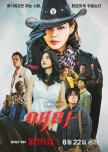
ONCE UPON A TIME IN CHUNGMURO
Madame Aema (1982) is a landmark in South Korean cinema. Released during Chun Doo-hwan’s authoritarian “3S Policy” era (Sports, Screen, Sex), it boldly tested the limits of censorship while becoming a commercial hit.Set in South Korea during the early 1980s, Aema follows the high-stakes world of Korea’s first erotic film, charting the journey of a seasoned star and an ambitious newcomer as they navigate a male-dominated industry rife with censorship.
Lee Hanee shines as Jung Hee-ran, a celebrated actress desperate to escape her sex symbol image, clashing with the manipulative producer Ku Jung-ho and director Kwak In-woo. Bang Hyo-rin’s Shin Ju-ae brings fire as a determined newcomer, whose ambition eventually leads her to forge an unexpected alliance with Hee-ran against systemic exploitation.
Visually, the series bursts with kaleidoscopic colors and audacious fashion, a stark contrast to the era’s typically somber portrayals. It foregrounds women’s solidarity while exposing the hidden suffering forced under patriarchal norms. Yet its message is paradoxically conservative: sexual desire is largely vilified, and only one character’s transactional sex is punished. The show favors energetic vignettes over historical accuracy, leading to caricatured characters and uneven tones, but it remains stylish and entertaining.
In essence, Aema is visually dazzling, thematically bold, and enjoyable, though its message and narrative clarity are somewhat muddled.
Was this review helpful to you?
This review may contain spoilers
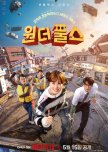
THREE DISASTERS, ONE RELUCTANT GOVERNMENT EMPLOYEE, AND A WHOLE LOT OF SLIME
OVERVIEW:Set in 1999 in the coastal city of Haeseong, The WONDERfools follows Eun Chae-ni, a terminally ill 27-year-old who attempts a fake kidnapping to fund her dream of travelling, involving her neighbour Kang Ro-bin and struggling florist Son Gyeon-un. The plan goes wrong when she dies, is exposed to a mysterious slime, and returns with teleportation, while the others also gain powers. They become entangled with Lee Un-jeong, a vigilante civil servant investigating the Wunderkinder Project, a covert orphan experimentation program from Hawondo Lab. Together they clash with the Church of Eternal Salvation, a cult led by Dr Ha Won-do, who seeks the mysterious Child of Eternity.
________________________
COMMENTARY:
Let me start by saying this: I had fun watching The WONDERfools. And I say this as someone who had zero intention of coming away feeling that way. A superhero K-drama set in 1999 with Cha Eun-woo in the lead? The scepticism was real. But Park Eun-bin as Eun Chae-ni is genuinely one of the most entertaining female leads I have seen in a while. She is chaotic, relentlessly optimistic, and absolutely unhinged in the best possible way. One minute she is dying, the next she is teleporting to a boat near China, and then screaming into the void about Northern Lights. She showed up to a hostage situation with a chainsaw. A CHAINSAW. I don't make the rules, she does.
The trio dynamic of Chae-ni, Ro-bin, and Gyeon-un is genuinely the best thing about this show. These three people share approximately one brain cell between them, and watching them figure out their powers through pure trial, error, and accidental chaos was genuinely hilarious. Gyeon-un sticking to a refrigerator while arguing with his wife, Ro-bin accidentally punching holes in walls when he gets emotional, Chae-ni teleporting into the middle of a period drama shoot because her heart rate spiked. The comedy writing in those moments was sharp, self-aware, and earned every single laugh.
The period setting of 1999 adds a fun retro texture to everything. The millennium panic, the cassette players, the general energy of a world that had not yet been worn down by smartphones and social media, it all works as backdrop and adds a nostalgic warmth that makes the show feel distinct. The show leans into its setting well without overselling it or turning it into a history lesson.
The villain trio, Pal-ho, Ju-ran, and Ho-ran, were more compelling than I expected. Their backstory of being experimented on as orphaned children and being fully indoctrinated into Dr Ha's cult worldview added real emotional texture to what could have been flat antagonists. Seeing Ju-ran and Ho-ran slowly start questioning Dr Ha's motives, and Pal-ho's bitter jealousy of Un-jeong going all the way back to childhood, gave the antagonistic side of the story some genuine weight. When Pal-ho died in Ju-ran's arms I felt something and I was not expecting to.
Gyeon-un's family subplot was also a surprising standout. His painful attempts to reconcile with a wife who has completely lost faith in him and a teenage daughter who is embarrassed to be seen with him gave the show some of its most grounded and human moments. The moment his daughter Cheong watches him be an actual superhero and finally sees her father as someone worth admiring was genuinely touching. The show knew what it was doing with him emotionally even when the plot around him was a mess.
________________________
MIXED EMOTIONS:
Let us talk about the Jeon-bok situation because my feelings are all over the place. For most of the show she is framed as this overprotective, financially stingy grandmother who refuses to let Chae-ni live. Fine. Normal kdrama grandmother energy. But then it is revealed that she helped fund the Wunderkinder Project and essentially contributed to the experimentation on children including the Child of Eternity, whose heart was later transplanted into Chae-ni. That is huge. That is an enormous moral failing. And the show just sort of... glosses over it? She cries, she apologises, she runs a memorial when Chae-ni disappears after saving the city, and somehow by the end everyone has largely moved on. I needed a harder reckoning there. I needed Chae-ni to sit with that longer.
I also had genuinely mixed feelings about Jun-mo. He is framed as this loyal protector figure for Jeon-bok throughout the whole show, and the eventual reveal that he was one of the orphaned children saved from the lab because of the fire Un-jeong caused was actually a nice full-circle moment. But I felt like his character was underwritten for most of the runtime. He kept showing up, providing just enough information to keep the plot moving, and then stepping back into the shadows. Give the man an actual arc, please.
The tone inconsistency throughout was also a source of whiplash for me. One minute the show is giving you full slapstick comedy with Gyeon-un stuck to a flower pot while his wife is on the phone yelling at him. The next it is serving you gut-punch imagery of children being injected with experimental chemicals in an orphanage. The drama did not always manage the transitions between those registers gracefully. Some scenes felt tonally orphaned, like they belonged to a completely different show that wandered onto the set by mistake.
________________________
DISLIKES:
Un-jeong's betrayal in episode five. I cannot let this go. And not because it was bad storytelling in theory, but because it was handled badly in execution. We have spent five episodes watching Un-jeong be suspicious of Chae-ni, slowly warm up to the group, even show moments of genuine care. And then suddenly he injects her with a sedative, hands her over to the villain, and we are supposed to be shocked. The problem is it did not land as a twist, it landed as a writing shortcut. There were no breadcrumbs, no seeds planted, no subtle hints that he was in contact with Dr Ha or being blackmailed. The explanation that he wanted information about his mother felt underwhelming compared to what he actually did. Like, sir, you could not have found another way? You handed her over to a man literally trying to cut out her heart.
The romance between Un-jeong and Chae-ni was the other major sore spot for me. The kiss in episode six was meant to be this pivotal moment where he uses the one sure-fire way to raise her heart rate and trigger her teleportation. In concept, cute. In execution, it had the romantic charge of two people shaking hands at a networking event. The chemistry between Park Eun-bin and Cha Eun-woo reads more like an older sister dragging her reluctant younger brother on an adventure than a love story. They are warm together and they clearly have fun in scenes, but romantic tension? The show kept insisting it was there and I kept waiting to feel it.
And speaking of Cha Eun-woo, let me be fair and honest here. He is not doing anything wrong. He is playing his signature brand: cool, brooding, trauma in the background, soft heart underneath. He hits his marks. He has good delivery in the quieter scenes. But he does not bring anything new to Un-jeong beyond what you have already seen from him, and a character this important to the show's emotional core needed more range than what was on offer. The monotone delivery works for stoic mystery but it does not work for vulnerability. The scenes where Un-jeong is supposed to be unravelling emotionally needed more and did not get it.
The explanation for why Chae-ni, Ro-bin, and Gyeon-un specifically gained superpowers from the slime remained vague throughout the season in a way that was frustrating rather than intriguing. Everyone else who touched the slime either died horribly or turned into something resembling human jelly. Why did these three survive and thrive? The best answer the show offered was essentially a shrug with a plot point about Chae-ni having the Child of Eternity's heart. But that still does not explain Ro-bin and Gyeon-un. This felt like a gap that the writers hoped the comedy would distract you from. It mostly worked, but it kept nagging at me.
Gyeon-un's power was also a comedy bit that outstayed its welcome by episode four. The sticking-to-things-when-he-lies gimmick was hilarious the first five times. By the seventh episode I needed it to evolve or to matter in a way that felt consequential rather than decorative. He did eventually use it to cling to the ceiling and overhear crucial villain plans, which was genuinely clever, but we waited a long time to get there.
________________________
LIKES:
Park Eun-bin. Full stop. She is the reason this show works as well as it does. Chae-ni in lesser hands could have been insufferably loud and one-note, a walking quirk machine. But Eun-bin brings this layered, lived-in quality to the character that makes every scene richer than it has any right to be. She does comedy and heartbreak in the same breath without either one cancelling the other out. The scene where she stays up comforting Un-jeong through his nightmares, and the moment where she breaks down crying after Ro-bin delivers her grandmother's food, both hit because Eun-bin grounded this whole chaotic story in genuine emotion. She is versatile, fearless, and completely committed. It is no wonder every project she touches turns into must-watch television.
The moment in episode six where Ro-bin explains to Gyeon-un why he has to save Chae-ni: because she was the only person who ever stood up for him when he was being bullied at school. That flashback of a teenage Chae-ni, presumably already carrying the terminal diagnosis, stepping in front of bullies on behalf of a kid she barely knew, is the most efficiently emotional scene in the drama. It tells you everything about who she is and why everyone around her loves her in about forty-five seconds.
Im Seong-jae as Ro-bin deserves a standing ovation. His power activation being tied to emotional overwhelm meant that the show kept putting him in positions where he had to be genuinely moved to do anything useful, and Im Seong-jae played every single one of those moments with such earnestness and warmth. The Ro-bin versus Pal-ho fight scenes were genuinely some of the funniest sequences in the show. Watching Pal-ho, a villain who has been established as terrifyingly powerful, look genuinely confused about why his abilities were not working on this random guy was comedy gold.
Choi Dae-hoon as Gyeon-un was consistently funny without ever being cartoonish. His dynamic with his wife Mi-hui was one of the most entertaining relationships in the show. They bicker constantly, she has no patience for him, and he keeps trying to do the right thing in the most roundabout possible way. But underneath all of that was a man who genuinely loves his family and is desperate to earn back their respect. That emotional throughline made his comedy land instead of feeling hollow.
Kim Hae-sook as Jeon-bok was phenomenal as always. This woman can communicate an entire complicated emotional history with a single look. Even when the writing did not fully commit to exploring the moral complexity of her character, Hae-sook showed up and did the work anyway. Her scenes with Chae-ni in the second half of the season carried genuine weight.
The ending of episode four where Chae-ni and Un-jeong end up beneath the Northern Lights together while she is bleeding out was genuinely beautiful. It was exactly the kind of moment this show is capable of when it slows down and lets itself breathe. She had been chasing those Northern Lights as a bucket list dream her entire life. The fact that it happened by accident, through a chain of absolute catastrophe, felt thematically right for who Chae-ni is. Life gave her what she wanted, just not in the way she planned. I adored that.
The finale, for all its messy pacing, delivered on spectacle. Chae-ni grabbing a blimp full of apocalyptic chemicals and teleporting it away from the entire city at midnight on New Year's Eve while fireworks go off around her was exactly the kind of unhinged, go-for-broke ending this show deserved. I was fully on board. My emotions were doing parkour. It worked.
________________________
FINAL THOUGHTS:
The WONDERfools is a flawed, uneven, frequently ridiculous show that I enjoyed far more than I was prepared to. It is not a masterpiece. The writing has real gaps, the romance does not work, the betrayal arc needed better setup, and the tonal whiplash will genuinely give you emotional jet lag. But the core trio is an absolute delight, Park Eun-bin is doing the most impressive work on television right now, and when this show hits its comedic or emotional beats correctly it genuinely soars.
It is the kind of drama that is better experienced than described. Trying to explain to someone why you are cackling at a man stuck to a ceiling in a villain's lab while simultaneously tearing up because a little girl realises her embarrassing father is a superhero is a conversation that only makes sense once you have watched it yourself.
The season finale leaves Dr Ha alive, the Church of Eternal Salvation still under investigation, Un-jeong still searching for his mother, and the entire slime-chemical situation unresolved. A second season is clearly being set up, and honestly? I would watch it.
Would I recommend it? Yes, with caveats. If you go in expecting a tight, well-plotted superhero narrative you will be frustrated. If you go in expecting a chaotic, funny, occasionally moving found-family story anchored by one of the best actresses working in Korean television right now, you will have a great time. Manage your expectations, embrace the chaos, and for the love of everything do not expect the romance to make you feel things.
Anyway, with all that said, I give The WONDERfools a 7.5/10.
Thanks for reading! ♡
Was this review helpful to you?

This review may contain spoilers
THE GENIE, THE PSYCHOPATH, AND A THOUSAND YEARS OF UNFINISHED BUSINESS
SYNOPSIS:Genie, Make a Wish is a supernatural romantic comedy about a genie named Iblis who was cast from heaven for refusing to bow before humans, and Ka-young, a young Korean woman diagnosed as a psychopath who was raised by her devoted grandmother Pan-geum to function in the world through rules and learned behaviour. Iblis needs Ka-young to make three corrupt wishes so he can corrupt her soul and win his eternal bet against righteous humanity. Ka-young, who remembers none of their shared past, has no interest in playing along. What unfolds is a chaotic, layered, emotionally surprising story of two people from completely different worlds who have apparently been orbiting each other across lifetimes without either of them fully knowing why.
________________________
COMMENTARY:
I will be honest, the premise sounds absolutely unhinged on paper. A genie released in the Arabian desert by a Korean mechanic with no emotions who then follows her back to her small village and starts getting arrested and losing money at arcade machines. It should not work. But it does, and it does almost immediately.
The show earns its chaos by grounding it in something real. Ka-young is not your typical FL. She was abandoned by her mother specifically because of her diagnosis, was raised entirely by Pan-geum, and has spent her entire adult life following a structured set of rules her grandmother built for her just so she can function. She is not broken. She is not sad about it. She has simply accepted the shape of herself and built a life inside it. That is a genuinely fresh character choice, and the show does not spend its time asking you to feel sorry for her or waiting for her to become softer. Her growth is not about becoming more emotional in a conventional sense. It is about expanding.
Meanwhile Iblis, who has spent nearly a millennium plotting revenge against the one righteous human who got him imprisoned, is completely unprepared for the version of her he actually meets. She threatens him with a hairpin on day one. She runs him over with her car. She beats him senseless when he sets her shop on fire. He is a supernatural being of immense power and she is genuinely unfazed by him, and that dynamic is endlessly entertaining.
I want to spend real time on Ka-young because I think she is one of the more brilliant FL characterisations in recent times. The show never once tries to cure her or frame her psychopathy as something to be overcome. What it does instead is show how a person can be deeply moral without being emotionally accessible in the traditional sense. Ka-young keeps choosing good not because she understands it on a feeling level but because Pan-geum built it into her architecture. The rules her grandmother gave her are not a cage. They are a love language.
Her first wish to test whether humans are corrupt by having Iblis grant five strangers their wishes is so perfectly Ka-young. She is not naive about human nature. She just has her own framework for evaluating it and she wants proof before she concedes. Every wish she makes after that, including her final one, is for someone else. A psychopath who keeps choosing self-sacrifice. There is something deeply moving about that contradiction once the show fully develops it.
Suzy absolutely killed this role. Ka-young's exterior is so controlled and flat and Suzy never made that feel like emptiness. There was always something underneath. The deadpan comedy, the small moments of competitive satisfaction, the jealousy she cannot name but clearly feels when Iblis mentions Jinniya, all of it was there without ever being announced. And when the finale finally gives her the emotional breakdown in the desert, it hits like a freight train because you have been watching her hold everything at arm's length for thirteen episodes. That scene was devastating in the best way.
Woo-bin has range we do not always get to see and this drama lets him use it. Iblis is funny. He is petty and jealous and embarrassingly bad at adjusting to modern life. The scene of him discovering carbonated drinks, the moment he gets motion sick after being released from the lamp, the absolute disaster of him attending a village festival. All of it lands because Woo-bin plays the absurdity with complete sincerity.
But the drama earns the right to break your heart with him because it spends time building the tragedy underneath the comedy. Iblis did not start his existence as a villain. He was a being who refused to bow out of pride and has spent a millennium convinced that his hatred for Ka-young is what drives him. What the past life reveals is that somewhere in a 20-year gap he cannot remember, he fell completely and irreversibly in love with her. He wrote her name on the walls of his lamp in a dead language over and over. He used his last divine wish to beg for a chance to see her again in another life. He wiped out an entire city in his grief after she died.
The episode that reconstructs that past is genuinely one of the most emotionally affecting things I have watched in a while. Woo-bin channelled Iblis's devastation so completely that it physically hurt. The arrogant immortal, brought completely undone by one human woman, weeping blood in the desert over a body turning to ash. The show earns every moment of it because it builds to it with patience.
I could talk about the supernatural mythology all day but the truth is the emotional engine of this drama is Pan-geum and Ka-young's relationship. Ahn Eun-jin played young Pan-geum with such warmth and specificity that every scene she was in felt lived-in. Her love for Ka-young is not performative or sentimental. It is practical and total. She built her granddaughter a whole functioning life out of rules and routines and never once treated her diagnosis as a tragedy to be mourned. That is an extraordinary kind of love and the drama understands it.
The second wish, Ka-young asking Iblis to restore Pan-geum's youth, is impulsive and not fully thought through in a very Ka-young way. But the reason behind it, overhearing Pan-geum worry about being a burden, is so telling. Ka-young cannot process grief. She cannot express love the way most people do. But she will upend the laws of reality for her grandmother without blinking. That is the show at its best.
Pan-geum's death hit hard even though it was telegraphed. The fact that Ka-young could not cry at the funeral and her mom would not let her join the procession is one of the most brutal moments in the drama. And then the desert breakdown comes later and you understand that all of that grief was just waiting for somewhere to go.
Min-ji is a gem of a supporting character. Fiercely loyal, quietly perceptive, the kind of friend who figures out the truth and responds by helping Ka-young hide it rather than making it about herself. Her final wishes, all three of them selfless, are a perfect reflection of who she is. The moment she can no longer recognise Ka-young after her third wish is the kind of small tragedy the show handles better than its big ones.
Every human master who gets wishes in this story reflects something specific about human nature and I think the drama handles this with more intelligence than it gets credit for. Im-seon wastes her wishes chasing workplace status she is not equipped for, ends up estranged from her daughter, and never even sees what she actually needed. Sang-tae is genuinely unsettling. A serial killer who uses his second wish to revisit the memory of a murder with visible satisfaction is a darker character than this genre usually attempts and Cho-joon plays him with a menace that works.
Yeong-hyeon is the most embarrassing kind of selfish, the kind that cannot recognise itself as selfishness until it has already caused damage. Bu-gyeong is driven purely by resentment. Kim Gae the dog asking to become human and then spending his human existence searching for the family that threw him away is the saddest arc in the whole drama and it lasts maybe four scenes total. The fact that he uses his last wish to return to dog form so he can say goodbye is genuinely heartbreaking.
The bet Ka-young sets up early on, asking Iblis to grant strangers' wishes to prove whether humans are corrupt, is one of my favourite structural choices in the drama. It makes the supporting characters' storylines feel purposeful rather than filler. Each one feeds back into the central theme. Greed hollows people out. Selflessness costs something real. Ka-young keeps proving her own point even when she does not intend to.
I want to be honest about the middle stretch because it is genuinely a problem. The Khalid arc, which takes up a significant portion of the drama's runtime, drags. Jung-hoon as an immortal being obsessed with obtaining more supernatural power is interesting in concept but repetitive in execution. His schemes loop back on themselves. His men show up. Ka-young gets cornered. Iblis shows up to save her. The mythology stacks up, Shadi, Zahara, soul flowers, immortality threads, but the emotional stakes do not rise proportionally.
The show is at its best when it is intimate. Ka-young and Iblis bickering over carbonated drinks, stargazing from the highest point in the village, redecorating the inside of his lamp together. Every time the supernatural politics pull focus away from that intimacy the drama loses something. There were stretches in the middle where I could feel myself losing investment and having to trust that the payoff was coming.
Ejllael is also a frustrating character. He is framed as antagonistic for most of the run but his motivations are inconsistent. An angel of death who tells Pan-geum the exact date she will die seemingly just to torment her, withholds crucial information from Iblis out of petty war-era grievances, and actively schemes to get Ka-young to make a corrupt wish so he can kill his brother. For an angel the moral logic is completely absent. Ka-young hitting him with a spade every other scene is extremely funny but it also underlines how thin his characterisation is. The show knows it cannot defend him so it just makes him a comedic punching bag instead.
The wish logic also had real inconsistencies. What counts as righteous versus corrupt shifted depending on what the narrative needed. Who can enter the lamp, what Iblis can and cannot alter in the past, how the bet actually works. The rules bent when the plot needed them to, which made it harder to fully invest in the stakes.
Despite the middle stretch issues the past life reconstruction is so good that it almost makes up for everything. Learning that Iblis spent twenty years in Dubai unknowingly falling in love with Ka-young a second time, this time a version of her who sold dates in the street and saved her money to buy a camel so she could go home, is devastating. She was discriminated against, cheated, beaten, and she still gave her last dates to homeless people. She was still exactly herself.
The cruelty of how she dies is almost unbearable. Iblis's master at the time makes a wish for a woman who refuses to submit to him and Iblis fulfils it without knowing the woman is Ka-young. By the time he realises it is too late. He fights, he begs, he tries to get anyone to take his lamp and use their first wish to save her. Nobody does. One man takes the lamp and wishes for gold. Ka-young dies with Iblis's hands on her face, and he destroys the entire city in his grief.
And then you find out that his last divine wish, the one the Supreme Being granted him, was simply to see her again in another life. He did not wish for revenge. He did not wish for her to remember him. He just wanted to see her. That recontextualises everything. His so-called hatred for her was grief wearing a costume. He has been mourning her for a thousand years and he could not even remember why.
The last few episodes are where the drama finally delivers on everything it has been building. Ka-young's final wish being framed as selfish on the surface but functioning as a last act of protection for Iblis is perfectly in character. She asks for one day of feeling everything. Every emotion she has been numb to her whole life. And then she spends that day weeping in the desert, finally understanding her grandmother, finally understanding what people have felt for her. It is raw and gutting and Suzy carries it entirely.
The reincarnation ending is exactly right. Ka-young returning as a genie, Iblis returning on the day the cherry blossoms fall, the two of them working together as a bickering duo for eternity. It fits them. Pan-geum raising chaos in the afterlife until Ejllael petitions for Iblis's return is the most Pan-geum thing imaginable and I loved it completely. Min-ji's wishes being entirely for other people, including her last one for Ka-young, is a beautiful sendoff for a character who spent the whole drama quietly being the best person in every room.
This one is for fans of supernatural romance, enemies-to-lovers, and slow burn payoffs that actually deliver. If you love dramas that blend genuine comedy with emotional gut punches, this is worth your time. Patience is required for the midsection but the back half rewards it.
This drama is not for everyone and I will not pretend otherwise. The lore can feel exhausting, the pacing has real issues, and if you need your romance to be front and centre at all times you will likely get frustrated. But if you trust the build, the landing is worth it.
________________________
FINAL THOUGHTS:
I give Genie, Make a Wish an 8/10. It is an uneven drama that peaks incredibly high and dips frustratingly low and somehow ends up being one of the more emotionally memorable watches of the year regardless. The core relationship between Ka-young and Iblis, two people who have been circling each other across lifetimes without knowing it, is exactly the kind of soulmatism story I live for when it is done with this much specificity.
Ka-young is not fixed by love. She is not cured or completed. She is expanded by it, and that is a much more honest and interesting story. Iblis does not become a good person. He becomes a person who chooses one human over his thousand-year-old resentment, which for him is the same thing. That distinction matters and the drama understands it.
The middle stretch will test you. The mythology will occasionally exhaust you. But Ka-young breaking down in the desert, finally feeling everything all at once, and Iblis returning on the day the cherry blossoms fall to find her already waiting. That is the drama at its best, and at its best this show is genuinely something.
Ty for reading! ♡
Was this review helpful to you?
This review may contain spoilers
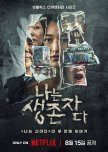
I didn’t know if I had the capacity to sit through this. Not because I didn’t want to, but because I was afraid of what it would do to me. Afraid of the weight of it, of carrying it with me after the credits rolled.But here’s the thing: once it began, I couldn’t look away. And I'm still shaking.
The word “survivor” has never felt so complicated. They didn’t just “make it out.” They clawed their way out. They stitched themselves together in rooms built to destroy them. And surviving didn’t mean it ended. It meant beginning a second life, one that society rarely has space for, one that the rest of us would rather not look at because it makes us uncomfortable.
The stories ripple through decades of Korean history:
Brothers Welfare Center first. I swear, this one made my blood boil. They grabbed people off the streets for being poor. Kids. Adults. Anybody. Locked them up in a “welfare center” that was just torture in disguise. People starved, abused, disappeared. Survivors are elderly now, their lives permanently bent around this one horror, and they still haven’t even gotten a real apology. Like… are you kidding me? Watching them speak, I felt ashamed to live in a country that let this happen and then buried it under silence. It wasn’t long ago. It was here, on this same soil I stand on.
Then JMS. And okay, hearing Maple again? I wanted to throw my laptop across the room. She is tired. You can see it. She gave her entire youth to a cult that stole her body, stole her time, stole her voice. And she’s still fighting. Still carrying this. Meanwhile, JMS is still operating. People are still defending him. And I’m like: how many women have to stand up bleeding before we finally say, enough?
But Jijonpa… I wasn’t okay after that. I don’t think anyone could be. A literal “murder factory.” The only survivor describing nine days in that hell; nine days of obeying, cooking, clinging to whatever shred of hope they dangled in front of her. She begged not to be cut into pieces. That was her prayer. Do you understand how broken you have to be to beg for that? How do you listen to a sentence like that and not feel your soul rearrange itself?
And then Sampoong. A department store, like… people were just shopping, working, living. And in seconds, gone. 502 dead. Thousands crushed or buried alive because some men wanted to save money on concrete. Survivors crawl out, but they never leave. They’re still down there. Their bodies walked out, but their souls are buried under the rubble. You can hear it in their voices. They’re still trapped.
I think what shook me most wasn’t just the horror of what happened; it was how familiar the silence around it felt. The forgetting. The way people moved on. The way entire systems turned their backs. Survivors didn’t just have to survive then; they’re still surviving now.
Critique:
Sorry, but the producers? They get a fat zero from me. Because why do you think it’s okay to shove them back into the exact cages they barely crawled out of? Dressing survivors in jumpsuits, tying ropes around their wrists, reconstructing cells, like trauma cosplay? That’s exploitation dressed up as “immersion.”
Their voices alone are enough. Their memories are enough. The tremble in their hands, the cracks in their voices, the weight in their eyes, that tells me everything I need to know. You don’t need to retraumatize them. You don’t need to manufacture “shock value” when the truth is already unbearable. And honestly, it makes me sick that the same system that silenced them for decades is now packaging their pain for viewership points. Survivors aren’t props. Their suffering isn’t a set design.
Final thoughts:
I don’t know how you’re supposed to “wrap up” after something like this. There isn’t a neat bow you can tie on four different hells. It’s ugly. It’s exhausting. It’s waking up every day with scars people can’t see and realizing the world would rather you stay quiet about them.
And yet… they spoke. They sat in front of cameras and dragged these memories out of their bones so we wouldn’t forget. That’s not just bravery, that’s sacrifice. Because every time they tell it, they have to relive it.
Which is why the production choices bothered me so much. Survivors don’t need ropes or cells or costumes to “set the scene.” They are the scene. Their words, their tremors, their pauses... that’s enough. Honestly, more than enough. And I can’t shake the feeling that forcing them through those re-creations was like retraumatizing them for the sake of aesthetics.
If it weren’t for that, this would’ve been a perfect 10 for me. No hesitation. But because of those choices, I have to knock it down to an 8. And that sucks, because the survivors gave us everything. They deserve nothing less than perfection in how their stories are told.
So maybe the only real final thought is this: don’t look away. Sit with it. Let it haunt you. Because the survivors don’t get to walk away when the credits roll, and neither should we.
Was this review helpful to you?


