

 134
134 256
256 24
24 2
2 5
5 6
6 10
10 5
5 7
7 6
6 4
4 10
10 5
5 2
2 8
8 41
41 3
3 5
5 4
4 2
2 1
1 4
4 5
5 5
5 2
2 7
7 30
30 39
39 13
13 25
25


This review may contain spoilers
Sad People in Love
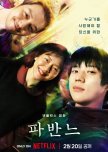
From the jump, Pavane feels like it exists in a slightly warped reality where everyone is lonely, underemployed, and quietly disappointed in themselves, which already makes it more honest than most romantic films. The story centres on three people working in the same department store, which is basically a factory for emotional suppression. Gyeong-rok parks cars while chasing dance like it’s a personality trait, Mi-jeong works in the basement like society physically pushed her underground, and Yo-han floats around as the charming, slightly strange friend who seems socially successful but radiates the kind of loneliness that comes from being liked without being known.The romance between Gyeong-rok and Mi-jeong does not arrive with fireworks or dramatic confessions because this film understands that people who feel undesirable don’t flirt like normal humans. Their connection grows through small glances, long pauses, and the shared exhaustion of knowing they do not fit society’s idea of a perfect couple, which somehow makes their relationship feel more intimate than any cinematic grand gesture ever could. It is not fantasy love, it is survival love, the kind that says, “You also feel out of place? Great, let’s be uncomfortable together.”
Mi-jeong sits at the emotional centre of the film, and instead of giving her a makeover or a glow-up montage, the story does something far more radical by letting her remain exactly as she is and demanding that the audience take her seriously anyway. She is repeatedly criticised for her appearance, as if her face itself is a social failure, and the film never pretends this cruelty does not wound her. But it also refuses to turn beauty into her redemption arc. Her worth comes from endurance, from continuing to exist in a world that keeps suggesting she should not. Go Ah-sung plays her with a quiet vulnerability that feels like someone constantly holding their breath, revealing trauma, fear, and the aching desire to be seen without ever turning Mi-jeong into a lesson or a slogan.
Gyeong-rok is gentle in a way that feels painfully realistic because he is clearly in love and yet emotionally illiterate, like a man who downloaded feelings without reading the instructions. He hesitates, misreads situations, and can be frustratingly dense, but that clumsiness makes him feel human rather than engineered. Their relationship never feels manufactured; it feels like something that grew by accident because neither of them expected to be chosen.
Yo-han is the most ambiguous figure, hovering between friend, observer, and emotional disruptor, adding a slightly surreal layer to the story as if he understands the characters better than they understand themselves. Sometimes this perspective deepens the film’s exploration of loneliness, showing how charisma can coexist with isolation, but at other times it pulls attention away from the central romance just as it begins to settle into rhythm, which raises the uncomfortable question of whether this imbalance is intentional or simply a flaw in the writing.
Visually, the film leans into muted colours and a faintly vintage atmosphere, turning the underground parking lot into an obvious but effective metaphor for lives lived outside society’s spotlight. The cinematography is restrained and elegant, and the use of classical music lifts certain scenes into something almost dreamlike. Yet the pacing in the second half weakens the overall impact, as transitions between emotional moments feel awkward and uneven, creating a pattern where the film draws you in deeply and then abruptly lets you go before the feeling can fully land.
Still, despite these structural issues, the film leaves behind genuine emotional weight because its sincerity about love, insecurity, friendship, and longing cuts through its imperfections. It is less about happiness than about the way even brief love can permanently reshape how people see themselves. These are characters who believe they do not deserve affection and slowly realise that being chosen once might be enough to sustain them for years.
Pavane is not a spectacle and does not trade in fantasy or transformation. It offers hushed pain, awkward tenderness, and the quietly devastating idea that someone might love you exactly where you are: in the basement, in the parking lot, in the version of yourself you assumed no one would ever pick. And somehow, that restrained hope feels more radical than any dramatic romance ever could.
Was this review helpful to you?

This review may contain spoilers
FAITH TURNS TO OBSESSION
**UPDATED REVIEW**Revelations is a gripping thriller that explores faith, guilt, and the consequences of misguided beliefs. The story follows Seong Min-chan, a small-town pastor who becomes convinced that a mysterious new churchgoer, Kwon Yang-rae, is responsible for his son's disappearance. A shocking chain of events unfolds, leading to tragic mistakes and desperate attempts to uncover the truth.
The film expertly builds tension through Min-chan’s escalating obsession. The moment he realizes his mistake, after already pushing Yang-rae down a slope, is particularly harrowing. Yet instead of remorse, another eerie "revelation" drives him forward, solidifying the film’s disturbing take on how people justify their own sins under the guise of righteousness.
Detective Yeon-hui, a woman battling her own demons, is also on Yang-rae’s trail. Haunted by the death of her younger sister, she is relentless in her pursuit of the truth, but her personal grief often clouds her judgment. Her panic attacks and emotional breakdowns add another layer to the film’s psychological intensity, showing that justice, like faith, is often muddied by human frailty. As she pieces together the case, her path inevitably collides with Min-chan’s, leading to a confrontation that forces both of them to confront the true nature of evil.
The film keeps you on edge with its dark atmosphere and intense suspense. As Min-chan struggles with his faith and guilt, the story takes unexpected turns, making you question who the real villain is. The performances are powerful, especially in the emotional and psychological moments. The cinematography also adds to the eerie feeling, using shadows and lightning to create a haunting effect.
But what makes *Revelations* so impactful is its refusal to provide easy answers. By posing the question, "Where does the evil that creates the devil come from?", the film challenges audiences to reflect not only on individual corruption but also on the structural forces that foster it.
The ending is thought-provoking and leaves a strong impact. Revelations is a must-watch for those who enjoy psychological thrillers with deep themes and moral dilemmas. It’s a movie that stays with you long after it ends.
Was this review helpful to you?

A MISSED OPPORTUNITY
*Bogotá: City of the Lost* is a crime drama starring Song Joong-ki, but despite an interesting story, it doesn’t fully deliver. The film follows Kook-hee, a young Korean man who moves to Bogotá and gets involved in the city’s black market. It promises action and suspense but feels slow at times, with too much talking and not enough excitement.One good thing about the movie is its setting - Bogotá looks gritty and realistic, making you feel like you’re really there. Song Joong-ki does a great job acting, but the story doesn’t give enough attention to other characters, making them feel unimportant. The action scenes are also not very thrilling, which is disappointing for a crime movie.
Overall, the movie has some good moments, but it doesn’t live up to expectations. If you’re a big fan of Song Joong-ki, you might enjoy it, but if you’re looking for an intense crime thriller, this one might not be for you.
Was this review helpful to you?
This review may contain spoilers
A Thrilling Descent into Chaos
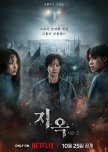
*Hellbound* Season 2 wastes no time plunging viewers back into its dark, morally complex universe where divine judgment and human corruption intertwine. This season raises the stakes, delving deeper into the mysteries surrounding the resurrection phenomenon while expanding its character dynamics in ways both shocking and exhilarating.The return of Jinsu (Kim Sung-cheol): His visions and ultimate transformation into one of the very monsters that once terrified humanity underscore the show’s central theme: no one is above judgment, not even the messiah-like figures they create.
Kim Jeongchil’s political machinations, in alliance with the government, form another key pillar of the season. His desperate attempt to maintain control over the New Truth by using Park Jungja (Kim Shin-rok) as a pawn adds a layer of intrigue and treachery.
Thematically, this season explores the devastating consequences of blind faith and power-hungry institutions. The New Truth’s “Resurrected One” plan, though initially grand in its ambition, becomes a symbol of their crumbling control. The demonic monsters serve as an ever-present reminder that divine retribution, though wielded by men like tools, remains uncontrollable and terrifying.
Meanwhile, Hyejin (Kim Hyun-joo) continues to act as the moral center of the show, pushing against the tide of corruption and madness. Her rescue mission for Park Jungja is one of the season's most thrilling arcs, showcasing her resilience and determination to protect the innocent, even in the face of overwhelming odds. The poignant moment of Jungja reuniting with her son provides a much-needed emotional reprieve amidst the chaos.
Director Yeon Sang-ho masterfully balances action, horror, and character-driven drama, creating a tense, chaotic atmosphere that builds relentlessly toward the finale. The introduction of new power players like Senior Secretary Lee, who manipulates events from the sidelines, adds political intrigue that complements the show’s exploration of spiritual fanaticism.
While the season provides plenty of answers, it also raises new questions, particularly about the resurrection and the true nature of divine judgment. The ending leave the future wide open for another chapter, rife with potential.
In short, *Hellbound* Season 2 intensifies its exploration of morality, faith, and the consequences of power, delivering a season that is as thought-provoking as it is thrilling. It masterfully intertwines human emotion with its dark, supernatural premise, making it a must-watch for fans of psychological and religious horror.
________________________
Theories I found good:
While Jin-su taunts Se-hyeong for wasting his last chance by trusting Jin-su, it is ultimately proven to be Jin-su who wastes his resurrection. He spends his second chance the same way he did most of his first life: selfishly, seeking a salve for his emotional pain without care for the pain he knowingly inflicts on others. Jung-ja’s declaration is its own kind of decree, as Jin-su realizes they are not the same.
Jae-hyeon may have a latent power, just as Jung-ja does.
What we do in this life, and how we care for each other, does matter. Even when Jin-su came back from hell, he feared he might still be in it. We create our own hell, individually and collectively, and even when there is a supernatural power also getting in on the game.
Stories have power, and Hye-jin is giving Jae-hyeon a good and true one. It is the kind of story that Jin-su was never told when he was little and alone. The kind of story Secretary Lee, the New Truth Society, or the Arrowhead would never bother telling because it doesn’t feed the kind of fast, uncaring power they are looking to grow. The kind of story Detective Jin Kyung-hun (Yang Ik-june) tells his daughter, Hee-jung (Lee Re), as she dies from cancer in his arms. Hee-jung lived most of her life under the thrall of Jung Jin-su and his empty promises, but it’s a family picture, a story of love, that gives her comfort in her final moments.
Was this review helpful to you?
This review may contain spoilers
A HEARTBREAKING YET BEAUTIFULLY CRAFTED FILM
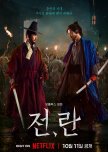
*Uprising* is a heartbreaking yet beautifully crafted film that takes us on an emotional journey through the friendship of Jong-Ryeo and Cheon-Yeong, set in a time of brutal class divisions in historical Korea. The plot centers on how the rigid social hierarchy affects their lives, particularly Cheon-Yeong, a slave who is forced to endure countless hardships in place of Jong-Ryeo.What starts as a cruel situation, Cheon-Yeong being beaten in Jong-Ryeo’s stead, evolves into a deep bond. Despite the fact that Cheon-Yeong isn’t born a slave, his family’s downfall forces him into this role, and it's his strength and refusal to accept the established hierarchy that makes him stand out. When he begins secretly teaching Jong-Ryeo how to fight, the dynamics between the two change, leading to a friendship that feels genuine despite the social disparity.
However, the film doesn’t shy away from the harsh realities of their world. Even after helping Jong-Ryeo win a prestigious sword-fighting competition, Cheon-Yeong is denied his freedom by Jong-Ryeo’s father, who breaks the promise of releasing him from slavery. This betrayal deeply scars Cheon-Yeong, though Jong-Ryeo still tries to protect him by sending him off to fight the Japanese invaders, hoping this will finally earn him his freedom. The film is filled with these moments of hope and crushing disappointment.
After years of fighting, Cheon-Yeong returns home only to find the world he left behind in ruins. Jong-Ryeo’s family home has been burned down by the people who suffered under the oppressive rule of his father. In one of the film’s most gut-wrenching moments, Cheon-Yeong tries to save Jong-Ryeo’s wife and son from the flames, but she refuses his help out of pride, seeing him as a slave rather than a person who might save her life. Her death serves as a stark reminder of how deeply ingrained social prejudice was, even to the point of self-destruction.
The climax of *Uprising* sees a tragic reunion between Jong-Ryeo and Cheon-Yeong after seven years of separation. Jong-Ryeo, unaware of the full story, initially believes Cheon-Yeong is responsible for his wife and son's deaths. Their final confrontation is tense, but as the truth is revealed, the film shifts focus from their conflict to a bittersweet reconciliation. Just when they finally resolve their long-standing misunderstanding, Jong-Ryeo is mortally wounded in battle against the Japanese. Cheon-Yeong kills the Japanese leader, Genshin, in a satisfying act of revenge, but it’s too late to save Jong-Ryeo.
In Jong-Ryeo’s final moments, he asks Cheon-Yeong if they’re still friends, referencing an earlier lighthearted exchange from their youth. It’s a poignant moment that captures both the tragedy and beauty of their relationship. Despite everything that has happened, the film shows that love and loyalty can persist, even in death. This scene is devastating, but it offers closure, showing that their bond was real despite the cruel world they lived in.
On a larger scale, *Uprising* also critiques the corruption of the ruling class, embodied by King Seonjo, whose greed and cowardice lead to the suffering of the common people. His alliance with the Japanese and subsequent desertion of his own throne during the invasion sparks the uprising that defines the film. The subplot involving Seonjo and the infamous Japanese leader Genshin, known as the “nose-snatcher,” adds layers of historical context and brutality to the narrative. In a symbolic twist, Seonjo’s greed is punished when the treasure he’s promised turns out to be boxes of human body parts, noses, to be precise, reflecting the horrors of war and the consequences of his betrayal.
In the end, Cheon-Yeong and a few of his fellow survivors form a new community, symbolically named “Beom Dong,” meaning “A world together.” It’s a hopeful note to close the film on, but *Uprising* doesn’t let the audience forget the price paid for such unity. The film leaves you with a lingering sense that although there’s hope for change, the struggle against social inequality is far from over.
*Uprising* masterfully balances personal and political themes, offering a powerful meditation on friendship, loyalty, and the fight for justice. It’s a tearjerker that hits hard, especially as it reveals the lasting impact of societal divisions, even as it tries to inspire hope for a better future.
Was this review helpful to you?
A Quiet Duel of Legacy and Pride
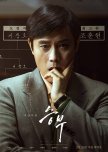
*The Match* is a compelling drama film based on the real-life relationship between two of South Korea’s most iconic Go players: Cho Hun-hyun and his protégé-turned-rival, Lee Chang-ho. Set in the early 1990s, the film traces their journey from a bond of deep respect and trust to a dramatic confrontation on the board that reshapes both their lives.The performances are the heart of this film. Lee Byung-hun is remarkable as Cho Hun-hyun, portraying a man torn between pride in his student and fear of being replaced. Yoo Ah-in brings a quiet intensity to Lee Chang-ho, expressing his character’s transformation from an obedient disciple into a confident and self-assured challenger. Their dynamic carries the film, grounding its emotional weight in realism and restraint.
The direction is subtle and patient. The film avoids melodrama, opting instead for a slow build of tension through deliberate pacing. The cinematography treats the Go board like a battlefield, using close-ups and careful lighting to give weight to every move.
One of the film’s strengths lies in its dialogue, which is thoughtful and philosophical. Lines like “A teacher is not someone who gives answers, but someone who opens the way” resonate far beyond the context of the game. The screenplay explores the loneliness of mastery, the burden of legacy, and the moment when every student must eventually step out of their teacher’s shadow.
There is also warmth and humor throughout the film, which balances the more intense moments. These touches humanize the characters and make their emotional journey all the more relatable.
It is a meditation on ambition, mentorship, and the bittersweet nature of growth. It’s a film that lingers because of the quiet, personal truths it reveals in the spaces between each move.
Was this review helpful to you?

A Bold Premise That Plays It Safe
Divorce Insurance sets out with a refreshingly bizarre premise. That kind of dark humor and social satire is a solid hook, and for the first few episodes, the drama leans into it well. But as the series progresses, it struggles to maintain that satirical sharpness, often trading its unique premise for safer, more conventional drama beats.-> What It Gets (Almost) Right:
1. A Unique Tone: Briefly, Before It Chickens Out
The first few episodes are weird in the best way. There’s a sly, deadpan humor, the kind that makes you think, Maybe this show is actually onto something. The actors get the assignment, the writing's clever, and the whole “divorce as an industry” thing feels biting. And then, poof! It remembers it wants to be heartfelt and relatable, and any trace of teeth gets politely brushed away.
2. Characters With Just Enough Quirk to Be Marketable
Ki-jun and Han-deul are awkward and emotionally damaged, aka perfect TV protagonists. They have an unresolved history, which the show dangles just long enough to be interesting before shoving them into a rushed romance. Dae-bok and Ah-yeong start off as quirky sidekicks and actually evolve into real people, which feels like a miracle considering how often they’re used for punchlines. Credit where it’s due.
3. Real Feelings, Occasionally
When the show stops trying to be cute or clever, it sometimes stumbles into real emotion. Seon-hee’s storyline, for instance, is actually moving. It’s the kind of subplot that makes you think, Why isn’t the rest of the show like this? And the answer, apparently, is because that would be too interesting.
-> Where It Trips Over Its Own Premise:
1. Remember That Whole “Divorce Insurance” Thing? Neither Does the Show
The hook is gold: morally questionable, ripe for satire, bizarre enough to stand out. Naturally, the show throws it in the trunk and drives off without it. A couple of episodes later, the business model is basically background noise. No messy ethics, no biting commentary - just cute coworkers trying not to cry at their desks.
2. Pacing? What Pacing?
The second half is like a montage in a movie where someone’s life spirals out of control, except without the music or the emotional payoff. Things happen too fast, characters make decisions that feel unearned, and big moments come out of nowhere. It’s not so much building tension as it is skipping steps and hoping no one notices.
3. Romance On Fast-Forward
Ki-jun and Han-deul clearly have history, and by the time the show explores any of it, they’re already halfway to coupledom. It’s the classic “we have chemistry, so let’s skip all the work” strategy. The result is a romance that feels less like a natural evolution and more like a checklist item the writers were eager to tick off.
4. From Satire to Sentimentality: A Speedrun
Once the show decides it wants to be “sincere,” it abandons the very thing that made it interesting. The bite is gone, the satire neutered, and what’s left are neatly wrapped plotlines. It’s emotional, sure, but safe, and not in a good way.
-> Final Verdict:
Divorce Insurance sets out to be sharp, strange, and subversive. But after a promising start, it quickly trades its edge for something safer and more familiar.. It is disappointing for me, who was hoping for something sharper, weirder, and more consistent.
At least you can’t say it didn’t try... for a little while.
Was this review helpful to you?
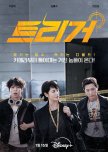
Fun fact (In case you're curious about the real cases):
Episode 1: The case of 'Agadongsan' (아가동산) and 'O DaeYang Corporation' (오대양) -- Cult and mass sui****Episode 2 and 3: 'Incheon Dongchun-dong elementary school student kidnapping and murder case' and 'Edmund Kemper' (2 grandparents murdered (when he was a minor), 8 serial murders and time (including biological mother)
[Culprit of Incheon case will be released on April 12, 2030]
Episode 4: 'Deux's Kim Sung-jae's suspicious death case' and 'Kim Bo-eun and Kim Jin-gwan case' (The victim was subjected to long-term SA by the defendant before the murder.)
[Kim Jin-kwan: 7 years in prison ( reduced to 2 years and 6 months on March 1993 , released around 1994 )
Kim Bo-eun: 5 years in prison (pardoned in March 1993)]
Episode 5: Collapse of demolished building in Hakdong, Dong-gu, Gwangju Metropolitan City (9 deaths and 8 injured)
Episode 6 and 7: The incident of Cho Joo-bin's accomplice stalking his homeroom teacher -- Student who conspired with Cho Joo-bin of ‘Nth Room’ to commit murder.
Episode 8 to 12: Deux's Kim Sung-jae's suspicious death case
___________________________________________________________________________________
REVIEW:
Okay but Unmasked is one of those dramas that grabs you by the collar in episode 1 and immediately screams, "GET IN LOSER, WE'RE EXPOSING CRIMINALS."
The premise? Delicious. You've got Oh So-ryong, an investigative journalist with absolutely no regard for her own safety, common sense, or apparently the laws of physics. This woman pursues justice like she's personally offended by crime. Every episode she's one bad decision away from becoming the headline instead of reporting it and honestly? Respect.
Then there's Han Do, who gets dragged from the drama department into Trigger, a TV program that exposes criminals. The man spends the first chunk of the series looking like someone accidentally enrolled him in a military bootcamp. He's miserable, he's confused, he wants out... naturally this means he eventually becomes emotionally invested and starts thriving. The classic "I hate this job" to "I would die for my coworkers" pipeline strikes again.
What makes Unmasked ridiculously easy to binge is its case-of-the-week structure. Every investigation gets about two episodes, which means the show never overstays its welcome. One minute you're dealing with cults, the next it's stalking, then corporate corruption, then sexual abuse, and somehow there's also a giant mystery involving an idol named Cha Seong-wook who disappeared twenty years ago.
And because this drama believes in giving viewers absolutely no peace, there's also Dr. Trigger, an anonymous online figure threatening to expose secrets within the team itself. Add in Han Do's suspicious career transfer and suddenly everyone looks guilty of something.
The pacing is basically fueled by three Red Bulls and unresolved trauma.
What I appreciated most is that despite all the chaos, the show actually takes its social issues seriously. Stalking isn't treated like romance. Harassment isn't played for laughs. Corruption isn't wrapped up with a cute bow. The drama consistently sides with victims and never feels like it's exploiting serious topics just for shock value.
Now, DOES IT ALSO HAVE THE SUBTLETY OF A CHAIR BEING THROWN THROUGH A WINDOW?
Absolutely. This show is dramatic as hell.
The villains are cartoonishly awful. The emotions are permanently set to eleven. The violence occasionally arrives wearing platform boots and carrying a flamethrower. But honestly? It works.
A lot of social-issue dramas get so busy delivering their "Very Important Message" that they forget to entertain people. Unmasked understands that if you want viewers to care, you first need them to be unable to stop clicking "Next Episode."
The Trigger team is also surprisingly lovable. So-ryong is a phenomenal lead and Kim Hye-soo absolutely devours this role like she's been waiting her entire life to yell at corrupt people on television. Han Do's development is genuinely satisfying, while Gi-ho, Na-hee, and Chief Park all bring their own insecurities, strengths, and weird little workplace dynamics to the table.
The team chemistry is carrying heavy cargo and somehow never drops it.
Unfortunately, the landing isn't nearly as smooth as the takeoff.
By the final episode, you can practically hear the writers speed-walking through unfinished plot points. Supporting characters receive resolutions that feel suspiciously like someone remembered them five minutes before the deadline. Some of the bigger mysteries get patched together with the narrative equivalent of duct tape and positive thinking.
And the ending? Ugh, it is standing outside your house holding a giant sign that says "SEASON TWO PLEASE."
Instead of delivering a fully satisfying conclusion, it spends a lot of time setting up future stories. It's not a disaster by any means (K-dramas have committed far greater crimes against endings) but it definitely lacks the confidence and sharpness of the opening episodes.
Also, let's be real for a second... this drama is not about investigative journalism. These people are out here paragliding into suspicious church compounds, collecting secret recordings like Pokémon cards, and conducting investigations that would make actual journalists immediately develop stress-induced eye twitches.
There is approximately zero interest in media ethics. The reporting methods are less "Pulitzer Prize" and more "Fast & Furious: Investigative Unit." But honestly? That's fine.
If you're looking for an authentic portrayal of journalism, this isn't your girl.
If you're looking for a flashy crime thriller packed with mysteries, morally complicated choices, dramatic confrontations, social commentary, and a team of lovable weirdos trying to drag terrible people into the light? Baby, welcome home.
Despite its messy ending, Unmasked remains wildly entertaining television. It has momentum. It has energy. It has enough cliffhangers to emotionally blackmail you into watching "just one more episode" until suddenly it's midnight and you're negotiating with your alarm clock.
And frankly? If Oh So-ryong existed on actual news channels, half the world's corruption scandals would be solved before lunch.
Was this review helpful to you?
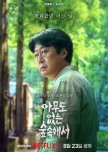
A frog (or frogs) dies from a stone thrown inadvertently
The Frog refers to an old Korean saying, “A frog dies from a stone thrown inadvertently”, which means people’s actions can have unintended negative consequences for others.“The Frog” is a pulse-pounding mystery thriller that seamlessly blends psychological tension with a high-octane narrative, making it a standout in the genre. Set across two distinct timelines, the series intricately weaves the fates of two men—Jeon Young-ha and Koo Sang-jun—whose lives are irrevocably altered by the presence of mysterious strangers and tragic events.
Young-ha, a reserved pension owner deep in the forest, finds his quiet life shattered when the enigmatic Yoo Seong-ha checks into his property. What begins as an innocuous visit quickly spirals into a nightmare as Seong-ha’s obsession with the pension pulls Young-ha into a game of manipulation, fear, and survival. Her presence is not just a disruption; it’s a catalyst for a series of increasingly disturbing events that push Young-ha to the brink.
In parallel, the series revisits the summer of 2000, where Sang-jun, a well-meaning motel owner, faces a different kind of horror. During the IMF crisis, a single act of kindness—offering a room to a stranded stranger—leads to an unthinkable tragedy that destroys his family and his livelihood. The show explores the psychological unraveling of Sang-jun as he grapples with guilt, public scorn, and the slow disintegration of his once-happy life.
Chief Yoon Bo-min, a tenacious detective who connects both timelines, adds another layer of tension as she digs into the mysterious happenings, driven by an intuitive sense of something deeply wrong. Her pursuit of the truth brings her dangerously close to the chaos surrounding both men.
The narrative is tightly wound, with each episode ramping up the stakes. The show is visually stunning, with beautiful mise-en-scenes that contrast the serene settings against the underlying dread.
One negative thing I found was that the transitions between the two timelines were not very seamless and can be confusing at first.
The terror comes from within—how far ordinary people can be pushed before they break.
In essence, “The Frog” is a suffocating, high-stakes drama that examines the devastating consequences of guilt, obsession, and the human capacity for both resilience and destruction. It’s a ride that leaves you breathless, with each episode escalating in intensity until the explosive conclusion.
Was this review helpful to you?
This review may contain spoilers
WOMEN SUPPORTING WOMEN
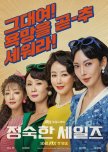
I went into this expecting a quirky little comedy about women selling lingerie in conservative 1990s Korea and what I got instead was a full on emotional gut punch disguised as a workplace drama. They really said "lol here's a funny premise" and then proceeded to make me ugly cry??? The audacity. The NERVE. I was not prepared and I will not be forgiving anyone involved anytime soon.Tropes: female friendship, found family, workplace ensemble, slow burn romance, underdog story
Likes:
Jeong-suk had me completely hooked from her very first scene. You don't even need them to tell you how hard her life is. The way she hesitates buying basic necessities for herself while making sure her child has everything says it all without a single line of dialogue. That kind of quiet, understated storytelling hits so much harder than any dramatic monologue ever could and I have so much respect for a drama that trusts its audience enough to pick up on those small details. She is selfless and disciplined and quietly resilient in a way that made me want to reach through the screen and protect her from everything.
And then there's Seung-soo. Her husband. Who is genuinely one of the most frustrating characters I have encountered in recent memory. The infidelity, the selfishness, the recklessness, the complete and utter lack of appreciation for the woman holding his entire household together... I was personally offended on Jeong-suk's behalf every single episode. He is the human embodiment of a walking red flag and I have said what I said. Every scene with him made me want to flip a table and I think that means the writing did its job perfectly.
BUT this drama is not really about him and that is exactly why it works so well.
The moment Yeong-bok, Ju-ri and Geum-hui entered the picture and this became a proper ensemble story I knew I was in serious trouble. Their chemistry together is genuinely off the charts and I mean that without any exaggeration whatsoever. Whether they are fumbling through the most embarrassing product demonstrations imaginable, navigating the chaos of their personal lives, or simply sitting together having honest conversations about things women rarely get to discuss openly on screen, these four feel so real and so genuinely connected that you forget you are watching actors perform a script. That is really, genuinely rare and I refuse to take it for granted.
What I love most about this drama is that it understands empowerment is not a solo journey. So many shows will give you one strong woman finding herself and frame it as this individual triumph. A Virtuous Business looks at that formula and says actually, what if she found herself because the women around her refused to let her disappear? The collective is the point. The friendship is the point. And it delivers on that premise so beautifully that I found myself getting emotional during scenes that were not even supposed to be emotional, just women being kind to each other and showing up and I was a complete wreck.
Let me break down the individual storylines because they all deserve their own moment:
Yeong-bok starts out looking like pure comic relief. A chaotic, overwhelmed working mother who is always three steps behind on everything. And then her arc quietly becomes one of the most emotionally layered and genuinely moving storylines in the entire drama. Her relationship with Jong-seon is portrayed with such warmth and sincerity that I was completely blindsided by how deeply I ended up caring about her. The show does this thing where you think you know exactly what a character is going to be and then it just pulls the rug out from under you and suddenly you are reconsidering everything.
Geum-hui's internal conflict between the modern independent woman she desperately wants to be versus the housewife existence she has been confined to was handled with so much sensitivity and care. There is something really painful about watching someone highly educated and deeply capable feel entirely trapped and unfulfilled by the life they are supposed to want. The drama explores that with empathy and never once makes her feel like a cautionary tale or a punchline.
And then Ju-ri. Funny, confident, loud, perpetually judged for her lifestyle and her choices. So many dramas would make a character like her into the one-dimensional comedic sidekick and leave it there. This drama refused. Beneath all that bravado is a woman who has spent a long time being seen as a certain type of person and decided to own it rather than let it break her. Her romantic storyline adds both genuine humor and real emotional complexity and I thought she was wonderful from start to finish.
Can we talk about the dynamic of Do-hyeon and Jeong-suk for a second because their relationship had me smiling at my screen like an absolute fool every single time they shared a scene. What I appreciate most is that their romance develops so naturally and without any of the usual manufactured drama or forced misunderstandings that plague so many kdrama romances. It grows through genuine shared experiences and emotional understanding and mutual respect and it feels earned in a way that a lot of dramas just... don't bother with. Their scenes together are genuinely some of the most enjoyable in the series and the charm between them is completely effortless.
The mystery subplot surrounding Do-hyeon's search for his biological mother adds an interesting layer of intrigue and momentum to the narrative without ever completely overtaking the emotional core of the story. It stays in its lane. I appreciated that.
The 1990s setting is recreated beautifully without ever becoming distracting. The town itself develops a really strong sense of identity and place across the run of the episodes. The soundtrack does exactly what a good soundtrack should do, the upbeat playful tracks and the more emotional melodies each know when to show up and when to step back. Flashbacks are integrated smoothly. The costume design hits the era without going into caricature territory.
Visually and atmospherically this drama really delivers. It feels lived in and specific and that specificity is part of what makes it so memorable.
Dislikes:
The tonal balance gets genuinely uneven at certain points, particularly when the darker storylines collide with the lighter comedic material in the same episode. There were moments where I felt slightly whiplashed going from something quite heavy to something quite silly and I think a little more care in the editing and pacing of those transitions would have helped a lot.
There are also some subplots that frankly overstay their welcome and could have been trimmed without losing anything important. Some episodes get a little lost in side stories that don't contribute meaningfully to the overall narrative and you can feel the pacing drag when that happens.
My biggest complaint is that as the drama progresses the actual lingerie business gradually fades into the background. The early episodes derive so much of their identity and their comedic energy from the challenges and genuine absurdities of selling adult products in an incredibly conservative environment and that setup is so specific and so fun that I found myself genuinely missing it as the show shifted increasingly toward personal drama. I understand why it evolved the way it did and the personal stories are often compelling but I do feel like the original premise got somewhat abandoned and that felt like a missed opportunity.
I have to be real with you about the finale because I think honesty is important and also I have feelings that need to be expressed.
The time jump frustrated me more than I expected. I understand completely what they were going for: Jeong-suk's growth, her independence, her full transformation into a woman who finally belongs to herself. And on a thematic level it works. It really does. She earned that ending and watching her stand in her own confidence and agency after everything she went through is genuinely satisfying.
But it comes at the direct expense of narrative closure for so many supporting characters that I had spent episodes becoming deeply invested in. Yeong-bok's story. Geum-hui's story. Ju-ri's story. All three of these women go on significant emotional journeys throughout this drama and in the final stretch they are left without the definitive and satisfying conclusions their arcs deserved. Questions about relationships and futures and the aftermath of major events just hang there unanswered. For a show that made its ensemble cast its greatest strength, that felt like a genuine betrayal of what made it special.
I sat with the finale feeling simultaneously moved and disappointed and I think that tension is the most honest way I can describe it. It is an ending that succeeds thematically but stumbles practically and that gap is frustrating because by that point you care so much about all of them.
FINAL THOUGHTS:
Despite its uneven pacing, the occasional draggy subplot and most significantly its frustrating finale, A Virtuous Business absolutely earns its place. It is funny and heartfelt and surprisingly thoughtful and it is willing to have real conversations about female sexuality, infidelity, economic dependence and social expectation in ways that feel genuinely meaningful rather than performative.
The chemistry between the four leads carries this show through every single one of its weaker moments. Some of the most powerful scenes in the entire drama are the quiet moments of women showing up for each other during vulnerability. Women rallying. Women refusing to let each other disappear. That image is the defining image of this series and it moved me more than I expected it to.
What begins as a comedy about selling lingerie ultimately becomes a warm, sincere and genuinely memorable celebration of women reclaiming their confidence and their sense of self in a world that spent a very long time telling them to expect less. It is not perfect. But it has so much heart that the imperfections are easy to forgive.
I give it an 8/10 and I stand by every point.
If you have been sleeping on this one please wake up immediately.
Thanks for reading! ♡
Was this review helpful to you?
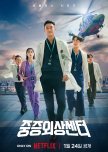
A High-Stakes Medical Drama with Action-Packed Heroics
""UPDATED REVIEW""Entertaining from start to end!
Kang-hyuk embodies the ultimate fantasy figure - someone who effortlessly saves lives, defies injustice, and commands attention with his charm, all while maintaining an impeccable style.
The hospital's relentless focus on profit acts as the story’s antagonist, with senior doctors often pushing back against Kang-hyuk’s idealism. Over time, some of these doctors begin to rethink their priorities, thanks to his influence.
The show knows that the corporate angle, while relevant, isn't the central focus. Instead, the heart of *The Trauma Code: Heroes on Call* lies in Kang-hyuk’s daring exploits and the growth of his two underlings, Jae-won and nurse Cheon Jang-mi, who initially finds Kang-hyuk’s presence more intimidating than inspiring. Kang-hyuk’s playful nicknames for them - 'Anus' and 'Gangster' - add a layer of humor and affection.
At its core, *The Trauma Code: Heroes on Call* is a high-energy, action-packed medical drama that plays with the familiar tropes of the genre while maintaining a lighter, more entertaining tone. It's a show best enjoyed in moderation, offering a fun mix of heroism and high-stakes drama.
Was this review helpful to you?
The More You Watch, The More You Love
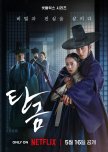
OVERVIEW:Dear Hongrang (Tangeum) is a sorrowful and gripping exploration of obsession, grief, and the violent yearning for belonging. Draped in mystery and laced with the emotional decay of a fractured household, the series begins with a tragedy and unravels into a slow-burning, multilayered descent into personal and political ruin.
At the center is Hongrang, heir to a vast merchant guild, who vanished mysteriously at the age of eight. His disappearance shattered the already fractured household. His mother, Min Yeon-ui, spirals into madness and addiction, while his father, Sim Yeol-guk, steps in to lead the association and, believing his son is dead, adopts Mu-jin, a shrewd and loyal orphan trained to be the new successor. The only one who refuses to stop searching is Jae-i, Hongrang’s half-sister, marginalized in her own home but bound to her brother by a childhood bond so deep it haunts her every step.
Twelve years later, a mysterious young man appears, scarred in all the right places, claiming to be the long-lost Hongrang. Yeon-ui is ecstatic. Jae-i is unconvinced. Mu-jin is threatened. What follows is not just a battle over inheritance, but over truth, memory, and identity.
COMMENTARY:
I didn’t expect Dear Hongrang to get under my skin the way it did. At first, it felt like too much, and suddenly, I was in it. Heart clenched, eyes stinging, trying not to see myself in people I didn’t want to relate to.
What hit me the hardest was the quiet collapse between Jae-i, Hongrang, and Mu-jin. It wasn’t loud or clean, but was the kind of heartbreak that just sits in the room with you.
Jae-i reminded me of what it’s like to be strong only because you have no choice. The way she holds herself - stiff, careful, almost too proud to admit she’s tired - I’ve seen that posture in people I love. I’ve worn it. And when she starts to let someone in, when her shoulders drop just a little, when her voice softens, I felt this stupid lump in my throat. Because I know how hard that is. To trust again after everything’s been taken from you.
Hongrang… god. He doesn’t even have to say much. He walks like someone who doesn’t expect to be missed. There’s this heaviness to him that made me uncomfortable at times, like watching someone who doesn’t believe they’re real anymore. But when he’s with Jae-i, when they just look at each other, it’s like the world pauses. It made me think of all the people I’ve tried to reach who were already halfway gone. People I wanted to save. People who maybe didn’t want to be saved.
And Mu-jin. I don’t think I was ready for Mu-jin. His pain is so quiet, it’s easy to miss, until you realize it’s everywhere. I saw a part of myself in him that I don’t like talking about. That feeling of being overlooked. Of loving someone who’s already looking past you. He doesn’t rage; he just aches. And I know that feeling too well. That desperate, silent kind of love that you pretend is enough, even when it’s killing you.
The show is gorgeous, sure - the forests, the candlelight, the jewelry, all of it. But that’s not what stayed with me. What stayed was the silence between scenes. The long stares. The unsaid things. The kind of tension that feels exactly like grief: stretched out, dull at first, then suddenly overwhelming.
Dear Hongrang wasn't trying to shock. It was trying to sit with me. Like grief does. Like guilt does. Like love does when it turns into something heavier. It’s not a drama about getting revenge or solving a mystery. It’s about what happens when the person you were dies, and you’re still here, expected to keep living anyway.
Every character in this show is holding on to something already gone. And maybe that’s why it wrecked me. Because I’ve done that. I’m probably still doing that. And the show doesn’t tell you it’ll get better. It just tells you to look at it. To let the ache exist. To stop pretending you can fix it by going back.
Was this review helpful to you?

A WILD, ROMANTIC ZOMBIE APOCALYPSE
Newtopia is a fresh and chaotic mix of romance, action, and zombie comedy that manages to bring something new to the well-trodden apocalyptic genre. With a star-studded cast, solid direction, and an engaging premise, it delivers both thrilling moments and unexpected humor.The premise of a breakup-turned-survival-quest adds an interesting emotional layer, making their journey more than just about escaping zombies. It's also about navigating their relationship and figuring out if they should even be together.
The pacing is fast and intense, with chaotic chase scenes, absurd comedy, and moments of raw emotion. It doesn't waste time with unnecessary exposition, diving straight into the outbreak and throwing the protagonists into extreme situations.
Park Jeong-min shines as the everyman-turned-reluctant-hero, balancing desperation with determination. Jisoo delivers a strong performance, bringing depth to her character’s frustrations and fears. Their chemistry is believable, especially in the tension between rekindled love and unresolved issues.
The supporting cast adds to the drama, with some memorable side characters who provide both comic relief and emotional weight. Unlike typical zombie dramas that focus solely on survival, Newtopia explores how people react in absurd, almost satirical ways when society collapses.
This drama doesn’t take itself too seriously, offering ironic twists and playful commentary on relationships. Some moments are outright ridiculous (in a good way), making it feel more like a Train to Busan meets Shaun of the Dead rather than a straight horror-thriller.
Conclusion:
Newtopia is a fresh and engaging take on the zombie genre, offering a mix of romance, action, and absurdity. If you’re looking for something fun, fast-paced, and different from typical apocalypse dramas, this is worth watching.
Was this review helpful to you?
This review may contain spoilers
LOVE IS TEMPORARY AND MARRIAGE IS A SERVICE
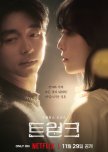
*The Trunk* presents itself as a romantic thriller steeped in mystery, symbolism, and emotional intrigue. Beneath its elegant surfaces, however, lies a story less concerned with crime than with the illusions people construct through marriage, trauma, and desire.The series opens with a striking image: a baby-blue designer suitcase trimmed in vivid red resting on the edge of a small islet, surrounded by the dark waters of a lake at dawn. Later, a woman glides across the same lake in a red kayak, creating another visual disturbance in an otherwise tranquil landscape. These carefully composed images establish a recurring motif throughout the drama - the intrusion of hidden truths into seemingly orderly lives.
Visual symbolism plays a central role in *The Trunk*. Objects are imbued with meaning, from the titular suitcase concealing secrets to a glittering chandelier whose sharp glass fragments evoke both beauty and danger. While the mystery surrounding the trunk provides narrative momentum, it ultimately serves as a backdrop for the show's deeper examination of marriage as both a social performance and a mechanism for emotional manipulation.
Gong Yoo stars as Han Jeong-won, an insomniac music producer haunted by childhood trauma. Living alone in a sprawling mansion burdened by memories of paternal abuse and his mother's violent death, Jeong-won remains emotionally trapped following his divorce from Lee Seo-yeon (Jung Yun-ha), his longtime partner and first love.
Seo-yeon has moved on with remarkable speed, marrying the younger and disciplined fencer Yoon Ji-o (Jo Yi-gun). Yet despite her new life, she continues to exert control over her former husband. In a particularly unusual arrangement, she persuades Jeong-won to enter a one-year contractual marriage, promising that they will reunite once the agreement ends.
His new wife is Noh In-ji, played by Seo Hyun-jin, whose profession forms the drama's central premise. In-ji works for NM (New Marriage), a secretive organisation that provides professional spouses to clients under carefully managed contractual arrangements. At the beginning of the series, she is concluding her fourth marriage assignment as her terminally ill client approaches death. Shortly afterward, she accepts her fifth assignment and arrives at Jeong-won's home, carrying the now-iconic red-and-blue suitcase.
Initially distant and emotionally detached, In-ji approaches her role with professional efficiency. Jeong-won, still consumed by his feelings for Seo-yeon, resists her presence. However, NM's structured marital guidelines gradually force the pair into closer contact. Over time, In-ji's reserved exterior reveals an unexpected warmth that begins to transform Jeong-won's cold and emotionally stagnant existence.
As their relationship develops, Jeong-won experiences meaningful personal change. His dependence on sleeping medication diminishes, and for the first time in years he begins to find genuine peace. Ironically, Seo-yeon becomes increasingly unsettled by these changes, her possessiveness emerging more clearly as she watches her former husband move beyond her influence.
Atmosphere is undoubtedly *The Trunk*'s greatest strength. The series combines elegant cinematography, restrained performances, and a pervasive sense of melancholy to create an immersive viewing experience. Gong Yoo and Seo Hyun-jin anchor the narrative effectively, conveying complex emotional wounds through understated performances that often communicate more than the script itself.
Yet despite its compelling mood and intriguing premise, the series falters when required to provide substantive answers. In-ji's backstory, though occasionally convoluted, ultimately enriches her character and clarifies her motivations. Jeong-won's characterization is somewhat less developed, but Gong Yoo's performance successfully conveys his vulnerability and emotional scars.
The greater issue lies with the supporting narrative elements. Seo-yeon's motivations become increasingly opaque as the story progresses, making her actions feel more contrived than psychologically coherent. Similarly, NM is introduced as a powerful and influential organisation operating behind the scenes, yet the series never fully explores its structure, purpose, or wider implications. What begins as a fascinating concept remains frustratingly underdeveloped.
Ultimately, *The Trunk* is a visually sophisticated drama that excels at creating mystery, tension, and emotional atmosphere. Its exploration of loneliness, intimacy, and the performative nature of marriage is often compelling, and its lead performances provide a strong emotional foundation. However, when the narrative attempts to unpack the secrets it has so carefully constructed, it struggles to deliver the same level of depth and clarity promised by its premise.
Elegant and engrossing for much of its runtime, *The Trunk* succeeds as a mood piece more than as a mystery. It invites us to open the proverbial trunk, only to reveal that what lies inside is less compelling than the anticipation surrounding it.
Was this review helpful to you?
A Brutal, Thrilling Sequel That Forgets What Made It Special
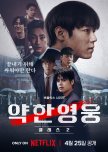
I went into Weak Hero Class 2 with pretty high expectations, and while it definitely delivers a gripping continuation, I can’t say it completely lived up to the raw brilliance of Season 1.On the surface, everything is bigger, and honestly, it’s impressive. Yeon Si-eun’s journey into a new school full of new dangers had me invested from the start. Watching him, Hu-min, Hyun-tak, and Jun-tae slowly forge a bond was probably the emotional highlight for me. Their brotherhood felt messy and real, full of guarded trust and bruised hearts. That part? The show absolutely nails it.
But where Season 1 thrived on slow-burn tension and devastating emotional buildup, Season 2 sometimes trades that for spectacle. The fights are frequent, beautifully choreographed, and absolutely brutal - but they’re also a little too polished at times. Some of the raw, desperate edge that made the first season so unforgettable feels sanded down here. It’s more "cool" than "gut-wrenching," and personally, I missed that rawness.
Another thing: the pacing feels uneven. The first half does a great job building new dynamics and setting up emotional stakes, but as the action ramps up, some of that careful character work gets sidelined. The heart is still there - it's just buried a little deeper under all the chaos.
That said, the performances are phenomenal. Ryeoun, especially as Hu-min, is magnetic. His layered performance brings a much-needed emotional anchor when the plot starts to sprint ahead. And Park Ji-hoon continues to be quietly devastating as Si-eun, managing to say so much with so little.
At the end of the day, Weak Hero Class 2 is a strong continuation that dares to expand its world, even if it sacrifices some of the emotional intimacy that made its predecessor special. It’s still absolutely binge-worthy - tense, brutal, and sometimes heartbreakingly honest - but it doesn’t quite reach the same unforgettable heights.
For me, it’s worth watching. Worth feeling a little heartbroken over. But not quite the masterpiece that the first season was.
Was this review helpful to you?


