

 132
132 248
248 23
23 2
2 5
5 6
6 10
10 5
5 7
7 6
6 4
4 10
10 5
5 2
2 7
7 40
40 3
3 5
5 4
4 2
2 1
1 4
4 5
5 5
5 2
2 6
6 30
30 38
38 13
13 23
23


This review may contain spoilers
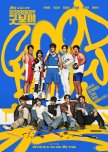
AN ODE TO YOUTH, CINEMA, AND MOVING ON
FUN FACT:Since the episode titles of Melo Movie seemed a bit too familiar to me, I decided to do some digging. After some sleuthing, I've figured the episode titles in Melo Movie are quotes from different movies.
Episode 1: "It Will Become Scenic When Dawn Comes" | The Secret Life of Walter Mitty (2013)
Episode 2: "Why So Serious" | The Dark Knight (2008)
Episode 3: "Keep Your Friends Close, But Your Enemies Closer" | The Godfather Part II (1974)
Episode 4: "It’s Not Your Fault" | Good Will Hunting (1997)
Episode 5: "No One Can Prepare You for the Love and the Fear" | About Time (2013)
Episode 6: "Happy Ending is Mine!" | The Princess Bride (1987)
Episode 7: "Thanks For the Adventure, Now Go Have a New One" | Up (2009)
Episode 8: "All You Need Is Love" | Love Actually (2003)
Episode 9: "We Were Like Strangers Who Knew Each Other Very Well" | Big Fish (2003)
Episode 10: "Life is a Beautiful, Magnificent Thing, Even to a Jellyfish" | Limelight (1952)
______
REVIEW:
Melo Movie is a story about the quiet disasters we survive, the ways we miscommunicate love, and the strange, redemptive beauty that comes from sitting through our pain instead of editing it out.
At first glance, it masquerades as another “melancholic slice-of-life” romance that’s a bit slow, a bit pretentious, full of beautiful people who never quite say what they mean. But the deeper you fall into it, the more you realize it’s about everything that lies beneath the surface of what people say and do. Every silence in this show is an emotion half-swallowed. Every smile is an apology never spoken aloud. The pacing, which might frustrate some, is its own language; the show is less about what happens than what doesn’t.
What I loved most is how Melo Movie doesn’t hand you emotions pre-chewed. It makes you earn them. It’s not melodrama; it’s micro-drama where every scene is built out of tiny, human moments: the way someone hesitates before saying a name, or looks away just before tears fall, or chooses a joke instead of a confession. It’s a series that trusts the audience to understand heartbreak without an orchestra swelling in the background.
This show is, at its core, a story about people who are all, in one way or another, haunted by the gap between the life they wanted and the one they actually live. Each of them has built an armor around that disappointment: Ko-gyeom with his ironic detachment and relentless humor, Moo-bi with her ambition and cynicism, Si-jun with his pride, Ju-a with her self-erasure. They orbit one another, collide, and drift apart, all trying to answer the same question: Can you really move forward while you’re still grieving what might have been?
If Melo Movie has a soul, it’s Ko-gyeom. He’s the character who made me both ache and laugh in equal measure, a man who hides deep wells of sadness behind a disarming grin. His love for cinema becomes both his shield and his crutch; films are how he learned to feel when real life became unbearable. There’s something almost tragic in that, the idea that stories saved him but also kept him from living his own.
Ko-gyeom is the kind of man who talks too much so he won’t have to say what matters. He cracks jokes when he should cry. He turns pain into performance. He’s spent so long being “the funny one,” the dependable one, that he’s forgotten how to let anyone see him break. And yet, Melo Movie breaks him, gently, lovingly, over ten episodes, until all the artifice falls away and he’s just a boy again, sitting in a dark room, watching flickering light fill the silence.
You start thinking he’s just the charming neighbor type, the failed actor who reinvented himself as a film critic. But as the layers peel back, what you find isn’t a cliché redemption story. It’s something rawer: the story of a man realizing that cynicism isn’t wisdom, and that healing doesn’t mean forgetting, but it means learning how to live with the memory.
The show’s greatest triumph, I think, is how it handles his grief. Ko-gyeom doesn’t fall apart in grand, cinematic fashion. He unravels slowly, like a sweater caught on a nail. A little tug here, a small silence there. When his brother dies, he doesn’t scream or break dishes, he just stops going inside the house. He lives in his car, pretending to be fine, because pretending is all he’s ever known.
Ko-gyeom’s relationship with Moo-bi becomes a mirror for everything he’s avoided. She challenges him to feel, to stop treating life like a movie he can critique from a distance. What’s beautiful is that their romance doesn’t “fix” him. It just gives him a reason to try again. By the finale, when he says he’ll stop watching movies for a while, it isn’t a rejection of art; it’s a confession of readiness. He’s finally ready to live his own story.
Moo-bi is not an easy character to love at first, and that’s precisely why I loved her. She’s brittle, defensive, a little cruel sometimes. But her sharpness is all self-protection. Beneath that cold precision is a girl who’s been aching for love her whole life and convinced herself she didn’t need it.
Her relationship with her father forms the emotional spine of her character. The tragedy of Moo-bi is that she spent her entire life resenting him for loving films more than her, only to become exactly like him. Her obsession with proving herself in the same industry is both rebellion and inheritance. She wants to disprove his belief that cinema is sacred, yet she can’t stop chasing that same ghost.
What makes her arc extraordinary is how it’s written not as a redemption but as a recognition. She doesn’t suddenly forgive her father or become soft. She just understands. And that’s far more powerful. The moment she realizes that her mother’s love had always been steady, while her father’s absence loomed larger only because she kept feeding it with anger, that’s the kind of emotional revelation that feels painfully, beautifully real.
Moo-bi and Ko-gyeom’s relationship is messy, tender, and grounded in mutual recognition. They’re two people terrified of intimacy: she’s scared of being left, and he’s scared of being truly seen. What they share isn’t a fairytale but a slow, awkward, brave attempt to let another person in. Their love scenes are breathtaking not because of passion, but because of restraint. Two wounded people choosing to stay anyway; that’s love at its most radical.
Ko Jun broke me. Completely. His story is one of those rare depictions of quiet despair that refuses to sensationalize suffering. He isn’t portrayed as a martyr or a villain, just a boy too tired to keep pretending that existing was easy.
Through Jun, Melo Movie explores a different shade of grief, not the kind that follows loss, but the kind that precedes it. He’s a man waiting for his own end, both literally and emotionally. And the show never punishes him for that. It treats his pain with dignity.
The relationship between the brothers is one of the best-written sibling dynamics I’ve seen in a while. There’s guilt and resentment, love and fear, unspoken devotion, and unbearable distance. Ko-gyeom’s realization that his brother’s “accident” was not an accident is one of the most harrowing scenes in the series, not because it’s shocking, but because of how quietly it’s delivered. Just a man realizing, too late, what his brother had been trying to tell him all along.
And then that letter, that beautiful, devastating letter where Jun writes that Ko-gyeom was his reason to live. That moment shattered me. Because in that confession lies the cruel symmetry of their bond: each brother lived for the other, and both forgot to live for themselves.
If Ko-gyeom and Moo-bi are about rediscovering love, Si-jun and Ju-a are about outliving it. Their story feels like a eulogy to a love that once burned bright but became suffocating over time. It’s not about betrayal or cruelty; it’s about what happens when devotion turns into dependency.
Ju-a is perhaps the most quietly tragic of them all. She believed that loving someone meant making yourself small enough to fit their dreams. She supported Si-jun to the point of erasure. And when she finally realized she didn’t exist outside his orbit, it was already too late. But her strength lies in how she doesn’t seek revenge or closure; she seeks rediscovery.
Si-jun, on the other hand, represents the paralysis of pride. He loved her genuinely, but his love was selfish, built on gratitude and fear rather than equality. When they meet again, his confusion feels painfully authentic. He wants to rekindle what they had, but he’s also terrified of seeing how much she’s changed.
Their final parting is one of the show’s most mature choices. Melo Movie understands that some love stories end not with heartbreak, but with acceptance. And sometimes, that’s the hardest ending of all.
______
LOVES:
What I loved most about Melo Movie was the writing. It’s some of the most emotionally intelligent, quietly devastating writing I’ve seen in a while. Every line feels intentional yet never stiff, as if the script were breathing right alongside its characters. The dialogue doesn’t talk about emotions; it simply embodies them. What fascinates me most is how it captures contradiction so truthfully: how a person can say “I’m fine” and mean “I’m breaking,” how a quiet “okay” can feel like the end of the world.
Then there are the characters, who feel astonishingly real. None of them are saints or villains; they’re simply people stumbling toward understanding. Each decision they make, even the misguided ones, makes perfect sense from their perspective. The show carries them with empathy, never judging, only observing. It understands that everyone is doing their best with what they have, and that sometimes, that’s not enough.
The soundtrack is another triumph. Sparse but unforgettable, it never dictates emotion but enhances it. The recurring piano motif feels like a heartbeat - steady, human, almost imperceptible until you notice how much you’d miss it if it stopped. The music never tries to make you cry; it lets you arrive there on your own.
And of course, the romance. The chemistry between Moo-bi and Ko-gyeom isn’t explosive or cinematic in the usual way, but it’s quiet, magnetic, and achingly believable. Their connection feels lived-in, as if they were two people who had already known each other in another life. Every touch, every shared silence, feels monumental precisely because it’s so restrained. There’s no melodramatic confession, no overwrought declarations, just the slow, patient unfolding of two souls learning to sit in each other’s presence without fear.
Above all, I loved how real it all felt. Melo Movie doesn’t chase neat resolutions or exaggerated catharsis; it chases truth. Healing here doesn’t erase scars; it simply teaches you to live with them. Relationships remain complicated, love remains flawed, and yet, there’s grace in all of it. The show’s realism isn’t cold or cynical; it’s tender. It knows that imperfection is the most honest kind of beauty.
______
THEMES:
Melo Movie is built like a sigh that never quite leaves the chest. The central idea is that life’s beauty and pain are inseparable, that to love is to risk being undone by it, and to keep loving anyway is the only real act of courage.
At its core, the show is about the after. Not the big moments of falling in love or losing someone, but the fragile, unglamorous stretch of time that comes after, when you have to live with the consequences of what you said, or didn’t say. That’s where Melo Movie lives: in the pauses, the half-remembered texts, the familiar streets that feel different because someone’s not walking beside you anymore.
There’s also a recurring motif of art as refuge. Every main character uses art as both expression and escape. Moo-bi hides behind her filmmaking, Ko-gyeom behind his reviews, Si-jun behind his music, Ju-a behind her work as a producer. They all create because they’re afraid of confronting the rawness of life. The show’s brilliance lies in how it doesn’t condemn this, it shows that art is survival, but warns that it can become a wall if we never step beyond it.
The cinematography reinforces this beautifully. The way light spills over empty rooms, the framing of doorways (always just slightly too wide, too lonely), the recurring shots of reflections, everything in Melo Movie whispers that the characters are both present and absent, living and haunted.
But the greatest theme of all is grief. Not the loud, cathartic kind, but the kind that lingers in your posture, in the way you leave a light on at night for someone who isn’t coming back. The show doesn’t treat grief as something to “get over.” It treats it as something you learn to carry. That moment when Moo-bi finds Ko-gyeom sleeping in his car is the perfect embodiment of that: the loneliness of someone unable to step back into a space once shared, the guilt of survival, the quiet hope that maybe someone will find you and just sit with you in it.
Love, here, isn’t grand or sweeping. It’s patient. It’s sitting in the cold car beside someone until morning. It’s telling the truth softly, even when it hurts. It’s the bravery of showing up again the next day, even when you’re still broken.
What struck me the most about Melo Movie is how it trusts silence more than dialogue. The emotional heavy-lifting happens in the moments between words - a look, a small gesture, an interrupted breath. The actors are masters of restraint, communicating volumes through the smallest movements.
There’s this scene where Moo-bi sits alone in the editing room, watching footage of Ko-gyeom smiling. You can feel everything she’s too proud to admit: longing, fear, guilt, tenderness.
Similarly, the friendship between Ko-gyeom and Si-jun speaks volumes through what isn’t said. The revelation that Si-jun knew about Ko-gyeom living in his car and quietly left supplies for him, that’s such a small detail, yet it’s one of the most moving moments in the series. It’s a perfect depiction of how men in particular are often taught to love indirectly, through gestures, through presence, through acts of care disguised as nonchalance.
Even the humor feels like heartbreak in disguise. The banter, the teasing, it’s all defense. The show understands that sometimes laughter is the only way to keep from falling apart.
______
FINAL THOUGHTS:
When Melo Movie ended, I didn’t feel the usual post-series emptiness. I felt quiet. Still. Like someone had pressed pause on the world so I could breathe for a moment.
This show reminded me that healing isn’t linear, that love doesn’t need to be loud to be real, and that sometimes the bravest thing you can do is stay. Stay when it’s hard, stay when you’re scared, stay even when words fail you.
Melo Movie isn’t for everyone, and that’s what makes it so special. It’s not built for bingeing or background noise. It demands patience, attention, and emotional honesty. But if you meet it halfway, it gives you something profound: a mirror. It shows you your own grief, your own tenderness, your own contradictions.
With all that said, I’d give this series a solid 8.5 out of 10.
Was this review helpful to you?
This review may contain spoilers
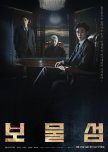
WHEN GREAT ACTORS ARE TRAPPED IN BAD WRITING
Wow. What a show. Truly groundbreaking stuff, if what you’re aiming for is wasting an incredible cast on a script that makes zero sense.Let’s start with the medical storyline, because clearly, accuracy wasn’t a priority. Punch-drunk syndrome? A terminal, degenerative condition? Apparently not here! Nope, here it’s just: “I’ll be fine if I take my meds.” Oh sure, buddy. No tremors, no vision loss, no slow, painful decline. Just pop a pill and you’re good to go. Groundbreaking medical science, right?
And Dong-ju. Man survives drugging, beatings, back injuries, PTSD, and a terminal brain disorder without even breaking a sweat. Superhuman? Apparently. Consequences? Never heard of them.
The romance? Oh, don’t worry, it’s definitely there… if you enjoy watching a female lead act like she just wants attention instead of, you know, having real feelings. Kim So Hyun tried, bless her, but even she couldn’t save a character written this badly. And of course, we traded a potentially amazing bromance for this half-baked love story. Great decision, writers. Really.
Now onto Ju-yeong, our so-called villain. The man who kills people for simply annoying him... except, of course, for Dong-ju, the walking definition of “please kill me already.” Because logic is optional here. For a start, what villain threatens to kill you every other scene and still doesn’t pull the trigger? Ju-yeong had everything: control over people, the money, the containers to make bodies vanish. He could’ve sneezed in Dong-ju’s direction and won. But no, he was written like a plot puppet. That first bathroom scene was pure villain gold. Everything after was downhill at record speed.
And don’t even get me started on Heo Sung-tae. THE Heo Sung-tae, reduced to a childish, weak chief for cheap laughs. Because nothing says “thriller” like forced slapstick.
The police team? Oh, please. Elite force? More like the department everyone laughs at. They were incompetent, constantly wrong, and then magically promoted at the end… for reasons? Sure. Why not. Meanwhile, this same team bends over backward defending Dong-ju, even though his idea of police work is punching people first and thinking never. But apparently, “it’s not his fault.” No, actually, it is.
And don’t think I forgot the wasted poetic justice. Ju-yeong should’ve died by his own philosophy: “loose ends need to be tied up, so now you’re the loose end.” But nope. He died unrepentant, evil to his last breath, with no real reckoning. What a waste.
So yes. If you’re looking for a story where good actors are forced to play idiots, medical science doesn’t exist, and logic is an urban legend, this is the show for you.
At least Jong-hyun’s jealous bromance moments were fun. That’s… something, I guess.
Was this review helpful to you?
A promising thriller that forgets what it was trying to say
*Buried Hearts* markets itself as a slick revenge thriller drenched in corporate corruption, memory loss, and familial secrets. And to be fair, it starts that way. But as the story unfolds, the show loses not only its narrative grip, but also its own identity.The early episodes are compelling. A secret slush fund, a shadowy professor pulling political strings, and a lead character with amnesia - there’s no shortage of tension. But the writing quickly shows cracks. Instead of escalating the drama, the plot circles back on itself repeatedly, bogged down by overused tropes (amnesia again?) and characters who stop evolving after episode three.
There’s a frustrating lack of depth in how the show handles its core themes. Power, memory, guilt - these are fertile grounds for psychological drama, but *Buried Hearts* rarely digs deeper than surface-level reveals. Characters tell us how they feel; the show doesn’t show us. The narrative doesn’t trust its audience to interpret nuance, so it spoon-feeds motivation through long, expositional dialogue.
The drama leans heavily on twists, but few of them land. A late-game near-incest plotline feels like a desperate attempt to inject shock value, only to be reversed quickly. The big reveals often feel more like filler than payoff - contrived rather than earned.
By the final third, the show is barely holding together. Pacing becomes a major issue. Scenes drag. Characters lose their edge. The revenge plot, which should intensify, flattens under political subplots and boardroom infighting that lack emotional stakes. What could have been a tight 12-episode series overstays its welcome across 16.
Park Hyung-sik does his best with what he’s given, but the script boxes him into a narrow emotional range. Dong-ju’s amnesia is used more as a reset button than a way to explore internal conflict. Hong Hwa-yeon, while understated and watchable, is underutilized, especially in the second half where her arc plateaus into passivity.
Even Huh Joon-ho, playing the morally gray puppet master Yeom Jang-seon, is reduced to a repetitive mouthpiece for exposition rather than a compelling antagonist.
The direction is clean but lacks distinct style. There’s none of the visual storytelling or atmospheric flair that defines standout K-thrillers. Music is overbearing, often cueing emotion instead of letting the scene breathe. And while the sets are appropriately cold and corporate, the lack of variety becomes visually monotonous.
Final Thoughts:
*Buried Hearts* has all the ingredients of a high-stakes melodrama, but it lacks cohesion, restraint, and most importantly, soul. The show wastes its premise, dulls its tension with repetition, and leaves its audience more frustrated than satisfied. What could have been a biting commentary on greed and identity ends up as just another forgettable entry in the ever-growing list of K-dramas that promise more than they deliver.
Was this review helpful to you?
This review may contain spoilers
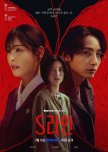
So Much Potential, So Little Payoff
The concept was good. But the drama lost its way.At first, it was a tight, claustrophobic social experiment. A girl cursed with this “gift,” a detective hiding his own broken past, a society rotting under moral policing. Each storyline, whether a SA victim shamed for her "excessive" lines or a brother reckoning with the hypocrisy of his cheating family, reflected an uncomfortable truth about how people judge sexuality.
And then… it happened. Suddenly, we’re in a dystopian fever dream. A teacher-turned-cult-leader summoning some “desire dimension”? Allegory, sure, but messy, rushed, and tonally WRONG. The characters stopped being people and became props. Even the boyfriend’s death felt cheap. Shock value over meaning.
Instead of finishing its moral conversation, S Line bailed, hiding behind symbolism and leaving its most interesting ideas to rot.
Was this review helpful to you?
This review may contain spoilers
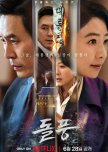
Government-funded Psychological Warfare
HOLY FREAKING HELLLLLLLLLL this drama is not a kdrama anymore this is literally psychological warfare with government funding 😭😭😭 every episode feels like somebody holding a gun to democracy’s forehead while the other person is blackmailing the gun itself LIKE WHAT IS GOING ONNNNNNfirst of all Dong-ho is one of the most terrifying male leads i’ve watched in YEARS because he doesn’t even act evil in a dramatic way 😭 he’s not screaming, not throwing glasses, not doing those corny villain monologues. NO. this man whispers in calm little lawyer voice and suddenly three careers are destroyed, a billionaire is crying, two prosecutors are getting exposed, and somebody’s entire bloodline is under investigation 💀 the way he keeps sacrificing pieces of himself for the “greater good” while slowly becoming the exact kind of monster he hated??? CHEF’S KISS. literally the whole show is watching a man rot morally in ultra HD while convincing himself he’s still saving the country and honestly… kinda iconic kinda horrifying 😭
and the thing that makes him scary is that he’s SMART smart. not drama-smart where characters become stupid so the plot can move. no this man is genuinely calculating like every scene with him feels like he already read the script before everyone else 😭 the way he anonymously fed information to different people just so they’d attack Su-jin from multiple angles at once????? HELLOOOOOO 😭😭😭 bro literally sat there engineering chaos like a bored chess god. when the review said he basically sent Su-jin into a lion pit and waited to see who would eat her first i LOST IT because that’s EXACTLY his energy 😭 he really said “i’m not killing you myself. society will do it for me.”
BUT ALSO… SU-JIN???? OH MY GODDDDDD this woman is actually insane in the BEST way. like every single episode i think “okay she’s done this time there’s no way she survives this” and then somehow she comes back with better PR, more supporters, another alliance, and a fresh blazer 😭😭😭 SHE IS A COCKROACH OF POWER. impossible to kill. terrifyingly adaptable. every time Dong-ho cuts off one route she opens three more like HYDRA 😭
and what i LOVE is that the show never writes her as some pathetic victimized woman politician. no no no this woman is dangerous. manipulative. emotionally repressed. deeply traumatized. probably hasn’t slept properly in years. but also charismatic as HELL 😭 the funeral speech????? oh she ate that up BADDDD. she weaponizes grief better than most politicians weaponize laws 💀 like imagine your enemy possibly murdered the president and YOU still somehow become the sympathetic public figure. i’m sorry but she’s a demon 😭
also can we talk about how everybody in this drama is emotionally attached to each other in the most toxic way possible 😭 because why does every confrontation between Dong-ho and Su-jin feel like a divorce between two people who used to run a revolution together LMAOOOOOO. the history between them is INSANE. they don’t even need romance because the betrayal itself has more chemistry than most kdrama couples 😭 every conversation is basically:
“you betrayed our ideals.”
“you became worse than him.”
“maybe but you created me.”
“okay fair.”
like HELLOOOOO??????
the flashbacks actually make everything hurt more because you see how idealistic they all used to be 😭 they genuinely believed they could fix corruption together and now they’re literally orchestrating assassinations, covering up murders, manipulating prosecutors, bugging watches, blackmailing ministers, threatening witnesses, and psychologically torturing each other over lunch 😭😭😭 the downfall is CRAZYYYYY
AND DON’T EVEN GET ME STARTED ON PRESIDENT JANG II JUN because this man’s entire existence is like the ghost haunting everyone 😭 the way everybody keeps using his legacy like a political football after his collapse/death is sooo nasty but fascinating. every single person projects something different onto him. Dong-ho sees him as the symbol of compromised ideals. Su-jin sees him as protection. the public sees him as tragedy. meanwhile this man was corrupt as hell too 😭😭😭 literally no saints anywhere. not ONE.
that’s probably my favorite thing about this show honestly. there are NO clean hands. every single person is compromised in some way. even the “good” actions are done through horrifying methods 😭 Dong-ho trying to save the country by committing crimes himself is soooooo funny in a dark way because sir… at what point do you become the thing you’re fighting 😭 this man keeps talking about justice while actively committing enough felonies to start his own constitution 💀
and i love that the show KNOWS this too. it never fully romanticizes him. even the reviews are like “uhhh king you are literally turning into the president you hated” 😭 the scene where he asks Jang-seok to continue the fight after he falls because he KNOWS he’s already corrupted himself??? whewwww. that hit. because deep down Dong-ho understands there’s no coming back for him anymore. he crossed the line episodes ago. now he’s just deciding how useful his destruction can still be 😭
ALSO JANG-SEOK MY POOR MEEEEOW MEOOWWWW 😭😭😭 this man is watching his best friend slowly transform into a political war criminal in real time and every episode he looks more exhausted 💀 the emotional conflict there is soooo good because he genuinely loves Dong-ho but he’s also a prosecutor so eventually he HAS to confront him. the scene where Dong-ho subtly admits that one day they’ll meet as prosecutor and defendant?????? OH MY GODDDD THE TENSIONNNN 😭 like this show really understands tragedy because everybody knows exactly where this is heading and still can’t stop it.
and can we PLEASE discuss the level of manipulation happening every episode because why is EVERYBODY recording each other 😭😭😭 bugged watches, hidden phones, anonymous leaks, recorded confessions, surprise press conferences, evidence in safes, blackmail documents… literally nobody in this universe should be allowed near electronics anymore 💀
the watch storyline specifically had me SCREAMING because Su-jin really thought she had Dong-ho cornered meanwhile he knew about the listening device THE WHOLE TIMEEEE 😭😭😭 i swear this man plays psychological chess like he’s possessed. he literally let her think she was controlling him just so she’d expose all the corrupt names connected to Daejin 😭 THAT IS SICKKKKKKK. like genuinely villain behavior but also kinda hot intellectually i’m sorry 😭
and speaking of Daejin OH MY GODDDD the way this corporation basically functions like an unofficial government is terrifying because it doesn’t even feel unrealistic 😭 the show’s portrayal of political-corporate corruption is sooo cynical but sooo believable. prosecutors getting controlled, media narratives changing overnight, public opinion manufactured through emotional performances, people suddenly switching loyalty depending on survival… this drama really said “what if power itself was a contagious disease” 😭
ALSO SU-JIN’S PUBLIC RELATIONS SKILLS NEED TO BE STUDIED BY NASA 😭😭😭 because how does she keep escaping career-ending scandals. husband corruption allegations? survived. hearing ambush? survived. public attacks? survived. possible murder involvement? survived. this woman could probably survive a meteor strike with a 62% approval rating 💀
and i’m sorry but the scene where Dong-ho jumps off the cliff trying to frame Su-jin further?????? ARE YOU KIDDING MEEEEEE 😭😭😭😭 i literally had to pause because WHO THINKS OF THIS. this man said “if i go down i’m dragging you into hell with me” and just launched himself off a cliff like a suicidal Shakespeare character with presidential immunity 💀 the level of theatrical insanity in this show is unmatched.
also the way they constantly use patriotism and history emotionally is soooo effective 😭 the flag passed down through generations, the promises about justice, the symbolism of returning to the Blue House, the idea of becoming a “whirlwind” that uproots corruption… it all sounds noble until you realize everyone saying these things is actively destroying themselves and others 😭 the irony is DELICIOUS.
and honestly the show is weirdly sad beneath all the chaos because none of these people even seem happy anymore 😭 they’re all trapped. Dong-ho can’t stop because too much has already happened. Su-jin can’t stop because survival became instinct years ago. everybody keeps escalating because if they pause for even one second they’ll lose everything. it’s like watching people drown while trying to hold onto crowns made of concrete 😭
ALSO THE WOMEN IN THIS SHOWWWW OMGGGGG 😭 Yeon-suk especially surprised me because at first i thought she’d just be another side political aide character but NOPE this woman is MOVINGGGG. the way she switched allegiance after learning the truth, the way she protects evidence, manipulates meetings, and quietly navigates all these dangerous men… she’s lowkey one of the smartest people there 😭 but also girl STAND UPPPP because why are you helping these morally bankrupt men implode the nation 💀
and the pacing??? absolutely psychotic 😭 there’s no breathing room at ALLLLLL. one episode ends with attempted murder and the next starts with an election scandal and then suddenly there’s corporate succession manipulation and then BOOM emotional flashback and then somebody confesses to attempted assassination live on television 😭😭😭 like the writers genuinely hate peace.
also the dialogue in this show sometimes sounds like ancient war generals disguised as politicians 😭 everybody talks like they’re declaring the fall of an empire every five minutes. nobody just says “i disagree.” NO. they say stuff like:
“history will decide which of us deserves to survive.”
LIKE DAMN OKAYYYY 😭😭😭
and can we talk about how funny it is that every character thinks THEY are the reasonable one 😭 Su-jin thinks Dong-ho is too reckless. Dong-ho thinks Su-jin is too corrupt. Sang-cheon thinks he’s strategically justified. the billionaires think they’re protecting stability. meanwhile the entire government is collapsing like a jenga tower in an earthquake 💀
the show also does something really interesting with morality because it keeps asking whether intentions matter if your methods become monstrous. like Dong-ho genuinely DOES want justice. i believe that. but bro is also manipulating people, covering up crimes, threatening officials, and attempting murder 😭 meanwhile Su-jin started as someone fighting injustice and slowly became absorbed into the very machinery she once opposed. it’s tragic because neither of them fully notices how far they’ve fallen until it’s too late.
and lowkey… they deserve each other 😭😭😭 because WHO ELSE could even understand the level of damage they’ve both accumulated. every interaction between them feels like:
“i know what you did.”
“yeah but i know what YOU did.”
“fair enough.”
LMAOOOOOOO
also i need to say this: the actors are CARRYINGGGG this material so hard 😭 because these scenes could’ve become melodramatic nonsense in weaker hands but instead everything feels so intense and believable. especially the microexpressions omg. the tiny pauses before betrayal. the exhausted stares. the silent resentment. the way Dong-ho sometimes looks physically sick after making a decision but still continues anyway 😭 THAT’S GOOD ACTINGGGGG.
and the show LOVES symbolic imagery 😭 hills, watches, hospital rooms, graves, the Blue House itself… every location feels loaded with emotional meaning. even people shaking hands feels threatening in this drama 💀
the hospital scenes especially stressed me OUTTTT because everybody kept hovering around the president like vultures waiting to see if democracy survives another hour 😭 meanwhile doctors are trying to save lives while politicians are basically calculating poll numbers in the hallway 💀 absolutely dystopian behavior.
and the way public opinion shifts every two seconds is soooo realistic and depressing 😭 one press conference changes everything. one emotional speech changes everything. one leaked recording changes everything. the public becomes another weapon in the war rather than actual people. everyone’s constantly trying to “control the narrative” instead of telling the truth 😭
ALSO WHEN SU-JIN GOT THE FIRST LADY ON HER SIDEEEEEEE????? OHHHHH Dong-ho was SICK 😭 because Su-jin understands emotional optics better than anyone else in the show. hugging at gravesites, crying publicly, framing herself as the defender of legacy… she turns symbolism into armor 😭 meanwhile Dong-ho relies more on strategic destruction. that’s why their dynamic works so well. one fights through emotional influence and survival instincts, the other through cold calculated warfare.
and honestly by the later episodes i wasn’t even rooting for “good guys” anymore because THERE ARE NONE 😭 i was just rooting for whichever psychopath had the better strategy that week 💀 the show completely brainwashed me into becoming a political gremlin.
also the ending stretch where Dong-ho starts openly incriminating himself while taking everyone else down with him????? INSANEEEEEE. this man really said “if i burn, the whole system burns too” 😭 like at this point he’s less a politician and more a living suicide mission wrapped in legal documents.
and maybe THAT’S why the title fits so well because the entire story feels like a whirlwind. nobody stays clean. nobody stays stable. everybody gets swept up, destroyed, transformed. power just spins faster and faster until people lose themselves inside it 😭
ANYWAYYYYYYY this show is basically:
“what if idealism and corruption got trapped in a toxic relationship and dragged an entire nation into couples therapy from hell”
and i am OBSESSEDDDDDD 😭😭😭
Was this review helpful to you?
This review may contain spoilers
WHEN THE SCALPEL SLIPS
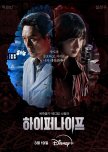
OVERVIEW:Hyper Knife is a medical crime thriller that follows Jeong Se-ok, a disgraced neurosurgeon who lost her license years ago and now runs a pharmacy by day and performs illegal black market brain surgeries by night. She is brilliant, terrifying, and completely unhinged in the best possible way. Then there is Choi Deok-hee, her former mentor and the man she blames for ruining her career, one of the most respected neurosurgeons in the country, who shows up at her door dying of brainstem glioma and asks her to operate on him.
That is the entire engine of this drama. Two morally grey geniuses with a deeply scarred history, both killers in their own right, forced back into each other's orbit by a terminal diagnosis. It is less of a whodunit and more of a psychological character study wrapped in surgical gloves and blood. If you go in expecting a traditional crime thriller you will be disappointed. If you go in understanding that this is a show about obsession, pride, ego, and a mentor-student bond so twisted it has lapped itself twice, you will probably love it.
________________
COMMENTARY:
OVERALL IMPRESSIONS:
This drama had me from the very first scene. There is no warming up period, no gentle introduction. Se-ok is performing brain surgery in a makeshift operating room hidden behind a Buddhist temple, surrounded by gangsters, completely in her element. Parallel cut to Deok-hee doing the same surgery in a gleaming hospital with full staff. The show does not tell you they are two sides of the same coin. It shows you and trusts you to understand. That kind of confidence in the storytelling is rare and it sets the tone for everything that follows.
The nurse murder in the early stretch is the moment that cements what kind of show this is. The nurse tries to blackmail Se-ok. Se-ok smiles, agrees, and then drugs and kills her while laughing. Park Eun-bin delivers that laugh with such bone-chilling precision that I genuinely had to pause for a second. This is not a drama where the morally grey female lead is secretly good underneath. Se-ok is a psychopath. A brilliant one, a compelling one. But she is not misunderstood. She is exactly what she appears to be and the show never apologizes for that.
The relationship between Se-ok and Deok-hee is the entire point of this drama and it is the best thing about it. These two share a dynamic that is impossible to neatly categorize. It is not mentorship. It is not rivalry. It is not romance though the obsession between them reads as something more. It is something closer to mutual possession. Each one is fascinated by and infuriated by the other in equal measure. They are the only people in the world who truly understand what the other is.
The reveal of why Deok-hee originally betrayed Se-ok is genuinely disturbing. He planned to take her to L.A. and essentially profit off her surgical genius while keeping her under his control. He wanted her for himself in the way a collector wants a rare find. Not a healthy dynamic by any definition. And yet the show never frames it as purely villainous either because Deok-hee also genuinely protected her, believed in her when no one else did, and ultimately orchestrated his own death as a final gift to her growth. Twisted? Absolutely. Interesting? Completely.
His grand plan at the end is the kind of thing that should feel ridiculous on paper. He deliberately worsens his own condition by self-medicating with a banned drug specifically so that the surgery will be as complicated as possible, specifically so Se-ok might fail, specifically so she will finally understand what it feels like to lose. He wants to humble her. He wants to make her human. And he is doing it by dying on her table on purpose. That is the most unhinged love language I have ever seen in a drama and I was absolutely riveted by it.
CHARACTERS:
Se-ok is one of the most genuinely interesting FL I have seen in a long time precisely because the show does not try to make you root for her in a traditional sense. She kills a blackmailing nurse. She murders a man who attacked her and buries him in her shed without flinching. She is cold, calculating, and completely unbothered by anyone else's emotional reality. She treats Young-joo with a kind of ownership rather than affection.
And yet. You watch her and you are captivated. Because Park Eun-bin plays her with such controlled ferocity that even when Se-ok is doing something monstrous you cannot look away. The scene where she slashes the back of Deok-hee's hand during surgery to take over the operation is one of the most quietly iconic power moves I have seen. No screaming. No grand gesture. Just a precise cut, a slight smile, and she steps in. That is character expressed through action and it is masterful.
What is also interesting about Se-ok is that the drama slowly reveals she was not born this way entirely. Her origin story as a girl from nothing, dealing with loan sharks, arriving at a welcome ceremony with a social worker, scratching and clawing for every inch of her career, only to have the one person who believed in her use that belief as a leash. The psychology underneath the psychopathy is there if you look for it. I appreciated that the show gave her depth without excusing her.
Sul Kyung-gu as Deok-hee is doing some of the best work of the entire show quietly. He is not loud or flashy. He operates on the same frequency as Se-ok which is deeply still, deeply calculating, and deeply dangerous. The scene where he slashes Myeong-jin's throat after letting him make one last call to his son is one of the most chilling moments in the drama precisely because of how calm it is. No remorse. No hesitation. Just efficiency. And then he hands him a napkin.
Young-joo deserves recognition as the emotional anchor of the show. He is the only character operating in anything resembling a normal moral register and yet he stays. He stays because Se-ok once convinced him to let her operate on his brain tumor by essentially daring him to live. That is not a healthy reason to be devoted to someone and the show knows it. Young-joo's loyalty is not framed as admirable. It is framed as the kind of devotion that happens when someone saves your life in the most chaotic way possible and you never fully recover from it.
Mrs. Ra is interesting mostly because of what she represents: the idea that Deok-hee has people around him who are just as morally flexible as he is. She followed him when he killed Myeong-jin, saved Myeong-jin behind his back, kept it secret for years, and only revealed it when it became necessary. She is not loyal in a simple way. She is loyal in the way people are loyal to complicated men they have seen do terrible things and chosen to stay anyway.
________________
LIKES:
Park Eun-bin. Full stop. I cannot overstate how much this performance carries the entire drama. She plays Se-ok with a specificity that is genuinely rare. The way she modulates between the cold clinical surgeon, the hysterically laughing killer, the girl who once begged Deok-hee to teach her everything, and the woman who will absolutely not let this man die on her table. Every register is distinct. Every transition is precise. She did not just play a psychopath. She played a person who operates on a completely different moral plane and made that person utterly watchable for eight episodes. This is award level work.
Sul Kyung-gu matches her completely. Their scenes together crackle with a specific kind of tension that is hard to manufacture. These are two actors who understand exactly what they are building and they do it with total commitment. The final argument before Deok-hee's surgery where all the history between them finally surfaces is cathartic in a way that eight episodes of careful buildup earns. You feel every year of their relationship in that scene.
The pacing in the first half is extremely tight. There is no wasted scene and no unnecessary filler. Every piece of information serves the larger puzzle. The parallel structure of the two doctors, one legal one illegal, both brilliant, both morally compromised, is established economically and paid off consistently.
The ending is genuinely bold. Deok-hee blackmails a corrupt inspector into continuing to investigate him, takes the blame for the nurse's murder to protect Se-ok, deliberately wrecks his own health to make her surgery harder, and then disappears. And the final shot of feet walking into a black market operating room implies he survived and came back to her. The show does not give you a clean resolution. It gives you a door left ajar and it feels right for these characters.
The cinematography is stylish without being overwrought. The operating room sequences in particular are shot with real tension. They treat neurosurgery with the same kind of choreographed intensity that other shows give to action sequences and it works extremely well.
________________
DISLIKES:
The middle stretch between the Myeong-jin investigation and the ship surgery drags. After the propulsive energy of the opening episodes the drama hits a plateau where the cat and mouse between Se-ok and Deok-hee starts to feel repetitive. She refuses, he pushes, she refuses again, he escalates. This cycle needed to break faster than it did.
Inspector Yang is the weakest element of the entire show by a significant margin. He functions purely as an obstacle and the show never gives him enough interiority to be interesting. He is corrupt, he is persistent, and ultimately he exists to be killed. For a drama this sophisticated in its treatment of its two leads the inspector feels like he wandered in from a much simpler thriller.
The Myeong-jin storyline is important for understanding Deok-hee's character but it is also where the pacing most clearly suffers. The psychiatric hospital investigation, Ki-young tagging along with Se-ok, the discovery that Myeong-jin was kept alive with brain damage in a nursing home and died three months ago all of this should feel more urgent than it does. It meanders when it should be accelerating.
Eight episodes is both the right length and also not quite enough. The show is so dense with psychological material that certain threads get shortchanged. We understand Se-ok's psychology in broad strokes but I wanted more of her actual inner world. The show tells us she can only feel peace in an operating room. It shows us. But it does not quite let me fully inhabit that experience with her the way I wanted to.
The ending's ambiguity will frustrate some and I understand that frustration even if I personally appreciated the choice. If you need closure this drama will leave you unsatisfied. Whether Deok-hee survived the surgery is deliberately left unclear. Whether Se-ok continues her black market practice, what happens to Young-joo and Han, none of it is resolved. The show ends mid-breath and depending on your tolerance for open endings that will either feel honest or feel like abandonment.
________________
FINAL THOUGHTS:
Hyper Knife is not for everyone and it knows it. It is not a feel good medical drama. It is not a satisfying procedural. It is not going to leave you with a warm sense of justice being served.
The show is at its best when it is focused on the psychologies of its two main characters and at its worst when it gets distracted by plot mechanics that feel borrowed from a more conventional thriller. The corrupt inspector, the black market broker, the police investigation, all of it is less interesting than ten minutes of Se-ok and Deok-hee in a room together being terrifying at each other.
If you are a Park Eun-bin fan this is non-negotiable viewing. If you enjoy dark psychological dramas with morally grey leads and no interest in reassuring you that the good guys win, watch this. If you need a clean ending, sympathetic characters, or anything resembling hope, maybe sit this one out.
Would I rewatch it? Certain scenes absolutely. The full eight episodes probably not, mainly because of the uneven middle. But Park Eun-bin's performance alone is something I will be thinking about for a while.
I give Hyper Knife a 7.5/10. Elevated by its performances beyond what the script alone deserves. A flawed but genuinely compelling piece of dark television.
Thanks for reading!♥
Was this review helpful to you?
Come for the Pretty Faces, Stay Because You Forgot Where the Remote Is
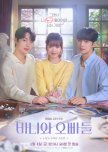
Crushology 101 kicks off with a dazzling premise: a young woman, freshly humiliated, decides that from now on, only gorgeous men are worthy of her time. Truly groundbreaking. If you ever wanted a show that promises emotional growth and then immediately forgets about it in favor of pretty faces, congratulations... you’ve found it.-> Story and Pacing:
The opening scandal is genuinely hilarious. But after that, the plot politely packs its bags and leaves. Bunny’s "handsome-only" rule is less about emotional healing and more about assembling the Korean drama version of a boy band. Growth is "teased" (if by teased you mean "mentioned and ignored"), and episodes start blending together into one long montage of Bunny blushing at different men.
-> Characterization:
Ban Hee-jin (Bunny) begins as someone you root for, until you realize she’s stuck on a hamster wheel of terrible decisions, and the script is too scared to let her get off.
The male leads (Ji-won, Jae-yeol, A-rang)? Icons of originality. We’ve got the brooding quiet guy, the smug flirt, and the sensitive artist - almost as if someone checked off a bingo card titled "Standard K-Drama Love Interests."
Their instant fascination with Bunny is truly touching, considering none of them know her beyond her tendency to trip over her own feet and stare dramatically into space.
-> Tone and Execution:
The show fully commits to its webtoon look, which is adorable until it’s supposed to get serious. Emotional scenes flash by so fast you’d think the editors had a hot dinner waiting. Any heartfelt moment is immediately buried under a mountain of cartoonish antics. Emotional stakes? Never heard of them.
-> Highlights (Such As They Are):
Bunny’s internal monologues are gold if you enjoy secondhand embarrassment.
Jae-yeol and Bunny actually have chemistry (an endangered species here).
Every once in a while, the show remembers it could be about self-esteem and body image... before getting distracted by another "accidental fall into a guy’s arms" scene.
-> Verdict:
Crushology 101 is colorful, chaotic, and as deep as a puddle. It’s the perfect background noise for folding laundry or wondering what more interesting dramas you could be watching. It’s just another webtoon adaptation you forgot you watched.
Was this review helpful to you?
Deception, Betrayal, and Karmic Doom
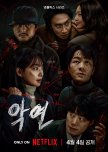
Karma is a crime thriller, yes. But more than that, it is a slow, merciless descent into the inescapable consequences of human greed, desperation, and revenge.Rather than following a singular, linear plotline, Karma constructs a mosaic of six intertwined lives, each thread weaving a tighter, more suffocating knot around the next. What begins as seemingly separate tragedies: crippling debt, an accidental killing, an unhealed past, gradually and methodically converges into something far darker than anyone could have anticipated.
At first, the show might give the impression of being an anthology, as each early episode focuses on different characters with narratives that appear self-contained. However, by the third episode, the true nature of the series emerges, the realization that these stories are not isolated events but rather fragments of a much larger and deeply interwoven nightmare.
Each character is more desperate than the last, and each possesses a dangerously flexible morality. Their choices ripple outward, affecting one another in unexpected ways. Even as they attempt to escape their fates, the past has a way of creeping back, ensuring that every action, no matter how seemingly small, has devastating consequences.
The beauty of Karma lies in its storytelling precision. This is not a series of twists for the sake of shock. Every turn, every betrayal, every revelation is earned. Just when you think you’ve grasped the full picture, you suddenly realize you’ve been looking at it from the wrong angle the entire time.
At its essence, Karma reveals the gradual desensitization to violence. The characters begin hesitant, fearful of what they are capable of. But as time passes, that hesitation fades. Violence begets greater violence, and soon, the line between necessity and cruelty blurs.
This is not a drama to be watched passively. It is a drama that demands your full attention, your patience, and your willingness to be drawn into its suffocating world.
It is for the people who crave stories that leave a mark, stories that challenge and haunt, stories that unravel like a beautifully constructed nightmare.
Was this review helpful to you?
This review may contain spoilers
THE BULLY-BUSTER DRAMA NOBODY ASKED FOR BUT EVERY KOREAN SCHOOL DESPERATELY NEEDED
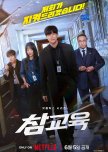
OVERVIEW:Imagine a Korean school system where students rule through fear, teachers are afraid to intervene, principals answer to angry wealthy parents, and even police investigations vanish under political pressure. Enter Na Hwa Jin, an inspector for the Educational Rights Protection Bureau, a government agency created to tackle the chaos. Backed by Minister Choi Gang Seok and aided by deputy director Bong Geun Dae, who frequently goes undercover as a student, Hwa Jin takes on the worst cases of school corruption and abuse. Later joined by former soldier Im Han Rim, the team brings a mix of investigation, intimidation, and brutal justice to every mission. Each episode sees the ERPB storm a different school, expose systemic wrongdoing, punish the guilty, and restore order. It’s *Taxi Driver* set in Korean schools, and it’s ridiculously satisfying.
⸻
COMMENTARY:
I was not prepared to enjoy this as much as I did. The premise on paper sounds like it could easily become repetitive or preachy or both simultaneously, which is the worst possible combination in a drama. Bully shows up, ERPB shows up, bully gets punished, roll credits, repeat for ten episodes. That description makes it sound exhausting. But the reason Teach You A Lesson actually works, and works consistently across all ten episodes, is that it understands that the problem is never just the bully.
Each case in this drama peels back a different layer of the same systemic rot. Ep 1 is about a rich politician's son who bullies with total impunity because every adult in the building is financially terrified of his father. Ep 2 is about a school that has essentially become a gang recruitment pipeline because nobody in authority cared enough to intervene. Ep 3 is about a teacher being destroyed by her own student through social media manipulation while the principal negotiates his own peace deal with the perpetrator instead of protecting the victim. Ep 4 is about a corrupt teacher who has been quietly steering wealthy students toward exam advantages for years. Ep 5 is about a parent who weaponised the very complaint system designed to protect children in order to torment a teacher. Ep 6 is about teenagers who know exactly how untouchable being a minor makes them and exploit that protection like it is a VIP membership card. Ep 7 is about a gambling addiction pipeline deliberately marketed to high schoolers. Ep 8 is about academic pressure so extreme that a mother was feeding her son illegal stimulants just to stay competitive at a prep school. Ep 9 is about passive exploitation masquerading as friendship. And Ep 10 brings the whole season full circle to the murder that started everything.
That is 10 episodes and not a single one of them recycles the same problem. I genuinely want to stand up and applaud whoever was in that writers' room because that is some disciplined, intelligent storytelling. The show never lets you settle. Just when you think you know what kind of villain you are watching, it introduces a new category of how adults fail children and how children fail each other and how systems designed to protect people get bent into weapons used against them.
Let me talk about Hwa-jin for a second because he is genuinely a very entertaining character. The man shows up to a school on his first day, immediately hears a student make a joke about a classmate who just died, and beats him. Not a lecture, not a disappointed look. He beats the student and then puts the entire class in a plank position. On his first day as a new teacher. The audacity. The commitment. The complete disregard for HR concerns. I genuinely watched that scene with my mouth open because you are simultaneously horrified and cheering and neither feeling is wrong. The show is self-aware enough to know that what Hwa-jin does is not strictly legal, and it leans into that tension deliberately rather than ignoring it. The ERPB has government authority but the way they use that authority is creative enough that even their allies sometimes need a moment to process it.
Kim Mu Yeol is doing exactly what this role needs. Hwa-jin is not warm, he is not particularly funny on purpose. He does not give inspirational speeches that end with someone crying and learning a lesson over background piano music. What he is, is terrifyingly certain of himself and absolutely relentless in a way that makes him magnetic to watch. There is a scene in ep 2 where he drives two students around a parking lot in a car with a missing door at genuinely unreasonable speeds while they scream and beg for their lives and he just looks completely unbothered, like he is running a routine errand. That is the energy this show runs on and Kim Mu-yeol delivers it with full commitment every single episode.
Jin Ki Joo as Han-rim is the most delightful surprise this drama has to offer. She shows up in ep 3 and immediately makes herself at home by grabbing a knife blade with her bare hand and staring a teenager off a balcony. She is a former soldier, she has the scars to prove it, and she operates with a kind of cheerful efficiency when it comes to violence that is somehow both alarming and deeply satisfying to watch. But what makes Han-rim genuinely great rather than just cool is that she has a full emotional life outside of the action sequences. Her dynamic with Geun-de, her protectiveness over him, the backstory of her own bullying that Hwa-jin helped her through, the way she genuinely struggles when she thinks she has put Geun-de in danger in ep 7, all of these things make her three-dimensional in a drama that could easily have settled for one-dimensional badassery and called it a day.
And then there is Geun-de. My sweet, hapless, perpetually stressed Geun-de. P.O plays him with such a specific kind of earnestness that you feel genuinely protective of the man despite the fact that he is a government official with a full salary and a tactical team behind him. He has a government title. He is the Deputy Director of the ERPB. And yet every single episode he ends up going undercover in a school, getting beaten up, kidnapped by loan sharks, developing a gambling addiction for the purposes of an investigation, or getting his cover blown in a cybercafe while Han-rim is distracted by a bag of snacks. This man is perpetually in danger and perpetually dignified about it and I love him unreservedly. The moment in ep 7 where he sends a distress message in Morse code through a criminal gang's server from inside their hideout is both the most ridiculous and most satisfying thing the show does.
Lee Sung Min as Gang-seok is doing the quietly excellent work that veteran actors make look effortless. Gang-seok is the political brain of the operation, the person who turns what Hwa-jin does in schools into policy announcements and press conferences and actual legal change. He is the reason the ERPB has teeth beyond the personal damage Hwa-jin inflicts. The scene in ep 10 where he completely loses his composure and tries to go after Gyu-cheol himself after seeing Hwa-jin's injuries is the most emotionally direct the character gets all season, and Lee Sung Min makes it land exactly right. He has been calling Hwa-jin his son quietly in the background the whole time. That moment is when you finally feel the full weight of it.
The Ga-yun thread running through the whole season is doing a lot of structural work. The entire ERPB exists because Ga-yun was murdered by a student she was trying to help, and the justice system gave that student two to four years and called it a day. Hwa-jin lost his partner. Gang-seok lost his daughter. The show does not let you forget either of those things but it also does not hammer you over the head with grief every episode. Instead it works as an undercurrent, explaining why these two men are as relentless as they are, why they take cases that others would find exhausting or hopeless, why Hwa-jin in particular has zero interest in meeting bullies halfway or giving them comfortable exits. When ep 10 finally reveals the full truth of why Gyu-cheol killed Ga-yun, the answer is so banal and so ugly that it hits harder than any dramatic revelation would have. He killed her because she threw his drugs away. He murdered a teacher who was trying to save him because she got in the way of his business. That is it. That is the whole reason, and it is devastating.
Ep 3 is the one that I think about the most because the Ye-ri case is doing something uncomfortably nuanced. Ye-ri is not a traditional villain in the sense that she has a coherent evil plan. She is a teenager who discovered that social media gives her power and that power is addictive, and she used it in increasingly destructive ways because every adult in her immediate environment either enabled her or refused to confront her until the damage was irreversible. Two teachers are destroyed. One takes his own life. And Ye-ri by the end is not triumphant, she is cornered and desperate and wielding a knife she does not actually know how to use. The show does not ask you to feel sorry for her but it does ask you to understand how she got there, and that is such a morally complicated thing.
Being a teacher myself, ep 5 almost made me leave my body. The sound design choice of making U-jin's mother's constant phone messages audible to us is either genius or deliberate cruelty and honestly it might be both. By the fifteenth notification sound I was stress-eating and reconsidering my life choices. Ji-seon's story is devastating because it is so recognisable: a person doing a genuinely good job who is slowly dismantled by one parent's campaign of harassment while every system around her fails to intervene. The principal asking her to ignore the messages because upsetting parents causes problems for the school is such a specific and believable failure of institutional responsibility that it made me angry.
Ep 8 is the one that will make parents deeply uncomfortable and good. Hyeon-min's mother is not a cartoon villain. She is not motivated by hatred or cruelty. She is motivated by the very real and very crushing pressure of the South Korean academic system and by the belief, not entirely unfounded given the context, that her son's entire future depends on his CSAT results. The show does not let that be an excuse. Hwa-jin making her follow the same sleep-deprived, controlled-meal, no-rest schedule she imposed on her son is the most elegant punishment in the entire season. Not a fine. Not an arrest. The experience of being inside the life she built for her child. The scene where Hyeon-min finally tells her he does not want to go to medical school and she goes completely blank before processing it is one of the best pieces of acting in the whole drama.
I also need to discuss Gi-tae, whose function in the drama is to be a structural antagonist for Gang-seok while representing every politician who would rather protect institutional inertia than fix an actual problem. He is not complex. He does not have a redemption arc. He is just a man who is threatened by what the ERPB represents because it makes visible the things his party has been comfortable ignoring.
The show is not subtle about what it is. This is not a nuanced exploration of whether vigilante justice is ethical. It is a show about people getting punished for ruining other people's lives, and it wants you to enjoy that punishment, and you will enjoy it, and you should not feel bad about enjoying it. The genre is wish fulfilment drama. It understand the deep public appetite for seeing systems that fail ordinary people get forcibly corrected by someone who simply refuses to accept that the system gets the final word.
The Han-rim and Geun-de romance thread is handled with exactly the right lightness. The show never makes it a main event, never sacrifices plot for shippy moments, but it does earn the warmth between them through consistent small details across all ten episodes. Han-rim worrying about his safety during undercover operations. Geun-de being the one person who manages to bring her out of a drug-induced fugue state in the finale. Hwa-jin clocking the whole situation from ep 4 and doing the kdrama equivalent of a knowing older brother smirk about it for the rest of the season. Gang-seok at Ga-yun's grave watching both of them pointedly try to ignore each other and clearly finding it hilarious. These are good people becoming attached to each other in believable ways and the show respects the viewer enough to let that develop organically rather than forcing it.
One thing I appreciated quietly throughout the whole season is that the show makes space for cases where students are the victims of adults rather than the other way around. Ji-seon in ep 5 is being tormented by a parent. Hyeon-min in ep 8 is being harmed by his own mother. The gambling students in ep 7 are being deliberately targeted and addicted by loan sharks who know exactly what they are doing to vulnerable teenagers. Seong-gu in ep 9 is being exploited by someone he thinks is his friend. The ERPB protects teachers and students and parents depending on who is being victimised in a given situation, and that flexibility keeps the show from becoming a simple students-are-the-problem narrative. The show is smarter than that and it wants you to know it.
⸻
FINAL THOUGHTS:
“Teach You a Lesson” is exactly the kind of drama that reminds you what Korean television does better than almost anyone else when it's firing on all cylinders. It's bold and provocative and stylish and it is packed with performances that make you genuinely care about everything happening on screen. It takes real social problems seriously and it approaches them with passion and urgency. It delivers satisfaction and catharsis in ways that feel genuinely earned. And it surprised me emotionally in the best possible way with a backstory that added real depth and humanity to what could've been a fairly surface level action show.
Is it morally complicated? Absolutely yes. Will it make you think? Also yes. Will it also have you cheering and gasping and completely unable to stop watching until you've finished all ten episodes? YES. All of those things can coexist and in this drama they do.
The cast is phenomenal across the board. Jin Ki-joo and Kim Mu-yul, Lee Sung-min, and P.O are all doing career best work here in my opinion and they deserve every bit of recognition they get for it. The production is slick and confident. The pacing is excellent. And the emotional core underneath all the action is genuinely moving once it reveals itself.
Don't sleep on this one seriously!! The people who get it will GET IT and I really think more people need to be watching and talking about this drama because it deserves the attention.
Also if you watched this and slept on Jin Ki-joo I am going to need you to go back and rewatch every single one of her scenes with fresh eyes because she is THAT girl and I will not be taking any questions at this time thank you!
With all that said, I give this a solid 8/10. I would absolutely recommend this to anyone who loves action dramas, school justice narratives, morally complicated protagonists or just stories about grief and power and what people build in the aftermath of devastating loss.
Thank you for reading!
♡
Was this review helpful to you?

This review may contain spoilers
CHARM CANNOT SAVE A SHOW THAT DOESN'T KNOW WHAT IT WANTS TO BE
Okay so I have been sitting here for the past hour trying to figure out how to even begin writing this review because I genuinely have so many conflicting thoughts and feelings about this drama and I don't even know where to start. I did not hate it, but I absolutely did not love it either. And honestly, that in itself is the biggest problem and the most frustrating outcome I could have walked away with. Because with a premise THIS relevant to the world we are living in right now, you should not be finishing a drama and just feeling… nothing. You should feel something. Anything. Happy, sad, devastated, giddy, obsessed... I don't care. Just SOMETHING. And the fact that I closed out the final episode and essentially just shrugged my shoulders and moved on with my day tells you everything you need to know about where this drama ultimately went wrong.I want to be fair though because there were aspects of this show that I genuinely enjoyed and I don't want to be one of those people who just trashes something without acknowledging what worked. So let me try and break this down properly.
⸻⸻⸻⸻⸻⸻⸻
GENERAL OVERVIEW:
Seo Mi-rae is a webtoon producer whose entire existence has basically been swallowed up by her career. No romance, no social life, no time, no energy, nothing. Just an endless cycle of impossible deadlines, demanding creators, and a workload that would break most people. After going through a painful breakup she has completely checked out of the idea of dating and has zero interest in pursuing another relationship. She is just existing at this point, running on fumes, and pouring everything she has into her job.
Then she gets selected as a beta tester for this revolutionary virtual reality dating platform called *Boyfriend On Demand* and honestly the concept alone had me sold from the jump. The app drops you into this fully immersive digital world where you can interact with hundreds of AI-generated romantic partners and every single one of them is specifically designed to fulfill a different fantasy. You want sweet and supportive? Done. Dramatic and brooding? Right there. Impossibly wealthy and devoted? Say less. Mysterious and protective? Already waiting. The app is essentially a choose-your-own-adventure romantic experience where the risks of real relationships don't exist and every single boyfriend is literally designed to make you feel chosen and special and loved. And as a concept? I mean… come on. You cannot tell me that is not creative and timely premises. In a world where people are lonelier than ever and technology is increasingly filling in the gaps of human connection, this idea had so much to say. SO much. And that is precisely why what they actually did with it hurt as much as it did.
⸻⸻⸻⸻⸻⸻⸻
COMMENTARY:
The virtual dating sequences? Honestly iconic. Genuinely hilarious. Completely unhinged in the most entertaining way imaginable. Every single time Mi-rae entered the simulation I was on the edge of my seat wondering what kind of fantasy scenario was going to unfold and which celebrity was going to pop up as her newest AI love interest. The sheer unpredictability of it kept me watching way longer than the actual quality of the writing deserved and I am not even remotely ashamed to admit that. That is just the truth.
The AI boyfriends themselves were so exaggerated and over the top in the best possible way. They were basically walking parodies of every romantic archetype you have ever seen in a drama and the comedy that came from Mi-rae having to navigate their ridiculous levels of devotion and dramatic declarations of love was genuinely some of the funniest content I have seen in a while. Her reactions alone carried so many scenes. There was a real self-awareness to these sequences that I appreciated because the show clearly knew how absurd the premise was and leaned into it rather than trying to play it completely straight.
And the celebrity cameos... okay listen. I understand that for some people the cameos were maybe a bit of a gimmick but for me? Every single one felt like an event. Like a little gift. You genuinely never knew who was going to show up next and that sense of excitement and surprise genuinely kept the momentum going even when other parts of the story were dragging. In a weird way the cameos became one of the show's most defining and memorable features and I think that says a lot about how well executed they were individually even if they contributed to a larger structural problem that I will get into later.
Seo Kang-joon appeared as one of the AI boyfriends and I am telling you right now, this man had LIMITED screen time. We are talking a handful of episodes at most. And somehow, SOMEHOW, he left a bigger and more lasting impression on me than the actual main love interest of the entire drama. How does that happen? HOW? The chemistry between him and Mi-rae was so immediate and so natural and so effortless that I genuinely sat there with my mouth open thinking "why are you not the lead of this show?" Like their interactions felt lively and easy and genuinely fun in a way that the central romance never quite managed to achieve despite having 10 entire episodes to build itself up. Some of the scenes they shared together were easily among the most memorable of the whole drama and he was barely even there!!!
It genuinely made me a little sad watching it because you could see what the show could have been if that same energy and chemistry had been channeled into the main relationship. I need someone to cast Jisoo and Seo Kang-joon in a proper drama together with a strong script and a fully developed love story because after watching this I am convinced they would be absolutely electric together. Someone please make this happen. I am begging.
And the truly frustrating thing is that his cameo character, a character with almost no backstory, no real development, no space to breathe, somehow felt more emotionally present and engaging than characters we spent the entire drama with. That is not a compliment to the cameo. That is an indictment of how badly the writing failed the main cast.
Park Gyeong-nam, played by Seo In-guk, is supposedly the love of Mi-rae's life. He is reserved and intimidating on the surface but secretly harbors genuine feelings for her and gradually becomes more important to the story as it progresses. In THEORY this relationship should have been the emotional beating heart of the entire series. The thing that grounds all the virtual chaos in something real and meaningful. The anchor. The reason we are watching.
In PRACTICE it felt like an afterthought. A side plot. Something the writers remembered existed between virtual dating sequences and celebrity cameos.
For the majority of the drama Gyeong-nam is essentially sidelined while Mi-rae runs around the simulation falling in and out of fantasy scenarios. He lingers in the background. He shows up occasionally to look meaningful and feel things quietly. And then by the time the show finally decides to actually commit to building their relationship there is genuinely not enough runway left to do it properly. Important moments feel rushed. Character development arrives so late in the game that it cannot possibly land with the emotional weight it should have. And the conclusion of their romance feels hollow as a result because you cannot make an audience invest in something you spent most of the drama not investing in yourself.
This is especially painful because Seo In-guk is genuinely talented. Like properly, undeniably talented. He has this natural screen presence that allows him to communicate entire worlds of emotion through a look or a quiet expression or the way he holds himself in a scene. Some of Gyeong-nam's most effective and moving moments involved no dramatic dialogue at all, just a lingering glance, a subtle shift in expression, a moment of quiet disappointment that he does not allow to show on his face. The performance was there. The actor was fully present and giving everything he had. The script just did not meet him where he was standing and that is the part I genuinely cannot forgive.
Because here is the thing. He tried so hard with so little. And you could feel it. You could feel him reaching for emotional beats that the writing kept failing to set up properly and honestly it just made me respect him more while simultaneously making me angrier at the show for wasting him the way it did. Seo In-guk deserved better material. Full stop. No argument. The character needed more and the actor was more than capable of delivering it if only the drama had bothered to do its part.
Okay let me talk about Jisoo because I think she did a genuinely good job with what she was given and I want to be clear about that before I get into the parts that annoyed me.
Carrying a drama with a premise this unconventional is not easy. It requires a particular kind of energy and presence, someone who can be funny without being cartoonish, emotional without being melodramatic, relatable without being passive. And for the most part Jisoo delivered. Her comedic timing was strong throughout and her expressive reactions became absolutely essential to some of the show's funniest and most entertaining moments. She was watchable in every scene and there is a natural charisma to her that kept the series moving forward even when the writing was letting everyone down. That counts for a lot and I do not want to minimize it.
Mi-rae herself is also a genuinely interesting character on paper. She represents an entire generation of young professionals who are running themselves into the ground trying to build careers while quietly falling apart on the inside. The exhaustion, the loneliness, the uncertainty about where her life is going... those feelings are real and they are relatable and in the right hands they could have been deeply affecting.
The problem is the writing kept undermining her. Her character development was inconsistent throughout the series and there were multiple moments where her decisions felt poorly motivated or just straight up immature in ways that made it difficult to stay fully invested in her journey. Like I understood her on a surface level but the drama never quite gave me enough of her interior world to make me truly feel for her the way I wanted to. And when you have a show that is essentially built around one character's emotional evolution, that is a significant problem.
This is not a Jisoo problem. This is a writing problem. The actress did her job. The script did not always do its job. Those are two separate and distinct issues and they should be treated as such.
At its core *Boyfriend On Demand* is not just a romance. It is a story about loneliness. About emotional fulfillment in an increasingly disconnected world. About what it means when technology becomes better at meeting our emotional needs than other human beings. About the seductive danger of preferring a controlled fantasy to the messy unpredictable reality of actual love. These are themes that matter. These are conversations worth having. And the framework of this drama was the perfect vehicle for having them.
The show even sets up genuinely fascinating territory around this, as Mi-rae grows more attached to the virtual world, reality starts to feel less satisfying by comparison. The idealized perfection of the app creates a standard that no real relationship can match. That tension between fantasy and reality could have been the foundation of something truly thought-provoking. A serious examination of digital dependency, emotional avoidance, and what we lose when we choose simulation over genuine human connection.
But every single time the drama got close to actually exploring one of these ideas, every time it approached a moment of real depth or genuine complexity, it retreated. Pulled back. Cracked a joke. Introduced another cameo. Jumped to another virtual scenario. It was like watching someone sprint toward something important and then stop just before reaching it over and over and over again for sixteen episodes. And eventually you stop believing they are ever actually going to get there.
The tragedy is that the comedy was good! I am not saying the humor was bad or unwelcome. The problem is that it kept coming at the expense of the story's more meaningful ideas. You can have both. Dramas do it all the time. But you have to be willing to let the weight of your themes actually land sometimes and this show consistently refused to do that.
If I had to identify the single biggest structural failure of this drama it is the imbalance between the virtual world and the real one. The show became so utterly fascinated by its own simulation, the rotating cast of fantasy boyfriends, the celebrity appearances, the increasingly elaborate scenarios, that it completely neglected the relationship it was supposedly building toward the whole time.
The virtual world got everything. The real romance got scraps. And no amount of rushing in the final episodes could compensate for 10 episodes of neglect. By the time the show tried to make me care deeply about Mi-rae and Gyeong-nam together it was already too late. The emotional foundation was not there because the drama never bothered to lay it properly. Their connection never gained the depth or the weight it needed to carry the conclusion and as a result the ending felt not just rushed but genuinely unearned.
This is the kind of structural imbalance that no amount of good acting or charming moments can fully fix. It is a foundational problem. A storytelling problem. And it is what ultimately prevented this drama from being what it could have been.
⸻⸻⸻⸻⸻⸻⸻
FINAL THOUGHTS:
If I had to sum this drama up in one phrase it would be "wasted potential," and I want you to understand that this genuinely hurts more than if it had just been a straightforwardly bad drama from episode one. Because bad dramas are easy to dismiss and forget. Dramas that waste genuinely strong premises stay with you in a different and more frustrating way. You find yourself thinking about the version of the show that could have existed. The version that actually committed to its own ideas. The version that gave the real romance the time and care it deserved. The version that was brave enough to sit with its more complicated themes instead of running back to safety every time things got emotionally interesting.
That version of *Boyfriend On Demand* would have been genuinely special. Instead what we got was entertaining enough in the moment but ultimately forgettable once the novelty wore off. The celebrity cameos were fun. Some of the virtual dating scenarios were genuinely hilarious and I laughed out loud more than once. Jisoo worked hard and brought real energy to the role. Seo In-guk was quietly excellent with material that did not deserve his effort. Seo Kang-joon showed up for five minutes and somehow became the most memorable thing in the whole drama. These are not nothing. These things count.
But a collection of entertaining moments is not the same thing as a good drama. And good performances cannot carry a story that the writing never properly built.
Overall I am giving this a 5.5/10.
THE PEOPLE WHO KNOW WHAT THIS COULD HAVE BEEN ARE SUFFERING AND WE DESERVE ACKNOWLEDGMENT!!!
Anyway, thanks for reading! ❤️
Was this review helpful to you?
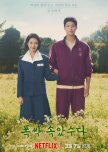
This review may contain spoilers
A LOVE LETTER TO LIFE ITSELF
GENERAL OVERVIEW:This drama did not simply unfold before me, but it reached out, took my hand, and walked me through the quiet poetry of life. It arrived like a whisper at the perfect moment, as if it had been waiting for me, knowing I needed it before I even did. And now, as I step away, I do so with a heart that sees more clearly, that loves more deeply - my parents, my siblings, the family I have yet to meet. Love that had always been there, yet somehow feels more vivid now, more profoundly alive.
With every episode, I wept, not just from sorrow, but from the weight of beauty, the kind that presses against your chest and makes you ache. The drama did not seek to impress; it did not force sentimentality. Instead, it captured life in its purest form. The fire of fleeting moments that propel us forward. The warmth of love that holds you just right, wrapping itself around you like a childhood memory. The unnoticed, mundane details of everyday life - the quiet rustling of morning, the lingering gaze of a loved one, the weight of an unspoken word - all painted with such tenderness that they became luminous.
But it also held space for the shadows, for the fractures we cannot bear to touch. It did not turn away from the memories we bury, from the wounds we pretend have healed. Instead, it showed the quiet, steady courage it takes to gather the pieces, to look back, to remember. And in that remembering, to choose - again and again - to keep living.
Never has a story felt so natural, so unassumingly profound, as if I had simply been invited to walk through life itself, to feel it fully. And as I reached the final moments, I cried - not just for what was lost, not just for what was found, but for the sheer, breathtaking experience of being alive.
To the writer who wove such delicate truths into a story, to the director and cinematographers who made every frame an embrace, and to the actors who did not merely perform but became - thank you. IU and Park Bo Gum shone as always, but every single soul in this drama - the parents, the grandparents, the brother, the sister-in-law, the rival father-in-law, the ex-boyfriend, the children - etched themselves into my heart.
I will return to this drama not just as a viewer, but as someone who now understands. Again and again, whenever I need to remember love. Whenever I need to remember life.
______
A MORE DETAILED REVIEW:
• Spring: The Beginning of Everything
The opening stretch of the drama is everything. We meet young Ae-soon, who is brash, emotional, and deeply lovable, as she navigates a childhood split between her father's well-off but cold family and her haenyeo mother, Kwang-rye, who dives into the ocean daily just to keep them alive. The mother-daughter relationship is the emotional foundation of this entire drama, and it hit me like a freight train from the very first episode. Ae-soon's poem promising to give her mother 100 won a day so she wouldn't have to work so hard? I was completely done.
Gwan-sik enters her life like a steady, quiet tide. He is not loud or flashy. He puts her shoes on her feet like it is the most natural thing in the world. He misses his first kiss attempt because he is nervous, and somehow that makes it all the more endearing. Their early dynamic, with her teasing, chaotic energy against his immovable warmth, is absolutely charming to watch. IU and Park Bo-gum find their rhythm immediately, and their chemistry is the kind that feels effortless without ever feeling unearned.
The early episodes also lay the groundwork for one of the drama's most consistent and powerful themes: the inequality women faced in this era. When Ae-soon runs away to Busan with Gwan-sik, his grandmother's remark that 'it's brave when a boy does it, but frivolous when a girl acts out of love' cuts deep. Ae-soon loses her enrollment at school because of it. He merely gets suspended. That single moment sets the tone for everything that follows.
• Summer: When the Storm Hits
Married life suits Ae-soon and Gwan-sik, but it is far from easy. Sang-sil, who's petty, controlling, and deeply insecure, essentially freezes Gwan-sik out of the island's fishing community, making their survival an ongoing battle. These episodes show the couple at their most strained, and yet never once do they lose their fundamental warmth toward each other. Ae-soon's grandmother eventually comes through with her savings so they can buy a boat. The moment they finally have a home, the very house where Ae-soon's mother once lived, is one of the most quietly moving scenes of the series.
Then comes the typhoon. And with it, the single most devastating moment of the drama: the loss of their youngest son, Dong-myeong.
The way this tragedy is handled is extraordinary. The show does not sensationalize it. It shows a family broken open: Gwan-sik, always their pillar of strength, completely crumbling for the first time. Ae-soon and Gwan-sik each carrying silent, private guilt for years. Gwan-sik blaming himself for not reaching their son in time. Ae-soon blaming herself for leaving them with a half-asleep neighbor. They never fully say this to each other until much later in the series, and that delay feels achingly true to how grief actually works. You hold it, you carry it, you keep moving because the other children need you too.
What broke me even more was learning, decades later, that Gwan-sik had been silently blaming himself the whole time. The parallel of young Gwan-sik registering his son's death while Ae-soon finds her kitchen filled with food left by neighbors... grief expressed in the language of community - is an image I will not forget.
• The Middle Years: Geum-myeong Takes the Torch
One of the drama's most fascinating structural choices is how it gradually shifts focus from Ae-soon and Gwan-sik to their daughter, Geum-myeong, who is played in her adult years by IU again. The parallels between mother and daughter are deeply intentional and beautifully executed. Geum-myeong is Ae-soon's dreams made flesh: she gets the education, the freedom, the opportunities her mother never had. And yet she still faces the same deep-rooted biases against women. Her accomplishments mean nothing to Yeong-beom's mother, who rejects her with cold contempt. She still lives in a tiny, moldy room working illegal tutoring jobs just to survive. The generation changed, but the world did not change nearly enough.
This section also introduces Eun-myeong, their son, who mirrors Gwan-sik's own hopeless romantic tendencies by falling instantly for the daughter of their former enemy and hiding her in his room exactly the way his father once hid a girl. Gwan-sik's face upon realizing this is priceless. The show has a wonderful sense of humor in the middle of all its heartache, and these moments of generational irony are some of its most joyful.
The scene where Geum-myeong nearly dies from carbon monoxide poisoning in her tiny apartment, and Ae-soon arriving to find her unconscious, was a gut punch. Ae-soon then holding onto grown Geum-myeong the same way she once held little Dong-myeong? That was the moment I understood this show was operating on a completely different level.
The fallout of Geum-myeong's broken engagement with Yeong-beom is handled with real emotional intelligence. The show doesn't villainize Yeong-beom. He loved her, but he simply wasn't strong enough to fight for her in the ways that mattered, and she eventually had to accept that love is not enough when the person you love won't stand up for you. Enter Cheong-seop, quiet, steady, deeply devoted, who, in the tradition of this drama's best relationships, expresses everything through small, consistent actions. He is a Gwan-sik for Geum-myeong's generation.
• Winter: The Weight of Time
The final stretch of the drama is where everything converges. Eun-myeong's storyline, his resentment at being overlooked, his bad business choices, and his eventual breakdown in jail add a layer of messiness and complexity that feels deeply real. No family is perfect. Ae-soon and Gwan-sik sacrificed everything for their children, and yet Eun-myeong still grew up feeling like a secondhand priority. The scene where he breaks down confessing this is devastating, and Ae-soon's response, marching into that woman's house and physically taking back their television, is the most Ae-soon thing this drama has ever done. I laughed and cried simultaneously.
Gwan-sik's final act of risk, buying a shop on the promise of development that may or may not come through, is also remarkable. Here is a man who spent 40 years being the safe, steady, reliable one, finally taking a leap of faith. The fact that it nearly costs them their house makes Sang-gil's unlikely redemption arc all the more satisfying. Even the drama's most frustrating secondary character gets a meaningful, humanizing moment.
And then Gwan-sik's illness. His final days. The scene where he asks Geum-myeong to stay with him, reminiscing about his life with Ae-soon, and makes one final request, that she never leave her mother alone after he is gone, was the most quietly devastating thing I have seen in a drama in years. Gwan-sik passing away while gazing at Ae-soon's smiling face is an image that earns every single second of the 16 hours you spent getting there.
The finale moves quickly through time jumps, and the emotional weight it lands on - Ae-soon turning to poetry in her grief, the restaurant flourishing, the family carrying on... prioritizes feeling over plot, and for this particular story, that is absolutely the right call.
⸻
THEMES & CHARACTER DEPTH:
The generational sacrifice theme is handled with extraordinary subtlety. The show never preaches. It simply shows you: Kwang-rye's haenyeo life, Ae-soon's lost education, Geum-myeong's moldy apartment in Seoul. Each generation clears a little more ground for the next. Each woman inherits both the dreams and the burdens of her mother. The idea that 'sacrifices of one generation become the liberation of the next' is woven into every narrative thread, and it never once feels forced.
The drama's treatment of gender inequality is also remarkable for being so matter-of-fact about it. It does not make a speech. It simply shows you a girl who wins an election and loses the position to a boy because of who his father is. A woman who runs away for love and loses her schooling. A daughter who outperforms her peers and still cannot get approval from a potential mother-in-law. This is how inequality actually operates. The drama captures it perfectly.
Ae-soon herself is one of the most fully realized female characters in recent K-drama history. She is not softened or sanitized. She is loud, stubborn, occasionally selfish, fiercely loving, and absolutely magnificent. Her arc, from a girl who dreamed of poetry to a woman who eventually writes and wins a competition under a pseudonym, to an old woman who finally has the time to sit and write for herself, is quietly triumphant.
Gwan-sik is the rare male lead who is defined entirely by devotion and consistency rather than by grand gestures. Park Bo-gum plays him with such restraint and warmth that you feel his love in every small moment, like the wallpaper he chose to make Ae-soon smile in their cramped apartment, the secret pearl necklace he saved for, the way he goes back to work the day after their son's death because there is no other option. He is not trying to be a hero. He is trying to be a husband and father, and the drama treats that as heroism.
⸻
PERFORMANCE HIGHLIGHTS:
IU is extraordinary in this role. I say this as someone who has admired her range in past projects but was genuinely unprepared for what she does here. She plays Ae-soon at multiple ages, and brings something specific and true to each phase. Her comedic timing in the early episodes is sharp and effortless. Her emotional range in the middle and later sections is nothing short of remarkable. She deserved every award nomination she got and then some.
Park Bo-gum gives his best performance to date. He has always been excellent at warmth and sincerity, but Gwan-sik asks something more of him: decades of quiet love, grief swallowed and carried alone, a man who rarely speaks his feelings but shows them in everything he does. The scene where he completely breaks down after Dong-myeong's death is one of the most raw moments in the drama. He earns it completely.
Moon So-ri and Park Hae-joon as the older versions of Ae-soon and Gwan-sik are exceptional. They seamlessly carry the emotional throughlines established by IU and Bo-gum without ever feeling like a different show. Moon So-ri in particular brings such lived-in weight to middle-aged Ae-soon that you feel the decades in her posture, her voice, the way she moves.
⸻
VISUALS:
The cinematography is stunning. Jeju Island is not merely a backdrop here, but a character. The sea, the tangerine groves, the stone walls and village paths all feel like they are alive and breathing. Director Kim Won-seok uses the landscape to mirror the emotional states of his characters in ways that are often breathtaking. The slow-motion sequences and the recurring imagery of women at sea carry enormous symbolic weight.
The color palette shifts subtly as the drama moves through its seasons. The early episodes have a golden, sun-washed warmth. The middle years are more muted, more grounded. The later episodes have a quiet, wintry light that feels appropriate for where the story is going. It is meticulous work.
⸻
QUOTES I LOVED:
“To my love, from the age of nine until now, thanks to you, my life has been spring every day. Until the spring we meet again, I’ll live as though every day is spring.”
“The pain of losing a parent cuts deeper as life goes on, but the pain of losing a child is etched in the deepest part of your heart.”
“There are no take-backs in life. If your life and my life join together as one, we stick it out together whether we live or die.”
“They say you need countless lifetimes of fate to meet even once in this life. If you miss it when it brushes past, that’s the end.”
“Rain may pour as if it would sweep everything away. But once the sun starts blazing again, life rises again, no matter what.”
“None of us has fully grown up. But every time our hearts felt growing pains, we all grew a little.”
“A child may abandon sick parents, but not the other way around.”
⸻
FINAL THOUGHTS:
When Life Gives You Tangerines is one of the most significant Korean dramas I have ever watched. Not because it is flashy or innovative in structure, but because of how profoundly and honestly it captures what a human life actually looks like: the joy and the grief sitting side by side, the love expressed in small ordinary acts, the dreams deferred and the dreams eventually lived, the people lost along the way who stay with us anyway.
This drama made me think about my own parents differently. It made me want to call my mother. It made me think about the women who came before me and what they gave up so I could exist the way I do.
By the time Gwan-sik passed away, looking at Ae-soon's smiling face, I was not just watching a love story. I was watching a life. And it felt like the most honest thing I had seen in a very long time.
I give this a 10/10. It is a masterpiece.
Thanks for reading!💖
Was this review helpful to you?
This review may contain spoilers
Erika Toda Eats Worms and Builds an Empire in Straight to Hell
This show is unwell, and I mean that as a compliment. This show looked at stability, peace, emotional balance, and said no thanks, we’re going to follow one woman who eats worms and then builds a media empire out of pure spite.And at the center of this chaos tornado is Erika Toda, who is out here playing Kazuko Hosoki from 17 to 66 like she signed a contract with God and refused to lose. Five decades, five personalities, zero weakness. It is honestly offensive how good she is. I felt judged watching her. Like girl, relax, some of us are barely playing one version of ourselves correctly.
We start in 2005. Kazuko is rich, famous, dripping in power, and surrounded by rumors like flies on expensive fruit. Fraud, yakuza, sketchy vibes. The kind of success where people smile at you and then immediately Google “is she a criminal.” So she decides to tell her life story to this struggling writer Minori, played by Sairi Ito. And you think oh, nice, healing moment. No. This is not healing. This is PR with trauma seasoning.
Then the show punches you in the throat with her childhood. Post-war Japan said “good luck” and left her to starve. This woman ate an earthworm to survive. An earthworm! I complain when my food delivery is ten minutes late, and she is out here doing Fear Factor just to stay alive. That kind of origin story does not give you soft eyes and a gentle heart, that gives you laser focus and trust issues so deep they need their own postal code.
By 17 she is lying about her age and working as a hostess, climbing fast because she can read men like cheap subtitles. Of course some trash boss tries to ruin her. Of course. Men stay predictable. But instead of collapsing, she goes full villain origin. She learns one rule and carves it into her soul. Never depend on anyone. Not your boss. Not your man. Not your horoscope. Nobody.
So what does she do? Opens her own nightclub in Ginza. Like a psychopath. Brings her younger brother along. Builds it into a success because apparently survival was just her warm-up round. Meanwhile her love life is a flaming garbage fire. Rich men proposing, promises flying, stability nowhere to be found. And then she gets involved with the underworld because why not add organized crime to the emotional damage cocktail.| Toma Ikuta shows up as a yakuza boss boyfriend and you just sit there thinking yes, this tracks, nothing about this woman screams “safe choices.”
Every time life hits her, she does not break. She upgrades. Betrayal? New skill unlocked. Failure? Character expansion pack. So when she becomes a fortune teller, it feels obvious. Of course she can predict people. She has been reverse-engineering human behavior since she was eating worms in a ditch.
And the show looks amazing while all this insanity is happening. The wardrobe evolves like a glow-up montage on steroids. The makeup ages her so well it is almost disrespectful. And somehow Erika Toda is still dominating scenes she is not even in. That is witchcraft. I am convinced.
The supporting cast is great but they know they are living in her world. Toko Miura brings emotional depth as Chiyoko Shimakura, but nobody is hijacking this train. This is Kazuko’s rollercoaster and everyone else is just strapped in, screaming.
The timeline keeps flipping between past and present, and you start realizing something important. Kazuko’s version of events are suspiciously polished. Meanwhile Minori is digging around like “hmm, this smells like selective memory.” So now it is not just a life story. It is a psychological chess match about who controls the narrative.
Kazuko is not a good person in the clean, Instagram-quote way. She is ruthless, messy, morally chaotic. A walking red flag with perfect lipstick. And yet you cannot look away. Because Erika Toda does not ask you to like her, but dares you to understand her.
Take her out and this show collapses instantly. Leave her in and it feels like you are watching someone set fire to the world and then sell tickets to the show.
Was this review helpful to you?
This review may contain spoilers
YOUR WISH HAS BEEN GRANTED; NOW RUN !
OVERVIEW:If Wishes Could Kill is a YA horror thriller about a group of high school friends whose lives are turned upside down by a cursed app called Girigo. The premise is simple and chilling: record a wish, submit your saju, and the app grants it. The problem? Every wish comes with a death timer. Once the clock hits zero the wisher dies, possessed and violent, taking out whoever is nearest before turning the knife on themselves.
At the centre of it all is Se-ah, a girl already carrying the grief of losing both parents, who watches her world collapse wish by wish. Alongside her are Geon-woo, her next-door crush turned boyfriend, Ha-joon, the quiet one with a secret, Na-ri, the friend whose jealousy makes her the most dangerous person in the room, and Hyeong-wook, the first casualty. Rounding out the supernatural side is Ha-young, a shaman known as Haetsal, and her husband Bang-wool, both of whom become the group's only real lifeline against an ancient evil spirit called Jugu that has hijacked the digital world to do its dirty work.
It is fast, it is creepy, and for the most part it delivers exactly what it promises.
____________________________________________
COMMENTARY:
This drama hooked me from the jump. The cold open is genuinely disturbing in the best possible way and immediately sets the tone for everything that follows. A girl slitting her own throat in a school media room while recording on a phone? Before you even understand the context? That is a strong way to open. It tells you immediately that this is not going to be a soft ride.
The setup moves fast. Within the first stretch you already have one death, a ticking timer, and a group of teenagers scrambling to understand rules that no one warned them about. The pacing in the first half is tight and confident. Every scene is doing something. Every character introduced serves the plot. There is no wasted space and no unnecessary filler, which is honestly refreshing for a drama of this genre.
What really sold me early on though was how grounded it felt. Yes there is a supernatural curse and a death app and spirit realms, but underneath all of that these are just normal kids dealing with academic pressure, one sided crushes, friend group tension, and the particular loneliness of being sixteen and misunderstood. The horror works because the humanity underneath it is real.
The show understands something that a lot of horror dramas miss: the monster is not the scary part. The scary part is what the monster reveals about the people it targets. Jugu does not create resentment or jealousy or loneliness in these characters. It finds what is already there and amplifies it. That is genuinely disturbing storytelling and it elevates the whole series above your average death game setup.
Se-ah is carrying survivor's guilt before the story even starts. Her parents died and the neighbourhood kids blamed her. So when people around her start dying again she does not panic and run. She takes responsibility. She throws herself directly into danger not out of bravery but because she cannot survive being the one who did nothing again. That is real character motivation right there and it makes every risk she takes feel earned rather than reckless.
The backstory of Hye-rung and Si-won is the emotional core of the whole thing and honestly it is heartbreaking. Two teenage girls, and a friendship destroyed by paranoia, jealousy, and one act of public humiliation that went too far. Si-won was so terrified of people finding out her mother was a shaman that she burned her own best friend to protect herself. And then she tried to undo it when it was already too late. Both of them died alone carrying the weight of something that did not have to happen.
Na-ri is the most complicated character and also the most frustrating in equal measure. She is not evil. She is jealous and scared and completely in over her head. The show is smart enough to let the audience hold both things at once: she made terrible choices AND the spirit weaponised her worst impulses against her. She was never really given a fair chance to fight back because the thing possessing her knew exactly which wound to press. I felt genuinely sad for her even when I wanted to shake her.
Ha-young and Bang-wool were the best addition to this drama and I want to say that loudly. Ha-young / Haetsal anchors the occult side of the story with real authority. She is not a convenient plot device. She is a fully realised character with her own limitations and risks and sacrifices. Every ritual she performs costs her something. The fact that she cannot leave her own home adds a layer of tragedy to her arc that the show handles with quiet grace.
Bang-wool is everything. Funny, warm, protective, wise, and completely unafraid of anything including death. The moment he takes a metal rod through his body to shield Se-ah and is still more concerned about getting them to safety than his own condition? That man had my whole heart. The way the show builds his bond with Ha-joon over the course of the story is one of its most satisfying subplots.
The realm sequences are genuinely unsettling and visually creative. The idea of Se-ah being forced to relive her worst memories as tests she must pass without looking back is a smart way to use the supernatural as a mirror for the characters' psychological state. It is horror that means something.
____________________________________________
LIKES:
The concept is fresh and genuinely original. A death app that works like a chain letter pyramid scheme is a premise I had not seen before and the show commits to its own rules which I always respect. The chain effect where one fulfilled wish transfers the death curse to the next user is dark and clever and adds real stakes to every decision.
The performances across the board are strong. Jeon So-young carries Se-ah with the exact right combination of grief and determination. She never tips into melodrama. The possessed sequences are the standout moments because several members of the cast had to physically transform their entire energy and physicality mid scene. Baek Sun-ho in particular during the possession sequences is genuinely scary in a way that feels completely committed and not at all performed.
The Hye-rung and Si-won backstory episode is the best piece of writing in the whole series. Watching their friendship fall apart step by step in a way where you understand every single character's choice even as you watch it all go wrong is painful storytelling in the best possible way.
The atmosphere is handled beautifully. The show knows when to be quiet and let dread build and when to hit you with something loud and visceral. The abandoned house scene is a particular highlight. The flickering compass, the dead birds in the closet, the ruined altar. All of it working together to create genuine unease without relying on cheap jump scares.
Bang-wool. Just Bang-wool in general. Roh Jae-won gave one of the most quietly compelling performances in the whole show. A man who faces supernatural evil with a kitchen knife and a salt shaker and still somehow makes you feel completely safe when he is in the room.
____________________________________________
DISLIKES:
The middle stretch loses momentum. The investigative episodes where the group is tracking down information on Hye-rung and Si-won are necessary for the plot but they slow things down considerably. After the visceral tension of the early episodes, spending this much time on laptop searches and neighbourhood canvassing feels like the drama lost confidence in its own energy for a beat. It picks back up but it does leave a dent in the overall pacing.
Na-ri's resolution bothered me. The show builds her up as this layered, tragic figure being exploited by the spirit and then essentially disposes of her in a way that feels both rushed and cruel. She ends the story trapped in the cursed realm with no clarity on whether she survived, found peace, or is just... gone. For a character they invested that much screen time in she deserved either a cleaner end or a more definitive answer. The ambiguity here does not feel intentional. It feels like the writers were not sure what to do with her.
The epilogue creates more questions than it answers and not in the satisfying way. Soo-san finding Na-ri's phone and a stranger on Discord directing him to it implies the curse is still running. Which either sets up a second season or is meant to be thematically resonant about the nature of human darkness. Either way as an ending beat it undercuts the sense of resolution the rest of the finale was building toward. I needed more of a landing before they pulled the rug again.
____________________________________________
FINAL THOUGHTS:
If Wishes Could Kill is a genuinely good YA horror thriller that does more right than wrong. It takes a concept that could have been gimmicky and grounds it in real human emotion. The friendships feel authentic. The grief feels earned. The horror is well executed. Ha-young and Bang-wool alone are worth the watch.
Where it stumbles is in the middle and the ending. A drama this tight and propulsive in its first half should not lose its grip the way this one does in the investigative stretch. And Na-ri's conclusion is a loose end that sits uncomfortably no matter how you try to read it.
But here is the thing. Even accounting for those issues this show kept me watching. Not because I had nothing better to do but because I genuinely wanted to know what happened. I cared about Se-ah. I cared about Bang-wool. I was disturbed by Jugu in a way that good horror is supposed to disturb you. And the backstory of two teenage girls whose friendship ended in tragedy because one of them was terrified of being seen for who she really was? That is going to stay with me.
If you are looking for something in the YA horror space that has actual substance underneath the scares this is worth your time. Go in knowing the pacing has a rough patch in the middle and that the ending asks more questions than it answers and you will be fine.
Would I rewatch it? Probably not in full but I would revisit specific sequences without hesitation.
Thanks for reading! ♥
Was this review helpful to you?
This review may contain spoilers
A Soul-Stirring Exploration of Life, Death, and Redemption
"Light Shop" is an emotionally gripping and thought-provoking narrative that masterfully blends supernatural intrigue with deeply personal stories of love, loss, and redemption. This series takes viewers on a poignant journey through the lives of characters who are trapped between life and death, all connected through an enigmatic light shop. With its rich character development, stunning visuals, and poignant exploration of the human condition, this show stands out as a must-watch for fans of supernatural dramas and psychological thrillers.PS: If anyone doesn't want any spoilers, scroll straight to the "conclusion" part.
Plot and Storytelling:
The concept of "Light Shop" is deceptively simple but profoundly complex. At its heart, it is a story of interconnected souls, each character grappling with their own past, regrets, and unfulfilled desires. What begins as an eerie, horror-like atmosphere, gradually transforms into an exploration of hope and second chances. Light Shop itself serves as a metaphorical crossroads where souls meet and interact, discovering not just the truth about their own lives but also the way their destinies are woven together.
The storytelling is nuanced, shifting seamlessly between different character arcs that initially seem unrelated. However, as the narrative unfolds, the viewer begins to see how these disparate lives intersect, all leading to a heartbreaking yet redemptive climax. Each episode builds tension, gradually revealing the layers of each character's tragic past and the complex emotional journeys they undergo. The pacing is well-balanced, ensuring that while the story has its emotional moments, it never feels rushed or heavy-handed.
Character Development:
The strength of "Light Shop" lies in its cast of deeply human characters, each of whom brings a unique perspective to the story. From Jeong Won-yeong, the mysterious and compassionate guardian of the afterlife, to Lee Ji-young, a woman whose love for her deceased boyfriend transcends death, each character is richly layered, with their own emotional baggage and desires. Their arcs are deeply interwoven, creating an intricate web of relationships that explores the themes of sacrifice, memory, and the pain of unspoken love.
Particularly compelling is the tragic story of Kim Hyun-min and Lee Ji-young. Their love transcends the boundaries of life and death, with Lee Ji-young's determination to save Kim Hyun-min, even after her own death, showcasing the lengths to which the human heart will go for love. The emotional depth of these characters is heart-wrenching, and their unresolved love story will undoubtedly leave viewers reaching for the tissues.
The transformation of Yang Seong-sik, a detective turned grim reaper, adds another layer of complexity to the story. His journey from skepticism to acceptance of his new role and his eventual involvement in guiding souls through the afterlife is both tragic and uplifting.
Themes and Symbolism:
"Light Shop" is rich with themes of memory, fate, and the blurry line between life and death. The concept of light as both a literal and figurative guide is central to the series, with each character’s story revolving around the choices they make when faced with death and the "light" that ultimately leads them to redemption or eternal separation. The lighting store itself symbolizes the fragile nature of life, offering solace, guidance, and sometimes, a second chance.
The show's exploration of life after death is presented in a way that feels both otherworldly and deeply relatable. It asks existential questions about the nature of our lives, our connections to others, and what happens when our time on Earth runs out. The characters' emotional arcs resonate universally, even though the setting is supernatural.
Visuals and Atmosphere:
The cinematography in "Light Shop" is stunning, with beautifully composed shots that emphasize the mood of each scene. The lighting, of course, plays a pivotal role in creating the atmosphere, whether it’s the soft glow of a light bulb or the dark, haunting street where characters wander, the use of light and shadow adds an eerie yet comforting dimension to the story. The show's visual style enhances its emotional depth, making each moment feel weighty and impactful.
Conclusion:
"Light Shop" is an unforgettable journey into the afterlife that not only explores the supernatural but also delves deep into the human experience. With compelling characters, a beautifully layered plot, and themes that resonate on a deeply emotional level, it is a show that stays with you long after the credits roll. Whether you're drawn to stories of love that transcend death, or you're interested in exploring the mysteries of the afterlife, "Light Shop" offers a unique and enriching experience that is as heartbreaking as it is uplifting. This series is a rare gem that reminds us of the fragility of life and the enduring power of love and memory.
A masterpiece in every sense. Highly recommended.
Was this review helpful to you?
This review may contain spoilers
When Bullets Fly, Logic Dies
Trigger struts in like it owns the place. It promises dystopian thrills, a deep dive into the psychology of rage, and maybe even some searing social commentary. For a moment, you believe it. Then it trips over its own shoelaces, spills coffee on the manifesto, and starts showing stylish gunfights instead.Our hero, Lee Do, is a former military sniper turned police officer who treats his taser like a baby blanket. He’s calm, empathetic, and apparently the only person in Korea with competency. When massacres break out across the country, he’s reluctantly dragged back into gunplay.
Moon Baek, the man who lights the match, who hands everyone guns not for money, but for ideology. He’s all contradictions: flashy yet tragic, smiling while your moral compass quietly vomits in the corner. His presence crackles. Every scene with him is electric.
At its best, Trigger gives you an unsettling mirror: ordinary people realizing that a gun turns them from background extras into the main characters of their own revenge films. It’s chilling, human, and horribly plausible.
Then… the plot walks into traffic.
A teenager and a middle-aged woman find a gun through a casual Naver search, but the entire police force of South Korea can’t figure it out. “Internet? Never heard of it.” It’s the kind of plot hole you could drive a tank through, slowly, so nobody gets hurt.
The script also has a strange habit of making every character around Lee Do incompetent just so he can shine brighter. It’s not clever. It’s like stacking the chessboard so your opponent only has pawns, then bragging about your strategic genius.
In the end, the show’s grand answer to systemic rage is… well… a little Hallmark. Sweet, maybe, but so emotionally oversimplified it makes you wonder if someone swapped it for a public service announcement.
So Trigger starts like a sleek bullet that is fast, dangerous, aimed with precision, and ends like a firecracker in the rain: a lot of smoke, a little noise, and the lingering smell of something that could’ve been spectacular if only it hadn’t soaked itself in style instead of substance.
Was this review helpful to you?


