

 24
24 44
44 8
8 1
1 1
1 1
1 1
1 1
1 1
1 6
6 2
2 3
3 1
1 1
1 1
1 1
1 3
3 1
1 3
3


This review may contain spoilers
Blood Makes Kings, Sins Make Ghosts
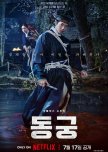
In a kingdom where the dead refuse to stay silent, Gu Cheon, a ghost slayer who walks between worlds, and Saeng Gang, a court lady cursed to hear the voices of restless spirits, are pulled into the East Palace, where something ancient and sinister has taken root. As buried secrets claw their way to the surface, the two find themselves trapped in a danse macabre of vengeful ghosts, royal conspiracies, and an evil lurking behind the throne. Some palaces are built on stone. This one is built on secrets.
At its core, The East Palace is a reminder that the past is never truly buried. Every hidden sin casts a longer shadow, every act of cruelty leaves a debt unpaid, and karma always finds its way home. As Gu Cheon and Saeng Gang unravel the palace's darkest secrets, they slowly realize that the most terrifying monsters are not always the spirits seeking revenge, but the people who gave them a reason to return in the first place.
The premise itself is not groundbreaking. It explores ideas that have appeared in other productions, and I even caught similarities to Stranger Things. Personally, I never saw that as a problem. Rather than trying to reinvent the wheel, The East Palace takes familiar concepts and dresses them in hanboks, palace intrigue, and Korean folklore, creating an atmosphere that feels distinct enough to stand on its own. One of the things I appreciated most was how accessible it is. The drama introduces different kinds of 귀 (gwi), explaining what each spirit is, how it comes to exist, the dangers it poses, and how it can be dealt with. Even if you know very little about Korean ghost folklore, the storytelling makes it easy to follow without feeling like a history lesson.
The Realm of Gwi was another fascinating addition. This blood red spirit world where vengeful ghosts dwell felt like a twisted mirror dimension, and I could not help but think of Stranger Things' Upside Down. The mechanics behind Gu Cheon's ghost slaying also made things more interesting. To fight spirits in the Realm of Gwi, he has to temporarily die first. Only after finishing his mission can he return to life, assuming nothing goes wrong. It is a simple concept, but it gives every journey into that realm a genuine sense of risk.
Gu Cheon left the biggest impression on me precisely because he is far from perfect. The drama never tries to paint him as an untouchable, effortlessly cool hero. Instead, he is afraid of dying, sarcastic, lazy, and constantly acts like he wants to avoid responsibility, even though he almost always ends up doing the right thing anyway. Those contradictions make him feel incredibly human and surprisingly relatable. Nam Joo Hyuk portrayed him with the right balance of emotional vulnerability and unintentional comedy. While he has proven many times that he can excel as the stoic, composed lead, I genuinely think these sarcastic, slightly lazy, and deeply human characters are where he shines the brightest. I watched this drama because of him, and I stayed because of him.
The only thing that oddly distracted me was how muscular he looked in hanbok. Don't get me wrong, the man has one of the finest oppa physiques out there and I fully appreciate it. Somehow, though, his modern, athletic build felt slightly out of place in traditional royal clothing. Maybe it is the tailoring, maybe it is just me. One thing I also kept wondering throughout the drama was whether Gu Cheon could actually fight in the real world. Inside the Realm of Gwi, he slices through spirits with confidence. Outside of it, he often looks like someone who would lose a fistfight against an ordinary person.
Saeng Gang turned out to be exactly the partner Gu Cheon needed. While he handles the supernatural threats, she investigates palace politics, buried truths, and generations of resentment. She is the one constantly putting scattered puzzle pieces together, especially when Gu Cheon's laziness threatens to derail the investigation. I appreciated that the drama never reduced her to a damsel waiting to be rescued or a female lead whose only role is to emotionally support the hero. She actively moves the story forward and even throws herself into danger to save Gu Cheon. Despite her courage and competence, the drama still allows her moments of vulnerability. Beneath everything, she remains a daughter longing for warmth and family. Roh Yoon Seo portrayed those different sides of Saeng Gang beautifully, and her expressions always felt natural for the character.
The Emperor ended up being one of the drama's most compelling characters. He constantly pulled me in different directions. At first, I thought he was simply another ruthless king who built his empire on blood. Then I saw moments that suggested he genuinely wanted to become a wise ruler. Then he massacred innocent sick people, and I immediately went back to seeing him as a monster. Then more secrets surfaced, revealing layers upon layers of guilt, regret, and impossible choices. He became neither hero nor villain, but someone permanently trapped in the grey space between the two. He loved his children, yet his love was shaped by the same violence that built his throne. Realizing that his son had followed the same bloody path broke him, leading him to make another horrifying decision because he believed there only needed to be one emperor stained by fratricide. Cho Seung Woo was phenomenal. I never once questioned his performance.
The supporting cast was equally dependable, although I do wish the Crown Prince had been explored much further. Kwak Dong Yeon is an actor who thrives when given a substantial character arc, whether he is playing someone kind or someone terrifying. Here, however, the drama barely scratches the surface. We only get fragments of his relationship with the Emperor before he becomes the primary akgwi. As the central evil spirit, he never quite felt intimidating enough. Instead of becoming a memorable final obstacle, he often came across like an NPC enemy waiting for the protagonist to defeat. I genuinely think the limited episode count worked against the character. Either he needed much more development, or the role should have gone to someone whose screen presence alone could create a stronger sense of menace.
Visually, The East Palace is gorgeous. The entire production has an artistic quality that constantly pulled me into its world. There were several moments where I found myself wondering how the writers and visual directors even came up with some of these ideas. That said, the visual effects are not flawless. Certain CGI shots were noticeably artificial, and the final battle relied so heavily on green screen that it unintentionally became more comical than exciting. Thankfully, the soundtrack helped maintain the atmosphere. One particular background track stood out so much that I actually tried searching for it after finishing the episode.
I also went into this drama with certain expectations because I heard the writer also wrote The Guest, which remains my favorite Korean horror drama. Unfortunately, despite all the ghosts and supernatural elements, The East Palace never actually scared me. Even as someone who scares quite easily, the jump scares barely landed, and most of the ghosts were more interesting than frightening. Ironically, my favorite supernatural creature was not scary at all. Ggeomeoksali completely stole every scene it appeared in. This tiny gwimae looked like a haunted little Labubu and instantly became my favorite character. If they ever release an official plushie, I will probably be first in line.
As the story approaches its conclusion, the drama reveals twists upon twists, uncovering generations of buried sins, painful truths, and karma finally demanding repayment. It was genuinely enjoyable to piece everything together, although I do wish those revelations had been given a little more room to breathe. The ending maintained a steady pace from beginning to end. It was neither anticlimactic nor the explosive climax I had imagined. Instead, it left me sitting there, quietly replaying everything in my head. The final moments provide enough answers to feel satisfying while leaving behind just enough lingering questions to keep the story alive after the credits roll.
In the end, The East Palace is an entertaining and surprisingly digestible supernatural sageuk. It may not redefine the genre or deliver unforgettable horror, but it succeeds in building an atmospheric world where ghosts, guilt, and palace politics intertwine naturally. It is immersive, visually striking, easy to follow, and anchored by characters who carry both the emotional weight and the mystery. Sometimes, that is more than enough. After all, the scariest ghosts are often the ones born from human hands.
At its core, The East Palace is a reminder that the past is never truly buried. Every hidden sin casts a longer shadow, every act of cruelty leaves a debt unpaid, and karma always finds its way home. As Gu Cheon and Saeng Gang unravel the palace's darkest secrets, they slowly realize that the most terrifying monsters are not always the spirits seeking revenge, but the people who gave them a reason to return in the first place.
The premise itself is not groundbreaking. It explores ideas that have appeared in other productions, and I even caught similarities to Stranger Things. Personally, I never saw that as a problem. Rather than trying to reinvent the wheel, The East Palace takes familiar concepts and dresses them in hanboks, palace intrigue, and Korean folklore, creating an atmosphere that feels distinct enough to stand on its own. One of the things I appreciated most was how accessible it is. The drama introduces different kinds of 귀 (gwi), explaining what each spirit is, how it comes to exist, the dangers it poses, and how it can be dealt with. Even if you know very little about Korean ghost folklore, the storytelling makes it easy to follow without feeling like a history lesson.
The Realm of Gwi was another fascinating addition. This blood red spirit world where vengeful ghosts dwell felt like a twisted mirror dimension, and I could not help but think of Stranger Things' Upside Down. The mechanics behind Gu Cheon's ghost slaying also made things more interesting. To fight spirits in the Realm of Gwi, he has to temporarily die first. Only after finishing his mission can he return to life, assuming nothing goes wrong. It is a simple concept, but it gives every journey into that realm a genuine sense of risk.
Gu Cheon left the biggest impression on me precisely because he is far from perfect. The drama never tries to paint him as an untouchable, effortlessly cool hero. Instead, he is afraid of dying, sarcastic, lazy, and constantly acts like he wants to avoid responsibility, even though he almost always ends up doing the right thing anyway. Those contradictions make him feel incredibly human and surprisingly relatable. Nam Joo Hyuk portrayed him with the right balance of emotional vulnerability and unintentional comedy. While he has proven many times that he can excel as the stoic, composed lead, I genuinely think these sarcastic, slightly lazy, and deeply human characters are where he shines the brightest. I watched this drama because of him, and I stayed because of him.
The only thing that oddly distracted me was how muscular he looked in hanbok. Don't get me wrong, the man has one of the finest oppa physiques out there and I fully appreciate it. Somehow, though, his modern, athletic build felt slightly out of place in traditional royal clothing. Maybe it is the tailoring, maybe it is just me. One thing I also kept wondering throughout the drama was whether Gu Cheon could actually fight in the real world. Inside the Realm of Gwi, he slices through spirits with confidence. Outside of it, he often looks like someone who would lose a fistfight against an ordinary person.
Saeng Gang turned out to be exactly the partner Gu Cheon needed. While he handles the supernatural threats, she investigates palace politics, buried truths, and generations of resentment. She is the one constantly putting scattered puzzle pieces together, especially when Gu Cheon's laziness threatens to derail the investigation. I appreciated that the drama never reduced her to a damsel waiting to be rescued or a female lead whose only role is to emotionally support the hero. She actively moves the story forward and even throws herself into danger to save Gu Cheon. Despite her courage and competence, the drama still allows her moments of vulnerability. Beneath everything, she remains a daughter longing for warmth and family. Roh Yoon Seo portrayed those different sides of Saeng Gang beautifully, and her expressions always felt natural for the character.
The Emperor ended up being one of the drama's most compelling characters. He constantly pulled me in different directions. At first, I thought he was simply another ruthless king who built his empire on blood. Then I saw moments that suggested he genuinely wanted to become a wise ruler. Then he massacred innocent sick people, and I immediately went back to seeing him as a monster. Then more secrets surfaced, revealing layers upon layers of guilt, regret, and impossible choices. He became neither hero nor villain, but someone permanently trapped in the grey space between the two. He loved his children, yet his love was shaped by the same violence that built his throne. Realizing that his son had followed the same bloody path broke him, leading him to make another horrifying decision because he believed there only needed to be one emperor stained by fratricide. Cho Seung Woo was phenomenal. I never once questioned his performance.
The supporting cast was equally dependable, although I do wish the Crown Prince had been explored much further. Kwak Dong Yeon is an actor who thrives when given a substantial character arc, whether he is playing someone kind or someone terrifying. Here, however, the drama barely scratches the surface. We only get fragments of his relationship with the Emperor before he becomes the primary akgwi. As the central evil spirit, he never quite felt intimidating enough. Instead of becoming a memorable final obstacle, he often came across like an NPC enemy waiting for the protagonist to defeat. I genuinely think the limited episode count worked against the character. Either he needed much more development, or the role should have gone to someone whose screen presence alone could create a stronger sense of menace.
Visually, The East Palace is gorgeous. The entire production has an artistic quality that constantly pulled me into its world. There were several moments where I found myself wondering how the writers and visual directors even came up with some of these ideas. That said, the visual effects are not flawless. Certain CGI shots were noticeably artificial, and the final battle relied so heavily on green screen that it unintentionally became more comical than exciting. Thankfully, the soundtrack helped maintain the atmosphere. One particular background track stood out so much that I actually tried searching for it after finishing the episode.
I also went into this drama with certain expectations because I heard the writer also wrote The Guest, which remains my favorite Korean horror drama. Unfortunately, despite all the ghosts and supernatural elements, The East Palace never actually scared me. Even as someone who scares quite easily, the jump scares barely landed, and most of the ghosts were more interesting than frightening. Ironically, my favorite supernatural creature was not scary at all. Ggeomeoksali completely stole every scene it appeared in. This tiny gwimae looked like a haunted little Labubu and instantly became my favorite character. If they ever release an official plushie, I will probably be first in line.
As the story approaches its conclusion, the drama reveals twists upon twists, uncovering generations of buried sins, painful truths, and karma finally demanding repayment. It was genuinely enjoyable to piece everything together, although I do wish those revelations had been given a little more room to breathe. The ending maintained a steady pace from beginning to end. It was neither anticlimactic nor the explosive climax I had imagined. Instead, it left me sitting there, quietly replaying everything in my head. The final moments provide enough answers to feel satisfying while leaving behind just enough lingering questions to keep the story alive after the credits roll.
In the end, The East Palace is an entertaining and surprisingly digestible supernatural sageuk. It may not redefine the genre or deliver unforgettable horror, but it succeeds in building an atmospheric world where ghosts, guilt, and palace politics intertwine naturally. It is immersive, visually striking, easy to follow, and anchored by characters who carry both the emotional weight and the mystery. Sometimes, that is more than enough. After all, the scariest ghosts are often the ones born from human hands.
Was this review helpful to you?


