

 25
25 46
46 8
8 1
1 1
1 1
1 1
1 1
1 1
1 6
6 2
2 3
3 1
1 1
1 1
1 1
1 3
3 1
1 3
3


Checkmate Has Never Been This Romantic
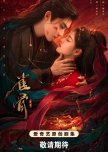
I went into Key to the Phoenix Heart with only one expectation: I wanted to see Hou Ming Hao play a feared and intimidating warlord. Thankfully, the drama delivered exactly that and then some. What I didn't expect was to become invested in a story filled with political maneuvering, hidden identities, layered conspiracies, self discovery, and what has become one of my favorite love triangles in a Chinese costume drama.
Set in a kingdom where power changes hands as easily as loyalty, the story follows Xiao Wu Yi, the feared commander of the Beifu Army, and Xie Jia Yu, the clever and resourceful daughter of the Grand Tutor. Forced into a political marriage, they begin their relationship as strangers bound by circumstance rather than affection. Every interaction feels like a careful chess move, with trust being the rarest piece on the board. As the political schemes grow more complicated and long buried truths surface, what begins as an arrangement for survival slowly turns into a partnership built on mutual respect, unwavering trust, and genuine love.
The narrative starts at a brisk pace. The first few episodes throw a considerable amount of political information at the audience, and I will admit I nearly dozed off once or twice. Even so, everything was presented clearly enough that I never felt lost. For viewers who have watched several Chinese costume dramas, the politics are actually quite easy to follow. The drama does a good job of gradually connecting every scheme until the later revelations feel less like sudden twists and more like the final pieces of a carefully assembled puzzle.
Hou Ming Hao completely convinced me as Xiao Wu Yi. Despite being only around twenty three or twenty four years old in the story, Wu Yi carries himself with the confidence and maturity of someone who has spent his entire life on the battlefield. After his brother's accident, he becomes the heir of Prince Jing'an and shoulders responsibilities far heavier than his age suggests. Wu Yi is charismatic, intelligent, respectful, calm under pressure, and endlessly strategic. Watching him is like watching a seasoned chess player who is already three moves ahead before everyone else has even decided on their first. His loyalty to the people of Ye never wavers, even if it means allowing others to see him as the villain. Every time he appeared on screen, I had the feeling he already had another plan waiting in his sleeve.
His action scenes deserve special praise as well. I appreciated that the production did not constantly rely on camera tricks to hide the actor. Instead, it confidently showcased Hou Ming Hao performing many of the action sequences himself. It made Wu Yi look every bit as capable as the story claimed he was. Simply put, it was incredibly cool.
Ai Mi also made a memorable first impression as Xie Jia Yu. For her first leading role, I thought she performed remarkably well. Jia Yu is introduced as a determined, capable, and courageous young woman who refuses to stay silent in the face of injustice. She possesses extraordinary talent in craftsmanship and dreams of traveling the world freely rather than remaining confined by expectations. Ai Mi fully committed to every emotional scene, whether it required quiet vulnerability or full blown ugly crying. I could genuinely see the effort she put into making Jia Yu feel sincere.
Li Mao turned out to be a much more interesting character than I initially expected. He longs for a better kingdom, but he is also someone who has spent most of his life being used as a pawn by others. Even in his relationship with Jia Yu, it often feels like he shapes himself into the version she wants rather than asking himself what he truly wants. While Wang Yi Lun's portrayal never made Li Mao particularly intimidating, I actually think that works in the character's favor. Instead of feeling like a terrifying mastermind, he comes across as someone suddenly handed power before he has fully grown into it. His insecurity makes him appear petty and even pathetic at times, but those qualities also fit the role he plays in the larger story.
The beginning of Wu Yi and Jia Yu's relationship was one of my favorite parts of the drama. While investigating the faulty crossbows responsible for the deaths of thirty thousand Beifu soldiers, Wu Yi's search leads him to Jia Yu, the mysterious Young Master of Miraculous Craft. Meanwhile, Jia Yu only knows Wu Yi through terrifying rumors and has personally heard him executing corrupt officials, leaving her convinced he is a ruthless monster. When Wu Yi unexpectedly requests her hand in marriage, she naturally tries to escape and reunite with Li Mao.
Their first real interaction aboard the ship was both exciting and charming. Jia Yu attempts to fight while closing her eyes, and Wu Yi effortlessly eliminates the threat standing right in front of her before she even realizes what happened. That moment somehow managed to be adorable and incredibly attractive at the same time. More importantly, it quietly marks the moment Wu Yi falls for her.
The love triangle itself deserves its own applause because it avoids nearly every frustrating trope I expected. When Wu Yi discovers that his best friend and his future wife are in love with each other, he never resorts to manipulation, jealousy, or sabotage. He respects Li Mao as his closest friend, and more importantly, he respects Jia Yu's right to choose her own future. That, to me, became the true foundation of their relationship.
One of my favorite aspects of Wu Yi's character is that he never treats Jia Yu like someone who needs controlling. He trusts her to make her own decisions, even when she makes mistakes. Instead of preventing her from acting, he simply stands beside her and helps clean up the consequences if things go wrong. Whenever others try to decide Jia Yu's future for her, whether it is Li Mao or even her own mother, Wu Yi consistently reminds them that she is fully capable of deciding for herself. Give me a man like this.
One of the drama's greatest strengths is that the romance never overshadows the political storyline. Instead, both elements strengthen one another. The love story gains emotional weight because of the political conflicts surrounding it, while the political conflicts become more meaningful because we understand what the characters are fighting for beyond the throne itself.
I also appreciated how Li Mao never became the stereotypical obsessive second male lead. His journey ultimately becomes one of self discovery rather than romantic defeat. While his feelings for Jia Yu were genuine, they were never the center of his identity. His true desire was always to build a better kingdom, and by the end, he finally learns to pursue his own convictions instead of constantly following someone else's expectations. His relationship with his sister also remained one of the emotional anchors of his character, reminding us who had truly stood beside him through every hardship.
Another detail I genuinely appreciated was how grounded the drama remained. People who fell off cliffs actually died. The story even showed their bodies instead of pretending they would magically return twenty episodes later. It is surprisingly refreshing how often this drama chose logic over convenience.
Before watching, I was honestly curious about how the production would handle the romance because of the discussions surrounding the age difference between Hou Ming Hao and Ai Mi. I deliberately kept my expectations low, and I ended up pleasantly surprised. The drama wisely avoids relying on conventional romantic scenes to sell their relationship. Instead, it builds intimacy through lingering glances, body language, conversations, and quiet moments together. There is only one forehead kiss, achieved through careful camera work, and even the more intimate hugging scenes never felt uncomfortable. The real source of the romance is Hou Ming Hao's eyes. His expressions constantly shift from curiosity to admiration, tenderness, happiness, and complete devotion without needing many words at all. His eyes genuinely tell their own story. Ai Mi complements that beautifully by portraying Jia Yu's innocent love and heartbreaking grief with sincerity. Together, they completely convinced me of their relationship.
The political storyline also finishes on a satisfying note. While some of the later conflicts became predictable, the execution still managed to surprise me. One particular large scale scheme involved so many moving parts, so much sacrifice, and such careful planning that I could only applaud the writers once everything came together. Seeing a Crown Prince willingly give up the throne for the greater good also added emotional weight to the conclusion.
Of course, the drama is not flawless. I wish the Phoenix Heart Token had received more meaningful development because its importance was mostly explained through dialogue rather than demonstrated through the story itself. Once its mystery was finally explored, everything wrapped up far too quickly and felt somewhat anticlimactic. Xiao Yao suddenly being able to walk into the battlefield also felt abrupt, and I would have loved more closure regarding the Xiao family's future after everything was over.
Visually, the drama is solid even if it is not particularly groundbreaking. The final battlefield, however, deserves recognition. It looked appropriately chaotic, dirty, and terrifying, creating the atmosphere a war sequence should have. I also appreciated how the use of caltrop fireballs naturally concealed background soldiers, preventing the awkward sight of motionless extras standing around during large scale battles. Although the visual quality during Wu Yi's confrontation with the Eagle King occasionally had that overly smooth AI appearance, it never diminished my overall enjoyment. The soundtrack also deserves praise. Every piece fits the emotional tone of its scene remarkably well and constantly enhances the viewing experience without becoming distracting.
[SPOILERS]
I normally dislike memory loss as a plot device, but surprisingly, I had no issue with it here. First, it only happens at the very end. Second, Wu Yi regains his memories relatively quickly. Most importantly, it actually makes sense within the story. The Miracle Doctor essentially performs what we would consider surgery, making Wu Yi's temporary memory loss feel like a believable consequence rather than a random obstacle. Watching him recover his memories upon seeing Jia Yu was deeply satisfying. His final line about how it was not a dream felt like the drama reassuring the audience that yes, they truly found each other again, and yes, they really did earn their happy ending.
[SPOILER ENDS]
Overall, Key to the Phoenix Heart exceeded every expectation I had. I came for Hou Ming Hao's warlord and stayed for a story that successfully balanced romance, politics, war, and personal growth. It features one of the healthiest love triangles I have seen in a long time, a romance that succeeds through emotional sincerity rather than excessive physical intimacy, and political storytelling that remains engaging without sacrificing its heart. Despite a few flaws, I finished this drama feeling thoroughly satisfied, and that is probably the highest compliment I can give.
Set in a kingdom where power changes hands as easily as loyalty, the story follows Xiao Wu Yi, the feared commander of the Beifu Army, and Xie Jia Yu, the clever and resourceful daughter of the Grand Tutor. Forced into a political marriage, they begin their relationship as strangers bound by circumstance rather than affection. Every interaction feels like a careful chess move, with trust being the rarest piece on the board. As the political schemes grow more complicated and long buried truths surface, what begins as an arrangement for survival slowly turns into a partnership built on mutual respect, unwavering trust, and genuine love.
The narrative starts at a brisk pace. The first few episodes throw a considerable amount of political information at the audience, and I will admit I nearly dozed off once or twice. Even so, everything was presented clearly enough that I never felt lost. For viewers who have watched several Chinese costume dramas, the politics are actually quite easy to follow. The drama does a good job of gradually connecting every scheme until the later revelations feel less like sudden twists and more like the final pieces of a carefully assembled puzzle.
Hou Ming Hao completely convinced me as Xiao Wu Yi. Despite being only around twenty three or twenty four years old in the story, Wu Yi carries himself with the confidence and maturity of someone who has spent his entire life on the battlefield. After his brother's accident, he becomes the heir of Prince Jing'an and shoulders responsibilities far heavier than his age suggests. Wu Yi is charismatic, intelligent, respectful, calm under pressure, and endlessly strategic. Watching him is like watching a seasoned chess player who is already three moves ahead before everyone else has even decided on their first. His loyalty to the people of Ye never wavers, even if it means allowing others to see him as the villain. Every time he appeared on screen, I had the feeling he already had another plan waiting in his sleeve.
His action scenes deserve special praise as well. I appreciated that the production did not constantly rely on camera tricks to hide the actor. Instead, it confidently showcased Hou Ming Hao performing many of the action sequences himself. It made Wu Yi look every bit as capable as the story claimed he was. Simply put, it was incredibly cool.
Ai Mi also made a memorable first impression as Xie Jia Yu. For her first leading role, I thought she performed remarkably well. Jia Yu is introduced as a determined, capable, and courageous young woman who refuses to stay silent in the face of injustice. She possesses extraordinary talent in craftsmanship and dreams of traveling the world freely rather than remaining confined by expectations. Ai Mi fully committed to every emotional scene, whether it required quiet vulnerability or full blown ugly crying. I could genuinely see the effort she put into making Jia Yu feel sincere.
Li Mao turned out to be a much more interesting character than I initially expected. He longs for a better kingdom, but he is also someone who has spent most of his life being used as a pawn by others. Even in his relationship with Jia Yu, it often feels like he shapes himself into the version she wants rather than asking himself what he truly wants. While Wang Yi Lun's portrayal never made Li Mao particularly intimidating, I actually think that works in the character's favor. Instead of feeling like a terrifying mastermind, he comes across as someone suddenly handed power before he has fully grown into it. His insecurity makes him appear petty and even pathetic at times, but those qualities also fit the role he plays in the larger story.
The beginning of Wu Yi and Jia Yu's relationship was one of my favorite parts of the drama. While investigating the faulty crossbows responsible for the deaths of thirty thousand Beifu soldiers, Wu Yi's search leads him to Jia Yu, the mysterious Young Master of Miraculous Craft. Meanwhile, Jia Yu only knows Wu Yi through terrifying rumors and has personally heard him executing corrupt officials, leaving her convinced he is a ruthless monster. When Wu Yi unexpectedly requests her hand in marriage, she naturally tries to escape and reunite with Li Mao.
Their first real interaction aboard the ship was both exciting and charming. Jia Yu attempts to fight while closing her eyes, and Wu Yi effortlessly eliminates the threat standing right in front of her before she even realizes what happened. That moment somehow managed to be adorable and incredibly attractive at the same time. More importantly, it quietly marks the moment Wu Yi falls for her.
The love triangle itself deserves its own applause because it avoids nearly every frustrating trope I expected. When Wu Yi discovers that his best friend and his future wife are in love with each other, he never resorts to manipulation, jealousy, or sabotage. He respects Li Mao as his closest friend, and more importantly, he respects Jia Yu's right to choose her own future. That, to me, became the true foundation of their relationship.
One of my favorite aspects of Wu Yi's character is that he never treats Jia Yu like someone who needs controlling. He trusts her to make her own decisions, even when she makes mistakes. Instead of preventing her from acting, he simply stands beside her and helps clean up the consequences if things go wrong. Whenever others try to decide Jia Yu's future for her, whether it is Li Mao or even her own mother, Wu Yi consistently reminds them that she is fully capable of deciding for herself. Give me a man like this.
One of the drama's greatest strengths is that the romance never overshadows the political storyline. Instead, both elements strengthen one another. The love story gains emotional weight because of the political conflicts surrounding it, while the political conflicts become more meaningful because we understand what the characters are fighting for beyond the throne itself.
I also appreciated how Li Mao never became the stereotypical obsessive second male lead. His journey ultimately becomes one of self discovery rather than romantic defeat. While his feelings for Jia Yu were genuine, they were never the center of his identity. His true desire was always to build a better kingdom, and by the end, he finally learns to pursue his own convictions instead of constantly following someone else's expectations. His relationship with his sister also remained one of the emotional anchors of his character, reminding us who had truly stood beside him through every hardship.
Another detail I genuinely appreciated was how grounded the drama remained. People who fell off cliffs actually died. The story even showed their bodies instead of pretending they would magically return twenty episodes later. It is surprisingly refreshing how often this drama chose logic over convenience.
Before watching, I was honestly curious about how the production would handle the romance because of the discussions surrounding the age difference between Hou Ming Hao and Ai Mi. I deliberately kept my expectations low, and I ended up pleasantly surprised. The drama wisely avoids relying on conventional romantic scenes to sell their relationship. Instead, it builds intimacy through lingering glances, body language, conversations, and quiet moments together. There is only one forehead kiss, achieved through careful camera work, and even the more intimate hugging scenes never felt uncomfortable. The real source of the romance is Hou Ming Hao's eyes. His expressions constantly shift from curiosity to admiration, tenderness, happiness, and complete devotion without needing many words at all. His eyes genuinely tell their own story. Ai Mi complements that beautifully by portraying Jia Yu's innocent love and heartbreaking grief with sincerity. Together, they completely convinced me of their relationship.
The political storyline also finishes on a satisfying note. While some of the later conflicts became predictable, the execution still managed to surprise me. One particular large scale scheme involved so many moving parts, so much sacrifice, and such careful planning that I could only applaud the writers once everything came together. Seeing a Crown Prince willingly give up the throne for the greater good also added emotional weight to the conclusion.
Of course, the drama is not flawless. I wish the Phoenix Heart Token had received more meaningful development because its importance was mostly explained through dialogue rather than demonstrated through the story itself. Once its mystery was finally explored, everything wrapped up far too quickly and felt somewhat anticlimactic. Xiao Yao suddenly being able to walk into the battlefield also felt abrupt, and I would have loved more closure regarding the Xiao family's future after everything was over.
Visually, the drama is solid even if it is not particularly groundbreaking. The final battlefield, however, deserves recognition. It looked appropriately chaotic, dirty, and terrifying, creating the atmosphere a war sequence should have. I also appreciated how the use of caltrop fireballs naturally concealed background soldiers, preventing the awkward sight of motionless extras standing around during large scale battles. Although the visual quality during Wu Yi's confrontation with the Eagle King occasionally had that overly smooth AI appearance, it never diminished my overall enjoyment. The soundtrack also deserves praise. Every piece fits the emotional tone of its scene remarkably well and constantly enhances the viewing experience without becoming distracting.
[SPOILERS]
I normally dislike memory loss as a plot device, but surprisingly, I had no issue with it here. First, it only happens at the very end. Second, Wu Yi regains his memories relatively quickly. Most importantly, it actually makes sense within the story. The Miracle Doctor essentially performs what we would consider surgery, making Wu Yi's temporary memory loss feel like a believable consequence rather than a random obstacle. Watching him recover his memories upon seeing Jia Yu was deeply satisfying. His final line about how it was not a dream felt like the drama reassuring the audience that yes, they truly found each other again, and yes, they really did earn their happy ending.
[SPOILER ENDS]
Overall, Key to the Phoenix Heart exceeded every expectation I had. I came for Hou Ming Hao's warlord and stayed for a story that successfully balanced romance, politics, war, and personal growth. It features one of the healthiest love triangles I have seen in a long time, a romance that succeeds through emotional sincerity rather than excessive physical intimacy, and political storytelling that remains engaging without sacrificing its heart. Despite a few flaws, I finished this drama feeling thoroughly satisfied, and that is probably the highest compliment I can give.
Was this review helpful to you?


