

 24
24 43
43 8
8 1
1 1
1 1
1 1
1 1
1 1
1 6
6 2
2 3
3 1
1 1
1 1
1 1
1 3
3 1
1 3
3


Bloom Once, Explain Never
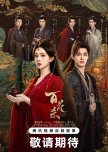
Blossoms of Power is a tale where revenge blooms in the unlikeliest of gardens. After surviving the massacre of the Gu family, Gu Qing Zi returns under the identity of Shen Xi He, the Princess of the Northwest, trading innocence for steel and resolve. Across the political chessboard stands Crown Prince Xiao Hua Yong, physically frail yet always several moves ahead of everyone else. As ambition collides with loyalty, the two form a formidable alliance, navigating a court where every smile conceals a dagger and power belongs to those willing to outplay fate itself.
The opening immediately grabbed my attention. Watching Qing Zi orchestrate her own death to frame another family already tells you everything you need to know about her. She is intelligent, calculative, ruthless when necessary, and always thinking several steps ahead. Her death also leaves Prince Xin, her husband, devastated. Forced to oversee the Gu family's massacre despite wanting to spare her, he is left helpless as she chooses death on her own terms. Then, almost immediately, the story shifts to the real Shen Xi He, a gentle and refined princess travelling to the capital for an arranged marriage. She falls into the water after an assassination attempt by one of her own maids, a mysterious double moon appears, and suddenly everything changes. That is also where my biggest issue with the drama begins.
Considering China's restrictions on resurrection, transmigration, and time travel stories, I was genuinely curious about how the drama would handle this premise. Instead of explaining it, however, the narrative simply leaves everything hanging. There is also a three year gap between Qing Zi's death and Xi He falling into the water, making the situation even more confusing. My own interpretation is that the double moon temporarily opened some kind of path between souls. Qing Zi's body had already died while her soul remained in limbo, whereas Xi He's body was still alive but somehow inherited Qing Zi's memories, skills, and personality while retaining her own memories. That explanation at least allows me to believe Xi He herself never truly disappeared. It makes the situation feel less unfair than having her body completely stolen.
The problem is that this is only my interpretation because the drama never confirms anything. It asks viewers to fill in the blanks themselves. Even stranger, Xi He wakes up with almost no confusion whatsoever. There is no existential crisis, no struggle adapting to a completely different life, and barely any reaction to such an unbelievable supernatural event. She simply wakes up and continues living as the fierce strategist we knew as Qing Zi. The people around her notice her dramatic personality change, but those concerns are brushed aside almost comically. Even her father and brother eventually conclude that the capital simply changed her. It almost feels as though soul swapping is just another Tuesday. For the rest of this review, I will simply refer to both Qing Zi and Xi He as Xi He.
Unfortunately, this habit of withholding explanations continues throughout the drama. Blossoms of Power often drops important details in passing or hides context within blink and you'll miss it shots. It almost feels like the drama is challenging viewers to solve a puzzle rather than simply telling its story. Sometimes that is rewarding, but other times it becomes frustrating because missing one tiny detail can leave an entire plot point feeling incomplete.
After Xi He survives her fall, Crown Prince Xiao Hua Yong discovers her unconscious and gives her a rare medicinal plant that he had risked his own life obtaining. He could have used it to treat himself, but instead chooses to save a woman he has just met. It sounds like love at first sight for Hua Yong. As he accompanies her journey to the capital, his admiration and respect only grows. He quickly recognizes Xi He's intelligence and strategic mind, seeing her as someone who can stand beside him rather than behind him. He is then determined to make her his Crown Princess. Now, Hua Yong deserves his own paragraph because shameless might as well be his middle name.
This man has absolutely no concept of subtlety. His flirtation is direct, relentless, and almost weaponised. Every other episode had me shrinking into my chair from second hand embarrassment because of another cheesy line or another overly confident romantic gesture. At first I genuinely questioned whether I could survive dozens of episodes of this. Strangely enough, somewhere along the way, I became desensitised. I ended up reacting exactly like Xi He herself, smiling, shaking my head, and quietly accepting that this hopeless romantic was simply being himself. Like eating overly spicy food, eventually your tongue gives up resisting.
That said, the drama occasionally mistakes exaggeration for spectacle. The most absurd example has to be Hua Yong climbing an icy mountain to retrieve another medicinal plant for Xi He. As an isolated romantic moment, it certainly looks impressive. In context, though, it made me question every law of physics. His experts fail to find the plant, naturally he succeeds, and then he somehow jumps off a cliff only to throw a rope back onto the very same cliff and climb it again. Unless I completely misunderstood the geography, I spent more time wondering why he did not simply climb down normally than appreciating the romance. It felt less like survival and more like an opportunity to farm aura points. Younger me probably would have swooned. Current me just stared at the screen wondering what exactly I had witnessed.
Despite Hua Yong's overwhelming devotion to Xi He, I was pleasantly surprised that his character never became one dimensional. I usually find characters whose entire world revolves around their love interest rather shallow, but Hua Yong avoids that trap. Before becoming Xi He's biggest supporter, he is first and foremost someone worthy of becoming Emperor. He genuinely cares for his people, takes his responsibilities seriously, and possesses intelligence equal to Xi He's. His playful exterior hides someone remarkably capable, which gives his character far more depth than his endless flirting initially suggests.
Ironically, despite all that effort, I never fully bought into the chemistry between Hua Yong and Xi He. Throughout most of the drama, Xi He remains emotionally guarded while Hua Yong does almost all the emotional heavy lifting. Their relationship often felt less like two people falling in love together and more like one person running a marathon while the other politely walks behind. Even after marriage, when they finally became more affectionate, I still found myself appreciating them more than actually feeling butterflies. Hua Yong's affection is certainly entertaining, but it often felt so excessive that I struggled to fully believe it as genuine love.
Ironically, the supporting couple completely stole the show for me. Bu Shu Lin and Cui Jin Bai had the chemistry I was searching for all along. Shu Lin disguises herself as a man in order to inherit her family's position, and Fan Shuai Qi absolutely sells the role. She is easily one of the most convincing female crossdressers I have seen in a Chinese costume drama. What begins as a scheme involving Jin Bai slowly develops into genuine affection, with Jin Bai hilariously questioning his own identity long before discovering Shu Lin is actually a woman. Their relationship develops naturally, their interactions feel believable, and by the time romance finally blossoms, I was fully invested. It is just unfortunate that censorship noticeably limited their romantic scenes, especially during the latter half of the drama.
The supporting cast in general is one of the drama's strongest assets. Lai Wei Ming was fantastic as Prince Lie and honestly had me wishing his character received a happier ending. Xu Zheng Xi once again proves that yearning is practically his speciality. Ever since Love of Nirvana, it feels like he has mastered the art of looking emotionally exhausted. It suits him extremely well, although I also hope future roles allow him to showcase different sides of his acting. I also have to give special praise to Lin Zi Ye as Tian Yuan. Every expression he made whenever Hua Yong unleashed another shameless line was comedy gold.
The main cast, however, is more of a mixed bag for me. I still cannot decide whether I actually liked He Yu's performance as Hua Yong. There are moments where he fits the role perfectly, but there are just as many where something feels missing. I actually preferred him in previous roles where he played colder and more reserved characters. Here, he strangely gives off supporting male lead energy rather than carrying the screen as the main lead. Outside of Hua Yong's outrageous flirting, I never felt especially emotionally attached to him, particularly during scenes that required heavier emotional delivery.
Meng Zi Yi left me similarly conflicted. Her naturally doll like appearance suits Xi He's composed and calculating personality beautifully. Unfortunately, that restraint also carries into scenes requiring stronger emotional expression. Her emotional breakdown near the end particularly disappointed me. Without the context of the scene, I genuinely might have mistaken it for someone rolling around in the snow with severe stomach cramps. Crying scenes need messy expressions. Furrowed brows, trembling lips, strained muscles, anything that convinces me the character is breaking apart. Instead, she often looks more concerned about maintaining a flattering camera angle than completely letting herself go emotionally. I actually enjoyed her performance in Blossom, but Princess Gambit simply did not work as well for me.
Visually, Blossoms of Power clearly aims for elegance. While certain locations such as the East Palace flower garden are genuinely beautiful, along with the colorful fireworks sequences, the overall presentation never feels particularly groundbreaking. Most of the cinematography falls into familiar territory. Even so, the production consistently looks polished and luxurious enough that I still appreciated the effort. The soundtrack also deserves praise. None of the songs have stayed on my playlist afterwards, but within the drama itself they always elevate the mood of each scene perfectly.
As the story approached its conclusion, however, the writing once again fell back into its old habit of leaving important questions unanswered. Prince Xin became the biggest emotional roller coaster in the entire series. I disliked him, sympathised with him, hated him again, then somehow liked him once more. While his final revelation attempts to tie everything together, it ultimately feels more convenient than convincing. It almost seems as though the writers decided his redemption at the last minute simply because every major character needed closure. The Emperor, on the other hand, genuinely surprised me. He feels remarkably human, and saying anything more would spoil one of the better aspects of the story.
[SPOILERS]
The ending itself also feels like the writers handing viewers a neatly wrapped gift while quietly hoping nobody asks too many questions. I appreciate that the drama chose a happy ending, I really do, but it never fully explains what actually happened to Hua Yong. His future after his son becomes Emperor also remains rather vague. Perhaps the bedtime story he tells his son reflects his desire to live peacefully among ordinary people while continuing to care for them from afar. That interpretation makes emotional sense, but practically speaking, I still have many questions. Is he simply going to remain inside the palace while pretending politics no longer exists? Your guess is honestly as good as mine.
[SPOILERS END]
Overall, Blossoms of Power is a decent watch that had me alternating between smiling, cringing, and scratching my head. One episode had me hiding behind a pillow from second hand embarrassment, while the next had me pausing to question the logic of what I had just watched. Watching it as an ongoing series with one or two episodes each day probably helped smooth out some of those frustrations. At the end of the day, this is neither an outstanding masterpiece nor a disappointing failure. It sits comfortably somewhere in the middle. If you're willing to embrace its shameless romance, overlook a few logic gaps, and accept that not every mystery will receive an answer, Blossoms of Power still offers an entertaining journey. Sometimes a flower blooms beautifully even when its roots are a little messy.
The opening immediately grabbed my attention. Watching Qing Zi orchestrate her own death to frame another family already tells you everything you need to know about her. She is intelligent, calculative, ruthless when necessary, and always thinking several steps ahead. Her death also leaves Prince Xin, her husband, devastated. Forced to oversee the Gu family's massacre despite wanting to spare her, he is left helpless as she chooses death on her own terms. Then, almost immediately, the story shifts to the real Shen Xi He, a gentle and refined princess travelling to the capital for an arranged marriage. She falls into the water after an assassination attempt by one of her own maids, a mysterious double moon appears, and suddenly everything changes. That is also where my biggest issue with the drama begins.
Considering China's restrictions on resurrection, transmigration, and time travel stories, I was genuinely curious about how the drama would handle this premise. Instead of explaining it, however, the narrative simply leaves everything hanging. There is also a three year gap between Qing Zi's death and Xi He falling into the water, making the situation even more confusing. My own interpretation is that the double moon temporarily opened some kind of path between souls. Qing Zi's body had already died while her soul remained in limbo, whereas Xi He's body was still alive but somehow inherited Qing Zi's memories, skills, and personality while retaining her own memories. That explanation at least allows me to believe Xi He herself never truly disappeared. It makes the situation feel less unfair than having her body completely stolen.
The problem is that this is only my interpretation because the drama never confirms anything. It asks viewers to fill in the blanks themselves. Even stranger, Xi He wakes up with almost no confusion whatsoever. There is no existential crisis, no struggle adapting to a completely different life, and barely any reaction to such an unbelievable supernatural event. She simply wakes up and continues living as the fierce strategist we knew as Qing Zi. The people around her notice her dramatic personality change, but those concerns are brushed aside almost comically. Even her father and brother eventually conclude that the capital simply changed her. It almost feels as though soul swapping is just another Tuesday. For the rest of this review, I will simply refer to both Qing Zi and Xi He as Xi He.
Unfortunately, this habit of withholding explanations continues throughout the drama. Blossoms of Power often drops important details in passing or hides context within blink and you'll miss it shots. It almost feels like the drama is challenging viewers to solve a puzzle rather than simply telling its story. Sometimes that is rewarding, but other times it becomes frustrating because missing one tiny detail can leave an entire plot point feeling incomplete.
After Xi He survives her fall, Crown Prince Xiao Hua Yong discovers her unconscious and gives her a rare medicinal plant that he had risked his own life obtaining. He could have used it to treat himself, but instead chooses to save a woman he has just met. It sounds like love at first sight for Hua Yong. As he accompanies her journey to the capital, his admiration and respect only grows. He quickly recognizes Xi He's intelligence and strategic mind, seeing her as someone who can stand beside him rather than behind him. He is then determined to make her his Crown Princess. Now, Hua Yong deserves his own paragraph because shameless might as well be his middle name.
This man has absolutely no concept of subtlety. His flirtation is direct, relentless, and almost weaponised. Every other episode had me shrinking into my chair from second hand embarrassment because of another cheesy line or another overly confident romantic gesture. At first I genuinely questioned whether I could survive dozens of episodes of this. Strangely enough, somewhere along the way, I became desensitised. I ended up reacting exactly like Xi He herself, smiling, shaking my head, and quietly accepting that this hopeless romantic was simply being himself. Like eating overly spicy food, eventually your tongue gives up resisting.
That said, the drama occasionally mistakes exaggeration for spectacle. The most absurd example has to be Hua Yong climbing an icy mountain to retrieve another medicinal plant for Xi He. As an isolated romantic moment, it certainly looks impressive. In context, though, it made me question every law of physics. His experts fail to find the plant, naturally he succeeds, and then he somehow jumps off a cliff only to throw a rope back onto the very same cliff and climb it again. Unless I completely misunderstood the geography, I spent more time wondering why he did not simply climb down normally than appreciating the romance. It felt less like survival and more like an opportunity to farm aura points. Younger me probably would have swooned. Current me just stared at the screen wondering what exactly I had witnessed.
Despite Hua Yong's overwhelming devotion to Xi He, I was pleasantly surprised that his character never became one dimensional. I usually find characters whose entire world revolves around their love interest rather shallow, but Hua Yong avoids that trap. Before becoming Xi He's biggest supporter, he is first and foremost someone worthy of becoming Emperor. He genuinely cares for his people, takes his responsibilities seriously, and possesses intelligence equal to Xi He's. His playful exterior hides someone remarkably capable, which gives his character far more depth than his endless flirting initially suggests.
Ironically, despite all that effort, I never fully bought into the chemistry between Hua Yong and Xi He. Throughout most of the drama, Xi He remains emotionally guarded while Hua Yong does almost all the emotional heavy lifting. Their relationship often felt less like two people falling in love together and more like one person running a marathon while the other politely walks behind. Even after marriage, when they finally became more affectionate, I still found myself appreciating them more than actually feeling butterflies. Hua Yong's affection is certainly entertaining, but it often felt so excessive that I struggled to fully believe it as genuine love.
Ironically, the supporting couple completely stole the show for me. Bu Shu Lin and Cui Jin Bai had the chemistry I was searching for all along. Shu Lin disguises herself as a man in order to inherit her family's position, and Fan Shuai Qi absolutely sells the role. She is easily one of the most convincing female crossdressers I have seen in a Chinese costume drama. What begins as a scheme involving Jin Bai slowly develops into genuine affection, with Jin Bai hilariously questioning his own identity long before discovering Shu Lin is actually a woman. Their relationship develops naturally, their interactions feel believable, and by the time romance finally blossoms, I was fully invested. It is just unfortunate that censorship noticeably limited their romantic scenes, especially during the latter half of the drama.
The supporting cast in general is one of the drama's strongest assets. Lai Wei Ming was fantastic as Prince Lie and honestly had me wishing his character received a happier ending. Xu Zheng Xi once again proves that yearning is practically his speciality. Ever since Love of Nirvana, it feels like he has mastered the art of looking emotionally exhausted. It suits him extremely well, although I also hope future roles allow him to showcase different sides of his acting. I also have to give special praise to Lin Zi Ye as Tian Yuan. Every expression he made whenever Hua Yong unleashed another shameless line was comedy gold.
The main cast, however, is more of a mixed bag for me. I still cannot decide whether I actually liked He Yu's performance as Hua Yong. There are moments where he fits the role perfectly, but there are just as many where something feels missing. I actually preferred him in previous roles where he played colder and more reserved characters. Here, he strangely gives off supporting male lead energy rather than carrying the screen as the main lead. Outside of Hua Yong's outrageous flirting, I never felt especially emotionally attached to him, particularly during scenes that required heavier emotional delivery.
Meng Zi Yi left me similarly conflicted. Her naturally doll like appearance suits Xi He's composed and calculating personality beautifully. Unfortunately, that restraint also carries into scenes requiring stronger emotional expression. Her emotional breakdown near the end particularly disappointed me. Without the context of the scene, I genuinely might have mistaken it for someone rolling around in the snow with severe stomach cramps. Crying scenes need messy expressions. Furrowed brows, trembling lips, strained muscles, anything that convinces me the character is breaking apart. Instead, she often looks more concerned about maintaining a flattering camera angle than completely letting herself go emotionally. I actually enjoyed her performance in Blossom, but Princess Gambit simply did not work as well for me.
Visually, Blossoms of Power clearly aims for elegance. While certain locations such as the East Palace flower garden are genuinely beautiful, along with the colorful fireworks sequences, the overall presentation never feels particularly groundbreaking. Most of the cinematography falls into familiar territory. Even so, the production consistently looks polished and luxurious enough that I still appreciated the effort. The soundtrack also deserves praise. None of the songs have stayed on my playlist afterwards, but within the drama itself they always elevate the mood of each scene perfectly.
As the story approached its conclusion, however, the writing once again fell back into its old habit of leaving important questions unanswered. Prince Xin became the biggest emotional roller coaster in the entire series. I disliked him, sympathised with him, hated him again, then somehow liked him once more. While his final revelation attempts to tie everything together, it ultimately feels more convenient than convincing. It almost seems as though the writers decided his redemption at the last minute simply because every major character needed closure. The Emperor, on the other hand, genuinely surprised me. He feels remarkably human, and saying anything more would spoil one of the better aspects of the story.
[SPOILERS]
The ending itself also feels like the writers handing viewers a neatly wrapped gift while quietly hoping nobody asks too many questions. I appreciate that the drama chose a happy ending, I really do, but it never fully explains what actually happened to Hua Yong. His future after his son becomes Emperor also remains rather vague. Perhaps the bedtime story he tells his son reflects his desire to live peacefully among ordinary people while continuing to care for them from afar. That interpretation makes emotional sense, but practically speaking, I still have many questions. Is he simply going to remain inside the palace while pretending politics no longer exists? Your guess is honestly as good as mine.
[SPOILERS END]
Overall, Blossoms of Power is a decent watch that had me alternating between smiling, cringing, and scratching my head. One episode had me hiding behind a pillow from second hand embarrassment, while the next had me pausing to question the logic of what I had just watched. Watching it as an ongoing series with one or two episodes each day probably helped smooth out some of those frustrations. At the end of the day, this is neither an outstanding masterpiece nor a disappointing failure. It sits comfortably somewhere in the middle. If you're willing to embrace its shameless romance, overlook a few logic gaps, and accept that not every mystery will receive an answer, Blossoms of Power still offers an entertaining journey. Sometimes a flower blooms beautifully even when its roots are a little messy.
Was this review helpful to you?


