

 23
23 41
41 8
8 1
1 1
1 1
1 1
1 1
1 1
1 6
6 2
2 3
3 1
1 1
1 1
1 1
1 3
3 1
1 3
3


Overdone
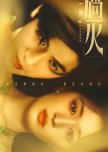
Overdo was one of my most anticipated dramas of the year. With Zhang Ling He and Wang Chu Ran leading the cast, I walked in with expectations through the roof. In hindsight, that might have been my first mistake. The irony is almost poetic because, much like its title, everything about this drama feels overdone. It constantly tries to raise the stakes, only to end up feeling exaggerated instead of impactful.
Set against the fading days of Republican-era Shanghai, the story follows Murong Qing Yi, a doctor whose life has been shaped by a cruel mistake made at birth. A chance exchange of letters leads him to Ren Su Su, an orphan carrying wounds just as deep as his own. Their relationship begins with quiet sincerity before fate tears them apart, leaving Qing Yi imprisoned under the belief that Su Su betrayed him while Su Su disappears without a trace. Three years later, she returns under a new identity, now engaged to his brother. Their reunion is fueled by resentment, misunderstandings, and buried truths, all unfolding as the nation inches toward war. On paper, it sounds like an emotional roller coaster filled with second chances, mistaken identities, and undying love. In execution, however, it often mistakes melodrama for emotional depth.
The problems start almost immediately with the cinematography and directing. The color grading, lighting, soft focus, and camera treatments constantly reminded me of a vertical drama. I have nothing against vertical dramas. I actually enjoy them. The issue is that I expected a high-budget long-form production, only to feel like I was watching one dressed up with a bigger cast and longer runtime. The directing only amplifies that impression. Many scenes feel unnecessarily dramatic, to the point where they become unintentionally funny.
The clearest example is the scene where Qing Yi jumps into the water to save Su Su. Instead of diving naturally, he launches himself flat into the water with his hands stretched forward, looking less like someone rescuing another person and more like someone accidentally participating in a belly flop competition. It completely took me out of the moment. If Zhang Ling He was unable to perform a proper dive, there were plenty of alternatives. He could have simply run into the water or jumped normally. Sometimes the simplest solution is the smartest one. Instead, the final result became comedy when it should have been life or death.
The use of AI in certain scenes also does not help. AI itself is not necessarily a deal breaker if it blends naturally into the production. Unfortunately, scenes like the airplane sequence look noticeably artificial, making it difficult to stay immersed. There are many moments throughout the drama where everything feels just a little too exaggerated, reinforcing that same vertical drama energy.
That said, not everything misses the mark. There are genuinely beautiful scenes scattered throughout the series, and several supporting actors deliver surprisingly strong performances. Li Bo Ze, Hai Tang Qing, and several other major supporting characters leave a positive impression. The drama also deserves credit for attempting to create morally layered characters. Li Rong Zhang, for example, is presented as both an abusive father and a patriot willing to sacrifice himself for the nation. That contradiction could have been fascinating, but the writing never explores it deeply enough. Rather than feeling like a complicated human being, he simply came across as confusing. Complexity only works when the audience is given enough time to understand it.
As for Zhang Ling He and Wang Chu Ran, they are easily among the drama's biggest strengths. Both actors maximize every opportunity they're given and deliver convincing performances despite the material. Unfortunately, they become victims of weak directing and increasingly outrageous plot twists. Qing Yi and Su Su are constantly trapped between personal desires and external responsibilities, which could have been compelling. Instead, their relationship becomes an endless cycle of misunderstandings, separation, reconciliation, love, hatred, and then back to misunderstanding again. I normally enjoy these kinds of tropes, but there is a difference between using them as seasoning and making them the entire meal. By the end, their relationship feels emotionally exhausting rather than heartbreaking.
One thing I cannot complain about, though, is the styling. The costumes, hairstyles, and makeup absolutely delivered. Everyone looked stunning, and the visual presentation of the cast deserved praise even when the script did not.
Ironically, the first half of the drama gave me hope. The early mysteries surrounding Su Su and Qing Yi immediately pulled me in. I especially found Su Su's past involving the women and the Huo family intriguing. The drama explores dark subjects including human trafficking, prostitution, and violence, and despite Chinese censorship, it presents these themes with surprising rawness. Some scenes are genuinely disturbing in ways that effectively capture the brutality of that world. Qing Yi's own mysterious past also kept me invested.
Unfortunately, once these mysteries are resolved around the middle of the series, the drama changes gears completely. Instead of building naturally upon what had already been established, it veers into increasingly dramatic territory filled with makjang-style twists and a storyline involving biochemical virus terrorism. It feels as though the writers kept asking, "How can we make this even bigger?" without asking whether it actually made the story better. Sometimes less really is more.
The ending perfectly reflects this issue. I actually prefer tragic endings for stories like this, but tragedy only works when it feels earned. Here, it often feels manufactured for the sake of making the audience cry. Certain sacrifices and plot developments seem unnecessary, and everything becomes so chaotic. Someone is gravely ill, then suddenly recovers. A terrorist incident appears out of nowhere. An entire village ends up paying the price. I found myself trying to justify the characters' decisions by assuming they simply had no better options under such desperate circumstances, but the story never fully convinces me that this was truly the only path available.
Overall, Overdo became an emotional graph that never quite stabilized. I started disappointed, became genuinely invested once the mysteries unfolded, then found myself disappointed all over again as the story spiraled into increasingly excessive territory. Thankfully, the short episode runtime made it easy enough to finish.
This is one of those dramas that I cannot confidently recommend, even if there are parts I appreciated. Whether you enjoy it will depend heavily on your tolerance for exaggerated melodrama, constant emotional whiplash, and makjang storytelling. If that sounds like your cup of tea, you may find much more to love here than I did. As for me, Overdo lived up to its title a little too well.
Set against the fading days of Republican-era Shanghai, the story follows Murong Qing Yi, a doctor whose life has been shaped by a cruel mistake made at birth. A chance exchange of letters leads him to Ren Su Su, an orphan carrying wounds just as deep as his own. Their relationship begins with quiet sincerity before fate tears them apart, leaving Qing Yi imprisoned under the belief that Su Su betrayed him while Su Su disappears without a trace. Three years later, she returns under a new identity, now engaged to his brother. Their reunion is fueled by resentment, misunderstandings, and buried truths, all unfolding as the nation inches toward war. On paper, it sounds like an emotional roller coaster filled with second chances, mistaken identities, and undying love. In execution, however, it often mistakes melodrama for emotional depth.
The problems start almost immediately with the cinematography and directing. The color grading, lighting, soft focus, and camera treatments constantly reminded me of a vertical drama. I have nothing against vertical dramas. I actually enjoy them. The issue is that I expected a high-budget long-form production, only to feel like I was watching one dressed up with a bigger cast and longer runtime. The directing only amplifies that impression. Many scenes feel unnecessarily dramatic, to the point where they become unintentionally funny.
The clearest example is the scene where Qing Yi jumps into the water to save Su Su. Instead of diving naturally, he launches himself flat into the water with his hands stretched forward, looking less like someone rescuing another person and more like someone accidentally participating in a belly flop competition. It completely took me out of the moment. If Zhang Ling He was unable to perform a proper dive, there were plenty of alternatives. He could have simply run into the water or jumped normally. Sometimes the simplest solution is the smartest one. Instead, the final result became comedy when it should have been life or death.
The use of AI in certain scenes also does not help. AI itself is not necessarily a deal breaker if it blends naturally into the production. Unfortunately, scenes like the airplane sequence look noticeably artificial, making it difficult to stay immersed. There are many moments throughout the drama where everything feels just a little too exaggerated, reinforcing that same vertical drama energy.
That said, not everything misses the mark. There are genuinely beautiful scenes scattered throughout the series, and several supporting actors deliver surprisingly strong performances. Li Bo Ze, Hai Tang Qing, and several other major supporting characters leave a positive impression. The drama also deserves credit for attempting to create morally layered characters. Li Rong Zhang, for example, is presented as both an abusive father and a patriot willing to sacrifice himself for the nation. That contradiction could have been fascinating, but the writing never explores it deeply enough. Rather than feeling like a complicated human being, he simply came across as confusing. Complexity only works when the audience is given enough time to understand it.
As for Zhang Ling He and Wang Chu Ran, they are easily among the drama's biggest strengths. Both actors maximize every opportunity they're given and deliver convincing performances despite the material. Unfortunately, they become victims of weak directing and increasingly outrageous plot twists. Qing Yi and Su Su are constantly trapped between personal desires and external responsibilities, which could have been compelling. Instead, their relationship becomes an endless cycle of misunderstandings, separation, reconciliation, love, hatred, and then back to misunderstanding again. I normally enjoy these kinds of tropes, but there is a difference between using them as seasoning and making them the entire meal. By the end, their relationship feels emotionally exhausting rather than heartbreaking.
One thing I cannot complain about, though, is the styling. The costumes, hairstyles, and makeup absolutely delivered. Everyone looked stunning, and the visual presentation of the cast deserved praise even when the script did not.
Ironically, the first half of the drama gave me hope. The early mysteries surrounding Su Su and Qing Yi immediately pulled me in. I especially found Su Su's past involving the women and the Huo family intriguing. The drama explores dark subjects including human trafficking, prostitution, and violence, and despite Chinese censorship, it presents these themes with surprising rawness. Some scenes are genuinely disturbing in ways that effectively capture the brutality of that world. Qing Yi's own mysterious past also kept me invested.
Unfortunately, once these mysteries are resolved around the middle of the series, the drama changes gears completely. Instead of building naturally upon what had already been established, it veers into increasingly dramatic territory filled with makjang-style twists and a storyline involving biochemical virus terrorism. It feels as though the writers kept asking, "How can we make this even bigger?" without asking whether it actually made the story better. Sometimes less really is more.
The ending perfectly reflects this issue. I actually prefer tragic endings for stories like this, but tragedy only works when it feels earned. Here, it often feels manufactured for the sake of making the audience cry. Certain sacrifices and plot developments seem unnecessary, and everything becomes so chaotic. Someone is gravely ill, then suddenly recovers. A terrorist incident appears out of nowhere. An entire village ends up paying the price. I found myself trying to justify the characters' decisions by assuming they simply had no better options under such desperate circumstances, but the story never fully convinces me that this was truly the only path available.
Overall, Overdo became an emotional graph that never quite stabilized. I started disappointed, became genuinely invested once the mysteries unfolded, then found myself disappointed all over again as the story spiraled into increasingly excessive territory. Thankfully, the short episode runtime made it easy enough to finish.
This is one of those dramas that I cannot confidently recommend, even if there are parts I appreciated. Whether you enjoy it will depend heavily on your tolerance for exaggerated melodrama, constant emotional whiplash, and makjang storytelling. If that sounds like your cup of tea, you may find much more to love here than I did. As for me, Overdo lived up to its title a little too well.
Was this review helpful to you?


