

 23
23 41
41 8
8 1
1 1
1 1
1 1
1 1
1 1
1 6
6 2
2 3
3 1
1 1
1 1
1 1
1 3
3 1
1 3
3


This review may contain spoilers
Behind Every Great Man Is a Woman With a Strategy
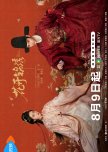
Born with little more than ambition and a good heart, Zhao Ling has no intention of staying at the bottom of the ladder. His life takes an unexpected turn when he crosses paths with Fu Ting Yun, a noblewoman whose reputation is shattered by a scandal she did not cause. What begins as a desperate escape slowly turns into a partnership. Against family grudges, political intrigue, and the whims of fate, Zhao Ling and Fu Ting Yun learn that love is sometimes less about finding the right person and more about choosing the same road, even when it leads straight into the storm.
The Road to Splendor was one of the good dramas I’ve watched this year. In a year where some productions have started leaning heavily on AI and shortcuts, this drama felt refreshingly authentic. You can see the effort behind it. From the locations to the cinematography, costumes, performances, and even the way certain scenes were staged, there was a sense that people actually cared about what they were putting on screen.
The drama opens with a wedding procession colliding with a funeral procession, which is already one hell of an introduction. Instead of immediately explaining everything, it takes us back to show how we arrived at that moment. And honestly, what happened to Ting Yun was heartbreaking. It is difficult to watch a woman live in a world where chastity and reputation can outweigh her own voice, especially when her own family treats her as something that can be sacrificed for their standing. Ting Yun was essentially raised to become a bargaining chip for the Fu family, protected and groomed so that she could make a "good marriage" and bring power to the family. Then, when a scandal she did not cause destroyed her reputation, the same family that had raised her simply abandoned her.
The funeral procession arranged for her was therefore much more than a dramatic scene. With Zhao Ling's help, Ting Yun arranged a wedding procession that collided with the funeral procession prepared by the Fu family. To me, that collision symbolized the death of her old life. The girl who had lived under the protection and expectations of the Fu family was gone. Her youth, sheltered ideals, and belief that she could simply follow the path chosen for her were buried there. What remained was a woman who had to stand on her own feet and decide where she wanted to go. That opening also gave the story a strong emotional foundation. Ting Yun's journey was not simply about revenge or proving everyone wrong. It was about reclaiming ownership of her own life. And this was where Deng En Xi really impressed me.
Fu Ting Yun might just be the most impressive role Deng En Xi has taken to date. She did not merely play Ting Yun. She became her. There is an elegance and charisma to her performance, but also an underlying sharpness that makes Ting Yun feel like someone who can walk into a room and quietly take control of it. A lot of that comes from her expressions and delivery rather than the script itself. What I especially appreciate is that Ting Yun was not written as an invincible woman empowerment poster. She is intelligent, strategic, and capable, but she is also confused, vulnerable, explosive, and sometimes wrong. She fails as much as she succeeds. That balance makes her feel human. Empowerment is much more convincing when the character is allowed to struggle instead of winning simply because the script says she is strong.
One scene that really demonstrated both the drama's willingness to be raw and Deng En Xi's commitment to the role was when Ting Yun was poisoned. Zhao Ling arrives at just the right moment and helps her induce vomiting with his fingers in her mouth. Even that alone felt unusually visceral for a Chinese drama. But then Ting Yun tries to induce vomiting herself by eating rain-soaked leftover noodles. I have a weak stomach, so I was genuinely speechless watching that scene. It was probably the most impressive and well-performed scene in the entire drama for me. I haven't seen any behind-the-scenes footage of how they filmed it, but that scene alone speaks volumes about Deng En Xi's dedication. I don't know how she managed to stomach it, but respect.
Then there is Zhao Ling. Zhao Ling is a salt trader, or depending on how you look at it, a bandit. He is not book smart, but he is street smart. Beneath his rough exterior, though, is a ridiculously sweet heart. Ding Yu Xi plays that duality beautifully. His puppy eyes can make Zhao Ling look almost harmless, but the moment his expression sharpens, you immediately remember that this man can be ruthless. I especially like that the drama does not try to sanitize him. When he cares about someone, he cares with complete sincerity. When someone hurts the people he loves, his ruthlessness has very few boundaries. He can simply pull out a knife and kill someone on the spot. And somehow, both sides of him feel believable.
His journey with Ting Yun is where the drama really shines. They become partners in the truest sense. Ting Yun brings intelligence, strategy, and the ability to see several moves ahead. Zhao Ling brings strength, street smarts, instincts, and the ability to handle situations that cannot be solved with a clever plan. They complement each other beautifully.
After they encounter the Crown Prince, who will later become Emperor, Ting Yun encourages Zhao Ling to join the army and aim for officialdom. She also tells him that she wants to marry him and will continue helping him. Of course, Ting Yun is not completely altruistic about this. His success benefits her too. But I like that their relationship is built on mutual interest that gradually grows into genuine loyalty. They head to Ganlin in the northwest, with Ting Yun taking her mother's surname, Xie, and becoming Zhao Ling's fiancée. Zhao Ling joins the army and tries to climb the ranks while Ting Yun manages things from home.
Ganlin was probably my favorite arc. It is where Zhao Ling's character development and his relationship with Ting Yun felt the strongest. You get to see them build a life together, face problems together, and gradually become the kind of couple who can trust each other with their backs turned. As partners, they absolutely slay. As lovers, though, I did not feel much sparks. The chemistry between Zhao Ling and Ting Yun is strong when they are working together, but as a romantic couple, they did not give me as much spark as I wanted. And honestly, I blame the writing. Both Ding Yu Xi and Deng En Xi have proven that they can deliver romantic expressions. If anything, their performances are doing a lot of heavy lifting here.
Zhao Ling's feelings were easier for me to see. His affection develops quietly but convincingly. He starts treating Ting Yun like a precious gem. He knows she is strong enough not to break, but he still does not want her to get scratched or fall to the ground. There are little moments where he is caught off guard by something she says or does, and you can see him slowly developing that soft spot. Ting Yun, however, was harder for me to read romantically. She clearly cares about him. She trusts him. She considers him someone she can walk through life and death with. But for most of the drama, she felt more like she had found her ride-or-die partner than the man she was romantically falling in love with. The circumstances and writing simply did not give her enough room to show romantic tension. The only time I genuinely felt Ting Yun's completely loving gaze was during the final swing scene.
One particular line from Zhao Ling stayed with me: "I saved you from Biyun Nunnery, not to let you end up in another one." That line basically defines their relationship. When Zhao Ling eventually comes to Ting Yun with poison, she does not react with huge surprise. It feels more like she is thinking, "So it has come to this." Somewhere in the back of her mind, she had always been prepared for the possibility that even Zhao Ling could become another person who would determine her fate. She accepts the poison because the choices she made were hers. She chose the marriage. She chose the capital. She chose this road. She does not regret it.
Then Zhao Ling takes the poison for her. That is when she is genuinely shocked. Because Zhao Ling has always wanted the best for her. He started this journey because of her, and somewhere along the way, he developed ambitions of his own. But underneath all of that, it was still about giving her the life she deserved. As partners, they are excellent. As a romantic couple, I just wish the drama had allowed them to breathe a little more. Zhao Ling literally says he wants to marry for love, yet somehow I did not always feel that love on screen as strongly as I wanted to.
The Ganlin arc itself eventually started leaning into more familiar tropes too. My biggest disappointment was Yu Jing Xiu. He was much more interesting when he was simply trying to fight against his parents and make a name for himself. I also enjoyed him more when he schemed against Ting Yun because his mother liked her and because she admired his mother. Once he started falling for Ting Yun because she saved him, then putting her on a pedestal as some goddess who had broken free from her family's shackles, his character became another typical obsessive and possessive second male lead. He went from interesting to predictable.
After Ganlin, the story takes Zhao Ling and Ting Yun to the capital. Zhao Ling earns an official position and becomes one of the Emperor's men, while Ting Yun takes charge of the Xie family business and continues supporting him with strategy and handling matters from the women's side. I actually enjoyed the first half of the capital arc. Watching them navigate court politics together was fun, especially because their strengths remained complementary. They really felt like a power couple in the practical sense. Although at some point I was just sitting there thinking, can you two please get married already? There are so many people hovering around them that I just wanted them to make things official.
The family and political conflict were also entertaining, especially watching the Zhao and Yu families clash through their respective women. Behind every powerful man is apparently a woman who listens to his problems and then quietly whispers the strategy he should use. I also appreciated that Madam Yu was not written as completely black or white. She knows when to attack and when to retreat. Ironically, her greatest victim might actually have been her own son, Jing Xiu. It was wild watching the Yu couple sacrifice their son so easily and claim it was for the family when it often felt more like they were protecting their own pride and saving their own skin.
Then came episode 31. For me, that was the emotional climax of the drama. By that point, I had become accustomed to the drama's misleading previews, ruses, and convenient last-minute solutions. Whenever something looked disastrous, I had started assuming there would be some trick around the corner. By the end, I was basically trained to think, "It's fine. Everyone will survive." However, episode 31 was different. There was no convenient ruse to soften the blow. It was simply the Emperor finally acting with the authority and responsibility of an Emperor. What happened was heartbreaking, made even more painful because the sacrifice could have been avoided. I was emotionally drained after that episode. Ironically, the actual finale did not affect me nearly as much.
The ending was steady, predictable, convenient, and ultimately anticlimactic. I was not angry with it, but I wanted to feel the victory of the leads more. After everything Zhao Ling and Ting Yun had endured, I wanted that feeling of finally making it through the storm. I did not need an explosive finale. I just wanted the emotional payoff to match the journey. The resolutions for the supporting characters were mostly decent, though some were much more satisfying than others.
Fan Ya Ke's ending felt liberating. I was genuinely happy for her, and I appreciated that the drama did not force her into the cliché of simply returning to parenting her son. Instead, it connected her ending back to the beginning, with her following in her father's footsteps and becoming a teacher. The Yu family's ending was where I felt the drama dropped the ball.
I did not need everyone to be beheaded, but I wanted the wins and losses to feel more tangible. Yu Guo Dong dying by accident was especially disappointing. After everything he had done and everything the story had built up, reducing his death to an accident felt anticlimactic. I would have found it much more satisfying if Jing Xiu had intentionally killed him, or if the Emperor had given him a severe punishment.
Madam Yu's ending was also surprisingly mild. For all the things she did, her punishment felt like a very chill layoff in modern terms. It's sad, but she'll live. I think the ending would have had more impact if we had actually seen more of her devastation and the consequences of losing everything. Instead, it felt rather lukewarm. The drama even had Ting Yun verbally explain that becoming a commoner was worse than death for Madam Yu, almost as if the script needed to convince both Ting Yun and the audience that this was a satisfying punishment.
As for Jing Xiu, his ending did not really feel like a defeat. If anything, it felt like he finally escaped his parents' cage. So perhaps it was less a punishment and more a gift. Still, I do appreciate that the drama gave closure to all the major characters and showed us where everyone ended up. Ting Yun and Zhao Ling's ending, especially that final swing scene, was beautiful.
One of the drama’s greatest strengths is the visuals. I loved how much effort went into the locations and cinematography, especially during the Ganlin arc. Rather than relying entirely on AI, green screens, and the familiar Hengdian setups, the production actually went out and filmed in different locations. The desert scenes were gorgeous. The autumn trees by the lake were gorgeous. There was a sense of scale that made the journey feel like an actual journey.
The color grading was also lovely. Warm golden tones made the happier and more splendid scenes feel warmer, while cooler tones were used for sadness and isolation. The camera angles, foreground elements, composition, and blocking were often thoughtfully done. I usually have a love-hate relationship with all the drapes in costume dramas, but this drama actually knew how to use them. The framing often felt aesthetic without becoming obviously obsessed with being aesthetic.
And the costumes, hair, and makeup were beautiful. They genuinely made me appreciate the fashion of the era more than I expected. The OSTs were another pleasant surprise. I still hear some of them in my head even after finishing the drama, which is usually a good sign.
Overall, The Road to Splendor is a drama I enjoyed very much, even though I cannot call it perfect. Its strongest points are its leads, production effort, cinematography, and costumes. Despite the parts where the drama stumbles, I would still recommend it. There is effort here. There is personality here. There are performances worth watching. There are scenes that genuinely surprised me. There are beautiful locations, gorgeous costumes, strong cinematography, and characters who are more nuanced than they initially appear. Most importantly, The Road to Splendor feels made rather than assembled. And in an era where you can sometimes feel the shortcuts behind the screen, that authenticity is worth something.
The Road to Splendor was one of the good dramas I’ve watched this year. In a year where some productions have started leaning heavily on AI and shortcuts, this drama felt refreshingly authentic. You can see the effort behind it. From the locations to the cinematography, costumes, performances, and even the way certain scenes were staged, there was a sense that people actually cared about what they were putting on screen.
The drama opens with a wedding procession colliding with a funeral procession, which is already one hell of an introduction. Instead of immediately explaining everything, it takes us back to show how we arrived at that moment. And honestly, what happened to Ting Yun was heartbreaking. It is difficult to watch a woman live in a world where chastity and reputation can outweigh her own voice, especially when her own family treats her as something that can be sacrificed for their standing. Ting Yun was essentially raised to become a bargaining chip for the Fu family, protected and groomed so that she could make a "good marriage" and bring power to the family. Then, when a scandal she did not cause destroyed her reputation, the same family that had raised her simply abandoned her.
The funeral procession arranged for her was therefore much more than a dramatic scene. With Zhao Ling's help, Ting Yun arranged a wedding procession that collided with the funeral procession prepared by the Fu family. To me, that collision symbolized the death of her old life. The girl who had lived under the protection and expectations of the Fu family was gone. Her youth, sheltered ideals, and belief that she could simply follow the path chosen for her were buried there. What remained was a woman who had to stand on her own feet and decide where she wanted to go. That opening also gave the story a strong emotional foundation. Ting Yun's journey was not simply about revenge or proving everyone wrong. It was about reclaiming ownership of her own life. And this was where Deng En Xi really impressed me.
Fu Ting Yun might just be the most impressive role Deng En Xi has taken to date. She did not merely play Ting Yun. She became her. There is an elegance and charisma to her performance, but also an underlying sharpness that makes Ting Yun feel like someone who can walk into a room and quietly take control of it. A lot of that comes from her expressions and delivery rather than the script itself. What I especially appreciate is that Ting Yun was not written as an invincible woman empowerment poster. She is intelligent, strategic, and capable, but she is also confused, vulnerable, explosive, and sometimes wrong. She fails as much as she succeeds. That balance makes her feel human. Empowerment is much more convincing when the character is allowed to struggle instead of winning simply because the script says she is strong.
One scene that really demonstrated both the drama's willingness to be raw and Deng En Xi's commitment to the role was when Ting Yun was poisoned. Zhao Ling arrives at just the right moment and helps her induce vomiting with his fingers in her mouth. Even that alone felt unusually visceral for a Chinese drama. But then Ting Yun tries to induce vomiting herself by eating rain-soaked leftover noodles. I have a weak stomach, so I was genuinely speechless watching that scene. It was probably the most impressive and well-performed scene in the entire drama for me. I haven't seen any behind-the-scenes footage of how they filmed it, but that scene alone speaks volumes about Deng En Xi's dedication. I don't know how she managed to stomach it, but respect.
Then there is Zhao Ling. Zhao Ling is a salt trader, or depending on how you look at it, a bandit. He is not book smart, but he is street smart. Beneath his rough exterior, though, is a ridiculously sweet heart. Ding Yu Xi plays that duality beautifully. His puppy eyes can make Zhao Ling look almost harmless, but the moment his expression sharpens, you immediately remember that this man can be ruthless. I especially like that the drama does not try to sanitize him. When he cares about someone, he cares with complete sincerity. When someone hurts the people he loves, his ruthlessness has very few boundaries. He can simply pull out a knife and kill someone on the spot. And somehow, both sides of him feel believable.
His journey with Ting Yun is where the drama really shines. They become partners in the truest sense. Ting Yun brings intelligence, strategy, and the ability to see several moves ahead. Zhao Ling brings strength, street smarts, instincts, and the ability to handle situations that cannot be solved with a clever plan. They complement each other beautifully.
After they encounter the Crown Prince, who will later become Emperor, Ting Yun encourages Zhao Ling to join the army and aim for officialdom. She also tells him that she wants to marry him and will continue helping him. Of course, Ting Yun is not completely altruistic about this. His success benefits her too. But I like that their relationship is built on mutual interest that gradually grows into genuine loyalty. They head to Ganlin in the northwest, with Ting Yun taking her mother's surname, Xie, and becoming Zhao Ling's fiancée. Zhao Ling joins the army and tries to climb the ranks while Ting Yun manages things from home.
Ganlin was probably my favorite arc. It is where Zhao Ling's character development and his relationship with Ting Yun felt the strongest. You get to see them build a life together, face problems together, and gradually become the kind of couple who can trust each other with their backs turned. As partners, they absolutely slay. As lovers, though, I did not feel much sparks. The chemistry between Zhao Ling and Ting Yun is strong when they are working together, but as a romantic couple, they did not give me as much spark as I wanted. And honestly, I blame the writing. Both Ding Yu Xi and Deng En Xi have proven that they can deliver romantic expressions. If anything, their performances are doing a lot of heavy lifting here.
Zhao Ling's feelings were easier for me to see. His affection develops quietly but convincingly. He starts treating Ting Yun like a precious gem. He knows she is strong enough not to break, but he still does not want her to get scratched or fall to the ground. There are little moments where he is caught off guard by something she says or does, and you can see him slowly developing that soft spot. Ting Yun, however, was harder for me to read romantically. She clearly cares about him. She trusts him. She considers him someone she can walk through life and death with. But for most of the drama, she felt more like she had found her ride-or-die partner than the man she was romantically falling in love with. The circumstances and writing simply did not give her enough room to show romantic tension. The only time I genuinely felt Ting Yun's completely loving gaze was during the final swing scene.
One particular line from Zhao Ling stayed with me: "I saved you from Biyun Nunnery, not to let you end up in another one." That line basically defines their relationship. When Zhao Ling eventually comes to Ting Yun with poison, she does not react with huge surprise. It feels more like she is thinking, "So it has come to this." Somewhere in the back of her mind, she had always been prepared for the possibility that even Zhao Ling could become another person who would determine her fate. She accepts the poison because the choices she made were hers. She chose the marriage. She chose the capital. She chose this road. She does not regret it.
Then Zhao Ling takes the poison for her. That is when she is genuinely shocked. Because Zhao Ling has always wanted the best for her. He started this journey because of her, and somewhere along the way, he developed ambitions of his own. But underneath all of that, it was still about giving her the life she deserved. As partners, they are excellent. As a romantic couple, I just wish the drama had allowed them to breathe a little more. Zhao Ling literally says he wants to marry for love, yet somehow I did not always feel that love on screen as strongly as I wanted to.
The Ganlin arc itself eventually started leaning into more familiar tropes too. My biggest disappointment was Yu Jing Xiu. He was much more interesting when he was simply trying to fight against his parents and make a name for himself. I also enjoyed him more when he schemed against Ting Yun because his mother liked her and because she admired his mother. Once he started falling for Ting Yun because she saved him, then putting her on a pedestal as some goddess who had broken free from her family's shackles, his character became another typical obsessive and possessive second male lead. He went from interesting to predictable.
After Ganlin, the story takes Zhao Ling and Ting Yun to the capital. Zhao Ling earns an official position and becomes one of the Emperor's men, while Ting Yun takes charge of the Xie family business and continues supporting him with strategy and handling matters from the women's side. I actually enjoyed the first half of the capital arc. Watching them navigate court politics together was fun, especially because their strengths remained complementary. They really felt like a power couple in the practical sense. Although at some point I was just sitting there thinking, can you two please get married already? There are so many people hovering around them that I just wanted them to make things official.
The family and political conflict were also entertaining, especially watching the Zhao and Yu families clash through their respective women. Behind every powerful man is apparently a woman who listens to his problems and then quietly whispers the strategy he should use. I also appreciated that Madam Yu was not written as completely black or white. She knows when to attack and when to retreat. Ironically, her greatest victim might actually have been her own son, Jing Xiu. It was wild watching the Yu couple sacrifice their son so easily and claim it was for the family when it often felt more like they were protecting their own pride and saving their own skin.
Then came episode 31. For me, that was the emotional climax of the drama. By that point, I had become accustomed to the drama's misleading previews, ruses, and convenient last-minute solutions. Whenever something looked disastrous, I had started assuming there would be some trick around the corner. By the end, I was basically trained to think, "It's fine. Everyone will survive." However, episode 31 was different. There was no convenient ruse to soften the blow. It was simply the Emperor finally acting with the authority and responsibility of an Emperor. What happened was heartbreaking, made even more painful because the sacrifice could have been avoided. I was emotionally drained after that episode. Ironically, the actual finale did not affect me nearly as much.
The ending was steady, predictable, convenient, and ultimately anticlimactic. I was not angry with it, but I wanted to feel the victory of the leads more. After everything Zhao Ling and Ting Yun had endured, I wanted that feeling of finally making it through the storm. I did not need an explosive finale. I just wanted the emotional payoff to match the journey. The resolutions for the supporting characters were mostly decent, though some were much more satisfying than others.
Fan Ya Ke's ending felt liberating. I was genuinely happy for her, and I appreciated that the drama did not force her into the cliché of simply returning to parenting her son. Instead, it connected her ending back to the beginning, with her following in her father's footsteps and becoming a teacher. The Yu family's ending was where I felt the drama dropped the ball.
I did not need everyone to be beheaded, but I wanted the wins and losses to feel more tangible. Yu Guo Dong dying by accident was especially disappointing. After everything he had done and everything the story had built up, reducing his death to an accident felt anticlimactic. I would have found it much more satisfying if Jing Xiu had intentionally killed him, or if the Emperor had given him a severe punishment.
Madam Yu's ending was also surprisingly mild. For all the things she did, her punishment felt like a very chill layoff in modern terms. It's sad, but she'll live. I think the ending would have had more impact if we had actually seen more of her devastation and the consequences of losing everything. Instead, it felt rather lukewarm. The drama even had Ting Yun verbally explain that becoming a commoner was worse than death for Madam Yu, almost as if the script needed to convince both Ting Yun and the audience that this was a satisfying punishment.
As for Jing Xiu, his ending did not really feel like a defeat. If anything, it felt like he finally escaped his parents' cage. So perhaps it was less a punishment and more a gift. Still, I do appreciate that the drama gave closure to all the major characters and showed us where everyone ended up. Ting Yun and Zhao Ling's ending, especially that final swing scene, was beautiful.
One of the drama’s greatest strengths is the visuals. I loved how much effort went into the locations and cinematography, especially during the Ganlin arc. Rather than relying entirely on AI, green screens, and the familiar Hengdian setups, the production actually went out and filmed in different locations. The desert scenes were gorgeous. The autumn trees by the lake were gorgeous. There was a sense of scale that made the journey feel like an actual journey.
The color grading was also lovely. Warm golden tones made the happier and more splendid scenes feel warmer, while cooler tones were used for sadness and isolation. The camera angles, foreground elements, composition, and blocking were often thoughtfully done. I usually have a love-hate relationship with all the drapes in costume dramas, but this drama actually knew how to use them. The framing often felt aesthetic without becoming obviously obsessed with being aesthetic.
And the costumes, hair, and makeup were beautiful. They genuinely made me appreciate the fashion of the era more than I expected. The OSTs were another pleasant surprise. I still hear some of them in my head even after finishing the drama, which is usually a good sign.
Overall, The Road to Splendor is a drama I enjoyed very much, even though I cannot call it perfect. Its strongest points are its leads, production effort, cinematography, and costumes. Despite the parts where the drama stumbles, I would still recommend it. There is effort here. There is personality here. There are performances worth watching. There are scenes that genuinely surprised me. There are beautiful locations, gorgeous costumes, strong cinematography, and characters who are more nuanced than they initially appear. Most importantly, The Road to Splendor feels made rather than assembled. And in an era where you can sometimes feel the shortcuts behind the screen, that authenticity is worth something.
Was this review helpful to you?


