
 Editorials


 1
1 3
3


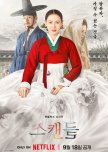
The Women of Bukchon
After all, Korea is not France.
I think director Jung Ji Woo knew exactly what he was doing when he adapted Les Liaisons dangereuses into a Korean period drama. The two societies were very different. Laclos gave us French aristocrats playing dangerous games with sex, love and reputation. Joseon society was much more controlled, especially for women. How they dressed, behaved, loved and even showed desire had rules.
So instead of simply putting the French story in Korean period, the director changed it.
Even the outcome is different. The original story ends with death, disgrace and destruction. The Scandal is much more subtle. There is still honor among sinners, and morality and reputation continue to control their lives. Oh yes, there is sex and nudity…but please, a few breasts and buttocks hardly compare with the scandalous behavior of the original story. Again…subtleties. And subtlety is both the strength and weakness of this series.
Eight episodes gave the director plenty of time to explain these characters and why they behaved the way they did. Unfortunately, it also gave us long conversations, slower pacing and less intensity. Sometimes I wanted the manipulation to burn instead of simmer. I honestly think this would have been much better as a tightly written three hour movie. Keep the beautiful cinematography, the glances, the silence and the sexual tension…but move the story along.
I admire the actors for taking risks, especially Ji Chang Wook. He stepped away from the clean and romantic image many of us are used to and played a man who uses sex and seduction as weapons. Earlier I wondered if Cho Won could eventually make me forget Ji Chang Wook. Not completely…but I admire him for trying something different.
Nana will probably divide viewers. Some saw her quiet performance as lacking emotion. I saw a young widow whose husband died before she really had a chance to live. Instead of enjoying marriage, she was expected to mourn, remain pure and behave exactly as society demanded. Even seeing her smile became difficult during these eight episodes. Her restraint was not necessarily a lack of emotion…perhaps it was a woman who had learned she was not allowed to show it.
By the end, I wondered if The Scandal should have been called The Women of Bukchon. Lady Cho fights the rules by manipulating them. Hui Yeon survives by living within them until she finally begins choosing for herself. Both women want something society tells them they should not want.
Maybe that is what this version ultimately became. It started with Laclos and his scandalous games of sex, power and manipulation, but somewhere along the way it became a story about women, desire and the price of living in a society that decides what is proper.
It is not the French story copied into Korea. And it should not be. After all…Korea is not France
I think director Jung Ji Woo knew exactly what he was doing when he adapted Les Liaisons dangereuses into a Korean period drama. The two societies were very different. Laclos gave us French aristocrats playing dangerous games with sex, love and reputation. Joseon society was much more controlled, especially for women. How they dressed, behaved, loved and even showed desire had rules.
So instead of simply putting the French story in Korean period, the director changed it.
Even the outcome is different. The original story ends with death, disgrace and destruction. The Scandal is much more subtle. There is still honor among sinners, and morality and reputation continue to control their lives. Oh yes, there is sex and nudity…but please, a few breasts and buttocks hardly compare with the scandalous behavior of the original story. Again…subtleties. And subtlety is both the strength and weakness of this series.
Eight episodes gave the director plenty of time to explain these characters and why they behaved the way they did. Unfortunately, it also gave us long conversations, slower pacing and less intensity. Sometimes I wanted the manipulation to burn instead of simmer. I honestly think this would have been much better as a tightly written three hour movie. Keep the beautiful cinematography, the glances, the silence and the sexual tension…but move the story along.
I admire the actors for taking risks, especially Ji Chang Wook. He stepped away from the clean and romantic image many of us are used to and played a man who uses sex and seduction as weapons. Earlier I wondered if Cho Won could eventually make me forget Ji Chang Wook. Not completely…but I admire him for trying something different.
Nana will probably divide viewers. Some saw her quiet performance as lacking emotion. I saw a young widow whose husband died before she really had a chance to live. Instead of enjoying marriage, she was expected to mourn, remain pure and behave exactly as society demanded. Even seeing her smile became difficult during these eight episodes. Her restraint was not necessarily a lack of emotion…perhaps it was a woman who had learned she was not allowed to show it.
By the end, I wondered if The Scandal should have been called The Women of Bukchon. Lady Cho fights the rules by manipulating them. Hui Yeon survives by living within them until she finally begins choosing for herself. Both women want something society tells them they should not want.
Maybe that is what this version ultimately became. It started with Laclos and his scandalous games of sex, power and manipulation, but somewhere along the way it became a story about women, desire and the price of living in a society that decides what is proper.
It is not the French story copied into Korea. And it should not be. After all…Korea is not France
Was this review helpful to you?


