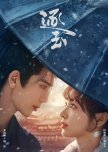
I was watching random videos on Instagram and stumbled upon this:https://www.instagram.com/reel/DVpbfXDE_Ai/?igsh=cWR6ZHE3bjljNnhrOur…
I bet she works out. Sheās all muscle with almost no fat. Her arms have clear muscle definition, her legs are long and beautiful and her calvesāthe muscles on the back of her lower legsālook strong too.
all he had to see was her knocking the pig out with one smash!! ....that was something :-D
in ep 1, before she kills it, "Be a good pig in this life. Be a good person in the next." Whack! The pig even closed his eyes. I'm not sure but when she stumbled onto the ML, I think she thought he's the pig she killed earlier, reincarnated.
What I love about Tian Xi Wei is her vivaciousness and endless energy, both in real life and on screen. She brings an irresistibly lively spirit to every character she plays. I first came across her in New Life Begins without knowing who she was, and I ended up watching the entire drama because of her. Tian Xi Wei has a special charm uniquely hers. Sheās also a strong voice actor, which makes using her own voice a real advantage.
As for the directing, itās only the first episode, but the director already knows how to pull you in. The use of things blowing around is a signature of the director of The Double. They use sensory details in a more theatrical, openly expressive way, where the style is visible but still effective. Iām also watching to compare the directing styles, and the differences are already interesting to see.
In episodeāÆ1, I love the tonal contrastāthe ML is serious and intense while the scene around him stays light and even humorous. The presence of an adorable, cute little girl adds a playful contrast as well. And the village itself has this charming, storybook atmosphereāvery much like the opening of Beauty and the Beast, where everyone says of Belle, āIām afraid sheās rather odd, very different from the rest of us.ā In this drama, though, they say, āThat strength of hers, even a grown man couldnāt match it.ā Her fierceness reminds me of Belleāsāsoft on the surface, steel underneath.
there's another director I really like, he directed The Double, and has a very distinct style too, does amazing shots too (at least I like it), so now I'm really curious about this director too, so I am excited to watch now.
9 episodes in and Iām really liking what Iām seeing. This drama indeed feels like jade: elegant and quietly…
This is the director's second long-form drama in his career. Prior to Blossom, he mostly directed micro-dramas (with episodes lasting about 10 to 15 minutes) and, before that, short films (non-theatrical releases) around 1 hour and 15 minutes long, along with a few other short-form dramas.Now, I'm curious to watch Blossom and Pursuit of Jade to see whether his style represents "a fusion of his micro-drama hooks + short-form emotional density + cinematic polish from his early movie rootsāall upgraded into full long-form depth." He's only 40, so he's a young director. He's bound to take on a lot more long-form projects now.It's an interesting trend: the influence short-form content is having on long-form storytelling. This just confirms what I've been readingāthat the explosive growth of short-form/micro-dramas is reshaping and influencing long-form dramas in the Chinese entertainment industry.I first noticed it in Glory, where the director was also from a short-form background, and Glory was her first long-form project. However, she didn't seem to bring over her short-form style (at least not that I could tell). I think she found it challenging to fuse the two. Producer Yu Zheng also seems to be trying to get into short-form content or leverage it. The Double incorporated elements of short-form hooks and performed really well, so I think he tried again in Gloryābut it didn't have the same impact as The Double.There's also an actor, Cheng Lei (also known as Ryan Cheng), who rose through micro-dramas. Talent seems to be shifting from short-form/micro-dramas to long-form dramas via these non-traditional paths.
In the late 1970s in China, only about 18% of people lived in cities. Most city dwellers had normal factory jobs with steady pay, free or cheap housing and food from their danwei, and ration couponsājust like the characters in Love Story in the 1970s. That basic setup was real. But the specific level of comfort shown in the drama wasnāt something all urban residents had; only a minority belonged to better-funded, topātier danwei that could provide that kind of life. So the lifestyle in the show reflected only a small share of Chinaās populationāmaybe 12ā16% at most, and more realistically around 8ā12%. Only a very small share of Chinaās population (2ā4%?) had realistic access to college recommendations in the late 1970s. The other ~82% lived in villages and struggled every day just to have enough food and clothesāand thatās an understatement.
As for the directing, itās only the first episode, but the director already knows how to pull you in. The use of things blowing around is a signature of the director of The Double. They use sensory details in a more theatrical, openly expressive way, where the style is visible but still effective. Iām also watching to compare the directing styles, and the differences are already interesting to see.
In episodeāÆ1, I love the tonal contrastāthe ML is serious and intense while the scene around him stays light and even humorous. The presence of an adorable, cute little girl adds a playful contrast as well. And the village itself has this charming, storybook atmosphereāvery much like the opening of Beauty and the Beast, where everyone says of Belle, āIām afraid sheās rather odd, very different from the rest of us.ā In this drama, though, they say, āThat strength of hers, even a grown man couldnāt match it.ā Her fierceness reminds me of Belleāsāsoft on the surface, steel underneath.