

Recent Discussions




Shirayuki is a female car designer and aspires to create a car like the Nagoya 2000GT which she feels is the best car ever created in Japan. One day, she is assigned to join the automatic driving development team which leaves her in shock and things start to change when she visits the Nagoya Automobile Museum. She meets a 4th generation Brazilian-Japanese Ricardo who wants to steal the 2000GT from the museum. Just then, a mysterious man wearing a white racing suit appears in front of them and turns the entire museum into a fantasy space with his magic that also traps Shirayuki and Ricardo in the museum.

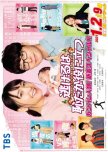
"Rikon Doukyo" centers around husband Konaka Masaru and wife Ichinose Naoko who seem to have a happy family life. All this comes to a seemingly abrupt end when the couple decides to divorce. Yet, the couple soon finds themselves living together again even though they are no longer married ...

"Rikon Doukyo" centers around husband Konaka Masaru and wife Ichinose Naoko who seem to have a happy family life. All this comes to a seemingly abrupt end when the couple decides to divorce. Yet, the couple soon finds themselves living together again even though they are no longer married ...

"Rikon Doukyo" centers around husband Konaka Masaru and wife Ichinose Naoko who seem to have a happy family life. All this comes to a seemingly abrupt end when the couple decides to divorce. Yet, the couple soon finds themselves living together again even though they are no longer married ...

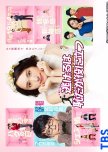
In both dramas, a man in his 30s and a slightly younger woman who is down on her luck enter into a marriage of convenience, start living together... and of course, end up falling in love. In Nigeru wa Haji da ga Yaku ni Tatsu, the man hires the woman to work as a live-in housekeeper and marries her to give their arrangement a respectable cover, while in Nagareboshi he pays her to donate liver tissue to his sister and they get married to make the organ transplantation possible.
In Nigeru wa Haji da ga Yaku ni Tatsu, the male lead has a withdrawn and timid personality and views social obligations as a hassle, whereas in Nagareboshi he is a man whose quiet conformity to social and professional norms belies his deep emotions and strong moral conviction. The female lead in Nigeru wa Haji da ga Yaku ni Tatsu is sensible and energetic in her pursuit of her goals, while in Nagareboshi she has been worn down by life to the point of desperation but has a rough, streetwise sort of charm. Overall, I think the characters in Nagareboshi are more mature and complex, but they make more questionable decisions.
(Tsuzaki Hiramasa's characterisation as a 'herbivore,' a new breed of man who actively rejects the trappings of traditional Japanese masculinity—sexual conquest, a single-income family and white-collar machismo—is actually an interesting counterpoint to Okada Kendo's muted and almost melancholic attachment to values like family, loyalty and honour. That said, while his personality does not illustrate millennial Japanese social dynamics quite as well as Hiramasa's, Kendo is a far better romantic lead for me because it's exhilarating to watch him silently set his heart on a woman like Makihara Risa, who is his social inferior and an unworthy romantic prospect by patriarchal standards but possesses such rare charisma she cannot be denied. Anyway, sorry. I love old-school romance, what can I say!)
Tonally, Nigeru wa Haji da ga Yaku ni Tatsu is a slice-of-life romcom that leans into the artifice of its premise (contract marriage) to explore the unspoken rules and expectations that govern all relationships. Not a lot happens; the main characters' cautious progress toward mutual vulnerability and the negotiation of their relationship in all its heartwarming awkwardness *are* the plot. Nagareboshi, by contrast, is both more melodramatic and more realistic; there is more external conflict that comes in the form of an ill sister, a leeching brother, class difference, societal prejudice, etc., but the characters themselves behave more like real people with their own flaws and pride.
Nigeru wa Haji da ga Yaku ni Tatsu is a good representative of the new wave of minimalist meta-romance in jdrama; in every episode, the main characters discourse on the idea of romance itself and analyse how their own actions hinder or contribute to the pursuit of self-actualisation, domesticity and companionship. Nagareboshi is also a quiet drama about two people making a stilted and tentative connection, but it's less self-reflexive and more passionate and romantic under the surface.
Nigeru wa Haji da ga Yaku ni Tatsu is more lighthearted and relatable in terms of the themes it explores, but Nagareboshi is the better, more compelling drama in my view.
In Nigeru wa Haji da ga Yaku ni Tatsu, the male lead has a withdrawn and timid personality and views social obligations as a hassle, whereas in Nagareboshi he is a man whose quiet conformity to social and professional norms belies his deep emotions and strong moral conviction. The female lead in Nigeru wa Haji da ga Yaku ni Tatsu is sensible and energetic in her pursuit of her goals, while in Nagareboshi she has been worn down by life to the point of desperation but has a rough, streetwise sort of charm. Overall, I think the characters in Nagareboshi are more mature and complex, but they make more questionable decisions.
(Tsuzaki Hiramasa's characterisation as a 'herbivore,' a new breed of man who actively rejects the trappings of traditional Japanese masculinity—sexual conquest, a single-income family and white-collar machismo—is actually an interesting counterpoint to Okada Kendo's muted and almost melancholic attachment to values like family, loyalty and honour. That said, while his personality does not illustrate millennial Japanese social dynamics quite as well as Hiramasa's, Kendo is a far better romantic lead for me because it's exhilarating to watch him silently set his heart on a woman like Makihara Risa, who is his social inferior and an unworthy romantic prospect by patriarchal standards but possesses such rare charisma she cannot be denied. Anyway, sorry. I love old-school romance, what can I say!)
Tonally, Nigeru wa Haji da ga Yaku ni Tatsu is a slice-of-life romcom that leans into the artifice of its premise (contract marriage) to explore the unspoken rules and expectations that govern all relationships. Not a lot happens; the main characters' cautious progress toward mutual vulnerability and the negotiation of their relationship in all its heartwarming awkwardness *are* the plot. Nagareboshi, by contrast, is both more melodramatic and more realistic; there is more external conflict that comes in the form of an ill sister, a leeching brother, class difference, societal prejudice, etc., but the characters themselves behave more like real people with their own flaws and pride.
Nigeru wa Haji da ga Yaku ni Tatsu is a good representative of the new wave of minimalist meta-romance in jdrama; in every episode, the main characters discourse on the idea of romance itself and analyse how their own actions hinder or contribute to the pursuit of self-actualisation, domesticity and companionship. Nagareboshi is also a quiet drama about two people making a stilted and tentative connection, but it's less self-reflexive and more passionate and romantic under the surface.
Nigeru wa Haji da ga Yaku ni Tatsu is more lighthearted and relatable in terms of the themes it explores, but Nagareboshi is the better, more compelling drama in my view.

"Rikon Doukyo" centers around husband Konaka Masaru and wife Ichinose Naoko who seem to have a happy family life. All this comes to a seemingly abrupt end when the couple decides to divorce. Yet, the couple soon finds themselves living together again even though they are no longer married ...

"Rikon Doukyo" centers around husband Konaka Masaru and wife Ichinose Naoko who seem to have a happy family life. All this comes to a seemingly abrupt end when the couple decides to divorce. Yet, the couple soon finds themselves living together again even though they are no longer married ...

"Rikon Doukyo" centers around husband Konaka Masaru and wife Ichinose Naoko who seem to have a happy family life. All this comes to a seemingly abrupt end when the couple decides to divorce. Yet, the couple soon finds themselves living together again even though they are no longer married ...

"Rikon Doukyo" centers around husband Konaka Masaru and wife Ichinose Naoko who seem to have a happy family life. All this comes to a seemingly abrupt end when the couple decides to divorce. Yet, the couple soon finds themselves living together again even though they are no longer married ...

"Rikon Doukyo" centers around husband Konaka Masaru and wife Ichinose Naoko who seem to have a happy family life. All this comes to a seemingly abrupt end when the couple decides to divorce. Yet, the couple soon finds themselves living together again even though they are no longer married ...

"Rikon Doukyo" centers around husband Konaka Masaru and wife Ichinose Naoko who seem to have a happy family life. All this comes to a seemingly abrupt end when the couple decides to divorce. Yet, the couple soon finds themselves living together again even though they are no longer married ...
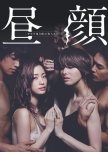
"Rikon Doukyo" centers around husband Konaka Masaru and wife Ichinose Naoko who seem to have a happy family life. All this comes to a seemingly abrupt end when the couple decides to divorce. Yet, the couple soon finds themselves living together again even though they are no longer married ...

"Rikon Doukyo" centers around husband Konaka Masaru and wife Ichinose Naoko who seem to have a happy family life. All this comes to a seemingly abrupt end when the couple decides to divorce. Yet, the couple soon finds themselves living together again even though they are no longer married ...

"Rikon Doukyo" centers around husband Konaka Masaru and wife Ichinose Naoko who seem to have a happy family life. All this comes to a seemingly abrupt end when the couple decides to divorce. Yet, the couple soon finds themselves living together again even though they are no longer married ...

"Rikon Doukyo" centers around husband Konaka Masaru and wife Ichinose Naoko who seem to have a happy family life. All this comes to a seemingly abrupt end when the couple decides to divorce. Yet, the couple soon finds themselves living together again even though they are no longer married ...


