

Recent Discussions


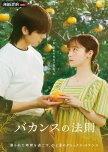
Hoshino Midori has been worn down by the hectic pace of working at a cosmetic surgery clinic. But when the clinic suddenly goes bankrupt, she unexpectedly finds herself unemployed. Seeing her at a loss, her older brother, Konta, suggests she take a "vacation from life" by staying at the villa their late grandmother left behind. Awaiting Midori at the villa are a beautiful seaside view, a garden overflowing with ripe summer oranges, and a mysterious caretaker named Nishigami, whose otherworldly presence immediately stands out. Soon, her close friends Rinrin, Tsumugi, and Tetsuro also gather at the villa. With Nishigami's help, they settle into a fulfilling summer vacation, enjoying carefree days together. Yet as Nishigami quietly watches over them as the villa's caretaker, a trace of sadness occasionally crosses his face. What is the true reason he continues to protect this villa? As summer draws to a close, an approaching storm threatens to dramatically change both Midori's and Nishigami's destinies.
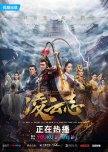
In the mid-17th century, the Manchus take over sovereignty of China and establish the Qing Dynasty. While nationalistic sentiments start brewing within the martial artists' community (jianghu), the Qing government immediately imposes a ban forbidding the common people from practising martial arts. Fire-Wind sees the new law as an opportunity to for himself to make a fortune and offers to help the government execute the new rule. Greedy, cruel and immoral, Fire-Wind ravages northwest China with his army, killing thousands of pugilists as well as innocent civilians. His next goal is to attack Martial Village, which houses a large number of martial artists...
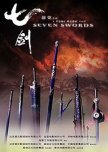
In the mid-17th century, the Manchus take over sovereignty of China and establish the Qing Dynasty. While nationalistic sentiments start brewing within the martial artists' community (jianghu), the Qing government immediately imposes a ban forbidding the common people from practising martial arts. Fire-Wind sees the new law as an opportunity to for himself to make a fortune and offers to help the government execute the new rule. Greedy, cruel and immoral, Fire-Wind ravages northwest China with his army, killing thousands of pugilists as well as innocent civilians. His next goal is to attack Martial Village, which houses a large number of martial artists...
In the mid-17th century, the Manchus take over sovereignty of China and establish the Qing Dynasty. While nationalistic sentiments start brewing within the martial artists' community (jianghu), the Qing government immediately imposes a ban forbidding the common people from practising martial arts. Fire-Wind sees the new law as an opportunity to for himself to make a fortune and offers to help the government execute the new rule. Greedy, cruel and immoral, Fire-Wind ravages northwest China with his army, killing thousands of pugilists as well as innocent civilians. His next goal is to attack Martial Village, which houses a large number of martial artists...
In the mid-17th century, the Manchus take over sovereignty of China and establish the Qing Dynasty. While nationalistic sentiments start brewing within the martial artists' community (jianghu), the Qing government immediately imposes a ban forbidding the common people from practising martial arts. Fire-Wind sees the new law as an opportunity to for himself to make a fortune and offers to help the government execute the new rule. Greedy, cruel and immoral, Fire-Wind ravages northwest China with his army, killing thousands of pugilists as well as innocent civilians. His next goal is to attack Martial Village, which houses a large number of martial artists...
- Both have haunted palaces.
- In both there are evil spirits that want to destroy royal bloodline and are haunting members of royal family.
- In both tv shows appears a shaman who with help of other person with special abilities investigate sins of royal family and fight evil spirits.
- Similar climat, humour, plot.
- In both there are evil spirits that want to destroy royal bloodline and are haunting members of royal family.
- In both tv shows appears a shaman who with help of other person with special abilities investigate sins of royal family and fight evil spirits.
- Similar climat, humour, plot.

Both main characters are devoted parents, leading seemingly ordinary lives in their community. However, beneath their everyday routines lies a web of intrigue, as each harbors a secret identity that brings them into the shadows of adventure and danger.

-both work together to solve cases
-they start by bicker and kinda misunderstood relation just like this one
-ghosts find the lead for their problem just like in SIL
-they start by bicker and kinda misunderstood relation just like this one
-ghosts find the lead for their problem just like in SIL


-Both are dark gl series with a satisfying ending.
-Both have great acting
-Both have characters with severe trauma
-Great cinematography, both have the best of any gl series i have seen
-Both have great acting
-Both have characters with severe trauma
-Great cinematography, both have the best of any gl series i have seen
I just feel the chemistry is nice between the characters and the concept of them working together to achieve some goal
If you’ve just watched YNEH & feeling heartbroken, Ticket To heaven is the best way to heal the bittersweet melancholia.
- YNEH premise is 1987 Taiwan, in a Catholic Boarding School & the ending sets in 17 years Later. TTH premise is 1996 Thailand, in a Catholic Seminary boarding School & the ending sets in 2025, 29 years later.
- The leads have opposing personalities in both, Falling for each other are thematically parallel in emotional depth, angst, and Internal Self conflict.
- TTH is less heavy, & You'll enjoy both the leads & supporting characters.
- YNEH premise is 1987 Taiwan, in a Catholic Boarding School & the ending sets in 17 years Later. TTH premise is 1996 Thailand, in a Catholic Seminary boarding School & the ending sets in 2025, 29 years later.
- The leads have opposing personalities in both, Falling for each other are thematically parallel in emotional depth, angst, and Internal Self conflict.
- TTH is less heavy, & You'll enjoy both the leads & supporting characters.

“Our Generation” features a similar dynamic between the leads, with a bond that starts as children and grows into something deeper that neither can move past. Both series also have a similar plot structure, with the beginnings of a romantic relationship in high school, followed by a sudden separation, and eventual reconciliation initiated by the FL not giving up the ML, who doesn’t want to tie down the woman he loves to a difficult life where he’s barely getting by.
Both are Chinese BL dramas with forbidden, Romeo & Juliet esque romances where the leads are forced apart due to familial circumstances and the ML would do anything to get the MC back. Though they differ quite a bit in tone and setting, (KtL is wuxia and DH is much more toxic) I think you'll enjoy the the other if you liked one of them.
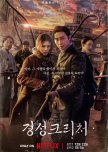
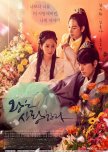
The East Palace and Gyeongseong Creature are both historical Korean dramas that combine supernatural horror with mystery, action, and emotional storytelling, but they explore those elements in different ways. Both series follow protagonists who confront terrifying, otherworldly threats while uncovering long-buried secrets that endanger many lives. They feature richly detailed historical settings, cinematic visuals, intense action sequences, and a blend of suspense with character-driven relationships. In both stories, the supernatural is more than just a source of scares—it serves as the catalyst for uncovering hidden truths and exposing the darkness lurking beneath society. However, their central conflicts differ significantly. The East Palace is rooted in Korean folklore and the spirit world, centering on a cursed royal palace, vengeful ghosts, and a spirit-catcher who teams up with a court lady who can hear the dead to unravel a decades-old royal curse. In contrast, Gyeongseong Creature is a historical creature thriller set during the Japanese occupation of Korea, where monstrous beings are created through horrific human experimentation, making its horror deeply connected to the brutality of history and human greed rather than ghosts or curses. While The East Palace leans into occult mystery and palace intrigue, Gyeongseong Creature emphasizes survival, conspiracy, and bio-horror against the backdrop of colonial oppression.
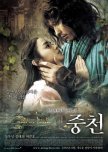
The East Palace and the 2006 fantasy film The Restless share a number of striking similarities in their supernatural world-building and emotional storytelling. Both are set in historical Korea and center on skilled warriors who battle malevolent spirits while crossing the boundary between the human world and the spirit realm. Rather than treating ghosts and demons as simple monsters, both stories explore themes of lingering resentment, unfinished destinies, sacrifice, and the emotional weight carried by the dead. Visually, the two works emphasize atmospheric fantasy, featuring haunting landscapes, ethereal spirit worlds, sword combat against supernatural enemies, and richly stylized historical settings. Romance also plays an important role in both narratives, unfolding against a backdrop of danger and the supernatural. The key difference is that The Restless is primarily an epic fantasy romance and action film centered on a ghost hunter’s journey through the mystical realm of Midheaven, whereas The East Palace is a mystery-driven historical series focused on unraveling a deadly royal curse within a haunted palace, blending palace politics with horror and occult investigation.


