

Recent Discussions




-Both are about a first love reuniting years later.
-Both switch between their younger and adult lives.
-Both MLs had strong dreams when they were young.
-Both FLs lose touch with the person they once were.
-Both reunite with unresolved feelings and past hurt.
-Both focus on lost dreams, regret and second chances.
-Both have a nostalgic, bittersweet romance.
-Both show how life changed them after growing up.
-Both switch between their younger and adult lives.
-Both MLs had strong dreams when they were young.
-Both FLs lose touch with the person they once were.
-Both reunite with unresolved feelings and past hurt.
-Both focus on lost dreams, regret and second chances.
-Both have a nostalgic, bittersweet romance.
-Both show how life changed them after growing up.


same writer, same plot, dare i say our generation has better execution!?!?!? if u love seeing women in LOVEEEE and hot men these both r right up ur alley


The OST of Business Proposal is referenced in Kpop Demon Hunters. Plus the actor Ahn Hyo Seop plays both the ML in Business Proposal & as the voice of Jinu in Kpop Demon Hunters.


In her last year in her twenties, Moka (29), the heroine who is anxious to get married, suddenly finds herself face-to-face with Min U (25), a man straight out of a Korean drama. He's a younger man with perfect looks, and apparently, he's also the heir to a wealthy family... While Moka's heart is thrown into turmoil by this sudden "out of the ordinary," she also has the presence of her childhood friend, Souta, a chef with a somewhat clumsy kindness. Torn between the sweet and smooth Korean style of approach and the quiet and honest feelings of a Japanese man, what kind of "true love" will Moka find? Now, a new love story that transcends Japan and Korea begins.
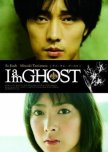
A young girl who contemplates suicide by jumping off a building meets a wounded ghost. The bleeding ghost is an assassin, and they will go through several cases.

Hinata is a journalist who aspires to be a writer. Yeong Su is Set up to take over his father's Hotel chain but is an aspiring artist. They meet while she is in Koreaon temporary assignment for her job and they get off on the wrong foot. However, when Yeong Su goes to Japan for business, he ends up causing a media frenzy and disappears, much to his advisor's horror. They bump into each other on the street and she brings him home, to her boyfriends dismay. As they slowly fall in love, a large number of obstacles stand in their way, the least of which is their different nationalities. This is a "Mobile" drama which means it is a movie sliced into 12 episodes

After a devastating failure as a spatial designer in South Korea, Lee Yu Bin retreats to a remote Japanese island to start over. There, he meets Shirahama Karin, a strawberry farmer living with a mysterious illness. Though they come from different countries and lead completely opposite lives, their chance encounter blossoms into a heartfelt cross-border love story that changes them both.
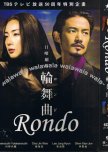
Japan and Korea's biggest names star in this big-scale drama. Nishijima Sho is a Japanese detective whose father was murdered in Korea when he was still a boy. In hopes of discovering the truth behind his father's death, Sho is working undercover in a huge secret organization. Choi Yuna is a Korean woman who visits Japan in search of her missing father. She opens a Korean restaurant with her younger sister, but soon faces the mercy of fate. The couple meets in a corner of Tokyo and falls in love. But what waits ahead of them. A "rondo" of fate, love, and history is about to begin.

Hyunhaetan Marriage War is co-production between South Korea and Japan. Dae Cheon and Takako are lovers who decide to get married. However, Dae Cheon's father, who is a fishing boat captain, dislikes the Japanese while Takako's father has an unfavorable opinion of Korea. So Dae Cheon teaches Takako how to talk in a heavy, folksy Korean accent and tells her to limit what she says to his father to only four words. He then introduces Takako to his father under the name "Choi Do Ja", which is a girl's name in Korea. Thinking that Takako is Korean, his father approves of their marriage. But later on, Dae Cheon's father learns that Takako is Japanese and becomes infuriated...


The story follows a desperate housewife who signs a contract with a cold and sadistic mafia boss, turning a relationship of domination into love.

The story follows a desperate housewife who signs a contract with a cold and sadistic mafia boss, turning a relationship of domination into love.

The story follows a desperate housewife who signs a contract with a cold and sadistic mafia boss, turning a relationship of domination into love.


Both are about friends falling for each other.
In ODS the MC actually leaves without saying a word to the ML and they only reunite years later wounds still open.
In ODS the MC actually leaves without saying a word to the ML and they only reunite years later wounds still open.


The actors are same in both of the series and the SOTUS drama actually is the starting point of relationship with both Arthit(Krist) and Kongphob(Singto).


Both dramas beautifully explore the element of a past love and how the past connects with the present to shape a new romance. In Century of Love, a soul travels through a century to find its match, while in A Tale of Thousand Stars, a transplanted heart carries the unfulfilled promises and emotions of its previous owner.


