


UNE SÉRIE EXCEPTIONNELLE
Très bonne première saison.Il est rare de voir se genre de scénario et j’ai adoré , que ça soit l’acting ou l’histoire.
On est directement accro dès les premiers épisodes.
Je vous conseille seulement de regarder la première saison car la suite est un miss pour moi. J’ai eu beaucoup de mal à m’introduire dans l’histoire et j’ai lâché au milieu de la saison 3.
Was this review helpful to you?
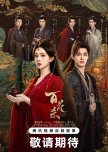
It's really a good drama for me in 2026!
Firstly I was waiting for this drama bcoz of watched heyu in speed and love and I liked him,and he didn't disappoint me or the story either .i really liked the yearner type male leads and he is really down bad for the fl.and he portrayed the yearner , emotional, little comedy type very well .and he is a cutie patootie.
And meng ziyi i didn't watched her any show only in reality shows ,in shows she is really a bubbly person but in drama her arrogant,cold female lead character was done really well and her styling in this drama made her even more beautiful!❤️
Iam not saying anything more story , don't want to give spoilers just little introduction,his name haoyang and crown prince who was poisoned in young age but he has good martial arts skill he will fall in love with the commandry princess shen xihe who is justiceful, beautiful and arrogant and the story goes there ,I seen some little bad reviews like this is not some more typical revenge drama more into slow burn romance .
The chemistry between leads is really good like,he fell first,he fell harder and she fell hardest type love ,this is a happy ending drama watch it it's worth and one of the best cdrama in 2026🥹🤏
Was this review helpful to you?
inoubliable
cette série m’a vraiment marqué par son histoire et l’acting des acteurs. J’ai détesté les antagonistes au plus profond de moi ce qui montre la qualité de leur acting.Ça m’a fait tellement du bien de la voir retrouver son sourire et qu’elle soit entouré de personnes aimantes.
Oui… j’ai pleuré.
Je me dis certaines personnes vivent ça et c’est tellement horrible!
J’espère que même si certaines personnes ont des difficultés, elles réussiront à surmonter ça et à trouver du courage pour se battre.
Was this review helpful to you?
This review may contain spoilers
A story about moving on which failed in leaving impact....
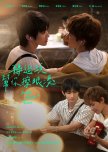
This story revolves around Chia yi and He mainly. One after seeing first few ep will think that this is supposed to be a love story but it's completely different. This story from the start was focusing on moving on and letting go.Chia yi who has already lost his parents and his uncle was on the surface very much happy person but deep inside a part of his soul still fears of that black day. He is still learning to survive loss. He despite being the carefree and a person who is working in lot of part time jobs just to bring more money to his house to support his own aunt who is also dealing with loss and the responsibility of handling chia yi alone were both tired and never fully healed from what really happened. And when he finally found someone who promised that he will never let him go and will find him in crowd, he again lost Yen Kai to the accident in front of him. He was always dealing with the loss and still moving on with the life. His coping mechanisms that "death is more painful than missing" was always challenged when he clearly has to live on with missing a person whom he truly loved.
Then we have Yen Kai who had brain tumor and has always ques his right to love as his time is limited. He always was seeking a love which he always find beside him but he never got the same from his parents as his father was always out of town due to work and his mother don't give him the love in the form he wants. So when he found chia yi he made sure he keep him beside him. But his journey to love was never about getting a person and more about learning to let go. He learned how even after loosing his cat who was his light he can still keep Galu's memory and yet bid bye. Then when he died he was always wanting to come back just to tell Chia yi that he taught him love and his love has given him his happiest moment of life. That closure was necessary for both chia yi and yen kai to resolve unsaid feelings and finally let go of each other as his father has taught him " love is not about tie down ur loved one but to be a person one can always return to"( here happiest version of themselves).
Then we have Diao chin, a person who has loved chia yi since childhood. But he instead of pursuing has always waited for chia yi, he despite seeing chia yi falling in love with Yen Kai never got jealous when he himself was dealing with loneliness, he has always supported and has taken care of Chia Yi when he was grieving a loss and was helping him in journey of moving on to become a person Chia yi can always come back to. His love was always waiting and letting go of Chia Yi for his betterment.
Despite having good plot and character depth, the story lacks in delivering emotional impact this series has promised of. Part of this goes to the confusing storytelling.The drama spent almost half its runtime making viewers emotionally invest in Chia Yi and Yen Kai.Then it expected viewers to accept Chia Yi's healing journey within a comparatively short span.That imbalance made the emotional transition feel rushed. Plus even in that the execution of storytelling and acting haven't done in a way so as to make one feel it's max impact. For eg- Chia yi was having hard time dealing with the acceptance of truth that Yen Kai is dead and then when Yen Kai's cousin and his father disclosed what Yen Kai felt towards him and then when he was walking on the same road where accident happened he was having panick attack. That was such emotional scene but it didn't move me as much as expecting. Maybe it was acting. Most of the time I felt I was crying because story was heavy and not because I was feeling the drama.
Major fault of this drama lies in the fact that script and screenwriter has invested 70percent of the story in telling about his first love then rest 30 percent with healing and starting new love story.This led to viewers attached to first love interest more and hard time in accepting new relationship dynamics. When they could have chose another route of investing 30 percent in Yen Kai's arc and then rest 70 percent in healing and selling new love story and that could still serve the synopsis and more acceptance towards Diao chin.
What I appreciate most is that despite all storytelling imbalances and acting miss the drama never abandoned its central theme of grief, acceptance, and letting go. It remained consistent with what it wanted to tell
Another highlight of this drama is the title itself "Smile after tears". Here smile is not the romantic smile. But instead the smile that comes with the acceptance after the tears and grief of loosing ur beloved. The story is not about finding love and happiness but acknowledgement that whole loss can't be undone we can always carry that person memory and without replacing them, we can still continue living our lives.It's a story that while crossing same path and when someone says same dialogue which one has told u, it's ok to miss and cry for them. It's ok to once again open ur heart to another love it doesn't mean u are removing ur first love or lost love but it's accepting that both present and future love can co exist in one's heart despite moving on. Afterall moving on is not about forgetting.It's ok to acknowledge that they were once and forever will be beautiful part of ur life while u move forward.
Was this review helpful to you?
This review may contain spoilers
Unsatisfying
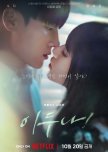
The more I think about it, the more it pisses me off!I don't really care about the main leads' relationship. It was basic and predictable and it ended in the most unsatisfying way. What really makes my blood boil is how they treated the character Choi I Ra! That woman had a personality and strength and they left her with nothing. She was studying fashion and that was a part of her personality and the writers made her corporate black, with no ambition, a copy of her anal partner. That was so disrespectful and such a bad example for girls.
There could be several reasons for her to not be able to work in her area of study but that doesn't mean she needs to give up on her essence. Being loud wasn't the only thing she was. She was original, colourful and unique. The story implies she gave it up for her relationship with the control freak.
I feel cheated by that outcome.
Was this review helpful to you?
This review may contain spoilers
an analysis
An analysis of the romance drama Shine on Me (骄阳似我)—originally authored by Gu Man—the story is not merely a love triangle, but a vivid manifestation of class struggle, socioeconomic alienation, and the commodity fetishization of romance.
The characters are archetypes representing different layers of the capitalist structure, and their romantic outcomes are predetermined by their material conditions.
1. The Class Architecture: Bourgeoisie vs. Proletariat
Society is split into those who own the means of production (the Bourgeoisie) and those who must sell their labor to survive (the Proletariat). Shine on Me maps onto this perfectly:
The Bourgeoisie (Nie Xiguang & Lin Yusen): Nie Xiguang is the ultimate "Fu'erda" (second-generation wealthy). She occupies a class position where survival is never a question; her reality is defined by emotional pursuits and leisure. Lin Yusen, similarly situated in upper-class privilege, possesses the institutional backing and capital security that allows him to navigate life with absolute confidence.
The Proletariat / Rising Petty Bourgeoisie (Zhuang Xu): Zhuang Xu comes from a humble, impoverished background. He owns no capital. To survive and climb the social ladder, he must commodify his intellect. His entire youth is defined by relentless labor, stress, and the desperate need for upward mobility.
2. Zhuang Xu's Insecurity as "Economic Alienation"
about alienation (Entfremdung)—how the pressure of capitalism forces individuals to suppress their human desires in pursuit of capital. Zhuang Xu’s inability to confess his love to Xiguang during university is a textbook example of this.
Romance as a Luxury Good: In a capitalist system, even love is subject to economic calculation. Zhuang Xu looks at Xiguang not just as a girl, but as a representative of a class he cannot afford. He believes that without money or a high-status corporate career, he has no right to pursue her.
The Tragedy of Delayed Gratification: He prioritizes his labor value over his human emotions, telling himself he will love her after he achieves wealth. By the time he secures a position in the high-stakes banking sector, his emotional alienation is complete; he has treated his youth as a transactional sacrifice, losing the girl in the process.
3. Nie Xiguang and "Bourgeois Blindness"
Nie Xiguang suffers from False Consciousness—she is blind to the systemic economic anxieties that drive the people around her because her wealth insulates her from economic reality.
Xiguang views love through a purely romanticized, idealistic lens. She cannot comprehend why Zhuang Xu is so distant, cold, or intensely focused on his career.
She misinterprets his structural class anxiety as a personal rejection. For a wealthy person, love is free; for a poor student, love is a liability that can distract from the brutal survival race. Her pursuit of him is an act of bourgeois leisure clashing against proletariat survival.
4. Lin Yusen: Capital Security and Romantic Monopoly
Those who control capital ultimately control the social narrative and resources. Lin Yusen wins Xiguang’s heart not merely because he is a "better match," but because his class position gives him psychological dominance.
Unlike Zhuang Xu, Lin Yusen does not suffer from economic anxiety. He doesn’t need to spend his 20s working 16-hour days just to pay rent.
Because his material base is completely secure, he has the luxury of being confident, proactive, and emotionally available. He can shower Xiguang with attention and chase her without hesitation. Capital security breeds the precise "confidence and charm" that the bourgeoisie rewards in romance, while poverty breeds the "hesitation and defensive pride" that dooms Zhuang Xu.
5. Chris and the Proletariat Realism
Chris represents the pragmatism of the working professional layer. Her attraction to Zhuang Xu is rooted in an appreciation for his labor value—his intelligence, competence, and corporate grind.
However, her ultimate rejection of him is a victory of class consciousness. Chris realizes that Zhuang Xu is emotionally bankrupt because he is still obsessed with conquering the "bourgeois ideal" (Xiguang) that he was denied in his youth. Chris chooses dignity, refusing to be an economic placeholder for a man who views romance as a trophy of his financial ascension.
Conclusion of the Drama
In Shine on Me, the romantic resolution reinforces the status quo of the capitalist superstructure. The wealthy girl (Xiguang) ends up with the wealthy guy (Lin Yusen), ensuring that wealth and class power remain consolidated within the same socioeconomic tier.
Zhuang Xu’s tragedy is the ultimate warning: under capitalism, if you sacrifice your human relationships and emotional well-being to chase capital, the system will reward you with money, but leave you utterly alienated and alone.
Would you like to explore how other romance tropes in C-dramas—such as the "CEO / Cinderella" dynamic—can be broken down using this same Marxist critique of class power?
Was this review helpful to you?
This review may contain spoilers
A Stunning Cast Trapped in a Weak Script
I'll start with the issues because, unfortunately, there are quite a few.**1. I never connected with the love story**
The drama expects us to believe Qingyi and Susu are deeply, passionately in love, but I never felt it. Instead of watching their relationship develop, we're given scattered flashbacks and brief moments that are supposed to convince us they're soulmates. They don't even properly confess their feelings to each other.
As a result, I couldn't understand Qingyi's unwavering devotion. Why is he willing to risk his life for Susu over and over again when, from his perspective, she has betrayed him multiple times? The emotional foundation just isn't there.
**2. The baby swap is never explained**
The entire story revolves around the children being switched at birth, yet the drama never explains how it actually happened. It's one of the biggest plot points, but we're simply expected to accept it without any explanation.
**3. How did they discover the truth 12 years later?**
Equally confusing is how everyone suddenly figured out the children had been switched. The revelation comes out of nowhere, with no believable investigation or evidence shown to the audience.
**4. Qingyi's biological mother is evil for the sake of being evil**
We're told she hates Qingyi because she blames him for his father's death. But Qingyi was only 12 years old at the time. What kind of mother holds a child responsible for something like that?
Not only does she constantly berate him, but she also physically abuses him. Instead of feeling like a complex, broken character, she comes across as a one-dimensional villain whose only purpose is to make the male lead suffer.
**5. The adoptive father is just as ridiculous**
The adoptive father is written to be equally cruel. Feeding raw meat to a 12-year-old and forcing him to eat it isn't compelling storytelling—it's shock value.
You can't keep piling on increasingly horrific abuse just to convince the audience that the male lead has had a tragic life. Tragedy works when it's believable and emotionally grounded. This just feels excessive.
**6. Qingyi's actions don't make sense**
Qingyi knows exactly how both his biological mother and adoptive father treat him, yet he keeps going back to them. Why?
A character doesn't have to be fearless or emotionally detached, but his choices should make sense. I like male leads who are strong, resilient, have a backbone, and know when to walk away from toxic people. Here, his repeated visits to his abusers feel more like a plot device than believable character behaviour.
And I'm not even going to get started on the questionable AI, the weak dialogue, and several other writing issues.
**Final thoughts**
Once again, this drama proves that casting two incredibly popular actors is not enough to save a weak script. There's only so much Zhang Linghe and Wang Churan can carry on their shoulders. Both actors did what they could with the material they were given, but no amount of good acting can fix plot holes, inconsistent character motivations, underdeveloped relationships, and poor writing.
Overall, the drama relies too heavily on melodrama and manufactured suffering instead of telling a coherent, emotionally satisfying story. I wanted to love it because the cast had so much potential, but the script ultimately let them—and the audience—down.
Was this review helpful to you?
UNDERRATED
OK, j’ai vraiment eu peur tout du long.C’était HORRIBLEMENT bien!
L’acting est au top, une histoire très bien travaillée et vraiment impopulaire.
Je ne comprends pas les personnes qui n’ont pas aimé.
C’est glauque voir gore, donc ne regardez si vous n’aimez pas les séries d’horreur.
Et ne fête pas comme moi qui regarde la nuit :)
Was this review helpful to you?
bad ending not satisfied lowkey
THEY LEFT OUT TLE TILL THE VERY END, i was waitigg bf since the drama started but wth absolutely pissing i would never watch gmmtv shows bcz they disappointed so hard,i had bery high hopess..... and august and tle had so much chemistry why did they do this to us i am so upsetttt. they did mot show ko song getting jealous or anything it was so mid never ever watch it................... GMMTV need to improve and stop playing these tactics they missed out on the best ship i hate them for this no matter the reason no right to disown the character when the drama is ongoing bcz we alr are interested why would you do that like i have no wordss they did us shitWas this review helpful to you?
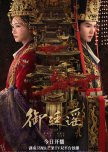
Another one of those shows
This show just like POJ and most of the other recent shows tries to fully focus on the visuals.Even tho they fail miserably because everything looks fake and filtered to the MAX.
The desert scene looked hella bad and even the props look super cheap.
FLs visuals cant keep up with the MLs. Both are mediocre actors.
Same old storyline - one characters is a noble and the other had nothing and made a name for herself - literally the basis of every story at this point. One person is a green flag, the other a red flag. One will be used by the other and the other will just smile and accept.
Can we come up with something new? Like just a tiny bit? 10% new stuff?
Was this review helpful to you?
OVERRATED
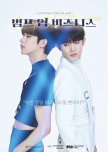
Bump up business est un Bl qu’on m’a beaucoup recommandé.Je m’y suis intéressé et j’ai regardé des vidéos sur ce drama (ce qui m’a hyper).
Et malheureusement, j’ai été pas mal déçu. Pour moi la série n’est pas assez développé, on ne se focus pas assez sur les personnages et sur leur histoire. À la fin, j’ai juste l’impression d’avoir survolé le drama et que ce n’était pas tellement bien .
Il y a du potentiel mais pas assez travaillé.
Facile à regarder si vous ne voulez pas vous prendre la tête .
Was this review helpful to you?
A Coming-of-age Queer Romance, Where The Stakes Were Simply Life
Ko1 and Ko2's story is one of the most sincere coming-of-age romances I've watched because the stakes are simply life itself.Ko1 begins as someone who is loud, socially confident, yet confused by feelings he doesn't have the language to understand. Progress captures that contradiction beautifully. Ko2, on the other hand, is much quieter. Almond gives him an understated emotional depth. His gaze often says far more than his words.
Neither of them is presented as perfect. They're occasionally hurt, selfish, scared, and confused. But they're constantly learning about each other, and making an effort to adapt once they're together. Ko2 reassures Ko1 while remaining realistic about their situation, and Ko1 gradually learns to understand both himself and the person he loves.
By the finale, every hug and every kiss carries the weight of everything they've experienced together. I could feel the entire journey they had been on, from teens trying to understand themselves to young adults in love. Their happiness feels earned because we've watched every uncertain step that brought them there.
This is one of New Siwaj's most complete works. He trusts the emotional truth of ordinary life, allowing the characters' growth to take center stage. The result is a romance that feels warm, deeply human, and earned.
Was this review helpful to you?
Monkey Carrying a Speaker
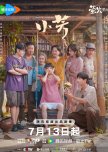
Xiao Fang is one of those dramas that quietly sneaks up on you. It welcomes you with bright colours, lush greenery, cozy homes dressed in warm earthy browns, and a peaceful rural atmosphere that feels like a comforting cup of tea. Then, it throws you straight into one of the most frustratingly realistic portrayals of family, gossip, and societal expectations.As Yang Xiao Fang and Qi Xiao Wei return to their rural hometown for the Spring Festival, the radio announces that a monkey carrying a loudspeaker is running loose around the village. It sounds ridiculous at first, almost comedic, but as the story unfolds, it becomes one of the drama's most brilliant recurring motifs. Xiao Fang arrives home pregnant, her engagement hanging by a thread, and before she can even settle in, rumours spread through the village faster than that monkey carrying a speaker. Every neighbour suddenly becomes a judge, every conversation becomes public property, and everyone seems convinced they know what is best for her.
That is where the drama immediately won me over. It never romanticizes rural life. Instead, it presents a community that is warm yet suffocating, loving yet intrusive. The gossip feels painfully authentic because it reflects how quickly a person's private life can become public entertainment. Watching Xiao Fang remain calm through all of it was almost unbelievable. Either way, her quiet composure became one of the most admirable parts of her character.
Then there is Xiao Wei. He is Xiao Fang's childhood friend, the father of her baby, and someone who genuinely wants to protect her. Unfortunately, every ounce of sympathy I had for him disappeared almost immediately. Unlike Xiao Fang, who chooses to face problems head on, Xiao Wei allows every piece of gossip to crawl under his skin. It certainly does not help that he comes from an exhausting family. His father is incredibly stingy, manipulative, controlling, patriarchal, and somehow always manages to make every situation worse. His mother is equally realistic in a different way. She pushes back just enough to show she has opinions of her own, but inevitably folds under her husband's authority. Their family dynamic is frustrating precisely because it feels so believable.
The moment that completely destroyed Xiao Wei's image for me was when both families were arguing and he blurted out, "Xiao Fang was the one who liked me first!" It sounded exactly like something a child would say after getting caught. Rather than taking responsibility, he shifted the attention onto Xiao Fang. It gets worse.
The painting incident was the point of no return for me. Rumors spread that Xiao Wei had painted a nude portrait of Xiao Fang, creating another public scandal. When everyone gathered to uncover the truth, Xiao Wei stumbled through lie after lie before finally admitting he had copied an existing famous painting. But what truly made my blood boil was his excuse. Out of embarrassment, he snapped that if Xiao Fang had not been kissing him that day, he would have finished painting instead. That sentence genuinely shocked me. Once again, he shifted responsibility onto Xiao Fang for something they had both participated in. The logic behind his excuse felt disturbingly similar to victim blaming, and from that point onward, I simply could not see him as a suitable partner or father, regardless of how much character development the drama tried to give him later.
Ironically, that is also why Xin Yun Lai deserves a lot of praise. He plays pathetic men incredibly well. I hated Xiao Wei so much because Xin Yun Lai portrayed every ounce of insecurity, immaturity, and cowardice with remarkable conviction. I had a similar impression of him in In Between, where he also excelled at playing a loser who constantly fumbles through life. Interestingly, I feel he struggles much more with cold, charismatic roles like the one he played in The Glory, where his expressions often felt too restrained. If anything, this drama proves he has found a niche that suits him perfectly, although I would still love to see him challenge himself with more expressive characters outside of that comfort zone.
One storyline I found surprisingly fascinating revolved around the bride's price, or cai li. Watching the Yangs and the Qis negotiate over it causes more misunderstandings as it revolves around money, pride, tradition, family honour, and ego. As the misunderstandings, lies, and arguments pile up, the gap between them becomes impossible to ignore. Xiao Fang handles every challenge with remarkable maturity. She refuses to view her pregnancy as a weakness, stays confident in her own decisions, and carefully considers how every choice affects not only herself but also her child and both families. Xiao Wei, meanwhile, remains trapped inside his own insecurities. Even when trying to solve problems, his solutions usually create even bigger ones because they revolve around protecting his own pride rather than understanding Xiao Fang's perspective.
Their biggest argument became one of the most memorable scenes in the entire drama. When Xiao Fang questioned his decisions, Xiao Wei exploded, telling her to stop making him feel like a fool and to change her attitude. Her quiet response, "But you said you never wanted me to change," broke me. That conversation became Xiao Fang's wake up call. The following day, she publicly announced through the village loudspeaker that she no longer loved Xiao Wei and was calling off the marriage. That was the exact moment I fell in love with her character.
She knows what she wants, draws clear boundaries, and refuses to sacrifice her own happiness simply because society expects her to. She is calm without being passive, kind without being naïve, confident without being arrogant, and mature without losing her youthful energy. Wang Ying Lu captures every side of Xiao Fang beautifully. She effortlessly balances her tomboyish charm with the softer changes that come with pregnancy and motherhood. Her naturally deep voice also gives the character an unexpected sense of charisma that makes Xiao Fang feel incredibly memorable. Every performance I have seen from Wang Ying Lu has impressed me.
After the breakup, the story shifts its attention away from romance and focuses instead on family. Rather than chasing an unnecessary reconciliation, the narrative explores how both families adapt to Xiao Fang's decision, and this is where the drama truly shines. The Yang family quickly became my favorite part of the entire series. They perfectly capture the beautiful contradictions of many Asian families. They argue constantly, interfere with each other's lives, make decisions that nobody asked for, and somehow still become each other's strongest source of support when it matters most. One minute they are shouting at one another, and the next they are standing shoulder to shoulder against anyone threatening one of their own. Every member leaves an impression, especially her dad, her first aunt, her cousin Dan Dan, and her grandma.
Yang Fan Hu may not have been the perfect husband, but he strives every single day to become the father Xiao Fang deserves. He supports his daughter without controlling her choices. Rather than telling her what to do, he simply reminds her that he will always be there if she falls. Yang Fan Yan, the eldest aunt, was the character I related to the most. Beneath her strong personality lies years of pressure, resentment, and exhaustion from always feeling responsible for everyone else while believing she had to work harder than her siblings for everything she achieved. As a fellow eldest daughter, her struggles hit especially close to home.
Dan Dan completely steals every scene he appears in. The contrast between this thoughtful, emotionally intelligent child and the unbelievably immature Xiao Wei is hilarious in the best possible way. Then there is Grandma Qu Man Xia, played wonderfully by Wu Yan Shu. She is simply iconic. Every time she puts on those black sunglasses, she instantly becomes the coolest grandmother in the village. Despite belonging to an older generation, her outlook is refreshingly progressive. She encourages Xiao Fang to value herself first and constantly reminds her daughters not to let men dictate their lives. Xiao Fang’s second aunt, Yang Fan Mei, and uncle, Yang Fan Zhu, also left a strong impression.
Even after Xiao Fang gives birth, I appreciated that the story refuses to reduce her entire identity to motherhood. One of my favourite details is how she dislikes being referred to only as "Bi Te's mother" because she still wants people to call her Xiao Fang. That small detail speaks volumes. Becoming a parent should not erase who you are as a person.
I also appreciated that the drama does not trap Xiao Fang within motherhood after giving birth. Instead of spending every waking moment caring for Bi Te, she continues pursuing her ambitions, builds her business, and allows herself to remain her own person. Fortunately for her, that works because she has both families and Xiao Wei sharing the responsibility of raising the child. I really liked that perspective. Parenting is often portrayed as one person sacrificing everything, but Xiao Fang suggests something healthier. When parents continue loving themselves, pursuing their dreams, and growing as individuals, they are also able to love their children without resentment or regret.
Visually, Xiao Fang is a beautiful drama. The natural colour grading, bright lighting, lush greenery, and warm wooden interiors create an atmosphere that feels incredibly comforting. Every frame captures the charm of rural life without making it feel overly idealized. The soundtrack deserves praise as well. The songs and background music fit the countryside setting perfectly and always seem to arrive at the right emotional moments without overpowering the scenes.
The ending tied up its loose ends in a satisfying way. Xiao Fang's business is thriving, she has established a stable life for herself and Bi Te, and Xiao Wei decides to leave town to pursue his own dreams. As someone who spent almost the entire drama hating him, I honestly felt relieved that he was leaving. More importantly, it was the right decision for both of them. They needed space to grow into better versions of themselves.
Objectively speaking, their farewell was beautiful. I appreciated how carefully the drama handled co-parenting. Rather than forcing a romantic reunion, the drama allows them to become supportive co-parents and genuine friends. It acknowledges that some people make better partners as parents than as lovers. Xiao Wei stood behind Xiao Fang when she chased her dreams, and now Xiao Fang stands behind him as he leaves to chase his. One of my favorite moments is when Xiao Fang and little Bi Te see him off from afar and recreate one of their old inside jokes together. It is such a small detail, but it reflects how carefully the writers remembered the little moments that shaped their relationship. Those callbacks made the ending feel all the more rewarding.
I also appreciated how naturally the drama redeemed Qi De Yao. His growth never felt forced because it came from experiences that genuinely challenged his perspective. The narrative gave him understandable reasons to change, making his transformation feel earned. As he changed, the atmosphere within the Qi family became noticeably brighter. Seeing the two fathers slowly move from lifelong rivals to friendly fellow grandfathers was another touching payoff that felt completely believable.
The drama closes by returning to the monkey carrying the speaker that was introduced in the very first episode. As Xiao Fang's business bus travels down the road, it comes across a loudspeaker abandoned in the middle of the street. Looking at it with a smile, she simply says that the monkey is now free. To me, the monkey carrying the speaker symbolizes a person weighed down by constant noise. Not literal noise, but the endless chatter of gossip, judgement, expectations, and the desire for validation. Once the monkey lets go of the speaker, it no longer carries everyone else's voices. It no longer feels the need to broadcast itself or live according to society's expectations. It is finally free.
That perfectly mirrors Xiao Fang's journey. Throughout the story, she is constantly surrounded by people telling her what she should do, who she should marry, how she should raise her child, and what kind of woman she should become. By the end, she has learned to let go of all that noise. She chooses herself without becoming selfish. She embraces motherhood without allowing it to define her entire identity. She loves the people around her while still protecting her own peace. In many ways, the drama quietly suggests that freedom begins the moment we stop carrying everyone else's expectations.
Overall, Xiao Fang is a beautiful yet frustratingly realistic slice of life drama set in rural China. It is warm without being naïve, emotional without becoming melodramatic, and honest about the complicated relationships between family, tradition, love, and independence. The writing made me feel genuinely connected to its characters, whether I was cheering for them, crying with them, or wanting to scream at Xiao Wei through my screen. By the time the credits rolled, I realized that this was never just a story about an unexpected pregnancy. It was a story about learning to live for yourself, even when the whole world keeps trying to speak over you.
Was this review helpful to you?
BEST HISTORICAL CHINESE DRAMA
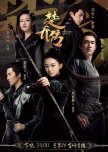
Pour moi c’est l’une des meilleures series historiques chinoises . C’est vrai que ça commence à vieillir et que les visuels ne sont pas parfaits mais niveaux histoire,c’est une toute autre chose. J’ai été prise dans l’histoire des le debut et, elle m’a fait ressentir toutes les choses possibles , j’ai pleuré,rigolé,sourit… Bref ,vous devez absolument le voir,c’est un MUST!Il y a également une suite qui est sorti il n’y a pas longtemps, je ne l’ai pas encore regardé en entier , donc je ne peux pas vous donner mon avis . C’est pour vous dire qu’il y a une suite qu’on espérait tous qui est sorti.
Was this review helpful to you?
This review may contain spoilers
Smile with Caution!
Fatal error was presenting one relationship, while intending to finish with another. Investing over half of the series on the past relationship and not enough time on the new.Premise would have worked had we not seen him meet and fall in the old, while the new was present, plus a lukewarm connection.
Many of our fellow audience lamented the acting which I forgave as this was still new for much of the cast and it seemed they were doing this to promote their idol careers. Whether it worked remains to be seen.
Anyway, it ended. Watch at own risk!
Was this review helpful to you?


