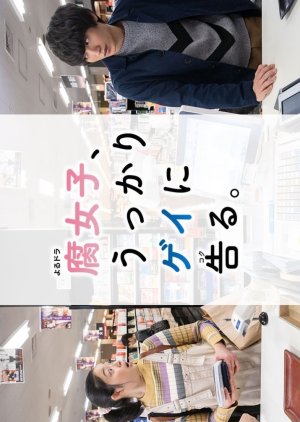
Jun is an 18-year-old high school student. He hides the fact that he is gay from his mother and other people. Miura-san is a classmate of Jun. She likes reading books about BL (genre depicting homoerotic stories). Jun tells Miura-san that BL is just fantasy and that gayness in real life is dirty. Miura-san tells Jun that his remark is offensive to gay people. Nevertheless, Jun and Miura-san become close. Jun becomes interested in Miura-san, and Miura-san begins to have feelings for Jun. One day, Miura-san tells Jun that she likes him.
Both are the same story but what "she likes" is the movie version while "fujoshi ukkari gei ni kokuru" is the drama version.

Jun is an 18-year-old high school student. He hides the fact that he is gay from his mother and other people. Miura-san is a classmate of Jun. She likes reading books about BL (genre depicting homoerotic stories). Jun tells Miura-san that BL is just fantasy and that gayness in real life is dirty. Miura-san tells Jun that his remark is offensive to gay people. Nevertheless, Jun and Miura-san become close. Jun becomes interested in Miura-san, and Miura-san begins to have feelings for Jun. One day, Miura-san tells Jun that she likes him.

Jun is an 18-year-old high school student. He hides the fact that he is gay from his mother and other people. Miura-san is a classmate of Jun. She likes reading books about BL (genre depicting homoerotic stories). Jun tells Miura-san that BL is just fantasy and that gayness in real life is dirty. Miura-san tells Jun that his remark is offensive to gay people. Nevertheless, Jun and Miura-san become close. Jun becomes interested in Miura-san, and Miura-san begins to have feelings for Jun. One day, Miura-san tells Jun that she likes him.

Jun is an 18-year-old high school student. He hides the fact that he is gay from his mother and other people. Miura-san is a classmate of Jun. She likes reading books about BL (genre depicting homoerotic stories). Jun tells Miura-san that BL is just fantasy and that gayness in real life is dirty. Miura-san tells Jun that his remark is offensive to gay people. Nevertheless, Jun and Miura-san become close. Jun becomes interested in Miura-san, and Miura-san begins to have feelings for Jun. One day, Miura-san tells Jun that she likes him.


Jun is an 18-year-old high school student. He hides the fact that he is gay from his mother and other people. Miura-san is a classmate of Jun. She likes reading books about BL (genre depicting homoerotic stories). Jun tells Miura-san that BL is just fantasy and that gayness in real life is dirty. Miura-san tells Jun that his remark is offensive to gay people. Nevertheless, Jun and Miura-san become close. Jun becomes interested in Miura-san, and Miura-san begins to have feelings for Jun. One day, Miura-san tells Jun that she likes him.

Jun is an 18-year-old high school student. He hides the fact that he is gay from his mother and other people. Miura-san is a classmate of Jun. She likes reading books about BL (genre depicting homoerotic stories). Jun tells Miura-san that BL is just fantasy and that gayness in real life is dirty. Miura-san tells Jun that his remark is offensive to gay people. Nevertheless, Jun and Miura-san become close. Jun becomes interested in Miura-san, and Miura-san begins to have feelings for Jun. One day, Miura-san tells Jun that she likes him.

For one, both are japanese lgbtq+ themed movies/shows. Both feature a gay high school aged protagonist, who is the object of a hetero girls romantic affection. Unrequited, forbidden love is a common theme in these films too. The male characters engage in same sex acts (with mostly older married men), keep it a secret though, staying the closet. Neither of these films are really happy so dont expect a grandiose romance story - youll be served the opposite.

"Fujoshi, Ukkari Gei ni Kokuru" has more drama, "Gomenne Seishun" - more comedy, but in general they are both about school kids who learn to accept themselves and others.
They both raise topics such as discrimination, bullying, labels, both has LGBT characters, and both shows the resolution of situations in a positive way, through the expansion of borders, support and acceptance.
They both raise topics such as discrimination, bullying, labels, both has LGBT characters, and both shows the resolution of situations in a positive way, through the expansion of borders, support and acceptance.

Both are short japanese dramas with lgbtq+ content/topic/themes and characters. Specifically, the main male lead in both as gay. Furthermore, theres also a prominent female character in both whos a fujoshi/who likes gay romance stories. In addition to that, both are adapted from novels written by the same author - Asahara Naoto who was gay himself.


Kajitani Mitsuki takes care to maintain a modest and refined appearance and has had a fair amount of experience dating men, but in truth, she is extremely uncomfortable with being led by men or engaging in sweet, intimate acts. As a result, none of her relationships have lasted, and she reaches the age of 24 without ever finding lasting love.
Then she begins dating Shinomiya Takayuki, an elite employee at a well-known trading company. However, on their first night together, something unusual happens. Just as they are about to begin being intimate, Shinomiya’s behavior seems somehow strange. In fact, Shinomiya also struggles with leading women and has been unable to overcome his complexes and trauma regarding sex.
Seeing Shinomiya blush and apologize, Mitsuki experiences her heart pounding for the first time. She becomes aware of her discomfort with the expectation that women must always be passive, and awakens to the fact that she has long wanted to be “the one who leads.” Meanwhile, in the face of Mitsuki’s assertive side, Shinomiya also begins to reveal feelings he had kept hidden all along.
Then she begins dating Shinomiya Takayuki, an elite employee at a well-known trading company. However, on their first night together, something unusual happens. Just as they are about to begin being intimate, Shinomiya’s behavior seems somehow strange. In fact, Shinomiya also struggles with leading women and has been unable to overcome his complexes and trauma regarding sex.
Seeing Shinomiya blush and apologize, Mitsuki experiences her heart pounding for the first time. She becomes aware of her discomfort with the expectation that women must always be passive, and awakens to the fact that she has long wanted to be “the one who leads.” Meanwhile, in the face of Mitsuki’s assertive side, Shinomiya also begins to reveal feelings he had kept hidden all along.


Jun is an 18-year-old high school student. He hides the fact that he is gay from his mother and other people. Miura-san is a classmate of Jun. She likes reading books about BL (genre depicting homoerotic stories). Jun tells Miura-san that BL is just fantasy and that gayness in real life is dirty. Miura-san tells Jun that his remark is offensive to gay people. Nevertheless, Jun and Miura-san become close. Jun becomes interested in Miura-san, and Miura-san begins to have feelings for Jun. One day, Miura-san tells Jun that she likes him.