





 MDL Choice: Heisei Dramas and Movies
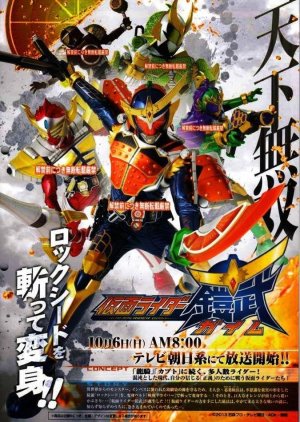
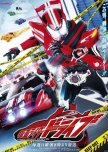
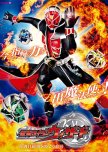
 In this installment of Toei's long running Kamen Rider franchise Kouta Kazuraba, a young man coming into adulthood in the secluded Zawame City, reunites with some friends from the street dance team he was a part of in his youth only to find that the captain of the team has disappeared in some sort of other world and left behind a strange belt buckle and padlock. Moments later, Kouta and his friend Mai are attacked by a monster called an Inves, Kouta uses the belt buckle and padlock to transform into Kamen Rider Gaim and defeats the monster. However, this is just the beginning of things for Kouta and Mai as they continue to search for their old team captain, run into more Kamen Riders both friendly and adversarial, and uncover a plot that could change the fate of all humanity. Edit Translation
- English
- Français
- magyar / magyar nyelv
- dansk
- Native Title: 仮面ライダー鎧武/ガイム
- Also Known As: Armored Rider Gaim , Kamen Raidā Gaimu , Masked Rider Gaim , 仮面ライダー鎧武(ガイム)
- Director: Morota Satoshi, Tasaki Ryuta, Nakazawa Shojiro, Kaneda Osamu, Yamaguchi Kyohei, Ishida Hidenori, Shibasaki Takayuki
- Screenwriter: Mori Nobuhiro, Urobuchi Gen, Haganeya Jin, Gun Snark, Nanashino Torico
- Genres: Action, Mystery, Tokusatsu, Sci-Fi
Cast & Credits
-
 Sano Gaku Main Role
 -

-

-
 Shida Yuumi Main Role
 -

-
 Aoki Tsunenori Support Role
Reviews

This review may contain spoilers
Don't Say No, Just Watch More!
Getting past the silly concept of "Fruit Samurai", and despite the awkward, way-too-long dance scenes that happen early in the show, Gaim is a stellar entry into the Kamen Rider franchise. The characters here are written with great depth and are very interesting. The fight choreography is good and the suit designs are great. Oren Pierre Alphonso is one of my favorite characters in any Kamen Rider series. I do have to say it has its issues though. It frequently has to find time to insert crossovers to other things such as upcoming movies - between important plot points they will arbitrarily add in weird moments for the sake of making these things episodes. On top of that, watching the group dance is strange. It's like they wanted to do something like Sega's Jet Set Radio franchise, but they couldn't show their protagonists doing something illegal like spray painting, but they still wanted that "street" feeling, so they put in these silly dance scenes. However, you're gonna want to stick around to see the great way the characters develop through the series, the cool suit designs, and the interesting twists and turns of the plot. Amazing stuff!Was this review helpful to you?
This review may contain spoilers
Mild spoilers ahead:
Everything the show did well:-Really interesting setting that the show uses the its upmost potential for the most part.
-The majority of the cast is really likeable.
-The rivalries between Kouta and Kaito is entertaining and both develop in interesting ways.
-The show manages to create really interesting thing with the fruit theme and connect it to the world-building in a significant manner.
-Cool action overall.
-The story develops in really interesting ways.
-Natural progression of stakes, which makes the threats in the second half feel legitimate.
-The final fight in episode 46 is amazing.
-Great finale.
Everything the show did bad:
-The show doesn't tell us Kaito's backstory despite him being the second most important character in the show. It's instead left to the Kamen Rider Baron Gaiden. This really hurts some of the show's emotional weight.
-The crossover specials hurt the show's pacing, but this is barely an issue if you're binge watching the show.
-While overall likeable, it felt that the show could have done more interesting things with Sid, Yoko and the side characters from the dance teams.
-Takatora is unable to fight for a big chunk of the show.
-I don't know how true this is since I've haven't seen the anime in question, but I've seen a lot of people say that this show's main writer is ripping his previous work Madoka Magica off, which makes the show feels less original. But I've seen the same people say that Gaim's better due to having 40+ episodes to develop its characters rather than 12 episodes + a movie.
Reasons for the show's strengths:
Main producer Naomi Takebe wanted to make a show that felt more similar to the dark atmosphere of early Heisei seasons of Kamen Rider. She chose Gen Urobochi as main writer after being recommend by voice actor Tomokazu Sugita who she had previously worked with during Kiva. It had been decided that the show would take the Kuuga approach of making the threat something that kids at time were scared of, during Kuuga it was serial killers, during Gaim it was the 2011 earthquake, due to the threat being decided to be a force of nature since the beginning, Bandai came up with the fruit motif to make it standout.
Takebe gave mostly complete creative freedom to Urobochi which lead to the story being planned out from the very beginning rather than just having a roadmap and build the story as the show goes on. This allowed the show to have better foreshadowing and barely change anything during its run.
Reasons for the show's problems:
There were very few changes to the script and not all of these were bad. Among the "good/neutral" changes are: Sigurd and Knuckle as both characters were originally not planned to transform, Baron obtaining lemon energy as originally wasn't supposed to have any other forms past mango, the teams were originally supposed to be delinquents but was changed into dance teams in order to contrast the dark tone. Among the "negative" chnages were: the removal of Kaito's backstory so that the show has better pacing which resulted into it being moved to the V-Cinema, the filler crossover episodes and the epilogue finale which wasn't planned as the staff wasn't sure of the show would have 46 or 47 episodes so Urobochi ended up only planning for 46 which resulted in the last episode feeling weirder. There's also some unspecified changes to Kaito's and Mitsuzane's characters but its unknown what these were and if they were for the better or for worse.
The reason why Ryugen, Zangetsu and Gridon appear in the beginning narration of the fight of Baron and Gaim despite not making that much sense is because the scene was added by the director Ryuta Tasaki despite not being in the script.
Overall:
The show's amazing overall, outside of not properly explaining Kaito's backstory, the show doesn't have any big notable issues and manages to be one of the most entertaining and interesting seasons in the franchise. Highly recommend to any tokusatsu fan, if you're into other works by Gen Urobochi or into survival shows.
Was this review helpful to you?