
 Editorials

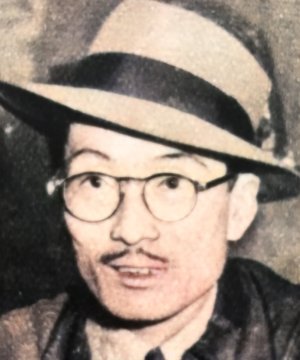
Chiba Yasuki
- Name: Chiba Yasuki
- Native name: 千葉泰樹
- Also Known as: ちば やすき
- Nationality: Japanese
- Gender: Male
- Born: June 24, 1910
- Died: September 18, 1985
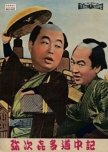
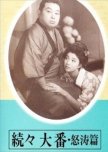
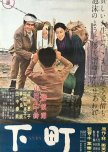
Chiba’s reputation for love stories led him to be assigned after the war to A Certain Night’s Kiss (Aru yo no seppun, 1946), in which the Japanese cinema’s much-anticipated first kissing scene was infamously obscured by an umbrella. However, Chiba’s work in the fifties displayed a new individuality, combining personal drama with social commentary. In Sunflower Girl (Himawari musume, 1953) a woman’s affection for her boss causes conflict with her more class-conscious coworkers, while in Death Fire (Onibi, 1956) a gas company employee demands sexual favors from a poor woman in lieu of payment. Chiba was also admired for his creative use of period settings: The Happy Pilgrimage (Yajikita dōchūki, 1958) was an offbeat jidai-geki about a pair of samurai who embark on a pilgrimage to Ise in order to escape their wives. More often, however, Chiba set his films in the recent past. Downtown (Shitamachi, 1957), based on a novel by Mikio Naruse’s favorite writer, Fumiko Hayashi, conveyed the despondent mentality of the Occupation era through its depiction of a doomed romance. Crazy Guy (Okashina yatsu, 1956) recounted the life story of a rakugo performer from the twenties to the Occupation, and was remarkable for its sudden shifts from comedy to tragedy; like Downtown, it ended with an unexpected fatal accident. Chiba’s most significant work is usually considered to be the Large Size (Ōban, 1957–58) series, described by Donald Richie as “a Balzac-like chronicle of [the] various falls and rises” of an ambitious young man in the early Showa period.
In the sixties, Chiba worked on such international co-productions as A Night in Hong Kong (Honkon no yoru, 1961) and A Star of Hong Kong (Honkon no hoshi, 1962), both sentimental stories of love affairs between Japanese men and Chinese women. With Different Sons (Futari no musuko, 1961) and The Daphne (Chinchōge, 1966), he directed melodramatic family sagas depicting difficult relationships between parents and children. Although several of his films secured foreign distribution at the time, Chiba is now neglected even in Japan. The breadth of his subject matter and his high reputation in his day suggest that he merits reappraisal.
(Source: A Critical Handbook of Japanese Film Directors) Edit Biography
Director
| Title | Rating |
|---|---|
| 0.0 | |
| 0.0 | |
| 5.0 | |
| 2.0 | |
| 0.0 | |
| 5.0 | |
| 0.0 | |
| 4.0 | |
| 8.0 | |
| 0.0 | |
| 0.0 | |
| 0.0 | |
| 6.4 | |
| 0.0 | |
| 0.0 | |
| 6.0 | |
| 2.0 | |
| 0.0 | |
| 0.0 | |
| 2.0 | |
| 0.0 | |
| 0.0 | |
| 4.0 |




Trending Articles
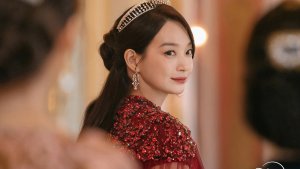
Top 12 upcoming dramas on every fan's watchlist
Editorials - Sep 19, 2026
From highly anticipated adaptations to gripping thrillers, the upcoming drama lineup has something for every fan. With teasers already dropping, these 12 dramas are generating plenty of buzz even before their premieres. Here are the titles to keep on your

Jing Bo Ran says 'The Early Spring' is his first true 'idol drama', shares insights into character styling
Celebrity - Sep 18, 2026
Jing Bo Ran opens up about his acting journey, styling Luan Nian in 'The Early Spring', and the roles that have shaped him as an actor

Xiao Zhan ranks 27th in China brand figures Top 500
News - Sep 21, 2026
Xiao Zhan has ranked 27th overall in the annual Brand Figures ranking released by Topbrand Union

Park Shin Hye and Choi Tae Joon become parents of two
News - Sep 22, 2026
Park Shin Hye (36) and Choi Tae Joon (35) have welcomed their second child

'Love O2O' relaunched on YOUKU with AI face-swapped female lead
News - Sep 24, 2026
The 2016 Chinese drama 'Love O2O' has been re-released as 'A Smile Is All It Takes', with Wang Zhu Yue replacing Zheng Shuang through AI face-swapping technology.

'A Love Other Than Yours' is the K-Drama That Will Make You Question Everything You Know About Long-Term Love!
Editorials - Sep 23, 2026
After ten years together, is it still love ... or just habit? This Amazon Prime Video K-drama, A Love Other Than Yours, will make you question everything!

Chen Zhe Yuan and Bai Lu confirmed for new Chinese historical drama
News - Sep 23, 2026
New Chinese drama 'Echoes' has announced Chen Zhe Yuan and Bai Lu as its leading cast
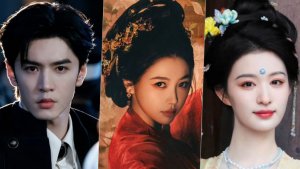
New Chinese dramas, starring Chen Zhe Yuan, Xiao Zhan, Esther Yu, Bai Lu, unveiled at iQIYI Conference
News - Sep 23, 2026
iQIYI unveiled its upcoming lineup at a conference on September 23, announcing more than 50 series across a wide range of genres



