
 Editorials
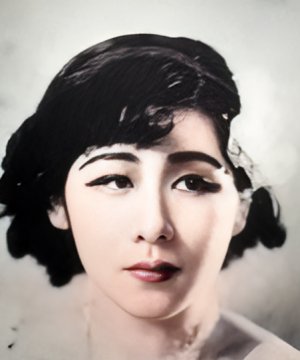
Sakura Hisako
- Name: Sakura Hisako
- Native name: 桜緋紗子
- Also Known as: Ogasawara Nichio, Ogasawara Nichiou, Ogasawara Fujiko, Ogasawara Eiho, さくら ひさこ, おがさわら にちおう, 櫻緋紗子, 小笠原不二子, 小笠原日凰, 神崎不二子, 桜ヒサ子, 小笠原英法
- Nationality: Japanese
- Gender: Female
- Born: March 15, 1914
- Died: March 20, 2002
Her father, a journalist for the Mainichi Shimbun (毎日新聞) Hiroshima bureau, relocated the family to Osaka during her childhood. In 1926, she enrolled at Tezukayama Gakuin Junior High School (帝塚山学院中学), but after her father took a position at Bantsuma Tachibana Universal Union Company (阪妻立花ユニヴァーサル聯合会社), she moved to Kyoto and transferred to Seika Girls' High School (精華高等女学校).
In 1929, encouraged by her uncle, she left school to enter the Takarazuka Music and Opera School (宝塚音楽歌劇学校) as part of the 19th class of the Takarazuka Revue (宝塚歌劇団). She debuted in April 1930 with the Flower Troupe (花組) in Haru no Odori (春のをどり), later transferring to the Star Troupe (星組) in 1934 and joining the Vocal Music Specialization (声楽専科) in 1937. Seeking a stage acting career, she left Takarazuka in 1940 to join the Shinsei Shinpa (新生新派).
She married a Shinpa patron but divorced within a year. She then worked as a secretary at Kureha Aircraft (呉羽航空機) in Tokyo and later at a Western-style dressmaking shop in Yurakucho. Following the resumption of Takarazuka performances, she co-founded Cattleya (カトレア), a store in Ginza selling Takarazuka memorabilia. She also established the Hoyukai (宝友会), an association for Takarazuka alumni, though financial struggles led her to close the shop after a car accident in 1951.
After recovering, she resumed performing, appearing in NHK radio dramas and later rejoining the Shinpa (新派) after its reunification. In 1961, she became a freelance actress but retired in 1965 at age 50 to enter Buddhist monastic life.
She first lived at Nichirinji (日輪寺) in Moto-Hakone before adopting the name Ogasawara Eiho (小笠原英法) and moving to Zuiryuji (瑞龍寺) in Omihachiman, Shiga, a Nichiren-sect monzeki nunnery (門跡尼寺). As head administrator, she provided life counseling for 37 years.
Sakura Hisako passed away on March 20, 2002, at the age of 88 due to chronic heart failure.
(Source: MyDramaList) Edit Biography
Drama
| Title | Rating |
|---|---|
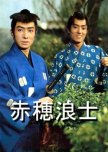
Ako Roshi
Japanese Drama, 1964, 52 eps
(Bit part)
|
5.0
|
Hana no Shogai
Japanese Drama, 1963, 39 eps
Iku
(Bit part)
|
4.0
|
Special
| Title | Rating |
|---|---|
Nyobokai
Japanese Special, 1957, 1 eps
(Unknown)
|
0.0
|
Kosho Musuko
Japanese Special, 1957, 1 eps
(Unknown)
|
0.0
|
Ayu no Yado
Japanese Special, 1954, 1 eps
Kinuyo
(Main Role)
|
0.0
|
Trending Articles
Top 12 upcoming dramas on every fan's watchlist
Editorials - Sep 19, 2026
From highly anticipated adaptations to gripping thrillers, the upcoming drama lineup has something for every fan. With teasers already dropping, these 12 dramas are generating plenty of buzz even before their premieres. Here are the titles to keep on your
Xiao Zhan ranks 27th in China brand figures Top 500
News - Sep 21, 2026
Xiao Zhan has ranked 27th overall in the annual Brand Figures ranking released by Topbrand Union
'A Love Other Than Yours' is the K-Drama That Will Make You Question Everything You Know About Long-Term Love!
Editorials - Sep 23, 2026
After ten years together, is it still love ... or just habit? This Amazon Prime Video K-drama, A Love Other Than Yours, will make you question everything!
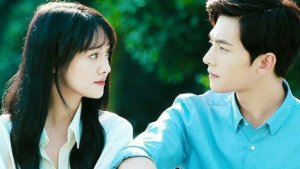
'Love O2O' relaunched on YOUKU with AI face-swapped female lead
News - Sep 24, 2026
The 2016 Chinese drama 'Love O2O' has been re-released as 'A Smile Is All It Takes', with Wang Zhu Yue replacing Zheng Shuang through AI face-swapping technology.
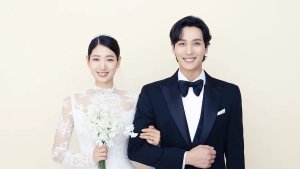
Park Shin Hye and Choi Tae Joon become parents of two
News - Sep 22, 2026
Park Shin Hye (36) and Choi Tae Joon (35) have welcomed their second child
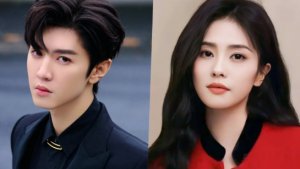
Chen Zhe Yuan and Bai Lu confirmed for new Chinese historical drama
News - Sep 23, 2026
New Chinese drama 'Echoes' has announced Chen Zhe Yuan and Bai Lu as its leading cast
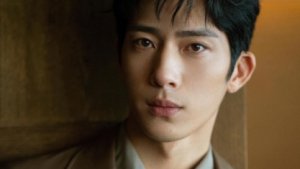
Jing Bo Ran says 'The Early Spring' is his first true 'idol drama', shares insights into character styling
Celebrity - Sep 18, 2026
Jing Bo Ran opens up about his acting journey, styling Luan Nian in 'The Early Spring', and the roles that have shaped him as an actor
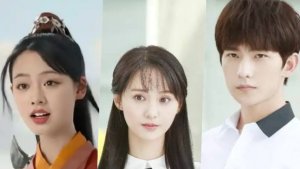
'Love O2O': Chinese actress Wang Zhu Yue responds to AI face-swap controversy
News - Sep 25, 2026
Wang Zhu Yue speaks out after the AI face swap in the re-released version of 'Love O2O' sparks controversy



