
 Editorials

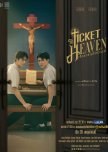
Just watch it because I'm still speechless😭😭😭Every scene feels like a daydream and nightmare at the same time, it all take a while before you could literally finished the whole episode. But even with this, GeminiFourth's performance delivery of their role BarthTanrak is beyond words to praise. They're just incredibly amazing.
Was this review helpful to you?
From the sweet moments of BarthTanrak to Barth's backstory, everything in this episode made me cry so much. To all Barth's and Tanrak people out there, keep going I hope you all found your own comfort and love.
Was this review helpful to you?
Ticket to Heaven Episode 1 immediately establishes itself as a series that understands the power of visual storytelling. From its opening moments to its final scene, every frame feels intentional, carrying meanings that go far beyond what is spoken aloud.What makes the premiere particularly impressive is how it already lays the foundation for the central conflict and relationship of the story. One of the most striking scenes is when Tanrak closes the church doors to shield the sanctuary from the raging storm outside. At that exact moment, Barth arrives. The timing feels far too deliberate to be a coincidence. It subtly introduces Barth as the "storm" that will enter Tanrak's carefully ordered life—a life built upon certainty, devotion, and unwavering faith. Barth's arrival disrupts that peace, much like the storm outside disrupts the calm of the evening.Yet the episode does not stop there. Shortly after, the Crucifix nearly falls, and it is Barth who instinctively steps forward to help Tanrak steady it. This moment is layered with symbolism. The Crucifix, representing faith, is something deeply rooted in Tanrak's identity. While Barth may initially appear as the source of disruption in Tanrak's life, the scene suggests that he may also become the very person who helps Tanrak carry the weight of his struggles. The symbolism beautifully hints at the duality of Barth's role: he is both the challenge that shakes Tanrak's world and the person who may stand beside him when that world begins to tremble.The Cross itself becomes one of the most meaningful symbols in the episode. It is the reason Barth and Tanrak physically come together as they hold it upright, creating a visual representation of faith bringing them closer. At the same time, the Cross may also foreshadow the internal and external conflicts their relationship will face. The very thing that unites them could eventually become the source of their greatest struggle.Another strength of the episode is how effortlessly it showcases the chemistry between Gemini and Fourth. Despite having only a few conversations together, they make every interaction feel meaningful. A subtle smile, a lingering glance, a brief exchange of words—these small moments carry an undeniable warmth that immediately draws viewers into Barth and Tanrak's connection. Their chemistry does not rely on grand romantic gestures; instead, it shines through natural expressions and quiet moments that feel genuine and unforced. Even in the earliest stages of their relationship, Gemini and Fourth create a dynamic that feels believable, making it easy to understand why these characters would gravitate toward one another.The episode's structure is equally powerful. It opens with the passing of the Marriage Equality Law, a moment symbolizing hope, progress, and the possibility of acceptance. Yet it closes with Barth and Tanrak standing together while those around them begin to judge and scrutinize them. This parallel creates a striking contrast between legal recognition and social acceptance. The message is clear: while laws can change overnight, people's hearts often take much longer to do the same.The cinematography deserves special praise. Every shot feels purposeful, every camera angle carefully chosen to communicate emotions and themes beyond dialogue. The visual language of the episode allows viewers to uncover deeper meanings hidden beneath seemingly simple interactions. Rather than merely telling a story, the series invites its audience to interpret and reflect on it.The acting further strengthens the narrative. Gemini and Fourth deliver performances filled with sincerity and emotional nuance, while the supporting cast helps establish the social and religious environment that shapes the story. Their portrayals make the characters feel human—flawed, conflicted, and deeply relatable.For a first episode, Ticket to Heaven does an exceptional job of introducing its themes, characters, and central conflict while trusting its audience to recognize the symbolism woven throughout the story. It is a premiere filled with thoughtful visual metaphors, compelling performances, and meaningful storytelling. More importantly, it successfully establishes what appears to be the heart of the series: a love story where faith is not simply a backdrop, but a force that both connects and challenges the people caught within it. Through its symbolism, cinematography, performances, and the effortless chemistry between Gemini and Fourth, Episode 1 proves that Ticket to Heaven is not only telling a love story—it is telling one that dares to explore the complicated space where faith, identity, and love intersect.
Was this review helpful to you?
What I can recommend to all the viewers is to look out for small details and try to immerse yourselves as part of the characters in the show or at least try on their perspectives. This is really an amazing episode. I don't know what else I can add to that.
Was this review helpful to you?
I'm afraid I can't exactly tell what i love most in this episode because all the details just feel so great to watch. It's painfully beautiful episode and I'm speechless on the last scene and the chemistry GeminiFourth got.
Was this review helpful to you?


