


 4
4 6
6 1
1 1
1 3
3 1
1


This review may contain spoilers
Trapped Between Reality and Hallucination
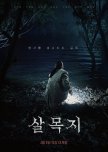
Salmokji: Whispering Water is an intriguing horror film. After doing some research I found out that it’s inspired by the urban legend surrounding the Salmokji Reservoir in South Korea, located in Yesan County. According to local stories, fishermen and residents have historically avoided the area after dark due to the reservoir being built over an old cemetery, which may have contributed to the ghost stories and supernatural rumors. The film uses this eerie real-world background effectively, creating an unsettling atmosphere from the very beginning.
The story follows a production crew that returns to Salmokji for a reshoot, only for strange and disturbing events to begin unfolding shortly after their arrival. From there, the film gradually pulls both the characters and the audience into a psychological spiral where reality becomes increasingly difficult to distinguish from illusion.
One of the film’s strongest elements is how it manipulates perception. Each twist and unsettling moment creates a lingering sense of inevitability, making viewers feel as though something terrible is always about to happen, the question is simply when. The narrative unfolds in a way that demands attention, as even small details can become important later on. Missing certain moments may leave viewers confused, but that confusion feels intentional, mirroring the paranoia and uncertainty experienced by the characters themselves.
While the film succeeds in building tension and psychological unease, it does have its flaws. The rules and limitations surrounding the ghost are never fully explained, which leaves some supernatural aspects feeling underdeveloped. Although many of the jump scares rely on familiar horror clichés, a few still manage to be effective due to their delayed timing and execution. However, the film struggles with character development. Because of the limited runtime and focus on atmosphere, the audience never truly forms a strong emotional connection with most of the characters outside of recognizing or liking the actors portraying them.
Another frustrating aspect is the characters’ constant willingness to split up despite witnessing obvious supernatural events firsthand. At times, their decisions feel more like plot devices than believable human reactions. Additionally, while the premise is compelling, the story does not expand deeply enough on its mythology or themes, leaving several ideas feeling only partially explored.
Overall, Salmokji: Whispering Water is an enjoyable psychological horror film that thrives more on mystery and uncertainty than outright terror. It is not particularly frightening or deeply unsettling, but it does create an eerie atmosphere that keeps viewers engaged. Those looking for a layered psychological experience may appreciate it more than viewers searching for a fully developed horror story with clear answers.
Theory:
Personally, I do not believe anyone truly escaped Salmokji. My interpretation is that whoever survived became trapped within the reservoir’s supernatural cycle, endlessly believing they escaped only to “wake up” and realize they are still there. The hallucinations continue until the ghost ultimately claims them. The ending gives the impression of an endless loop, a cycle of false hope and psychological torment.
At the same time, since the film has an open ending it allows viewers to form and have their own interpretations. That ambiguity is likely intentional, making the ending one of the movie’s more interesting aspects despite its lack of concrete answers.
The story follows a production crew that returns to Salmokji for a reshoot, only for strange and disturbing events to begin unfolding shortly after their arrival. From there, the film gradually pulls both the characters and the audience into a psychological spiral where reality becomes increasingly difficult to distinguish from illusion.
One of the film’s strongest elements is how it manipulates perception. Each twist and unsettling moment creates a lingering sense of inevitability, making viewers feel as though something terrible is always about to happen, the question is simply when. The narrative unfolds in a way that demands attention, as even small details can become important later on. Missing certain moments may leave viewers confused, but that confusion feels intentional, mirroring the paranoia and uncertainty experienced by the characters themselves.
While the film succeeds in building tension and psychological unease, it does have its flaws. The rules and limitations surrounding the ghost are never fully explained, which leaves some supernatural aspects feeling underdeveloped. Although many of the jump scares rely on familiar horror clichés, a few still manage to be effective due to their delayed timing and execution. However, the film struggles with character development. Because of the limited runtime and focus on atmosphere, the audience never truly forms a strong emotional connection with most of the characters outside of recognizing or liking the actors portraying them.
Another frustrating aspect is the characters’ constant willingness to split up despite witnessing obvious supernatural events firsthand. At times, their decisions feel more like plot devices than believable human reactions. Additionally, while the premise is compelling, the story does not expand deeply enough on its mythology or themes, leaving several ideas feeling only partially explored.
Overall, Salmokji: Whispering Water is an enjoyable psychological horror film that thrives more on mystery and uncertainty than outright terror. It is not particularly frightening or deeply unsettling, but it does create an eerie atmosphere that keeps viewers engaged. Those looking for a layered psychological experience may appreciate it more than viewers searching for a fully developed horror story with clear answers.
Theory:
Personally, I do not believe anyone truly escaped Salmokji. My interpretation is that whoever survived became trapped within the reservoir’s supernatural cycle, endlessly believing they escaped only to “wake up” and realize they are still there. The hallucinations continue until the ghost ultimately claims them. The ending gives the impression of an endless loop, a cycle of false hope and psychological torment.
At the same time, since the film has an open ending it allows viewers to form and have their own interpretations. That ambiguity is likely intentional, making the ending one of the movie’s more interesting aspects despite its lack of concrete answers.
Was this review helpful to you?


