
 Editorials

 4
4 6
6 1
1 1
1 3
3 1
1



This review may contain spoilers
A Perfect Pitch with a Flat Note Ending
Kpop Demon Hunter is an entertaining film with a unique concept, vibrant visuals, beautiful cinematography, and a few catchy songs, but unfortunately, it relies too heavily on overused tropes and underdeveloped storytelling. As a result, it feels like it was made to appeal to a narrow audience, rather than exploring the full potential of its creative premise.The film centers around Huntr/X, a K-pop girl group that doubles as demon hunters, and the Saja Boys, a K-pop boy group who are demons. While the setup is promising, the story fails to give the Saja Boys meaningful development. Only Jinu, the group’s leader, is given a real arc, he displayed glimpses of complexity as he struggles between good and evil. However, his journey is cut short. When he finally comes to his senses, he’s killed off within seconds, which undercuts emotional payoff tremendously.
Jinu’s character had strong potential, his desire to be free and his sense of being misunderstood were compelling. That same depth could have been extended to the rest of the Saja Boys. Giving each member a unique reason for being in the group and showing their eventual growth would’ve added real emotional weight and created a stronger connection to the audience. But they were reduced to background noise.
It would have been far more impactful to show The Saja Boys and Huntr/X teaming up, to defeat Gwi-Ma, providing a powerful message of unity and growth. Instead, the film takes a shortcut, and it shows.
The film also leans into a somewhat problematic dynamic: girls fix problems and saves the world, while boys create them and seek destruction. All the main villains are male, and while there are female villains, they’re under the control of Gwi-Ma. That dynamic felt one-sided and oversimplified. This one-dimensional portrayal felt both imbalanced and reductive. There was a real opportunity to subvert expectations and show unity and collaboration between the groups, but instead, the film leaned into division and sacrifice.
The film also leaves a number of questions unanswered: (just a few listed)
1. What happened to Rumi’s aunt?
2. Was the demon world actually sealed successfully?
3. What are the consequences of Rumi being half-demon and half-hunter? (If there are any)
4. Were past bands completely unsuccessful, and is Huntr/X the first to succeed?
5. And if Gwi-Ma is defeated, is he truly gone or could he return?
On the musical side, only three songs stood out as potential singles: “What It Sounds Like,” “Free,” and “Golden.” The rest are decent, but feel more like standard movie soundtrack that’s only enjoyable in the moment, but not something I’d revisit outside the film.
Overall, I did enjoy the movie, but I wasn’t satisfied with the direction it took. The ending, in particular, felt rushed and underdeveloped. This concept would’ve worked much better as a limited series, where the characters and their arcs could be properly explored and given the depth they deserved. As it stands, some moments felt sloppy, inconsistent, and creatively lazy! Especially in the final act. I may be overthinking this movie, but at least it’s a good one time watch.
Was this review helpful to you?

It’s Not Perfect, But It’s a Bloody Good Time
I was pleasantly surprised by how much I enjoyed My Golden Blood. While the storyline isn’t groundbreaking, it’s still engaging and fun to watch. It strikes a balance between drama, romance, and supernatural elements, making it a solid pick for fans of the genre.However, I did notice some oddly timed cuts throughout the show. At times, scenes felt abruptly shortened or transitioned too quickly, which occasionally disrupted the pacing.
As for the acting, I personally didn’t find it deserving of the criticism I’ve seen in other reviews. No, it’s not Oscar-level, but it’s more than adequate for a TV series of this type and far better than many others I’ve seen.
The CGI and special effects were admittedly a bit dated and occasionally clunky, but oddly enough, that added a sense of nostalgia for me. It reminded me of some of Thailand’s earlier supernatural dramas, there’s a charm in that slightly rough-around-the-edges feel.
What absolutely cannot be denied is the chemistry between the two leads. Their connection is palpable and carries much of the emotional weight of the series. It’s that dynamic that really keeps you invested, even during some of the more cliché or corny moments, which, let’s be honest, are almost expected in a vampire-themed show.
Overall, I genuinely enjoyed My Golden Blood. Yes, it has its flaws, but it also has heart. If you’re a fan of vampire stories, don’t let the negative reviews deter you. Give it a chance, you might end up liking it as much as I did.
Was this review helpful to you?
A Story That Needed More Depth
Feel What You Feel had the potential to be a much stronger series, but its numerous plot inconsistencies ultimately disrupted the pacing and overall flow of the story.That being said, I did enjoy the dynamic between the two main leads, Yu Lei and Chen Ke. Although their storyline occasionally felt more drawn out than necessary, I could still appreciate the reasoning behind it. Both characters are young and navigating unfamiliar emotions and experiences for the first time. The series did a commendable job portraying the gradual development of their relationship, particularly through themes of jealousy, care, vulnerability, and affection.
Unfortunately, the second lead storyline felt underdeveloped and somewhat misplaced within the overall narrative. Li Ming’s sudden shift came across as rushed, relying heavily on brief actions and lingering glances rather than meaningful buildup. While it was clear the series intended to show a turning point in his feelings, the execution lacked the depth needed to make the transition feel impactful.
As for Ouyang Han, I found his character particularly frustrating. While I understand the intention behind portraying someone with an intense crush, his inability to recognize boundaries or pick up on obvious social cues made him annoying. His actions often came across as intrusive rather than endearing, which negatively affected my perception of the character.
In contrast, He Jin is the most underdeveloped character. From the start, it is obvious that he struggles with loneliness, insecurity, and an inability to properly connect with others. His difficulty socializing and making friends is consistently hinted at throughout the story, yet the series never fully explores the root of these issues. The audience is only given brief statements about what he supposedly experienced. Aside from his awkward introduction with Chen Ke, much of He Jin’s character arc feels fragmented and confined to isolated moments that never fully tie back into the broader narrative. Because of this lack of development, his emotional breakdown later in the series feels sudden and disconnected, rather than serving as a powerful culmination of his internal struggles.
Overall, I did not fully enjoy the series, mainly because of its inconsistent storytelling and underdeveloped subplots. However, the show still had its strengths. The soundtrack was particularly well done and helped elevate several emotional scenes, while the cinematography, though not exceptional, was visually decent and fit the tone of the story.
Was this review helpful to you?

A Cinematic Masterpiece with Layers of Story
This series is a visual masterpiece, beautifully shot with stunning cinematography that captivates you from start to finish. Not a single episode feels slow or unnecessary; each one keeps you fully engaged. I really appreciated how the show explains key events within the same episode, creating a sense of clarity while also building toward a larger, more intricate narrative. The storyline itself is exceptional, layered, thoughtful, and full of purpose.One of the things I loved most was how seamlessly the show blended genres, offering a bit of everything without ever feeling disjointed. While the ending was somewhat predictable and I found myself wishing it had taken a different path, it didn’t diminish my enjoyment in the slightest. Overall, this is a truly remarkable series that I’d highly recommend.
Was this review helpful to you?

This review may contain spoilers
A Heartfelt Journey of Resilience and Triumph
Warning - this movie does have attempted suicide.Big World is a profoundly moving film that showcases Jackson Yee’s phenomenal performance as Liu Chunhe, a young man with cerebral palsy (CP) determined to prove that his condition does not define his potential. Jackson Yee brings raw authenticity and emotional depth to Chunhe, a character who seeks equality and the same opportunities as others, whether it’s attending college, securing a job, or earning a driver’s license. Through his unyielding determination, Chunhe demonstrates that no obstacle is insurmountable with perseverance.
The film masterfully captures Chunhe’s inner struggles, particularly in a heart-wrenching scene where he questions why he was born with CP, a condition that remains a medical enigma.
Equally compelling is Chunhe’s yearning for love. He knows it won’t be easy, but his understanding of the challenges doesn’t lessen his hope.
A pivotal moment comes during Chunhe’s confrontation with his mother, whose misguided attempts to shield him by isolating him and fixating on his disability only deepen his sense of being a burden. The raw emotion in Jackson Yee’s delivery when Chunhe admits to feeling like “dead weight” to his family is unforgettable, reflecting the pain of overhearing childhood conversations and enduring societal stares.
While Chunhe’s mother mishandles her protective instincts, the film doesn’t shy away from addressing these flaws. Her eventual explanation and apology toward the end offer a satisfying resolution, highlighting the complexity of familial love.
The conclusion, with Chunhe and his grandmother (his biggest supporter throughout the film) embracing a fresh start is both uplifting and authentic, tying the narrative together with hope.
Big World delivers a powerful message about resilience, personal growth, and the pursuit of equality. It’s a heartwarming, inspiring story that navigates life’s challenges with grace, leaving the audience moved and motivated.
Was this review helpful to you?

This review may contain spoilers
A Complicated Bond Forged Through Pain
Dive into My Bad Rival was honestly a pleasant surprise. After watching the trailer, I wasn’t expecting to enjoy the series as much as I ultimately did. What initially appeared to be a fairly straightforward story gradually developed into something much more complex, exploring power, manipulation, abuse, trauma, and the complicated ways people can form connections when they are both carrying deep emotional wounds.The story follows Kang Han and Ji Soo, two very different individuals whose lives become intertwined through circumstances driven by greed, power, and control. From their very first interactions, the physical and abusive nature of their relationship immediately establishes an uncomfortable power imbalance. Their connection is not built on the typical foundation of romance or mutual attraction. Instead, it develops through coercion, dependency, and circumstances that neither of them seems fully capable of escaping.
Ji Soo is initially portrayed as someone who has become accustomed to simply enduring whatever is thrown his way. His willingness to tolerate mistreatment makes him appear almost like a submissive “lap dog,” but as he spends more time with Kang Han, something begins to change. Rather than simply fearing or resenting him, Ji Soo slowly starts to understand the person behind the cruelty. That understanding doesn’t excuse Kang Han’s actions, but it adds another layer to their increasingly complicated relationship.
Kang Han, in particular, is a fascinating and deeply flawed character. His possessiveness toward Ji Soo becomes increasingly obvious, especially in the way he struggles to tolerate anyone else getting close to him. There is clearly an attachment and affection there, but Kang Han has no healthy understanding of what love or affection should look like. Instead, he expresses his feelings through control, intimidation, and abuse, almost as though he has been conditioned to believe that hurting someone is another way of showing that they matter to him.
That becomes much clearer once Ji Soo witnesses the abuse Kang Han suffers at the hands of his father. Seeing Kang Han subjected to the same cruelty, if not worst provides an important piece of context for understanding his character. His history reveals that much of his behavior was learned from the environment he grew up in. His father possesses both wealth and influence, leaving Kang Han trapped in a situation where seeking help isn’t as simple as it should be.
However, the series does an important job of showing that understanding someone’s trauma does not mean excusing their actions. Kang Han’s suffering explains where some of his behavior comes from, but it doesn’t erase the damage he causes. That distinction is one of the more interesting aspects of the story.
The relationship between Kang Han and Ji Soo also gradually shifts in an unexpected way. What begins as a deeply unhealthy dynamic eventually develops into a bond built on protection and mutual understanding. As they witness each other’s vulnerabilities, they begin to recognize the pain beneath the surface. Neither of them is particularly good at expressing themselves, but their actions increasingly demonstrate that they have begun to care for one another.
That is ultimately what made their relationship compelling to me. This isn’t a bubbly, conventional romance where two people simply fall in love and everything magically works out. Instead, it feels more like two deeply damaged people finding one another and, in their own imperfect ways, becoming a source of comfort and protection for each other. Their connection is messy, complicated, and at times difficult to watch, but that complexity is what gives their story its emotional weight.
My biggest criticism is the ending. The final portion of the series felt noticeably rushed, especially considering how much time was spent developing the characters and their complicated relationship. The final scene and the dialogue between them managed to bring the story to a satisfying enough conclusion and neatly tied together the emotional journey they had taken.
Overall, Dive into My Bad Rival turned out to be a much better watch than I expected. It’s a short drama with a surprisingly consistent storyline, layered characters, and a relationship that is far more complicated than it initially appears.
Was this review helpful to you?
Two Minds, One Unspoken Connection
Eclipse of the Lost City is a decent short form series that relies heavily on tension, mystery, and, most importantly, the evolving bond between its two leads, Lu Ye and Shen Tian Bai. What begins as an unintentional partnership gradually develops into something far more complicated, as the two are forced to work together while simultaneously questioning each other’s motives, intelligence, and loyalty.The story follows Lu Ye and Shen Tian Bai as they attempt to uncover the truth behind the many mysteries surrounding their lives. Their partnership initially feels more like a competition than genuine cooperation. What starts as a scheme quickly becomes a game of intelligence, with each constantly trying to determine who is one step ahead. One of the most interesting aspects of their dynamic is how observant they both are. They pay close attention to details, body language, and subtle changes in behavior, allowing them to manipulate the people around them and use situations to their advantage.
This similarity is also what makes their relationship so compelling. Both characters are intelligent and capable, yet they have enough differences to create a sense of balance between them. They understand what the other is capable of, which naturally creates a level of distrust. At the same time, that distrust is ironically what brings them closer. They are constantly anticipating each other’s moves, yet underneath all of that suspicion is an undeniable level of trust neither of them is willing to acknowledge.
Their bond is particularly effective because the series does not rely on direct declarations of affection. Instead, it communicates their feelings through their actions, expressions, and the way they instinctively protect one another. They may repeatedly insist that they do not trust each other, but their actions tell a completely different story. The way they look at one another, the risks they are willing to take, and the lengths they go to in order to protect each other make it obvious that their connection runs much deeper than either of them wants to admit.
I also appreciated how the series used flashbacks to show the history behind their relationship. Seeing how their connection developed as they grew older gave their present day dynamic more emotional weight. The strongest indication of how much they mean to one another is that they only allow themselves to show vulnerability around each other. For two characters who constantly claim they cannot trust one another, they ultimately become the only people capable of seeing each other at their weakest.
The jealousy displayed in Episode 18 also adds another interesting layer to their relationship, pushing their connection beyond what could simply be described as brotherhood. There is an emotional intensity between them that the series deliberately leaves beneath the surface, allowing the audience to interpret their relationship in their own way.
From a storytelling perspective, the plot is relatively easy to follow, with many of the questions introduced in an episode receiving answers within that same episode. This creates a sense of clarity and prevents the mystery from becoming unnecessarily complicated. Considering that the episodes are only around 10–15 minutes long, the pacing is handled fairly well. The series manages to move the story forward without making it feel completely overwhelming.
One of the weaker aspects was the use of AI-generated elements. I could somewhat overlook them because they were primarily used as transitions between scenes rather than being central to the storytelling.
The supernatural element introduced toward the end was another questionable choice. It felt somewhat random compared to the direction the story had established previously. However, despite feeling out of place, it was surprisingly entertaining and added an unexpected twist to the final stretch. The ending itself was probably the weakest part of the series. While it was somewhat underwhelming, it still provided enough closure to leave the story feeling reasonably complete.
Visually, the cinematography is not particularly spectacular, but there are moments where it shines. Certain shots effectively capture the atmosphere and tension of the story, particularly during scenes involving the two leads. The soundtrack also deserves credit for how effectively it complements the narrative. The music helps build tension and emotion within key scenes, enhancing the overall viewing experience rather than simply serving as background noise.
Overall, Eclipse of the Lost City is a fun and enjoyable watch that successfully balances mystery, drama, action, corruption, and bromance within its short runtime. Its biggest strength is undoubtedly the relationship between Lu Ye and Shen Tian Bai. Their complicated combination of rivalry, distrust, loyalty, jealousy, and unspoken care gives the series an emotional layer that makes it more engaging than the plot alone might suggest. It may have its flaws, particularly toward the ending, but the chemistry and dynamic between its leads make it worth watching.
Was this review helpful to you?

A Quietly Disturbing Look at Modern Life
New Normal is an interesting, if somewhat uneven, film that follows the lives of six different people, with each story unfolding through chapter-style storytelling. This structure works well because it gradually offers insight into each character’s life while emphasizing how disconnected people can be from one another, even while living side by side in the same world.One of the film’s strongest aspects is its cinematography and overall presentation. The way the movie is shot reinforces its central theme: everyone appears to be living ordinary, routine lives on the surface, yet there are darker and more complicated events happening beyond what others can see. That sense of hidden reality creates an unsettling atmosphere throughout the film.
The ending, however, is where the movie becomes more divisive. It takes a very nuanced and ambiguous approach, which makes the story feel intentionally unresolved. While the final revelations and the group chat sequence provide enough context to understand why certain individuals were being targeted, the film leaves many questions unanswered. Not seeing the aftermath or consequences of those events may frustrate some viewers, especially since no one is truly held accountable and life seemingly continues as normal.
At the same time, that unresolved feeling appears to be deliberate. New Normal leans heavily into the idea that real life rarely provides complete closure or easy answers. People move on, mysteries remain unsolved, and the world continues regardless. Whether that approach feels thought-provoking or unsatisfying will likely depend on the viewer.
Overall, I neither loved nor disliked the film. It presents some compelling ideas and creates an effective atmosphere, even if its storytelling choices do not always fully land. One thing that stood out, intentionally or not, was the soundtrack, which often felt strangely placed and unexpectedly comedic at times.
Was this review helpful to you?

This review may contain spoilers
Trapped Between Reality and Hallucination
Salmokji: Whispering Water is an intriguing horror film. After doing some research I found out that it’s inspired by the urban legend surrounding the Salmokji Reservoir in South Korea, located in Yesan County. According to local stories, fishermen and residents have historically avoided the area after dark due to the reservoir being built over an old cemetery, which may have contributed to the ghost stories and supernatural rumors. The film uses this eerie real-world background effectively, creating an unsettling atmosphere from the very beginning.The story follows a production crew that returns to Salmokji for a reshoot, only for strange and disturbing events to begin unfolding shortly after their arrival. From there, the film gradually pulls both the characters and the audience into a psychological spiral where reality becomes increasingly difficult to distinguish from illusion.
One of the film’s strongest elements is how it manipulates perception. Each twist and unsettling moment creates a lingering sense of inevitability, making viewers feel as though something terrible is always about to happen, the question is simply when. The narrative unfolds in a way that demands attention, as even small details can become important later on. Missing certain moments may leave viewers confused, but that confusion feels intentional, mirroring the paranoia and uncertainty experienced by the characters themselves.
While the film succeeds in building tension and psychological unease, it does have its flaws. The rules and limitations surrounding the ghost are never fully explained, which leaves some supernatural aspects feeling underdeveloped. Although many of the jump scares rely on familiar horror clichés, a few still manage to be effective due to their delayed timing and execution. However, the film struggles with character development. Because of the limited runtime and focus on atmosphere, the audience never truly forms a strong emotional connection with most of the characters outside of recognizing or liking the actors portraying them.
Another frustrating aspect is the characters’ constant willingness to split up despite witnessing obvious supernatural events firsthand. At times, their decisions feel more like plot devices than believable human reactions. Additionally, while the premise is compelling, the story does not expand deeply enough on its mythology or themes, leaving several ideas feeling only partially explored.
Overall, Salmokji: Whispering Water is an enjoyable psychological horror film that thrives more on mystery and uncertainty than outright terror. It is not particularly frightening or deeply unsettling, but it does create an eerie atmosphere that keeps viewers engaged. Those looking for a layered psychological experience may appreciate it more than viewers searching for a fully developed horror story with clear answers.
Theory:
Personally, I do not believe anyone truly escaped Salmokji. My interpretation is that whoever survived became trapped within the reservoir’s supernatural cycle, endlessly believing they escaped only to “wake up” and realize they are still there. The hallucinations continue until the ghost ultimately claims them. The ending gives the impression of an endless loop, a cycle of false hope and psychological torment.
At the same time, since the film has an open ending it allows viewers to form and have their own interpretations. That ambiguity is likely intentional, making the ending one of the movie’s more interesting aspects despite its lack of concrete answers.
Was this review helpful to you?

A Beautifully Shot Thriller That Loses Its Mystery
Sirens Kiss is a unique thriller that stands out most through its portrayal of Han Seol-ah, easily the show’s strongest and most compelling character. She is written as an emotionally complex woman whose traumatic past has left her emotionally detached and guarded. Rather than expressing herself openly, Seol-ah internalizes everything, which unintentionally makes her the perfect suspect in the eyes of others. Her inability to display emotion causes people to misinterpret her behavior, while her confidence in her own innocence leaves her feeling no obligation to constantly defend or explain herself. This creates an interesting dynamic where only those who truly understand her can recognize the truth beneath her cold exterior.This naturally leads into her relationship with Cha Wook-seok, whose growing curiosity about Seol-ah becomes one of the show’s emotional anchors. Their dynamic is compelling because it develops under tense and emotionally fragile circumstances. Although the series carries a romance label, the relationship does not follow the conventions of a typical romantic drama. Instead, it initially feels more like a relationship built out of necessity and circumstance rather than genuine love. That approach ultimately works in the show’s favor, as it allows the romance to evolve gradually into something more believable and emotionally meaningful over time.
The investigative side of the story is also handled well for the most part. The detectives actively examine different perspectives in their search for the truth, though Gong Ju-yeong often became frustrating to watch. Her approach to the investigation frequently felt driven more by personal jealousy and emotional bias than by a genuine desire to objectively uncover the facts.
One of the show’s strongest themes is how truth can easily be manipulated depending on public perception. Sirens Kiss effectively explores how even honest words or actions can be twisted to fit a narrative, and how emotionally exhausting it becomes to constantly prove your innocence to people determined not to believe you. Han Seol-ah’s actions in Episode 9 especially emphasize that emotional exhaustion and serve as one of the series’ more impactful moments.
The mystery element starts off strong and genuinely suspenseful, but the series struggles to maintain that momentum. By around Episode 5, it becomes fairly obvious who is behind the murders, which weakens much of the tension for the remainder of the show. Considering this is only a 12-episode series, it would have benefited from preserving the mystery for longer instead of making the reveal so transparent early on. Unfortunately, the identity and motivations of the main culprit also lean heavily into cliché territory, which undermines some of the uniqueness the show initially established. As a result, the overall payoff feels underwhelming compared to the promising setup.
Despite those shortcomings, the series does deserve credit for how well it connects each character’s storyline to Han Seol-ah, whether through past relationships or present circumstances. The intertwining narratives are handled thoughtfully and help give the story emotional cohesion. One particular reveal involving someone from Seol-ah’s past was especially well executed and genuinely surprising, even if the hints became noticeable shortly before the reveal itself. The show balanced foreshadowing effectively without making every twist overly obvious.
Overall, Sirens Kiss is a decent thriller elevated by strong performances, excellent cinematography, and a memorable soundtrack that enhances many of the show’s emotional scenes. While the cast delivers convincing performances and the earlier episodes establish an intriguing psychological mystery, the reliance on clichés and weaker writing in the second half prevents the series from fully reaching its potential. Even so, its character work, particularly with Han Seol-ah, remains engaging enough to make the show worth watching.
Was this review helpful to you?

A Heartbreaking Journey Through Love and Survival
Viva La Vida wastes no time immersing viewers in its emotional core, opening on an incredibly heavy and heartbreaking note. From the very beginning, the film introduces Ling Min and the harsh reality of her life as a 24-year-old woman suffering from kidney failure. Through scenes documenting her daily struggles, hospital visits, and emotional exhaustion, the audience quickly understands the severity of her condition. Ling Min records a video out of desperation, hoping her story can help her find a solution and ultimately allow her to live a normal life free from constant suffering.One of the film’s strongest aspects is how it contrasts Ling Min’s pain with the seemingly ordinary lives of those around her. A particularly impactful moment features a mother and son repeating the phrase, “We live in a beautiful city. We have a perfect life. We should be thankful and grateful for our daily life.” This scene beautifully reinforces one of the film’s central themes: you never truly know what struggles another person may be facing behind closed doors. While the world continues moving normally around them, people suffering silently are often forced to put on a façade and pretend everything is okay.
The introduction of Lü Tu brings a refreshing comedic energy that helps balance the film’s otherwise heavy emotional tone. His personality sharply contrasts with Ling Min’s, and the film uses this difference intentionally to highlight their opposing outlooks on life. Their interactions feel natural and meaningful, showing how two completely different people can still form a deep emotional connection under unusual circumstances.
What makes their relationship especially compelling is how gradually and beautifully it develops throughout the story. The film carefully portrays the growing closeness between Ling Min and Lü Tu, emphasizing their care and devotion toward one another in subtle but heartfelt ways. Much of this emotional warmth comes from Lü Tu, whose affection and sincerity are consistently touching. Given Ling Min’s circumstances and emotional burdens, it makes perfect sense that she takes longer to fully open her heart, which ultimately makes the emotional payoff even more satisfying and impactful.
The film also delivers a raw and painfully honest portrayal of the emotional toll that comes with waiting for an organ donor match. It captures the fear, uncertainty, heartbreak, and emotional exhaustion experienced not only by patients, but also by the people who love them. Even routine treatments are presented with a sense of emotional weight, making every moment feel significant. The journey both characters endure after falling in love, while simultaneously wanting what is best for one another, is handled with great care and emotional maturity.
The performances from both leads are excellent, bringing authenticity and vulnerability to their roles. Their chemistry feels genuine, allowing the emotional moments to resonate even more deeply. Combined with strong writing, the film successfully delivers its themes about love, sacrifice, illness, and the fragility of life.
As expected, the cinematography is stunning. Chinese cinema continues to excel at capturing emotion through visual storytelling, and Viva La Vida is no exception. The film uses beautifully composed shots, meaningful visual symbolism, and well-written dialogue to strengthen its emotional impact. The soundtrack is equally impressive, enhancing both the heartbreaking and tender moments throughout the story without ever feeling overwhelming.
Overall, Viva La Vida is a beautifully heartbreaking film about illness, emotional struggle, human connection, and discovering love in the midst of pain.
Was this review helpful to you?

This review may contain spoilers
An Emotionally Nuanced Drama That Needed More Time
Contrast is an enjoyable series with a strong emotional foundation, though its biggest weakness lies in its pacing. The show would have greatly benefited from a longer runtime, as several important plot points and emotional developments felt rushed rather than fully explored.Kanata and Akira their interactions begin subtly, with the two observing each other from a distance before Kanata finally approaches Akira and gradually builds a friendship with him. The progression from friendship to romantic feelings is handled with notable restraint and realism. Rather than relying heavily on dialogue, the series conveys their growing affection through lingering glances, body language, and quiet moments, making the emotional shift feel natural and believable.
However, the subplot involving Akira’s tutor felt underdeveloped. While the recurring flashbacks provide some context, they remain confined to a single moment in time and fail to fully explore the complexity of the situation. The portrayal of the tutor as emotionally manipulative was executed surprisingly well. The manipulation was subtle and nuanced, presented in a way that many viewers may not immediately recognize, which ultimately made those scenes more unsettling and realistic. Akira’s initial acceptance of the situation also felt believable, especially considering how trauma and grooming can distort a person’s understanding of boundaries and relationships until later in life.
That said, the misunderstandings between the two characters were handled convincingly and reflected the emotional immaturity and confusion often present in high school relationships. I only wish the confession scene had been written more effectively, as it was immediately followed by yet another secret and further emotional distance, which weakened the payoff of an important moment.
Akira’s backstory ultimately adds significant depth to his character and explains why he struggles to trust others or allow himself to form close relationships. The emotional push-and-pull between the leads feels grounded and authentic, capturing the awkwardness, fear, jealousy and uncertainty that often come with first love.
One area where Contrast truly excels is emotional expression. The series often communicates more through facial expressions and silence than through words, allowing quieter moments to carry emotional weight. The soundtrack also complements the atmosphere beautifully, enhancing many of the series’ most impactful scenes. While the cinematography could have been sharper and more visually refined at times, it was still effective overall.
The only trope that felt unnecessary was the familiar stereotype of the quiet loner hiding a dark, often inappropriate or illegal secret. It is a trope frequently used in dramas of this kind, and here it felt somewhat predictable. Additionally, the final episode suffered heavily from rushed pacing, leaving several emotional beats without the resolution they deserved.
Despite its flaws, Contrast remains a thoughtful and emotionally grounded drama. The title itself is fitting, as Kanata and Akira ultimately balance one another through their contrasting personalities and experiences.
Was this review helpful to you?

A Compelling Tale of Deception, Growth, and Genuine Love
Love’s Ambition is a well crafted and emotionally layered drama that successfully balances romance, ambition, and character-driven storytelling. The series centers on Xu Yan, a resilient young woman raised by her grandmother, whose difficult upbringing shapes her determination to rise above her circumstances and build a better life.Her path takes a decisive turn when she meets Shen Haoming, a man from an elite background. In an effort to enter his world, Xu Yan fabricates aspects of her identity to present herself as someone of equal standing, ultimately leading to their marriage. However, what initially appears to be a calculated move is grounded in genuine emotion.
As their relationship unfolds, the series subtly hints that there is more beneath Shen Haoming’s composed exterior than meets the eye. His reactions and decisions often suggest an awareness that adds an intriguing layer to his character, creating tension and keeping viewers questioning how much he truly understands about Xu Yan’s situation. This dynamic allows the story to maintain a sense of mystery without giving too much away, while still deepening the emotional stakes between the two.
Despite their complicated beginnings, the couple agrees to maintain appearances, leading to a relationship filled with unspoken emotions, shifting power dynamics, and gradual vulnerability. Over time, Shen Haoming begins to confront his true feelings. His evolution from emotional distance to genuine affection becomes one of the drama’s strongest arcs, ultimately driving him to fight for their relationship and win Xu Yan’s heart.
One of the series’ standout qualities is how it handles its characters and their development. Both leads experience meaningful growth, and several supporting characters contribute significantly to the narrative. While some characters are intentionally frustrating, at times to the point of exasperation, they are written with clear purpose, and the cast delivers strong performances that bring these roles to life.
Visually, Love’s Ambition excels with polished cinematography that enhances both its intimate and dramatic moments. The series is further elevated by a well-curated soundtrack that complements the emotional tone of each scene, making key moments even more impactful.
That said, the show is not without its shortcomings. Certain episodes feel slightly drawn out, and some characters or conflicts could have been written with greater depth. A few misunderstandings linger longer than necessary, occasionally affecting the pacing. However, these elements also add layers to the story’s tension and complexity. Not every conflict is neatly resolved, and not every character undergoes growth, but this lends the narrative a sense of realism, highlighting that not everyone is willing or able to change.
Overall, Love’s Ambition is a compelling and well-balanced drama that explores the complexities of love, trust, and personal ambition. Its blend of emotional depth, strong performances, and thoughtful storytelling makes it a memorable series that resonates beyond its final episode.
Was this review helpful to you?
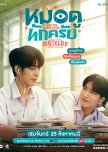
A Heartfelt Story of Friendship, Ambition, and Growth
MuTeLuv: “Hi” by My Luck stands out as one of the most memorable entries in the MuTeLuv series, offering a heartfelt story that balances emotional depth with thoughtful character development. What makes this installment particularly compelling is its ability to portray the pressures and struggles students face while striving to succeed and prove themselves. The series captures the constant drive to excel academically while also highlighting the emotional toll that ambition and expectations can place on young people.One of the strongest aspects of the show is the way every narrative element feels intentional. The storyline progresses with clear purpose, allowing the characters and their motivations to develop naturally. Rather than relying on overly dramatic moments, the series focuses on subtle yet meaningful interactions that gradually reveal the personalities and vulnerabilities of its characters.
A highlight of the story is the evolving relationship between Er and Mawin. At first glance, the two appear to be complete opposites, yet their differences ultimately create a balanced and compelling dynamic. Er is portrayed as exceptionally intelligent but struggles internally with self-doubt and the pressure to maintain excellence. Despite his capabilities, he constantly questions himself and his worth, making him a relatable character for viewers who understand the weight of expectations.
Mawin, on the other hand, presents himself as calm, composed, and largely indifferent to the opinions of others. As a genius who often chooses silence over confrontation, he gives the impression that he has everything under control. However, beneath that quiet confidence lies a more vulnerable side. Mawin’s greatest struggle is not intellectual, it is emotional. Despite his brilliance, he finds it difficult to form genuine friendships and longs for authentic connections with others.
This complexity makes Mawin one of the most relatable and layered characters in the series. Even when he overhears people speaking negatively about him, he chooses empathy rather than resentment. Instead of holding grudges, he continues to see the good in others and often helps people behind the scenes without seeking recognition. These small, quiet acts of kindness reveal his true character and add emotional depth to the narrative.
The chemistry between Er and Mawin gradually evolves throughout the series, showing how their differences complement each other. Er’s vulnerability contrasts with Mawin’s calm demeanor, while Mawin’s quiet support helps Er confront his insecurities. Together, they create a relationship dynamic that feels genuine and meaningful, rather than forced or overly dramatic.
Beyond the central relationship, the show also does an excellent job of giving supporting characters clear roles within the story. Each character contributes to the overall narrative in a way that feels purposeful, helping to build a well-rounded world that reflects the complexities of student life. These interactions add depth to the series and reinforce its themes of perseverance, friendship, and personal growth.
Overall, MuTeLuv: “Hi” by My Luck is a beautifully balanced drama that combines thoughtful storytelling with strong character development. By focusing on emotional authenticity and meaningful relationships, the series delivers a story that feels both relatable and impactful. Its exploration of ambition, loneliness, and the search for genuine connection makes it not only entertaining but also deeply resonant for viewers.
If anything, the show succeeds because it reminds us that even the most brilliant individuals still seek the same things everyone else does, understanding, friendship, and a place where they truly belong.
Was this review helpful to you?

Olympic Strength Meets Police Duty: A Thrilling Yet Slightly Uneven Ride
Good Boy follows former Olympic medalists Yoon Dong-ju, Ji Han-na, and Kim Jong-hyun, who transition from elite athletes to police officers. The concept itself is immediately compelling, taking individuals who once represented their country on the world’s biggest sporting stage and placing them in the unpredictable and often dangerous world of law enforcement. This premise provides the series with a unique foundation, allowing the story to explore how discipline, competitiveness, and resilience developed through sports can translate into real-world crime fighting.One of the strongest aspects of the series is the way the team is assembled. Each member of the group brings a specific skill set shaped by their athletic background, and the show does a good job highlighting how those abilities contribute to their roles within the police unit. Rather than feeling like a random assortment of characters, the team dynamic feels purposeful. Their Olympic experiences are not simply backstory; they actively influence how they approach challenges, solve problems, and work together under pressure.
Another major highlight of Good Boy is its ability to blend multiple genres effectively. The series moves fluidly between action, comedy, and drama, creating a tone that keeps the narrative engaging throughout most of its run. The action sequences are particularly impressive, often choreographed with a level of intensity and creativity that reflects the characters’ athletic backgrounds. These moments are elevated further by strong cinematography and an energetic soundtrack that heightens the tension and excitement of each confrontation.
That said, the series occasionally struggles with pacing. At times, the runtime of certain episodes feels a bit stretched, causing portions of the story to drag more than necessary. While the central narrative remains interesting, a tighter edit could have helped maintain momentum and sharpen the overall storytelling.
The one element that feels somewhat misplaced is the romantic subplot. While romance is a common component in many dramas, here it tends to feel slightly disconnected from the core narrative. The storyline doesn’t add much to the character development or the central conflict, and at times it interrupts the otherwise strong rhythm of the series. In many ways, the show likely would have remained just as effective, if not more focused, without it.
One aspect the series handles particularly well is the balance between the protagonists and their antagonists. Rather than consistently portraying one side as overwhelmingly dominant, the show allows circumstances and strategy to dictate who gains the upper hand in each situation. This creates a more grounded sense of tension, where victories and setbacks feel earned rather than predetermined.
Overall, Good Boy is an entertaining and well-produced series with a strong central concept and memorable action sequences. Despite occasional pacing issues and a romance subplot that feels somewhat unnecessary, the show succeeds in delivering a dynamic mix of humor, drama, and adrenaline-fueled moments. When the series leans into its strengths, especially during the action-heavy scenes, it truly shines, supported by excellent cinematography and a powerful soundtrack that elevates the viewing experience.
Was this review helpful to you?


