

 2
2 1
1 1
1


Peach and Me — Four Episodes for a World That Needed Twelve
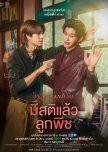
Fans wanted to see more of Thee and Peach, but I do not think this was really the kind of “more” we were asking for. Me and Thee had already completed their romantic journey. Thee and Peach had fallen in love, survived all the exaggerated misunderstandings surrounding them and reached their wedding. A sequel therefore did not need to place them back at the centre of every conflict. It needed to show what happened to the large group of people whose stories were only beginning when the original series ended. Instead, Peach and Me gives us four pleasant episodes that feel more like an extended special than a proper continuation. Officially produced as a four-episode sequel by GMMTV and Gemmistry Studio, it reunites the original director, Nuttapong Mongkolsawas, with Pond, Phuwin and the wider ensemble from Me and Thee.
Of course, Pond is still hilarious. Comedy comes so naturally to him that even the smallest expression can become funny without making the scene feel forced. He has developed into such a strong comic actor that I genuinely believe he could eventually build a successful solo career in comedy films or television dramas, even outside his partnership with Phuwin. Phuwin remains exactly what Peach needs to be: calm, grounded, easy to love and almost impossibly beautiful. His quieter energy gives Pond the space to be excessive without allowing the comedy to become unbearable. Their contrast continues to work perfectly, and their chemistry makes it believable that these two men are now comfortably married.
The problem is that Thee and Peach no longer needed to be the entire story. Main characters need supporting characters, especially once their own romance has already reached a stable conclusion. A strong sequel could have transformed Thee and Peach into the glue holding several new stories together. Their marriage could have become the emotional centre of the series while the people around them faced changes in love, work, family and responsibility. Lookplub and Mira were beginning to develop an interesting connection, but everything happened too quickly and too easily. Their conversations suggested two women with very different backgrounds who could slowly learn to understand one another, yet four episodes left almost no space for uncertainty, conflict or genuine romantic progression. The possibility was introduced, lightly explored and then almost immediately resolved. Tawan and Aran also deserved more. Their relationship could have grown beyond another quick romantic development by showing how both men changed individually as well as together. Tawan still needed to prove that he had matured, while Aran needed space to decide what forgiveness actually meant for him. A complete sequel could have allowed their professional lives, insecurities and relationship to evolve rather than treating them as another couple requiring a fast conclusion. Rome and Mok had perhaps the strongest potential of all. Rome taking control of the Arseni family creates an entirely new power structure, while Mok must decide whether he can remain beside him as a bodyguard, friend and partner. The series briefly addresses the danger surrounding the succession, including an attack that injures Mok and forces Rome to confront his feelings, but the conflict is resolved before it can become the foundation of a larger story.
That leadership change could have connected every storyline. Rival factions could have threatened the family, Rome could have struggled with the responsibility inherited from his father, and Mok could have faced the consequences of protecting someone he also loves. Lookplub and Mira could have become involved through the mansion and its security, while Tawan and Aran could have been drawn into the chaos through their work. Thee and Peach would still have remained essential. Thee could have tried to protect his younger brother while learning that leaving the mafia world does not erase his family responsibilities, and Peach could have become the person keeping everyone emotionally connected. Their marriage would have shown that falling in love is not the end of a story; life, family and danger continue around them. Most importantly, none of this would have required abandoning the comedy that made Me and Thee special. The kidnappers could have been completely incompetent, rescue plans could have collapsed through ridiculous accidents, and Thee could have treated every family crisis like another melodramatic lakorn. The danger could have been real while the execution remained funny.
That is what makes these four episodes so frustrating. The ingredients for a full twelve-episode sequel were already present. GMMTV had several popular couples, an established mafia family, a leadership transition, unresolved relationships and an audience actively asking to return to this world. The production did not need to invent an artificial reason to continue the story because the side characters had already created one. The original Me and Thee consisted of ten episodes and used its supporting cast to make Thee and Peach’s romance feel like part of a much larger world. Peach and Me reduces that same world to approximately three and a half hours, leaving several potentially substantial plots competing for attention.
The weakness is therefore not the cast or the technical production. GMMTV, Gemmistry Studio and Nuttapong Mongkolsawas preserve the same comic tone, visual polish and character chemistry that worked in the original. Gemmistry is still a relatively young production label, with Me and Thee and Cat for Cash among its first completed BL projects, so its catalogue remains too small for firm conclusions. However, the studio has already demonstrated that it can support polished ensemble productions; here, the limiting decision was the format rather than an obvious lack of production capability.
The early audience figures also suggest a slightly less enthusiastic response than the original and it reflects my own feeling that the special is enjoyable without reaching the original series’ impact.
Final Thought
I cannot give Peach and Me a bad review because I still enjoyed returning to these characters. Pond remains an exceptional comic actor, Phuwin gives the chaos its necessary calm, and the entire cast is too charming for the four episodes to become unpleasant. However, finishing the story is not the same as developing it. The fans did not simply want four more episodes of Thee being dramatic and Peach lovingly managing him. We wanted to return to this entire world and discover what happened once the main romance was no longer the only reason to keep watching.
A full sequel could have used Thee and Peach’s marriage to unite the stories of Lookplub and Mira, Tawan and Aran, and Rome and Mok. The mafia succession could have created danger, comedy and emotional growth for everyone without damaging the warm identity of the original series. Instead, GMMTV gave us a half-hearted continuation despite having enough characters and ideas for something far more ambitious. Four unnecessary episodes could have become twelve excellent ones, and that missed opportunity is far more disappointing than anything actually shown on screen.
Peach and Me remains cute, funny and perfectly watchable. It gives the characters a final goodbye, but it also proves that their world was not ready to end. The potential was there, the cast was available and the audience was waiting. The only thing missing was the decision to tell the larger story.
Of course, Pond is still hilarious. Comedy comes so naturally to him that even the smallest expression can become funny without making the scene feel forced. He has developed into such a strong comic actor that I genuinely believe he could eventually build a successful solo career in comedy films or television dramas, even outside his partnership with Phuwin. Phuwin remains exactly what Peach needs to be: calm, grounded, easy to love and almost impossibly beautiful. His quieter energy gives Pond the space to be excessive without allowing the comedy to become unbearable. Their contrast continues to work perfectly, and their chemistry makes it believable that these two men are now comfortably married.
The problem is that Thee and Peach no longer needed to be the entire story. Main characters need supporting characters, especially once their own romance has already reached a stable conclusion. A strong sequel could have transformed Thee and Peach into the glue holding several new stories together. Their marriage could have become the emotional centre of the series while the people around them faced changes in love, work, family and responsibility. Lookplub and Mira were beginning to develop an interesting connection, but everything happened too quickly and too easily. Their conversations suggested two women with very different backgrounds who could slowly learn to understand one another, yet four episodes left almost no space for uncertainty, conflict or genuine romantic progression. The possibility was introduced, lightly explored and then almost immediately resolved. Tawan and Aran also deserved more. Their relationship could have grown beyond another quick romantic development by showing how both men changed individually as well as together. Tawan still needed to prove that he had matured, while Aran needed space to decide what forgiveness actually meant for him. A complete sequel could have allowed their professional lives, insecurities and relationship to evolve rather than treating them as another couple requiring a fast conclusion. Rome and Mok had perhaps the strongest potential of all. Rome taking control of the Arseni family creates an entirely new power structure, while Mok must decide whether he can remain beside him as a bodyguard, friend and partner. The series briefly addresses the danger surrounding the succession, including an attack that injures Mok and forces Rome to confront his feelings, but the conflict is resolved before it can become the foundation of a larger story.
That leadership change could have connected every storyline. Rival factions could have threatened the family, Rome could have struggled with the responsibility inherited from his father, and Mok could have faced the consequences of protecting someone he also loves. Lookplub and Mira could have become involved through the mansion and its security, while Tawan and Aran could have been drawn into the chaos through their work. Thee and Peach would still have remained essential. Thee could have tried to protect his younger brother while learning that leaving the mafia world does not erase his family responsibilities, and Peach could have become the person keeping everyone emotionally connected. Their marriage would have shown that falling in love is not the end of a story; life, family and danger continue around them. Most importantly, none of this would have required abandoning the comedy that made Me and Thee special. The kidnappers could have been completely incompetent, rescue plans could have collapsed through ridiculous accidents, and Thee could have treated every family crisis like another melodramatic lakorn. The danger could have been real while the execution remained funny.
That is what makes these four episodes so frustrating. The ingredients for a full twelve-episode sequel were already present. GMMTV had several popular couples, an established mafia family, a leadership transition, unresolved relationships and an audience actively asking to return to this world. The production did not need to invent an artificial reason to continue the story because the side characters had already created one. The original Me and Thee consisted of ten episodes and used its supporting cast to make Thee and Peach’s romance feel like part of a much larger world. Peach and Me reduces that same world to approximately three and a half hours, leaving several potentially substantial plots competing for attention.
The weakness is therefore not the cast or the technical production. GMMTV, Gemmistry Studio and Nuttapong Mongkolsawas preserve the same comic tone, visual polish and character chemistry that worked in the original. Gemmistry is still a relatively young production label, with Me and Thee and Cat for Cash among its first completed BL projects, so its catalogue remains too small for firm conclusions. However, the studio has already demonstrated that it can support polished ensemble productions; here, the limiting decision was the format rather than an obvious lack of production capability.
The early audience figures also suggest a slightly less enthusiastic response than the original and it reflects my own feeling that the special is enjoyable without reaching the original series’ impact.
Final Thought
I cannot give Peach and Me a bad review because I still enjoyed returning to these characters. Pond remains an exceptional comic actor, Phuwin gives the chaos its necessary calm, and the entire cast is too charming for the four episodes to become unpleasant. However, finishing the story is not the same as developing it. The fans did not simply want four more episodes of Thee being dramatic and Peach lovingly managing him. We wanted to return to this entire world and discover what happened once the main romance was no longer the only reason to keep watching.
A full sequel could have used Thee and Peach’s marriage to unite the stories of Lookplub and Mira, Tawan and Aran, and Rome and Mok. The mafia succession could have created danger, comedy and emotional growth for everyone without damaging the warm identity of the original series. Instead, GMMTV gave us a half-hearted continuation despite having enough characters and ideas for something far more ambitious. Four unnecessary episodes could have become twelve excellent ones, and that missed opportunity is far more disappointing than anything actually shown on screen.
Peach and Me remains cute, funny and perfectly watchable. It gives the characters a final goodbye, but it also proves that their world was not ready to end. The potential was there, the cast was available and the audience was waiting. The only thing missing was the decision to tell the larger story.
Was this review helpful to you?


