

 2
2 1
1 1
1


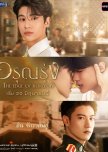
The Edge of Horizon — Thai Drama at Its Finest
Sometimes calling something a BL almost feels too restrictive. The Edge of Horizon is absolutely a BL. Its central love story is between two men, and that relationship is never hidden behind bromance or ambiguity. But after finishing it, I didn't think, “That was an excellent BL.” I thought, “That was an excellent Thai drama.” For me, this was a perfect 10/10.
The story begins in Siam in 1932, with Phob, the son of a palace nursemaid, growing up beside Prince Thinnakon. They love each other before they are old enough to fully understand why the world considers that love impossible. One is born into service; the other is born into royalty. Years later, they meet again as adults at the same moment their country itself is moving toward enormous political and social change. That setting is not simply decoration. The series takes place around the 1932 Siamese Revolution, when Thailand was moving away from absolute monarchy toward constitutional government. The changing country therefore reflects the changing relationship perfectly. Phob and Thinnakon are asking whether the social order that decided their places at birth should also have the right to decide whom they are allowed to love. What impressed me immediately was the respect given to that world. Period dramas are easy to make beautiful and much harder to make believable. Putting actors in old clothes and finding an antique house is not enough. Here, status exists in almost everything: the way characters speak, stand, enter rooms, address one another, dress and even look at somebody above or below them socially. The palace does not merely look old. It feels governed by rules.
The actors actually trained for those differences. Inn Jakkrasin explained that the younger Phob required workshops focused on the submissive physical behaviour expected of a servant, while the adult military Phob required completely different preparation. He consulted military contacts about details such as saluting and the positioning of his feet. Ongsa similarly changed his normal fast speech into something slower and more deliberate for Thinnakon, including a different vocal tone appropriate to his character's upbringing. Those details matter because class is the real third person in their relationship. Phob and Thinnakon never seem to believe they are unequal as human beings. The world keeps reminding them that they are. That is considerably more interesting than simply giving us an evil father who says, “You cannot date another man.”
Vasin's opposition is tied to sexuality, certainly, but also bloodline, title, duty, reputation and hierarchy. Thinnakon is not simply his son. He represents a royal family and everything that family believes must survive through him. From Vasin's perspective, his son's life is not entirely private property. And Chai Chatayodom is terrifying in the role. He doesn't need to become some ridiculous screaming villain because his authority already fills the room. This is a veteran actor with decades of experience and multiple acting awards, including major Best Actor and supporting-actor honours, and you can see exactly why. Vasin can frighten me with restraint. His anger feels dangerous because it comes from someone absolutely convinced that his position gives him the right to control everybody beneath him. The best villains rarely think they are villains. Vasin believes he is protecting his family, his status and the order that gave meaning to his own life. That does not excuse what he does, but it makes him much more interesting than a one-dimensional homophobic father. Chai gives him enough humanity that I could understand where the character's fear came from while still wanting somebody to push him into the nearest pond.
Then there is Pond Ponlawit. Yes, my dreamy "I wish he was my boyfriend" gorgeous boy was there, so obviously I was going to notice him. But Prince Chattrathorn is genuinely one of the most interesting supporting characters because Pond refuses to play him as simply unpleasant. Even Inn and Ongsa said they were surprised by what Pond created with the role. Inn specifically praised how much reasoning and detail Pond put behind Chattrathorn's arrogance, while Ongsa said the performance made a morally grey character feel much more dimensional than he expected. That is exactly what I saw. Chattrathorn can be arrogant, cruel and infuriating, but Pond makes you feel that there is an entire internal logic underneath every ugly decision. He doesn't simply walk into a scene carrying “antagonist energy.” He walks in believing he has reasons. And Pond has become very good at that. The real revelation for me, however, was Inn Jakkrasin and Ongsa Tthuchh.
Phob needed strength without becoming the stereotypical masculine protector who solves everything for the softer royal character. He has anger, pride and political convictions, but he also understands that loving Thinnakon means loving somebody whose entire identity was built inside the system Phob increasingly questions. Inn makes that contradiction believable. Phob wants change, but he loves somebody connected to what is changing. He can resent privilege without resenting Thinnakon. He can fight against hierarchy without pretending that history disappears because two men kiss. That is a much harder character to play than a simple revolutionary hero. Ongsa's Thinnakon is almost the opposite, and I loved him. He is gentle, adorable and sometimes painfully easy to want to protect, but the writing never confuses gentleness with stupidity. Thinnakon has been raised inside enormous privilege while simultaneously having very little freedom over his own life. He can command other people and yet cannot simply command the right to love Phob. Ongsa's eyes do so much of the work. Sometimes Thinnakon looks at Phob with the happiness of the child who grew up beside him. Sometimes he looks at him as the adult who already knows exactly how much their relationship could cost. The transition happens without needing constant dialogue. And together, Inn and Ongsa have chemistry. Not manufactured “BL couple chemistry.” Not two actors repeatedly placed close enough together until fandom decides they look cute. They feel attached. There is history in the way they look at each other. Their intimacy makes sense because the relationship began before sexuality even entered the equation. They know each other as children, friends, first loves, people separated by adults, and eventually men who have independently grown into very different positions. So when physical intimacy finally enters the relationship, it feels like an extension of everything already there.
The production treated those scenes with the same care as the rest of the drama. Inn and Ongsa have spoken about establishing trust and boundaries beforehand, while director Kathadeb built the scenes through carefully planned individual shots. The result is sensual without suddenly making the drama feel as though somebody changed channels and put on a different series. That visual control exists everywhere. The cinematography understands how gorgeous period drama can be without turning every frame into an advertisement for expensive costumes. Interiors feel inhabited. Natural light, darker rooms, formal spaces and open landscapes all have different emotional functions. The characters can look tiny inside architecture that represents generations of social hierarchy, then much freer when the world around them physically opens. And the costumes deserve their own praise. Viriya Pongkajorn's work doesn't simply make everybody attractive. Clothing immediately helps separate royalty, servants, military personnel and people occupying different social positions. As characters age and their places in society change, their appearance changes with them. The clothes become part of the storytelling rather than an expensive wardrobe department showing us what it bought. That is what I mean by respect. Respect for Thai clothing. Respect for forms of address. Respect for class differences. Respect for military behaviour. Respect for the political period. Respect for architecture and domestic hierarchy. The production does not treat 1932 Thailand as an exotic background created for international BL viewers. It treats it as Thailand. That distinction may be why The Edge of Horizon feels much closer to a traditional high-quality Thai lakorn than to the familiar BL production model. And one31 knows how to do this. This is the same broadcaster behind To Sir, With Love and, more recently, the large-scale period BL Love in the Moonlight. GagaOOLala even promoted The Edge of Horizon as another grand One31 period production following Love in the Moonlight. This is therefore not a tiny BL company suddenly experimenting with historical costumes. One31 is bringing the production traditions of mainstream Thai television into queer romance.
That may be one of the most important developments in Thai BL. For years, BL often operated like its own smaller industry: younger actors, smaller budgets, university settings, limited casts and productions primarily targeting BL audiences. There is nothing inherently wrong with that model, but The Edge of Horizon shows what happens when a male-male romance receives the same treatment as a major historical television drama. You get Chai Chatayodom. You get Kathaleeya McIntosh and Duangjai Hathaikarn. You get experienced supporting performers standing beside younger BL actors rather than a cast composed almost entirely of newcomers. You get proper historical drama. And suddenly the BL is no longer expected to carry everything alone. The family stories matter. Political divisions matter. Generational conflict matters. The women matter. The older characters matter. Social class matters. Even characters who oppose Phob and Thinnakon have lives beyond simply creating obstacles for the main couple. That ensemble is one of the reasons the eleven episodes feel justified. I never felt that I was waiting through “non-BL scenes” for the romance to come back. Those scenes are the drama. The relationship exists within a family and a country, so understanding those people is part of understanding why loving each other is so difficult.
Even the political conflict avoids becoming a simplistic lesson where monarchy equals evil and revolution automatically equals good. Phob wants social change for understandable reasons, but political movements are still made of human beings, and human beings bring ambition, self-interest and contradictions with them. Thinnakon's privilege does not make him cruel, while Phob's ideals do not make every decision around him automatically correct. History is rarely that clean. The music understands the same idea of hope. Ongsa's “Saeng Raek” (“First Light”) was created around the image behind the title Arun Rung—dawn, the point where light finally appears after darkness. Songwriter-producer Achariya Dulyapaiboon described the imagery through the apparently impossible meeting of sun and earth, mirroring two people whose worlds tell them they should never meet. That symbolism could have been painfully obvious. Instead, it works because the whole drama is about change that initially seems impossible. A servant can become an officer. A prince can question what his title demands of him. A country can transform its political structure. A family can discover that tradition is not automatically the same thing as morality. And two men born on opposite sides of a hierarchy can decide that the line separating them does not deserve more respect than their love. The ending therefore felt earned rather than simply satisfying. I didn't need another tragedy proving that gay historical romances must end in punishment. Nor did I need a ridiculous modern fantasy where everyone suddenly adopts 2026 values in 1932. The drama finds something much better: hope.
Change comes slowly. People resist it. Some traditions survive, others evolve, and the characters themselves have to learn which parts of the world they inherited deserve preservation and which deserve to be challenged. That is what a historical drama should do. It should not simply reproduce the past beautifully. It should make us understand why people lived as they did while still allowing us to question what that world demanded from them.
Final Thought
I went into The Edge of Horizon knowing Pond was there, so that was already one excellent reason for me to watch it. I finished it thinking about everybody. Inn's strength. Ongsa's gentleness. Pond turning an arrogant royal into a genuinely layered man. Chai Chatayodom being absolutely terrifying. The mothers, grandmother, women and servants around them. The costumes. The military detail. The language. The palace. The music. The politics. The intimacy. The history. That is why giving it 10/10 feels easy for me.
The Edge of Horizon never seems embarrassed to be a BL, but it also never behaves as though being a BL means it should accept lower ambitions. The romance receives the same visual care, dramatic weight and experienced supporting cast that a major heterosexual period lakorn would expect. And that is exactly how it should be. I don't want queer historical dramas to feel like modern BL actors playing dress-up in borrowed costumes. I want them to feel rooted in the country, culture and period they are portraying. I want traditions to matter because challenging a tradition means nothing if the audience never understands what that tradition represented. I want older actors capable of terrifying me, mothers whose choices hurt, political change with consequences, beautiful language, carefully designed clothing and romance that belongs organically inside all of it. The Edge of Horizon gave me that. Audience reception also suggests I was hardly alone. Shortly after the finale, IMDb had it at roughly 8.5/10 from around 180 ratings, with individual episodes repeatedly scoring around 9 or higher. That is still a modest international sample, but the consistency is notable, and contemporary reviews repeatedly praised the acting, cinematography, historical setting and the way romance was integrated with class and political change. For me, however, numbers are secondary. I have watched enough BL to know when I am forgiving something because I love the actors, when I am enjoying something despite its flaws, and when a production simply gives me almost nothing I want to change. This was the latter.
The Edge of Horizon is not just one of my favourite Thai BLs of 2026. It is Thai drama at its finest.
The story begins in Siam in 1932, with Phob, the son of a palace nursemaid, growing up beside Prince Thinnakon. They love each other before they are old enough to fully understand why the world considers that love impossible. One is born into service; the other is born into royalty. Years later, they meet again as adults at the same moment their country itself is moving toward enormous political and social change. That setting is not simply decoration. The series takes place around the 1932 Siamese Revolution, when Thailand was moving away from absolute monarchy toward constitutional government. The changing country therefore reflects the changing relationship perfectly. Phob and Thinnakon are asking whether the social order that decided their places at birth should also have the right to decide whom they are allowed to love. What impressed me immediately was the respect given to that world. Period dramas are easy to make beautiful and much harder to make believable. Putting actors in old clothes and finding an antique house is not enough. Here, status exists in almost everything: the way characters speak, stand, enter rooms, address one another, dress and even look at somebody above or below them socially. The palace does not merely look old. It feels governed by rules.
The actors actually trained for those differences. Inn Jakkrasin explained that the younger Phob required workshops focused on the submissive physical behaviour expected of a servant, while the adult military Phob required completely different preparation. He consulted military contacts about details such as saluting and the positioning of his feet. Ongsa similarly changed his normal fast speech into something slower and more deliberate for Thinnakon, including a different vocal tone appropriate to his character's upbringing. Those details matter because class is the real third person in their relationship. Phob and Thinnakon never seem to believe they are unequal as human beings. The world keeps reminding them that they are. That is considerably more interesting than simply giving us an evil father who says, “You cannot date another man.”
Vasin's opposition is tied to sexuality, certainly, but also bloodline, title, duty, reputation and hierarchy. Thinnakon is not simply his son. He represents a royal family and everything that family believes must survive through him. From Vasin's perspective, his son's life is not entirely private property. And Chai Chatayodom is terrifying in the role. He doesn't need to become some ridiculous screaming villain because his authority already fills the room. This is a veteran actor with decades of experience and multiple acting awards, including major Best Actor and supporting-actor honours, and you can see exactly why. Vasin can frighten me with restraint. His anger feels dangerous because it comes from someone absolutely convinced that his position gives him the right to control everybody beneath him. The best villains rarely think they are villains. Vasin believes he is protecting his family, his status and the order that gave meaning to his own life. That does not excuse what he does, but it makes him much more interesting than a one-dimensional homophobic father. Chai gives him enough humanity that I could understand where the character's fear came from while still wanting somebody to push him into the nearest pond.
Then there is Pond Ponlawit. Yes, my dreamy "I wish he was my boyfriend" gorgeous boy was there, so obviously I was going to notice him. But Prince Chattrathorn is genuinely one of the most interesting supporting characters because Pond refuses to play him as simply unpleasant. Even Inn and Ongsa said they were surprised by what Pond created with the role. Inn specifically praised how much reasoning and detail Pond put behind Chattrathorn's arrogance, while Ongsa said the performance made a morally grey character feel much more dimensional than he expected. That is exactly what I saw. Chattrathorn can be arrogant, cruel and infuriating, but Pond makes you feel that there is an entire internal logic underneath every ugly decision. He doesn't simply walk into a scene carrying “antagonist energy.” He walks in believing he has reasons. And Pond has become very good at that. The real revelation for me, however, was Inn Jakkrasin and Ongsa Tthuchh.
Phob needed strength without becoming the stereotypical masculine protector who solves everything for the softer royal character. He has anger, pride and political convictions, but he also understands that loving Thinnakon means loving somebody whose entire identity was built inside the system Phob increasingly questions. Inn makes that contradiction believable. Phob wants change, but he loves somebody connected to what is changing. He can resent privilege without resenting Thinnakon. He can fight against hierarchy without pretending that history disappears because two men kiss. That is a much harder character to play than a simple revolutionary hero. Ongsa's Thinnakon is almost the opposite, and I loved him. He is gentle, adorable and sometimes painfully easy to want to protect, but the writing never confuses gentleness with stupidity. Thinnakon has been raised inside enormous privilege while simultaneously having very little freedom over his own life. He can command other people and yet cannot simply command the right to love Phob. Ongsa's eyes do so much of the work. Sometimes Thinnakon looks at Phob with the happiness of the child who grew up beside him. Sometimes he looks at him as the adult who already knows exactly how much their relationship could cost. The transition happens without needing constant dialogue. And together, Inn and Ongsa have chemistry. Not manufactured “BL couple chemistry.” Not two actors repeatedly placed close enough together until fandom decides they look cute. They feel attached. There is history in the way they look at each other. Their intimacy makes sense because the relationship began before sexuality even entered the equation. They know each other as children, friends, first loves, people separated by adults, and eventually men who have independently grown into very different positions. So when physical intimacy finally enters the relationship, it feels like an extension of everything already there.
The production treated those scenes with the same care as the rest of the drama. Inn and Ongsa have spoken about establishing trust and boundaries beforehand, while director Kathadeb built the scenes through carefully planned individual shots. The result is sensual without suddenly making the drama feel as though somebody changed channels and put on a different series. That visual control exists everywhere. The cinematography understands how gorgeous period drama can be without turning every frame into an advertisement for expensive costumes. Interiors feel inhabited. Natural light, darker rooms, formal spaces and open landscapes all have different emotional functions. The characters can look tiny inside architecture that represents generations of social hierarchy, then much freer when the world around them physically opens. And the costumes deserve their own praise. Viriya Pongkajorn's work doesn't simply make everybody attractive. Clothing immediately helps separate royalty, servants, military personnel and people occupying different social positions. As characters age and their places in society change, their appearance changes with them. The clothes become part of the storytelling rather than an expensive wardrobe department showing us what it bought. That is what I mean by respect. Respect for Thai clothing. Respect for forms of address. Respect for class differences. Respect for military behaviour. Respect for the political period. Respect for architecture and domestic hierarchy. The production does not treat 1932 Thailand as an exotic background created for international BL viewers. It treats it as Thailand. That distinction may be why The Edge of Horizon feels much closer to a traditional high-quality Thai lakorn than to the familiar BL production model. And one31 knows how to do this. This is the same broadcaster behind To Sir, With Love and, more recently, the large-scale period BL Love in the Moonlight. GagaOOLala even promoted The Edge of Horizon as another grand One31 period production following Love in the Moonlight. This is therefore not a tiny BL company suddenly experimenting with historical costumes. One31 is bringing the production traditions of mainstream Thai television into queer romance.
That may be one of the most important developments in Thai BL. For years, BL often operated like its own smaller industry: younger actors, smaller budgets, university settings, limited casts and productions primarily targeting BL audiences. There is nothing inherently wrong with that model, but The Edge of Horizon shows what happens when a male-male romance receives the same treatment as a major historical television drama. You get Chai Chatayodom. You get Kathaleeya McIntosh and Duangjai Hathaikarn. You get experienced supporting performers standing beside younger BL actors rather than a cast composed almost entirely of newcomers. You get proper historical drama. And suddenly the BL is no longer expected to carry everything alone. The family stories matter. Political divisions matter. Generational conflict matters. The women matter. The older characters matter. Social class matters. Even characters who oppose Phob and Thinnakon have lives beyond simply creating obstacles for the main couple. That ensemble is one of the reasons the eleven episodes feel justified. I never felt that I was waiting through “non-BL scenes” for the romance to come back. Those scenes are the drama. The relationship exists within a family and a country, so understanding those people is part of understanding why loving each other is so difficult.
Even the political conflict avoids becoming a simplistic lesson where monarchy equals evil and revolution automatically equals good. Phob wants social change for understandable reasons, but political movements are still made of human beings, and human beings bring ambition, self-interest and contradictions with them. Thinnakon's privilege does not make him cruel, while Phob's ideals do not make every decision around him automatically correct. History is rarely that clean. The music understands the same idea of hope. Ongsa's “Saeng Raek” (“First Light”) was created around the image behind the title Arun Rung—dawn, the point where light finally appears after darkness. Songwriter-producer Achariya Dulyapaiboon described the imagery through the apparently impossible meeting of sun and earth, mirroring two people whose worlds tell them they should never meet. That symbolism could have been painfully obvious. Instead, it works because the whole drama is about change that initially seems impossible. A servant can become an officer. A prince can question what his title demands of him. A country can transform its political structure. A family can discover that tradition is not automatically the same thing as morality. And two men born on opposite sides of a hierarchy can decide that the line separating them does not deserve more respect than their love. The ending therefore felt earned rather than simply satisfying. I didn't need another tragedy proving that gay historical romances must end in punishment. Nor did I need a ridiculous modern fantasy where everyone suddenly adopts 2026 values in 1932. The drama finds something much better: hope.
Change comes slowly. People resist it. Some traditions survive, others evolve, and the characters themselves have to learn which parts of the world they inherited deserve preservation and which deserve to be challenged. That is what a historical drama should do. It should not simply reproduce the past beautifully. It should make us understand why people lived as they did while still allowing us to question what that world demanded from them.
Final Thought
I went into The Edge of Horizon knowing Pond was there, so that was already one excellent reason for me to watch it. I finished it thinking about everybody. Inn's strength. Ongsa's gentleness. Pond turning an arrogant royal into a genuinely layered man. Chai Chatayodom being absolutely terrifying. The mothers, grandmother, women and servants around them. The costumes. The military detail. The language. The palace. The music. The politics. The intimacy. The history. That is why giving it 10/10 feels easy for me.
The Edge of Horizon never seems embarrassed to be a BL, but it also never behaves as though being a BL means it should accept lower ambitions. The romance receives the same visual care, dramatic weight and experienced supporting cast that a major heterosexual period lakorn would expect. And that is exactly how it should be. I don't want queer historical dramas to feel like modern BL actors playing dress-up in borrowed costumes. I want them to feel rooted in the country, culture and period they are portraying. I want traditions to matter because challenging a tradition means nothing if the audience never understands what that tradition represented. I want older actors capable of terrifying me, mothers whose choices hurt, political change with consequences, beautiful language, carefully designed clothing and romance that belongs organically inside all of it. The Edge of Horizon gave me that. Audience reception also suggests I was hardly alone. Shortly after the finale, IMDb had it at roughly 8.5/10 from around 180 ratings, with individual episodes repeatedly scoring around 9 or higher. That is still a modest international sample, but the consistency is notable, and contemporary reviews repeatedly praised the acting, cinematography, historical setting and the way romance was integrated with class and political change. For me, however, numbers are secondary. I have watched enough BL to know when I am forgiving something because I love the actors, when I am enjoying something despite its flaws, and when a production simply gives me almost nothing I want to change. This was the latter.
The Edge of Horizon is not just one of my favourite Thai BLs of 2026. It is Thai drama at its finest.
Was this review helpful to you?


