
 Editorials

 1
1 3
3


Caveat Emptor!!! buyer beware.
Caveat emptor. When something looks too good to be true, perhaps we should be wary.Was I sold a bag of rotten eggs? And can I only blame myself because I was attracted to the beautiful packaging? I have been watching Royal Betrothal slowly unravel since the second half began, and I kept telling myself, perhaps it will get better. That is usually the danger with these dramas, you invest so much time and emotion that you keep hoping the writers will somehow find their way back.
Unfortunately, by episode 30, I finally gave up. Their version of a Game of Thrones “Red Wedding” was the moment I couldn’t even finish the episode. Everything about it felt wrong. The bait-and-switch, only to be baited and switched again, became exhausting. At some point I had to ask myself: How creative were the writers when they ran out of ideas? The excessive slow-motion sequences became almost comical, the fight scenes defied any sense of realism, and the drama seemed to substitute spectacle for storytelling. With only two episodes left, I finally succumbed to my inner desire to drop the series. Life is simply too short to finish a drama I no longer enjoy.
And that is particularly disappointing because this drama had so much going for it. The production looked beautiful, the cast was attractive, and there were moments early on when I genuinely thought we were getting something special. Wu Jin Yan and Chen Zhe Yuan are both talented actors, and they certainly have the ability to carry a good story. But as a viewer, I also have to hold them accountable not for the writing or directing, but for the choices they make about the projects they take on. As top actors, they have some say in the stories they attach themselves to. After this one, unfortunately, they have lost a little of the goodwill I had as a fan.
I know Chinese dramas are becoming increasingly mainstream and are reaching audiences far beyond China. That is wonderful. But please, don’t mistake international audiences for ignorant fools who will accept anything simply because the costumes are beautiful, the actors are gorgeous and the production looks expensive. We are watching. We are paying attention. If anything, expanding into the international market means the writing has to step up, more credible characters, more intelligent plotting, and storytelling that doesn’t insult the audience’s intelligence. The Chinese drama industry absolutely has the talent and resources to do this. I’ve seen it. And unfortunately, Royal Betrothal is no Pursuit of Jade.
If this becomes a continuing trend, audiences outside China may eventually shift their attention back to Korean dramas and other Asian productions. There is plenty of competition out there, and beautiful packaging can only take you so far.
Having said all that, I realize this is a rather long rant. But sometimes you simply have to get it out of your system. I really don’t like being sold a beautiful bag only to discover that someone forgot to check what was inside.
So, with two episodes remaining, I’m moving on. There are plenty of other dramas waiting for me and perhaps after this disappointment, it’s time for some completely senseless high-school BL nonsense. Sometimes that’s exactly what the doctor ordered.
And next time, please don’t call it Royal Betrothal.
Just call it what it really is:
“Chop Suey: The Movie… Part Deux.”
Was this review helpful to you?

Spooked but where’s the love.
When the movies The Sixth Sense and Ghost have a baby, you get Spooky in Love. So let’s be clear: this was never really about investigating death and murder, nor was it truly a rom-com.The references to Greek mythology and the boat that carries souls to the afterlife were a creative touch (sarcasm intended), and an elaborate way to end a soul, if you will. But apparently, nothing demonstrates true love better than sacrificing oneself by getting run over by a truck. Because, naturally.
This show is so riddled with tropes that it could fill a Swiss cheese. So let’s just call it what it is: a cheesy show.
Unfortunately, it is also symptomatic of what I find increasingly frustrating about some newer K-dramas: recycled ideas, lazy writing, and stories seemingly designed around what will generate Netflix hits rather than what makes for a satisfying narrative. The audience is apparently expected to consume whatever is served, specially cheese.
Just as I said in my episode reviews, the ending completely fell off a cliff. What started with an intriguing premise ultimately became unremarkable, predictable, and forgettable.
Maybe it works for dreamers. It certainly didn’t work for me.
And that’s the real shame. With two such talented actors carrying the story, they deserved a much better script.
Was this review helpful to you?
Enigmatic. Perplexing. Healing.
This series begins with loss…with people finding support in one another through the trauma of losing someone they love. Like a train ride, it starts very slowly, gradually gaining speed and momentum until…it hits a wall.The writers beautifully incorporate so many metaphors throughout the story that, as a viewer, I constantly found myself looking for answers. Why can’t you just tell me what is happening? Because that would dumb me down.
This is what I admire about Japanese writers. They have a creative way of challenging our intellect without resorting to cheap tricks. Here we simply watch people dealing with loss, grief, marriage, love and the things we keep hidden. And just when you think you understand where the story is going, something happens that changes everything.
Because you’ve already become emotionally invested in these characters, your reaction is exactly what the writers wanted…anger, confusion, disbelief, frustration. Call it whatever you like.
But like hanging a T-shirt out to dry, understanding takes time, patience and acceptance.
That’s when the train starts gaining momentum.
Then, just as you’ve surrendered to the idea that perhaps this journey is becoming boring and monotonous…the train hits the wall.
Suddenly your emotions are pulled right back in.
What just happened?
Was that real?
Was that a dream?
And once again, you’re questioning everything you thought you understood.
The acting is superb and remarkably natural. During the last few episodes, I purposely turned off the closed captions. I wanted to listen to their voices, watch their eyes and study their body language. Sometimes those things tell a story all by themselves. By watching this way, every revelation became even more shocking because I wasn’t being told what to think…I had to interpret what I was seeing.
And perhaps that is what this entire series has been asking us to do.
How well do we really know someone we’ve loved for years?
You can sleep beside someone every night, build a home together and create what appears to be a loving and peaceful marriage…yet never share your deepest thoughts, fears and secrets. We sometimes reveal only the parts of ourselves that we believe will preserve that happiness, while keeping our real selves safely hidden underneath.
Is that still love?
Perhaps the title itself provides the answer.
A T-shirt doesn’t dry simply because the washing machine has stopped spinning. Pull it out too soon and it may still be wet. You have to hang it up, expose it to the air…and give it time.
Maybe people aren’t so different.
And perhaps love isn’t about keeping everything clean and perfectly folded. Maybe it’s about finally exposing everything we’ve kept hidden and discovering whether, after all of it has been washed and hung out to dry, we still choose the person standing beside us.
I’m on episode 9, however the series ends it would make me feel good. Because finding love and even losing it after is still better that never to have loved at all.
Was this review helpful to you?
I am challenged by this series
I’ve written many reviews and this how challenges me so much that I wrote this one episode before it ends. I’m genuinely struggling to decide how I feel about this series. Even after eleven episodes, I’m still undecided whether I like it or not, and perhaps that’s part of what makes it so intriguing.Deep In explores actors wrestling with deep psychological issues while asking an interesting question: how much of a character eventually becomes part of the actor portraying them? Years ago I had the opportunity to speak with a well-known actor about this very subject. When I asked whether playing certain roles affected him personally, he simply replied, “How could it not? The characters we play eventually become every bit a part of who we are.” That conversation stayed with me, and this series attempts to explore that idea through its “show within a show” narrative.
I’ve always enjoyed stories that blur the line between fiction and reality. When executed well, they become fascinating character studies. Unfortunately, Deep In isn’t always successful because the performances don’t feel equally matched.
Ollie, despite being only twenty years old, appears more comfortable inhabiting both of his roles though struggle with his youthful looks. Although this may also be Shu Yuan’s first major acting role, his inexperience is more apparent. There are moments where he feels self-conscious rather than fully immersed in the character, creating a disconnect that weakens the emotional foundation of the story.
If viewers are simply looking for another BL romance, attractive leads and fan service may be enough. But in today’s crowded BL landscape, that’s rarely enough to make a series memorable. What separates a great drama from an average one isn’t how many romantic or intimate scenes it contains, but whether the emotions feel authentic. A passionate kiss or an NC scene may quicken the pulse for a moment, regardless of whether it’s a straight or gay romance, but those moments fade quickly. What remains are the quiet, emotionally truthful performances that stay with you long after the credits roll.
I don’t watch BL because I want attractive actors paired together. I watch because I want to understand the people they’re portraying. Genuine chemistry comes from believable performances, not simply from fan expectations or carefully cultivated “shipping.” Great actors create emotional connections that transcend the genre itself.
Perhaps that’s why I’ve grown increasingly critical of the BL industry as a whole. Thai BL, in particular, has become an effective launching pad for young actors, but the industry’s reliance on fixed pairings and fan-driven shipping can also become limiting. Watching the same couples play variations of similar characters eventually loses its novelty. Variety challenges actors to grow, while repetition often breeds complacency.
Another challenge Deep In faces is its casting. The story asks very young-looking actors to portray characters with emotional maturity beyond their years. Ironically, I think it may have been easier for older actors to play younger roles than for these youthful actors to convincingly portray older, more psychologically complex adults. Their performances are sincere, but I was never entirely convinced by the illusion.
What I do appreciate is that the series isn’t afraid to explore uncomfortable ideas. What happens when an actor’s role begins to reshape his own identity? When actors genuinely fall in love because of the characters they portray, does it last? The show even touches on morally complicated territory that invites discussion or arguments rather than easy answers. Whether viewers accept these probably depends on how willing they are to separate fantasy from reality.
With one episode remaining, I’m still undecided. I admire the ambition behind Deep In far more than I admire its execution. Perhaps the finale will bring everything together. For now, I’m left appreciating the questions it asks more than the answers it has given.
Was this review helpful to you?
Redemption, not revenge.
This series would have been more appropriately titled “Redemption.” While it begins with Min’s relentless pursuit of revenge against the man who betrayed him, it gradually evolves into something much more meaningful. It explores the realization that a life fueled by vengeance is also consumed by anger and hatred. In Min’s case, the greatest act of forgiveness isn’t directed at someone else, it’s forgiving himself so he can finally move forward. In the end, he learns that what truly matters isn’t revenge, but the people who stand beside him.The series does an excellent job of maintaining both its momentum and narrative consistency from beginning to end. That said, I couldn’t help but feel that ten episodes were simply not enough. Two additional episodes would have allowed for richer character development, particularly the relationship between Sky and the photographer Pakin. Arthur also deserved more depth, especially considering his mother’s pivotal role in building Dream. That aspect of the story felt underexplored. The series also shines a light on the darker side of the entertainment industry. While this isn’t a new theme, it’s an unfortunate reality that has existed for decades, and the show presents it effectively without sensationalizing it.
The acting is top-notch, and much of that credit belongs to the director, who successfully drew out deeply emotional performances from both Toptap and Min. They’re already talented actors, though I still believe both have room to grow in their craft. What truly elevates the series, however, is their chemistry. It is absolutely electric. Their NC-17 scenes are undeniably intense and will send more than a few heart rates into tachycardia. And yes… it’s nearly impossible not to notice those infamous hot buns.
This pairing has undoubtedly cemented their place as a fan-favorite ship. My only hope is that they avoid the trap that has claimed so many popular on-screen couples before them, accepting weak scripts simply to capitalize on fan service. They have proven they can deliver compelling performances, and they deserve projects that challenge them as actors rather than merely feeding the fandom.
Was this review helpful to you?
history is rarely kind but real
I’m not a big fan of dramas or movies that leave me sad and teary-eyed in the end, but I wanted to watch this film because of its significance in Korean history and because of Park Jihoon (known fo this role in Netflix’s Weak Hero Class. I’ve become a fan of this antithesis of the typical Asian lead actor. Jihoon is not particularly tall and he doesn’t have that stereotypical Korean leading-man face, but he has this puppy eyes that is full of emotion and his screen presence is undeniable and emotionally honest. Both PJH and Yoo Hai Jin deserves the Baeksang awards for their outstanding acting.This is the tragic story set during the 15th century Joseon era and the reign of King Danjong, a teenager who inherited the throne at a very young age after the death of his father. His uncle eventually took the throne from him, and the young king was exiled to a faraway land. The movie centers on two characters: the former king and the town chief who becomes his warden.
Even though we already know how the story ends, I truly enjoyed the evolution of the characters and the gradual friendship that develops between them. There are quiet moments in the film that touch your heart deeply and left both my wife and me very teary-eyed. Yet somehow, you leave the theater with a sense of warmth because, despite the tragedy, humanity still wins in the end.
It’s currently on limited release in the U.S., and we always enjoy driving to Koreatown to watch Korean films. It just feels more authentic somehow. The movie has been a huge hit in South Korea, and I completely understand why. I think many people could relate to the young king, his loneliness, helplessness, and quiet dignity
Was this review helpful to you?
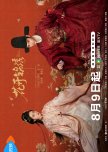
An epic story of love and courage
Too many Chinese dramas arrive wrapped in hype because of their popular actors, only to disappoint with weak scripts and little chemistry. Sometimes the age difference becomes impossible to ignore, while other pairings simply lack that elusive spark. Add the overused palace intrigues, endless scheming, and conversations that drag on for several episodes…and many historical dramas begin to feel interchangeable.Road to Splendor feels different. At its heart, this is the story of two people stripped of security and forced to survive through difficult circumstances. Zhao Ling and Fu Tingyun begin with very little except their intelligence, courage, and growing trust in one another. Together they overcome each challenge, rise in status, and move closer to the lives they once dreamed of…only to discover that perhaps they had already found their dream simply by being together. There were true poignant conversations, realizations, regret for both of them.
The series unfolds through the different stages of their journey. With every new place, they encounter people who test them, help them, or eventually become part of the family they create around themselves. Their strength is never entirely individual. Zhao Ling may possess the boldness and instinct to survive, while Fu Tingyun brings patience, intelligence, and quiet resolve. Together, they become stronger than either could have been alone.
But entering the imperial court changes the game. Survival among ordinary people required courage and resourcefulness…survival among the powerful requires experience, restraint, and an understanding of rules they are only beginning to learn. Their rise gives them greater influence, but it also exposes their weaknesses. Every promotion places them closer to power…and closer to those who know how to manipulate it. There were some great antagonists as well who added balance tothe show, getting me riled up , but without them the show would have been flat lacking depth and context. And for once, the mighty Secretaries do not control the Emperor or the Imperial guards, assassins or a large military.
The Road to Splendor often times is difficult and filled with sacrifices, only through these lessons and painful experience will our protagonist learn, similar to the game of “Go” every win also means sacrifices.
This drama does not rely on dramatic and grand entrances, nor does it use high-wire climactic acrobats.
What I appreciate most is that the story rarely feels stagnant. It avoids many of the usual Chinese-drama problems where conflicts are stretched unnecessarily or buried beneath endless, meaningless conversations. Each chapter builds naturally upon the one before it, and every struggle teaches Zhao Ling and Fu Tingyun something they will need for the next. Watching them learn how to survive the politics surrounding them is far more satisfying than the palace intrigue itself.
The chemistry between Ding Yuxi and Deng Enxi is unmistakable yet never forced. It can be seen in the way Zhao Ling looks at Fu Tingyun…and in the subtle, gentle way she disarms him without diminishing his strength. Both actors are undeniably attractive, but their appearances never overwhelm their characters. Ding Yuxi has his own rugged, masculine presence, especially beneath that wide-brimmed straw hat, while Deng Enxi gives Fu Tingyun a quiet grace that gradually reveals remarkable strength.
Perhaps the real splendor in this story is not the wealth, status, or recognition they eventually gain. It is the road they traveled together…and the realization that everything they were searching for had already been walking beside them.
Was this review helpful to you?
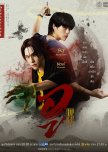
when chemistry isn’t enough
Since watching High School Frenemy, I became a fan of SkyNani. After all, they broke away from GMMTV’s familiar formula by making a bromance instead of a BL. Similar to The Untamed, the pair built a loyal following through their chemistry alone.But unlike The Untamed, I think a bromance can only sustain its appeal for so long. This is one reason I appreciate that other Asian countries don’t always follow the Thai BL formula. Sometimes pairings become forced, and actors end up playing roles that don’t truly suit them. Yes, they can cry on cue or exchange intense gazes, but chemistry alone isn’t enough.
If I’m being completely honest, I think Sky and Nani are stronger as individual actors than as a permanent screen pairing. I’m also glad they don’t participate in the song-and-dance fan events that many BL couples do. In my opinion, that preserves their value as actors rather than turning them into fan-service personalities.
As for Wu, it started with tremendous promise but quickly lost its momentum. The opening episodes were compelling, yet the story soon became predictable and, at times, overly sentimental. More disappointing was the lack of meaningful character development. Nearly every major character occupied a pivotal role in the narrative, yet few were given the depth they deserved. The supporting cast, rather than enriching the story, often felt underutilized.
The biggest indication that the series wasn’t working for me was that I found myself rooting for the antagonists. When the villains become more compelling than the protagonists, it’s usually a sign that the emotional investment has shifted.
I also think the series suffered from its length. Recently, many Thai BL dramas have shortened their episode counts, perhaps following the trend of Japanese dramas. But what works in Japan doesn’t necessarily translate elsewhere. Japanese storytellers have mastered the art of concise, tightly constructed narratives. Simply making a series shorter doesn’t guarantee better pacing. In Wu, I felt there was enough material for a longer series that could have explored its characters and themes with greater depth.
I’m sure many fans will disagree with my assessment, and that’s perfectly fine. I’ve long accepted that we don’t all see stories the same way. It would be a rather dull world if we did.
In today’s BL landscape, where dozens of new titles are released every year, audiences have more choices than ever before. Ironically, while the quantity has increased, I can’t help but feel that the overall quality has gradually declined.
Was this review helpful to you?

The second season syndrome
Season 1 started with Uncle Jian dead, his body shown and his funeral taking place, while the story revealed that he was the head of Muthehelp. He also left his niece the green code, a signal that everyone in the organization was obligated to protect her. That setup created such a powerful foundation that I was expecting Season 2 to pick up directly from there. Instead, the connection felt somewhat loose.This is what I call the second-season syndrome. When the first season is a classic, how do you possibly top it?
It reminded me of the first time I watched Kill Bill: Vol. 1. That feeling of discovering something completely fresh is almost impossible to recreate. Season 2 doesn’t quite have that same impact. But to be fair to the writers, they weren’t really trying to repeat Season 1. This time, they went deeper into the mythology, the characters, their backgrounds and motivations and, of course, there were a lot more deaths.
And honestly, it wouldn’t be much of a bloody action series if only the good guys were allowed to survive.
My favorite character in the entire series remains our supreme female antagonist. She drove me absolutely boiling, and I have to admit, I admire her craziness. There is something fascinating about her anger. Deep down, there is even a part of her we can understand. Her rage doesn’t come from nowhere; it comes from pain, betrayal and the feeling of being wronged.
Jian may have played a smaller role this time around, but I actually enjoyed seeing more of my favorite lead actor. Still, at its heart, this season feels like a story about the wrath of women who kill.
Unlike Season 1, there isn’t much here that demands to make sense. Don’t look for profound meaning. Don’t expect to finish an episode longing for love or wondering who you want to become.
This is not that kind of show.
It’s meant to be enjoyed with a bowl of popcorn on the couch while watching people do increasingly outrageous and senseless things to one another.
And you know what?
For what it is, I enjoyed every bloody minute of it.
Was this review helpful to you?
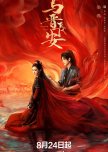
It’s Zorro on steroids
I really wanted to like this Chinese drama, after all you have to strong lead actors and great supporting actors as well. My issue is the storyline and timeline itself. Sometimes I watch a show and feel like they need to add more episode but in the case of Shadow Love, they could have cut it short. The show started very well with a fine balance of action, love and tension, but as the show moved on, several episode was unnecessary in my opinion and just cut short. It’s like watching tending where the top notch athletes kept lobbing the ball waiting for who will hit the ball hard and end the match. This lack of continuity as the relationships evolve is so disruptive in the flow. And what about them weak and lame emperors. Basically the story talks about two strong characters and everyone around them is weak, unable to make a strong sustainable action.The production at times was good and most of the times was poorly done. Unlike the Guardians of. Dafeng, Shadow Love looked cheap. In costumes and an unconvincing masked outfit. Yes, you can recognize who is behind the masked zorro in this show. Maybe I can’t help but compare all the other beautifully produced shows, it just doesn’t cut it for me.
Was this review helpful to you?
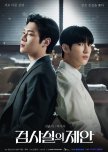
The crime is the ending
The series began with so much intrigue that it kept me glued to the screen, eagerly anticipating each new episode. It was a classic whodunit that constantly had me guessing who the real culprit was. While it lacked the intensity and suspense of a true crime drama, it’s difficult to expect that level of grit from a BL series.This was a low-production Korean series with plenty of potential. The premise was promising, but unfortunately, the writing never lived up to it. With episodes running only about 20 minutes each, the story lacked the depth needed to develop either the mystery or the characters. The romance didn’t feel natural and often seemed forced. Too many questions were raised throughout the series, only to be left unclear.
The acting, particularly by Park Si Woo, wasn’t convincing. Whether it was his performance or the director’s inability to draw out the necessary emotions, his portrayal of a broken, defenseless former police officer was difficult to believe. In contrast, Cho Min Kyu was the standout of the cast, delivering a compelling performance as the unhinged antihero.
The ending was perhaps the biggest disappointment. The obvious CGI beach scene felt completely out of place, and using handcuffs as a symbol of lifelong commitment came across as more cheesy than meaningful.
I genuinely wanted this series to succeed and found myself rooting for it from the very beginning. Sadly, despite its intriguing premise, it ended up being a missed opportunity that never fulfilled its potential.
Was this review helpful to you?

This review may contain spoilers
Something wrong happened along the way
I know this will ruffle a few feathers among fans, but Veil of Shadows simply didn’t work for me and in more ways than one.First, the storyline felt unnecessarily convoluted. Instead of building intrigue, it created confusion, with noticeable plot holes and repetitive scenes that added little value. I found myself trying to piece things together rather than being immersed in the narrative.
Second, the promotion of Joseph Zheng as a leading figure felt misleading. His role comes across more as supporting, which may leave viewers expecting a different kind of presence feeling disappointed.
Visually, the series leans heavily on CGI—so much so that it often distracts from the performances rather than enhancing them. Style seems to take precedence over substance, and not always to the show’s benefit.
And then there’s the cinematography choice: the constant close-ups paired with dramatically wind-swept, wavy hair. It’s a stylistic device that quickly becomes overused, losing its intended impact and turning almost into a visual cliché.
The stakes also feel diminished. Characters die, only to be revived through a recurring “magic stone” device and if all things fail there’s the qlubiquitous “everything-can-be-fix-with-time-travel”This cycle undercuts emotional weight so why invest in loss if it’s repeatedly undone?
It also raises a fundamental question: whose story is this, really? The narrative focus feels scattered, making it hard to connect deeply with any one character or relationship.
Finally, the inclusion of the “weasel demon” character while perhaps intended as quirky or compelling felt more distracting than engaging, especially as the role grew in prominence.
Overall, the show reminds me of the same issues I had with Fangs of Fortune: over-the-top dramatics, an overcrowded cast, and a storyline that struggles under its own ambition. There’s a distinct flair for spectacle, but without clarity and cohesion, it becomes difficult to stay invested.
Of course, this is just my perspective. If you enjoyed the series, that’s completely valid. But for me, it ultimately fell short of its potential.
Was this review helpful to you?
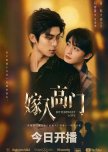
A dark Cinderella story
I stopped at episode 3 as it crossed the line from dark drama into exploitation.The rape and prolonged humiliation weren’t simply uncomfortable, they felt gratuitous. What puzzles me is how Chinese censors continue to allow this kind of content in same-sex stories when Addicted was effectively shut down years ago for portraying a consensual gay relationship. The inconsistency is hard to ignore.
At this point, the series feels less like a romance and more like an omegaverse fantasy wrapped in a prestige drama. Attraction may exist between the leads, but attraction does not justify abuse. There is nothing romantic about coercion, humiliation, or sexual violence.
Whether the relationship is heterosexual or homosexual makes no difference. A relationship built on domination and abuse should never be romanticized.
Unfortunately, BL dramas have a recurring habit of equating passion with violence, reinforcing the stereotype that gay relationships are inherently toxic, masochistic, or defined by power imbalances. Those dynamics may exist for some people, but they are far from the reality for most.
Unlike Double Helix, where two damaged people slowly destroyed each other through their choices, Bittersweet begins with a master-and-slave dynamic that demands sympathy for the victim while simultaneously packaging the abuse as the catalyst for romance. That’s a premise I struggle to accept.
The one thing the director unquestionably gets right is making us empathize with the protagonist. Every indignity he suffers makes me want to see him reclaim his agency. But if the series is trying to present this as meaningful social commentary about China, it misses the mark. The supporting characters are so relentlessly cruel that they feel more like caricatures than people.
I’m sure the story is building toward the protagonist finally standing up to his controlling brother, his manipulative wife, and ultimately his abuser. I only hope that when it gets there, it earns that redemption instead of asking viewers to mistake trauma for love.
Was this review helpful to you?
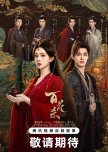
A story of love beautifully told
It’s rare to watch a Chinese drama where the writing, directing, screenplay, and performances sustain a steadily growing intensity from beginning to end. Too often, C-dramas start with tremendous promise, lose momentum halfway through, and stumble toward a rushed or unsatisfying conclusion. Blossoms of Power is one of the rare exceptions. Every episode builds naturally upon the last, making the final payoff feel completely earned.The female lead is undoubtedly the heart of the series. Rather than serving as a supporting figure to the male protagonist, she commands every scene with intelligence, confidence, and emotional depth. Her relationship with the Crown Prince is equally refreshing. He follows her lead not out of weakness, but out of admiration, trust, and genuine love, creating one of the healthiest and most balanced partnerships I’ve seen in a palace drama.
What impressed me most was how unpredictable the story remained until the very end. Just when I thought I knew where it was heading, the writers managed to surprise me with an ending that was both satisfying and emotionally rewarding. In an era where many recent C-dramas have settled for recycled plots and mediocre storytelling, Blossoms of Power reminds us how compelling the genre can be when the script is given the attention it deserves.
I rarely feel the urge to rewatch a drama, but this is one I’ll gladly revisit. In many ways, I found it even more convincing than the highly praised Pursuit of Jade. The heroine possesses no supernatural abilities or exaggerated martial arts skills. Her greatest gift is an extraordinary sense of smell, yet she skillfully navigates the dangerous complexities of palace politics, earns the respect and affection of multiple princes, and never loses sight of her purpose. That, to me, is what makes a truly compelling female lead. Her strength comes from intelligence, resilience, and composure, not from impossible feats of acrobatics.
Another welcome surprise is the production itself. The series avoids excessive CGI and over-the-top wire-fu that often distract from the story. Instead, it invests in believable performances, thoughtful character development, and carefully crafted political intrigue. The result is a drama that feels grounded, emotionally engaging, and consistently rewarding.
Most importantly, Blossoms of Power delivers something increasingly rare: a beautiful, well-earned, and thoroughly satisfying ending. It never loses sight of its characters or its story, making it one of the finest palace dramas I’ve watched in recent years.
Was this review helpful to you?
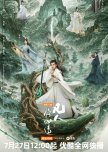
When all the great ingredients failed to make a beautiful dish
The premise of this fantasy Chinese drama about a simple country boy with no special powers and lacks ambitions, going through life with a passion to grow and learn is classics as time. The best part is watching our protagonist grow into the hero that he is. Unfortunately the show is filled with so many characters that diluted the essence of the story. Some characters were introduced but led to nowhere and makes one wonder what was that all about. Even the antagonists were confusing to the point that there was no single entity who took the role. So was this good vs evil or dumb vs dumber? The show felt like watching The Hunger games met Harry Potter and the video game Destiny. Acting was good but lack depth and sincerity. My favorite parts were the fighting scene with magical powers which were beautifully done but other than that we could have skipped 20 episodes or maybe needed another 10 episodes to expand on the storylines.
Our protagonist had a personality of a toad who only loved to swallow everything in front of him. The introduction of a love story only to end with nothing felt like a hitting the wall at high speed.
Just like the love story lost in the muddy waters, there was not enough focus for his friendship to grow with his best friend, albeit a soulless body wearing a mask. Not sure why he has to wear a mask at all.
The show has so much potential starting out in the first epsisodes only to be messed up by bad script writing and poor editing. What is unfortunate when the storyline goes awry is that the ending is even worse. Maybe there will be another season based on how it ends yet at this point I really didn’t know who to root for and why should there be another season. If there is another season with a really bad storyline or script please spare us the agony of figuring out the essence of this show.
Was this review helpful to you?


