
 Editorials


 1
1 3
3


Disney’s 12 dwarfs fails again
Just like its twelve characters, this show is struggling with an identity crisis. It can’t decide if it wants to be a comedy, an action piece, or a suspense thriller. With such a large ensemble, the real challenge is developing each character and their relationships—and here, it falls short.For once, I found myself rooting more for the antagonist than the leads. Ever since Crash Landing on You, many K-dramas seem stuck in a rut, especially under the growing influence of U.S. film studios. Some of my friends have already switched over to C-dramas for fresher storytelling.
Sorry Disney, but if you couldn’t save the Seven Dwarfs, there’s no saving these twelve disciples either
Was this review helpful to you?

The age of discovery of pain and happiness
Episode 7 surprised me. I started this series simply enjoying the youthfulness and pettiness of high school, never expecting it to explore the psychology of teenage relationships with this much depth. To me, this has become Putter’s story more than Lee’s. Putter is the one forced to grow up faster because, unlike Lee, he is mostly alone…and when you are alone, you cannot afford to hide behind walls forever.High school is the age of experimentation and discovery. It is like putting your finger into an electrical socket and learning just how badly it can hurt. Lee discovers that friendship can give him the support and confidence to pursue his dreams. But he also discovers the pain of falling in love and possibly losing that friendship in the process. He can retreat to the safe side, away from the fire…but at what price?
Putter has always lived on that safe side. Yet he finally lowered his walls, allowed himself to be vulnerable, and accepted Lee’s love. But was it truly love? In high school, love is understood differently. Teenagers often mistake attention for affection, longing for devotion, and sacrifice for proof of love. Eventually, they learn that feelings are not always returned equally…and that may be one of the most painful lessons of growing up.
Putter helped Lee recover the spark he needed to shine and pursue his dream. But somewhere along the way, Putter began losing his own. Is it really love when loving someone causes you to stop shining? Perhaps Putter’s greatest lesson is not simply the pain of losing Lee…it is discovering that loving oneself may be the greatest love of all. Love should never require one person to become smaller so the other can glow brighter.
Whether Lee and Putter get back together is not the real ending. Their story could go either way because discovering themselves matters more than defining their relationship. This series could have ended with Episode 7, and I could imagine their friendship surviving and growing with them. Perhaps when they are older, after learning how to love without losing themselves, they will find each other again…not to continue where they left off, but to start over
This series had more maturity that I expected, that’s what I enjoyed the most.
Was this review helpful to you?

It’s not Ash, but the fire is real.
The story is hardly original: an undercover operation, a powerful crime family, two enemies with a shared past, guns pointed at attractive faces and enough sexual tension to ignite the ammunition warehouse. Think KinnPorsche or Spare Me Your Mercy which is the bar I set for this genre.The criminal plot occasionally feels less like a true syndicate, it doesn’t feel like a Mafia-type group and more like a nice excuse to lock two handsome men inside the same house. Fortunately, the handsome leads Orion Chen and DayDay understands their roles and one can feel their intensity. Just like our two leads in Ash.
Kiss or Kill may not have the polish and feel of a major production, but it knows exactly what it is selling, danger, deception and two men who cannot decide whether to shoot each other or remove each other’s clothes. I love strong-willed gay men duking it out to see who ends up on top(our intended). The crime story still feels fake, yet the chemistry feels surprisingly genuine. Four episodes in, I’m not completely convinced by their love but I’m sufficiently seduced to continue watching. Since this was film outside the scope of the Chinese censorate I hope the intensity of the NC scenes are worth waiting for, after all, fireworks are bound to explode.
Was this review helpful to you?

The movie is better than the series
What happens when a lychee encounters a durian? You get a recipe for a sweet and pungent little movie.Originally a five-episode series that was condensed into an hour-long movie, I can understand why viewers who watched the original version may have disliked it. Something inevitably gets lost when five episodes are squeezed together, especially continuity and character development. But as a short movie, I actually think the story flows much better. It’s a small-budget production, but the right actors with good chemistry can make all the difference.
From the get-go, we’re introduced to Gao Ran’s beauty and personality. So the question becomes: would you rather have fruit in your room or a naked man? 😂 Didi, our confused and introverted older virgin, discovers the joys of sex but, because of his insecurities, is constantly looking for something safe and familiar. There’s no long, drawn-out drama here, just a chance encounter, a little confusion, attraction, and what happens afterward.
Don’t take this “what-if” movie too seriously. It’s essentially a sitcom and rom-com rolled into one, and that’s exactly what makes it entertaining. It’s short, light, silly, and sweet enough to be worth a rewatch.
Wang Chen Rui has so far mostly appeared in BL productions as he continues to develop his acting skills. I’m hoping he gets better scripts that allow him to show what he can really do because there’s definitely talent there. We already know he has the hot body. Now let’s give the man a script worthy of it. 😂
Was this review helpful to you?

Supernatural but not cheesy
I’m not a fan of horror or jump-scare movies. Being startled for the sake of a cheap thrill has never appealed to me. However, a dark, mysterious occult series with high production values and outstanding performances is a completely different story.East Palace proves that eight episodes are more than enough to tell a complex and compelling tale. It masterfully weaves together palace intrigue, murder, political conspiracies, and the supernatural without ever feeling rushed or bloated.
Nam Joo Hyuk delivers another excellent performance in the lead role, which comes as no surprise. The real standout for me, however, was Roh Yoon Seo. She brought remarkable depth and conviction to her character, making her every bit as captivating as the protagonist.
The CGI is first-rate, polished, immersive, and refreshingly free of the cartoonish effects that often plague fantasy dramas. The story unfolds at a steady, confident pace, revealing just enough with each episode while introducing twists that keep you guessing until the very end. Although it deals with spirits and the occult, this is less a horror series than a well-crafted supernatural mystery.
More than anything, East Palace demonstrates that a drama doesn’t need 40 episodes to tell a rich, engaging story. By avoiding unnecessary subplots, disposable characters, and overblown visual effects, it delivers a tightly written, visually impressive, and thoroughly satisfying experience.
Was this review helpful to you?

Nauseatinf roller coaster ride
To be honest, this series started with a compelling premise: the daughter of a respected general becomes a Grand Princess caught in the deadly political struggle between the Regent and the King’s uncle. Add a handsome love interest and a disgraced prince, and it seemed like all the ingredients were there for an engrossing historical drama.Unfortunately, the writers became so obsessed with plot twists that the story lost its way. Watching this series felt less like following a well-crafted political intrigue and more like riding the biggest roller coaster at Six Flags except every climb was followed by another unexpected drop, twist, and loop.
Every revelation was immediately replaced by another. Just when you thought you understood someone’s motives or identity, another twist turned everything upside down. Nothing was ever what it seemed until the very end, when every secret was suddenly revealed. It tried to be the perfect whodunit, but instead became so convoluted that it was exhausting to follow. I found myself spending more time trying to piece together the plot than becoming emotionally invested in it.
The romance, which should have grounded the series, felt like an afterthought. Instead of driving the story, it merely passed through it. Even more disappointing, the male lead often felt like a supporting character in his own drama.
Ironically, 24 episodes should have been enough to tell this story, yet so much time was spent on unnecessary twists that the emotional arcs and supporting characters never had the room to breathe. By the finale, I wasn’t surprised by the revelations, I was simply relieved the ride was over.
For viewers who enjoy nonstop plot twists and intricate palace conspiracies, this may be entertaining. For me, however, the series sacrificed coherence and emotional depth in favor of constantly trying to outsmart its audience.
Was this review helpful to you?
a question of faith, in God and Love.
Ticket to Heaven — The Temptation of TanrakTicket to Heaven is, to me, less a BL romance than a story about temptation. It reminded me of Christ’s temptation in the desert—not because it retells Scripture, but because it asks the same timeless question: What are we willing to sacrifice for what we believe?
When I was a teenager, I once asked my cousin, a Catholic priest, how difficult it was to live the priesthood. His answer has stayed with me ever since.
He said being a true Catholic is already difficult because we are called to live according to our faith. Being a priest goes even further. It is not about fulfilling one’s wants or desires, but about sacrifice—giving oneself completely to God and choosing a life of service over personal fulfillment. He told me that many are called, but few are chosen.
That conversation became the lens through which I watched this series.
Although the story is set in a school for future seminarians rather than an actual seminary, it explores the same internal conflict: the struggle between faith and desire. Tanrak’s journey is not simply about falling in love with another boy. It is about confronting his own convictions, questioning the life he believed he was destined to live, and discovering whether his calling is genuine or merely inherited.
The writing cleverly uses biblical imagery throughout the series. Barth becomes the tempter—not evil, but the person who continually presents Tanrak with choices. The apple, the roti wrap, climbing over fences, breaking rules—each symbolizes another step away from certainty. Every episode slowly erodes Tanrak’s innocence until desire becomes impossible to ignore.
What impressed me most is that the series never portrays temptation as purely physical. Tanrak is an orphan who has longed for affection all his life. Barth gives him the attention, warmth, and acceptance he has always lacked. That emotional hunger makes the temptation far more believable than simple attraction. It raises an important question: are we witnessing genuine love, or is Tanrak confusing love with the need to be loved?
Episode four remains my favorite. Joe’s conversation about the priesthood beautifully captures its essence—not loving one person, but sacrificing oneself in order to love many. That echoes exactly what my cousin once explained to me, and it gives the series its emotional and spiritual center.
Fourth delivers another remarkable performance. He completely disappears into Tanrak, portraying innocence, guilt, longing, fear, and internal conflict with remarkable subtlety. Every emotional breakdown feels earned, making Tanrak’s journey the true heart of the series.
Gemini, however, left me wanting more. Barth carries deep resentment toward God, yet that anger rarely feels fully realized. Gemini naturally projects warmth and sincerity, qualities that work wonderfully in many roles, but here Barth needed a sharper edge and a more volatile emotional presence. I wanted to see a broken young man whose pain slowly softened because of Tanrak. Instead, Barth often felt gentle from the beginning, making his emotional arc less compelling.
This also touches on one of my recurring criticisms of the Thai BL industry. Established “ships” sometimes dictate casting more than character. While Gemini and Fourth undeniably possess excellent chemistry, chemistry alone does not always create the strongest performances. Sometimes the best actor for a role may not belong to the established pairing. Chinese and Japanese productions often feel freer in this regard, casting actors based primarily on the needs of the story rather than audience expectations.
Ironically, because Gemini and Fourth remain so closely associated with My School President, I occasionally found it difficult to completely separate these characters from those earlier roles. That familiarity slightly weakened the illusion this darker, more mature story was trying to create.
The finale will satisfy most viewers, but I don’t believe the ending is the true point of the series. This is not ultimately a story about choosing between love and the Church. It is about people of faith wrestling with guilt, identity, acceptance, and sacrifice. Whether Tanrak’s decision is viewed as happy or tragic depends entirely on one’s understanding of what happiness truly means.
Ticket to Heaven asks difficult questions without pretending to have easy answers. For that alone, it deserves recognition. It is one of the rare Thai BLs that invites viewers not merely to watch a romance, but to reflect on faith, vocation, temptation, and the cost of following one’s convicti
Was this review helpful to you?

Back to the Future with a twist
This is a story of what ifs, of second chances, and ultimately of discovering what truly matters in life.The idea of traveling back in time to change the past is one of the oldest tropes in storytelling. On the surface, Twinkling Watermelon doesn’t reinvent that formula. But what makes this series special is that it uses time travel not to alter history, but to deepen our understanding of the people we love.
Its emotional core lies in our relationship with our parents. As children, we often see them only as mothers and fathers, forgetting that they were once teenagers themselves—full of dreams, insecurities, first loves, disappointments, and impossible choices. Through the eyes of the protagonist, we are reminded how arrogance, youth, or simply ignorance can blind us to the struggles they quietly endured long before we were born.
Watching this series reminded me of the song Dance with My Father. It carries the same bittersweet longing—the weight of “could have,” “should have,” and the question we all ask ourselves: If I were given one more chance, what would I do differently?
There are obvious echoes of Back to the Future, not only in its time-travel premise but even in the way music becomes a bridge between generations. Speaking of music, the original soundtrack is simply wonderful. It’s one of those rare OSTs that lingers long after the final episode and deserves a permanent place on my iPhone playlist.
The performances are equally remarkable. Every actor is convincing, and each character feels authentic and fully realized. Their chemistry makes every emotional moment believable, whether joyful, heartbreaking, or quietly reflective. I found myself eagerly waiting for each new episode, and when it ended, I was already longing for the next.
In today’s landscape of increasingly familiar dramas, Twinkling Watermelon feels refreshingly sincere. It takes an old trope and breathes new life into it through warmth, humor, music, and genuine emotional storytelling. More than anything, it reminds us that while we may never get the chance to change the past, we can always change how we understand it.
Without question, this is a series I’ll gladly watch again.
Was this review helpful to you?

A shared offering of the heart written together, across time
Some stories break your heart… and some, very rarely, come back to heal it. Forever and Ever is the latter.As a companion to One and Only, this drama doesn’t try to recreate the tragedy but completes it. Where the former was defined by restraint, silence, and duty, this one is built on presence, choice, and quiet certainty. It feels less like a sequel and more like a promise finally kept.
What makes this series stand out is its gentleness. There are no grand conflicts or overwhelming twists but still enough to create tension. There are painful moments, ebb and flows, as every story should be. A yet it focuses on the beauty of the ordinary like shared meals, soft conversations, touches and lingering glances. And yet, because we carry the memory of their past life, these simple moments feel deeply significant. Every touch not withheld, every word spoken aloud, becomes an act of redemption.
The relationship here is not dramatic, it is intentional. It grows steadily, grounded in mutual respect and emotional security. This is what their love might have always been, had time and circumstance been kinder. Watching it unfold feels less like falling in love and more like finally coming home.
The symbolic “fu” (上共賦) in the Imperial Park captures the essence of the story. Traditionally a poetic expression, here it feels like a shared offering, something written not just in words, but across lifetimes. It represents what was once left unsaid, now quietly fulfilled. Their love no longer needs to fight to exist; it simply does. “What we could not say then, we inscribe now, not in words alone, but in the life we are finally allowed to live.”
If One and Only was about love constrained, then Forever and Ever is about love realized. It doesn’t erase the pain of the past, it honors it by allowing something whole to grow in its place.
And that is what makes this story so memorable: not just that it made us feel the loss, but that it gave us the rare gift of resolution.
Was this review helpful to you?

Finally a Thai BL drama worth going mainstream
What happens when you suddenly wake up one day and discover you’re a prince? It’s a trope as old as time. But from the “Game of Thrones”-like opening sequence, you immediately know this is a big-budget Thai BL series. I credit Domundi for breaking new ground by producing BL shows with higher budgets and more adult-oriented storytelling, moving away from the cheesy, teeny-bopper style often associated with the genre.With two top-tier leads, Zee and Nunew, expectations are high—and the production delivers. Filming on location in England, paired with gorgeous costume design and stunning sets, gives the drama a refined, high-end feel. The sweeping musical score perfectly matches the emotions on screen, adding depth to every scene.
The cinematography is a standout. From beautifully lit performances to breathtaking shots across the UK, the world-building feels convincing, drawing you into this imagined kingdom. Even though it’s difficult to accept an Asian cast as European royalty, the direction, visuals, and fencing sequences elevate the concept and make it surprisingly believable. The fencing competition, though predictable, was executed with elegance and added to the regal atmosphere.
Another refreshing detail—the absence of product placement. Unlike many Thai BLs that are often weighed down by sponsors’ items, this series feels free to focus entirely on story and artistry.
Zee and Nunew shine in their more mature roles, delivering romance that is both passionate and beautifully orchestrated. Meanwhile, Jimmy and Ohm bring remarkable depth in their supporting roles, with chemistry so strong it nearly steals the spotlight. Their final episode scene was especially moving—it brought tears to my eyes. I only wish their background story had been explored further.
The pacing can feel slow at times, largely because of the many characters that require development. While this risks feeling tedious, I’d still prefer it to a rushed narrative crammed into fewer episodes. In fact, the show benefits from weaving in broader themes—social, geopolitical, and environmental—alongside the central romance, giving the story more weight and relevance.
In conclusion, if this is the future direction of Thai BL, then we’re entering an era where the genre can truly go mainstream
Was this review helpful to you?

A beautiful rendition for people with disabilities
“The only thing deaf people can’t do is hear” and these words truly define people with disabilities of any kind. As a physiotherapist I have seen so many shows that misrepresented the emotional difficulties of people with disabilities. Though acting is becoming someone you are not, acting as a disabled person is much harder because the actor has to learn not only the what the person thinks but also learn what the person is unable to do. The ML did this perfectly although I couldn’t help but stare at his beautiful expressive face. Having a nephew who is deaf taught me to focus on their face as a major part of their communication. The ML did the same thing. I give credit to the Taiwanese writers and actors for making some of the best BL and LGBTQ shows and this ranks very high in my opinion.Was this review helpful to you?

This series is undercooked and bland
I’m usually a big fan of Japanese BL because of its creative writing and its ability to say so much with very little. But when you adapt a much longer Thai BL and reduce the running time by more than half, something is inevitably going to get lost. By Episode 7, I think I know what got lost here…the emotional connection.The leads are handsome and individually they seem perfectly suited for their roles, but together I just don’t feel that chemistry. When they look at each other, I want to feel that little spark…the hesitation, longing, awkwardness, something. Instead, I’m watching two actors playing a romance rather than two characters slowly realizing they’ve fallen for each other. I’ve seen plenty of straight actors play gay roles so convincingly that one glance can say more than an entire scene. Here, those looks just aren’t speaking to me.
And strangely, despite being a much shorter adaptation, the middle still dragged. The endless flashbacks certainly didn’t help. Enough already! When you’ve cut the original story this drastically, every minute becomes precious. I don’t need another reminder of something I watched twenty minutes ago…I need those minutes developing the characters and relationships happening now.
Which brings me to the biggest question after Episode 7: how are they possibly going to fit everybody else in?
There are other characters with relationships that are only beginning to bud, yet they’re treated like side dishes at a Korean BBQ…a little banchan here, another little taste there, and just when I’m interested, someone takes the plate away. These relationships need time to simmer too. If you’re going to keep them from the Thai original, then give them enough room to matter. Otherwise, why put them on the table at all?
I love a good push-and-pull romance. The uncertainty is half the fun. But Your Sky: Hare nochi Koi has felt less like push-and-pull and more like push…and keep pushing away. Seven episodes in, I should be aching for Sora and Hinata to finally get together. Instead, I’m still waiting for their romance to convince me that they should.
Then we have an antagonist whose behavior has been pushed into such ridiculous territory that instead of creating tension, he simply irritates me. A good antagonist should make me fear what he might do next. This one makes me wonder why everyone around him hasn’t figured out how stupid his behavior is already.
And yes…I appreciated Thomas and Kong appearing for their little 15-second cameo at the end. Cute. A nice wink to those of us who know and enjoyed the Thai version. But let’s be serious…Thomas and Kong showing up for 15 seconds isn’t going to save this sinking boat.
The ingredients for a wonderful Japanese BL are all here…fake dating, friendship turning into love, jealousy, side couples, family, handsome leads and that delicious push-and-pull. The problem is we’re already at Episode 7 and there are still too many ingredients sitting on the kitchen counter. Someone needs to start cooking or get the hell out of the kitchen.
Was this review helpful to you?

great chemistry but it fell off the cliff
Melody of Golden Age started as the kind of costume drama I enjoy…murder, mystery, palace intrigue and a marriage born out of circumstance, with two strong personalities slowly learning to trust each other. Shen Du and Yan Xing had enough chemistry and push-and-pull tension to keep me invested, and Ding Yuxi could say more with a stare than some actors can with an entire page of dialogue.But 40 episodes is 40 episodes…and boy, did I feel it. By the second half I was fast-forwarding through several episodes because the story became redundant, with scenes that either dragged or simply stopped making sense.
The plan Shen Du and the Queen devised to expose the culprit was one of my biggest frustrations. So many people were tortured and killed as part of this elaborate scheme when I kept thinking…why not simply arrest him? Sometimes writers become so determined to create a clever twist that they forget the audience is sitting there asking the most obvious question.
Then came the palace finale…a fiasco. After investing so many hours in the mystery, I expected something tighter, smarter and more satisfying. And the divorce…was that really necessary? It felt less like something these characters needed and more like another obstacle the writers needed to fill the remaining road.
In fact, I would have preferred a completely different ending. Let Shen Du finally restore his family name and reclaim his glory…but at a price. Let him lose the woman he loves. And let Yan Xing choose Pan Zi and the life of adventure they once imagined…two people riding away together to see the world.
Now THAT would have been an ending.
Shen Du gets everything he fought for except the one thing he ultimately wanted most, while Yan Xing chooses freedom and a new horizon. Two victories…and one beautiful tragedy. Sometimes love doesn’t have to win for the story to have a satisfying ending.
There was a very good drama buried inside Melody of Golden Age…unfortunately, it was buried somewhere inside 40 episodes.
I enjoyed the journey…but I would have packed considerably lighter.
Was this review helpful to you?
The best family Chinese drama
Go AheadI have always loved family dramas because family is where we first learn about love, sacrifice, disappointment, forgiveness…and sometimes pain. Perhaps it also comes from growing up in a culture where family remains at the center of our lives. We may leave home, build lives of our own, and travel far away…but a part of us will always long for the place and the people who first made us feel that we belonged.
Go Ahead tells the story of three children…Li Jianjian, Ling Xiao, and He Ziqiu…who grow up together not because they share the same blood, but because two loving fathers create a home for them. Li Haichao, especially, is the heart of this family. Through his cooking, patience, and unconditional love, he becomes the mother and father these children desperately need. Ling Heping may be quieter and often absent because of his work, but together these two men show that fatherhood is not simply about biology…it is about showing up.
What makes this drama so beautiful is that it does not romanticize family. These characters carry wounds from abandonment, guilt, rejection, and parents who sometimes cause more pain than comfort. As the children grow older, time and distance pull them apart…and returning home does not immediately heal everything. They must learn that becoming adults does not mean leaving their childhood pain behind. Sometimes we carry it with us until we finally find the courage to face it.
The romance may become part of the story, but for me, the real love story is this family they created. The performances are warm, natural, and deeply moving…especially the wonderful chemistry among the three younger actors and the two fathers. They made me laugh, cry, and remember that DNA may make us relatives…but love, sacrifice, forgiveness, and the choice to remain in one another’s lives are what truly make us a family. For the way it made me laugh, cry, and reflect on the meaning of family, Go Ahead easily earns a place among my Top 10 Chinese dramas just as Reply 1988 is on my top list for K-drama. This is not simply a story about coming home…it is about realizing that home has always been the people waiting for you.
Was this review helpful to you?
What the heart truly wants
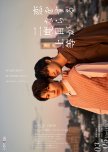
Ever wonder what happened to our first love, our first kiss…or the innocence we carried during high school? Those memories remain forever etched in our minds and hearts…no matter how many years have passed.Fast forward to our adult lives, when we believe we finally understand who we are and have complete command of our emotions…or so we thought. Then one familiar face suddenly walks back into our lives, and we become that awkward teenager again…uncertain, defensive, and terrified of being hurt.
That is the heart of Love Is Better the Second Time Around. Season 1 is not simply about rekindling a first love…it is about confronting a past that was never given a proper ending. Miyata and Iwanaga may be older, accomplished, and outwardly confident, but love exposes the parts of themselves they never completely outgrew. Their playful banter, lingering looks, stubborn pride, and moments of vulnerability made their relationship believable. They were not merely starting over…they were deciding whether an old love deserved a different ending.
The four handsome and genuinely talented actors brought warmth, subtlety, and emotional honesty to the story. There was no need for exaggerated drama because even their quietest expressions spoke loudly. Sometimes the most powerful emotions are found not in what is said…but in everything two people are still afraid to say.
Season 1 asked whether first love could be recovered. Season 2 now asks an even more difficult question…after finding each other again, can they accept everything that happened during the years they were apart? Loving someone means accepting the memories you did not share, the people who came before you, and the insecurities that continue to follow you. A second chance is not a clean slate…it is choosing to love someone despite everything already written on it.
Perhaps love really is better the second time around…not because we are necessarily wiser, but because we finally understand what we stand to lose. First love teaches us how deeply we can feel…while a second chance teaches us how to stay.
Was this review helpful to you?


