

 2
2 9
9 1
1 1
1


Racism Stems from Ignorance
This drama is touching a chord of our current society on the racial issue that has been propelled to the forefront of our lives and is compelling all to come to its reckoning. As we can see gradually from the drama, racism stems from ignorance. This is the story about the human race and the Kunwu race, and their hatred for each other. As always, the human race is the destructive race, killing as many of the Kunwu as possible because humans feel that Kunwus are atrocious and bad.After the killings, many Kunwus are left scattered, scared and hopeless. Their only hope is to raise their king, who has been sealed by the human race for 10 years, from his slumber so that the Kunwu race can be freed again. Of course, the human race fights tooth and nail to stop this from happening. At the end of the story, the human race realizes their flawed perception of the Kunwu race. Indeed we can all live harmoniously together in peace if we treat each other more kindly.
Su You Lian (Wu Jia Yi), a holy girl from the Kunwu race, comes to live among the human race in the Moyun Academy where the Dragon King is kept sealed. Her mission is to wake the Kunwu King. There at the Academy, she meets Li Xuan (Xu Kai) who is the protector of the human race. Unbeknownst to both, Li Xuan is half human and half Kunwu. They both fall head-over-toe in love with each other, and their conflict renders them in emotional turmoil.
The whole drama almost revolves around life in the Academy. It starts off with a lot of comedies as Li Xuan is an untamed kid and Xu Kai’s acting is fabulous. However, as the story progresses, the later episodes become more somber, and Li Xuan becomes serious as he grows.
Wu Jia Yi is a fantastic dancer. Her dancing scenes in the beginning episode are mesmerizing. As Su You Lian, she is tormented as she knows she’s not supposed to fall in love with the enemy. I love Wu Jia Yi’s acting. She depicts a Kunwu character so well as she exudes that unspoken charisma.
There are multiple love triangles here, but both Su You Lian’s and Li Xuan’s love for each other is unwavering despite their conflicts. A lot of time is spent on the emotional turmoil undergone by Su You Lian and heart brokenness by Li Xuan.
Once Li Xuan discovers his own true identify and Su You Lian completes her mission, the story comes to a conclusion very quickly. Like many other Chinese historical dramas where endings are shoddy with characters being written off in death, this drama follows that path. But to my surprise and perhaps to placate the viewers, the dead characters are somehow, miraculously resurrected.
Overall, this drama is not exceptional but watchable as it’s a mixture of being light and humorous to occasional heart wrenching. The CGI is like what you see in a computer game; in fights, people simply jump up and off the roofs and everywhere on the screen. The plot is pretty straightforward and easy to follow. Though not perfect, I have rather enjoyed it.
Was this review helpful to you?
No Kisses? No Problem
Kissing scenes? Yeah, don't hold your breath. It's Ren Jia Lun. What do you expect? The guy is basically famous for not kissing his co-stars—except for maybe one or two dramas I can think of. But you know what? I still totally loved this series. And I say that as someone who usually craves romance. For me, the love here is quiet and real. It's in the way they care for each other, not in big passionate moments. Lu Qian Qiao's love for Xin Mei, and her love for him? Undeniable.The story itself is completely captivating. It starts as a xianxia fantasy, but its message hits close to home today: how the powerful and greedy elites will tear apart the world just to live forever. That part really sticks with the audience.
Lu Qian Qiao is a war ghost—an immortal with insane physical strength. But the trade-off is, he can't taste, feel, or see the way humans do. His world has no color. Even though he loves painting, everything he creates is gray. Food tastes disgusting to him—except wine. He can't feel pain. His wounds heal instantly. And worst of all, he doesn't die. He just watches the people he cares about grow old and slip away, over and over. That's his torture. So while others fight to become immortals, he fights to become human. It's such a beautiful, heartbreaking role reversal.
Xin Mei's first encounter with him is both hilarious and heartwarming. She has this curse: marry three men, and each one will die young. But she's kind-hearted. So instead of letting a good, worthy man be her third husband and die, she chooses a sinful one. At that moment, Lu Qian Qiao is in prison waiting for his execution. To her, he's perfect. And coincidentally, he's also looking for a bride as the first step in his plan to become human.
So the knot is tied early. It's a marriage of convenience—each with their own secret goal. But very quickly, it becomes so much more. Love. Trust. A deep yearning for each other.
Ren Jia Lun as Lu Qian Qiao is wonderful. His costumes and hairstyling are gorgeous (no weird helmet head), and his fight choreography is clean, sharp, and believable. His dialogue is simple, but every word feels honest and meaningful. His character is so powerful that every time he shows up, you just know everything's going to be okay.
Wang He Run as Xin Mei is amazing too. She has this sweet, innocent smile you won't forget. Unlike the other cultivators, she's genuinely kind. But when she needs to protect the people she loves, her eyes turn sharp—almost unrecognizable. And when she unleashes her full power, she becomes this fierce, brutal force of justice, cutting down evil without mercy. Wang He Run played that transformation perfectly.
All the good guys are incredibly lovable, and the villains, truly awful (in the best way). Every actor made their role believable. Bravo to the whole cast. You can also see the detail and hard work in every scene setting—it just adds to the viewing pleasure.
Overall, this is a drama rather well done. Don't let the current 8.0 rating fool you. Honestly? Though the storyline may be a bit predictable, that score doesn't do it justice—especially when you see other, weaker shows rated higher.
Don't miss this one!
Was this review helpful to you?
Crazy, Hilarious, Addictive, Unexpected Ending
When I first started watching Guardian of the Dafeng, my immediate reaction was, “What the heck is going on?” The drama is an eclectic mix of genres—modern-day elements, wuxia, xianxia, dark magic, mythical creatures, palace politics, and even a kind of cell phone system. It’s a potpourri of ideas thrown together. However, once I got the hang of it, I became hooked. The sheer craziness and humor made it an enjoyable watch. Dylan Wang is hilariously over-the-top, and even his cringiest moments are amusing.The story follows Yang Ling, a modern real estate agent who time-travels to a fictional ancient dynasty called Dafeng. He finds himself inhabiting the body of Xu Qi’an, the nephew of a low-ranking government official. Xu Qi’an regains consciousness in prison and soon learns the dire circumstances surrounding his incarceration. His uncle, responsible for escorting government funds, has lost the money, resulting in his imprisonment and impending execution. Meanwhile, Xu Qi’an faces exile, and the female members of his family are condemned to a brothel.
Determined to change his fate, Xu Qi’an leverages his modern scientific and technological knowledge to uncover the mystery behind the missing funds. His ability to think critically and adapt to his new environment helps him navigate the challenges ahead. Additionally, his partial knowledge of ancient poetry—highly revered in that era—becomes a powerful tool in gaining recognition. His quick wit and ingenuity propel him through the ranks, ultimately leading him to become the Da Geng Ren—the Guardian—charged with protecting the kingdom from dark forces and crimes.
Xu Qi’an’s journey is akin to Forrest Gump, where misfortunes turn into opportunities, and luck seems to follow him at every turn. As he rises in status, he gains supernatural abilities, mastering dark and celestial forces, and accumulates immense wealth for his family. His adventure is wildly entertaining and filled with comedic moments.
Characters and Acting
Dylan Wang’s performance is outstanding. He effortlessly transitions from looking silly and exaggerated with pouting lips to delivering intense, piercing stares in serious moments. The entire cast, including the antagonists, is well-developed and humorous, with each character possessing distinct strengths and weaknesses.
What I Liked
One of the highlights of the drama is the way Xu Qi’an strategizes through situations. His thought process is audibly represented in thought bubbles, showing viewers the best course of action in any given moment.
The drama’s blend of the impossible and the possible, the insane and the logical, the outrageous and the acceptable, is what makes it so uniquely entertaining. I also enjoyed Xu Qi’an’s relationships—his bond with his cousin, who is righteous yet stubborn, his loyalty to his two best friends, and his dynamic with his superior, who always watches out for him.
Furthermore, Xu Qi’an’s approach to justice resonates deeply. When the proper channels fail to serve justice, he takes matters into his own hands. This aspect of the drama connects with real-world frustrations over injustice, making it even more engaging.
Final Thoughts
The ending is unexpected and somewhat abrupt. Xu Qi’an seemingly disappears, which makes sense since he originates from the future. However, at the same time, he exists as a member of the Xu family, leading to a puzzling contradiction. The identity of the mysterious figure, which remained a mystery throughout the series, is finally revealed in a surprising twist. However, the convoluted nature of the ending leaves several questions unanswered. Notably, Xu Qi’an doesn’t return to the future as Yang Ling, leaving an open-ended feeling, as if a continuation might be in the works.
Overall, Guardian of the Dafeng is a wild, entertaining ride filled with humor, action, and unexpected twists. Despite some narrative inconsistencies, it remains a highly enjoyable watch.
Was this review helpful to you?
Super Cute Chinese Version of the Beauty and the Beast
"The Princess and the Werewolf" is a captivating story reminiscent of a modern-day Beauty and the Beast. It revolves around Princess Qi Pa (Wu Xuanyi), who unknowingly loves the human Li Xiong (Chen Zheyuan) but fears and despises the beastly Kuimulang (Chen Zheyuan), not realizing they are the same person. This leads to comical situations as she tries to escape the Beast World, and her emotions unravel in front of the very person she both fears and adores. In contrast, Kuimulang falls deeply in love with her without expecting anything in return, while she struggles to love only a part of him.Kuimulang seeks to prolong his life by retrieving a "lingzhu" (a power source) accidentally swallowed by Qi Pa five years ago. Now finally finding her, to extract it, he must make her fall passionately in love with him and share a passionate kiss. He kidnaps Qi Pa, hoping to obtain the "lingzhu" one day. Qi Pa, however, constantly plots her escape, sharing her plans with Li Xiong, who is both her captor and confidant. Amidst her escape attempts, Kuimulang must contend with a secretive subversive force that nearly killed him five years ago. Multiple assassination attempts threaten their lives.
Qi Pa, a princess of Great Xia, is a vibrant and open-minded individual with a liberal education. Unlike typical princesses, she is outgoing, possesses critical thinking skills, and understands human psychology. Despite her flamboyant exterior, she's fiercely devoted to true love.
Kuimulang, the King of the Beast Race ("Hua Shou"), is adored by his subjects and bears the responsibility of protecting his clan with his life, a mission passed down for generations. His continuous use of inner power weakens his body, causing him to transform into a wolf at night. When Qi Pa encounters him in his wolf form, she is terrified and finds him repulsive. However, she falls in love with him when he assumes his human form as Li Xiong, unaware that Kuimulang and Li Xiong are the same person. Fearing rejection, Kuimulang maintains two identities. When Qi Pa discovers the truth, it tests the depths of their love.
Qi Pa's love journey unfolds gradually, with her realization of her true home coming late in the story, adding a humorous twist. The villains' motives are typical – the pursuit of ultimate power to rule the Beast Kingdom - and they are known from the beginning of the story. A new villainous character is introduced very late in episode 27, becoming a central figure of dislike. The story wraps up neatly, with characters receiving their due rewards and punishments. Episode 29 stands out as the most touching, where the main characters unite against all odds, and a simpleton general becomes a true hero.
Wu Xuanyi delivers a convincing portrayal of Qi Pa, infusing her character with modernity and charm. Chen Zheyuan impressively embodies the distinct personalities of Kuimulang and Li Xiong, evoking sympathy for Kuimulang's unrequited love. The entire cast has delivered exceptional performances, embodying their respective roles with authenticity. Notably, the side characters have charmed their way into the audience's hearts, and the inclusion of several side couples adds delightful layers of sweet love stories to the narrative.
My Verdict
This enchanting story features modern elements in terms of attire and language. Characters take on various animal traits, from wolves to poisonous snake, cat, weasel, earthworm, chameleon, scorpion, and more, endearing themselves to viewers.
The moral of the story begs the question: should one love someone solely based on their appearance, as Qi Pa initially does, while overlooking the genuine devotion and sacrifices made for them? In essence, Qi Pa values all that Kuimulang has done for her but rejects him purely on the basis of his appearance. Is this fair?
In summary, "The Princess and the Werewolf" is a great watch, offering humor, romance, and adventure. Don't miss it!
Bravo!
Was this review helpful to you?
Struggle and Life of an Entertainment Artist
As always, Deng Lun's performance is top notch. And for that matter, Ma Si Chun is amazing. She is so natural and herself. I love Ni Hong Jie's and Han Tong Sheng's performances too. They are just like your everyday neighbors going about their everyday life. There's no pretense; everything is as it is.All of us can relate to the story. Everything and everybody is realistic. There are no super wealthy and powerful people. There are no super nasty antagonists. It is just a story about normal people living a normal life. It is also the story of the arduous journey of an aspiring actor. Deng Lun has acted as if that's his own story, the struggle he has gone through himself before he achieves what he is today. It makes me wonder, what has Deng Lun lost himself, if any, over the years in his quest for success?
The story dwells deep into our own soul searching. What are we willing to sacrifice in order to realize our dreams? What do we really want in life? The road to success is usually laced with temptations. What is the price are we willing to pay to get it ( success)? Many people do feel lost and unhappy when success comes to them eventually. By then, many also realize they have lost what they love the most in their life - their family. Many have their regrets, but usually it's already too late.
The morale of the story is to know where to draw the line to safeguard what one values the most. Choosing and giving up a dream is very hard to do but maybe necessary.
As the saying goes, "Flowers can bloom again, but people cannot return to their youth ever". Hao Ze Yu (played by Deng Lun) initially interprets this as, "Don't waste time during your youth, go achieve your dreams". Not until he loses a loved one that he finally realizes the phrase actually means, "Treasure the people around you". What a valuable life lesson for us all.
Great drama! Great watch!
Was this review helpful to you?
Both Li Yuhu (Tian Xiwei) and Du Bingyan (Bai Bingke) have weddings scheduled for the same day. However, they get caught in a storm and seek refuge in a temple. After the rain subsides, and having their veils switched, they are mistakenly led to the wrong carriages, ending up in the wrong destinations. Initially reluctant brides, they decide to conceal their true identities and plan an escape. To their surprise, they find themselves falling in love with the men they were never meant for and they them.
The plot follows a predictable path, featuring a detestable antagonist and his accomplices. From a logical standpoint, there are moments of inconsistency and naivety. Notably, the antagonist manages to evade justice right under everyone's nose. In terms of acting, the entire cast delivers commendable performances, with Tian Xiwei standing out and Patrick Quan as Ke Shizhao the villain lagging behind -- he brazenly writes on his face, "I am the bad guy" -- with his robotic facial expressions. Nonetheless, the drama offers a simple and enjoyable viewing experience.
My Verdict
While not groundbreaking, this drama has its merits. With endearing side couples, a bit of romance, some light action, a wise mentor who guides both pairs, a straightforward plot, and beloved characters, it's suitable for a family audience.
Was this review helpful to you?
Depressing
"Faithful" serves as a poignant reminder of the challenges faced by women throughout history, from ancient times to the present day. In eras past, when a woman faced violation, the blame often fell squarely on her shoulders, while the perpetrators went unpunished. Though progress has been made in the modern world, women still bear the burden of proof, while powerful individuals can wield influence and wealth to evade accountability, even in the face of multiple accusations. This injustice persists in our society, regardless of cultural or temporal context.Following the loss of her best friend, Lin Rulan (Hu Yixuan), Meng Wan (Janice Wu) seeks retribution for the wrongs committed by Wu Lian (Qiao Zhenyu) against Lin Rulan, herself, and numerous other girls at the Embroidery Academy. Meng Wan patiently awaits seven years to attain the status necessary to infiltrate the influential circle of individuals crucial to her plan to bring down Wu Lian.
Meng Wan assembles a group of six like-minded individuals, all of whom have crossed paths with Wu Lian and are determined to settle their scores with him. Their collective goal is to ensure that Wu Lian faces justice and to prevent him from causing further harm to young girls. Despite his history of abhorrent behavior, Wu Lian has thus far evaded punishment. Meng Wan is resolute in her mission to hold him accountable, so that he can no longer inflict harm on anyone else.
The story unfolds in a captivating back-and-forth timeline, blending present-day events with pertinent pieces of the past for added depth and context. This approach not only maintains clarity but also infuses an extra layer of intrigue compared to conventional storytelling formats. As the drama approaches its climactic confrontation with the villain, the narrative attempts to provide a rationale for his actions based on his traumatic childhood experiences. While his eventual fate is anticipated, this attempt at justification seems unnecessary to me and, for some viewers, could even be deemed offensive as this is an obvious case of whitewashing.
The Chinese title, "The Nine Virtuous Ones," encompasses the first seven individuals, while the additional two remain less evident, having not initially stood alongside the others. The acting is generally commendable, though certain scenes suffer from lackluster execution. Notably, during a pivotal moment involving a burning of one of the “seven”, the urgency to save her is blatantly missing. Some logical inconsistencies and plot holes are apparent.
The primary story concludes at episode 24, with episode 25 presenting an alternate tale centered on the same characters, exploring a what-if scenario. Everything in this alternate reality hinges on Wu Lian, speculating how events might have unfolded differently had he not experienced a troubled upbringing. The notion that predatory behavior may be attributed to a traumatic childhood is a subject of ongoing debate. Personally, I find such a narrative unconvincing and, at times, chauvinistic.
My Verdict
The story mirrors a present-day "Me Too" scenario, wherein a predator of young women enjoys impunity through collusion with corrupt officials. The powerful evade justice, while the victims are left voiceless, shattered, and even deceased. Sadly, this system still persists in our lives today, where wrongdoers often evade consequences and show no remorse. Due to potentially distressing content, viewer discretion is advised.
Was this review helpful to you?
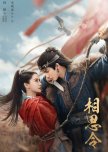
Decent Story, Tropey & Cliche, Acting Lacks Depth
Adapted from the novel "The Stolen Bride" by Xi Juan, the series takes significant liberties, straying far from its source material. The Chinese title, 相思令 (Xiang Si Ling), suggests a poignant tale of longing between separated lovers, yet this theme is poorly executed in the drama. The prevalence of forced marriages—whether mutually unwanted or one-sided—leaves a bitter taste. The use of blackmail to manipulate characters detracts from any semblance of romance, casting a shadow over the relationships portrayed.Storyline
Set in a fictional era across three neighboring kingdoms—Nan Yan in the South, Bei Xuan in the North, and Xi Xiang in the West—"Everlasting Longing" spins a tale of intrigue and romance. In Nan Yan, a genius girl from a merchant family disguises herself as a man to run her family business. She’s also the secretive descendant of a master craftsman known for designing advanced machinery and weapons. In her search for a metal-like granite to craft a unique arrow, she travels to Bei Xuan, where she meets and falls in love with a man seeking answers about his parents’ death twelve years prior. The arrow found in his father’s body was designed by her family, making her a crucial clue. While he finds ways to keep her in Bei Xuan, she remains until her king, suspecting betrayal, arrests her family and threatens their lives unless she returns. At the same time, the man she loves is coerced into marrying another woman, forcing her to leave, heartbroken.
Characters and Acting
Jun Qi Luo / Jun Fei Fan:
As a woman, she is known as Jun Qi Luo; as a man, Jun Fei Fan. Intelligent, beautiful, courageous, and calm under pressure, Jun Qi Luo is a compelling character. However, Angelababy’s portrayal falls short, with unsynchronized facial expressions that fail to capture the character's essence, often making her more irritating than endearing.
Xuan Lie:
Despite being from a bloodthirsty tribe, Xuan Lie is kind and intelligent. As the general of his tribe, he strives to unite the other four tribes to strengthen the Bei Xuan kingdom. While Song Wei Long’s commanding presence fits the role, his acting leaves room for improvement. Styled like a wolf, his towering presence and fur coat do evoke a fearsome wolf master vibe, but the heavy makeup, emphasizing his hooked nose, gives him more of an eagle-like appearance.
Other Main Characters:
Surprisingly, I found other main characters like Shao Qi Min and Luo Zhi Zhou and their respective actors more convincing than the leads. Bai Bing Ke deserves praise for her portrayal of Princess Xuan Qing Kou, nailing the high-pitched, staccato voice that makes the character utterly irritating. My favorite side character, though, is Luo Qi (Chen Tao), Xuan Lie’s sidekick and almost a brother to him. Chen Tao's acting is commendable with fine facial expressions that compliment Xuan Lie's cold appearance greatly. The character I found most grating was Jun Yu Jue, Jun Qi Luo’s first cousin. Greedy, evil, and cartoonishly exaggerated, Wu Yi Jia’s performance, while over-the-top, captures the despicable nature of the role.
OST
The original soundtrack is a pleasant surprise, enhancing the emotions of key scenes, adding a layer of depth that the story itself at times lacks.
Final Thoughts
"Everlasting Longing" leans heavily on well-worn clichés and predictable tropes—falling off cliffs, women disguising themselves as men, and forced political marriages. The story unfolds in two halves, with the first set in Bei Xuan and the latter in Nan Yan, centering on the dilemma of love versus duty. While Xuan Lie prioritizes love above all, Jun Qi Luo believes that without harmony between nations, there can be no foundation for love.
Despite featuring real kissing scenes, the chemistry between Song Wei Long and Angelababy falls flat, with Song Wei Long showing more passion than his co-star. The plot twists often defy logic, making the storyline feel like a patchwork of forced developments. One of such weird logic is Jun Qi Luo’s decision to split her own family in pursuit of peace, and the illogical timeline at the end only adds to the disconnect.
That said, credit is due to the elaborate settings and the strong performances from the supporting cast, who ultimately breathe life into the drama.
If you are either a hardcore fan of Angelababy or Song Wei Long, or an armchair romance buff like me, you may still enjoy this drama despite its many shortcomings—but if you're looking for a well-crafted, emotionally resonant story, you might find it lacking in depth and coherence.
Was this review helpful to you?
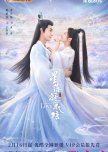
Light-hearted with Laughter and Tears
Watching The Starry Love in the context of today’s discord world of hegemony, I couldn’t help but relate it as a satire of the current world’s geo-politics: everyone wants to be the hegemon. The heavenly and the demonic realms are the two superpowers here in the story, trying to take on each other to dominate. The heavenly emperor is selfish, corrupt, and atrocious (sounds familiar?) while the demonic king is the equivalent but with a different ending (you may ask why).Despite its heavy undertone of geo-politics, this drama is light-hearted. Along with its main plot, it also depicts the issues faced by many parents today: even the god, demon and beast people have parenting problems. Shao Dian You Qin (Chen Xingxu) falls in love with Princess Li Guang Ye Tan (Li Landi aka Landy Li) whom he couldn’t wed because of a bridal switch; he defies his father and runs away (kind of). The Third Prince of the demonic realm, Chao Feng (Chen Hailiang aka Luke Chen), falls in love with Princess Li Guang Qing Kui (He Xuanlin) who is meant for the regent, and they elope. Even the crown prince of the animal realm, Di Lan Jue (Qin Tianyu), constantly defies his father and leaves home. (Therefore parents, you are not alone.)
The ideas of bridal switches and cross racial marriages (in this case, cross realms) are not new. How all these are being put together with heaven switching into hell, or mortal switching into animal realm, takes some imagination, brilliant storytelling, acting and cinematography. As the story develops its characters, jokes almost take over to show the audience the individuals' personalities. It captures various human relationships, such as the kind and loving mothers as in the heavenly queen and the demonic concubine (Chao Feng’s mom) with their sons, contrasting the atrocious fathers as in the heavenly emperor and demonic king, the bonded sisterly relationship, the friendship and platonic love between the main characters etc. The drama is full of funny dialogs (the dialogs between Chao Feng and his side kick are some of the funniest and loveliest) and paradoxes, and yet it also comes with heart-felt wrenching pains in separation and deaths.
In terms of acting, a big applause for the whole cast for putting up a brilliant performance, from the main leads to the supporting. I fell in love with Chen Xingxu (Shao Dian You Qin, Mei You Qin, La Mu, Wen Ren) in “Goodbye My Princess” and here, he lives up to his expectation. He has matured a lot since then (Goodbye My Princess). Playing five distinctive characters, Chen Xingxu aces them all, with the final character an embodiment of all the previous four. As always, he is totally immersed in his roles. Though not listed on the Top 10 most popular Chinese actors, Chen Xingxu is one of the best young Chinese actors.
Li Landi’s acting is convincing and she has an adorable badass charisma which viewers love. As Ye Tan, Li Landi makes the viewers empathize with all her misfortunes and cheer for her courage. She has delivered a very lovable Ye Tan and has an undeniable chemistry with Chen Xingxu.
The second couple’s story is well developed and beautiful. As the ever-loving sister, Qing Kui is graceful and beautiful. I really love He Xuanlin’s portrayal of the character whose love and sacrifice are very convincing. Last but not least, I want to commend Chen Hailiang’s portrayal as Chao Feng. This is his first role as a main lead. He exudes the charisma as a kind, but at times, not so nice, dark prince (like a bad boy), and I love it. This is a complex character stuck in a tormenting environment for survival and Chen Hailiang nails it, with a lot of ironies and humors. Bravo!
My Verdict
The Starry Love is a very enjoyable drama that captures laughter and tears. Most of the characters are lovable and the selection of actors for the roles is appropriate. The costumes are beautiful - ethereal looking for the heavenly realm, dark and gothic for the demon sect, animalistic for the animal kingdom. The use of CGI is heavy but done realistically and appropriately.
Overall, a drama well done for all to enjoy.
Don't miss it. Bravo!
Was this review helpful to you?
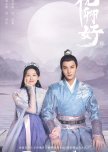
Bland & Predictable
I have always loved a badass female lead, but despite the female lead in this drama who is said to be sassy, I can’t stand her. Therefore the first few episodes are very hard to watch for me. As the story unfolds, her character develops and grows, and becomes less annoying towards the end, but she is still not totally lovable as far as I'm concerned. I stick with the drama because it’s a very short one at only 22 episodes and I like Zheng Yecheng.What I like
1). Zheng Yecheng, as Shen Yan, looks gorgeous in this drama in his uniform and informal wear.
2). Though not a fan of Merxat, I like his character here as Shen Yan’s brother, Shen Yu.
3). I like Shen Yan’s relationship with his brother. Despite they always throw sarcasms at each other, they love each other. They work together and help each other out, especially Shen Yu helping his little brother in all his dangerous assignments. I like both brothers being unmatchable great martial arts fighters.
4). Unlike other Chinese dramas, this drama doesn't kill off all the side characters at the end.
5). The official sound tracks (OSTs) are beautiful.
6). It is a very short series at only 22 episodes.
7). I love the beautiful embroidered guard uniform. Both Shen brothers look gorgeous in it.
8). Acceptable acting, props, camera work, script writing and editing.
9). There are no love triangles.
What I don’t like
1). The female lead character played by Yuan Bingyan is supposed to be lively, cheeky, bold, and full of spirit, but instead here, she is perverted, flamboyant, outrageous, cringey, clingy, unreasonable, inconsiderate, unbashful, and when she feels helpless, she cries. Her suggestive and coming-on-hard behavior is really a put off though it is just her facade. To me, this type of character is not really a strong female character because she has no dignity and is not fearless. Fortunately, the character grows and she becomes less blatant, and she knows how to use her status to her advantage and to help others.
2). As much as I like Zheng Yecheng, he lacks the cold, stonehearted look as the Lord of the Netherworld; Zheng Yecheng is too soft looking and his eyes are not piercing enough.
3). The romance in the beginning is rather tiring to watch: the female coming on hard, and the male is irresponsive; but when the male’s heart is melted, the female intentionally hurts him to make him leave “for his own good” – this kind of line is really overused and ineffective in capturing the viewers’ hearts anymore.
3). Rather bland story with no surprises nor twists.
4). Not much humor.
My Verdict
The plot is rather simple. All the antagonists are in the open in plain sight. There’s a conspiracy to usurp the throne. The perverted princess becomes rather useful after she falls in love with the supposed stonehearted commander-in-chief for the Jinlin Guards. There are some conflicts in the relationship and both characters are in turmoil every now and then, with the princess crying a lot that doesn’t capture my heart. The overall writing and editing are acceptable with not too many plot holes nor questionable logic. Overall, this is not a terrible series, but nothing special either. Watch it if you’re a Zheng Yecheng’s or Yuan Binyan’s fan but do not have too high expectations.
Was this review helpful to you?
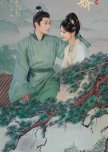
A Love Triangle That Doesn’t Leave a Bad Taste
At first glance, Serendipity might seem like your typical trope-heavy drama - love triangle, amnesia, fake siblings-to-lovers, dramatic cliff falls, all that. But here's what makes it special: the way these familiar elements are woven together creates something fresh and engaging. The Chinese title 榜上佳婿 "Top Scholar Son-in-Law" has a totally different meaning, providing a different vibe. It's currently rated below 8/10 on MDL, and I want to explain why this hidden gem deserves more love.Why the Low Ratings?
First, there's the cultural context. In Chinese tradition, marrying someone you were raised with as a sibling (but aren't blood-related to) was completely acceptable. Many Chinese families especially in ancient times, adopted children who later married their sons and daughters. Many historical dramas feature this setup as well, but international viewers often find it uncomfortable. That cultural gap likely contributed to the mixed ratings - while Chinese platforms give it a solid above 8/10, some international viewers could have marked it down for this reason alone.
Then there's the dreaded Second Male Lead Syndrome. Song Qing Zhao is everything you'd want - noble, kind, gentle and hopelessly devoted. With a wealthy and powerful family related to the royal family, it's easy to root for such a charming man, and many viewers were so disappointed when he didn't get the girl that they could have tanked the ratings. But love stories aren't always about who seems perfect on paper.
Another reason for the low ratings is the chemistry debate. Lu Chang’s initial coldness toward Jian Ming Shu does create an interesting dynamic—but for some viewers, it also makes their eventual romance feel less convincing. At first, Lu Chang rejects Ming Shu so firmly that it turns off many viewers. This is why many argue the couple lacks natural chemistry, compared to Ming Shu’s warm, easygoing dynamic with Song Qing Zhao.
Song Qing Zhao, with his gentle humor and open affection, seems like the more natural match for Ming Shu’s lively personality. Their scenes together radiate comfort and playfulness, while Lu Chang’s lingering emotional walls make his romantic shift harder to buy—at least at first.
That said, the story does plant subtle clues that Lu Chang’s feelings run deeper than he lets on. His protectiveness, lingering glances, and quiet sacrifices for Ming Shu suggest his coldness is more about self-control (he's supposed to be her brother) than indifference. For viewers who prefer slow-burn tension over instant sparks, this makes their eventual love story rewarding. But if you’re someone who values overt warmth in a pairing, it’s easy to see why Song Qing Zhao feels like the better fit.
Ultimately, whether you ship the main couple or prefer the second lead comes down to what you value in a love story: gradual emotional thawing, or effortless compatibility. Both perspectives are valid—but they’re also why this love triangle sparks such passionate debates!
The Story
The Chinese title 榜上佳婿 ("Top Scholar Son-in-Law") refers to a fascinating historical tradition. When imperial exam results were posted, wealthy families would literally camp out at the bulletin board to "catch" the top scholars (like Lu Chang, who becomes the valedictorian) as potential husbands for their daughters. These scholars were guaranteed prestigious government positions, making them the ultimate catches.
This is exactly what Jian Ming Shu, who’s been in love with Lu Chang since childhood, does at the start. When Lu Chang becomes the top scholar, she fights to claim him first. But Lu Chang is reluctant and resents her for forcing him to marry her.
After her family is murdered, Jian Ming Shu escapes but loses her memory after a cliff fall. Rescued by Lu Chang, she's passed off as his sister "Lu Ming Shu" for protection. Their investigative partnership brings them closer, even as Song Qing Zhao enters the picture, unaware they're not really siblings.
The love triangle develops beautifully - there's humor (the guys' jealousy is hilarious—Lu Chang even gifted Ming Shu a puppy named Zhao Zhao, a homophone of Qing Zhao), tension (Ming Shu's guilt over loving her "brother"), and genuine emotion. The dynamic between the three is sweet and funny. Meanwhile, they're unraveling political conspiracies, with Prince Yu as the clear but untouchable villain as Lu Chang lacks the evidence to expose him. Every witness he finds ends up dead, making his mission even harder.
Acting & Characters
Lu Chang (Wang Zi Qi) – At first, he’s cold and focused only on his goals, rejecting Ming Shu’s advances. But as they spend more time together, he slowly falls for her. Wang Zi Qi nails the transition from indifferent scholar to a man deeply in love. His subtle expressions—especially when he’s pretending not to care while Ming Shu gets close to Song Qing Zhao—are gold.
Jian Ming Shu (Lu Yu Xiao) – Smart, compassionate, and a talented jewelry maker, Ming Shu has loved Lu Chang since childhood. Even with amnesia, her heart still pulls her toward him. Some viewers criticize Lu Yu Xiao’s posture (she slouches next to more elegant actors), but I wonder if that was intentional to make Ming Shu feel more relatable. Either way, her performance is heartfelt by portraying a spirited yet vulnerable Ming Shu.
Song Qing Zhao (Wang Hong Yi) – Noble, kind, and hopelessly in love with Ming Shu, he’s the perfect second lead. Wang Hong Yi plays him with so much charm that it’s no surprise fans were devastated when he didn’t end up with the girl.
Final Verdict
Serendipity has its flaws (like Lu Chang getting paddled on the butt but somehow lying on his back afterward), but it's a wonderfully executed historical romance. This is one of the best love triangles I’ve seen. The title 榜上佳婿 is the key to understanding Lu Chang and Ming Shu's entire relationship. From reluctant "caught scholar" to genuine love, their journey is what makes this drama special.
And yes, many viewers were too busy rooting for the SML to notice all the hints that the main leads were meant to be—like sharing wedding wine (even at the beginning), matching bracelets, and accidental love bites. The cultural elements, engaging love triangle, and political intrigue make it far better than its ratings suggest. If you enjoy dramas where the leads actually earn their happy ending, don't miss this one.
Serendipity isn’t a blockbuster, but it’s a well-told, enjoyable story with great chemistry and just enough drama. Don’t let the ratings scare you off—this one’s worth watching.
Was this review helpful to you?
The Surest Thing is Being Unsure
In contemplating this drama, one is struck by its intrinsic uncertainty; every attempt to foretell an outcome based on personal theories is swiftly invalidated. Amid fervent discussions within the MDL community, the narrative unravels like a colossal jigsaw puzzle, with assumptions and theories constantly evolving, only to be refuted in due course. The plot remains shrouded in secrecy, devoid of any prior references, leaving viewers to speculate and generate their own theories.Performances are commendable, with fight choreography leaving a lasting impression. Tian Jiarui's portrayal of Gong Yuanzhi stands out, his wicked smile sending shivers down one's spine. Zhang Linghe's Gong Ziyu exudes an endearing, love-struck quality akin to a teenager in the throes of first love. Lu Yuxiao's Shangguan Qian strikes a delicate balance between reality and deception, leaving the audience perpetually guessing. Cheng Lei's Gong Shangjue subtly conveys secret satisfaction with a telltale quirk at the corner of his lips. Even Omid's portrayal of the ostensible antagonist, Hanya Si, brims with emotional depth and inner turmoil. The costumes are meticulously crafted, and the makeup work is remarkably convincing. The drama also boasts a collection of poignant ballads, expertly timed to heighten the emotional resonance of each scene.
Although the undertones are somber and shadowed, the narrative interjects moments of levity through humor, wordplay, and irony. An instance arises when Yun Weishan addresses Gong Ziyu as "Yu Gongzi," prompting him to retort, "Call me Gong Ziyu," a clever homophonic quip laden with layered meaning. Above all, the story revolves around the romances of various couples. While the first couple commands ample screen time, the second couple receives comparable attention, their relationship characterized by well-defined characters and an air of suspense and suspicion. Just as the audience anticipates a continuation of playfulness, the mood shifts abruptly, veering into darker, more grave territory as the characters confront their would-be assassins, their lives imperiled by unseen poisons.
"My Journey to You" also serves as a cautionary tale on how not to construct a drama. The beginning is amazingly good. It commences with a dark air of mystery, introducing enigmatic characters each with their own strengths, flaws, and hidden agendas. Discussions abound, speculating on the intricacies of the plot and the ultimate antagonist, as every character harbors ulterior motives. By Episode 22, the grand reveal occurs, divulging the whole plot and the mastermind's identity. However, this revelation falls flat as the element of surprise of who the mastermind is has disappeared; the audience has already figured this out in the prior episodes. On top, the supposedly multi-layered scheme by the protagonists becomes not so perplex anymore as the characters settle into their defined roles of virtue or vice, the earlier allure and intrigue fade.
At the end of the story, Gong Ziyu, though growing stronger and less naïve, retains moments of folly. Perhaps most notably, the once wicked Gong Yuanzhi transforms into an endearing figure, affectionately addressing most of his older comrades as "ge ge." The drama concludes with numerous unresolved mysteries, chief among them being the true leader of Wu Feng and the fate of Yun Weishang. These loose ends leave the narrative feeling somewhat deflated, ending with a sense of anticlimax. While a potential sequel is hinted at, it remains unconfirmed.
My Verdict
Despite the drama’s less-than-stellar development, it is redeemed by a cast of strikingly handsome men, from Zhang Linghe to Zuo Ye. Even the juvenile Lester Lin is amazingly good looking. Each one possesses a distinct charm. It is regrettable that Zeng Shunxi makes only a belated appearance with limited screen time.
Though a missed opportunity for a more compelling conclusion, this drama comes highly recommended for its rich entertainment value and the presence of exceptionally charismatic actors.
Bravo! Strongly recommended! Don't miss it!
Was this review helpful to you?
Navigating a Betrayed Relationship: Empowering Steps for Women
While I typically steer clear of dramas centered around betrayed relationships, as I find them to be emotionally taxing, showcasing the turmoil of a straying husband and a beleaguered wife, this drama paints betrayal with a stark realism that hits close to home for many around us. Too often, the wife finds herself adrift, battling depression, and tragically, some even contemplate self-harm. However, tears and self-destruction need not be the path. The author offers a more empowering approach.It's entirely natural for most women to desire knowledge about the other woman in such situations. This inclination is quite understandable. Therefore, the author suggests locating the other woman. This isn't to coerce her to sever ties with the husband, for continuing such a relationship with a cheating spouse is futile; divorce is inevitable. Before initiating divorce proceedings, there are precautionary measures a woman can take to safeguard her interests and secure the best outcome possible. Lin Shuang (Zhang Xiaofei) takes the initiative to identify her husband's lover, Jiang Xi (Jenny Zhang). She establishes a camaraderie, imparting the realization that their mutual adversary is the unfaithful husband, not each other. This bond blossoms into a genuine friendship, with both extending a helping hand in times of need.
Next, it's crucial to reevaluate one's life goals. Revisit those initial aspirations. Lin Shuang recalls her days as a top-tier student, even outperforming the best of her peers. Nurtured by supportive parents who instilled invaluable values, she possessed a resolute strength of character. Recognizing the need to rediscover herself becomes paramount.
Returning to the workforce after several years devoted to family is undeniably challenging, but far from insurmountable. Lin Shuang confronts rejection in her job interviews, grappling with either being deemed too mature for entry-level positions or lacking the experience for mid-tier roles. Starting with a modest role and progressing upward is a viable strategy. Lin Shuang opts to become a ride-hailing driver, meticulously selecting routes that afford her insights into the job market and potential employers.
Furthering one's education is pivotal. The pursuit of knowledge and honing of skills should be a perpetual endeavor. Lin Shuang embarks on this journey, juggling responsibilities as a mother, daughter-in-law, and caretaker of the household. Through tenacity and diligence, she attains the qualifications and skills requisite for employment. This marks the initial stride towards financial independence, a pivotal factor in securing custody of her child post-divorce.
Securing the services of a proficient divorce lawyer is essential. Lin Shuang's legal counsel imparts crucial advice on uncovering her husband's concealed assets, ensuring she receives her rightful share.
Initially beset by low self-esteem due to her circumstances, Lin Shuang receives a wake-up call from Gu Xu (Huang Xiaoming), a childhood acquaintance and academic rival. He admonishes her for failing to appreciate her privileged family background (her father being a professor) and her innate talents, which consequently led to a lack of respect. This revelation prompts Lin Shuang to understand that self-love precedes garnering respect.
Throughout her preparation for divorce, Lin Shuang grasps a fundamental truth: reliance on oneself, rather than others, is the linchpin to attaining one's desires. Placing hope in external sources is futile; true agency resides within one's own hands. There are no shortcuts in this world; success hinges on self-reliance. True security emanates from within; it's a gift one grants oneself. Once you've bestowed this sense of security upon yourself, none can wrest it away. Marriage isn't a sanctuary; it's imperative to first cultivate independence. Marriage isn't a panacea for life's troubles either; it, too, presents its own set of challenges. The onus to resolve these challenges invariably falls on us. Life mirrors the act of washing dishes: one washes, the other dries, achieving synchronicity.
My Verdict
This story weaves a tapestry of marriage, family, friendship, and work, resonating deeply with many women who've grappled with sacrificing their careers and ideals for the sake of family. Life, much like a game of cards, doesn't guarantee a winning hand every time. Yet, possessing the courage to play even the weakest cards can transform adversity into opportunity.
This drama serves as a guide for women facing similar circumstances, offering insights on protecting oneself from a cheating spouse, strategizing for divorce, and navigating the process.
As for the performances, the entire cast delivers commendable portrayals, with Zhang Xiaofei standing out for her portrayal of turmoil, struggle, shame, heartbreak, and vulnerability. Jenny Zhang's transformation from a clandestine lover to a soulmate is equally convincing. While Li Zefeng's portrayal of Wei Ming falls somewhat short, as he tends to maintain the same expressions regardless of circumstance, a touch of variety in his emotional range would have enhanced the portrayal. Huang Xiaoming playing Gu Xu, makes his first appearance on screen a few episodes later. Remarkably, he maintains a background presence even after Lin Shuang's divorce. I take pleasure in observing the authentic dynamic between Gu Xu and Lin Shuang. They share a genuine rapport, even though she becomes somewhat authoritative with him at times and he complains she bullies him. The overall performance is commendable.
This is a compelling watch, resonating with viewers who can empathize with the characters.
Great watch! Recommended!
Was this review helpful to you?
Devoted Emperor - An Extinct Species
I have really enjoyed this short series despite many viewers claim the story being unoriginal with an expected outcome. This is an Isekai story whereby the female lead is transported to a parallel universe in the ancient times through virtual gaming. The story may not be original for many viewers, but I still find it sweet and relaxing.I love the performances of the two main leads Li Xia (Camille Hua) and Emperor Yang Mo (Alan Luo), Though this is my first time watching their drama, I find them authentic and lovable, and the couple has great dynamics together. Apart from their good look, I really enjoy the story of an emperor who truly loves a woman and is devoted to her even when she is of a low social status and not attractive; I like watching the emperor for valuing a person from the inside rather than from the outside. It's nice to imagine that somewhere out there, such characters do exist. Alan Luo has successfully portrayed his longing for Li Xia even when their relationship is prohibited. It is interesting to watch Li Xia managing an historical character with contemporary etiquettes and Camille Hua plays the role beautifully with her beautiful sweet smile.
I also love the side couple here, Jie Qing Shu (Joseph Wen) and Fan Ru Wiang (Li Hai Shan). Both generals, Jie Qing Shu is serious, quiet and calculative but Fan Ru Wiang is totally the opposite of him. Being outspoken, rash and impatient, Fan Ru Wiang always takes the lead towards Jie Qing Shu. Their dynamics are sweet and warm.
I like the narrative at the end of each episode. It reflects the thoughts of the writer, what the journey brings to him/her, and the lessons learned. The narratives are philosophical and provide deeper searches within the viewers' hearts.
The only issue I have is how the story does not even attempt to reconcile the sudden come and go of Li Xia. There is a lot of unanswered questions for the Emperor and the Generals (and people around them) regarding Li Xia, but these are not explained to them convincingly and they simply accept Li Xia as if she is normal like them. I guess, these are just characters from a video game that don't need to make sense of anything.
The low rating here (7.2 at this moment) is not justifiable and should not be taken seriously as it is only rated by very few viewers, hence does not represent the true value of the drama. This is a short and light romance drama that may bring good entertainment value to the viewers. Worth a try.
Was this review helpful to you?
Delightfully Crazy, Surprisingly Addictive.
The Demon's Pursuit is, quite simply, a story of chaos, a fusion of everything. Modern divorce drama collides with ancient xianxia lore; supernatural detective work intertwines with second-chance romance; low-budget constraints meet ambitious storytelling. Silly and funny, yet serious, deadly, spooky and creepy. This drama is proof that you don't need A-list stars or blockbuster budgets to craft an engaging drama. What it lacks in polish, it makes up for in heart, creativity, and sheer watchability. It's the kind of show you start out of curiosity and finish with genuine affection.When a divorcing couple is thrust into a fantasy novel mid-argument, they awaken in the demon-ridden Great Qian Realm: he's a condemned prisoner, she's a fallen empress. To survive, they must solve mystical crimes, navigate court intrigue, and confront the very real demons of their broken marriage. It shouldn't work this well—but it does.
I haven't watched Gao Hongkai or Wu Chunyi before, therefore I'm not familiar with their acting. As the story pulls me in, I realized how good these two unknown actors are. Wu Chunyi as Su Ningxue is a revelation. She balances imperial poise with modern vulnerability, conveying quiet strength without overplaying. Gao Hongkai as Lin Mo brings a grounded, weary pragmatism that makes his gradual emotional thaw feel earned. Their chemistry doesn’t rely on instant fireworks—after all, they’re already ex-spouses. What truly works is how they slowly rebuild their bond, unfolding with a quiet, natural warmth that feels deeply human rather than scripted. For a production relying on relatively unknown actors, the lead performances are not just competent—they're compelling.
At 24 episodes of roughly 15 minutes each, The Demon's Pursuit is engineered for modern viewing habits. There's no padding, no filler subplots stretching thin. Each episode advances either the mystery, the relationship, or both. It's easy to follow, easy to squeeze into a busy day, and easy to watch "just one more."
That said, the editing occasionally betrays the tight schedule. Transitions can feel abrupt, and a few emotional moments land slightly off-rhythm due to pacing choices. These aren't dealbreakers, but they're noticeable—especially if you're used to the polished flow of big-budget productions.
This drama doesn't pretend to be high art. It leans into its genre-blending chaos: one minute you're deciphering a cursed artifact, the next you're watching a quiet moment of reconciliation over a cup of tea. The "crazy logic" isn't a bug—it's a feature. It asks you to suspend disbelief, invest in the characters, and enjoy the ride.
And the ride is fun. The supernatural cases are inventive enough to hold interest. The romantic tension avoids melodrama by rooting itself in shared growth. The low-budget aesthetic, while visible (not too bad), doesn't distract from the core strengths: character and story.
For a low-budget production with relatively unknown actors, this is a surprisingly enjoyable gem. The acting—particularly from the two leads—exceeds expectations. The story, for all its chaotic fusion, holds your attention. And in an era of endless content, that's no small feat.
Watch if: You enjoy character-driven fantasy, don't mind bending logic for fun, and appreciate a rekindled romance that is both funny and sweet.
Was this review helpful to you?


