

 4
4 17
17 1
1 5
5 1
1 1
1 1
1


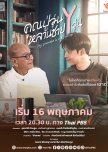
When writing a BL novel changes the family
Before anything else, let me point out that this is NOT a BL.
This drama's focus is on a journey through a time of growth -- in this case, it's the grandfather and the grandson, along with their family members, who try to save their orphanage; it just happens to have a few gay characters (and one confused character).
Along the way, the series picks up a few topics that are currently discussed in Thai society -- That there is some romance is more coincidental than central.
So, those who are interested ONLY in BL romance series should give this one a miss.
However, if you're willing to follow the story of a family of multiple generations through troubled times, who push through by doing things they would have not done normally, and who learn and grow because of it, then I fully recommend this drama.
The script is written extremely well -- the plot flows smoothly from one point to the next. Problems are -- although enhanced for tension -- never too "out there", and characters don't react dramatically, but rather like *people*. The characters are well-defined from the get-go, and the following character development makes sense.
The titular characters, their relationship with each other and their own journey -- both grandfather and grandson are mentioned in the Thai title -- get, of course, the most screen time and the most character development. Grandfather Sak starts out as the typical (Thai) traditional patriarch, who might care for his family but thinks he has to be strong and flawless as well as strict with his sons at all times, and learns to let his family take on part of the responsibility, learns to show weakness and, most importantly, learns to accept his sons the way they are. Grandson Save's story is a more common coming-of-age story; with a light twist in that he doesn't just grow up to be a responsible adult family member but also that he learns things about himself that he had never thought of before.
The development is gentle, but by intention not smooth: It has fits and starts, stalls occasionally -- just as it happens in real life.
The family dynamics are introduced step by step -- at first they just seem like an ordinary family of four generations that share a house, and then slowly we get to know and love their kindness, their flaws, their struggles, and their love for each other. Which is why when the reason for the uneasiness that occasionally pops up in early episodes gets revealed later, it hits much harder.
What is a bit unfortunate is that the children and the great-grandmother get only a minuscule bit of plot for themselves. I do understand the need for a focus on few sub plots but I would have loved to know more about the kids and about great-grandmother's own story. Maybe we can get a spin-off?
The plot is, for the lack of a better word, a slice-of-life, that refuses to collapse into soap opera, even though some plot points would make a weaker writer yield to temptation. Instead, in these moments, it gentles the tension -- by having a character accepting the inevitable, or neatly side-stepping the huge fallout by giving into the big emotions.
The actors as well as the directors follow the understated way of dealing with these big emotions -- they get as much room as they need to, but no more than that.
All of these elements combined make for a drama that feels very grounded, even as the emotions hit hard at the same time, especially in episodes 8 to 10. And by this I mean that Yes, it made me cry. More than once.
In all of this, as well as in its overall style, it is a very typical Thai PBS production.
Which means it comes as no surprise that it also touches on contemporary issues like scams, health issues in age, gender roles, to name a few, as well as a call for mutual respect between generations.
The most prominent issue is the acceptance of gay men and of gender non-conforming people by their family members -- how what we are taught in childhood still influences what we believe in adulthood, but also that there's a chance of changing your beliefs.
Another point, one that I found very interesting and think would deserve its own series, is how BL (dramas and novels) are still considered "lesser" than other, more traditional genres. And I find it quite fascinating that it's specifically compared to adventure novels here, which don't have the best reputation for quality themselves (at least here in Germany they don't).
Overall, this is an excellent production in terms of writing, directing, editing and acting. Done in the typical Thai PBS style, it's made to appeal to an audience of different ages with a goal to educate Thai viewers for the 21st century.
There are a few things to nitpick (like the fact that all children at the orphanage are all of approximately the same age), but in the greater context, these become insignificant.
The drama has a clear vision of what it wanted to achieve, and in my view, it did.
I have no reservation at all to recommend this to anyone who is willing to follow a story about a family with flawed characters, who struggle through a time of confusion.
This drama's focus is on a journey through a time of growth -- in this case, it's the grandfather and the grandson, along with their family members, who try to save their orphanage; it just happens to have a few gay characters (and one confused character).
Along the way, the series picks up a few topics that are currently discussed in Thai society -- That there is some romance is more coincidental than central.
So, those who are interested ONLY in BL romance series should give this one a miss.
However, if you're willing to follow the story of a family of multiple generations through troubled times, who push through by doing things they would have not done normally, and who learn and grow because of it, then I fully recommend this drama.
The script is written extremely well -- the plot flows smoothly from one point to the next. Problems are -- although enhanced for tension -- never too "out there", and characters don't react dramatically, but rather like *people*. The characters are well-defined from the get-go, and the following character development makes sense.
The titular characters, their relationship with each other and their own journey -- both grandfather and grandson are mentioned in the Thai title -- get, of course, the most screen time and the most character development. Grandfather Sak starts out as the typical (Thai) traditional patriarch, who might care for his family but thinks he has to be strong and flawless as well as strict with his sons at all times, and learns to let his family take on part of the responsibility, learns to show weakness and, most importantly, learns to accept his sons the way they are. Grandson Save's story is a more common coming-of-age story; with a light twist in that he doesn't just grow up to be a responsible adult family member but also that he learns things about himself that he had never thought of before.
The development is gentle, but by intention not smooth: It has fits and starts, stalls occasionally -- just as it happens in real life.
The family dynamics are introduced step by step -- at first they just seem like an ordinary family of four generations that share a house, and then slowly we get to know and love their kindness, their flaws, their struggles, and their love for each other. Which is why when the reason for the uneasiness that occasionally pops up in early episodes gets revealed later, it hits much harder.
What is a bit unfortunate is that the children and the great-grandmother get only a minuscule bit of plot for themselves. I do understand the need for a focus on few sub plots but I would have loved to know more about the kids and about great-grandmother's own story. Maybe we can get a spin-off?
The plot is, for the lack of a better word, a slice-of-life, that refuses to collapse into soap opera, even though some plot points would make a weaker writer yield to temptation. Instead, in these moments, it gentles the tension -- by having a character accepting the inevitable, or neatly side-stepping the huge fallout by giving into the big emotions.
The actors as well as the directors follow the understated way of dealing with these big emotions -- they get as much room as they need to, but no more than that.
All of these elements combined make for a drama that feels very grounded, even as the emotions hit hard at the same time, especially in episodes 8 to 10. And by this I mean that Yes, it made me cry. More than once.
In all of this, as well as in its overall style, it is a very typical Thai PBS production.
Which means it comes as no surprise that it also touches on contemporary issues like scams, health issues in age, gender roles, to name a few, as well as a call for mutual respect between generations.
The most prominent issue is the acceptance of gay men and of gender non-conforming people by their family members -- how what we are taught in childhood still influences what we believe in adulthood, but also that there's a chance of changing your beliefs.
Another point, one that I found very interesting and think would deserve its own series, is how BL (dramas and novels) are still considered "lesser" than other, more traditional genres. And I find it quite fascinating that it's specifically compared to adventure novels here, which don't have the best reputation for quality themselves (at least here in Germany they don't).
Overall, this is an excellent production in terms of writing, directing, editing and acting. Done in the typical Thai PBS style, it's made to appeal to an audience of different ages with a goal to educate Thai viewers for the 21st century.
There are a few things to nitpick (like the fact that all children at the orphanage are all of approximately the same age), but in the greater context, these become insignificant.
The drama has a clear vision of what it wanted to achieve, and in my view, it did.
I have no reservation at all to recommend this to anyone who is willing to follow a story about a family with flawed characters, who struggle through a time of confusion.
Was this review helpful to you?


