


 4
4 17
17 1
1 5
5 1
1 1
1 1
1


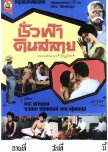
First of all, since there's no description here, a short synopsis:
Phapo, the owner of a logging camp and an impressive white mustache, returns from Bangkok with his new and very young wife Yupadee. Phapo's nephew Sangmong and Yupadee are attracted instantly to each other, and after a time, they begin a torrid affair, swearing they will love each other in all eternity. The affair is, of course, not a secret for long...
This is the third film I watched that was made by Pattana Pestonji after the 1954 "Santi-Vina" (where he was the cinematographer) and the 1957 film "Country Hotel" (where he was also the director). For "Forever You" (1955) he was the producer and the cinematographer, and the director is Khru Marut, who also directed "Santi-Vina".
If I understood the information I could find correctly, this film is also filmed on 35mm film, which means it didn't have to be dubbed later.
In style, this film is closer to Santi-Vina than to Country Hotel, with beautiful landscape shots and scenes that depict Thai culture and life of that time, although not as extensive (maybe because it was made for the domestic, not international, audience). Actually, this was what made me keep watching through the first hour -- because the story itself was fairly predictable.
Or so I thought.
Because when Phapo finds out about the affair, he does not react the way we (and Sangmong) expect him to. And this is where I was finally captured -- During the last half-hour I shouted at the screen, I cried, I sighed ... I cursed at Phapo, at Sangmong, and was moved by the secretary's (Thip's) kindness. The last minutes have two or three more surprises, and when the film ended, I was very happy to have watched it.
When I get to a point where my Thai is good enough (if that ever happens), I will definitely seek out the novel, because I want to know more about some characters' motivations -- I guess that due to time constrictions, the film script cut out much of the interactions between Sangmong and the logging camp workers and between Yupadee and the mistresses. We do get a few glimpses about this, and from that we can guess what workers, servants and mistresses think about the couple (and their affair), but I think knowing more about this would have made the reactions of the other characters, especially how they acted in the ending minutes, and the subsequent decision Phapo makes.
Because to be honest, I'm not sure I understand why he did what he did in these very last minutes.
Overall, the story is very much a child of its time -- Phapo as the autocratic, benevolent-until-he-is-not authority figure who resides over the workers, the servants and his harem of mistresses is likely an archetype and will be recognized by much of the contemporary audience as such, while I, from my Western 21st century perspective, almost automatically see him as someone with a questionable character.
I am convinced that his reaction to the affair when he found out about it was well within his own framwork of morality. What I am unsure of is what exactly the ending means within the framework of mid-20th century Thai society and Buddhist teachings.
So, like with most older non-European stories, since we are far removed from the time and place of origin, as a casual viewer I (and viewers like me) will have to be careful with any reading of morality or intended messages.
Nevertheless, from my modern and Western perspective, I would like to see a retelling from Yupadee's point of view. In this film, she starts flirting openly, even aggressively, with Sangmong from the very first day -- making it seem that she's more or less cavalier about her marriage, maybe even seemingly giving here the blame for the affair. I don't think it's intended, as the dialogues make it obvious that both are drawn to each other equally, but I wonder how contemporary audiences viewed her.
It's obvious that the original author and the film crew are all men, and think of the story from the male point of view of the mid-20th century. But when Yupadee talks about freedom near the end, and when I look at the decision she makes in the end, there is much complexity in her character already; in my view, she could very well be THE central character of the story -- she has much agency aready: She is the one who pursues Sangmong, and she is the one who makes an important decision in the end. I wonder why she married Phapo though -- what kind of life did she come from? What went on in her head when she decided to take the risk to have an affair? What did she hope for from Sangmong in the beginning, what in the end?
The film merely shows us a flirty, lustful woman who knows what she wants but we don't know WHY.
However, I don't blame the film for what it is. It's a child of its time, made by men, it has a limited run time, so allowances must be made. And as I said before, it did make me feel with the characters: Sangmong was a sympathetic naive young man, Yupadee was a young woman who tried to somehow find freedom, Thip was torn between sympathy and duty, even Phapo whose actions gave the tragedy even more poignancy was (for a time) thoroughly likeable.
Was it good?
Considering the time and place of origin, it was.
Did I like it?
Surprisingly, I liked it more than I thought, and I am happy I got the chance to watch it.
Would I recommend it?
To anyone who wants to watch more of Pestonji's work and to anyone who is interested in Thai cinematic history.
Phapo, the owner of a logging camp and an impressive white mustache, returns from Bangkok with his new and very young wife Yupadee. Phapo's nephew Sangmong and Yupadee are attracted instantly to each other, and after a time, they begin a torrid affair, swearing they will love each other in all eternity. The affair is, of course, not a secret for long...
This is the third film I watched that was made by Pattana Pestonji after the 1954 "Santi-Vina" (where he was the cinematographer) and the 1957 film "Country Hotel" (where he was also the director). For "Forever You" (1955) he was the producer and the cinematographer, and the director is Khru Marut, who also directed "Santi-Vina".
If I understood the information I could find correctly, this film is also filmed on 35mm film, which means it didn't have to be dubbed later.
In style, this film is closer to Santi-Vina than to Country Hotel, with beautiful landscape shots and scenes that depict Thai culture and life of that time, although not as extensive (maybe because it was made for the domestic, not international, audience). Actually, this was what made me keep watching through the first hour -- because the story itself was fairly predictable.
Or so I thought.
Because when Phapo finds out about the affair, he does not react the way we (and Sangmong) expect him to. And this is where I was finally captured -- During the last half-hour I shouted at the screen, I cried, I sighed ... I cursed at Phapo, at Sangmong, and was moved by the secretary's (Thip's) kindness. The last minutes have two or three more surprises, and when the film ended, I was very happy to have watched it.
When I get to a point where my Thai is good enough (if that ever happens), I will definitely seek out the novel, because I want to know more about some characters' motivations -- I guess that due to time constrictions, the film script cut out much of the interactions between Sangmong and the logging camp workers and between Yupadee and the mistresses. We do get a few glimpses about this, and from that we can guess what workers, servants and mistresses think about the couple (and their affair), but I think knowing more about this would have made the reactions of the other characters, especially how they acted in the ending minutes, and the subsequent decision Phapo makes.
Because to be honest, I'm not sure I understand why he did what he did in these very last minutes.
Overall, the story is very much a child of its time -- Phapo as the autocratic, benevolent-until-he-is-not authority figure who resides over the workers, the servants and his harem of mistresses is likely an archetype and will be recognized by much of the contemporary audience as such, while I, from my Western 21st century perspective, almost automatically see him as someone with a questionable character.
I am convinced that his reaction to the affair when he found out about it was well within his own framwork of morality. What I am unsure of is what exactly the ending means within the framework of mid-20th century Thai society and Buddhist teachings.
So, like with most older non-European stories, since we are far removed from the time and place of origin, as a casual viewer I (and viewers like me) will have to be careful with any reading of morality or intended messages.
Nevertheless, from my modern and Western perspective, I would like to see a retelling from Yupadee's point of view. In this film, she starts flirting openly, even aggressively, with Sangmong from the very first day -- making it seem that she's more or less cavalier about her marriage, maybe even seemingly giving here the blame for the affair. I don't think it's intended, as the dialogues make it obvious that both are drawn to each other equally, but I wonder how contemporary audiences viewed her.
It's obvious that the original author and the film crew are all men, and think of the story from the male point of view of the mid-20th century. But when Yupadee talks about freedom near the end, and when I look at the decision she makes in the end, there is much complexity in her character already; in my view, she could very well be THE central character of the story -- she has much agency aready: She is the one who pursues Sangmong, and she is the one who makes an important decision in the end. I wonder why she married Phapo though -- what kind of life did she come from? What went on in her head when she decided to take the risk to have an affair? What did she hope for from Sangmong in the beginning, what in the end?
The film merely shows us a flirty, lustful woman who knows what she wants but we don't know WHY.
However, I don't blame the film for what it is. It's a child of its time, made by men, it has a limited run time, so allowances must be made. And as I said before, it did make me feel with the characters: Sangmong was a sympathetic naive young man, Yupadee was a young woman who tried to somehow find freedom, Thip was torn between sympathy and duty, even Phapo whose actions gave the tragedy even more poignancy was (for a time) thoroughly likeable.
Was it good?
Considering the time and place of origin, it was.
Did I like it?
Surprisingly, I liked it more than I thought, and I am happy I got the chance to watch it.
Would I recommend it?
To anyone who wants to watch more of Pestonji's work and to anyone who is interested in Thai cinematic history.
Was this review helpful to you?


