


 4
4 17
17 1
1 5
5 1
1 1
1 1
1



"Wherever feels like home ... is home."
Having seen "Midnight University" and "Low Season", I was looking forward to a non-romance Thai-style horror comedy. Those other two titles managed to combine Thai silly humour with deeper themes of life to create something very unique.And "Peaceful Property" did the same. I laughed, I cried, I was moved.
If we're being honest, each element of the story on its own follows a trope or two: The family backstories of two main characters, the individual ghost stories, the way the friend group meets, fights and makes up -- but then, how these are weaved together, with colourful threads of goofy humour, heart wrenching acting, consistent writing and solid editing, it's become a beautiful tapestry that tells us about family, home, (familial and romantic) love and loss. About how important it is to tell your loved ones that you love them before it is too late.
Maybe a note before I go into more detail: Thai humour, especially the silly sort you find in ghost comedies has a lot of screaming, running, is even bordering on slapstick situational comedy. If this is not to your taste, you might want to proceed with caution. If, on the other hand, you are easily scared -- this is not that sort of horror. The ghosts look mildly scary at first glance, but they are definitely not.
The writing is extremely consistent for a light comedy -- some elements and hints are shown early, and picked up in later episodes, the main villain is not quite clear from the beginning, the ghost's stories (which have only one episode to unfold and conclude) are able to build a connection with the viewers in a very short time, and ! the series remains interesting until the last minute. I'm usually bored by longer "and this is what happened after everything was resolved", which takes more than 20 minutes here, and I was not bored at all. I even paused at some points to read PangPang's live stream chat (I recommend to pay attention to the chat throughout the series, some comments are extremely funny!)
I would have liked to see a bit more criticism of the capitalist and classist society, Kan's background would make a good starting point for that. But to be honest, I did not expect it -- it's not generically part of the genre, and doesn't fit the core themes (home & family).
Without good acting, even a good script can't save a drama -- and I loved the acting here. Nobody was awkward and out of character, and within minutes of meeting a new character, I was able to connect with them.
The first episodes focus on a "ghost of the week" story while the relationship between our main characters develops in the background. It's not too on the nose, but also not too subtle how the "cases" relate to the group's story -- and some of them are picked up in the latter part of the series, which focuses on Kan's and Home's backgrounds.
The theme of "home" is both already in the name of one of the main characters ("Home") and in its title "บ้านหลอน On Sale" /baan long/, i.e. "Haunted House for Sale".
บ้าน /baan/ means both "house" (as in the building) as well as "home" (in the literal and metaphorical sense). ที่บ้าน /thii baan/ usually means "at home" but is also sometimes used for the people living "at home", i.e. the family.
If we look at the ghost stories with this in mind, they all not only take place in some sort of house, it's also always about family, about relationships between people -- some of them literally dream of owning a house.
Overall, this is one of the Thai series that can be watched by anyone. It's funny, it's heart-wrenching -- I sobbed in every episode, and often laughed just a minute later -- and it tells us to cherish the people who are ที่บ้าน, (at) home.
Was this review helpful to you?
180 Degree Longitude Passes Through Us
5 people found this review helpful
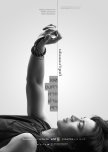
From a single line you can draw a wall -- or a bridge.
This is one of those dramas that leave me with a lot of feelings and with many thoughts, none of which I am able to express in words.I often give some insight of what I think a drama is about, what I believe its core themes are. I won't do so here, I think this is one you should go in as blind as possible.
But maybe as an advice for those who think about watching this drama, this is what you should *not* expect:
* fluffy, steamy or whirlwind romance,
* kissing or sex
Instead, you *will* get this:
* a slow paced drama about grief, about loss, about trans-generational trauma,
* a drama that focuses on the relationships between four people, one of them dead,
* many dialogue-heavy scenes,
* a slow reveal of what exactly happened in the past and what it means for the present,
* complex relationships,
* an ending that you will have to decide whether it is a happy one,
* excellent acting, minimal sets, and extremely intentional camera angles,
* metaphors,
* and did I say that this is slow? It's slow. And the story is not in what is happening, it is in what the characters are feeling and what they have to say (or choose not to say). And in that, it doesn't feel slow at all -- every short dialogue, every camera view is filled with meaning.
Don't expect a "BL", don't expect a drama that is focused only on a love story between two men.
The story is at least as much about the triangle between the mother, the father and the father's best friend as it is about the relationship between mother and son -- and the lines that can divide or connect them.
Was this review helpful to you?

What will you sacrifice to make your loved ones happy?
What might be important to know:* This is not an action/crime series.
Yes, there are some action scenes. And yes, there is a crime ring, drug smuggling and a murder case. But it's not at the centre of the plot. The main characters are even only marginally involved -- but the crime sub plot majorly influences certain reactions and decisions.
* This is not (only) a fluffy rom-com.
Actually, after the meet-cute and the scenes when Min follows Q in episode 1 and the preview for epiosde 2, I was convinced that this would be a shallow rom-com full of tropes and over-the-top Thai humour.
It IS very fluffy at times, very cute, with two soft boys who fall deeply in love with each other. But it is not only that.
In its core, the drama explores a much deeper question: How much will you sacrifice for the people you love?
Will you sacrifice your money, your health, your prospects in life? Your life itself? Will you do things you would never do otherwise? Will you sacrifice your own happiness?
And are these sacrifices you make -- are they the right choices? Will they make the other person happy?
I love how these questions are slowly asked and how they are answered differently over the course of the series. Both Min and Q search for the right way to achieve happiness for their loved ones -- with twists and turns, with laughter and tears. As the audience, we get to slowly learn about their lives and history, what made them who they are now and how traumatic events in their lives have shaped their views.
The script is well-written in that regard, there are no dragging parts, and the events of the present and the past are told in a way that they make a cohesive whole.
There are several inconsistencies, both in the writing and the execution. Just to mention some of the most obvious: the scene in front of Q's house in episode 7 would have had more impact if the actors hadn't swapped places for the close-ups, which brought me out of the immersion into an extremely emotional scene. I don't understand why Min's bedroom was restored to its original state after Min had taken care to rearrange everything in episode 2. Also, Min was shown as speaking English very badly (ep. 1), but later, he has no problems with instructing tourists at the surfing school.
One major flaw in the writing is the character of "James". I think he should have been two characters -- because he both has connections to the criminal underground (which are never explained nor explored, and Yada or indeed anyone else doesn't even really seem to know or notice him) and he is this good friend and mentor for Min with connections in the film industry, who is supposed to be extremely likeable and trustworthy? It would not have been hard to write a second character for the criminal connected side (another stuntman, maybe?), and keep James for the rest.
Mhen was unfortunately a bit bland as a character, he was never able to become more than "little brother who is ill and loves his older brother very much" -- and though Ohm Thipakorn obviously tried his best, he was not able to give his character much more colour. (Also, how does he get a heart transplant that quickly?)
Throughout the series, it's never clear how much time has passed, so that some scenes seem to happen very fast after another, when it's probably not the case -- a flaw a lot of Thai BLs seem to share.
But I can overlook these flaws because of the solid technical execution and mainly because the script gets the emotions right, and knows how to tie them together with the main theme of the drama, -- and because of the acting. Both Ohm Pawat and Leng Thanaphon are very convincing in their roles. They were able to make me feel with their characters, to be immersed in their story and to believe their emotions.
Leng surprised me, because I was a bit sceptical if a rookie would be able to portray a character that is at odds with himself and with the world -- and indeed, especially in the beginning, when Q is trying to show one kind of emotions to the outside, while he has opposite emotions on the inside, Leng reaches his limits fast. In his defense, these scenes would have been a challenge for more experienced actors, too.
Overall, I find, again, that it's best to follow a drama's story without preconceptions about what it "should" be, but instead listen to what the writer, the director and the actors are showing us -- and here, they showed us a story about how traumatic experiences can shape your world. They showed us a story about about devotion, about love between parent and child, between brothers, between lovers and what it means to make another person truly happy.
Was this review helpful to you?

อย่าหยุดสู้! -- Never Stop Fighting!
I usually only watch variety shows when I'm feeling really, really sick. So, when I clicked start on the first episode of "Running Man Thailand" in late February, I didn't expect to get hooked on the show and to wait impatiently for the next episode to air each week.Somehow, the regular hosts, their guests and the technical crew made this show highly addictive. There's never a dull moment, even if some episodes scratch the two hour mark.
Granted, not every game met the mark (I think the game inventors severely underestimated the difficulty of the Pattaya Beach games), and I didn't think the "couples' episode" (ep 5), was the best of ideas -- but overall, the games were well-designed, and made so that every participant could shine at least once.
Episodes were also edited on point for the most part; the editors built tension incredibly well and I think they found the best scenes to tell a good story for each game. The amount of material must have been huge, so I really think this is impressive work.
The regular hosts were delightful! I love how competetive all of them were -- nobody backed down, even when exhausted or cornered. NuNew was a wonderful surprise. I also liked how they grew over the course of the season -- from people who knew each other in passing as professionals in the same industry to team members (or opponents) who know each other's strengths and weaknesses.
However, even with all of these great aspects, there's one thing that makes this show stand out: The hosts (and guests) all genuinely seem to like each other. I love how happy they are when an opponent does something extraordinary; I love how they step back after a fight and check if the other is okay. There never seems to be even a second of animosity between any of them.
Of course, one never knows how much exactly is scripted in shows like these but I think there is some genuine fondness among the participants.
Overall, I enjoyed almost every minute of "Running Man Thailand". I really hope the producers will consider a second season.
For those who consider watching just one episode for their favourites -- you can, of course, and it's likely you will enjoy it. But I really recommend watching all ten episodes for the development of the dynamics between the regulars.
Was this review helpful to you?
A conflict based on miscomminucation, the inability to face your own insecurities, or external influences that stop one of the two main characters to act and resolve the conflict on time: This all has been done before in many, many dramas and novels. So, in order to stand out, you need to be meticulous in the writing and in the execution. The crew for this production was not.
There was much potential in the imagery -- the sterile house vs. the perfectly manicured garden, which Ha Yeonwoo crashes into, vs. the wide spaces of nature. There was good potential in the non-linear story-telling, so that we only get to know of their back story bit by bit. There was some potential in the meta-narrative where the feelings of our protagonists are mirrored in the feelings of the fictional couple.
Unfortunately, none of it was used well. It starts with the writing itself: The meta-narrative and non-linear story-telling interfered with each other and reduced the potential significance of each. Parts of the flashbacks seem at odds with each other -- at first there was something about a sweater, and later about a kiss; and both times I had the impression that this was the last time they had seen each other. Some scenes in the later part added nothing to the story (like when they broke into the museum) -- and considering that the whole runtime is just under two hours, the screen writer should have asked themselves: What story do I want to tell?
And in my opinion, the screenplay is the base for everything else -- if it already doesn't work, then the rest will struggle.
The thing is that "the rest" also doesn't work well. The cinematographer had an eye for nature shots (those were great) -- but that was it. The house, the garden and the world outside had interesting lines and light to use. None of it had any significance on screen.
Scenes were edited to be too long or ended abruptly. Microphones were seen on screen. At times, there were some audio issues. And let's not talk about the "kiss" in the "rain" at the end. (Not that I don't mind closed-mouth kisses per se, but here the camera held and held, until it felt awakward for everybody.)
Most of the time, the actors tried to save the mess, and I do think that their abilities were the only thing that made me sit through this film. But even they dropped the ball near the end -- if you are that uncomfortable kissing your (male) colleague, then you should make sure to either not act in a production that requires kissing or at least make sure that it's not as obvious in the finished product.
Overall, I have the impression that most of the crew didn't want to be there and rushed through everything just to get it done. I wonder if they are able to take pride in the product?
Was it good?
No. There was potential but none of it was used.
Did I like it?
I liked two aspects; the rest was ... meh. It was short, though.
Would I recommend it?
No.
Was this review helpful to you?
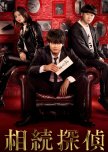
It felt as if it was two different dramas -- one that ran for about two thirds of the total and another that started around the end of episode 7 or 8.
The drama starts like quite a few Japanese detective dramas do: An eccentric main character, often a genius, accompagnied by one or two equally eccentric (or very straight-laced) side-kicks solve a "case of the week" , often with a twist or using unusual methods. Their "lair" is appropriately colourful and chaotic, the way the first few cases are laid out follows the pattern of traditional mystery dramas.
And I do love this kind of mystery drama, I liked 99.9 Criminal Lawyer, The Locked Room Murders, and more.
But Inheritance Detective failed to connect me with the team members. It neither develops their quirks well enough for them to really become a running gag (for example Tomonaga is supposed to often speak very quietly, so that nobody can understand him, which is used only occasionally in the earlier episodes, and never in the later ones. Haie himself eats dry coffee beans when he takes on a case, but it's never explained why or at least commented on or, I don't know, *something*, he just does.)
The drama's cases are neither good detective cases, where the audience can either guess along or be astonished at the genius detective's abilities, nor are they connected by a common thread (except by inheritance and wills), unlike the themes of "identity" and "mother-child-relationships" in Don't Call it Mystery.
I could have followed either direction -- comedy, mystery, philosophy -- but this drama failed to evolve any of these possibilities to a depth I could have been satisfied with.
And then the "showdown" with the real villain started, and it felt as if I watched a completely different drama. Any hint of levity was gone, characters suddenly seemed to change (from antagonists to supporters), and it felt like a revenge thriller or court drama, complete with seemingly life-threatening situations.
But this too was never developed deeply enough, even the villain stayed one-dimensional, the speech Haie gives in court near the end felt more contrived than moving -- mainly because I wasn't invested in anything.
Actually, I went through the first five episodes like a breeze, slowed down later, and the last episode took me long enough that I watched both seasons of Minato's Laundromat (which were at least not boring, just frustrating), *and* 8 episodes of Monster Next Door in the meantime.
And it's a real shame that the script was so bad, because the main actors were brilliant. I almost didn't recognize Akaso Eiji, he completely disappeared behind his role.
I think, based on the actors' abilities, I could have loved the team -- but not with this script.
However, there *is* one thing in the script I loved: When Haie tries to sideline his female sidekick "for her safety" (not his male sidekick), she doesn't let him, but involves herself again without his consent or even knowledge.
Was it good? -- It had some good ideas, but wasn't consistent in theme or tone. The actors were brilliant.
Did I like it? -- I would have given the first part a 7/10 or the second part a 6/10 -- but put together, no.
Would I recommend it? -- No. Neither to mystery nor to thriller aficionados.
Was this review helpful to you?
Short and Sweet
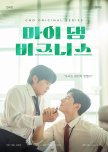
"My Damn Business" is a short, tropey-but-sweet romance drama, that could happen "next door to you".With "My Damn Business", GND studio (formerly Guy Next Door) have released their second multi-episode mini drama. Before this one, "Fake Buddies" was released as seven loosely connected episodes, and before "Fake Buddies", they only made short comedic skits.
It's maybe also a good idea to keep in mind that they posted a note on YouTube in summer 2024 (unfortunately deleted by now), in which they mentioned that the "channel is run by three people who handle all the content creation".
So, GND Studio is very much a small start-up, with extremely limited ressources and even less experience with longer dramas.
As with "Fake Buddies", they used their experience with the short form and with working with a minuscule budget to their advantage:
1. They chose a plot that did not require a lot of actors, only few simple sets, and that could be told in a few short scenes.
2. Each episode was comprised of one simple and short story arc, which could begin and end within the same episode -- and still moved the relationship forward.
Other things I noticed:
* I mostly like the chosen background music -- especially the percussion piece in the first episode but also the melancholic piano piece. The jazzy tune at the bar was a bit annoying but we've heard worse.
* The company is called GND International.
* Acting, wrinting and editing came together to create a story that gets to the point quickly but is still slow enough in the important moments for the emotions to unfold.
* One thing that should have been made clearer for the viewers was the intention of Han U Jin in the first two episodes. I think quite a few viewers (me included) felt his actions toward Yoon Su An were too much -- when it was just his extremely awkward way of flirting, where he tried to use any opneing he saw to get closer to Yoon Su An.
* Both Han U Jin and Yoon Su An were a bit awkward, fumbled interactions, and still managed to solve their issues in the end by expressing their concerns and desires. Apart from their too good looks, they really felt like two "guys next door" to me.
With an overall runtime of just over an hour, this drama is a quick sweet snack in between longer and heavier dramas.
Was this review helpful to you?
The awards are certainly well deserved. The acting, the soundtrack, the cinematography, everything served to enhance an already incredible story.
Here are some aspects that impressed me:
* The whole drama is not something to watch casually. Every minute is relevant, every twitch or facial twist is an important part of the story.
* I loved how I got to see only bits and pieces of what happened -- and had me mistrusting everybody throughout the series. Especially during the first episodes, which left me reeling with their cliffhangers. And then there was some new bit of info which slotted seamlessly into what I knew but changed all my ideas on what was going on.
* The first episodes made me guess and mistrust to the point where I expected a new twist even to the very end, when in other dramas I would already have been bored by the predictable plot -- I did no longer trust my own deductions nor my knowledge of the genre's usual plots, culprits and tropes.
* Every character is just shades of grey. Everybody's got their motives and reasons for their actions. Nobody is purely good, and still, a lot of them are somewhat likeable. That is something not a lot of dramas manage to do.
* I loved the role smiling and laughing played in this drama. I think the times when a smile, a chuckle or a laugh was really genuine instead of expressing any kind of negative emotion could be counted on the fingers of one hand.
* While the female characters were in the minority (no surprise there), all of them were strong, independent and active characters in their own right. (Apart from the victims of the serial killer, which was one of the few genre-conforming elements.)
* And last: No romance! Always a plus.
If you are a fan of mystery thrillers, this one will be worth your time!
Was this review helpful to you?

After the owner of a Japanese publishing house has died, a power struggle ensues. Hayami is appointed as the managing editor of the magazine Trinity by one side -- and editor Takano is also caught up in this, even though she just wants to publish well-written and interesting serialized novels. Both will try to save Trinity in their own ways.
The writing is tight -- every dialogue has meaning, so this is not a casual watch. It took me a while to get who is who and who wants what, which is important because this is very much character-driven, I had to rewind some scenes in the first half hour.
The characters' motivations and ambitions are only revealed by what they say, or don't say; sometimes by their actions -- and a lot of it means you have to read between the lines. The movie's title -- 騙し絵の牙 -- Fang of Deception -- or, the official English title Fangs of Fiction -- hints that at least of these characters may be hiding secret motivations.
There are several plot twists in the end, one of which I did not anticipate at all, but, in hindsight, made a lot of sense.
Also, I want to point out that the office sets, like in many other Japanese productions, are excellent! For example, I love how cramped and busy the editors'room of Trinity is, the mountains of paperwork of every available surface. The space of the much revered Kunpu Reviews, in contrast, looks much more organized and still as realistically used.
Fangs of Fiction is both really funny and shows us the contemporary struggles (of the publishing industry) at the same time. Both the external struggle as a traditional company against the new online world, and the more internal struggle about traditional values and old styles of story-telling versus modern innovation and showing more diversity in stories (I loved the cameos of the disabled and the old model and of Ladybeard.)
It also subtly touches on issues of how women are treated in fiction: The main female editor is constantly trying to point out how outdated the depictions of female protagonists in the fictional novels are -- and is instantly shut down by her male companion. I am glad to see that the female protagonist in this movie is at least as important as the male main character -- and how she found her own successful way of dealing with the issues of the publishing world in these modern times.
Recommended! Maybe you'll find more subtle deceptions when you watch the movie, I'm sure I did not catch them all.
Was this review helpful to you?
One main reason for this is the main male character, Lee Ahn, who I thoroughly disliked. He is cocky and self-assured without having any abilities to support it -- and it feels that he thinks it's enough that he is himself and has this psychometry to be allowed to flaunt rules.
Another is the romance, which felt forced and superfluous. Is it not enough to share the same traumatic childhood exerience? To have the same goal? Why does it have to be romance, when partners and eventual friends would have made enough sense?
I did not feel any sexual or romantic attraction between them. For the longest time, Jae In seemed to be more annoyed than romantically interested.
They wouldn't do a romance arc if the young people had the same gender, so why force this into a good mystery?
Because the mystery plot was quite good otherwise -- the storyline of the dangerous stranger whose identity is slowly revealed and how he connects to the mysterious Kang Seong Mo was delightfully muddied by the storyline about corporate fraud.
It seemed that we knew everything already in episodes 11 to 13 or so (which is also part of why I had trouble continuing at that point) -- but then there's a surprising plot twist!
(The story telling though was a bit too slow in the last episodes.)
Kang Seong Mo was by far the most interesting character, and his actor subtly portrayed his emotions -- emotionless robot, even though it seems to the other characters, he is not. Without him, I would probably not have made it through the drama.
An honourable mention for Jae In -- one of the few female characters in a drama who can hold her own -- yes, she "needs" to be saved by the male lead at least once, but other than that, she is indispensible to the plot, and actually more competent than Lee Ahn.
Overall, it's not bad -- just not something I liked. If you don't mind romance in your mysteries, cocky male characters and slow pacing, then it might be for you.
Was this review helpful to you?

When I started this, I had, once again, no idea what would await me -- I like choosing things based on the title and the poster. After the first episode, I still had no idea, except that there seemed to be ghosts? But was it comedy? Tragedy? Supernatural mystery?
As it turned out, it was all of them. And the ghosts were ... something very special. I don't want to spoil anything, but the ghosts are (with one exception) not the classic spirits of the deceased.
The horror element in this series is minimal, there is some gore in the first episode -- but later there is no such thing anymore.
In the presentation and the way the serious themes were mixed up with the comedy -- and how the important bits of character development were at times almost hidden by the comedy, it reminded me of the Thai way of telling stories about the human condition. And in its core, this story is very much about the human heart; about the desire to belong, the love people have for family (parents-child-relationships specifically play a large role here), the hole that remains when a loved one is gone.
The screenplay develops this theme slowly, but with intent. I didn't feel that there was a misstep or that it lacked anything. Grief was bundled into laughter and that softened the hard parts of the story -- more than once, I found myself crying gently and laughing softly at the same time.
We mainly follow Pu Yiyong's journey, who must find out how to handle his new powers, and at the same time, struggles with grief and guilt, since he believes that it's his fault that his family was involved in the accident. He forms a trio with two other characters: a young police women with an abrasive personality and his one-time victim of school bullying, a young man who now studies medicine. I loved the dynamics of the group, who all have some growing-up to do (and in that, the series also includes a coming-of-age element). And I love most that there is not even a hint of romance between them! (And it's obvious that the writer is aware of how unusual that is; they included comments from other characters who seem to think that there is something going on either between Pu Yiyong and the young woman or between him and the yong student -- and all three react with confusion each time.)
Was it good?
Yes, the screenplay was solid, the balance between comedy and serious was good, and the actors and editors did a great job.
Did I like it?
A lot! I love stories like this that mix supernatural mystery, comedy and underpin issues of the human heart.
Would I recommend it?
I would, yes.
Was this review helpful to you?
The romance starts off strong -- and then comes to a complete standstill for six episodes. In that time, the series discusses how workplace dynamics (in particular hierarchies and the concept of seniority) influence the quality of work and of work life. It also picks up themes like bossing, the culturally significant concepts of "saving face" and เกรงใจ /greng-jai/ (the feeling of not wanting to burden people who have seniority/authority with your own needs or wishes), office gossip and others. We follow Pat in his first months at the office, and how he learns to find his own place in this world. The difference between his coworkers (who expect the Thai way of doing and saying things) and his superior, who is, even by my German standards, extremely up-front and blunt with his feedback, is striking; and I expect this might hit a nerve with Zillenial Thai viewers.
We also get to see how his friends go through things: getting prgnant, breaking up, living through unrequited love ... all of the things many young people in their twenties experience.
"Step by Step" is also the first Thai BL series I've watched that takes work issues seriously and not just as pretty background for a sweeping romance. The inter-office work as well as the lingo and the workflow felt quite realistic -- I'm not sure if it actually is, but if there was any nonsense, I didn't notice it. It certainly was better than whatever they did in "Bed Friend" or "A Boss and a Babe".
After episode six, the focus pivots towards the romance -- and while I liked how they gently re-introduce it at first, the whole thing takes a nosedive near the end of episode 8. It recovers slightly in episode 10, when the same-sex relationship between boss and employee becomes known and thus an issue (but only for this episode), and then never fully recovers again. Here are some (hopefully non-spoilery) examples of things that went wrong:
* The timeline went wobbly -- what we get in time stamps, doesn't make sense.
In the beginning, Pat is 25, his friend knows she is pregnant (and in the third month of pregnancy), and Jeng gets a year to turn the department profitable.
Sometime later Pat has a birthday, then his friend gives birth, then we get a small time skip of three months. But then there's almost tow quarters left of the year Jeng had?
After that, there's a time skip of two years, another of birthday of Pat's -- and in the last minutes of the series, he says he is 26 years old. Sigh.
* The secondary pairing doesn't get a resolution at all, after a lot of dramatics between episodes 5 and 10 or 11.
* Some supporting characters are important in the first half, and then never come back. One supporting character has a 180°-turn with her characterization.
* Jeng has a breakdown in episode 8 because of his feelings -- there was never any hint before that he was that deep in love. Overall, the progression of emotions was uneven; especially just before and after they got together, there seemed to be a jump in attraction/love; which could have been prepared better.
* Let's just forget the lakorn-ish birth scene, which happened in a public bus with onlookers filming, and which had never any impact on anything else.
* The conflict between Jeng and his father never gets resolved. Jeng even says "this was too easy" at one point, but there's never any follow-up. (The father was also a severely underutilized character. And maybe all the more jarring because his actor was good enough to give him characterization where there was none in the script.)
* In episode 12, which is overly long already, with 1 hour 49 minutes, instead of resolving the remaining conflicts (e.g. the secondary couple's story), the last 30 minutes were spent on Pat and Jeng being domestic together in unrelated scenes. Also, Pat was ukefied in these last scenes, which, for me, made all his character growth kind of pointless.
And it's really a shame that the writing falls apart to that extent. We have this really well-introduced office and its work dynamics. We have a diverse friend group, that even has a token het couple, with interesting romantic and platonic relationships. We have a discussion about social issues about society and workplace politics. And then nothing of that is used to the fullest, and in some cases, not even resolved. I wished a ThaiPBS writer would take the same premise and run with it -- to think that they could do another "The Summer We Met" with this? I would love it. The potential for something special was there.
It's strange that despite these issues, I ended up liking the series anyway. Maybe because the first half was so strong for me. Maybe because I really liked both Pat and Jeng, and they did make me feel all aflutter when they were together.
Was it good?
In regard to production qualtiy and acting, it was an average Thai BL. It could have been a perfect ThaiPBS lakorn, if the romance had been reduced to a minimum and the social commentary about working as a young adult and issues of nepotism and class had been more developed.
It's also really unfortunate that the ending just fizzled out.
Did I like it?
Despite the issues the series had, I liked it fine, strangely enough, especially the first six episodes. I might even rewatch it some day.
Who would I recommend it to?
To be honest, I don't think I would recommend it. I would not advise against watching it, for those who like to watch a story that's slow to unfold and focuses on work relationships.
Was this review helpful to you?
There are stories that push their message, whichever it might be, on their viewers/readers.
And then there are stories that try to do both -- be entertaining for those who just want to relax after work and still convey messages that go beyond the moment.
"Let's Go Karaoke!" is one of the few films (and series) that really manage to balance the two without one overpowering the other.
The plot itself is engagingly narrated with a clear arc of development for the story -- a viewer can just sit back and be entertained. And yet, the film clearly also talks about the first steps into adolescence: Both the physical changes and the way these changes force children to adapt their own lives and the way children, now teenagers, step into the adult world, and start to understand that adults are not less quirky, not less insecure, not less searching for the right path -- not less human! -- than the children. They start to think about love and friendship. They leave their childhood behind.
I am quite sure that there are also some thoughts about masculinity and machismo to be found.
In "Let's Go Karaoke!", the viewer doesn't have to consciously search for these themes, and neither are they forced unto the viewer.
The unlikely friendship between the Yakuza, who wants to learn how to sing to avoid punishment from his boss, and the middle schooler, who has always sung as a sporano but whose voice is about to break, is the scaffold with which these themes are built. Their power dynamics -- the adult is physically stronger and even dangerous but he still submits to the perceived superior knowledge of a fourteen year-old -- provide an interesting, and often humorous, frame for the story. When Oka Satomi steps into the adult world, he also leaves his childhood pursuits behind, ingeniously symbolized by choir member "Wada" who feels betrayed by Oka's leaving.
Of course, if JFF Theater includes a film in its line-ups, I'll expect high quality regarding the actors' performances and the technical execution; and I was not disappointed here. I was not only impressed by the actors' overall performance -- especially Narita Kyoji who is convincing both as a dangerous Yakuza and as a vulnerable man -- but also by the quality of singing in this film: you have to be very good to sing *that* badly.
The film mostly focuses on the two main protagonists, so the supporting charaters remain mostly quick sketches, but their actors also give them some personality -- for me, it's very clear that Wada, Nakagawa, Izawa and Hyena all have enough backstory that they could easily have their own film.
There were a very small amount of characters' action that only made sense in a "because the plot needs it" way, but these were very easily ignored.
Was it good?
Yes. Not only was I entertained but there was also a not-small amount of depth.
Did I like it?
A lot!
Who would I recommend it to?
To those who love coming-of-age-stories.
Was this review helpful to you?

Too much and not enough, no middle here.
I understand why fans of "Bed Friend" were angry about "The Middleman's Love". This might be set in the same universe as the dark-ish "Bed Friend", but the genre couldn't be more different. What's more, the series isn't even very good as a stand-alone comedy.If you have read enough fanfics, you might be familiar with a specific type: A fan decides they want a fluffy feel-good happy-ending with some elements of crack for their "fav charrie" -- and why not throw in some cross-over characters or OCs in there as well? -- and then to their own astonishment the fic suddenly has plot? And they don't quite know what to do with it, so they decide to throw in another few comedy scenes and a sex scene or two and call it a day.
This is what "The Middleman's Love" feels like.
We get the OOC scenes of a ghost hunt and a "company sports day" with children's party games; we get the catchphrases and the OTT humour, we get a lot of snacks, we get a "workplace" that is a joke and has no bearing at all on the story, and so on and so forth -- and then, suddenly, character backstory and angst? Which breaks the style and the established rules of the story.
What doesn't help is that director Cheewin Thanamin wasn't able to create a vision from the mess of a script. He re-uses elements from his previous dramas; for example the animation from Why R U? or the over-acting from YYY or Toh's character design from Secret Crush On You or the background music from Bed Friend, whether it fits or not. But he does not manage to make it a cohesive whole. In the beginning, he chose to use elements of parody and over-done narration, like when Jade and Mai "ride" in the obviously parked car or in the day-dream sequences, as well as the use of the "mandee" logo for the company. But then he switches the style to that of an average rom-com later on, while he still tries to keep Jade's over-the-top character.
That the sex scenes neither have any kind of narrative function nor round out the characters' relationship dynamics (on the contrary, they break them completely) is only the over-ripe cherry on top.
I wish that both the screen writers and the director had committed to one singular vison and style for this drama. Either go completely overboard with everything and make something unique or follow the title of a "คนกลาง", "a middle/mediocre man", and make Jade really an absolutely ordinary, unremarkable and middling man. The latter also would have had its own potential for a good and special story, be it comedy or serious drama, in its own right.
One positive thing that can be said is that Yim, who plays Jade, does his utmost to fill the role. He doesn't hold back and obviously is not afraid to look ridiculous, which is a must-do for his role. Unfortunately, he is neither directed with good vision (see above) nor coached well enough to use his whole body for the comedy; and it does not help that (for whatever reason) he doesn't move all his facial muscles to the extent needed, so his Jade doesn't reach the kind of physical comedy that would have been required for the series to work.
There is not much to say about the other actors -- none of the roles required much acting skill, even for a romance.
Was it good?
It had some good elements for a crack fic or a parody but didn't dare to go all the way. Both the script and the style of direction muddied any potential vision.
Did I like it?
I didn't think of dropping the drama, so it wasn't that bad for me. But I also would not say I enjoyed most of it.
Who would I recommend it to?
I wouldn't.
Was this review helpful to you?
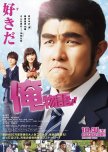
Young Love with three Sweethearts
Oh, what sweethearts these three teenagers are! This is a love-triangle done right, and the film hits all the highs and lows of a first love.And this is a story with one of the narratives I love: The "ugly duckling" doesn't change.
Takeo is, while well liked by guys, shunned by girls at every turn. His appearance and his deep voice -- the first image that came into my head when I saw him was one of a middle ranked yakuza -- is definitely not what teenage girls look for in their next crush.
The film makes is very, very clear in the first minutes, however, that this boy is a complete sweetheart, a loyal friend, and a gentle soul. From his many rejections in the past, his confidence regarding love is non-existent and he thinks his crush on Yamato is hopeless; and still he puts on a smile and tries to make his friend and his crush happy.
And this is why the film works so well; the three main actors convey the feelings with apparent ease -- when their characters smile with a broken heart, when they try to stay calm but would rather break down and cry; it's all there to see.
The humour is over-the-top as for most adaptations of comedy manga, but sprinkled throughout, and never laughs at the characters.
One little thing I loved a lot was how the writer let the mother causally accept the possibility of her son dating a man. Progressive mums, yay! Also, I love how they hinted that Suna's feelings might be not quite the platonic friendship he would like us to believe. I hated the after-credits scene though, it broke the style of humour and the characterizations of Takeo and Suna, so if you see Suna's characters the way I do, you might want to give the after-credits scene a miss.
Was it good?
Yes, both actors and writers knew what they were doing, and they told us a beautiful story about young love and friendship.
Did I like it?
Absolutely.
Who would I recommend it to?
People who want to watch a different kind of coming-of-age / young love story.
Was this review helpful to you?


