


 4
4 17
17 1
1 5
5 1
1 1
1 1
1


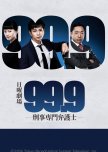
A court / crime drama that combines serious cases with slapstick humour.
Does the combination of serious cases and humour work? Yes, for the most part.If you don't like the Japanese style of comedy and typical Japanese acting, then this show is probably not for you.
There are a few scenes when the slapstick comedy is a bit too much for me, but I thoroughly enjoyed the puns.
Things I liked:
* The cases are not too simple -- although the clues are usually quite obvious, it's not always clear on the details, so they stay interesting.
* This does not matter actually, since the main point of attraction are the lawyers and their team of paralegals and how they interact with each other.
* Especially Miyama and his "boss", Sada, who absolutely do not like each other at the beginning, start to respect each others strengths, even though their professional ethics differ.
* Regarding Miyama, the show manages to balance on the fine egde between making him eccentric and unlikeable -- usually landing on the side of eccentric. I think the humour in this show makes his quirks endearing rather than obnoxious.
* A huge plus is that there's no romance plot. Yes, there are two people with enormous crushes on another person, but these are only played for laughs, and it's very clear that the other party will never be interested.
One minor thing I did not like as much: The prosecutors' side stayed too one-dimensional; I would have liked more development for them.
Recommended!
Was this review helpful to you?
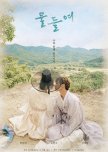
Mellow and relaxing; painting together on a hot summer day
What I liked:* The general atmosphere of the movie was relaxing, they managed to capture the feeling of sitting in nature on a hot summer day and falling in love perfectly.
* The storyline is a good fit for the length of the movie.
* All three main characters, especially the bodyguard. They all manged to convey their feelings without trouble. I liked the bodyguard's reaction to that suspicious person, his worry and gradual acceptance of what is to come. Also, I love that it remains unclear what his feelings are exactly -- loyalty, friendship, romantic love? Sometimes things are muddled and it's good to leave it open.
* Although I'm usually wary of timeskips, that one at the end worked. In my opinion, showing what happened directly after the return would have felt very differently to the rest of the movie. Good choice, there.
What I did not like:
* The last ten minutes or so feel weirdly paced, in contrast to the majority of the film, which is pretty slow. I think they tried to convey a sense of urgency, but why then this strange flashback to the conversation between the lady and the bodyguard?
Overall impression:
It's a nice romance, with okay-to-good pacing, nice scenery, and well acted. The story is captivating and although it is on itself quite predictable, the characters and their actors make it something special.
There are some questions that remain unanswered, sometimes I liked the ambiguity, sometimes it would have been nice to have it a bit clearer.
[This is a slightly edited version of the review I posted on Viki.]
Was this review helpful to you?

Things I liked:
* The story has two of my favourite tropes (emenies-to-lovers and accidental/forced roommates), which are are really well done. The boss/employee vs. tenant/landlord dynamics give good balance to their relationship. Overall the plot is a bit predictable but the characters' development and the interaction of the team members make it enjoyable.
* The team members were great, they provided both comic relief and an outsider's point of view for the developing relationship. They were also quite cute.
* Kang Woo Jung's acting was brilliant -- I hope he'll get the chance to act in productions of different genres, so more people will see him.
* Both lead actors seem comfortable with each other, which makes the intimacy between the characters believable. (It's sad that I have to say this -- but in some Korean BL dramas the actors seem so uncomfortable!)
* I also like that we get to see a glimpse of the struggles some gay men go through -- unluckily falling for a straight man, the fear what would happen if you're outed at work, how people will judge you for being with another man. Yoon Seo Bin was good at portraying all of these with a side of internalized homophobia. This topic was there throughout the show, sometimes just as an undercurrent, sometimes more obvious, but it never distracted from the sweetness of the romance plot.
Things I did not like:
* The acting of both main leads was a quite muted at times. Especially in the scenes when their characters argue with each other, I did not feel the emotions as much as I could have. I think stronger body language and facial expressions would help. They are both really good at expressing their emotions with their eyes, though, so it's not a question of talent -- either they just have to practice a bit more or the director did direct them that way. (Or is it something more ... chemical, at least concerning facial expressions? With the entertainment industry as it is, I wouldn't rule it out.)
* I wish the show would have made Jae Yoon's motivation for his decision in episode 7 clearer -- either by characterizing him better in earlier episodes or telling the audience outright. I think Jae Woon's actions come across as more tropey than it was intended.
* Also it would have been nice to get more of Ho Joon's backstory earlier and not infodump everything in one (though very heartfelt) speech.
All in all, one of the better K-BLs I've seen, and very comfortable to watch repeatedly.
[This is an updated version of the review I posted at Viki.]
Was this review helpful to you?
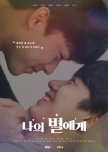
In a lot of other Korean BL dramas, something is always off -- either the story doesn't make any sense (or only had old-fashioned and even harmful clichés), or the acting is stiff or the production (sets, audio etc.) lacks details or the directing is lackluster etc.
This drama has none of those problems.
The plot is is solid, if a little predictable. What's making it special are the little hints at more backstory -- especially for the two main leads, who are wonderfully vulnerable and both have scars from earlier events in their lives, which we only get hints of -- and they both accept these vulnerabilities and the weaknesses of each other.
The acting enhances this further. There are many small moments when you have to look closely at the actors, they often express their emotions through small changes in posture or even just with their eyes (I loved these moments when Son Woo Hyun shows how his character is hurt by Han Ji Woo's harsh words, and equally, how Kim Kang Min can say whole paragraphs by just averting his eyes.) Both main actors and the supporting cast are obviously invested in making this drama into something good.
The sets feel real, and with much attention to detail. In the beginning of the story, Ji Woo's home seems a bit bare -- except for the kitchen, which is clearly well loved and often used. This is the only place in the whole house where Ji Woo has left traces of his own personality -- until Seo Joon, that is. Then suddenly, decorating items start to show up (and it's clear that Ji Woo put them there for Seo Joon).
The directing puts all these things into a cohesive whole. For me, it feels as if the director had a clear vision of the story, the characters, and their backstories.
Yes, the budget could have been higher, the run time could have been longer. But I think they did what they could, and it doesn't even show too much that it was shot during the first autumn/winter of the covid-pandemic (I suppose that South Korea had quite a few restrictions back then, as did other countries).
I recommend that you re-watch this after season 2 -- there are several scenes that hit differently after you know more about the characters.
Was this review helpful to you?

Good for a one time watch
"Friends-to-lovers" is usually a trope I like very much, and they did it justice until Zheng Ze Shou and Fu Li Gong got together. From then on, it was rather cheesy and the conflicts too clichéd for me.The acting by the main couple was excellent, especially when they were still figuring out their feelings or what to do about them.
I also loved the two fathers and Nikita. Unfortunately, the same cannot be said of the second couple; especially Yuki's actor stayed bland, he mostly had the same gentle smile, whoever he looked at and however he felt -- I noticed it the most when he was fighting with the laundromat owner. It really didn't help that he didn't get any backstory (we only know his father was Japanese and died when Yuki was a child, which makes Yuki's "ohayou" even more pretentious).
The song that was used for the opening credits got on my nerves (it also was non-sensical); and the piano background music was distracting from what was happening on-screen.
It's a shame that the female roles did not get more development. The sister is unfortunately the stereotypical little sister (even though she's somewhere in her early twenties), the little girl has no personality whatsoever, apart from being a bit sassy. And Nikita's character, who was so cool and mysterious and generally an impressive woman with her own business, was ruined by that stupid and unnecessary crush.
I did like that we got to see two lawyers working together, and it was an excellent idea to have them be divorce lawyers in a romance -- the drama was strongest when the cases made Ze Shou and Li Gong think and talk about love and marriage, and reflect on their own love story. I wish the writer had used this also to resolve the conflicts of the second half. Together with maybe more time to show the father's side (because I think it's not very clear why he reacts the way he does). this would have made the second half better.
Overall, the story's flow is good, it's done well -- though not so good that I'd want to watch it a second time.
[cross-posted to VIki]
Was this review helpful to you?
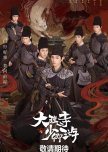
Came for the comedy, stayed for the mystery, enjoyed the friendship.
The tl;dr:* Good pacing overall, nice balance between mystery and comedy
* Fine acting, distinct personalities and interesting background stories for the main cast
* No Romance!
* Strong female character, who unfortunately gets pushed out of the plot later
* Important message; good portrayal of diversity (considering it's Chinese)
* Ear-catching OST
The first episodes start with a strong comedic vibe, which is sometimes even stapsticky, after which the drama progressively gets deeper into the mystery of what happened three years ago.
I liked how this change happens gradually, the audience gets lured in with seemingly simple detective cases, and glimpses into the background stories. Only slowly the bigger picture begins to emerge, and it's not until the very end that we know all of the important elements. And on the way to the story's climax, the comedic elements are not lost -- the whole show feels well-rounded in its pacing and in the balancing of the different elements.
There are no episodes that feel dragged out, nor does the story ever feel rushed.
All of the main characters are incredibly well portrayed. Usually with costume dramas, especially those set at court, with all these similar uniforms and hats, it takes at least three episodes until I know who is supposed to be who. Not in this drama! Not only have the members of the Judicial Court all distinct personalities (more on that later), but each character has his (or her) very own body language. Even when they do nothing but sit or stand around, it's possible to recognize each and every one of them, even from behind.
No Romance! Always a plus, if the writer doesn't force a het romance into an otherwise engaging story, just to prove that there is no homo-romantic attraction between the main characters.
I loved Vice Minister Shangguan from the first minute -- finally, here is a female character who is not a simpering, love-sick and annoying girl but rather a strong woman who fought for her right to have her own life. In a sexist society (other characters even comment on this), she opposed her parents' will and got into a position of power as an official. Her office which is overflowing with scrolls and paperwork shows how hard-working she is. She must have had a hard time navigating Palace politics, as a woman and sole vice minister -- always on the outlook for people who want to sabotage her and her work; and we get to see glimpses of how she did it in the first episodes.
I also loved how her appearance underlines her character -- she's wearing sensible clothes, her make-up is modestly done.
All of which make the one thing that's really bad about the drama even worse: When things get serious, she's getting shipped off, for her safety, or, as Li Bing would put it, "for her own good". Why? She's certainly not weaker that, say, Cui Bei. She's not less experienced in intrigue than Wang Qi or less clever than any of them. So, why? Only so that when it gets serious, she can't "steal" the spotlight from the men. Plotwise, it would have been very much possible for her to be an important part of the team.
This is the one reason I deducted half a point from the rating for the category "story".
One big point in the drama's favour is that it shows us how important it is to see others as a human being -- what it does to a person if they are dehumanized (whether revered as god or reviled as monster) and how it makes us more human if we are kind to one another. Connected to this is that the acceptance of diversity can only strengthen us. (Which makes it even more regrettable that Vice Minister Shangguan is not part of the team!)
The team of Ming Jing Hall are very different people, not only is the boss half-human, half-cat, there's also the superstitious ex-soldier, the "diplomat" with a fondness for cross-dressing, the bookish man who always brings bad luck, the bumbling country boy and even a foreigner!
(That's one aspect that I found astonishing, there was actually very little nationalism in this drama; usually Chinese dramas are all about how great and heroic the Chinese people are -- here they are the aggressors towards another country, while the presumed antagonist just wants ... well, that would be a spoiler.)
Only by working together, by not just accepting each other but also recognizing each other's strengths and quirks, can the team solve the mystery and get justice for those who have been wronged.
Overall, this is an engaging and well-acted drama that made me laugh, and made me cry, and had me on the edge of my seat until the last minute of the closing credits.
Was this review helpful to you?
This review may contain spoilers
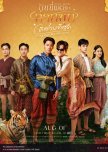
Set in a fantasy land with a timetravel/body swap trope at the centre, "I'm the most Beautiful Count" balances three (Western) genres: comedy, romance and political intrigue. It starts out as a simple comedy, slowly adds romance and lastly edges into the political plot -- I liked how the script never forgets any of the three and usually manages to combine them nicely.The romance was maybe too underwhelming for some -- the focus is on the revolution plot for quite some time, and we don't really get the two main characters be lovey-dovey together, which, in my view, wouldn't quite fit them anyway, since they do love to bicker with each other. I liked that they made it clear that even after declarations of love there will be misunderstandings and a continuous re-balancing of boundaries. I also liked how the script acknowledges that you can love one person dearly while still being attracted to another -- it's the decision if you'll want to act that makes or breaks a relationship. (That being said, I think Prince!Worradetch should have just taken all three of the men -- Kosol, Banjong and Jade -- into his harem.)
The comedy was there on-and-off throughout the series, and I liked its use until the start of the last episode. Mainly it was Prince!Worradetch being extra again and again, and their surroundings having to somehow cope with it -- but I felt that it never laughed *at* Worradetch, only with him.
While the plot about the revolution is not ... revolutionary, I found it to be solidly done for the most part. It took over much of the runtime during later episodes, as is only right, and there were some narrative tricks used to make a rather straightforward plot more interesting. For a while there I thought that we might even get an ending that was not a happy one -- but unfortunately they pulled the rug there from under our feet, and not one time, not two, but three times! And while the first one was an almost-clever plot twist, the second just cheapened the emotions they made us go through -- and the third diminished the taste of victory and justice in favour for unhinged comedy. (There is a reason why in old fairy tales the villain *always* gets punished.)
Those two last rug-pulls are tied into how the screenplay flips the mood on its head in the last episode -- we go from light-hearted plot with serious messages to silly comedy that forgets all the hardships and all the bad things that happened before, just to make a happy ending with glitter and rainbows. That was *not* needed at all. A victory that acknowledges the sacrifice that was needed to get there tastes even sweeter, don't you think?
Another great let-down were the female characters. We have our main characters who want equality and justice for *everybody* to live how they want. And the screenplay? Gives us exactly *two* women who even are in more than two scenes or so -- and one of them only appears near the end of the story. The other has exactly one reason to be there: To be the jealous antagonist for Worradech's romance arc. She doesn't contribute in a meaningful way to the revolution other than to look pretty and cook meals with chili paste. Was it really too much to ask to give her at least *one* other character trait or purpose?
On a technical side, this drama was well done. They obviously only had a limited budget -- and clever use of locations and filming angles made the world richer looking than it was. (An advantage of setting this in a fantasy land, no need to be too fussy with historical accuracy.) Fighting scenes and anything that needed a crowd looked slightly empty with only a handful of extras, and that might be the reason why there's no huge battle scene -- but I'd rather the producers and writers look for clever solutions than rely on CGI (or worse, genAI). And I think they did well with their solution, the final takedown fit Worradetch and his companions' characters extremely well, I think.
While the actors all delivered a solid performance, let me point out that I loved Nut here: He was able to switch easily between the effusive Prince and the more reserved original!Worradech. The other actor who impressed me was Lee Asre, who played the slave "Jade", who was often seen just kneeling in the background and still never fell out of his role. He showed his character's development well through his body language which relaxed incrementally with Jade's growth of confidence.
Overall, I loved this production despite its flaws. I found it engaging, never boring; and it delivered a thinly-veiled political message with its comedy, which is my favourite style of story.
Before I come to my concluding three questions, let me makes two quick detours:
Detour 1:
Prince / Worradetch calls themselves กะเทิย "kathoey". Now, I'm not Thai, so this is all from my observations from a distance, but from what I've seen and understood, กะเทิย is a concept that doesn't fit into our neat Western boxes for identity, it is something quite different. A gay man can be กะเทิย, as well as an effeminate man -- it's a spectrum that reaches up to what we call "trans woman" in the West. So, while Prince says "ฉันเป็นกะเทิยค่ะ" "I am Katheoy" they are using ฉัน, which is usually a "female"-associated pronoun, but can also be used by men. So, it doesn't mean that they say "I am a (trans) woman" (in the narrow Western sense).
They are simply กะเทิย -- that's why I prefer the term to use as it is, and not try to translate it to a Western term that will not fit in most cases.
Detour 2:
To have a drama with a katheoy character in a main role is rare. To have them be shown not as the butt of the joke but as a competent, complex human being who succeeds outside of the "assigned" careers of fashion, entertainment or beauty, but in politics of all things, is even rarer.
Actually, I only know of one other drama like this, and that is "ผู้ใหญ่ลีศรีบานเย็น" ("Headman Lee of Sri Baan Yen").
So, while I know that webtoon fans were upset that the screenwriter decided to tone down the political side and set the adaptation in a fantasy land, for me it is already a feat that "I'm the most Beautiful Count" was adapted as a drama at all. It's one thing to be a webtoon with a (relatively) small readership, it is quite another to be a drama made by an established production company and published on a major streaming platform.
This is why I am not at all disappointed -- it's much less risky to have the main characters (the good guys) push for the abolishment of the monarchy that way. For those who don't know, Thailand has one of the most restrictive lèse-majesté laws in the world. In 2023, the party who won the most votes in the election was even dissolved by the courts because they had campaigned for a less restrictive law. So, I cannot blame the production company and their writer at all for erring on the side of caution, even if that made Thai fans of the webtoon upset.
(iirc, they were upset by more than that, but I can't remember the specifics.)
Was it good?
It was well-acted, the romance and the revolution plot line were nicely balanced, and the crew used their budget well to tell a story that should have been much grander in scale. However, the drama also had a few major flaws.
Did I like it?
I thoroughly enjoyed all of it! Even the two rug-pulls and the ridiculousness of the last episode couldn't detract from that. I might even rewatch the series.
Who would I recommend it to?
To those who like to see a kathoey character in a major role. To those who don't mind over-the-top ridiculousness and are able to see the political messages behind the comedy.
Was this review helpful to you?

This review may contain spoilers
Road trip drama
"The End of the World With You" is, at its core, a road-trip movie -- in drama form, with a romance and instead of just one character dying, it's the whole world.And the world here feels very real -- the way the drama is filmed, acted and edited makes everything feel very grounded. There's no flashiness; sets and colours are as realistic as they can be, and as a viewer, I felt the heat of the sun, the refreshing water, the lushness of a Japanese summer.
As usual for the genre of "road trip", it's about reflecting ones past, bringing up regrets and giving character(s) their last-minute character development. And there's always the question in the background: Will we believe in a miracle?
The miracle, so much can be said, is heavily implied here but not fully confirmed. I like it when a story like this one stays open-ended, others might not be satisfied.
It took me years to start this, several days to get through the first two episodes. First because others talked about it being "hard to watch" and "toxic" (and I should have known then and there that this opinion is utter rot, the word "toxic" is as much of a bad sign as "heart-warming") and then because it seemed as if this would be another BL about lost-and-found-again love told only from the perspective of the "uke" character. But near the beginning of episode 4 I saw that this would be more.
The drama started to really go into the road trip part: picking up new party members, encountering different strangers and situations, and going deeper into the past of the four characters, which (of course) are intertwined. During this second half of the drama, Ritsu undergoes a very subtle character development -- maybe a bit too subtle for the average Western viewer. He has to confront his decisons of the past, whether good or bad. He has to face the results of his decisions -- especially what his actions towards his then-lover did to Masumi. With typical Japanese restraint, both of them quietly resolve their tension and understand each other's feelings with the prospect that their lives might end in a few days.
Or it might not, and that is the main crux of the drama and of life: We know we will have to die, but it's not certain when. Masumi and Ritsu will probably die tomorrow, but maybe, if a miracle happens, they might not. We, the viewers of the drama, will probably live longer -- but maybe, if a disaster happens, we might not.
The question is, how will you go on regardless?
Was it good?
It was made with care and a limited budget. It's surprisingly realistic for such a fantastic scenario.
Did I like it?
Yes, and much more than I thought I would. I loved the subtle and understated character development of Ritsu's.
Who would I recommend it to?
Actually, I think every BL fan should at least try it and see for themselves.
Was this review helpful to you?
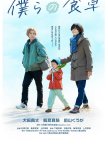
Whichever aspect I consider -- story, acting, the pace, the set design, the message, how music and silance are used -- there is nothing I would want to change.
"Our Dining Table" is a gentle, slow-paced romance, tied together by simple but delicious food and an energetic little boy.
Both young men are missing something in their lives -- Yutaka is the more obvious one; since the story is mostly told from his perspective, and his loneliness and his problem with eating in a group is at the centre of the story -- but Minoru is also alone in his own way: Caring for a pre-schooler as a 23-year-old, he is only met with incomprehension from his peers, and so has lost most of his social circle.
While I was interested in Yutaka's story about how he found his own family, as well as delighted by Tane's overwhelming cuteness, it's Minoru who makes me come back to this drama. I love watching his face, and especially his eyes when he looks at Yutaka, and how their expression subtly changes over the course of the story, from interest to happiness to resignation and finally, to a gaze that is so full of love that it almost feels intrusive to watch him.
And it's not only Minoru's actor's ability that elevates a lovely story to something special -- it's all of them. The child actor, of course, but also the father's actor, who infuses the character's silliness with genuine fatherly love for his sons.
"Our Dining Table" is one of two dramas I choose to rewatch whenever I despair of humanity.
Was this review helpful to you?
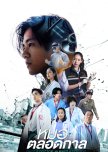
เพราะเขามีหัวใจของหมอ
I breezed through this drama -- the acting is top-notch, the script (with one exception) incredibly well-written, and the characters are not only consistent but also multilayered.First of all: The acting.
There is really nothing to complain about. From the main cast to the small roles, there was no awkward moment or a moment where I would have said that something didn't fit with the character or the scene.
Especially for some of the main cast, whose characters are more of the ambivalent type, they managed to make me like or dislike them, as needed by the respective scene.
The script is overall very neatly written. It gently leads us through the lives of a group of doctors in a Thai hospital; with Doctor Talodgan and his journey through self-doubt and grief at the centre, and several other story lines around him, some just an episode long, others are weaved through more than half of the total runtime.
There is a set-up of an important plot point right at the beginning, and then, especially after episode 5, more and more story lines are gently introduced. There is a lot going on between episodes 6 and 14 -- but somehow the drama never feels crowded or rushed; on the contrary, there is a lot of space to work through the emotions we feel together with the characters as well as space to breathe between events.
The story picks up pace in the last two episodes, where the crime plot and its fall-out come to the forefront and the secrets of the past are revealed -- here most of the long-term story lines are tied together into one.
There is one revelation in episode 14 that in my opinion didn't fit the rest of the narrative, as well as a brief dip into a cliche in episode 15, but that is overall negligible.
"เพราะเขามีหัวใจของหมอ -- Because they have the heart of a doctor" is at the centre of the drama -- which is question of what it means to "have a doctor's heart", i.e. the ethics of being a medical professional. Around it there are other issues that are discussed by Thai society: for example the influence of social media on public perception or how money, political power and social status are still a deciding factor in whether a person gets preferential treatment in society. I also liked how the drama places importance on mental well-being as part of being healthy, and de-stigmatizes seeking professional help in these matters.
The characters are very consistent -- and most importantly, nobody except for two background (but influential) characters is solely a hero or a villain, not even the hospital director. The script gives every character a reason for their actions and feelings as well as the chance to grow throughout the series. I found this the most obvious for Talodgan's friend and colleague, Tonnam, and for the female intern, Fon.
Relating to that, there were many points where the script could have veered into lakorn territory, with jealousy, love triangle or revenge plots. It didn't.
There is a slight romance arc, but it's more simmering in the background, and even the love confessionss are extremely understated.
Overall, the characters are *adults* and medical professionals and act accordingly.
The medical aspect seems to be very accurate -- given that there are several messages about healthy living, organ and blood donations and other medical issues that are relevant for the average citizen, and that medical ethics are at the centre, it's good that the writers and the director paid a lot of attention to this. I loved how they showed the doctors as professionals, and that there is no more drama in the cases than needed. An normal operation is already tense enough, you don't need extra dramatics.
A last note: The background music was sometimes a bit too sentimental, but I loved the percussion part in tense moments, which sounded a bit like a heart beat.
Was it good?
Yes! It had very tidy writing, and the acting was superb. I liked how they weaved character development, a sound plot and messages to the public into one engaging drama.
Did I like it?
I loved it and finished the whole thing in days. I love the unhurried pace, and how every character has their redeeming qualities. Also, the romance was barely there.
Who would I recommend it to?
To anyone who watches dramas for the characters, who can cope with a pace that takes its time to arrive where it was going, and who doesn't need a blazing romance.
Was this review helpful to you?
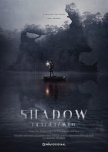
Twists and turns, steeped in Thai spiritualism
"Shadow" is an all-around solid supernatural mystery (not horror) with some gay main characters. It's not a romance, and there are no BL tropes in sight.So, anyone who wants a BL romance should maybe not watch it.
However, those who are interested in a ghost mystery with a lot of twists and turns, to the very last second even, might have a great time with it.
Before I go into my thoughts about the script, let me say a sentence or two about the actors. They were fantastic!
This was only the second role of Fiat Patchata's that I saw him in. The first (in this year's "The Death of Khun Phra") was so different that I almost can't believe that this is the same actor! Both Fluke Natouch and Poon Mitpakdee were excellent; and Utt Uttsada led me by the nose with his portrayal of Brother Anurak.
And Singto Prachaya? If there was any doubt at all that he was brilliant as Dan, any doubt would have been swept away by the last eight minutes of the drama.
The sets, the camera work, the background music and the colours were appropriately done for setting the mood of each scene; I admit I am not overly fond of the end credits song.
The script though.
The script was *everything* I look for in a supernatural mystery.
It led me from one question to another -- I had so many theories while I watched it, and most of them made a lot of sense at the time, but then with the next reveal, all of them had to be discarded. And it was well-written in that regard: the new information *always* made sense, and in the end I saw that I had picked up on some important hints and foreshadowing, without understanding what I saw at the time.
When the story ended, there were only very few loose threads and unanswered questions, none of which concerned the main plot.
Apart from all the the parallels to "Hamlet", one other thing in the script I adore was that it managed to include some metaphorical commentary on some other topics, for example on Thailand's history and the influence of western culture, on how being viewed as different can lead to self-destruction, as well as how abuse shapes children, and more.
Just a few, hopefully non-spoilery examples:
* The forest spirit whose mutually beneficial co-existence with the locals is cut by the arrival of western (Christian) culture, and is consequently becoming twisted and malevolent.
* The silence of Thai society about the events of 6th October, which they call "Red October" in the drama (I suggest to read up on it, this is *the* scar on Thailand's communal conscience), ultimately leads to more pain and mistrust in the present.
* Trin, Dan and Nai are different from the norm -- and the difference in how they are dealing with it and if they have the good kind of support leads to growth or destruction.
* An abused and lonely child is easy prey for the next abuser, who can use the child's needs and trauma to forge a connection and the illusion of safety and belonging.
"Shadow" is also deeply intertwined with Thai spiritualism and Buddhist believes, and I'm sure I didn't understand all of it. Like with the events of 6th October, the writers assume that the audience are aware of it, and I'm sure that Thai viewers understand much of what is only implicitely said that I don't.
One belief that does seem to be extremely important is the concept of "karma" -- that is different for everybody from birth, and that we might be able to escape, or not.
I also suspect that the Thai and Buddhist way of seeing the world influenced the ending and the overall meaning of the drama -- which might lead to some disappointment by western viewers because it means the story goes towards a different conclusion than westerners might expect or hope for.
So.
Was it good? -- Yes, the script was solid and engaging, the acting excellent.
Did I like it? -- Oh, yes. It had everything I want in a mystery, made me develop theories and ideas and gave me lots of twists, right until the very end. And I *loved* the ending.
Who would I recommend it to? -- To everyone who likes supernatural mysteries, and like to explore the mystery together with the characters. Not to those who are looking for a BL.
Was this review helpful to you?

This review may contain spoilers
Please pay no mind to the star ratings for this review. Because I admit it, I am one of those people for whom this series has nostalgic value. When I first watched it in 2022, this was only my second live-action BL drama (and my first encounter with anything Thai), and I was *fascinated*. I had been reading Japanese BL manga in the early 2000s and I have been a voracious reader of slash fanfiction for more than 25 years now -- but I never knew live-action BLs even existed until 2022. So, I was feeling slightly overwhelmed, and this makes me feel more favourable towards this series than it deserves.
Because, if we are being honest, apart from Pete and Ae's love story, this drama is not very good.
It starts with the technical side:
The colours are strangely subdued (for a Thai production), without there being a narrative reason for it. The background noise is at times overwhelming (especially in a scene where Pete, his mother and Ae sit near a fountain) -- although at other time I find it charming to hear university life going on in the background. We can hear clothes brushing over microphones in some scenes. Props are not quite what they should be (thereare props from IKEA at rich Pete's house, and school bags are often obviously empty. In some scenes the actors look as if they had to do their own hair and make-up.
The show obviously had a rather low budget; but not everything about it is bad. I love the messy dorm room -- a bit icky, probably hot -- and both the flat colours and the background noise give the university grounds a realistic vibe -- watching the young people in the canteens, on the walkways and on the football field, surrounded by the noise and heat of Thailand, I always feel that this is just one of many stories happening on the campus. It's nothing like most of the newer airbrushed and clean BL drama, which are painfully obviously set in drama-land.
If we're looking at the acting and the directing, the series is mediocre: Some scenes are full of awkward acting -- some are more watchable. Since most actores were complete newbies at the time, I can understand it -- but better directing could have helped here. There are some scenes that are outstanding though. One of them is the beautiful coming out-scene in episode 1 -- the hesitation in the beginning, the way Pete's mum suppresses her own feellings and turns away and towards Pete again and again, the tentative questions and the short but reassuring answers, until both are in tears, the hesitant acceptance in the end -- this is the kind of coming-out scene I miss in newer BLS, where acceptance often is immediate and coming out is no big deal. (And while we here, I love that Pete describes himself as "gay", and doesn't only use descriptive terms.)
And an upopular opinion, maybe: I wish they had cast someone else than Perth for Ae. Don't get me wrong, Perth does a good job (especially considering his age)! But Ae is time and again described as short, stocky and dark -- Perth is none of these. Ae's appearance is an important part of his character though, and one of his sources of insecurity, and I would have liked it bo be more obvious. Alos, I would have liked to see the visual difference between a dark, stocky and short Ae and a light-skinned, tall and lanky Pete.
And now to the most obvious flaws: the storylines. We have five couples here, which is aready too much for a fourteen episode series, and half of them are not what I'd call good romance.
The one with the least screentime is also the worst -- outright rape, and subsequent victim-blaming, which is only played for laughs? Yeah, this is where it becomes very clear that this is based on a MAME story. Since this was a Wabi Sabi production and aired by GMM25, there must have been people in charge who worked independently from MAME and should have been able to cut this from the drama? I really don't want to know what the producers and screenwriter were thinking.
The story of Tar and Tum is very flawed -- I don't really mind that they are step-brothers. Two consenting adults can do what they want, in my opinion, as long as there won't be any children (the risk of genetic diseases is just too high). The thing is, there's no consent here in the scene where Tum tries to assault Tar. What I don't like about this subplot are two things: a) the story neither begins nor ends within the series. We don't know the background if we don't know TharnType, and the story does not stop at a satisfying point. And b) Tar's trauma is not handled well. If he's still victim-blaming himself-- then why is he not still in therapy? Why does his brother not know anything about it? (He doesn't need to know details, but it's quite obviuos that Tum is completely in the dark here.)
Putting the Tar/Tum story and the No/Kengkla plot next to each other -- why? We have a guy thoroughly traumatized by rape and in the same drama, rape is supposed to be something funny? Doesn't compute at all. Why did nobody notice?
Can and Tin, well. This is a mixed bag for me. I strongly dislike the "top pressures the bottom into sexual situations" trope, so I was not enamoured with their story at first, or later. Can is clearly not in a mental place where he is ready to enter *anything* remotely romantic / sexual, and Tin is only trying to get someone so he won't be alone any more, so his pursuing Can is not about Can, only about himself. So, I was really happy with their ending -- Can got a good character development arc, where he ends up realizing what a romantic/sexual relationship could mean for him, understanding that he does not want it at the moment -- and consequently rejecting Tin. Go, Can!
I did love Cha-Aim and Pond. I love their constant bickering, love how she always pushes back at Pond whenever he gets too much. I love a woman who knows her worth, and can clearly communicate her boundaries and her wants. Pond comes across as this slightly icky, sex-crazed porn addict (and I don't love his slightly homophobic attitude at the beginning). But as we get to know him, we can see that behind his "Three S" behaviour, there's actually a guy who cares about his friends deeply, and who never judges people for who they are.
Well, and Pete and Ae? Their love story is the one reason I can't give a lower rating than I did. This is a wonderful teenage love story, with a lot of "firsts" for both of them. I usually don't like the top/bottom dynamics, which are extremely strong here (Ae is rough, strong, possessive, while Pete is meek, soft, and very shy). But with them, it fits -- here, it feels as if they are two halves ot the same whole. And while Ae is extremely possessive, he is also someone who doesn't feel as if he deserved Pete (and seeks reassurance from Pete!). Yes, Ae is clearly the dominant partner -- but as a good dominant partner should, he always chacks in with Pete and tries to be aware of any boundaries. Even the "gay for you" trope works here, since Ae hasn't had any sexual desire before.
Like with any good teenage romance, both Pete and Ae grow in the course of navigating their relationship, and are more adult in the end than in the beginning.
So, can I recommend it?
Not really. There's so many good BL series nowadays, that it's really not necessary to watch this one.
On the other hand, Love by Chance *is* one of the classics which laid the groundwork for following works. And Ae and Pete are just adorable. Should you decide to try it, you should be aware of the show's many flaws and prepare yourself for a rather explicit rape scene in episode 14. Or you can just fast-forward through all of the scenes with Kengkla (No alone is okay) and with Tum or Tar in them. You won't miss anything.
Was this review helpful to you?
This review may contain spoilers
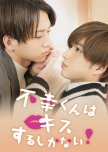
"Mr Unlucky Has No Choice but to Kiss" is a series that has both a title that is too long and episodes that are too short.Or maybe the episodes are just long enough -- long enough to develop a light-hearted story that makes us fall in love with the main characters and get to know the side characters. Dragging it out would not have helped, in my opinion.
This is what makes the show outstanding:
* The acting for Fukuhara's character is on point. I love how the actor can go from fake high-pitched cuteness when covering up his bad luck to real joy when something goes right, to his inner monologues complaining about his bad luck, to his real self when talking to Shinomiya.
* I like how the professor's lectures fit into the developing relationship. Also, from what I know of psychology, the theories presented are actual theories.
* It is astounding how the people working on this show have developed the supporting characters so well that I feel like I know them, even though they get very little screen time.
* The attention to detail in both the acting and the sets makes this show worth watching more than once (or twice. Or three times.)
* I am also glad that the issue of consent is so prominent in the story. (Especially as it's a point of concern in some other BLs.) Not only is it discussed several times, but the characters follow through to the end -- even to the frustration of the character who said no. The sudden kiss in episode 1 is also discussed later. (So, actually, the title is wrong. Fukuhara Kouta does have a choice to kiss!)
I also love how they showed that Fukuhara with his bouts of bad luck and Shinomiya with his incredible good luck both stand apart from the people around them. Now that they have found their counterpart who can bring balance to their lives, they will be able to open up to others and live as normal people among them.
I must admit that the nature in the background always confuses me a bit, as the story is set in April, but the nature looks like autumn -- but that might be because the whole colour palette tends towards brown and orange?
All in all, I highly recommend this series. It's fluffy and sweet, something nice to watch when you need a pick-me-up.
Was this review helpful to you?
This review may contain spoilers
pure crack
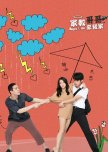
Are you familiar with the term "crack fic" from fan fiction? This is like that -- as if the writer asked: what are the most common tropes for BL stories to get two guys together, and how can I put all of them in one show?Here's some of the tropes:
forced cohabitation
only one bed
tutor -- student
a fujoshi
a love rival who makes one of them realize his feelings
caring for the ill love interest
sharing food
childhood bully to lover
gay for you
This show is silly, with intentionally exaggerated acting (bordering on slapstick) and camera work, and no plot besides the aforementioned tropes.
If you are not a fan of silliness and suggestive scenes that never actually get anywhere, then this is not for you. If, on the other hand, you are willing to laugh at your own love of BL and are also a fan of silly slapsticky situations, then what are you waiting for?
Also, it might be of interest to know that this is all about the phase BEFORE one of them finally realizes the attraction to the other, so there's no actual relationship here.
In a traditional broadcast setting, this show would fit perfectly at the end of a more serious BL drama.
Was this review helpful to you?
What I liked best:
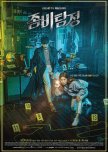
* The initial premise is different and interesting, the story arcs well paced and in the end, all story threads are neatly tied up. Even if they ended the series with a glimpse of a new plot, it felt more like a "this is not the end" than a cliffhanger.
* The main character was extremely well acted, I loved the facial expressions (or, sometimes, the lack of them) and how the actor moved his body, we never forget that this is actually a dead body, not a living being.
* The comedy was there duiring all the episodes, and varied between spoofing Zombie movies and the detective genre, slapstick-y routines and just plain hilarious situations.
* The mysteries were not too simple, but simple enough for a comedy.
* Some K-Dramas I've watched have a weird slump in pacing or story in the 9th to 11th episdes. This one doesn't, every episode was interesting or funny enough to keep me watching.
* There was no romance between the two main characters, only a hint of interest on the woman's side, which is not even recognized by the zombie detective.
Was this review helpful to you?


