


 2
2 1
1 1
1



Shark 2: The Storm — Four Years Later, It Was Worth the Wait
Waiting four years for a sequel felt incredibly long, especially after how much I enjoyed Shark: The Beginning. I was worried the momentum would be gone or that the cast wouldn't feel the same anymore. Fortunately, The Storm quickly proved those fears were unnecessary. It feels like a natural continuation rather than a sequel made simply because the first film was successful.The story expands the world while keeping Woo Sol at its centre. He's no longer the frightened teenager trying to survive. He's stronger, more confident, but still carries the emotional scars of everything he experienced before. I appreciated that the sequel never forgets where he came from. His growth feels earned because the film constantly reminds us of the person he used to be.
Kim Min Seok once again carries the entire film.
One thing that genuinely impressed me is how committed he remained to the character. Four years have passed since the first film, yet he still looks completely believable in the role. Physically, he maintained the condition needed for Woo Sol, and emotionally, he slips back into the character as if no time had passed at all. It's also difficult to believe he's already in his mid-thirties. He still has the youthful face that made Woo Sol so easy to sympathise with in the first film.
I've always liked the contrast he brings to action roles. He has this naturally gentle, innocent expression, yet once the fighting begins, you completely believe him. Very few actors manage that balance as well as he does.
The action is even more ambitious this time, but what I appreciated most is that it never replaces the story. Every confrontation has emotional meaning behind it, making the fights feel like the continuation of Woo Sol's personal journey rather than action for the sake of spectacle.
The production also feels larger than the original. The cinematography, choreography, and overall scale all show clear progression, while still respecting what made the first film work. Rather than trying to become something different, it simply becomes bigger.
Final Thought
Shark 2: The Storm is exactly the sequel I was hoping for. It respects the original, continues Woo Sol's journey in a meaningful way, and once again reminds me why Kim Min Seok is one of my favourite Korean actors. Waiting four years was frustrating, but after watching the film, I honestly think it was worth every minute.

The Promise of the Soul — Another Proof That Taiwan Knows How to Reinvent BL
Taiwan never seems afraid to try something different, and The Promise of the Soul is another perfect example. On paper, the story sounds almost impossible to make believable: a man is reunited with his soulmate after being reincarnated through his own grandson's body. Yet somehow, the drama makes this extraordinary premise feel deeply human. By the end, I wasn't thinking about fantasy anymore. I was simply watching two souls who had finally found each other again.The story constantly surprised me. Rather than treating reincarnation as a gimmick, it asks difficult questions about love, identity, destiny, and sacrifice. The fact that Ye Hai Yuan is the reincarnation of the wife Xia Cha lost decades earlier gives the romance an emotional depth that few BLs attempt. It's also heartbreaking to realise that this second chance only exists because his grandson lost his life. That tragedy remains part of the story from beginning to end, making the happiness bittersweet rather than perfect.
Martin Wong completely surprised me.
I remembered him as being very slim in his previous projects, but here he looks completely different. His physical transformation immediately gives the character a stronger presence, and he convincingly portrays someone carrying decades of life experience inside a young body. It's not just about looking more muscular. It's about making you believe this young man thinks, speaks, and reacts like someone who has already lived an entire lifetime. That balance is incredibly difficult to achieve, and Martin succeeds brilliantly.
Kenji Fan is equally convincing. He's naturally handsome, charming, and easy to like, but what impressed me most is how sincere his emotional journey feels. As Hai Yuan slowly accepts feelings he never expected to have, every step of that evolution feels believable. Because Martin and Kenji already knew each other before filming, their relationship never feels forced. Their chemistry develops effortlessly, making the romance feel genuine from beginning to end.
I also appreciated that the series never loses sight of its emotional core. Beneath the fantasy lies a simple story about two people who complement each other perfectly. They're complete opposites in personality, yet that's precisely why they fit together so naturally. Watching those differences slowly disappear as they realise they're soulmates is what makes the romance so touching.
The production deserves praise as well. Like many Taiwanese BLs, it doesn't rely on spectacular visual effects or extravagant locations. Instead, it focuses on intimate cinematography, expressive performances, and quiet emotional moments. Those choices allow the story to breathe and make even the supernatural elements feel believable.
Final Thought
The Promise of the Soul is another reminder of why Taiwanese BL continues to impress me. It's creative without becoming confusing, emotional without becoming melodramatic, and original without forgetting that the romance should always remain at the centre of the story. Martin Wong and Kenji Fan make an exceptional pairing, and together they bring a beautiful, bittersweet love story to life. It's a drama that made me believe soulmates might really exist.

Depth of Field — Japan Turns the Simplest Love Story into Something Unforgettable
There are dramas that entertain you, dramas that make you smile, and then there are dramas like Depth of Field that quietly break your heart. I cried more than once watching this series, not because it tries to manipulate your emotions, but because everything feels painfully sincere. From the first meeting on the school rooftop to the final episode, I felt as though I was watching someone's most precious memory unfold.I had already enjoyed the manga, so my expectations were high. Fortunately, the adaptation understands exactly what made the original story so special. It never tries to make the romance bigger or more dramatic than necessary. Instead, it embraces the quiet moments, the awkward silences, and the emotions that are often left unspoken. Rather than simply adapting the plot, it captures the soul of the manga.
The real revelation, however, is Usa Takuma.
I honestly think this is one of the greatest acting performances I've ever seen in a BL. Every emotion feels completely authentic. Whether Hayakawa is trying to hide his pain, falling in love without understanding why, or slowly allowing himself to become vulnerable, Usa Takuma never misses a single emotional beat. I didn't just watch his character suffer—I felt that suffering with him. That's an incredibly rare quality for any actor, regardless of genre.
Konno Ryohei is equally important to making the story work. His calm presence perfectly balances Hayakawa's emotional turmoil, creating a relationship built on understanding rather than grand romantic gestures. Their chemistry doesn't explode onto the screen. It quietly grows until you suddenly realise you're completely invested in them. That's exactly why their relationship feels so believable.
One of the things I admire most about Japanese BL is its ability to make ordinary life look extraordinary. Depth of Field doesn't rely on spectacular scenery or luxurious locations. Most of the story takes place at school, on a rooftop, or in everyday surroundings. Yet every frame feels beautiful. Through the cinematography, the lighting, and the careful direction, even the simplest classroom or corridor looks like a cherished memory from a first love. It's a kind of visual poetry that very few countries consistently achieve.
The soundtrack is equally remarkable. Rather than telling me how to feel, it quietly accompanies the story, allowing the performances to carry the emotional weight. Combined with the delicate direction, it creates an atmosphere that stays with you long after the final episode ends.
Final Thought
Depth of Field is everything I love about Japanese BL. It proves that a simple story, told with honesty, beautiful direction, and extraordinary performances, can be more powerful than the biggest productions. The manga was already excellent, but the drama somehow managed to make me love it even more. Above all, Usa Takuma delivered a performance I'll never forget. For me, this isn't just one of the best BLs of the year—it's one of the best I've ever watched.

Revenged Love — The Adaptation This Novel Always Deserved
I absolutely loved Chai Jidan's novel, so I went into Revenged Love with very high expectations. After the disappointment of Falling in Love with a Rival back in 2015, I honestly wasn't sure the story could ever receive the adaptation it deserved. Thankfully, this series proves that sometimes it's worth waiting. This is everything I wanted the first adaptation to be.The story remains one of the most original premises in BL. What begins as a ridiculous revenge plan slowly transforms into a genuine love story that constantly surprises both the characters and the audience. The beauty of the narrative is that it never asks whether someone is gay or straight. It asks a much simpler question: what happens when your heart falls in love with someone you never expected? That's what makes the story so compelling. Love doesn't always follow the labels we create for ourselves.
The adaptation is remarkably faithful to the novel. Unlike the 2015 version, which had to compress hundreds of chapters into a handful of short episodes, this series finally gives the characters room to grow. Their emotions evolve naturally, the relationships make sense, and every major turning point feels earned instead of rushed. As someone who already knew the source material, I couldn't have asked for a better adaptation.
The cast is outstanding.
The main couple immediately convinced me, but what surprised me even more was the second couple. Too often, secondary romances exist simply to fill screen time. Here, both relationships are equally interesting, equally believable, and equally important to the overall story. I never found myself wanting to skip one couple to return to the other because both storylines kept me completely invested.
The chemistry is exceptional across the board. Every relationship develops naturally, allowing the emotional moments to land with real impact. Whether the characters are arguing, teasing each other, or slowly admitting their feelings, everything feels authentic. The performances never become exaggerated, which is exactly what this story needed.
The production also deserves praise. Despite the limitations surrounding Chinese BL productions, the series never feels restrained emotionally. The direction understands when to embrace comedy, when to slow down for romance, and when to let the actors carry the weight of a scene without unnecessary melodrama. Combined with an excellent soundtrack and polished cinematography, the result is a series that constantly feels confident in what it wants to be.
Final Thought
Revenged Love is the adaptation I had been hoping for ever since I finished the novel. It captures the humour, the romance, the emotional growth, and the unforgettable relationships that made Chai Jidan's story so popular in the first place. After the failed attempt in 2015, this version finally gives Counter Attack the justice it always deserved. For me, it's simply a perfect BL.

SOTUS — Finally, a Love Story That Feels Like Mine
I honestly never thought I would see something like this on television.Until now, if you wanted to watch stories about two men falling in love, you had to look for independent movies, short films, or productions that were often impossible to find with subtitles. Suddenly, here comes SOTUS, a full television series where the romance between two boys isn't treated as a joke or a tragedy. It's simply a love story, and that alone makes it exciting.
What struck me immediately is how normal the characters feel. They aren't exaggerated stereotypes or comic relief. They don't remind me of the flamboyant gay characters we've often seen in older films, where straight actors play them almost like a parody. Arthit and Kongpob are simply two university students. They dress like everyone else, act like everyone else, and slowly discover feelings they weren't expecting. One accepts them more easily, while the other struggles with what they mean. That feels real.
The romance develops slowly, and I loved that. Instead of rushing into a relationship, the series lets the tension build through everyday interactions. Kongpob's determination slowly breaks through Arthit's walls, and watching those small changes becomes just as rewarding as the romantic moments themselves. By the time the relationship begins to blossom, I was completely invested.
Krist Perawat and Singto Prachaya are outstanding together. Their chemistry feels effortless, making every smile, every stare, and every awkward conversation believable. Neither performance feels exaggerated. Instead, they create the impression that these are two young men genuinely trying to understand feelings they never expected to have. I couldn't imagine better casting for these characters.
Another thing I really enjoyed is discovering Thailand through the story. The SOTUS system was completely new to me, and although some aspects are surprisingly harsh, it was fascinating to learn about a university tradition I had never heard of before. The series isn't just introducing me to a new love story; it's introducing me to another culture as well, and that makes the experience even richer.
The production is simple but effective. The university setting feels authentic, the pacing allows the relationships to grow naturally, and the soundtrack supports the story without becoming distracting. Nothing feels overly dramatic. The series trusts its characters to carry the emotions, and they absolutely do.
Final Thought
SOTUS gave me something I had been waiting for without even knowing it was possible: a genuine television romance between two ordinary young men. More than the love story itself, what moved me was seeing characters who felt real instead of stereotypical. I finished the series hoping this wouldn't be the last BL of its kind, because if this is the future of the genre, I definitely want to see more.
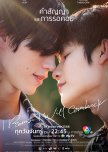
I Promise I Will Come Back — A Love Story That Broke My Heart
I knew from the first few episodes that this wasn't going to be a light romance, but I still wasn't prepared for the ending. By the time the credits rolled, I was crying. Not because the story tried to manipulate my emotions, but because I had genuinely become attached to these characters. Their journey felt so sincere that every decision they made carried emotional weight until the very last scene.One thing I really appreciated is that the drama never mistakes tragedy for depth. The story takes its time developing the relationship, allowing the two leads to slowly build trust, affection, and love. Because their connection feels so believable, every happy moment becomes precious. That's exactly why the ending hurts so much. It isn't simply sad—it feels unfair, just like life sometimes does.
The acting is excellent throughout. Both leads fully commit to their characters, making every emotional scene feel honest rather than exaggerated. Whether they're sharing quiet conversations, moments of happiness, or heartbreaking goodbyes, I completely believed them. Their chemistry carries the entire drama, and without performances of this quality, the ending would never have had the same impact.
The production also deserves praise. The cinematography quietly supports the emotional tone without becoming overly dramatic, while the soundtrack knows when to step back and let silence do the work. Instead of forcing tears through loud music or excessive melodrama, the series trusts its actors and its story, and that confidence pays off.
Some viewers will probably dislike the ending simply because it isn't the happy conclusion they were hoping for. I understand that reaction, but I don't share it. A sad ending doesn't automatically make a story bad. Sometimes it's the ending that stays with you the longest because it feels honest. I may have wished for a different outcome, but I wouldn't change the story just to leave with a smile.
Final Thought
I Promise I Will Come Back is one of those rare dramas that reminds me why I watch BL in the first place. It isn't afraid to make you laugh, hope, and eventually cry alongside its characters. The ending broke my heart, but that's only because the series first convinced me to love the people at the centre of it. For me, that's the mark of an unforgettable story.
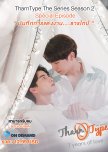
TharnType Season 2 Special: The Wedding Day — The Perfect Goodbye
After following Tharn and Type through everything they experienced over the past two years, I honestly couldn't have asked for a better ending. The Wedding Day isn't trying to create one last dramatic obstacle or force unnecessary conflict between them. Instead, it celebrates everything the couple has overcome and gives them the happy ending they truly deserve.The story is wonderfully simple because it doesn't need to be anything else. This special isn't about asking whether Tharn and Type belong together anymore—that question was answered long ago. It's about watching two people who fought through countless misunderstandings, personal struggles, and family issues finally reach the point where they can confidently choose each other forever. Sometimes, that's all an ending needs.
Mew Suppasit and Gulf Kanawut remain the heart of the entire franchise. Their chemistry feels just as effortless as ever, and because we've spent so much time watching these characters grow together, every smile, every joke, and every emotional moment carries extra weight. They don't have to convince us that Tharn and Type love each other anymore. We already know it, and that's exactly what makes this final chapter so satisfying.
One thing I particularly appreciated is that the special gives fans time to simply enjoy the couple. Rather than rushing from one dramatic event to another, it allows us to celebrate alongside them. After all the emotional highs and lows of the series, slowing down was exactly the right decision. It makes the wedding feel earned instead of simply becoming another plot point.
The production also feels slightly more polished than before. The ceremony itself is beautifully presented without becoming overly extravagant, and the music fits the atmosphere perfectly. For once, I actually noticed the soundtrack because it quietly enhances the emotion instead of disappearing into the background.
More than anything, this special feels like a farewell—not just to Tharn and Type, but to everything this franchise has represented. It's the final chapter of a journey that began with two completely opposite personalities learning to understand each other, and it ends exactly where it should: with two people choosing to build a life together.
Final Thought
The Wedding Day is the ending I wanted for Tharn and Type. It doesn't rely on unnecessary drama or last-minute twists because it understands that the journey has already been completed. Instead, it gives fans one final opportunity to celebrate one of BL's most memorable couples and lets the story close with happiness rather than heartbreak. As a conclusion to both the series and Mew and Gulf's journey as Tharn and Type, I honestly couldn't have asked for much more.

Wandee Goodday — The Gold Standard for Modern Romantic Comedy BL
Every once in a while, a BL comes along that reminds me why I fell in love with the genre in the first place. Wandee Goodday is one of those dramas. It has everything I look for: believable chemistry, mature characters, excellent humour, a relationship that grows naturally, and enough emotional depth to make the comedy meaningful instead of superficial. I loved it so much that I even imported the official DVD box set directly from Thailand. That's something I rarely do, and it says everything about how much this series meant to me.The story immediately stands out because it refuses to follow the typical romantic-comedy formula. Yes, it begins with a fake relationship and a friends-with-benefits arrangement, but it quickly becomes much more than that. Instead of relying on endless misunderstandings to delay the romance, the series focuses on two adults learning to understand themselves before they can truly understand each other. Behind all the comedy lies a surprisingly mature story about confidence, vulnerability, and the fear of not being enough for the person you love.
One of the biggest reasons it works is the sport itself.
Unlike many dramas where the profession or hobby exists only as decoration, Muay Thai is part of Yoryak's identity from beginning to end. His discipline, his emotional restraint, and even the way he approaches relationships are all shaped by the sport. That's why I often compare other combat-sport BLs to Wandee Goodday. It proves that a sport can become an essential storytelling tool instead of simply providing a few training montages between romantic scenes.
Then there are Great Sapol and Inn Sarin.
Honestly... what a pairing.
They're both incredibly handsome, but that's the least interesting thing about them. What truly impressed me was how naturally they complemented each other. Great has an effortless masculinity that never becomes intimidating, while Inn brings warmth, humour, and emotional sensitivity without ever making Wandee feel weak. They completely avoid the outdated "top versus bottom" stereotypes that still exist in parts of the BL industry. Instead, they simply feel like two adults falling in love.
Their chemistry is phenomenal.
It never feels manufactured for fan service. Whether they're arguing, teasing each other, flirting, or sharing intimate moments, everything flows naturally. There isn't a single scene where I questioned whether they believed in their own relationship. By the end of the series, they had become one of my favourite BL pairings ever, which is exactly why I'm disappointed GMMTV doesn't seem interested in continuing to develop them as a long-term ship. I genuinely think they're leaving something special behind.
The supporting cast deserves just as much praise. Drake Sattabut, Pod Suphakorn, Thor Thinnaphan and the rest of the ensemble all contribute to a world that feels alive beyond the central romance. Nobody exists purely to create unnecessary drama. Every supporting character helps the protagonists grow, making the story richer instead of simply longer.
Director Golf Sakon Wongsinwiset also deserves enormous credit. Balancing comedy, romance, sport, and emotional drama is much harder than it looks, yet the series constantly knows when to make you laugh and when to quietly break your heart. The pacing never feels rushed, the humour rarely becomes childish, and the emotional scenes are allowed to breathe instead of being overwhelmed by music or melodrama. Visually, the production is polished throughout, with energetic fight choreography and bright cinematography that perfectly matches the optimistic tone of the series.
Perhaps what I admire most is that Wandee Goodday understands that healthy relationships are actually interesting. So many romances depend on endless secrets, toxic behaviour, or artificial misunderstandings to keep the story moving. Here, the characters gradually learn to communicate, support each other, and grow together. That doesn't make the drama less exciting—it makes it far more rewarding because their love feels earned.
Final Thought
Wandee Goodday is everything I want a romantic-comedy BL to be. It's funny without becoming ridiculous, romantic without becoming cliché, and emotional without manipulating the audience. Great Sapol and Inn Sarin create one of the most believable and charismatic pairings I've seen in years, and I genuinely wish GMMTV had continued building on their partnership. This is one of those rare dramas I know I'll revisit again and again, because every rewatch reminds me just how enjoyable a well-written love story can be.

The Next Prince: Uncut — The Version That Should Have Been Released First
After watching both versions, I honestly don't think The Next Prince: Uncut is a different drama. It's simply the complete version of the story we should have received from the beginning.The additional scenes don't radically change the plot, but they significantly improve the rhythm of the series. Relationships feel more natural, emotional transitions make better sense, and several conversations finally have the time they needed to breathe. Instead of jumping from one important moment to another, the story allows its characters to develop at a more believable pace.
The romance also benefits from the extended cut. While my criticism of the casting remains exactly the same—I'm still not convinced NuNew was the right choice for this particular character—the extra scenes give both leads more opportunities to build their relationship. Their emotional progression feels less rushed, making some later decisions easier to accept.
The political side of the story also becomes clearer. The royal families, succession issues, and alliances receive additional context, making the world easier to understand. It's still not the strongest aspect of the series, but at least the narrative feels more coherent than in the broadcast version.
That said, the Uncut version doesn't fix my biggest criticism. The problem was never missing scenes—it was the casting. My opinion hasn't changed regarding NuNew's portrayal of Khanin or Zee's suitability as a bodyguard. More screen time cannot fundamentally change performances that I already felt were miscast. Likewise, the actors who impressed me the first time—Net, JJ, Jimmy, Ohm, and especially Kris Charintip—remain the ones who naturally command the screen whenever they appear.
Final Thought
The Next Prince: Uncut is unquestionably the superior version of the series. The additional footage strengthens the storytelling, improves the pacing, and gives the relationships more room to grow. If you've never watched The Next Prince, this is the version I would recommend. It doesn't completely change my opinion of the drama, but it does make a good series noticeably better.

Secrets Happened on the Litchi Island — A Masterclass in Quiet Storytelling
Every year, there are a few dramas that remind me why I love Asian storytelling so much. They don't rely on shocking plot twists, endless fan service, or exaggerated emotional scenes. Instead, they trust their audience to pay attention, to read between the lines, and to let silence speak as loudly as dialogue. Secrets Happened on the Litchi Island is exactly that kind of drama. From beginning to end, I felt like I was watching a carefully crafted film rather than a television series, and by the time the credits rolled, I genuinely couldn't think of anything I wanted to change.The story is beautifully written because it understands that mystery isn't simply about hiding information from the audience. Every revelation changes the way you perceive the characters instead of existing purely for shock value. As secrets slowly emerge, the drama becomes less about discovering what happened and more about understanding why people made the choices they did. Themes of guilt, forgiveness, family expectations, and emotional healing are woven together so naturally that nothing ever feels forced. The romance is important, but it never overshadows the larger emotional journey. Instead, love becomes another way for the characters to confront their past rather than escape from it.
The acting is exceptional across the entire cast. Not a single performance feels artificial or exaggerated. Every actor understands that this story lives in quiet emotions rather than dramatic outbursts. A simple glance, a hesitant smile, or a long silence often communicates more than pages of dialogue could. That level of restraint is surprisingly difficult to achieve, yet everyone involved seems completely in tune with the tone the series is aiming for. The chemistry between the leads also feels wonderfully natural because it develops through trust, vulnerability, and shared experiences instead of relying on constant physical intimacy. It never feels like the actors are trying to convince the audience they're in love. You simply believe it.
What impressed me even more was the direction. Every frame feels deliberate. The island itself becomes a character, with its beaches, forests, and quiet villages creating an atmosphere that constantly reminds you of the memories the protagonists are trying to escape. The cinematography never tries to impress with flashy camera movements or artificial beauty. Instead, it finds elegance in simplicity, allowing the scenery and the performances to breathe together. There were several moments where I completely forgot I was watching a television drama because the visual language felt closer to independent cinema.
The soundtrack deserves just as much praise. I'm often fairly indifferent to music in BL because it tends to blend into the background, but here it becomes an essential part of the storytelling. The score knows exactly when to remain silent and when to gently guide the emotion of a scene without ever becoming manipulative. Some of the most memorable moments are actually the quietest ones, where natural sounds and subtle music create an intimacy that dialogue alone could never achieve.
What I admire most, however, is the confidence of the writing. The series never rushes to explain itself, never underestimates the audience, and never feels the need to exaggerate its emotions. It trusts that viewers will understand what the characters are feeling even when nothing is explicitly said. That level of confidence is rare, and it elevates every aspect of the production. Rather than trying to be the next viral BL, it focuses on telling an honest story with patience, intelligence, and remarkable emotional maturity.
By the time I reached the final episode, I realized I hadn't simply enjoyed the series—I had lived alongside these characters. That's an incredibly difficult achievement. Plenty of dramas entertain me. Very few make me forget that I'm watching actors playing fictional roles.
Final Thought
Secrets Happened on the Litchi Island is, quite simply, one of the finest BL dramas I've watched. Every department—from the writing and directing to the performances, cinematography, and music—works together with remarkable precision to create something that feels timeless. It proves that powerful storytelling doesn't need spectacle. Sometimes all it needs is honesty, patience, and characters who feel completely real. For me, this is what a perfect drama looks like.
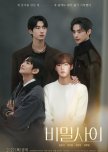
Secret Relationships — A Mystery You'll Never Experience the Same Way Twice
Some dramas are built to be rewatched because you notice new details every time. Secret Relationships isn't one of them. This is what I call a "one-shot drama." The first watch is absolutely addictive because you're constantly trying to understand everyone's motives, guessing who is telling the truth, who is manipulating whom, and who genuinely deserves Da-on's trust. Once you know the ending, however, a large part of that suspense disappears. The story is still excellent, but the emotional roller coaster can never hit quite the same way again.Adapted from McQueen Studio's popular Kakao webtoon, the series keeps what made the original so compelling: it isn't really a love triangle—or even a love square—but a psychological drama disguised as a BL. Every man surrounding Da-on represents a different form of love. One is possessive, one is manipulative, one is selfless, and one forces him to question what he truly wants. Rather than asking "Who will he choose?", the drama asks a far more interesting question: "What kind of love actually allows someone to heal?" That is where the series shines, and director Yang Kyung-hee wisely leans into the psychological tension instead of turning the story into a conventional romance.
The acting is what elevates the entire production. Kim Jun Seo carries an emotionally demanding role with surprising confidence, especially considering this is his first leading acting role after his idol career. Da-on never feels like a passive victim. Instead, you can see years of trauma shaping every decision he makes, even when those decisions frustrate you. Cha Sun Hyung, Kim Ho Young and Cha Jung Woo are equally convincing because none of them play simple heroes or villains. Every character believes he loves Da-on, but each expresses that love in a completely different—and sometimes deeply unhealthy—way. That ambiguity is what kept me invested until the very end.
What impressed me most is that the series refuses to romanticize toxic behaviour. It certainly portrays obsession, emotional manipulation and dependency, but it never pretends those things are healthy expressions of love. As the mystery unfolds, you slowly realize that the safest relationship isn't necessarily the most passionate one. The final choice feels earned because the story carefully dismantles the illusion that intense love automatically means genuine love. That's a much more mature message than many BLs attempt to deliver.
My only real criticism has nothing to do with the drama itself but with a broader trend in the Korean BL industry. Korea continues to produce excellent BLs, yet they often feel like launching pads for promising young actors before agencies move them into mainstream television. Once an actor gains recognition, returning to BL still seems to be the exception rather than the norm. Compared to Thailand or Taiwan, where many performers continue building long-term careers within the genre, Korea often treats BL as a stepping stone instead of a legitimate destination. It's frustrating because productions like Secret Relationships prove that Korean creators are perfectly capable of delivering sophisticated queer stories. What the industry still lacks is long-term commitment to the genre and the actors who help build it.
The production quality is also worth mentioning. The office setting gives the story a welcome sense of maturity, while the cinematography frequently uses tight framing and muted colours to reinforce Da-on's emotional isolation. The series rarely wastes time with unnecessary subplots, making every episode feel purposeful. If anything, I actually wished it had been longer. With only eight episodes, some emotional transitions happen faster than they probably should, and a few supporting relationships could have benefited from more development. Even so, the pacing never loses sight of the central mystery, which is what keeps the series so engaging.
Final Thought
Secret Relationships is one of the strongest Korean BLs of 2025 because it understands that romance alone isn't enough. It builds suspense, explores trauma, and forces its characters to confront unhealthy forms of love before they can recognise a healthy one. It's not the kind of drama I'll revisit often because so much of its brilliance depends on discovering the truth alongside the characters. But for that first watch, it's almost impossible to stop pressing "Next Episode"—and sometimes, that's exactly what great storytelling is supposed to do.

Countdown to Yes — When Friendship Quietly Turns Into Love
Going into Countdown to Yes, I already knew it was adapted from the manga Shinyu no “Dosei Shite” ni “Un” te Iu made, and you can actually feel that origin throughout the drama. It has that very Japanese way of telling BL stories: slow, introspective, built on silence, hesitation, and emotional tension rather than big dramatic events. And honestly, that’s exactly why it works so well. The story is simple on the surface. Two best friends living together, slowly confronting feelings that have probably been there for a long time. But what makes it special is the way it explores that transition from friendship to love. It doesn’t rush anything. Instead, it focuses on the small moments — shared routines, awkward silences, unspoken thoughts — the kind of details that make you realize how deep their bond already is before anything romantic even happens.Amemiya Kakeru plays the easygoing, cheerful character, but underneath that, you can clearly see someone who is scared. Scared of change, scared of losing what he already has, scared of what it would mean if those feelings became real. That duality is portrayed really well. He feels light on the surface, but emotionally fragile underneath. Yoshizawa Kaname is the complete opposite. He’s distant, quiet, and struggles to express himself, but you can feel how deeply he cares. His love isn’t loud or obvious. It’s in the way he looks, the way he reacts, the way he holds himself back. And that restraint is what makes his character so powerful. You don’t need big confessions to understand him — you feel everything through what he doesn’t say.
That contrast between the two characters is what carries the entire drama. One is afraid of losing the present, the other is afraid of never moving forward. And the story builds tension from that emotional imbalance. It’s not about external conflict, it’s about internal struggle. What I really appreciated is how faithful the drama feels to its manga roots. Japanese BL adaptations often focus on atmosphere and emotional subtlety rather than spectacle, and this one does it beautifully. The pacing might feel slow for some people, but it’s intentional. It allows you to sit with the characters, to understand them, to feel the weight of every small change in their relationship.
The production also supports that tone very well. The music is soft and never intrusive, letting the silence do most of the work. The cinematography focuses on intimate framing, making even the smallest interactions feel meaningful. It almost feels like you’re watching moments of real life rather than a scripted drama. And when the story finally moves forward emotionally, it feels earned. Nothing is forced. Every step they take toward each other makes sense because you’ve seen the journey, the hesitation, the fear, and the longing that led them there.
Final Thought
Countdown to Yes is a perfect example of how powerful a simple story can be when it’s told with care. It doesn’t rely on drama or shock value, but on emotional truth and character development. The performances are subtle but incredibly effective, and the relationship feels real from beginning to end. It’s the kind of BL that stays with you not because it’s loud, but because it’s honest.

My Girlfriend Is the Man! — A Webtoon About Unconditional Love That Forgot Its Own Message
I was genuinely excited for My Girlfriend Is the Man! because I had already read Massstar's original webtoon. What made it so interesting wasn't the gender-swap itself—that's a concept we've seen countless times—but the question behind it: Would you still love the person you love if their gender suddenly changed? That was the heart of the webtoon. Unfortunately, that's also what the drama loses along the way.Instead of embracing that idea, the adaptation plays it remarkably safe. Rather than becoming a BL—or at least a romance that genuinely explores attraction beyond gender—it slowly turns into a fairly conventional romantic comedy with a fantasy twist. I kept waiting for the series to challenge its own premise, but it never really did.
To me, this isn't a BL.
It's a heterosexual romance interrupted by temporary gender changes.
That's a huge difference.
One of the biggest reasons is the amount of focus given to Arin's character. I completely understand why the production made that choice. Arin is a well-known idol, and she's charming on screen. But because she remains such a dominant presence throughout the series, the relationship between the two male leads never has the opportunity to fully develop. Instead of asking, "Can love exist regardless of gender?", the drama constantly reassures the audience that the original girlfriend is still there.
It feels like the production was afraid of its own concept.
Ironically, the person who understands the assignment the best is Yoo Jung Hoo.
He's easily the revelation of the series.
While promotional material understandably focused on the idol cast, Yoo Jung Hoo quietly delivers the most impressive performance in the entire drama. He somehow manages to portray Ji Eun's personality without becoming a caricature. His gestures, expressions, vulnerability, and warmth all convince you that you're still watching the same person trapped inside a different body. It's a surprisingly nuanced performance and, in my opinion, the strongest piece of acting in the entire cast. Even early promotional coverage highlighted how naturally he embodied Ji Eun despite the physical transformation.
The frustrating part is that the drama rarely lets him become the emotional center of the story.
Instead, it repeatedly shifts the focus back toward Arin.
Yoon San Ha doesn't help much either. I usually enjoy his work, but here his performance feels very one-dimensional. Park Yoon Jae spends most of the drama reacting to events instead of driving them. His emotional conflict should have been enormous. The person he loves is standing right in front of him—but in another body. That should completely challenge his understanding of love, attraction, and identity.
Instead, his emotional journey often feels surprisingly superficial.
The series constantly avoids asking the difficult questions.
That's probably what disappointed me the most.
Imagine if the drama had fully committed to its premise.
Imagine if Park Yoon Jae had genuinely fallen in love with Ji Hoon while he remained male. Imagine if they had kissed. Slept together. Built a relationship that existed independently of Ji Eun's original appearance. That would have transformed the entire story into something meaningful. It would have shown that love really does transcend gender.
Instead, the drama seems determined to reassure viewers that everything will eventually return to normal.
For me, that's a missed opportunity.
The production itself is pleasant enough. The cinematography is colorful, the fantasy elements are handled well, and the comedy is often entertaining. The cast is attractive, and there are moments where the drama almost becomes the bold adaptation I wanted. But it always pulls back before crossing that line.
Looking at the reception, I honestly understand why the series struggled to find a large audience despite its strong cast and recognizable webtoon. It started with an interesting premise but never fully embraced what made that premise unique, eventually recording disappointing television ratings despite considerable pre-release anticipation.
Final Thought
My Girlfriend Is the Man! isn't a bad drama—it just isn't the adaptation I was hoping for. The original webtoon asked a fascinating question about unconditional love and identity. The drama answers it by avoiding the question altogether. Yoo Jung Hoo delivers an outstanding performance that deserved to be the emotional heart of the series, but the adaptation never gives him that opportunity. In the end, I finished the drama feeling like I had watched a safe romantic comedy when I was promised something far braver.
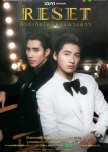
Reset — Incredible Performances Carry an Overly Ambitious Story
Reset is one of those dramas that reminds me why I still get excited when a BL tries to do something different. Instead of relying on the usual university romance or office relationship, it combines fantasy, mystery, romance, and the entertainment industry into a story that constantly asks whether fate can really be changed. It's ambitious, visually polished, and emotionally engaging. At times, it's also confusing. But somehow, it still became one of my favorite BLs of the year.The biggest reason is Pond Ponlawit.
I've admired his acting ever since 180 Degree Longitude Passes Through Us. Even back then, he showed an emotional maturity that actors much older than him sometimes struggle to achieve. Since then, I've often wondered why he wasn't getting more leading roles. Reset finally gave him another opportunity to prove just how talented he is.
And once again, he delivers.
Pond has a very unusual screen presence. He's masculine without trying too hard, naturally handsome without relying on his looks, and emotionally expressive without becoming theatrical. He can make you understand what his character is feeling with nothing more than a slight change in expression. That's not something every actor can do.
Honestly, he's exactly the kind of actor I could imagine leading almost any genre, not just BL.
Peterpan Tadsapon also surprised me.
This was one of his biggest leading roles, and he holds his own remarkably well opposite Pond. Their chemistry isn't built around excessive fan service or exaggerated intimacy. Instead, it's subtle. They feel like two people slowly learning to trust each other rather than two actors trying to convince the audience they're in love.
I actually appreciate that both actors have stayed away from the typical shipping culture that dominates the BL industry. Neither of them constantly plays into fan fantasies outside the drama, which makes it easier for me to judge their performances purely as actors. Their connection feels professional, natural, and believable because it's built through acting rather than marketing.
Where Reset struggles is its storytelling.
The series tries to juggle multiple timelines, mystery elements, emotional trauma, entertainment industry politics, and romance all at the same time. When everything connects, it's fascinating. But there are also moments where the narrative becomes difficult to follow, and I occasionally found myself having to think back to earlier episodes to understand why something was happening.
Some viewers loved that complexity.
Personally, I think the script occasionally became a little too ambitious for its own good.
The production, however, is excellent. One thing that immediately stands out is how cinematic the series feels. Director A Natthaphong Wongkaweepairod gives the drama a much larger scale than most BL productions. The lighting, framing, and transitions often resemble mainstream Thai dramas rather than a niche BL series. Every timeline has its own atmosphere, making the visual storytelling one of the strongest aspects of the show.
The soundtrack also deserves praise. Instead of relying on generic romantic songs, the music follows the emotional rhythm of the story, knowing exactly when to stay quiet and when to heighten the tension.
One thing I particularly enjoyed is that the fantasy never completely overshadows the characters. At its heart, Reset remains a story about regret, second chances, and learning to move forward instead of trying to rewrite the past. That's what ultimately gives the series its emotional weight.
Final Thought
Reset isn't perfect. Its story sometimes becomes more complicated than necessary, and there were moments where I wished the script would slow down and let the audience breathe. But incredible performances—especially from Pond Ponlawit—more than compensate for those weaknesses. He's one of the most naturally gifted actors of his generation, and Reset is further proof that he deserves far more leading roles. Even with its narrative flaws, this is exactly the kind of ambitious BL I want to see more often.

Secret Lover — When Chemistry Feels Almost Dangerous
Some BL dramas are cute. Some are romantic. And then sometimes a series comes along where the chemistry between the actors is so intense that it feels almost forbidden to watch. Secret Lover gave me that exact feeling. The story itself is built around a classic trope that I personally love: childhood friends slowly realizing their feelings for each other. Lu Jun Xi and Han Tuo have known each other forever, but their relationship changes when what starts as “dating practice” slowly turns into something real. What begins almost like a game quickly becomes a secret romance that both of them struggle to understand and eventually accept.What makes the drama work so well is that the emotional conflict isn’t just about romance. They are also dealing with family pressure, expectations about their future, and the fear of revealing their relationship publicly. Jun Xi wants to keep things hidden while Han Tuo wants to stop pretending, which creates tension throughout the story. But honestly, the real reason this drama works is the connection between Wang Jyun Hao and Chance. Their chemistry is unbelievable. There are BL couples who look good together, and then there are couples who make you forget you’re watching actors. Some of their scenes are so intense that they genuinely made me react — and that almost never happens to me when watching BL. The intimacy feels raw, almost forbidden, and that kind of energy is very rare in this genre. And the funny thing is… that chemistry makes sense when you know the reality behind it. Wang Jyun Hao and Chance eventually confirmed that they are actually dating in real life, something fans had already suspected because of how natural their connection looked on screen. That authenticity changes everything. When they look at each other, when they touch, when the tension builds in certain scenes… it never feels staged. It feels real.
The supporting cast also does a great job keeping the story grounded. Characters like Xiao Yang and You Mei add another layer to the narrative without turning the drama into unnecessary chaos. Instead of becoming clichés, they help show how complicated relationships can be when feelings and friendships collide. The production itself is also surprisingly strong. The pacing keeps the story moving, the emotional scenes are well framed, and the music supports the atmosphere without overwhelming it. Nothing feels cheap or rushed. It’s a drama that clearly understood what kind of emotional tone it wanted to create.
Final Thought
Secret Lover is one of those BL dramas where the chemistry between the leads completely elevates the entire story. The friends-to-lovers narrative is already compelling, but when you add performances that feel this natural, the result becomes something much stronger. It’s intense, emotional, sometimes even a little dangerous in the way it plays with intimacy — and that’s exactly why it works so well. A perfect score from me without hesitation.


