


 2
2 1
1 1
1


Goddess Bless You From Death — When a BL Becomes Something Bigger Than Romance
I went into this expecting a BL. What I got was something way more interesting — a dark fantasy / crime mystery that just happens to have a queer romance inside it. And honestly? That’s why it worked so well for me.This drama doesn’t feel like it’s trying to sell you a couple. It feels like it’s trying to tell a story first. The romance is there, but it breathes naturally inside the plot instead of being forced into every scene. The world is heavy, spiritual, violent sometimes, and deeply emotional. The story follows a murder investigation mixed with supernatural elements, with Thup — a man who can see ghosts — and Singha — a police inspector tied to fate and protection — pulled into something way bigger than themselves.
And that tone matters. Because this isn’t soft romance fantasy. It’s closer to horror-mystery with emotional tension sitting under everything. That constant feeling that something is wrong, something is watching, something is inevitable… it stays with you. And when the emotional beats hit, they hit harder because the world already feels dangerous.
What really made this work is the chemistry between Pooh and Pavel. Not “fanservice chemistry”. Real, quiet, grounded connection. The kind where you don’t need big declarations because you can feel it in how they look at each other, how they move around each other, how the tension just sits there in silence.
And I think that’s why this drama feels like “a normal drama with queer characters” instead of “a BL trying to be serious”. The relationship isn’t sanitized. The tension is physical, sometimes messy, sometimes very direct — which honestly feels closer to real adult gay relationships than the super slow, innocent fantasy style we often get.
If I’m being honest about why I didn’t give it a perfect score, it’s because I could see where the story could have gone further. Some mythology threads could have been pushed deeper. Some emotional reveals could have hit harder if they were tied back into earlier plot points more tightly. But that might also just be me being used to heavy fantasy world-building and wanting everything to connect perfectly.
Emotionally though? It worked. The story feels haunting in that quiet way — not loud tragedy, but the kind that sits in your chest after you finish. And that’s why the rewatch value is weirdly lower than the quality. Because once you know the truth, once you understand the emotional core and the mystery, the shock is gone. And this story lives a lot in that discovery.
This is one of those dramas that proves BL doesn’t have to feel like BL to be meaningful. It can be horror. It can be fantasy. It can be crime. And the romance can exist naturally inside that world instead of being the whole point.
And honestly, that’s why it stayed with me. Not because it was perfect. But because it felt real inside something unreal.
21 Days Theory — When a Short Time Changes Everything
There is something strangely beautiful about a story that knows it is temporary.21 Days Theory doesn’t pretend to be a grand romance or a forever kind of love. It tells you from the start: this is limited, fragile, and possibly unfinished. And that honesty is what makes it hit harder than you expect.
The idea itself is simple — two people meet for only twenty-one days. No promises, no future plans, just a short space in time where feelings grow faster than they should. It feels like summer, like borrowed time, like something you already know will end even while you are still inside it.
The story carries that emotion surprisingly well. It understands that some connections exist only to teach you something about yourself, not to stay forever. There is a quiet sadness under every scene, even when the characters are smiling, because the clock is always ticking. And when it ends, you don’t feel closure — you feel that soft ache of something that mattered, even if it was brief.
The acting, however, doesn’t always match the weight of the story. Some moments feel flat, some emotions don’t fully land, and you can sense that the cast struggles to reach the depth the script is asking for. The feelings are there in theory, but not always in the eyes.
The music is gentle but forgettable. It supports the mood, but it never becomes part of the memory of the show. And once you finish it, you probably won’t rush to watch it again — not because it’s bad, but because its power lies in the first experience, in that initial emotional hit.
What stays with me is not the romance itself, but the idea behind it: that even a short connection can change the way you see love, time, and yourself.
Final Thought
21 Days Theory is not about forever.
It is about moments.
And sometimes, that is enough.

2 Moons — The Beginning That Couldn’t Carry Its Own Shadow
I don’t hate 2 Moons.But I also can’t pretend it aged well.
When I first watched it, it felt like something important. Soft, innocent, shy — a beginning. But watching it again now, after everything BL has become, it feels more like a sketch than a story. A promise that didn’t know how to fulfill itself yet.
The idea is simple: a quiet boy still carrying his high-school crush, finally meeting him again at university. It should feel emotional, nostalgic, intimate. But instead of depth, the drama keeps circling the same moments without letting them grow. The story repeats itself, stretching scenes that should feel tender into something strangely empty.
There is a sweetness in the atmosphere, yes. A kind of old-school innocence. But it never becomes intense, never truly vulnerable. It stays on the surface, like it’s afraid of its own emotions.
The acting doesn’t help. Not because it’s bad, but because it’s uncertain. Some moments feel genuine, others feel staged, like the actors themselves are not fully convinced by what they’re playing. You can feel the hesitation, the lack of emotional weight. The chemistry is there in theory, but it never ignites.
And the music… it exists. But it never elevates a scene, never makes your heart ache, never lingers after the episode ends. It’s background noise, not memory.
What makes this more painful is knowing what came after. The later seasons, the recasts, the constant reboots of the same story, trying again and again to fix what was missing. It’s like watching the same love story reincarnate without ever finding peace. The universe keeps asking, What if this time it works? But the soul of the original remains incomplete.
There are moments of charm, of course. Little glances, awkward smiles, soft touches that remind you why BL started this way. But they are fragments, not foundations.
By the end, you don’t feel heartbreak.
You don’t feel fulfillment.
You just feel… finished.
Not because the story is resolved, but because it never truly began.
Final Thought
2 Moons is not terrible.
But it is no longer enough.
It is a relic of a time when BL was still learning how to speak.
And while I respect its place in history, I can’t pretend it still knows how to make me feel.
Caged Again — Cute Premise, Strange Execution, Sweet Enough to Finish
So I just finished Caged Again, and honestly… it was weird. Like, conceptually adorable in the promo – a penguin turning into a human? That’s bonkers! But watching the whole thing made me feel like I was in a sitcom mash-up of fantasy school life and random filler scenes that never quite understood what it wanted to be. It FEELS cute at first, but by episode 3 you start going… what even is this?The story starts with Junior, who literally used to be a penguin in a zoo and somehow becomes human and enrolls in school without explosion or trauma. That premise keeps it interesting for the first few episodes, and some moments are genuinely funny, even delightfully absurd. There’s creative worldbuilding hints too — like spirits, animal instincts, and strange supernatural threads — but 80% of the time the script just meanders. It never commits to tension or emotional depth, just floats around side plots and school antics that could have been so much more.
And that’s where my rating reflects the weird dissonance. The acting is good, genuinely. Jay and Ben infuse Junior and Sun with sweetness and awkward charm. Online communities were actually surprised by how strong the chemistry is between them, even if the plot struggles to support it — people on Reddit praised the pairing and said the chemistry was “on point” with moments that made them laugh or feel strangely invested. Their dynamic is easily the best part; the actors bring heart where the story sometimes forgets to.
But the story itself? It feels like someone took eight hours of random school comedy, some supernatural elements, and threw it all together without a destination. Scenes drag, subplots stall, and the romance between Junior and Sun barely goes beyond pleasant “aww” moments. People online who actually loved the show call it “adorable,” “fun,” and “unique,” but I also saw plenty of reactions saying the script feels shallow and the final episodes feel rushed compared to the earlier promise.
The music does its job — atmospheric, gentle, nothing ground-shaking — and the production values are polished, but honestly the soundtrack left me shrugging. Not bad, just not memorable either.
My big issue is this: the story could have been interesting if it went deeper into the fantasy aspects, into the emotional identity of Junior and Sun rather than side tangent after side tangent. There are moments where the show touches on something deeper – identity, belonging, confusion about love – but it never fully explores any of them. That’s why the rewatch value is so low for me; there’s nothing layered enough under the surface to discover a second time.
So yeah, it’s not terrible. I don’t hate it. It’s cute, and watching it in one sitting definitely helps you stay connected. But it feels like a concept without enough follow-through. I finished it more amused than invested, and that’s not enough for me to want to rewatch it.
If you like weird fantasy BL that’s more fluffy than emotionally deep, and you don’t mind silliness mixed with sweetness, it’s worth a try. But don’t expect something that will sit in your head for weeks after.
Everything was fine, until...
Yes, I did enjoy the drama then, and I re-watched it today and decided that it was time for a review.If you look at the story, it is not the first time traveling drama but it's usually in the past, here it's in the future.
It is cute as its about sexual discovery for a boy born in the 80s and a teenager, Kiao, of the 90s (at the end, we're from the same generation), so is reluctance to accept loving a boy is understandable. Yet, it's 2022 (in the drama), in Thailand and it's more acceptable (again, in the drama). So he fall in love with his best friend's son Bamee who had died years ago. At first, he just want to take care of him like a nephew, but his feelings towards him grew deeper. Some people may think it's creepy, but you need to remember that at the end, he's still a teenager and they're the same age. Plus, even if his real friends are now older, he is still young with no experience . However, he grow during the drama. He want to go back in time, not only to save his own mother, but also to save his best friend (Bamee's dad).
The trouble comes when Kiao tried to go back but got sucked back into the future and Bamee forgets him. To me, this is when Kiao should have tried to change his lover's future as he knew he had to go back soon. He should have make Bamee love someone else. THAT would have been the highlight of the drama. I would have loved for exemple that in the past, Bamees dad would have been in love with Kiao, and that why he got divorce instead of dying and they could have been together. Kioa not remembering his love for Bamee also would have been more logical as he changed the future. He would have been better if he only remembered missing is mother and his best friend.
So, by not doing something more mature and logical, the have chosen to make Bamee (20) meet the OLD Kiao (40) and remember him then AND KISS !!! Yep, that was what many people thought nope, that's wrong!!! First because Bamee has his dad back, second, what would he kiss a guy twice his age, and his dad's friend? And why is Kiao, who was very cute, still single and waiting for his best friend's son? So this was what made us think the ending was so wrong!
If they wanted to make it simpler, they could have chosen to send Bamee in the past and live with Kiao and his mum and make everyone forget about them! After all, his step-mum wasn't his mum and could have had his parents closer to him while growing close to them while loving the man of his dream!
But hey, they didn't ask us what we thought if they choose this ending, or if they should have done something else. For the reviews, they really f.cked up!!!

Missed the plot
I agree with a lot of reviews about this drama. I expected so much from the first episodes and BIM... NothingThey put a lot of effort to build the vilain in the drama, and the back story was great. The fact that Him had PTSD, the fact that Nail was Blue doppelganger, the ex who cheated with a girl... all that could have made a great storyline. But the just denied everything. One episode they fight at the end, the next they already made up from the start, so it's confusing.
And all building the story to have absolutely no tension at the end.... Where was the drama????
Nothing was used and you feel watching episode 11 and 12 that it can't be IT. And you realize you lost your time.
Now, the side stories with Pie, who is doing what Him did to Blue to his new s.x buddy Chao. He tries to become his boyfriend, but he is still close to his ex who wanted to use Pie to make a s. tape for money. That could have been more dramatic, like the violence in "Love in the Air" r.ape scene, but nothing? Chao just caught the conversation, and saw the Instagram and that was all.
It was the first movie made by Wayu Pattharawut, CEO of Y entertainment and director for this drama. But it's not a good start. We had similar problems with "Unforgotten Night" who had great unused potential. Maybe the CEO should focus on making his YouTube Channel and social media clearer and employ scenarists that can actually make a novel better on screen!!!

Rak Diao — When Sitcom Energy Meets BL Heart
I just finished this series, and honestly… it did not deserve to end. Rak Diao feels like a Thai BL sitcom: light, warm, playful and yet emotionally sincere in a way that surprised me. It reminded me of an early, fun version of Roommates of Poongduck 304, but with something that drama lacked: a real world around the couple.A BL That Feels Like a Sitcom
The show uses a classic laugh-track format that instantly brings back memories of old American sitcoms like Friends or The Nanny. But instead of feeling cheesy or mocking, the humor stays gentle and inclusive. It never turns LGBTQ+ love into a joke. That balance is rare.
More Than Just the Main Couple
What truly works is that the story does not revolve only around the two leads. There are friendships, family tensions, workplace misunderstandings; small conflicts that make the world feel alive. Yes, the side stories could have been developed more deeply, but their presence gives the series warmth and rhythm.
Dreamlike, But Still Comforting
The ending is exactly what you expect from a BL, maybe not realistic, but hopeful. Sometimes, we need stories that let us believe love can win, even when real life is harder. And this series gives you that feeling without pretending to be something it’s not.
The Leads Deserve More
Earth Thanakrit and Win Songsin have natural chemistry, confidence, and charm — and yes, incredible screen presence.
They deserve many more leading roles.
Final Thought
Rak Diao is not trying to be deep. It is trying to make you smile. And sometimes, that is exactly what a love story should do.

I Promise I Will Come Back (Uncut Ver.) — The Ending That Finally Makes Sense
Unlike many Uncut editions that simply add a few romantic scenes, I Promise I Will Come Back (Uncut Ver.) genuinely changes how the story is experienced. Most of the series remains the same, but the extended finale completely transforms the emotional impact of the ending.The additional scenes don't erase the heartbreak. I still cried just as much. What they do is give meaning to that pain. Instead of ending with pure tragedy, the Uncut Version introduces a different perspective on fate, sacrifice, and second chances. It doesn't magically create a happy ending, but it offers hope where the TV version only offered despair.
I also appreciated that the longer ending gives the characters more room to breathe. Several emotional moments that felt rushed in the broadcast version now unfold naturally, making the conclusion much more satisfying. The performances become even stronger because the actors are finally given enough time to let the emotions settle instead of rushing toward the credits.
The chemistry between the leads remains the heart of the series. The extra footage doesn't fundamentally change their relationship, but it reinforces why their story became so heartbreaking in the first place. By the time the final scene arrives, I was just as emotionally invested as before—if not more.
Final Thought
I Promise I Will Come Back (Uncut Ver.) isn't simply a longer version of the same drama. It's the version that completes the story. The extended ending gives the emotional journey the resolution it deserved and makes the entire series feel more coherent. If you only watch one version, this is unquestionably the one I would recommend.
After Sundown — When Chemistry and Horror Both Fail to Appear
I wanted to love this movie. On paper, it had everything: BL leads who are a real-life couple, a supernatural revenge story, and gothic romance. And yet… none of it truly worked.Where the Emotion Was Supposed to Be
When you cast two actors who are a real couple, you naturally expect intensity, tension, vulnerability, something real. But here, I felt nothing. Even after the characters become physically intimate, there is no emotional shift. No sense that something has changed between them. They remain distant, as if the connection exists only because the script says so. Love is never shown. Only implied.
A Horror Story Without Fear
The ghost’s story should have been tragic and terrifying: a woman betrayed, trapped in the past, seeking revenge in a world that mirrors her suffering. But the film never commits to its own darkness. The ghost is not frightening. The revenge lacks urgency. The mythology is barely explored. So many powerful directions were possible: a parallel woman living the same fate, a reincarnation cycle, a generational curse, but none of them are fully developed.
Too Much Focus, Not Enough Story
The film centers so heavily on the two male leads that it forgets to build the world around them. The supernatural plot becomes background noise instead of the driving force. This is not balance. It is neglect.
Final Thought
After Sundown is not terrible. But it is a story that promises much more than it delivers. I rarely rate BL projects this low, which shows how much I expected from this film. I truly hope the production team learns from this and brings more depth, emotion, and ambition to their next project.

Kiseki Chapter 2 — A Different Kind of Romance That Deserved More Credit
I think Kiseki Chapter 2 is one of those dramas that many people misunderstood. Going into it expecting a traditional BL romance is probably the biggest mistake you can make. This isn't a story about finding the love of your life. It's about four adults crossing paths during a short period of their lives and discovering something about themselves through those encounters. That's exactly why I enjoyed it.The story is deliberately simple. Two Thai friends reunite in Japan and unexpectedly meet a pair of twins who are also trying to find their own direction in life. Their journey isn't built around dramatic twists or endless misunderstandings. Instead, it's about conversations, travelling together, making memories, and accepting that not every meaningful relationship has to last forever. I found that refreshingly mature.
One thing I particularly appreciated is that the series doesn't treat physical intimacy as the reward for true love. Here, attraction, affection, loneliness, and companionship all coexist without forcing every relationship into the same romantic formula. That makes the characters feel much closer to real adults than many BL protagonists.
The cast also deserves more credit than they usually receive. BeBoy brings a contagious enthusiasm that keeps the story alive, while the twins, Pan and Plai, offer two completely different personalities despite sharing the screen. I especially liked the natural chemistry between the actors. Knowing that several of them had already worked together before probably helped create that sense of familiarity, making the relationships feel relaxed rather than overly rehearsed.
The Japanese setting is another major strength. Rather than simply using Japan as a postcard, the series creates the feeling of travelling alongside the characters. It made me want to pack my bags and explore those places myself. The production is modest, but it uses its locations intelligently, giving the drama a warm and authentic atmosphere.
The intimate scenes naturally attracted the most attention, but I never felt they existed purely for fan service. All four actors are adults, comfortable with what they're portraying, and the physical intimacy feels consistent with the mature tone of the story. Instead of feeling exploitative, those moments reinforce the idea that these characters are living in the present rather than chasing fairy-tale romances.
Final Thought
Kiseki Chapter 2 won't satisfy viewers looking for a conventional BL with a perfectly wrapped-up romance. That's precisely why I appreciated it. It tells a quieter, more realistic story about people meeting at the right moment in their lives, even if that moment isn't meant to last forever. It may not be for everyone, but I found it far more thoughtful than its reputation suggests.

House of Stars — When Everyone Is Guilty and No One Is Safe
I loved this series. And I hated how it ended. Because House of Stars spends twelve episodes building a world full of secrets, lies, ambition, and fragile love… only to leave us standing in front of a door that never opens. This is not a bad drama. But its open ending is painful.A Web of Broken Love
What makes this story powerful is that no one is clean. Every character is driven by fear, desire, or survival. Even the women who hold almost no power in this world are trapped in roles where they can only protect themselves through manipulation or silence. Even the so-called “evil” woman is not cruel by nature. She is terrified of losing her son, of losing control, of becoming irrelevant. This is not a story of villains. It is a story of people cornered by ambition.
So Who Is the Real Enemy?
That is the question the finale refuses to answer.
- Is it So, hiding behind calm loyalty?
- Is it Sin, whose silence feels heavier than words?
- Is it Suzy, whose influence reaches further than we see?
The truth is: they all are. Each of them carries guilt. Each of them destroys something. Only a few characters, like Wayha and Pitch; remain genuinely kind, untouched by the game.
The Ending That Hurts
The final episode does not resolve the central mystery. It shifts the suspicion… and then stops. Unless a second season exists, this is not closure; it is interruption. And that is the only thing that truly disappoints.
Final Thought
House of Stars is worth watching. Not because it answers everything but because it makes you question everyone. Just don’t expect peace when it ends.

Love Sick 2024 — The Same Story, a Different Generation
I already liked the story of Love Sick. The original 2014 series was historically important and gave Thai BL something that barely existed on television at the time: two schoolboys whose relationship was not simply a tragic gay subplot hidden inside somebody else's drama. But liking what the original represented never meant that I thought everything about its execution had aged equally well. It took a very long time to reach emotional points that should have arrived more naturally, the enormous amount of surrounding school drama often diluted Phun and Noh's relationship, and I never completely believed the romantic ease between the original leads. Ten years later, Love Sick 2024 gave me the strange experience of watching essentially the same story and finally feeling that it had found the form I wanted from it. That is why I think calling this simply a remake understates what worked. The original Love Sick ran for 12 episodes in 2014 and then an extraordinary 36 episodes in its second season, making 48 episodes altogether. The 2024 adaptation takes the same novel by Latika Chumpoo and restructures that world into 15 episodes. That alone creates a completely different rhythm. Events that once seemed to wander eventually toward a destination now feel as though somebody has gone back through the story and asked what actually matters, what needs room, and what can be removed without losing the emotional identity of Phun, Noh and Friday College.The greatest improvement for me, however, was Almond Poomsuwan and Progress Passawish. Casting two genuine newcomers as Phun and Noh could easily have gone wrong, especially when they were inheriting characters already associated with one of the most important early pairings in Thai BL. Instead, their inexperience became part of what made the romance convincing. Phun and Noh are teenagers discovering feelings they do not completely understand, so uncertainty should be visible. The awkward pauses, hesitation, embarrassment and moments where they seem unsure what to do with their own bodies do not feel like experienced actors carefully manufacturing adolescent discomfort. Sometimes they simply look like two young performers discovering how to play intimacy at the same time their characters are discovering it. For me, that was perfect casting. I did not need polished romantic leads behaving as though Phun and Noh had already survived three previous relationships. I needed boys whose feelings seemed slightly ahead of their ability to explain them. Progress makes Noh wonderfully expressive without turning him into a cartoon, while Almond gives Phun a calmer quality that makes the moments where his emotions become visible much more effective. They are also simply adorable together, but cuteness alone would not have carried fifteen episodes. What mattered was the ease between them. Even without relying on a conventional kiss between the central pair, I understood exactly when proximity had stopped being part of their fake-boyfriend arrangement and started meaning something neither knew how to name.
That is where the difference from 2014 felt most obvious to me. I am not interested in speculating about the sexuality of either generation of actors because acting does not provide evidence of someone's private orientation. What I can judge is what appeared on screen. With the original leads, I often felt an awareness that two male actors were performing a male-male romance. With Almond and Progress, that barrier largely disappeared for me. Touching, leaning against one another, invading each other's personal space or simply remaining physically close rarely felt like something the actors needed to overcome before the characters could exist. The decade separating the adaptations matters here. Love Sick first appeared in 2014 at the beginning of modern Thai BL television, when the genre itself was still unusual enough that academic research now identifies the series as a turning point in Thai media. By 2024, these younger actors had grown up in a country where BL actors appeared on enormous billboards, male-male fictional couples had become mainstream entertainment products, Pride was publicly celebrated, and parliament had approved marriage equality. During the broadcast of Love Sick 2024, royal assent made Thailand the first country in Southeast Asia to legally recognise same-sex marriage, with the law scheduled to take effect in January 2025.
That does not mean homophobia disappeared or that every Thai teenager suddenly became completely comfortable with sexuality. Research involving Bangkok adolescents still finds stigma alongside increasing acceptance, although the overall levels of stigmatising attitudes in the studied group were relatively low and positive exposure to LGBTQ representation was associated with lower stigma. I therefore would never use Thailand's reputation for tolerance to make assumptions about Almond or Progress themselves. What has changed is the cultural environment in which young actors learn what two boys being affectionate can look like. By 2024, male-male romance was no longer the strange television experiment it had been when the original Love Sick appeared. That difference affects the entire remake. The school feels younger and more emotionally open. Attraction can be confusing without automatically becoming terrifying. Boys can tease one another about relationships and exist physically around one another without every touch being framed as an enormous violation of masculinity. This is still BL rather than a documentary about Thai teenagers, but the emotional vocabulary has changed. Watching the remake made me realise how much a society can change around a story while the basic story itself stays almost identical.
Cheewin Thanamin was also a sensible person to guide a cast this inexperienced. Whatever anyone thinks about individual dramas in his filmography, by 2024 he had spent years directing young performers in BL and understood the mechanics of the genre. He had worked across comedy, explicit adult romance, school stories and much darker material. More importantly here, he knew not to direct Almond and Progress as miniature versions of experienced BL stars. Their youth and lack of polish were allowed to remain visible, and because the characters themselves are young, that vulnerability becomes an advantage rather than a defect. The supporting cast works for similar reasons. There are moments where the differences in acting experience are visible, and nobody should pretend every performance is technically perfect. But Friday College benefits enormously from looking like an actual collection of boys rather than a room full of twenty-five-year-old professional models pretending they have homework tomorrow. Contemporary viewers were divided about the inexperienced performances, with some praising the authenticity and others wanting much stronger emotional control from the newcomers. I fell much closer to the first group because this particular story needs youthful awkwardness more than it needs technical perfection.
The remake also reminded me why I liked the original story despite my problems with the older adaptation. The fake-boyfriend premise is simple but effective because neither boy initially understands what he is inviting into his life. Phun wants a practical solution to family pressure. Noh needs help with his music-club budget. The transaction gives them permission to behave like a couple before either has to admit that he might actually want to be one. Pretending becomes a safe rehearsal for feelings that are much more frightening when they become real. It is hardly the most complicated plot BL has ever produced, but simplicity is not a weakness when the characters make the emotions interesting. Where Love Sick 2024 particularly improved things for me was in making that transition easier to feel. I could see when jealousy stopped being part of the joke. I could understand the discomfort around girlfriends without needing the drama to continually explain it. I believed that Noh could simultaneously care about Yuri and recognise that what he feels for Phun belongs somewhere else emotionally. The story remains messy because adolescence is messy, but the mess now feels attached to the characters instead of the series simply taking an unnecessarily long route toward the next important scene. I also appreciated that the remake did not attempt to modernise Love Sick by turning it into a completely different kind of BL. The setting, music club, friendships, uniforms, gossip and enormous network of teenage relationships are still recognisably Love Sick. The production understands that the original has an identity worth preserving. What needed updating was not the central premise but the way the story moves, the performances, the production polish and the emotional language between the boys. This is important because the original deserves respect even where the remake improves upon it. Thai BL in 2024 could afford to look more confident partly because Love Sick took the risk ten years earlier. Research on the Thai BL industry repeatedly identifies the 2014 series as one of the crucial starting points for the enormous market that followed. A remake therefore had an unusual responsibility: it had to improve something historically important without behaving as if that older production had simply been a mistake.
For me, it succeeded. The 2014 version was groundbreaking; the 2024 version was simply much more enjoyable to watch. Those statements can exist together. Being first deserves recognition, but being first also means working without ten years of accumulated knowledge about how Thai BL can be written, acted, filmed and marketed. The remake had the enormous advantage of inheriting an industry the original helped create.
Final Thought
What I liked most about Love Sick 2024 was not that it changed Phun and Noh. It was that it allowed me to see the same characters through a different generation. The basic confusion of first love is still there, but the atmosphere surrounding two boys discovering attraction no longer feels the same as it did a decade earlier. Almond and Progress did not need to define anything about themselves for me to believe their characters. They simply needed to appear comfortable enough with each other that Phun and Noh could exist without the actors' hesitation becoming louder than the relationship. That is why using newcomers worked so beautifully for me. Their awkwardness had value. Their uncertainty had value. Even the little imperfections in their performances could resemble the imperfections of teenagers who have no idea how they are supposed to behave when friendship begins turning into something else. I found them extremely cute together, but more importantly, I found them believable together. The story itself remains fairly simple and there are still too many surrounding characters for every storyline to receive equal depth. I would not pretend this was some revolutionary piece of writing in 2024. What impressed me was how much better the same material could feel when the pacing, casting and emotional atmosphere finally worked for me. It was almost like discovering the version of Love Sick that had always existed somewhere inside the original story but had not yet completely reached the screen. And perhaps that is the best reason for a remake to exist. Not to erase the work that came before, and not simply to reproduce it with prettier cameras, but to take something important and ask what another generation can reveal inside it. For me, Love Sick 2024 answered that question very well.

You Make Me Dance — A Small BL That Made a Difficult Year Warmer
Note: This review reflects how I experienced the drama when it was released in 2021 and was originally written elsewhere before being added to MDL. I therefore judge it within the BL landscape that existed at the time rather than comparing it with productions released years later.I probably remember You Make Me Dance more fondly than its story alone would normally justify. I watched it in 2021, during COVID, when everyday life already felt unusually confined and repetitive, and something about this little Korean BL gave me exactly the atmosphere I needed. It was quiet, romantic, slightly melancholic and visually warm despite taking place during winter. It certainly wasn't an extraordinary story, and even at the time I could see weaknesses in the writing, but watching these two lonely men gradually become important to one another made those short episodes strangely comforting. Sometimes the circumstances in which we discover a drama become inseparable from how we remember it, and this is one of those cases for me.
The premise is unusual enough to immediately attract attention. Song Si-on is a 22-year-old contemporary-dance student struggling financially after conflict with his family leaves him largely alone, while Jin Hong-seok is a 28-year-old debt collector who has already abandoned his own dream of music. Hong-seok arrives to recover Si-on's debt, Si-on convinces him to wait until an important dance audition, and somehow debtor and collector end up sharing a rooftop home while becoming emotionally entangled. The details are certainly not the most realistic financial arrangement ever written, but realism was never what made the series work for me. What interested me was the symmetry between them: one man is desperately trying not to abandon his dream, while the other already knows what abandoning one feels like. Their romance grows from that recognition as much as from attraction. The drama was also tiny. Eight episodes of roughly twelve to nineteen minutes meant that the complete story was barely feature-film length, and a movie edit was indeed released afterwards at around one hour and forty-six minutes. That format inevitably created problems. Si-on's relationship with his mother needed more development, Hong-seok's history with music could have gone considerably deeper, the rival characters are more functional than complex, and several emotional developments happen because the series simply has no time to let them evolve slowly. Contemporary reviews in 2021 were already divided on exactly this issue: some viewers praised the production and chemistry while feeling that the story was racing against its short runtime and leaving parts of both characters unexplored. I agreed with that criticism even while enjoying the drama much more generously than some reviewers did. But I also think it is important to remember what Korean BL looked like at that moment. W-STORY had already produced Where Your Eyes Linger and Mr. Heart, and You Make Me Dance belonged to that early wave of Korean productions trying to establish BL as something visually polished even when the budgets and episode lengths were much smaller than ordinary K-dramas. It already looked professional. The lighting, winter atmosphere, rooftop interiors, dance studio and framing around bodies gave the series an identity that felt much more deliberate than its miniature format might suggest. A Japanese Blu-ray release later in 2021 even promoted it specifically as the next BL from the company behind Where Your Eyes Linger, which shows how recognisable W-STORY's emerging position had already become.
The dance itself is important because it isn't simply a hobby pasted onto Si-on to make him visually interesting. Dance represents the part of himself he refuses to surrender even after family rejection, financial trouble and professional insecurity. Hong-seok, by contrast, has already surrendered his relationship with music and accepted a life that pays him without fulfilling him. The idea that Si-on's movement can awaken something in Hong-seok is simple, perhaps even slightly sentimental, but I liked it. One is still fighting for the thing that makes him feel alive, and watching him reminds the other that surviving and living are not necessarily the same thing. There is also a fascinating production detail behind that choice. Choo Young-woo's character was reportedly not originally conceived as a contemporary dancer at all. During casting, Young-woo demonstrated dance he had learned while preparing for acting-school entrance examinations, and the creative team changed the character and story around what they saw. That makes sense when watching him because the camera clearly trusts his physicality. Si-on's dancing does not look like a random skill inserted between dialogue scenes; the series repeatedly allows Young-woo's body to communicate loneliness, ambition and frustration. For a young actor making his first screen appearance, carrying both the acting and the physical demands of the role was quite an introduction. Choo Young-woo was very young here, and there are moments where that freshness is visible, but it suited Si-on. He has the vulnerable look of somebody who desperately wants affection while pretending he can survive without it. His expressions can move quickly from stubborn confidence to something almost childlike, which makes Si-on's emotional dependence understandable without turning him into a completely helpless character. This was his first credited screen role, so I could not watch him in 2021 with an established filmography in mind; I simply saw a very attractive young actor with an unusual screen presence who immediately made me curious about what he might do next. Won Tae-min fascinated me for a different reason. He was still credited as Won Hyung-hoon then and was also extremely early in his screen career, but he already had one of those faces that seemed capable of belonging to almost any character. I could imagine him as the good man, the dangerous man, the ordinary office worker, the villain, the romantic lead or the person you should probably avoid following down a dark alley. That versatility is partly physical—his features can look remarkably gentle or very hard depending on expression—but it would mean nothing without control behind it. Hong-seok begins as someone who should be intimidating, yet Won lets little moments of care escape before the character is prepared to admit them. For someone with so little screen experience at the time, he was remarkably captivating. Hong-seok could easily have become ridiculous because the premise asks us to accept a debt collector who essentially moves into his debtor's life and gradually becomes his protector. Won plays the character seriously enough that the absurdity becomes less important. He has a natural stillness that works particularly well opposite Young-woo's much more physically expressive Si-on. One character moves because he is trying to keep his dream alive; the other often barely moves because he has spent too long suppressing his own. Visually, they balance each other. Their chemistry is what ultimately allowed me to forgive the screenplay. It isn't the most explosive romance, but I believed that these two lonely people could become attached very quickly because both recognised something missing in themselves through the other. Hong-seok does not simply want Si-on because he is attractive; Si-on represents passion, youth and the courage to continue wanting something. Si-on, meanwhile, finds in Hong-seok the dependable adult presence and protection he has been missing. That creates an imbalance which the short script never examines deeply enough, especially considering that one is technically collecting the other's debt, but emotionally I understood why they gravitated toward one another.
The physical romance also felt surprisingly comfortable for a Korean BL of that moment. In a 2021 Viki interview, Won and Choo themselves joked that their characters were older than the school-age leads often associated with BL and hinted that viewers would get scenes they wanted to see. The kissing never becomes explicit, but it doesn't feel as though the production is terrified of the fact that these men are attracted to each other either. That mattered in an industry where Korean BL was still defining how much romance it was prepared to show. I also remember the winter atmosphere almost as strongly as I remember the plot. The cold air, rooftop apartment, dance studio, scarves and subdued colour give the drama a feeling of isolation that suits both characters. A contemporary 2021 review described the winter setting as adding to the coldness and loneliness surrounding them, and that is very close to what I felt. During COVID, when so many of us were spending much more time inside and ordinary social life had become strange, that combination of loneliness slowly turning into warmth affected me more than it probably would have under different circumstances. That is also why I cannot judge the drama entirely through technical imperfections. If somebody watched You Make Me Dance only for plot construction, I could understand a considerably lower rating. The mother's storyline is incomplete, the rival dancer is too thinly written, CEO Cha functions more as an obstacle than a fully convincing person, the financial premise is questionable, and the ending resolves problems with the efficiency required by a drama that has almost no minutes left. The story is simply “okay.” What lifted it for me was performance, chemistry, atmosphere and timing. There is a difference between saying a drama is objectively flawless and saying that a drama gave you an experience you value. You Make Me Dance was the latter. I could see exactly where it was underwritten while still wanting to stay inside its little world. The imperfections did not stop Young-woo and Won Tae-min from making the central relationship emotionally pleasant to watch, and the production understood how to create mood despite having very limited time.
Final Thought
Looking at You Make Me Dance as I experienced it in 2021, I understand perfectly why I gave it 9/10 even though I would never pretend every individual component deserved that score. The writing was not a nine. The plot was not a nine. The development of the supporting characters certainly was not a nine. But a personal rating is also about what watching something actually did to you, and during a difficult period this tiny winter romance made me feel better. It also gave me two actors I immediately wanted to remember. Choo Young-woo had the vulnerability and physical expressiveness needed for Si-on despite this being his screen debut, while Won Tae-min already looked like an actor who could become almost anybody depending on what a future director asked from him. Their chemistry was strong enough to make a very compressed romance feel warmer and more complete than the script really allowed it to be.
Korean BL in early 2021 was still finding its shape, and You Make Me Dance was part of that process. It showed that even a drama built from eight miniature episodes could have attractive cinematography, real romantic chemistry, actors worth following and enough emotional identity to stay with somebody after the plot itself had started fading. For me, that is exactly what happened. I don't remember every narrative detail anymore, but I remember the rooftop, the winter, the dancing, those two faces, and how much I enjoyed having them around during COVID. Sometimes that is worth more than a technically perfect script.
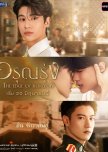
The Edge of Horizon — Thai Drama at Its Finest
Sometimes calling something a BL almost feels too restrictive. The Edge of Horizon is absolutely a BL. Its central love story is between two men, and that relationship is never hidden behind bromance or ambiguity. But after finishing it, I didn't think, “That was an excellent BL.” I thought, “That was an excellent Thai drama.” For me, this was a perfect 10/10.The story begins in Siam in 1932, with Phob, the son of a palace nursemaid, growing up beside Prince Thinnakon. They love each other before they are old enough to fully understand why the world considers that love impossible. One is born into service; the other is born into royalty. Years later, they meet again as adults at the same moment their country itself is moving toward enormous political and social change. That setting is not simply decoration. The series takes place around the 1932 Siamese Revolution, when Thailand was moving away from absolute monarchy toward constitutional government. The changing country therefore reflects the changing relationship perfectly. Phob and Thinnakon are asking whether the social order that decided their places at birth should also have the right to decide whom they are allowed to love. What impressed me immediately was the respect given to that world. Period dramas are easy to make beautiful and much harder to make believable. Putting actors in old clothes and finding an antique house is not enough. Here, status exists in almost everything: the way characters speak, stand, enter rooms, address one another, dress and even look at somebody above or below them socially. The palace does not merely look old. It feels governed by rules.
The actors actually trained for those differences. Inn Jakkrasin explained that the younger Phob required workshops focused on the submissive physical behaviour expected of a servant, while the adult military Phob required completely different preparation. He consulted military contacts about details such as saluting and the positioning of his feet. Ongsa similarly changed his normal fast speech into something slower and more deliberate for Thinnakon, including a different vocal tone appropriate to his character's upbringing. Those details matter because class is the real third person in their relationship. Phob and Thinnakon never seem to believe they are unequal as human beings. The world keeps reminding them that they are. That is considerably more interesting than simply giving us an evil father who says, “You cannot date another man.”
Vasin's opposition is tied to sexuality, certainly, but also bloodline, title, duty, reputation and hierarchy. Thinnakon is not simply his son. He represents a royal family and everything that family believes must survive through him. From Vasin's perspective, his son's life is not entirely private property. And Chai Chatayodom is terrifying in the role. He doesn't need to become some ridiculous screaming villain because his authority already fills the room. This is a veteran actor with decades of experience and multiple acting awards, including major Best Actor and supporting-actor honours, and you can see exactly why. Vasin can frighten me with restraint. His anger feels dangerous because it comes from someone absolutely convinced that his position gives him the right to control everybody beneath him. The best villains rarely think they are villains. Vasin believes he is protecting his family, his status and the order that gave meaning to his own life. That does not excuse what he does, but it makes him much more interesting than a one-dimensional homophobic father. Chai gives him enough humanity that I could understand where the character's fear came from while still wanting somebody to push him into the nearest pond.
Then there is Pond Ponlawit. Yes, my dreamy "I wish he was my boyfriend" gorgeous boy was there, so obviously I was going to notice him. But Prince Chattrathorn is genuinely one of the most interesting supporting characters because Pond refuses to play him as simply unpleasant. Even Inn and Ongsa said they were surprised by what Pond created with the role. Inn specifically praised how much reasoning and detail Pond put behind Chattrathorn's arrogance, while Ongsa said the performance made a morally grey character feel much more dimensional than he expected. That is exactly what I saw. Chattrathorn can be arrogant, cruel and infuriating, but Pond makes you feel that there is an entire internal logic underneath every ugly decision. He doesn't simply walk into a scene carrying “antagonist energy.” He walks in believing he has reasons. And Pond has become very good at that. The real revelation for me, however, was Inn Jakkrasin and Ongsa Tthuchh.
Phob needed strength without becoming the stereotypical masculine protector who solves everything for the softer royal character. He has anger, pride and political convictions, but he also understands that loving Thinnakon means loving somebody whose entire identity was built inside the system Phob increasingly questions. Inn makes that contradiction believable. Phob wants change, but he loves somebody connected to what is changing. He can resent privilege without resenting Thinnakon. He can fight against hierarchy without pretending that history disappears because two men kiss. That is a much harder character to play than a simple revolutionary hero. Ongsa's Thinnakon is almost the opposite, and I loved him. He is gentle, adorable and sometimes painfully easy to want to protect, but the writing never confuses gentleness with stupidity. Thinnakon has been raised inside enormous privilege while simultaneously having very little freedom over his own life. He can command other people and yet cannot simply command the right to love Phob. Ongsa's eyes do so much of the work. Sometimes Thinnakon looks at Phob with the happiness of the child who grew up beside him. Sometimes he looks at him as the adult who already knows exactly how much their relationship could cost. The transition happens without needing constant dialogue. And together, Inn and Ongsa have chemistry. Not manufactured “BL couple chemistry.” Not two actors repeatedly placed close enough together until fandom decides they look cute. They feel attached. There is history in the way they look at each other. Their intimacy makes sense because the relationship began before sexuality even entered the equation. They know each other as children, friends, first loves, people separated by adults, and eventually men who have independently grown into very different positions. So when physical intimacy finally enters the relationship, it feels like an extension of everything already there.
The production treated those scenes with the same care as the rest of the drama. Inn and Ongsa have spoken about establishing trust and boundaries beforehand, while director Kathadeb built the scenes through carefully planned individual shots. The result is sensual without suddenly making the drama feel as though somebody changed channels and put on a different series. That visual control exists everywhere. The cinematography understands how gorgeous period drama can be without turning every frame into an advertisement for expensive costumes. Interiors feel inhabited. Natural light, darker rooms, formal spaces and open landscapes all have different emotional functions. The characters can look tiny inside architecture that represents generations of social hierarchy, then much freer when the world around them physically opens. And the costumes deserve their own praise. Viriya Pongkajorn's work doesn't simply make everybody attractive. Clothing immediately helps separate royalty, servants, military personnel and people occupying different social positions. As characters age and their places in society change, their appearance changes with them. The clothes become part of the storytelling rather than an expensive wardrobe department showing us what it bought. That is what I mean by respect. Respect for Thai clothing. Respect for forms of address. Respect for class differences. Respect for military behaviour. Respect for the political period. Respect for architecture and domestic hierarchy. The production does not treat 1932 Thailand as an exotic background created for international BL viewers. It treats it as Thailand. That distinction may be why The Edge of Horizon feels much closer to a traditional high-quality Thai lakorn than to the familiar BL production model. And one31 knows how to do this. This is the same broadcaster behind To Sir, With Love and, more recently, the large-scale period BL Love in the Moonlight. GagaOOLala even promoted The Edge of Horizon as another grand One31 period production following Love in the Moonlight. This is therefore not a tiny BL company suddenly experimenting with historical costumes. One31 is bringing the production traditions of mainstream Thai television into queer romance.
That may be one of the most important developments in Thai BL. For years, BL often operated like its own smaller industry: younger actors, smaller budgets, university settings, limited casts and productions primarily targeting BL audiences. There is nothing inherently wrong with that model, but The Edge of Horizon shows what happens when a male-male romance receives the same treatment as a major historical television drama. You get Chai Chatayodom. You get Kathaleeya McIntosh and Duangjai Hathaikarn. You get experienced supporting performers standing beside younger BL actors rather than a cast composed almost entirely of newcomers. You get proper historical drama. And suddenly the BL is no longer expected to carry everything alone. The family stories matter. Political divisions matter. Generational conflict matters. The women matter. The older characters matter. Social class matters. Even characters who oppose Phob and Thinnakon have lives beyond simply creating obstacles for the main couple. That ensemble is one of the reasons the eleven episodes feel justified. I never felt that I was waiting through “non-BL scenes” for the romance to come back. Those scenes are the drama. The relationship exists within a family and a country, so understanding those people is part of understanding why loving each other is so difficult.
Even the political conflict avoids becoming a simplistic lesson where monarchy equals evil and revolution automatically equals good. Phob wants social change for understandable reasons, but political movements are still made of human beings, and human beings bring ambition, self-interest and contradictions with them. Thinnakon's privilege does not make him cruel, while Phob's ideals do not make every decision around him automatically correct. History is rarely that clean. The music understands the same idea of hope. Ongsa's “Saeng Raek” (“First Light”) was created around the image behind the title Arun Rung—dawn, the point where light finally appears after darkness. Songwriter-producer Achariya Dulyapaiboon described the imagery through the apparently impossible meeting of sun and earth, mirroring two people whose worlds tell them they should never meet. That symbolism could have been painfully obvious. Instead, it works because the whole drama is about change that initially seems impossible. A servant can become an officer. A prince can question what his title demands of him. A country can transform its political structure. A family can discover that tradition is not automatically the same thing as morality. And two men born on opposite sides of a hierarchy can decide that the line separating them does not deserve more respect than their love. The ending therefore felt earned rather than simply satisfying. I didn't need another tragedy proving that gay historical romances must end in punishment. Nor did I need a ridiculous modern fantasy where everyone suddenly adopts 2026 values in 1932. The drama finds something much better: hope.
Change comes slowly. People resist it. Some traditions survive, others evolve, and the characters themselves have to learn which parts of the world they inherited deserve preservation and which deserve to be challenged. That is what a historical drama should do. It should not simply reproduce the past beautifully. It should make us understand why people lived as they did while still allowing us to question what that world demanded from them.
Final Thought
I went into The Edge of Horizon knowing Pond was there, so that was already one excellent reason for me to watch it. I finished it thinking about everybody. Inn's strength. Ongsa's gentleness. Pond turning an arrogant royal into a genuinely layered man. Chai Chatayodom being absolutely terrifying. The mothers, grandmother, women and servants around them. The costumes. The military detail. The language. The palace. The music. The politics. The intimacy. The history. That is why giving it 10/10 feels easy for me.
The Edge of Horizon never seems embarrassed to be a BL, but it also never behaves as though being a BL means it should accept lower ambitions. The romance receives the same visual care, dramatic weight and experienced supporting cast that a major heterosexual period lakorn would expect. And that is exactly how it should be. I don't want queer historical dramas to feel like modern BL actors playing dress-up in borrowed costumes. I want them to feel rooted in the country, culture and period they are portraying. I want traditions to matter because challenging a tradition means nothing if the audience never understands what that tradition represented. I want older actors capable of terrifying me, mothers whose choices hurt, political change with consequences, beautiful language, carefully designed clothing and romance that belongs organically inside all of it. The Edge of Horizon gave me that. Audience reception also suggests I was hardly alone. Shortly after the finale, IMDb had it at roughly 8.5/10 from around 180 ratings, with individual episodes repeatedly scoring around 9 or higher. That is still a modest international sample, but the consistency is notable, and contemporary reviews repeatedly praised the acting, cinematography, historical setting and the way romance was integrated with class and political change. For me, however, numbers are secondary. I have watched enough BL to know when I am forgiving something because I love the actors, when I am enjoying something despite its flaws, and when a production simply gives me almost nothing I want to change. This was the latter.
The Edge of Horizon is not just one of my favourite Thai BLs of 2026. It is Thai drama at its finest.
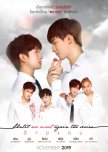
Until We Meet Again — The Most Beautiful Love Story I've Ever Watched
I honestly don't know how to describe what I just watched.I've seen BLs before, and I've enjoyed many of them, but Until We Meet Again is on a completely different level. This isn't simply a romance between two boys. It's a story about love that survives death itself, about family, guilt, forgiveness, and destiny. Every episode made me more emotionally invested than the previous one, and by the end, I had cried more times than I can count.
The idea of connecting two lives across different generations could easily have become confusing, but the writing handles it beautifully. Every revelation fits naturally into the story, and every answer creates an even stronger emotional connection with the characters. The ending is one of the most satisfying I've ever seen because it doesn't simply resolve the plot—it gives every important character the closure they deserve.
Ohm Thitiwat and Fluke Natouch are absolutely incredible together.
Their chemistry never feels forced for a single second. Every smile, every tear, every embrace feels genuine. I completely believed in Dean and Pharm, but I also completely believed in Korn and Intouch. Playing two different emotional layers within the same story is incredibly difficult, yet both actors manage it effortlessly. I honestly can't imagine anyone else bringing these characters to life the way they did.
The supporting cast is equally remarkable. Every relationship feels meaningful, every family carries emotional weight, and every character contributes something important to the story. If I had one small wish, it would simply be to see Somkrit receive more attention in the present timeline. As In's best friend, he deserved the opportunity to have his own emotional journey after everything that happened in the past.
The production is simply beautiful. The cinematography constantly enhances the emotion without becoming excessive, the soundtrack is unforgettable, and the pacing allows every important moment to breathe. Nothing feels rushed. The series understands that sometimes silence says more than dialogue, and those quiet moments are often the ones that stay with me the longest.
Final Thought
Until We Meet Again is everything I want a BL to be. It tells an unforgettable love story, treats its characters with respect, and delivers emotions that feel completely genuine from beginning to end. I laughed, I cried, and I became deeply attached to every stage of the journey. For me, this is simply a perfect drama, and I already know I'll watch it again many times.:::


