


 2
2 1
1 1
1


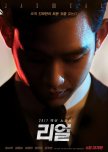
Can We Still Judge the Movie?
I never reviewed Real when it came out in 2017. Back then, I simply accepted it for what it was: an unusual psychological film that wouldn't appeal to everyone. Nearly ten years later, with everything surrounding Kim Soo Hyun and after reading countless comments describing it as "the worst Korean movie ever made," I decided to watch it again.What surprised me the most wasn't the movie itself. It was the reviews.
I spent some time reading opinions from different years before rewatching it. The reviews from 2017 were already divided, but most people talked about the cinematography, the confusing narrative, the symbolism, or the performances. As the years passed, especially after 2025, the discussion seemed to shift. Instead of talking about the film, many reviews focused almost entirely on Kim Soo Hyun, Sulli, or the explicit scenes. It made me wonder how many people were actually reviewing Real, and how many were reviewing the people in it.
Then I watched the movie again.
Honestly... I expected something much more explicit.
For years I had heard people describe Real as if it were one of the most shocking Korean films ever made. After finally revisiting it, I couldn't help comparing it to American and European productions I've watched over the years. Series like Queer as Folk contain scenes that are considerably more explicit, yet they rarely generated the same level of outrage. Real is certainly intended for adults, but the controversy surrounding those scenes feels far bigger than the scenes themselves.
Looking back, I still don't think Sulli deserved the criticism she received simply for accepting this role. Whether someone enjoys the film or not, actors shouldn't become the target of public anger for performing scenes that are part of the director's artistic vision.
That doesn't mean Real is a misunderstood masterpiece.
Far from it.
The film is ambitious, sometimes to its own detriment. Director Lee Sa Rang clearly wanted to create something where reality, identity and memory constantly overlap, leaving the audience unsure of what is actually happening. I appreciate films that trust viewers to think for themselves, but Real occasionally mistakes confusion for complexity. There were moments where I felt intrigued, and others where I simply wished the story would communicate its ideas more clearly.
Visually, however, I think the film deserves far more credit than it usually receives.
The neon lighting, the carefully designed sets and the dreamlike atmosphere create an identity that immediately separates Real from more conventional Korean crime films. Even when the narrative loses me, I never felt the production became lazy. Every frame looks intentional. Whether you enjoy the story or not, it's difficult to deny the amount of work that went into creating its visual style.
Kim Soo Hyun was also, in my opinion, a good casting choice.
His role demands constant shifts between confidence, vulnerability and psychological instability, and I think he handles those changes well. Ironically, after everything that's happened over the past few years, I found myself paying less attention to him than I expected.
Instead, Lee Sung Min completely stole the film.
I've admired him for years, and Real reminded me once again why. He has an incredible ability to dominate every scene without raising his voice or overacting. He isn't the kind of actor people usually describe as glamorous, yet his presence is genuinely intimidating. Every time he appeared on screen, I found myself watching him more than anyone else.
Maybe that's what makes revisiting Real in 2026 so interesting.
The film itself hasn't changed.
What has changed is the audience.
Whether consciously or not, many people now seem to approach Real carrying opinions about its actors before the opening scene even begins. I don't think that's unique to Korea, but I do think it's particularly visible here. We often separate artists from their work in Western cinema, while in Korea the public image of an actor can dramatically reshape how older projects are perceived.
Final Thought
I don't think Real deserves the reputation it has today, but I don't think it deserves to be called a masterpiece either. It's an ambitious psychological thriller with impressive visuals, solid performances and a story that sometimes becomes too complicated for its own good.
If you decide to watch it, my only advice is this: try to judge the film itself, not the headlines you've read over the past few years. Whether you end up loving it or hating it, I think that's the fairest way to experience one of Korea's most controversial films.

Oh No! Here Comes Trouble — A Great Drama That Felt Like It Was Afraid of Its Own Romance
Oh No! Here Comes Trouble is simply a very good drama. It mixes supernatural mystery, comedy, emotion, and character development with remarkable confidence, creating a story that constantly surprised me. Every case reveals something meaningful about the characters, making the series much more than a collection of paranormal investigations.The strongest part of the drama is undoubtedly the relationship between Pu Yiyong and Cao Guangyan.
Their friendship develops so naturally that, at times, I genuinely wondered why the series insisted on presenting them as nothing more than close friends. Their trust, loyalty, emotional dependence, and willingness to sacrifice everything for one another constantly pushed their relationship beyond what I usually expect from a simple bromance. I honestly think the story would have worked even better if it had embraced that emotional connection instead of avoiding it.
The only character I never managed to appreciate was the police officer.
Rather than helping the story, I often found her frustrating. Many of her decisions felt unnecessarily selfish or surprisingly naïve, especially considering her profession. Instead of balancing the two male leads, she often slowed the story down for me.
The cast, however, is exceptional. Every performance feels sincere, and the emotional scenes are handled with remarkable subtlety. Combined with an outstanding soundtrack and beautiful cinematography, the production constantly succeeds in making both the supernatural and the human moments equally believable.
Final Thought
Oh No! Here Comes Trouble is an excellent supernatural drama with outstanding performances and unforgettable emotional moments. I only wish it had been brave enough to let its two main characters become what they already felt like throughout the entire story. For me, they were much more than friends.

My Romance Scammer — Great Cast, Completely Wrong Pairings
The biggest disappointment of My Romance Scammer isn't the story. It's the way the story is told.On paper, a romance built around deception, wealthy families, and redemption could have become an entertaining drama. Instead, everything is exaggerated to the point where it almost feels like a sitcom. Every episode follows the same rhythm: a revelation, a shocked reaction, an over-the-top confrontation, then almost immediate forgiveness before moving on to the next problem. After a while, I stopped taking the conflicts seriously because nobody seemed to learn anything from them.
The writing asks the audience to believe things that I simply couldn't accept.
As a scammer, I honestly couldn't imagine crawling back to the person I manipulated and expecting love to erase everything. Even less when the victims forgive so quickly. The series puts so much faith in the power of love that it sometimes feels like it belongs in a Disney fairy tale rather than a drama about fraud and betrayal. Rich people making one unbelievable decision after another, getting married almost immediately without even discussing a prenuptial agreement... I honestly wouldn't trust any of these characters to run the companies they're supposedly inheriting.
Ironically, I really liked the cast.
Mark Jiruntanin is incredibly handsome and has the presence of a fashion model. Unfortunately, he keeps falling into the same acting pattern I've noticed in his previous work. He constantly looks stressed, as though he's an introvert being forced to speak in front of hundreds of people. It suits certain scenes, but after a while it becomes repetitive.
Junior tries hard to sell every emotional moment, but for me something is still missing. His background in comedy is obvious, and while his comic timing works well, the more dramatic scenes never fully reached me emotionally. I understood what the character was supposed to feel, but I rarely felt it myself.
Poon Mitpakdee is naturally funny and incredibly likeable. He brings warmth to almost every scene he's in. My problem wasn't with him—it was with the pairing. With Ohm Thitiwat, I never felt the connection I was expecting. I kept thinking back to Ohm's work with Fluke Natouch, where everything felt effortless and emotionally natural. Here, something always seemed to be missing. Ironically, I've also found Ohm more relaxed and convincing in several of his heterosexual dramas than in this particular pairing.
That brings me to another thought I had while watching the series. As BL continues to evolve and more openly LGBTQ+ actors begin taking leading roles, I personally find myself paying much more attention to authenticity. That's simply my own impression, but in this drama I never completely believed either couple. They felt like actors performing a romance rather than two people genuinely falling in love, and that made it much harder for me to become emotionally invested.
The production itself is perfectly respectable. The pacing is energetic, the visuals are polished, and the comedy is clearly intentional. My issue is that the emotional side of the story never reaches the same level, making the entire drama feel much lighter than its premise suggests.
Final Thought
My Romance Scammer had a cast I genuinely enjoyed watching, but I never believed the relationships they were trying to sell. Between a script that asks for too many unrealistic decisions and pairings that never fully convinced me, I finished the drama feeling that the actors deserved a much stronger story than the one they were given.

Duang with You — A Love Story About Never Giving Up
What I loved most about Duang with You is that it isn't simply a romance. At its heart, it's a story about perseverance. It's about refusing to give up on someone you genuinely care about, even when things don't go the way you hoped. That message gives the drama much more depth than the average university BL and makes the romance feel earned instead of rushed.The story is simple, but it knows exactly what it wants to tell. Rather than relying on endless misunderstandings or unnecessary drama, it focuses on the small moments that slowly bring two people closer together. Every setback only makes the relationship stronger, and that's what kept me emotionally invested until the very end.
The cast is absolutely adorable.
TeeTee has the kind of smile that could melt almost anyone. His enthusiasm and sincerity make Duang impossible not to love, and he carries the optimism of the story perfectly. Por, on the other hand, has an incredibly youthful face. Even though both actors are in their early twenties, they look so young that some of the more intimate scenes almost make you forget they're adults. Their innocence becomes part of their charm and gives the romance a sweetness that feels completely natural.
What I also liked is that their relationship never feels locked into traditional expectations. Their personalities complement each other so well that I could easily imagine them as a truly versatile couple, with neither one defined by a fixed role in their relationship. That balance fits the way their romance develops throughout the series and makes them feel like genuine equals.
The production is equally charming. The university setting is colourful without becoming unrealistic, the cinematography matches the warm atmosphere, and the soundtrack quietly supports the emotional scenes. Nothing tries to steal the spotlight from the characters themselves, which is exactly the right decision.
Final Thought
Duang with You reminded me that sometimes the simplest stories are also the most touching. It's a drama about patience, determination, and believing that love is worth fighting for. Add an incredibly likeable cast and a relationship that's easy to believe in, and you get one of the sweetest BLs I've watched this year.
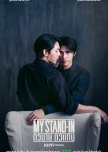
My Stand-In — An Incredible Story That Deserved Stronger Chemistry
The moment I learned that Professional Body Double was being adapted, I couldn't wait to watch it. The novel is one of those stories that constantly plays with identity, obsession, love, and guilt, creating characters who are often difficult to like yet impossible to forget. Thankfully, the adaptation stays remarkably faithful to that emotional complexity. As a story, My Stand-In is everything I hoped it would be.What fascinated me most is how morally complicated everyone is. Nobody is completely innocent, nobody is completely evil, and every decision has consequences. The idea of living as someone else's replacement could easily have become melodrama, but instead it develops into a surprisingly emotional reflection on identity and self-worth. Even when I disagreed with the characters, I always understood why they made their choices. That's exactly the kind of writing I enjoy.
Unfortunately, my biggest problem has nothing to do with the script.
I've tried several times to connect with Up Poompat as an actor, and this drama confirmed the same feeling I already had before. I never doubt his professionalism or his commitment, but I constantly feel as though he's acting rather than becoming the character. His movements often seem calculated, his emotional reactions restrained, and many scenes leave me with the impression that he's uncomfortable instead of naturally expressing what his character is feeling. That's entirely my personal impression, but it prevents me from fully believing the romance.
The contrast with Poom Phuripan makes that feeling even stronger.
Poom gives absolutely everything to his performance. Every emotional scene feels genuine, whether he's expressing heartbreak, anger, hope, or vulnerability. I never had to wonder what his character was feeling because he communicates it so naturally. Watching the two leads together, I often felt as though one actor was carrying the emotional weight of the relationship while the other remained more distant. Since a romance depends on both performances, that imbalance constantly pulled me out of the story.
Ironically, that's what frustrates me the most because almost everything else is excellent.
The production is polished, the cinematography beautifully supports the darker tone, and the adaptation successfully captures the emotional atmosphere of the novel without losing its own identity. The supporting cast also delivers consistently strong performances, making the world feel believable from beginning to end.
Final Thought
My Stand-In tells one of the best stories I've seen in a BL. The writing is intelligent, emotionally challenging, and remarkably faithful to the spirit of the original novel. That's exactly why I finished the drama with mixed feelings. I loved almost everything about the story, yet I never fully believed the central romance because I couldn't connect with one of its two leads. Had both performances reached the same emotional level, this would simply have been a much better BL.
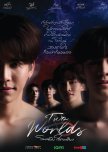
Two Worlds — Great Ideas That Never Reach Their Full Potential
When I saw the premise of Two Worlds, I expected something much bigger than what I ultimately received. Parallel worlds, alternate realities, and the possibility of changing fate are exactly the kind of concepts I usually love. The story had everything it needed to become one of the most memorable BLs of the year. Instead, I finished it feeling that too much potential had been left unexplored.The concept itself is genuinely interesting. Moving between two different realities creates countless possibilities for mystery, romance, and emotional conflict. Unfortunately, the script often chooses the simplest path instead of fully exploring the consequences of its own ideas. Rather than becoming increasingly complex, the story sometimes feels surprisingly straightforward, leaving me wishing it had pushed the fantasy elements much further.
Max Kornthas and Nat Natasit remain a comfortable pairing to watch. After working together since Why R U?, it's obvious they understand each other's rhythm on screen. Their chemistry is natural, and despite the ten-year age difference between them, they complement each other well as actors. I never questioned their relationship while watching the series. If anything, I simply wanted stronger material for them to work with.
The actor who impressed me the most, however, was Gun Thapanawat. I honestly think he deserves far more recognition than he currently receives. Because he isn't part of an established ship, he sometimes feels overlooked compared to other actors in the industry. That's a shame because his performance here is one of the strongest parts of the drama. At 26 during the airing of the series, he already shows a confidence and emotional presence that deserve bigger opportunities. I genuinely hope his agency gives him more substantial roles because he clearly has much more to offer.
Perhaps that's why the writing became my biggest disappointment. Knowing that the screenplay was written by Pratchaya Thavornthummarut naturally raised my expectations. This is the same writer connected to dramas such as 2gether, Bad Buddy, My School President, and My Love Mix-Up!—all stories that understand how to balance emotion, humour, and character development. Here, however, I never felt that same magic. The dialogue is perfectly serviceable, but the overall structure never fully develops the fascinating premise. Rather than surprising me, the story often plays things much safer than I expected.
The production itself is solid. The fantasy elements are handled well enough, the cinematography is attractive, and the overall atmosphere remains engaging throughout. From a technical perspective, I have very few complaints. My frustration comes almost entirely from the feeling that the series could have been so much more.
Final Thought
Two Worlds isn't a bad drama. In fact, it contains many elements I usually enjoy: parallel worlds, an experienced lead pairing, and a talented supporting cast. My disappointment comes from seeing so much unrealised potential. With a stronger script that fully embraced its own concept, this could easily have become one of the standout BLs of 2024. Instead, it's a good series that never quite reaches the level I know everyone involved was capable of delivering.

The Judge Returns — Ji Sung Never Disappoints, Even When the Story Does
I'll admit it immediately: I'm an easy audience when Ji Sung is involved.I've followed his career for more than twenty years, ever since The Hidden Princess in 2002. Since then, he's given us unforgettable performances in dramas like Kill Me, Heal Me, Doctor John, and The Devil Judge. At this point, I almost start every new project expecting excellence because that's exactly what he has delivered throughout his career. Even at 49, he remains one of the most charismatic Korean actors on television. He has aged like a fine French wine, gaining elegance and presence with every role. Lee Bo Young is a very lucky woman.
The premise immediately appealed to me because I have exactly the same weakness for redemption stories in regular dramas that I have for reincarnation and time-travel stories in BL. Watching someone return to the past to correct mistakes or save lives is a concept I'll probably never grow tired of. It creates endless emotional possibilities, and I was excited to see what this drama would do with it.
Unfortunately, the story never surprised me.
That's probably my biggest disappointment. The writing constantly reminded me of other Korean dramas I've already seen. Every major twist felt familiar, every revelation was easy to predict, and by the second half I already had a good idea of how everything would end. The drama isn't badly written, but it rarely finds its own identity. Instead, it often feels like a collection of ideas borrowed from stronger series.
Ji Sung once again does everything he possibly can to elevate the material.
His greatest strength has always been his ability to make emotionally complex characters feel believable, and that's exactly what he does here. Even when I wasn't particularly invested in the plot, I remained invested in him. He has an incredible talent for expressing regret, determination, and vulnerability with the smallest facial expressions. Very few actors can carry a familiar story as effortlessly as he can.
The supporting cast is equally solid, and the production itself leaves very little to criticise. The direction is polished, the pacing remains consistent, and visually the drama looks exactly as good as a major Korean production should. Technically, it succeeds almost everywhere.
The problem is simply that I never felt excited.
For a drama built around redemption and second chances, I expected more emotional surprises and more difficult choices. Instead, I often felt like I was watching a very well-made version of stories I'd already experienced before. It kept my attention, but it rarely exceeded my expectations.
Final Thought
The Judge Returns is another reminder of why Ji Sung remains one of my favourite Korean actors. His performance is excellent, his screen presence is undeniable, and he once again proves he can make almost any character compelling. I only wish the story had been as exceptional as the man leading it. Instead of creating something truly memorable, it settles for being a good drama that never quite escapes the shadow of everything that came before it.

Shark: The Beginning — One of the Best Webtoon Adaptations I've Seen
As someone who already loved the webtoon, I was both excited and nervous when Shark: The Beginning was announced. Too many webtoon adaptations lose what made the original special. Thankfully, this isn't one of them. From beginning to end, it captures the same determination, pain, and hope that made me love the source material.The story is much more than a simple school bullying drama. It's about someone who has everything taken away from him and has to rebuild himself from nothing. Every setback makes Cha Woo Sol stronger, not because he suddenly becomes invincible, but because he slowly learns that surviving sometimes means changing completely. That progression feels believable, and I found myself rooting for him during every fight.
Kim Min Seok is absolutely fantastic.
I've always thought he has something unique as an actor. No matter how physically strong his characters become, he keeps this innocent look that immediately makes you want to protect him. That quality is perfect for Woo Sol. Even while learning how to fight, he never loses the vulnerability that defines the character. It makes every victory feel earned instead of inevitable.
It's also impressive to see the physical work he put into the role after returning from military service. The training sequences look convincing because he clearly committed to becoming this character rather than simply acting the part.
The supporting cast is equally strong, especially Wi Ha Joon. His presence completely changes the atmosphere whenever he appears on screen. Rather than becoming a stereotypical mentor, he creates a relationship with Woo Sol that is built on respect, discipline, and mutual understanding. Watching their dynamic develop became one of my favourite parts of the film.
The action scenes deserve special praise. They're brutal without becoming unrealistic, and every punch has consequences. Instead of trying to create flashy martial arts choreography, the film focuses on survival, making every fight feel dangerous.
Final Thought
Shark: The Beginning proves that a great webtoon adaptation doesn't need to reinvent the source material. It simply needs to understand why readers fell in love with it in the first place. Kim Min Seok delivers one of my favourite performances of his career, and I honestly hope this isn't the last time we see Woo Sol's story continue.
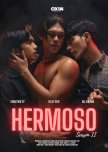
Hermoso Season 2 — Sometimes It's Better to Let a Story End
I honestly don't understand why this second season exists.The first season already had an ending. It wasn't a happy one, but it was a conclusion I could accept. It was emotional, bittersweet, and gave the story a sense of closure. Instead of respecting that ending, Season 2 reopens everything simply to create more drama, and for me, it completely undermines what came before.
The biggest mistake is the memory-loss storyline.
Amnesia is already one of my least favourite clichés when it's well written. Here, it feels like an excuse to force the characters back to the beginning and create an artificial love triangle. Watching someone forget the person they loved and start developing feelings for someone else—especially someone who should never become a romantic option—didn't make me emotional. It made me frustrated. At that point, I honestly found myself thinking I would have preferred the original ending to remain untouched.
The acting is once again perfectly acceptable for what the script asks the cast to do. I never felt the actors were the problem. They commit to the material and do their best with increasingly exaggerated situations. Unfortunately, even good performances can't rescue a story that keeps piling one melodramatic twist on top of another without earning them emotionally.
Like the first season, the production values remain respectable. The cinematography is pleasant, the locations are beautiful, and the intimate scenes are filmed confidently. But this time, even those strengths weren't enough to keep me invested. Instead of feeling like a natural continuation, the series often feels determined to shock the audience rather than tell a meaningful story.
Final Thought
Hermoso Season 2 takes an ending that was already satisfying enough and complicates it with unnecessary twists that add frustration rather than emotion. For me, this sequel never justified its own existence. Instead of strengthening the original story, it weakens it, proving that sometimes the hardest decision for a writer is also the right one: knowing when to stop.

Hermoso — You Watch It for the Heat, Not the Story
Let's be honest: the main reason people talk about Hermoso isn't the story. It's the intimate scenes. The series is undeniably bold, and if that's what you're looking for, it certainly delivers. Unfortunately, once those moments are over, there isn't much left that kept me emotionally invested.The premise actually had potential. A romance between two men from completely different worlds could have become something memorable, especially with the beautiful coastal setting of the Philippines. Instead, the script keeps introducing new conflicts and melodramatic twists without developing them properly. Rather than becoming more interesting as it progresses, the story gradually loses its direction.
The cast also left me unconvinced.
The actors are physically attractive, and they handle the intimate scenes professionally. That's never the problem. My issue is that I rarely believed the emotional side of the relationship. Outside the physical attraction, I struggled to understand why these characters were supposedly falling so deeply in love. The chemistry works on a physical level, but not on an emotional one, and for me that's a major difference.
Ironically, the production itself is quite solid. The seaside locations create a beautiful atmosphere, the cinematography is pleasant, and the intimate scenes are filmed with confidence rather than awkwardness. It's obvious the production knew exactly what audience it wanted to attract. I just wish the same amount of effort had been invested in the screenplay.
By the end, I felt the series had confused passion with storytelling. Physical attraction can start a romance, but it can't carry an entire drama on its own. I needed stronger characters, a more coherent narrative, and a relationship that convinced me beyond the bedroom.
Final Thought
Hermoso is a series I'll remember for its boldness rather than its story. If you're looking for a BL with plenty of physical intimacy, you'll probably understand why it found an audience. I personally wanted much more than that. The chemistry may be hot, but without a stronger script, it never became a romance I truly cared about.

Suntiny — I Honestly Don't Understand the Appeal
I rarely ask myself why a drama exists, but Suntiny made me do exactly that. From the very first episodes, I kept wondering who thought this story was a good idea and, even more surprisingly, why talented actors agreed to bring it to life. I know many viewers enjoyed it, and I genuinely respect that. I just couldn't see what they were seeing.The biggest problem is the writing.
The body-swap premise could have been fun if it had been used to explore identity, relationships, or even comedy in a clever way. Instead, the script feels like it repeats the same jokes and situations without ever building toward anything meaningful. Entire episodes go by with very little happening, leaving the impression that the story is constantly moving without actually going anywhere.
The tone also feels confused. One moment the series asks me to laugh at exaggerated comedy, and the next it suddenly expects me to become emotionally invested in the romance. For me, those two sides never blend together. Rather than complementing each other, they constantly undermine one another, making it difficult to take either seriously.
The cast deserved better.
Max Kornthas and Nat Natasit are experienced enough to make almost any situation watchable, but even they can't overcome a script that gives them so little to work with. I never blamed the actors while watching. I blamed the material. Their performances are serviceable, yet none of the emotional moments truly land because the writing never earns them.
From a technical standpoint, the series is perfectly acceptable. The production is colourful, the direction is competent, and nothing is particularly ugly to look at. But good production values can't save a story that never convinced me to care about its characters or their journey.
Final Thought
Suntiny is one of those rare dramas where I finished every episode asking the same question: why? Why this story? Why these characters? Why this direction? I know it found an audience, especially among long-time MaxNat fans, but for me, no amount of chemistry or fan service could compensate for a script that felt empty from beginning to end. This is simply a BL that never worked for me.

Falling in Love with a Rival — A Huge Disappointment for Fans of the Novel
I was incredibly excited when I heard that one of my favourite BL novels was being adapted. Finding good BL stories isn't easy, and seeing one finally reach the screen felt like something special. Unfortunately, after watching Falling in Love with a Rival, I couldn't hide my disappointment.My biggest problem is how little it resembles the novel.
The original story isn't just about revenge or comedy. It's about two people who slowly discover feelings they never expected to have. The romance develops naturally, and that's what makes it so interesting. Here, most of that emotional journey disappears. The adaptation feels rushed, simplified, and often disconnected from what made the novel so memorable in the first place. Instead of feeling like I was watching the story I loved, it felt like I was watching a very loose summary of it.
The acting doesn't help either.
None of the performances are terrible, but very few scenes feel emotionally convincing. The chemistry between the leads never reaches the level needed to make me believe the relationship, which is a serious problem for a romance. Several emotional moments that should have been powerful simply pass by without leaving much of an impression.
The production is also clearly limited. With such short episodes, the story barely has time to introduce the characters before moving on to the next plot point. Everything happens so quickly that it's difficult to become emotionally invested. Rather than adapting the novel, it often feels like it's skipping from one important scene to another without allowing any of them to breathe.
Despite all that, I can't completely dislike the series.
Simply seeing a BL novel adapted into a television drama still feels exciting. There aren't many opportunities to watch stories like this, and I genuinely hope productions such as this encourage more creators to bring BL novels to the screen. Even if this adaptation didn't satisfy me, I still want the genre to continue growing.
Final Thought
Falling in Love with a Rival isn't the adaptation I was hoping for. As someone who loved the novel, I found it far too rushed and far too different from the original story. I'm happy that BL novels are finally beginning to appear on screen, but this one deserved much more care than it received. I just hope the next adaptation remembers what made the original so special in the first place.
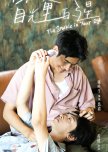
The Sparkle in Your Eye — A Heartbreaking Look Behind the Spotlight
The Sparkle in Your Eye isn't just another BL set in the entertainment industry. It's a drama about what fame can cost, how easily public opinion can destroy someone's career, and how difficult it is to remain true to yourself when your entire life becomes a product. By the end, I was heartbroken.The story follows two actors brought together by circumstances, but the romance is only one part of a much larger picture. What stayed with me most was the constant pressure surrounding them. Every decision is judged, every rumour becomes a headline, and every relationship can be turned into a weapon. The series does an excellent job showing that success in show business often comes at the expense of personal happiness.
Knowing how tightly the entertainment industry is monitored in China, I was honestly surprised this BL was made at all. The drama doesn't openly challenge the system, but it still paints a bleak picture of how careers, public image, and private lives can collide. That alone gives the story an emotional weight that goes beyond the romance itself.
The acting is one of the series' strongest qualities. The two leads build a believable relationship while never losing sight of the pressures surrounding their characters. Their quieter moments are often the most powerful because they feel like brief escapes from a world that constantly demands they perform, even when the cameras are off.
The production also deserves praise. The entertainment industry feels convincing, not glamorous. Instead of romanticising celebrity life, the series constantly reminds us how fragile fame really is. The cinematography supports that contrast well, moving naturally between the polished public image and the loneliness hidden behind it.
Final Thought
The Sparkle in Your Eye is a love story, but it's also a reminder that falling in love can become incredibly complicated when the whole world believes it owns your image. I finished the series with a heavy heart. The romance moved me, but what affected me even more was its portrayal of the sacrifices demanded by show business. It's one of those dramas that stays with you long after the final episode.

The Ex-Morning — Some Ships Are Simply Meant to Sail Together
Nine years after SOTUS, the ship that introduced so many of us to Thai BL is finally back. I wasn't expecting nostalgia alone to carry an entire series, and thankfully it doesn't. The Ex-Morning proves that Krist and Singto were never just a successful pairing because of timing or luck. They simply have something together that I rarely see with other actors.I've watched Krist with different partners over the years, and while some of those pairings were enjoyable, I always felt something was missing. It wasn't the acting. It wasn't the stories. It was the chemistry. Put him next to Singto, however, and everything suddenly feels effortless. They don't look like two actors trying to convince me they're in love. They simply behave like two people who already know each other inside out. That's the kind of connection you can't manufacture, and probably why they became one of BL's first truly iconic ships.
The story also deserves credit for avoiding the usual university setting that made SOTUS famous. Instead, it follows two adults forced to work together years after their breakup. It's a refreshing premise because the conflicts don't come from youthful misunderstandings but from regrets, careers, pride, and unresolved feelings. Watching two people who once loved each other slowly rediscover why they fell in love in the first place feels far more mature than the average romantic comedy.
Krist delivers one of his strongest performances to date. Phi is flawed, impulsive, sometimes selfish, yet always deeply human. Singto perfectly balances him with a calmer, more composed performance that never feels passive. Their personalities complement each other exactly as they should, and every reunion scene carries emotional weight because you immediately believe these two characters share years of history.
The supporting cast also plays its part well without overshadowing the central relationship. More importantly, the writing never forgets what people came to watch. The focus always returns to Phi and Tam, allowing their emotional journey to remain the heart of the series.
The production is polished throughout. The newsroom setting feels believable, the pacing remains engaging, and the direction knows when to rely on silence instead of dialogue. The soundtrack isn't particularly memorable, but it quietly supports the emotional scenes without becoming distracting.
Final Thought
The Ex-Morning reminded me why Krist and Singto became such an important pairing in the first place. Long before "shipping" became the marketing machine it is today, they already had something that couldn't be taught: natural chemistry. Nine years later, that connection hasn't disappeared. If anything, it feels stronger, more mature, and more believable than ever. For me, some actors work well together. Krist and Singto simply belong together on screen.

I Promise I Will Come Back: Something Happen — A Different Story Worth Telling
Rather than extending TK and Victor's story, Something Happen wisely chooses a different direction by focusing on Victor's twin brother. At first, I wasn't sure that was the right decision because I was still emotionally attached to the original couple. Surprisingly, the special quickly finds its own identity instead of trying to recreate what made the main series so memorable.The story naturally feels smaller in scale, but that's perfectly fine. Instead of revisiting the heartbreak of the original drama, it introduces a new romance with its own emotional journey. I appreciated that the writers resisted the temptation to simply recycle the same formula. This special works best when viewed as a companion piece rather than a true sequel.
The new cast integrates well into the universe, and the performances remain sincere throughout. While it never reaches the emotional intensity of the main series, it doesn't really need to. Its purpose is simply to spend a little more time in a world many viewers had grown attached to.
Final Thought
Something Happen isn't the continuation of I Promise I Will Come Back that some viewers may expect. It's a separate story connected to the same universe, and judging it on those terms makes it much easier to appreciate. It doesn't replace the original, but it offers a pleasant and worthwhile addition for fans who weren't quite ready to leave that world behind.


