


 2
2 1
1 1
1



Burnout Syndrome — We Judge People Before We Understand What Extinguished Them
I imagine that some viewers are discovering Burnout Syndrome now because Dew Jirawat is currently appearing in Mr.Kill. I am almost experiencing the opposite. I am watching Mr.Kill because Burnout Syndrome made me fall for Dew and showed me how naturally he can inhabit a character without appearing to perform for the camera. GMMTV’s current mystery series places him in another psychologically demanding role, but the quiet spontaneity that impressed me here has become even stronger there. Dew has a way of delivering dialogue as though the words have only just occurred to him. His pauses, reactions and changes in expression do not feel rehearsed, even when the scene clearly requires precise emotional control. It creates the impression that Pheem is thinking while speaking rather than waiting for the actor’s turn to recite a line. That quality is extremely difficult to fake, and placing him beside Gun and Off made the series a fascinating acting showcase.Gun is, as always, remarkable. Jira is not simply confused between two attractive men; he is someone who has lost his professional direction, confidence and understanding of what he needs from other people. After being suddenly dismissed from his job, he enters a period of creative and emotional exhaustion before becoming caught between Pheem, whose attention initially feels safe, and Koh, a wealthy technology entrepreneur who employs him as a public representative while also becoming the inspiration for his art. The ten-episode series develops this triangle from JittiRain’s novel and story, with JittiRain, director Anucha Boonyawatana and Sethinun Jariyavilaskul credited in the writing team.
The completed novel, Burnout Syndrome (ภาวะรักคนหมดไฟ), was released before the television broadcast, and Dew even created artwork for one of its Thai covers. This connection between the book, Jira’s identity as an artist and Dew’s own visual-art background makes his casting feel particularly appropriate, even though Pheem is not the artist within the story. The series remains closely tied to JittiRain’s central idea: three people who appear functional from the outside but have each lost something essential inside themselves. The title can also be misleading when approached too literally. The World Health Organization defines burnout specifically as an occupational phenomenon caused by chronic workplace stress, characterized by exhaustion, detachment or cynicism toward work and reduced professional effectiveness. In everyday language, however, people often use the word more broadly to describe the emotional depletion caused by life, relationships, social pressure, caregiving or loss. Burnout Syndrome begins with professional exhaustion, but gradually uses the image of a fire going out to explore something much wider: what happens when a person no longer possesses enough emotional energy to continue being the version of himself that everyone expects.
Most of us have experienced some form of that exhaustion, even when it would not qualify as clinical occupational burnout. It does not always come from a job. It can come from society repeatedly asking us to conform, from loving someone who cannot give us what we need, from death, loneliness, financial insecurity or the simple accumulation of disappointments that gradually removes our enthusiasm for life. Sometimes nothing visibly dramatic happens, yet we still reach a point where getting through an ordinary day requires more effort than anyone around us can understand. That is why writing characters like Jira, Koh and Pheem is difficult. Their most important emotions are not always visible, and the series refuses to translate every contradiction into a convenient explanation. They frequently behave in ways that are selfish, confusing or unfair because emotionally exhausted people do not suddenly become perfectly self-aware simply because they have entered a romance. They may want comfort while rejecting the person offering it, desire honesty while hiding their own intentions or hurt someone because admitting fear feels more dangerous than creating distance.
Playing those contradictions is even harder than writing them. Gun makes Jira’s uncertainty feel genuine rather than indecisive for the sake of extending a love triangle. His feelings change because his understanding of the two men changes, but also because his understanding of himself remains unstable. He is looking for love while still trying to identify which version of himself is real: the unsuccessful artist, the public representative created for Koh, the person Pheem believes he knows or the man whose desire returns when Koh becomes his subject. Off receives the least immediately lovable character, which is probably why so many viewers judged Koh so harshly. He is wealthy, controlling, emotionally closed and accustomed to arranging people around his needs. His fear of social contact does not automatically excuse the way he uses money, employment and authority to keep Jira close, and it is completely understandable that viewers would dislike him during the earlier episodes. However, disliking a character is not the same as the character being badly written. Koh is presented in layers because people rarely reveal the reason for their worst behaviour when we first meet them. What initially appears to be arrogance gradually exposes fear, isolation and an inability to form relationships without trying to control their terms. Off does not ask the audience to forgive everything Koh does; he allows us to understand how a man can become this emotionally distorted while still remaining responsible for the harm he causes.
Anucha Boonyawatana already proved with Not Me that she knows how to use Off and Gun beyond the familiar security of their pairing. That series placed romance inside political anger and social inequality, while Burnout Syndrome turns inward and examines the private systems of power that develop between people. The reunion could easily have become another vehicle built around OffGun’s established popularity, but Anucha instead gives them raw characters who are frequently unpleasant, vulnerable and difficult to classify. Her direction is particularly effective because she does not sugar-coat the relationships. These are not people who arrive emotionally prepared to love correctly. They bring financial inequality, professional dependence, jealousy, unresolved pain and incompatible expectations into every connection. The series looks attractive, but it does not polish the characters until their flaws become harmless or charming. That rawness also explains why the dialogue and performances can feel unusually spontaneous. Some viewers praised the fragmented conversations precisely because they resemble the way people actually speak when they are uncertain, embarrassed or trying to conceal what they mean. Other viewers interpreted the same tone as unnecessarily gloomy or mistook emotional opacity for weak characterization. The divided response therefore reflects the series itself: it asks the audience to observe people whose motives cannot be understood from their first actions, and not every viewer will have the patience to remain with them until those layers become visible.
Dew is essential to maintaining that balance because Pheem initially appears to be the easier person to love. He communicates more naturally, notices Jira’s emotional state and offers companionship without immediately surrounding it with Koh’s uncomfortable power imbalance. Yet, like everyone else in the series, the person we first meet is not the complete person. Dew allows Pheem’s charm to coexist with insecurity, desire and less attractive emotional choices, gradually complicating the character without making the change feel artificial. That is also how relationships work outside fiction. We often begin by loving someone’s face, humour, confidence or apparent kindness, but early attraction is based on a carefully limited amount of information. People usually show the version of themselves that feels safest or most desirable, not necessarily because they are deliberately lying, but because trust has not yet made complete honesty possible. The real person appears slowly. Sometimes we discover flaws we can accept because we understand where they come from and see that the person is willing to change. Sometimes we fight because love has not erased the ways we hurt one another, and sometimes we leave because understanding a person does not obligate us to remain with them. Burnout Syndrome understands that learning the reason behind someone’s behaviour does not automatically make the behaviour acceptable; it simply makes the choice to stay or leave more informed.
This is where the series becomes more than a conventional love triangle. Jira is not merely deciding which man is more romantic or attractive. He is learning what each relationship asks him to sacrifice, which person sees him most clearly and whether either man loves Jira himself or the function he performs in their lives. At the same time, Koh and Pheem must confront whether their feelings are truly love or another attempt to fill what has gone missing inside them.
The production deserves credit for supporting that complexity. Burnout Syndrome was produced by GMMTV with Chamade Film, whose catalogue was still relatively small when the series aired, including productions such as Whale Store xoxo and That Summer. Those projects received mixed responses to their writing, but they established a consistent ability to create polished, visually coherent worlds. Here, the restrained cinematography, urban isolation, artwork and desaturated atmosphere are more than decoration; they make the characters appear surrounded by people and opportunities while remaining emotionally separated from both. The small size of Chamade Film’s completed catalogue means it would be premature to claim that the company guarantees excellent writing. However, Burnout Syndrome demonstrates that it can support a mature production with experienced performers, difficult themes and a director with a clear visual identity. The disagreements surrounding the series have generally focused more on its characters, pacing and emotional darkness than on cheap filming, weak technical execution or the kind of production limitations that frequently damage ambitious BL stories.
Final Thought
I understand why some viewers disliked Burnout Syndrome. Koh can be infuriating, Jira’s uncertainty can feel exhausting, and Pheem is not allowed to remain the uncomplicated alternative he appears to be at the beginning. Watching damaged people repeat their mistakes is uncomfortable, especially when a romantic drama has trained us to expect love to heal everyone quickly and reward the character who seems nicest during the first episodes. However, I do not think the writing failed simply because the characters were difficult to love. The series is asking us to recognize how easily we judge people through isolated actions while knowing almost nothing about the fear, grief or exhaustion influencing them. Understanding those reasons does not erase responsibility, but refusing to look for them leaves us with characters who appear inconsistent only because we have decided that the first version we saw must be the real one. Gun gives Jira all the confusion of someone trying to rebuild himself while choosing between two imperfect forms of love. Off makes Koh’s cruelty, isolation and gradual emotional exposure exist within the same person without demanding easy forgiveness. Dew may have been the greatest discovery for me because his natural performance made Pheem feel as though he existed before the camera arrived and continued thinking after every scene ended. Anucha Boonyawatana created another down-to-earth work with OffGun, but this time the struggle is not fought in the streets or against an obvious political enemy. It takes place inside people who no longer understand what they need, inside relationships where affection and control overlap, and inside the distance between the person we present and everything we are afraid to reveal.
Those who saw only confused writing may experience the series differently after returning to it later. Time and personal experience can completely change the way we understand a character, because sometimes the problem is not that the story failed to explain someone. Sometimes we simply had not yet lived through enough exhaustion, disappointment or complicated love to recognize what the story was showing us.

The On1y One — A Love That Refuses to Say Goodbye
Some stories do not end. They simply stop breathing. The On1y One is one of those rare dramas that does not feel finished—it feels interrupted. Not because it fails, but because it builds a world and emotional truth so real that its sudden silence feels like loss. This is not just a BL. It is a coming-of-age story about identity, vulnerability, and the kind of love that changes the way you see yourself.A Love That Grows Like an Addiction
There is something quietly addictive about this series. Not in the way of melodrama, but in the way the emotions slowly take hold. Each episode deepens the connection, not through spectacle, but through familiarity. It reminds me of Addicted, not in story, but in emotional grip. That sense of being unable to look away because the characters feel like people you might know, or once were. What makes The On1y One more powerful is its tenderness. It is not about rebellion. It is about discovery. Two boys learning who they are, and what they mean to each other, without yet knowing how to protect that love.
Performances That Feel Like Real Life
The cast carries this story with honesty and softness. Nothing feels exaggerated. Their awkwardness, joy, fear, and longing are not performed—they are lived. The camera often lingers on small gestures: a glance held too long, a hand that hesitates before touching. These moments create an intimacy that feels deeply human. You don’t just watch them fall in love. You remember what it felt like to fall in love for the first time.
An Ending That Feels Like a Door Left Open
The final episode does not close the story. It opens it wider. It is not a resolution—it is a promise. And that is why the absence of a second season hurts. The narrative clearly points forward. The emotional journey is only beginning. This is not an ending. It is a pause.
Final Thought
The On1y One is a rare gift: a story that feels honest, intimate, and alive. It deserves to continue. Until then, it remains a love story that refuses to fade—and one I will gladly return to again and again.

The Sign — When Fate, Myth, and Love Collapse Into One Narrative
Some dramas exist to entertain. The Sign exists to shake you. This is one of the rare BL stories that doesn’t just combine genres — it balances them. It is action, fantasy, mystery, and romance all at once, and it trusts its audience to feel complexity rather than to be comforted by a predictable happy ending. The result is satisfying not because it checks boxes, but because it creates a world you want to explore more.Fantasy and Reality Intertwined
At its core, The Sign is about two men — Phaya and Tharn — whose connection feels beyond coincidence, as if fate itself pulled them together. The supernatural elements of premonitions and mythical beings aren’t just spectacle. They are emotional language. Tharn’s visions, Phaya’s unresolved past, and their shared mystery are metaphors for how love keeps resurfacing even through the barriers of time and fear. This is not shallow romance; this is a cosmic bond disguised as destiny. Fans have praised the chemistry between the leads — and they deserve it. The actors’ dynamic feels like recognition, not performance. That’s rare in BL, especially when fantasy is involved.
No “Official” Season 2 — But the Story Doesn’t Really End
Here is where we need real clarity: Contrary to what many fans hoped, The Sign does not have an official second season in production. Neither the producers nor the original author confirmed a continuation — which has been confirmed multiple times in international fan discussions and community reports. Instead, what exists beyond the 12 episodes is a special side story or bonus content, not a full canonical sequel. There was a special episode released in May 2024 featuring cast interviews and behind-the-scenes material, rather than narrative continuation. This means the story as presented , while rich, remains contained, not expanded in a Season 2 format. What remains teased are the possibilities within the world: new antagonists linked to Phaya’s past, mythic beasts whose origins matter, and unresolved threads that feel like they want to grow. But at the moment there is no official narrative sequel confirmed.
Why the Lack of Season 2 Isn’t a Failure
This actually fits the spirit of the series. The Sign doesn’t resolve everything because life never does. The mythology is ancient and incompletely understood. The connection between the protagonists transcends time, and the unanswered questions mirror that: sometimes love doesn’t solve the past — it just exists alongside it. This ambiguity is not a flaw.
It is the drama’s theme.
Beyond Romance: A Genre Milestone
The series deserves more credit than it gets for blending:
- Mythology and reincarnation
- Action and procedural mystery
- Romantic tension without forcing clichés
- Emotional stakes without reducing them to fan fantasy
This is why The Sign feels bigger than the average BL. It is not a traditional love story. It is a mythopoetic love narrative, written as if fate were a dimension and not a plot device.
Final Thought
The Sign asks something rare of its audience: Look beyond happy endings. Look at meaning.
This is why fans fell for it — and why the lack of an official Season 2 doesn’t weaken it. The world it builds is already complete enough to stay with you. Whether that world ever expands doesn’t change the fact that what we have stands as one of the most ambitious BL stories in recent years. Watch it. Feel it. And let its open mysteries stay alive in your imagination.

2 Moons: The Ambassador — When a Story Loses Its Face
This is not a bad series. But it is one of the most emotionally exhausting BL franchises to follow. Not because of the story, but because it keeps erasing itself.A Franchise Trapped in Reboots
2 Moons should have been a long-running BL saga. Instead, it became a cycle of recasts and soft reboots that break emotional continuity.
- Season 1 (2017) introduced us to the world and its couples. It was imperfect, but sincere — and left unfinished.
- Season 2 (2019) restarted the story with a new cast. Episodes 1–5 retell season 1, then finally move forward. It is, narratively, the strongest version.
- Season 3: The Ambassador recasts everyone again and resets the emotional bond for the third time.
And none of the new actors even resemble the previous ones. This is not evolution. It is replacement.
Why It Hurts the Story
In BL, chemistry is memory. When you replace faces, you erase history. Every emotional moment becomes disconnected. Viewers are asked to care again — without being allowed to grieve what they lost. The problem is not the actors. It is the producers. The original casts are now recognized and active. There was no artistic necessity for this change. Only a commercial one.
Is Season 3 Worth Watching?
Yes… but only if you let go of everything that came before. As a standalone, The Ambassador is decent. But as part of a trilogy, it feels like a stranger wearing familiar names.
Final Thought
2 Moons did not fail because of weak writing. It failed because it refused to respect its own identity. A story needs a face. And this one keeps losing it.

Love Hurts — When the Chemistry Is Bigger Than the Format
I rarely write reviews for Korean BLs with ten-minute episodes. There are simply too many of them now, and unless something really distinguishes itself, eight episodes of six to ten minutes can feel less like a drama than a collection of scenes surrounding one romantic idea. Love Hurts surprised me. The story itself certainly did not. Kim Dojin and Lee Jaewon were classmates who became close, developed feelings, separated without properly resolving what happened between them, and eventually have to confront a first love that neither has completely left behind. We have seen variations of first love, missed timing, ghosting, misunderstandings and reunion countless times across BL, films and heterosexual romance.The Korean title, 첫사랑니, is actually more interesting than the English one because it plays with first love and wisdom tooth: something buried underneath, painful when it begins to emerge and difficult to ignore once it starts hurting. That metaphor fits the story rather well. But even then, nothing about the premise made me think I was about to discover something revolutionary. (dramabl.com) What made me keep watching was the actors. And more specifically, their chemistry. There are BL couples where the script continuously tells us that two characters want each other while I sit there waiting for the actors to convince me. Love Hurts had almost the opposite problem. The screenplay had barely enough time to develop anything, yet every time Kim Changyu and Kang Seon-ho were together, my brain was basically shouting: get a room. The sexual tension is ridiculous. It isn't created through explicit scenes either. It is in proximity, eye contact, hesitation and the slightly uncomfortable awareness of another person's body. They often look like two people who remember exactly what being close to each other felt like and are trying to behave as if they don't. That is much harder to manufacture than a technically competent kiss. At some point I genuinely wondered whether they were a couple outside the drama, not because I have any interest in deciding actors' private relationships for them, but because their physical ease together was that convincing. Chemistry is not evidence of a real relationship; excellent acting can create exactly the same impression. In fact, making the audience briefly wonder where acting ends is probably one of the greatest compliments I can give two romantic actors. And that is especially noticeable because Love Hurts gives them almost nothing to hide behind.
There is no expensive fantasy world, no elaborate crime plot, no enormous supporting cast and no spectacular cinematography distracting us from whether the couple works. Eight episodes run roughly six to eleven minutes each, so the entire series is only around the length of a feature film. It was released through Lovememory's YouTube channel, with episodes initially available early to channel members before public release. (dramabl.com) When a production is this small, chemistry becomes incredibly important. Thankfully, Kim Changyu has plenty of it. I have had a crush on him since His Man in 2022, so I admit I wasn't approaching this with complete neutrality. He was adorable there, and four years later I still find him ridiculously cute. For anyone discovering him through Love Hurts, his Instagram is @gyu_11.12. But liking him personally isn't why I think he works here. His Man also makes Changyu interesting within Korean BL because he did not become visible by playing a fictional gay character. He first became widely known through Korea's first major gay male dating reality show, where eight men openly participated in a program about finding another man. He has since moved further into scripted queer productions, including Fan Service earlier in 2026. That transition matters. Changyu does not perform Dojin as a collection of mannerisms designed to signal "gay character." There is nothing exaggerated about the performance. He could easily fit into a heterosexual romance, thriller, workplace drama or comedy without needing to change some supposedly essential part of himself. And to be clear, that is not because masculine gay actors are somehow more versatile than effeminate gay actors. Effeminate men can play an enormous range of characters too. The point is that sexuality is not an acting type. A gay actor is an actor. That sounds absurdly obvious, yet Korean entertainment still has very few openly gay performers working visibly in mainstream scripted roles. Hong Seok-cheon famously lost television work after publicly coming out in 2000 and spent years rebuilding his career. More recently, Squid Game creator Hwang Dong-hyuk explained that when he considered authentic casting for a transgender character, the industry had so few openly trans or gay actors available that finding one was extremely difficult. That makes people such as Changyu important even when the BL itself is tiny.
There is also an interesting double standard around queer roles. Straight actors can play gay characters, gain a BL fandom and then return to heterosexual romances, thrillers or mainstream television without anybody deciding that their fictional sexuality defines their career. For an openly gay actor, however, there is always a risk that audiences and casting directors start thinking, "gay actor = BL." That would be an enormous waste. I don't want Kim Changyu to receive more BL roles simply because he is gay. I want him to receive more acting roles because he can act. If the character happens to be gay, wonderful. If his next character falls in love with a woman, murders somebody in a thriller, investigates crimes, becomes somebody's annoying brother or spends sixteen episodes doing absolutely nothing romantic, that should be equally normal. Representation becomes much more meaningful when LGBTQ actors are allowed to exist across an industry rather than being confined to stories about their sexuality.
Kang Seon-ho also deserves credit because this chemistry obviously requires two people. He already had experience in several short queer productions before Love Hurts, including projects such as Kiss Kiss Sxx, Love Reset, Connect and Sweet Blood. His professional profile also lists extensive short-film work and formal acting studies, which helps explain why the incredibly compressed format doesn't seem to overwhelm him. (starlet-studio.co.kr) Jaewon could easily have become frustrating because so much of the relationship depends on what he does not explain. In a longer drama, silence can slowly reveal itself. In a ten-minute episode, withholding information can simply make a character look irritating. Seon-ho manages to communicate enough underneath that distance that Jaewon doesn't become completely inaccessible. Together, they do something that many much more expensive BLs fail to accomplish: they make me anticipate physical contact before it happens. That is why I eventually started wanting something I normally don't even ask for. A sex scene. Not because Love Hurts needed explicit content to qualify as BL, and certainly not because every romantic story should end in bed. I frequently complain when productions use sex as a substitute for emotional development. Here it was almost the opposite. The tension had accumulated so consistently that by the finale I wanted some kind of physical release simply for narrative satisfaction. It could have remained tasteful and mostly implied. I just wanted the drama to finally say, "Yes, these two have spent eight episodes looking at each other like that, and now they are finally going to do something about it." At that point the imaginary voice in my head could finally say: AT LAST. That reaction tells me much more about their chemistry than any explicit scene actually could. What frustrates me is how clearly Love Hurts demonstrates the limitations of its format. This could have been a proper Korean BL. Not necessarily sixteen one-hour episodes—that would be ridiculous for this story—but perhaps eight episodes of thirty minutes, with a few additional characters and enough time to develop the original relationship, the separation, the reason behind Jaewon's behaviour and the difficulty of rebuilding trust after somebody disappears from your life. Instead, we receive approximately eighty minutes in total. That forces everything to become shorthand. The characters look at each other and we understand history. A few lines imply emotional damage. Flashbacks have to replace whole stages of a relationship. Conflict appears and disappears quickly because there literally isn't time for it to breathe. The actors compensate for an enormous amount of missing writing. And that is where I think Lovememory deserves both praise and criticism. The company has developed a very specific niche in Korean BL: extremely short YouTube productions such as Two Some Boys, With Me, Boysmate, Never Ending Story, Opposites Attract, Sweet Blood and now Love Hurts. It has also repeatedly provided opportunities to performers connected to queer reality television; With Me, for example, featured Kim Hanmin from His Man 3, while Fan Service brought together Changyu and fellow His Man participant Kim Changmin. I appreciate that enormously. But the company's catalogue also illustrates the problem with Korean micro-BLs. Audience samples for several of its productions are so small that ratings are not particularly meaningful—Two Some Boys, for example, has only a handful of IMDb ratings—so it would be unfair to declare a clear quality trend from scores. What is much easier to see is the production model itself: six-to-ten-minute episodes, small casts, limited locations and stories designed around what can realistically be achieved with those resources. Love Hurts is one of the cases where I think that model undersells the talent involved.
Technically, I was impressed. The cinematography, framing and especially editing feel considerably more professional than I expect from this level of Korean web BL. Nothing screamed "amateur production" at me. The camera understands faces, cuts generally arrive when they should, and scenes have visual continuity. The limited budget is visible through scale, not through incompetence. That distinction is important. A small budget doesn't bother me. Poor filmmaking does. If you can only afford two actors, three locations and ten minutes, then make those two actors and three locations look intentional. Love Hurts largely succeeds at that. Which is why I wanted more. This is exactly the opposite reaction I have to some Korean micro-BLs where I reach episode three and already feel they have stretched fifteen minutes of material into an hour. Here, I reached the ending thinking the production had found two actors capable of carrying substantially more drama and then gave them barely enough time to prove it.
Final Thought
There is nothing exceptional about the story of Love Hurts. First love. Separation. Misunderstanding. Feelings that never completely disappear. Reunion. We have seen all of it before, and we will see it again. But chemistry can make an old story feel surprisingly new. Kim Changyu and Kang Seon-ho made me believe these characters wanted each other before the screenplay had enough time to fully explain why. Every look seemed slightly too long, every bit of physical proximity felt loaded, and by the end even I—the person constantly saying BL does not need sex scenes—was sitting there thinking: please, just get a room already. That alone made this little drama memorable to me.
It also reminded me why I wish Korean BL would stop treating ten-minute web episodes as the natural home for so many queer stories. Love Hurts did not need a larger budget to become louder or more explicit. It needed a larger canvas for two actors who had already created something the production could not buy: believable attraction. And I especially hope this opens more doors for Kim Changyu. Being openly gay should not sentence an actor to playing gay characters forever, just as being straight has never prevented countless actors from building careers through BL. He has the screen presence and acting ability to do much more than one genre. For once, my complaint about a tiny Korean BL isn't that ten minutes per episode was already too much. It's that these two made ten minutes feel nowhere near enough.
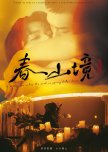
A Winter Sun Wakes the Wind in Spring Hills’ Dream — Between Private Love and Public Silence
I really loved A Winter Sun Wakes the Wind in Spring Hills’ Dream. Not simply because the romance worked for me, but because it is one of the rare Chinese BLs willing to look directly at the contradiction surrounding gay life in China without reducing the country to either “everyone is homophobic” or “everything is fine.” Feng Qinglang is a famous actor who falls for Xu Changyang, a tea maker from a wealthy family in Yunnan, but their relationship quickly becomes about much more than celebrity meeting civilian. It becomes a story about what can be accepted privately, what can be acknowledged publicly, and how different those realities can be.That distinction interested me most. Xu Changyang’s father can respect his son’s relationship while warning Feng Qinglang that the real danger will come from public scrutiny and the media. The obstacle is not that nobody can imagine two men loving one another. It is that accepting that love around a family table is very different from allowing it to become part of a family’s public identity, an actor’s commercial image or a socially recognised future.Research on LGBTQ attitudes in mainland China reflects some of that contradiction. Personal acceptance is higher than outsiders often assume, while same-sex marriage remains unrecognised and family pressure to marry and continue the family line is still real. Marriage can involve parents, reputation, grandchildren and the joining of two families, not only two people choosing each other. Understanding that does not make the pressure fair, but it explains why the drama never treats acceptance as simple.
The series becomes even sharper when it moves into the entertainment industry. Feng Qinglang does not entirely belong to himself: his face, relationships and the way fans imagine his romantic life have commercial value. That is why the obsessive shipper was so interesting. She is so invested in her favourite actor’s fictional ship that discovering her own brother is genuinely involved with one of those men becomes unacceptable. She supposedly loves the actor, yet she will hurt the real person to preserve her fantasy. Even her brother’s happiness becomes less important than the couple she wants to consume. That is one of the ugliest sides of parasocial fandom: admiration can turn into ownership. The celebrity is no longer allowed to love whomever he chooses because his private life interferes with the product the fan wants. She is even willing to damage the reputation of the actor she claims to support in order to “protect” his ship. The drama understands that extreme fandom is not necessarily love. Sometimes it is control disguised as affection.
The entertainment-industry story works for the same reason. A closeted actor does not simply have a secret boyfriend; he has information that can affect contracts, endorsements, fandoms and family reputation. Secrecy gives power to anyone capable of exposing him. Where public representation of male-male romance is restricted, that gap between private truth and public image becomes especially meaningful.
What I particularly appreciated is that Feng Qinglang and Xu Changyang are not written as idiots once those pressures arrive. BLs often create conflict by making two supposedly intelligent adults suddenly incapable of having one conversation. Here, distance between them sometimes has a purpose. They step away because making the relationship more visible at a particular moment could hurt one another or their families. Loving someone does not always mean standing dramatically beside them while the world burns. Sometimes protecting the relationship means waiting until the noise dies down. That made their love feel much more adult to me. Every attempt to separate them ultimately fails because the relationship is not based only on attraction. They repeatedly act with the other person’s interests in mind. They protect each other, protect their families and, when necessary, accept distance. Temporary separation therefore does not mean their love has weakened. It becomes another way of maintaining it. I also loved how the physical relationship was handled. There is skinship, desire and intimacy, but the series never seems desperate to prove it is “really BL” by showing more. A look, a touch or simply waking up together can tell us what happened when the camera was not there. The restraint made some scenes more intimate because the viewer can imagine what remains outside the frame. Their love is always clear even when it cannot always be displayed completely.
The deaths were equally important because they prevented the beautiful mountain romance from becoming an artificial safe world. Xing Lan’s road accident brutally changes Qinglang’s emotional life. The other gay relationship was even harder for me. A man has to cope with his lover being left in a coma while the lover’s family directs blame toward him, as if their relationship itself caused the tragedy. That kind of grief can become poisonous because bereavement and guilt start feeding one another. Finding someone else afterwards does not magically cure that. Someone can genuinely care for another person and still remain attached to a dead or unreachable first love. Trauma is not infidelity, and grief does not disappear because enough time has passed or because someone kinder arrives. The tragic end of that storyline is painful precisely because love was present around him and still could not remove the guilt he carried. That darkness makes the central couple’s ending more valuable. This is not a universe where love automatically saves everyone. Some people die. Some people arrive too late. Some wounds remain. Qinglang and Changyang surviving one another’s world therefore feels earned rather than guaranteed simply because they are the leads.
The acting helped enormously. Xiong Yiwen, Kuma, makes the difference between public celebrity and private man visible in his body. When Qinglang is “on,” there is control; in the mountains, that control gradually loosens. Liu Jingyu works beautifully in the opposite direction. Xu Changyang feels rooted, calm and connected to tea, land and family, so he never needs to compete with Qinglang’s star persona. Their contrast strengthens the relationship. The production deserves just as much credit. The mountains are not decorative wallpaper. The tea-growing villages, real paths, old buildings, weather and open landscapes become part of the emotional language of the story: the place where Qinglang can stop being a commodity and simply exist. The camera lets those places breathe. Sometimes the characters are simply small human figures surrounded by something much larger than themselves. That is filmmaking, not just pretty scenery.
Then came that ending. After everything the outside world placed between them, returning to the mountains was exactly where Qinglang and Changyang needed to finish. Their relationship began in a place where Qinglang could temporarily abandon his public identity, so finding one another there again transforms the landscape from an escape into a home. They are no longer hiding because they cannot face reality. They have faced it, survived it and finally chosen what remains when the noise disappears. I also loved that the drama actually ended. No mysterious phone call, no new enemy watching from a car, no last-minute suggestion that another season is needed. The story completes the emotional journey it started. Sixteen episodes were worth it because they actually led somewhere.
Final Thought
I hesitate to say that A Winter Sun Wakes the Wind in Spring Hills’ Dream shows “the true China,” because no drama can show the true face of a country containing more than a billion people. But it does show a much more interesting China than the two caricatures we are often given from outside. China is not a country where every ordinary person automatically hates gay people. Nor is private tolerance the same thing as equality. A father can accept his son and still fear what society will do to him. Friends can know. Gay and lesbian people can love, work and live ordinary lives while marriage remains unavailable to them. An actor can be surrounded by people who privately understand him while his career still depends on the public never knowing the same truth. That is why I think this drama matters for Chinese BL. It does not need explicit sex to prove that Qinglang and Changyang are lovers, and it does not turn them into “bros” while expecting the audience to decode a censored romance. They love each other. The series knows it, the characters around them know it, and we know it. What becomes complicated is not whether the love exists but where that love is permitted to exist. Behind closed doors, around a family table or high in the mountains, their relationship can simply be love. The moment cameras, reputations, fandoms, careers and social expectations enter the room, the same relationship acquires consequences. Yet none of those forces ultimately manages to redefine what they are to each other.
The scenery was extraordinary, the romance was beautifully framed, the intimacy was restrained without becoming cowardly, grief was allowed to remain painful, and the entertainment industry was shown as something capable of creating dreams while simultaneously imprisoning the people whose faces sell them. Then, after sixteen episodes, the drama had enough confidence to put its characters back on top of those mountains and simply let their story be complete. For me, that makes A Winter Sun Wakes the Wind in Spring Hills’ Dream not only one of the best Chinese BLs I have watched, but one of the most complete.

A Dog and a Plane — Sometimes Familiar Isn't Enough
I've followed Tay and New for almost ten years. Like many people, I first discovered them through Kiss the Series, long before BL became the phenomenon it is today. Since then, I've watched countless variety shows, YouTube videos and dramas featuring them. What has always made TayNew special isn't simply their chemistry. It's how different they are. Tay is naturally funny. Everything about him feels spontaneous, whether he's filming a series or simply appearing on a variety show. New, on the other hand, is much quieter and more reserved. Those completely opposite personalities have always balanced each other perfectly, and it's one of the reasons they became one of GMMTV's most iconic couples.A Dog and a Plane doesn't try to change that formula. In fact, it almost embraces it too much. Their characters feel incredibly close to the personalities they've been playing together for years. That's not necessarily a criticism because both actors remain as likeable as ever, but after a decade of watching them, I was hoping to see something that challenged them a little more. The acting certainly isn't the problem. Tay is as charming and effortlessly funny as always, while New continues to bring a calmer energy that complements him perfectly. Their chemistry remains completely natural, and it's easy to understand why audiences still enjoy watching them together after all these years. What has changed, however, is the image of the couple itself. New has visibly become much more muscular over the years, while Tay still has the same slimmer and softer appearance that fans know so well. Yet their dynamic never really evolves. The series continues to present Tay as the dominant partner and New as the more passive one, exactly as it has done for years. There's nothing wrong with that dynamic in itself, but after so many projects together, I couldn't help wishing the writers would surprise us by reversing expectations or exploring a different balance between them.
Another thing I noticed is how much their romantic scenes have changed. Today, both actors are in their mid-thirties, and compared to many newer BL couples, their intimacy is much more restrained. The relationship is almost entirely expressed through kisses and affectionate moments rather than physical passion. That isn't necessarily a weakness because not every BL needs explicit intimacy, but it does contribute to the feeling that the series never wants to leave its comfort zone. Ironically, the person I expected to challenge that comfort zone was Jojo Tichakorn Phukhaotong. After directing series such as 3 Will Be Free, Never Let Me Go, The Warp Effect and Only Friends, Jojo has built a reputation for pushing relationships into morally complex or emotionally risky territory. That's exactly why A Dog and a Plane surprised me. Instead of feeling bold, it feels unusually safe.
Comedy is clearly the priority. The problem is that comedy also needs drama. The funniest stories usually work because genuine emotional stakes exist underneath the jokes. Here, I kept waiting for those moments to arrive. I expected more from the accident. I expected the ex to create real emotional conflict. I expected situations that would genuinely test the relationship before allowing the comedy to take over again. Instead, everything remains relatively flat. The result is a pleasant series that never becomes memorable.
As much as I love Tay and New, I found myself enjoying them more than the story itself. That has happened to me before with some of their non-BL projects as well. I've never been particularly attached to the straight characters they play, even though I genuinely enjoy watching them as people. That's why I'm especially curious to see them in Scarlet Heart Thailand. With so many established BL actors appearing in one of GMMTV's biggest upcoming productions, I hope the script proves that the casting wasn't simply designed to attract existing fandoms. Great actors deserve great stories.
Final Thought
I don't regret watching A Dog and a Plane. Tay and New remain one of GMMTV's most lovable partnerships, and after almost ten years together it's impossible not to smile watching them share the screen again. Unfortunately, this time their chemistry carries a story that never reaches the same level. It's an enjoyable BL comedy, but one that plays everything surprisingly safe. I laughed, I smiled and I enjoyed spending time with the characters, yet when it ended I never felt the urge to immediately watch it again or add the DVD boxset to my usual GMMTV collection. For two actors I've followed for nearly a decade, I simply expected something a little more ambitious.

The Next Prince — Spectacular to Look At, but Miscast Where It Mattered Most
There is no denying that The Next Prince is one of the most ambitious BL productions Thailand has ever made. The budget is on another level. The costumes are magnificent, the locations are breathtaking, the orchestral soundtrack gives the series a cinematic feeling, and every frame looks expensive. The production team even filmed scenes in London instead of relying on stock footage, created nearly one hundred costumes for Khanin alone, and trained the cast in fencing, archery, piano, and royal etiquette to make the fictional kingdom of Emmaly feel believable. It shows. This is probably one of the most visually impressive BLs ever produced.But beautiful visuals can only carry a story so far.
The original novel by Ceo ft. Ennice is actually much shorter than the series. Because of that, the screenwriters had to expand the plot to fill fourteen episodes, adding political intrigue and new storylines that weren't fully developed in the source material. Unfortunately, you can feel it. The pacing often becomes uneven, with long stretches where very little actually happens. Instead of building suspense, the series sometimes feels like it's admiring its own production design.
My biggest issue, however, is the casting.
I've never really been a fan of NuNew as an actor. He's an excellent singer, and his popularity is undeniable, but acting is a different skill. Khanin is supposed to evolve from an ordinary young man into someone capable of becoming a ruler, standing against centuries of tradition while surviving political conspiracies and assassination attempts. That journey requires visible growth.
I never really saw it.
NuNew plays Khanin almost exactly the same way from beginning to end. His naturally delicate mannerisms work perfectly in lighter romances like Cutie Pie, but here they constantly reminded me that I was watching NuNew rather than a future prince. Khanin needed to become stronger, more confident, more commanding. Instead, he often remained soft-spoken and emotionally dependent, even during moments that should have established him as a leader.
The same applies to Zee Pruk.
I like Zee as an actor, but Charan never convinced me as the kingdom's most feared royal bodyguard. He's handsome, charismatic, and physically fit, but his natural elegance sometimes works against the role. When I think of an elite protector trained to kill without hesitation, I imagine someone whose presence alone makes people step back. Zee's version of Charan feels more like the perfect romantic lead than a battle-hardened royal guardian.
Ironically, that's why the supporting cast often stole the show for me.
Net, JJ, Jimmy, Ohm, and especially Kris Charintip brought a different energy whenever they appeared. They had less screen time, yet many of them felt more believable within this political world. Kris, in particular, has an undeniable charisma that made every scene she appeared in more interesting. I often found myself wishing the story would spend more time following these characters instead of returning to the main couple.
The chemistry between Zee and NuNew is still there. After several projects together, it's impossible to deny how comfortable they are with each other. Their romantic scenes feel natural, and it's easy to understand why they're one of Thailand's biggest BL pairings. But chemistry alone cannot solve a casting mismatch. A believable romance doesn't automatically create believable characters.
One aspect I genuinely appreciated was the directing. Aoftionz Kittipat Champa clearly understood the scale of the project. The action scenes are well choreographed, the political atmosphere is convincing, and the visual storytelling is among the best Thailand has produced in the BL industry. Every kingdom feels distinct, the fencing sequences are elegant, and the series often looks more like a fantasy film than a television drama.
Still, I kept asking myself the same question throughout the series.
What if the roles had been cast differently?
What if Khanin had been played by someone with a stronger commanding presence? Someone like Pond Ponlawit, Jimmy Jitaraphol, or even one of the newer actors who naturally project quiet authority. What if Charan had been portrayed by someone whose physicality immediately sold the image of an elite warrior rather than relying on the audience's affection for Zee?
I honestly believe this could have changed my entire opinion of the drama.
Final Thought
The Next Prince is a technical masterpiece. The production is extraordinary, the cinematography is stunning, the costumes are spectacular, and the amount of work invested in creating Emmaly deserves enormous respect. But for me, casting is just as important as production value. I never completely believed NuNew as a future king or Zee as the kingdom's deadliest bodyguard. Their popularity and chemistry made the romance work, but not the characters themselves. In the end, I admired The Next Prince far more than I loved it—and for a story built on emotion and destiny, that's a significant difference.

Love at First Spike — When “BL” Becomes a Marketing Lie
This is not a BL. Calling this series a BL because there are gay characters around a straight protagonist is misleading. BL means Boys Love. Here, the main character is heterosexual, openly in love with a girl from beginning to end, and never emotionally or romantically engages with another man. Representation is not decoration. Queer characters are not background furniture.A Red-Flag Protagonist Without Growth
From the first episode to the last, the protagonist is written as aggressive, ego-driven, and emotionally violent. He does not grow. He does not learn. The script never truly questions his behavior, it excuses it. The story asks us to sympathize with him, but gives us no reason to. When a character remains toxic without consequence, the narrative becomes complicit.
The Cousin Is Not the Villain
Many viewers condemn the cousin for “betrayal.” I don’t. She is trapped in the same emotional conflict, and while honesty would have been the right choice, silence does not justify what happens to her afterward. Her actions come from fear and confusion, not malice. The real problem is not what she did: it is the emotional environment that made truth feel unsafe.
A Story With Nothing New to Say
Beyond the misleading label, the drama offers no fresh perspective. Its conflicts are predictable, its emotional arcs underdeveloped, and its message unclear. It does not challenge. It does not transform. It does not stay with you.
Final Thought
Love at First Spike is not offensive because it is bad. It is disappointing because it pretends to be something it is not. And in doing so, it wastes both its characters and its audience.

Let Me Hear It Barefoot — Choosing Safety Over Love
I never understood the outrage about the ending. To me, it felt honest. This is not a tragic movie. It is a quietly realistic one. Like many Japanese queer stories, Let Me Hear It Barefoot is not about fighting society. It is about learning how to survive inside it.Two Men, Two Invisible Prisons
Yanase Maki is openly gay, gentle, and emotionally strong. He cares for his blind grandmother, Midori, who dreams of seeing him travel to America. To comfort her, he creates ASMR recordings that allow her to “see” the world through sound. It is already a lie told out of love.
Ari Naomi is trapped by his father, Tamotsu, a gambler who drains his son financially and emotionally. Naomi is constantly under threat, not just physically, but socially. He cannot build a future because his past follows him everywhere. They meet through sound. They connect through silence. They fall in love in the only safe space they have.
Love That Cannot Be Protected
Naomi wants to escape. He saves money. He dreams of starting again with Maki. But when his father’s debts catch up to them, violence follows. Naomi loses everything: his savings, his freedom, and his sense of worth. In prison, he chooses to push Maki away, not because he stopped loving him, but because he believes love will only destroy him. The dialogue is subtle, almost cold. But the meaning is clear to those who read between the lines. This is not rejection. It is sacrifice.
Why He Chooses a Woman
When Naomi leaves prison, he chooses a woman. Not because he is no longer gay, but because he is tired. Tired of fear. Tired of instability. Tired of fighting. In Japan, a criminal record already makes life difficult. Being openly gay makes it harder. Naomi chooses safety over authenticity. Like many people do.
The Meaning of the Ending
The final scene mirrors the opening: two cars passing, two lives moving forward in parallel, never touching again. Maki looks calm. Naomi looks haunted. They loved each other. They just did not choose the same life.
A Story About Pretending
Everyone in this film is pretending: Maki lies to his grandmother to give her peace. Naomi lies to himself to survive. Society pretends love is simple. This is not about homophobia. It is about parental and social control over personal happiness.
Final Thought
This is not a fairy tale. It is a mirror. And sometimes, the truth is quieter than we expect.

The Shipper — When Fantasy Meets the Cost of Reality
Many people watched The Shipper only for the BL pairing. And that is exactly why so many people rejected it. This drama is not here to fulfill fan fantasy. It is here to question it. And that is what makes it uncomfortable. And, in my opinion, meaningful.This Is Not About Shipping. It Is About Projection
From the start, the drama places us inside the head of someone who projects a story onto two boys. We build a romance that exists only because we want it to. We imagine feelings, moments, futures, without knowing who these people really are. And then the series slowly removes the fantasy. Not by mocking it, but by confronting it with reality. We don’t just discover who the main boy was. We discover who he was and who he was not. The good. The selfish. The fragile. The mistakes. This is what hurts.
The Cruel Truth: He Was Already Gone
The biggest twist is not that he dies. It is that he was dead from the beginning. Everything we witness is already memory. Already regret. Already too late. Every confession, every realization, every moment of clarity comes after the accident. The people around him only learn how much he meant to them when there is no one left to hear it. This is not tragedy for shock. This is tragedy as message.
What the Drama Is Really Saying
This is not about BL vs straight love. It is about timing. About how people wait too long to say:
- “I love you.”
- “I forgive you.”
- “I’m proud of you.”
- “You mattered to me.”
We wait until it is safe. Until it is perfect. Until it is too late. And The Shipper forces us to face that.
Why the Ending Had to Be This Way
A happy ending would have betrayed the entire meaning of the story. This is not a romance to be consumed.
It is a lesson to be lived. It tells us:
- Don’t dream about the lives of others.
- Don’t write stories for people instead of knowing them.
- And don’t delay love.
A Final Note on First
First Kanaphan is magnetic here. There is a sincerity in his performance that makes the emotional collapse feel human, not dramatic. This role is one of the reasons he became so loved today — and he deserved that recognition.
Final Thought
The Shipper is not what you expected. But maybe it is what you needed. Because sometimes, stories are not meant to please us. They are meant to wake us up.
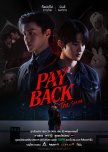
Payback — When Sex, Power and Revenge Share the Same Currency
I have watched many BLs advertise themselves as revenge dramas, only to forget about the revenge as soon as the romance begins. Payback never makes that mistake. It is one of the strongest revenge BLs I have seen in a long time because the love story does not interrupt the darker plot. Sex, ambition, corruption and revenge are all part of the same system. The Thai drama adapts the Korean Payback manhwa by samk and Fujoking, with Lee Yoohan becoming Sun while Yoon Jay retains his name. Sun enters the entertainment industry after learning the truth about the betrayal and death that destroyed his family, while Jay secretly holds considerable influence inside the company and offers the access Sun needs to complete his revenge. The official uncut version is rated for adults, and that tone is evident throughout the production.What interested me most was the way the series presents sex as another form of currency. Powerful people can exchange roles, protection and professional opportunities for access to someone’s body, while young performers are left trying to decide whether they are consenting or simply accepting what appears to be their only route forward. The explicit scenes are therefore not unnecessary additions created only to attract BL viewers. They are part of the corruption the story wants to expose. At times, the series is almost soft pornography, and with Min Thanakorn I honestly did not mind. The production is clearly aimed at a young-adult-to-adult audience, and pretending these characters exist inside an innocent romantic world would have weakened the story. The sex scenes are physical and erotic, but they also reveal who holds power, who is trying to regain control and who sees every relationship as another transaction.
The entertainment industry depicted here may appear exaggerated, but its basic mechanisms are not difficult to believe. The Harvey Weinstein cases and the wider #MeToo movement showed how powerful people could connect professional advancement with sexual access, silence and fear of retaliation. Even years after the movement became internationally visible, industry research continued to show that many workers doubted powerful offenders would actually face consequences. What makes Payback particularly interesting is that it places male performers inside that system. It is already extremely difficult for women to admit that someone exploited their ambitions or professional vulnerability. For men, expectations surrounding masculinity, strength and supposedly constant sexual willingness can create additional shame and make disclosure even more difficult. Research into male sexual victimisation repeatedly identifies stigma, fear of disbelief and masculine stereotypes as barriers to reporting.
The series places that discomfort directly in front of the viewer. These men are not only selling performances, faces and carefully constructed public identities. They are surrounded by people who believe their bodies can also become part of the business agreement. This is not a romance filled with hearts and flowers; it is a revenge story set in a world where intimacy, ambition and exploitation have become almost impossible to separate. Comparing the live-action adaptation with the manhwa makes the strengths and weaknesses of the casting much clearer. Min is remarkably close to how I imagine Lee Yoohan in reality. Fujoking’s Yoohan is lean, sharp-featured and emotionally guarded, carrying guilt and anger without constantly displaying them. Min has that same controlled coldness, making Sun appear as though every movement has been considered before anyone else enters the room.
Min Thanakorn is also incredibly beautiful, but his appearance is honestly the least important part of what he achieves here. His performance reminded me of the cold, brilliant investigators often found in Chinese police dramas: men who rarely show emotion but always seem to understand the situation before everyone else. Sun’s revenge never feels impulsive because Min makes it look like something he has carried, studied and refined for years. He understands how to act through stillness. He rarely needs to raise his voice or create exaggerated expressions because his eyes, posture and breathing already tell us what Sun is thinking. The same control makes the explicit scenes work. Min does not simply rely on nudity or choreography to make them erotic; the desire begins in his face and body before anything physical happens. At 26, Min already has extensive performance experience through idol training and televised competition programmes, and that familiarity with cameras is visible in the precision of his close-ups. Payback proves he is not simply a performer trying acting as another career extension. I can easily imagine him succeeding in crime dramas, psychological mysteries and films where a character’s intelligence or danger must be communicated without constant dialogue.
Toptap’s casting becomes more complicated when compared directly with Yoon Jay from the manhwa. In Fujoking’s artwork, Jay is broader, more physically imposing and visibly more mature than Yoohan. He carries himself with the relaxed arrogance of someone who knows he owns the room, while his smiles can feel playful, possessive or vaguely threatening depending on what he wants. The original Jay is not merely a rich sponsor who helps Yoohan. He is unpredictable, shameless and slightly frightening, with enough power that the reader can never be completely certain whether he will protect Yoohan or become another danger Yoohan must survive. The licensed novel even introduces him as an eccentric man whose apparently ridiculous behaviour hides much more dangerous secrets. Toptap is 22, while Min is 26, and the difference matters because the younger actor was asked to embody the older, more experienced and powerful character. Toptap is handsome and performs the emotional and intimate scenes well, but his naturally softer presence rarely communicates the physical or psychological authority associated with the original Jay. His age and youthful screen image are documented even though DramaBL’s profile had not yet incorporated that biographical information.
This concern was already visible among readers when the casting was announced. Several fans questioned the missing height difference, Jay’s younger appearance and the absence of the intimidating, imposing aura established by the manhwa. After watching the completed series, I understand exactly what they meant. The adaptation effectively reverses part of the original visual power dynamic. Min looks like the more mature, dangerous and controlled man, while Toptap often appears like the softer partner standing beside him. That does not destroy their chemistry, but it changes Jay’s position in the story. Instead of feeling like an unpredictable force capable of overpowering Sun, he sometimes feels more like Sun’s lover and financial supporter. Someone such as Ngern Anupart or Net Siraphop might have created the mature, physically dominant presence associated with the webtoon character more immediately. Even Boss Chaikamon appeared more threatening during several scenes than the man supposedly controlling the entire entertainment company. Toptap was not bad, but Min’s authority was so strong that Jay struggled to feel like his equal. That imbalance gradually transformed the whole series into Sun’s story. Everyone else felt like a supporting character attached to his revenge, while Jay mainly became the man closest to him and the person sharing his bed. This is quite different from the manhwa, where Yoohan and Jay generate tension because both men are dangerous in completely different ways.
Shogun Paramee provided some necessary softness and remained as naturally charming as usual. His presence prevented the production from becoming emotionally exhausting without undermining its adult tone. I am now even more curious to see him in Not Yours, whose international uncut premiere is scheduled for September 26, 2026.
The adaptation may not reproduce every part of the original character balance, but it understands why the revenge story works. It keeps Sun’s guilt, determination and complicated relationship with punishment at the centre rather than reducing the webtoon to sexual scenes. The explicit content receives considerable attention, yet the production never completely loses the corruption, betrayals and professional power games surrounding it.
Final Thought
Payback understands that a successful revenge drama cannot become afraid of its own darkness. It uses the BL relationship as part of the corruption rather than an escape from it, asking whether desire can ever be completely free when careers, money and influence control every decision. The comparison with the manhwa also explains why the casting produces such an uneven result. Min captures Lee Yoohan’s appearance, coldness and internal control remarkably well, while Toptap softens Yoon Jay into a younger and less intimidating figure. Their physical chemistry works, but the dangerous balance between the original characters becomes far less convincing. Fortunately, Min is powerful enough to carry the entire adaptation. He makes Sun’s revenge feel more important than every other relationship surrounding him, while his beauty, restraint and extraordinary command of the camera turn an already strong character into the centre of the production. Payback is unapologetically sexual, morally uncomfortable and far more interested in power than conventional romance. Most importantly, it never forgets why its main character entered the entertainment industry in the first place.

Zantiis Miss You — A Travel Advertisement Disguised as a BL
There is nothing wrong with a BL being used to advertise a destination. Asia has been doing this for years, and BL is particularly effective at it because viewers become attached not only to the characters but also to the places where they fall in love. Research has even found that watching Thai BL can influence international viewers’ desire to travel to Thailand. I Told Sunset About You is probably one of the best examples of how well this can work: the story made Phuket part of its identity, and its success was later credited with bringing fans to locations around Phuket Old Town and Promthep Cape. The difference is that it was still a drama first and a beautiful advertisement for Thailand second. Zantiis Miss You reverses that balance. The real star of this series is Zantiis Ndol Villas. The resort is not simply a filming location; it gives the drama its name, becomes the property Sila secretly visits, and provides almost everything the series wants us to admire: the wooden buildings, stream, greenery, food, peaceful atmosphere and surrounding Muak Lek landscape. Contemporary on-air information even identified the hotel as funding the production. Whether we call it a travel BL, branded drama or an extended commercial with a romance attached, the purpose is difficult to miss. Again, I have absolutely no problem with that. If someone wants to make me spend eight episodes thinking, “That hotel looks beautiful, maybe I should stay there one day,” it can work. Product placement pays for countless BLs already. At least here the product is prettier than another bottle of collagen being held directly toward the camera. But you still need to give me a drama.Sila is an exhausted executive suffering from burnout and insomnia who hides his identity and visits his own resort as “Kin.” A booking problem places him with Tonnam, the friendly receptionist, and the peaceful environment and new relationship slowly begin to heal him. It is the rich, emotionally closed man meeting the warm ordinary person who teaches him how to live again, combined with forced cohabitation and a secret identity. None of this is new, but familiar stories can still be wonderful when characters make them their own. Unfortunately, Zantiis Miss You never develops enough personality to do that. The story feels unfinished because almost everything exists in its simplest possible form. A problem appears, a conversation happens, attraction develops, and the series moves on. There is very little emotional build-up between those steps. With only eight short episodes, most around ten minutes, the entire finished drama is barely longer than a movie. Yet even within that limited time, too much attention is spent displaying the environment rather than building the people living inside it.
That is where the travel-advertisement structure starts hurting the romance. A healing BL should make the viewer understand why this particular person becomes the place where another person can finally rest. Sila sleeping better beside Tonnam is a lovely idea. But an idea is not an emotion. We need conversations, uncomfortable silences, little discoveries about one another and moments where being together changes how they behave when they are apart. Instead, the relationship often feels like another activity included in the resort package. The second couple suffers even more because there simply is not enough material around them. Guide Piyawat and Nut Traipat are not complete newcomers who have never stood in front of a camera. Guide previously appeared in Secret Ghost, while Nut already had Our Days and Twins. Team Tatchanon also appeared in Twins, and Ryuki Napat had already worked in The Masked Hearts. There is therefore enough previous experience among these four actors that I cannot simply blame everything on an inexperienced cast. The acting is still weak in places, but actors need material and direction. When the dialogue gives them little subtext, scenes are extremely short and relationships jump between emotional points without enough transition, even competent performers can start looking unnatural. Chemistry becomes especially difficult because chemistry is not simply two attractive men standing close together. The audience has to understand why they want to be close. What surprised me most after checking the production was the director. X Nuttapong Mongkolsawas is certainly not someone learning how to direct BL. His résumé includes Theory of Love, Vice Versa, Cherry Magic Thailand and, very recently, Me and Thee. He has already demonstrated that he knows how to direct romance, comedy and actors with very different levels of experience.
That makes Zantiis Miss You more disappointing rather than less. I cannot know how much creative freedom he had on a small branded production, and it would be unfair to pretend that directing eight tiny sponsored episodes has the same resources or objectives as directing a major GMMTV series. But the finished result feels strangely mechanical for someone with his experience. It gives the impression that the production's first obligation was to photograph the location attractively and that the characters were fitted into whatever time remained. LoveMedia Thailand is also not completely new to BL. The company produced Twins in 2023 and currently has Swing Kick in its pipeline. Twins itself received a mixed reception: it sits at 6.8/10 on IMDb from just over 200 ratings, while viewer discussions repeatedly praised the actors but complained about slow pacing, plot holes and a rushed ending. Others genuinely enjoyed it and considered it underrated, so the evidence is mixed rather than universally negative. Still, storytelling and pacing were already the areas attracting criticism. Unfortunately, those are exactly the weaknesses I see again here. The landscapes are beautiful. The resort looks peaceful. The actors are attractive. The whole production successfully makes Thailand look like somewhere I would happily disappear for a few days. But I finished the series knowing considerably more about where I might like to sleep on holiday than why these characters fell in love.
Final Thought
A travel BL does not have to hide the fact that it is advertising something. Sell me the hotel. Show me the waterfall. Give me beautiful aerial shots, breakfast by the stream and enough scenery to make me open Google Maps before the episode finishes. I genuinely enjoy discovering places through dramas. Just give me a reason to care about the people standing in front of those landscapes too. That is what Zantiis Miss You never managed for me. Its romance is bland, its characters remain underdeveloped and the acting frequently feels weaker than the actors' previous work because there is so little for them to build upon. The premise feels like something that could have been created during a short marketing meeting: exhausted rich owner secretly visits beautiful resort, meets adorable employee, heals and falls in love. Done.
There was a perfectly acceptable BL hidden inside that idea. Burnout could have provided emotional depth, the secret identity could have created genuine conflict, class differences could have complicated the romance, and the resort could have become a meaningful symbol of the quieter life Sila actually wanted. Instead, most of those possibilities remain suggestions rather than developed stories. That is why calling it simply “bad” does not really explain my disappointment. It accomplished its advertising function rather well. I remember the villas, the scenery and the atmosphere. I just wish I remembered the love story with the same clarity.
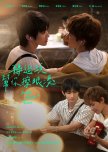
Smile After Tears — Beautiful Ideas, Missing Emotions
Taiwan has produced some of my favorite BLs over the years. Whether it's We Best Love, See Your Love, Plus & Minus, Be Loved in House: I Do, or The On1y One, Taiwanese productions have a unique way of making emotions feel genuine. That's exactly why I was looking forward to Smile After Tears. The premise had everything I enjoy: first love, music, fantasy, grief, and a director, Chiang Ping Chen, whose previous BLs I have loved. Unfortunately, this is one of those rare Taiwanese BLs that left me emotionally disconnected. The story itself was never the problem. A romance interrupted by death, with one character trying to help the person he loves move on from the afterlife, is a beautiful concept. It's also a theme we've seen in several BLs before. Whether through reincarnation, ghosts, or unfinished goodbyes, many series have explored the idea that love can continue after death. Smile After Tears doesn't reinvent that formula, but it didn't need to. What mattered was making me feel the loss.Sadly, that's where the series struggled the most. Death should completely change the emotional atmosphere of a story. Here, it almost feels like another plot point. The characters cry very little, the grief comes and goes incredibly quickly, and before I had time to process what happened, the story had already moved on to the next scene. Instead of allowing silence, sadness and absence to settle, the editing constantly pushes the narrative forward. As a result, I never truly felt the weight of losing one of the main characters.
Brian Cheng's character also made that emotional journey more difficult for me. I understand why he exists in the story. Loving someone since childhood while knowing that person loves someone else could have added another layer to the grief. Instead, I often found his presence frustrating. Rather than helping me experience Jun Jia's loss, his storyline repeatedly pulled my attention away from the emotion I was supposed to be feeling. That also affected Chang Junjia's performance. At first, I wondered if he simply wasn't expressive enough. But the more I watched, the more I realised I don't think the acting was the real issue. I actually believe the problem came from the directing and especially the editing.
There are moments where Chang Junjia clearly shows pain. He cries, he breaks down, and you can see the emotion is there. The problem is that those moments rarely last. The series cuts away so quickly that the audience never has time to stay with his grief. A few minutes later, he's smiling again, continuing his daily life, and the emotional impact almost disappears. Because of that, the title itself started to lose its meaning for me. A smile after tears should feel earned. It should represent healing after a long journey through grief. Here, the smile often arrived before I believed the tears had even ended. Instead of seeing someone slowly learning to live again, I sometimes felt as if Jun Jia simply accepted everything far too easily. He kept telling us how much he missed Yan Kai, but I rarely felt that longing through the way the story was edited.
Ironically, that's what disappointed me the most. This wasn't a script problem. The ideas were all there. The fantasy element works, the relationship between the leads is sweet, and the music naturally connects the different stages of their story. Even the production remains beautiful from beginning to end, something I've come to expect from Chiang Ping Chen's work. Considering he previously directed series such as Be Loved in House: I Do, Plus & Minus, See Your Love and Secret Lover, I honestly expected the emotional pacing to be much stronger.
Final Thought
Smile After Tears isn't a bad BL. In fact, I actually liked it. It has a touching premise, a lovable cast, beautiful cinematography and several genuinely heartfelt moments. But when a story is built around love, loss and learning to smile again, the audience needs time to grieve alongside the characters. Unfortunately, the series never allowed me to stay in those emotions long enough. Instead of making me cry with its characters, it simply showed me that they were sad before quickly asking me to move on. That's why, despite enjoying the story overall, I never connected with it as deeply as I hoped I would.
The Boy Next World: My Destiny — Japan Does It Better Again
The Japanese adaptation is simply much better than the Thai version. Better cast, better writing, and a much more convincing romance. Once again, Japan proves that a smaller budget doesn't automatically mean a weaker drama. Sometimes, it produces something that feels much more authentic than a larger production.The story benefits enormously from the adaptation. The emotional moments have more impact, the pacing feels smoother, and the relationship develops in a much more believable way. Rather than trying to impress with bigger production values, the series focuses on what really matters: the characters and their emotions. That's exactly what I wanted from this story.
The cast is another major improvement.
One thing I appreciated immediately is how natural the two leads feel together. They don't look like they're trying to convince the audience they're in love. They simply look comfortable with each other, both on and off screen, and that sincerity makes the relationship much easier to believe. It's the same feeling I had while watching the Japanese version of Love in the Air. There is a level of authenticity that I personally don't always find in other adaptations.
That's also why I find it unfortunate that Japan's LGBTQ+ entertainment industry remains much more discreet than Thailand's. Even so, the actors here project a confidence and comfort that make the romance feel genuine instead of performed. Whether that's through their chemistry, their acting style, or simply the direction, the result feels incredibly natural.
The production itself is another reminder that money isn't everything. The series may not have the biggest budget, but the direction, the writing, and the performances constantly compensate for it. Rather than trying to compete through spectacle, it succeeds through simplicity and emotional honesty.
Final Thought
The Boy Next World: My Destiny is another example of why I enjoy Japanese adaptations of MAME's novels so much. They may look simpler on the surface, but they often understand exactly where the emotional strength of the story lies. For me, this version improves on the Thai adaptation in almost every important aspect, making it one of the strongest Japanese BLs of the year.


