




This review may contain spoilers
"I'm going back to the North..."♫
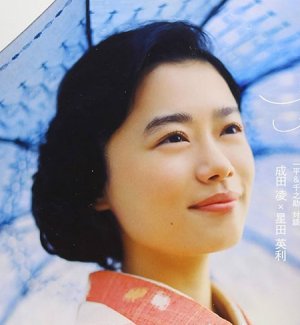
"Amachan" is the 24th asadora that I've watched. I hesitated to watch this one since it's SO popular. My track record with popular asadoras hasn't been so good. Thankfully, I was pleasantly surprised with "Amachan" and ended up really liking it. It's an interesting blend of comedy and high drama, when asadoras (particularly popular ones) usually go for the big historical epic vibe. However, it is not without its faults. Warning for small spoilers of the endingNon is really sweet as the heroine Amano Aki, and I liked her 99% of the time. But... She can be annoying sometimes with her denseness and naïvete, which is mostly played for laughs. I would also say that her motivations are kind of weak. She wants to be an ama because she likes diving; she wants to be an idol because she likes singing and making people smile. I understand that this is in fact part of her character, but I think her weak motivations is probably why viewers don't like the idol arc of the asadora as much. Anyway... I consider Aki's mother and grandmother, Haruko (Koizumi Kyoko) and Natsu (Miyamoto Nobuko), to be the second and third heroines of this asadora. Their performances are honestly perfect and their stories were executed perfectly. *Chef's kiss* Props also to Arimura Kasumi (later the heroine for "Hiyokko") for playing young Haruko.
"Amachan" also has the perfect cast of side characters. I know asadoras are known for their wonderful side characters, but "Amachan" is the first I've watched where I liked everyone. I felt like everyone had a well laid-out personality. Sometimes I have a hard time remembering characters in asadoras, but I never had that problem here. I particularly related to Yui (Hashimoto Ai), Aki's best friend who has a slightly twisted personality. Her arc isn't perfect, but I liked how it mirrored both Haruko's and Aki's experiences. Then there's Suzuka Hiromi (Yakushimaru Hiroko), an actress who can or cannot sing? [Lol I loved that they left that ambiguous at the the end.] I really wasn't expecting to like that character so much, but Yakushimaru plays her with the right amount of comedy and diva-ness. And, of course, there's every townsperson of Kitasanriku which is too many to name, but I will carry them within my heart from now on.
Now a couple of complaints. "Amachan" doesn't have much in the way of romance, which is fine but I've come to expect stronger romances in asadoras quite frankly. Aki's love interest Taneichi (Sota Fukushi) is kind of just there, and a lot of the drama around their relationship feels forced in my opinion. Especially when you think of Aki's age, though I guess she really is naive. My other complaint is that the music is repetitive. The opening is instrumental and can kind of feel like you're on an amusement park ride if you watch multiple episodes in a row. "Shiosai no Memory," sung by several characters, is nice but only made an impact once I heard it 10+ times. GMT's "Hometown" song I thought was terrible and I found it hard to believe that it was a hit lol. Other than that, I liked the frequent plugs of old 80s songs and Daikichi singing "Ghostbusters!" randomly.
A lot of asadoras explore the theme of "hometown," but I think "Amachan"'s exploration of this has become my favorite. Aki doesn't particularly like Tokyo, where she was born and grew up. She instead finds her "hometown" in Kitasanriku, where her grandma lives and her mother grew up. Therefore, your "hometown" is where you love to be and where the people you love are. Aki does return to Tokyo for a year and a half, but ultimately decides to pursue her dream of being an idol in Kitasanriku. Yes, she'll never become a superstar that way, but she'll get to stay in the place she loves with the people she loves. Honestly, I really love this sentiment. "Amachan" easily enters my top ten asadoras. I love it so much, even the idol arc ;)
My Asadora Ranking: https://mydramalist.com/list/LAlqpp21
Was this review helpful to you?
This review may contain spoilers
'Nice Play'
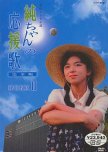
"Jun-chan no Ouen-ka" is my 4th asadora. I chose the drama since the fansubber had just finished subbing it at the time. You can find the subtitles over at d-addicts. "Jun-chan" was different from the previous asadoras I watched. The key difference being that Junko (played by Yamaguchi Tomoko) is an unambitious heroine. This is not bad, but it does mean that the series does not necessarily have a goal it's working towards. [Edit: This seems typical of '80s asadoras.] Junko instead focuses on taking care of her family through various ways. The drama therefore feels like more of a family/slice-of-life drama. I liked this kind-of easy-going pace, but I wasn't exactly on the edge of my seat after each episode to find out more.Besides family, "Jun-chan" has a secondary focus of baseball. It links to several of the series major characters and is also the source of the more emotional moments. I'm sure the third to the last episode will get to you too. I cried so much lol. Junko's brothers, Akira and Yuta, are the main ballplayers of the series. They are also two of my favorite characters in this asadora. There is a slightly awkward transition from where they are played by child actors to adult actors. However, I thought the adults were stronger actors so that makes up for it. I particularly liked the adult Yuta (played by Karasawa Toshiaki). Akira has a particularly pivotal moment that I won't spoil, but it sets the tone for the rest of the asadora.
The main storyline in "Jun-chan" is perhaps the romance between Junko and the Japanese-American, Shuhei (played by Takashima Masahiro). I thought these two had strong chemistry and they manage to stay interesting even after getting married. Some might find their back-and-forth a tad grating, but I liked it. It was really the only source of tension for much of the asadora. And the "Will you marry me?" scene was the best. Much of the latter half of the drama is about the couple working through their marital and child rearing problems. Considering their strong, stubborn personalities, I liked that the writers didn't opt for an immediate "happily ever after"-type marriage. Their relationship feels very realistic as a result.
Now addressing Junko. She's a very low-key heroine in some ways. Junko gets most of her satisfaction out of life by helping others whether it's doing the housework or supporting her family by working at a diner and later at an inn. However, she is not portrayed as being perfect. Junko actually has a bit of a martyr complex and is often stubborn. Her family and loved ones appreciate what she does for them, but aren't afraid to call her out every now and again. And I absolutely loved these moments. As a heroine, I found Junko very enjoyable to watch and never annoying. I'll remember her for her bright and never-ending perseverance.
To close out, I chose to title this review "Nice Play" after a pivotal moment in the series. It's used in baseball to indicate "good game" basically. However, one character points out that this could apply to life itself. Junko, her family, and friends each had a "nice play." I enjoyed nearly every minute of the series and I liked that the ending indicates that their lives will go on even after the story.
My Asadora Ranking: https://mydramalist.com/list/LAlqpp21
Was this review helpful to you?
Amazing
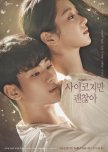
IOTNBO has definitely made it onto my favorites list. I loved it so much. Originally, I wasn't going to watch this drama. I saw the trailer and I didn't really seem like something I would be into. Cut to two weeks later, I was browsing mdl's calendar to see what was playing on my birthday. This drama was the only thing appealing and logistically also the only one I could catch up with. Then I saw a video on IG of Mun-yeong yelling at a deer lol. I could no longer resist and binged the first eight episodes of the drama. I absolutely LOVED it.My favorite theme of IOTNBO is healing. Seeing the main three characters gradually heal as well as the other patients just warmed my heart so much. Overall, the look, acting, characters, music, everything was perfect. I will definitely watch this drama again. Likely in the next two months or so. Short review since 200 people have already written ones before me.
Was this review helpful to you?

Just an average rom-com
I absolutely love rom-coms, which is drawing me more and more to Filipino movies. I watched "You're My Boss" because I loved Toni Gonzaga in "Starting Over Again." Her acting ultimately saved this movie for me. Don't get me wrong, it's not bad. It's just...average. It's the same rom-com you've seen fifty million times (i.e. it's full of cliches). Though this is not necessarily a bad thing, as long as you like predictable rom-coms. As for me, movies like this are my guilty pleasure so I enjoyed it.To quickly summarize the plot: Albert, Georgina and Pong's boss, goes on vacation and leaves her in charge. Georgina wants to redeem herself after an embarrassing viral video and will do anything to save the company's biggest account. This includes having Pong pose as the boss in order to win over Mr. Najimoto. Side note: was Mr. Najimoto supposed to be sexist? He just assumed Georgina was an assistant and wouldn't talk to her. Another note: I'm assuming the actor wasn't actually cause his English accent was over the top at times.
The second half of the film shows Pong and Georgina really falling in love. For this part, I would definitely say this is worth a watch. They are so cute together, especially the way Pong looks at Georgina when she's not paying attention. One last complaint: the ending was wrapped up too easily! I can't be the only one who thought this. Anyway, I would still recommend this to rom-com lovers even if you aren't seeing anything new.
Was this review helpful to you?
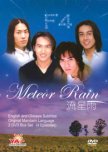
Mei Zuo's episode: takes place during "Meteor Garden", after Dao Ming Si and Shan Cai break up. I've always had a soft spot for Mei Zuo (Vanness Wu), so I loved seeing him as the focal point. In the episode, he meets a Japanese girl searching for her grandmother. He helps her search and gradually finds himself attracted to her. The story was very cute and my heart melted at the last scene.
Xi Men's episode: anyone who has watched "Hana Yori Dango 2" will remember Sojiro's storyline, this episode also covers that topic. Unfortunately, the second half of that story had not been written yet in the manga, leaving a somewhat unsatisfying conclusion in "Meteor Rain". In this episode, Xiao You (Rainie Yang) returns from Canada to see Xi Men. After he tells her about his first love, she decides to help ease his regret.
Dao Ming Si's episode: Si's story, which is sometimes split into two episodes, may be the most unnecessary of them all. My main problem with it is that it causes continuity problems. It is set before "Meteor Garden", but Si's hair is straight and he is not a complete a**. In the story, Si is on the run from the police, when he is found by a young girl. He stays with her and her father and forms a close bond. The series cannot be forgiven for the horrible ending to this story, but I'll leave that for you to watch yourself.
Overall, I think the series can only be appealing to die hard "Meteor Garden" fans. If this does not describe you, I would probably avoid it. I'd like to give a special mention to the music. The songs were all taken from F4's debut album and are still very catchy, despite being over fifteen years old.
Was this review helpful to you?
Cute and Fluffy
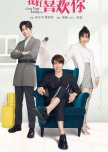
I've only watched a handful of Chinese dramas, but I've noticed an overall vibe from the ones I've seen. They're what I would describe as "cute and fluffy," meaning they make me smile and relax. Of course, "Count Your Lucky Stars" like any drama has its share of emotions. However, for the most part, the drama was just a nice escape. I would also recommend not going into this drama with too high expectations. It doesn't take itself seriously and you shouldn't either or you'll probably be disappointed.Jerry Yan and Shen Yue's chemistry was amazing! Honestly, when I heard they were going to do a drama together, I thought they were cashing in on Meteor Garden's popularity. I was pleasantly surprised. (P.S. I don't mind the large age gap, but you might. Fair warning.) I also enjoyed the side romances, though Ruru and Bao were dragged on a little too much while Wen Xi and Mu Yang happened at the snap of a finger! The second male lead was so wholesome. I really hope he gets a main lead in a drama. Another warning, Shen Yue's love rival was so annoying!
That's it cause I don't want to give away too much of the story. I recommend this drama if you're fans of Jerry Yan or Shen Yue. But remember to keep your expectations low! This isn't some revolutionary drama. It's just a cute, light drama to relax to. Also, it's very suitable for binge-watching.
Was this review helpful to you?

This review may contain spoilers
"I want to serve as a bridge between Hawaii and Japan."
"Sakura" is the 29th asadora that I've completed. I've been watching "Sakura" since @heart-ereki began fansubbing it last year. [A great, big thank you to them for subbing it!] I've really enjoyed watching it 2-3 weeks at a time. After watching it for so long, I feel quite attached to this asadora unlike ones that I've binge-watched so this review will be heavily biased [lol]. Oh, it might be a bit rambling..."Sakura" is a rare example of a nearly perfect modern day asadora. "Modern day" meaning that it takes place around the time that it aired. Modern day asadoras used to be popular, particularly during the early 2000s. Some examples are "Hitomi" and "Dondo Hare." In my opinion, these tend to be misses rather than hits. [This is also probably why NHK has moved to a more hybrid format like "Mare," which is set during the 1990s but also takes place during modern day.] "Sakura," thankfully, avoids all of the pitfalls of a modern day asadora. It keeps up its relaxing vibe without any drastic tonal changes. There aren't any supporting character that cause neverending frustration. And it keeps conflict to a minimum.
The asadora follows Japanese-American Matsushita Sakura (played by Takano Shiho) who comes to Japan to teach English at an all-boys middle school. Through Sakura, the asadora gives a lovely, nuanced take on identity. In the first week, Sakura's father tells her that Japan will always make her feel different for being American, despite being fully Japanese ethnically. And, yes, she goes through several culture shocks, though she's slowly able to "bridge" the gap through kindness and understanding. It's quite amazing to see the contrast between the beginning and the ending. Shiho is also the perfect actress to play Sakura. She is able to portray all of her emotions well and her English accent is great.
I really love how the asadora is structured. Each week has a new story sometimes focusing on a supporting character or expanding Sakura's character. Through Sakura's "meddling," we get to know more about characters like one of my faves, Sawada (Noguchi Goro). I also appreciate that certain storylines are given more time to develop. For example, the sweet romance between Sakura's grandmother Yoshiko (Tsushima Keiko) and her first love (Naito Taketoshi). While some storylines I'm grateful were wrapped within a reasonable amount of time, which includes the conflict between Sakura's mother Kyoko (Ohta Hiromi) and her grandfather (Kobayashi Asei). This is mostly to say that I think the storylines in "Sakura" were very well-paced.
As for the romance, it's very rare that an asadora wait so long to settle the main couple. However, considering it's Katsuragi (Ozawa Yukiyoshi), I think it was well worth the wait [lol]. I won't lie and say that the will they, won't they wasn't annoying at all, but the culminating moment in the final week convinced me it was worth it. As a character and love interest, I really like Katsuragi. He is given great character development on his own. Though there's obvious chemistry between him and Sakura, the drama is careful about not making it a romance until after Sakura and her fiance are broken up. [Shout out to Robbie and his actor Camus Thane! I loved him so much too.] When it does turn into a romance, all of the moments are perfect!
I highly recommend "Sakura" for all asadora lovers. I think it comes close to perfection, barring a few moments here and there. Overall, I think this asadora will stick with me for a long time and I know that I will rewatch it one day.
My Asadora Ranking: https://mydramalist.com/list/LAlqpp21
Was this review helpful to you?
This review may contain spoilers
"Why were you born? How will you live your life?"
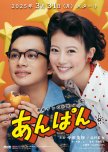
"Anpan" is my 38th asadora watched. I want to extend my sincere thanks to Irozukusubs for subbing this asadora. "Anpan" was a fun watch. The first two thirds of it is really solid, but I think it loses its charm/momentum in the third act. Let me explain... P.S. some major spoilers follow!"Anpan" is inspired by the lives of "Anpanman" creator Yanase Takashi (played by Kitamura Takumi) and his wife Komatsu Nobu (Imada Mio). For this retelling, their last names are changed to Yanai and Asada in order for NHK to take liberties with the story. The one major example being that Takashi and Nobu are portrayed as childhood friends, when they actually met as adults in real life. It's a mix of fact and fiction.
The first two thirds of the drama focus more on Nobu and her development as a character. She's very engaging and interesting. Starting off the series as a tomboy and then becoming a hardcore militarist during the War. Asadoras rarely show heroines being on the "wrong side" of history, so I liked this element even if Nobu was somewhat frustrating during this part. Takashi, if we're being honest, isn't given that much character development. He starts as a pure-hearted softie and ends that way. However, for that reason, it's hard to watch him going through his adolescent struggles and then the War.
It's strange to call World War II the highlight of this asadora, when it's usually the part I get tired of the most in asadoras. It's when Nobu is at her most interesting and tragic watching her come to terms her complicity as a grade school teacher. Takashi also really shines in this part with several episodes being dedicated solely to him as he goes through army training and then he's shipped off to China. Those episodes showing him starving on the battlefield are incredibly poignant and heartbreaking.
Following the War, Nobu and Takashi are reunited at a newspaper office. She then departs for Tokyo to work with a politician as shes searching for a "justice that can't be overturned." Takashi eventually follows and the pair marry. This is where the asadora falls victim like most "couple asadoras." Less is focused on Nobu's career and she really just becomes his support system as Takashi takes the main stage. This reminded me a bit of "GeGeGe no Nyobo" but it's frustrating since Nobu was such a strong character beforehand. Additionally, because Takashi doesn't actually start "Anpanman" until 1973, it feels like there's a lot of meandering as we watch him struggle to become a manga artist. He also had such a varied career that the focus seems to go everywhere to be honest.
Though the main characters are charming themselves, I had a lot of favorites among the supporting cast. I particularly loved Nanako Matsushima as Tomiko, Takashi's mother who abandons him. She plays the complicated woman so well, making her equally likable and unlikable. A special shout-out to Ninomiya Kazunari for playing Takashi's father for two poignant scenes. Kawai Yuumi is also amazing as Ranko, Nobu's middle sister. She's so good that I hope she gets her own asadora eventually. Hare Nanoka is adorable as the youngest sister Meiko, though the character becomes less interesting in the third act. As there are two many characters to talk about, I mention just a couple more. I also particularly loved Takashi's uncle (Takenouchi Yutaka), the absolute best; Takashi's friend and Army superior Yagi (Tsumabuki Satoshi); and lastly the newspaperman Shoji (TsudaKenjiro). There's lots more.
Rare for an asadora, the heroine is actually married twice which is actually true to life. Nobu marries Wakamatsu Jiro (Nakajima Ayumu) through an arranged marriage. Jiro is quite sweet, and though I wasn't a fan of the age gap, I felt quite sad when he passed away. Surprisingly, I wasn't that annoyed that Nobu and Takashi didn't get together until the last third of the asadora. I felt natural and their cuteness as a couple was worth the wait. I liked the other couples of the asadora, Ranko and Go (Hosoda Kanata), Ranko and Yagi, and Meiko and Kentaro (Takashashi Fumiya).
As a tribute to "Anpanman," it's a tad disappointing that it isn't focused on until the last five weeks or so of the asadora. I suppose it can't be helped, considering the real life circumstances. However, it significantly contributes to the unevenness of the last third of the asadora. At some point, you're just waiting for "Anpanman" to happen and it feels like a long wait. Despite this, "Anpan" is a good asadora with lots to love and enjoy. I waffled a bit between rating it 8.5 or 9, and settled on 9 because the first two thirds are really good. It won't go down as the best asadora, but I'm sure it'll bring many smiles and tears to those who watched it. I'm glad I watched it.
My Asadora Ranking: https://mydramalist.com/list/LAlqpp21
Was this review helpful to you?
This review may contain spoilers
"Our one piece of a lifetime"
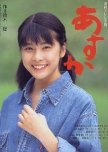
"Asuka" marks the 26th asadora that I've completed and the first for 2025. I'm happy that I saved this one for wintertime since it has weeks dedicated to Christmas and New Years'. For the most part, "Asuka" starts off very strong. Sadly, however, it's ruined towards the middle by an unnecessary love triangle. It does get exponentially better after the love triangle is solved, but it's hard to get back into it after that. This review will mostly be complaints about the storylines I didn't like.The drama is unique for an asadora in some of its storytelling and structure. It begins in its first week by telling the parents' love story. Kyoko (Konno Misako), whom is set to inherit her parents' confectionery, runs off from her betrothal ceremony to marry the head confectioner Rokutaro (Fujioka Hiroshi) instead. Of course, this is a big no-no in society at the time and leads to repercussions throughout most of the drama even what would be decades later. Kyoko was originally supposed to marry the son of Tahei (Kaneda Ryunosuke), an influential man in Kyoto. He seems to enjoy harassing her family from then on. I rather liked his antagonistic role in the story, even if it seemed a bit unreasonable at first.
After the parents' love story, we spend five weeks of episodes with Asuka (Enokizono Miho→Takeuchi Yuko) as a child. The aforementioned love triangle is set up here, but not really a problem yet. Asuka's childhood friends are Hayata "Professor" Shunsaku (Asari Yosuke→Fujiki Naohito) and Ayase Mai (Sugimoto Yuria→Sato Hitomi). Mai turns out to be her cousin through Asuka's wayward and often useless uncle Tamajiro (Umezawa Tomio). Asuka and her parents return to Kyoto to help the family's shop. Tamajiro later abandons Mai and her mother Hiroko (Natori Yuko) at the shop as well. Once they have grown up, Asuka decides to become a confectioner like her dad and Mai aspires to be an ordinary office worker.
The love triangle comes in full force when Shunsaku comes to Kyoto for college. I really think this is the worst part of the drama and really makes all the parties involved look terrible. Mai is in love with Shunsaku and knows that Asuka feels the same way. She, however, has no qualms in using her friend's loyalty against her and ropes Asuka into helping her get him. Asuka is a pushover and lets all of this happen. [I'm sorry but I can't feel bad for her over that.] Shunsaku is obviously in love with Asuka, but willingly goes out with Mai despite his feelings for her not being that strong. (This goes on for WEEKS of episodes btw.) Finally, after Mai and Shunsaku are engaged, she learns that Asuka and Shunsaku have been meeting behind her back. Nothing funny is going on, but she lost trust in both of them. [Not that I cared that much.] Mai, of course, takes this opportunity to act like a complete victim despite all the scheming and manipulation she has done. She starts dating Asuka's now ex-boyfriend Tetsuji (Inoue Charu) and they marry rather quickly. [It felt so rushed!] Though there are no obstacles, it takes several weeks of episodes for Asuka and Shunsaku to FINALLY get together.
I already hated Mai before the love triangle if I'm being honest. Her personality is terrible and she's always treating Asuka meanly. Near the end of the drama, she admits that she has always been jealous of Asuka which explains all of her behavior. However, after everything, I'm not sure how Asuka can even stand to be in her presence. Asuka is not an angel and made some mistakes, but Mai is just a manipulative b**** who only cares about her own feelings. I don't think she gets any better in the latter half of the drama either. As for Shunsaku, I don't understand how Asuka can be in love with such a wishy-washy man. I was really rooting for her to be by herself, but asadora heroines seem to always have to get married even when it goes against the asadora's "goal" [Asuka being a confectioner].
After abandoning Mai and Hiroko, Tamajiro returns to them several years later. He couldn't make himself successful with any of his ventures and now wants to take over the family business since it's now successful. I can't stand this man! He's so sneaky in the way he gets control of the business, nearly ruining Kyoko and Rokutaro's relationship in the process. He too admits to being jealous of Kyoko his entire life. Like father, like daughter I guess... Of course, Tamajiro runs the business into the ground, thanks in part to the 1980s bubble era. (I'll admit that it wasn't 100% his fault, but he should get most of the blame.) Like his daughter, I don't think he ever gets better at the end either. On occasion, the other characters can also be annoying (particularly Asuka's parents) because of their stubbornness. However, I think everyone is written very well and true-to-life (even the characters I hate).
Now for the parts I like. First, there's Takeuchi Yuko as Asuka. She's very expressive in the role and I think she's the real saving grace of this asadora. I liked her aspiration of being a confectioner (and I wish the drama had focused on it more instead of the stupid love triangle), and her rivalry with her father who’s in the same profession. Then there's the themes of family, togetherness, and community. All of it was expressed thoughtfully, but maybe goes a little too far.
For some context, "Asuka" was written in the "Lost Decade," a period of time when the economy was really bad in Japan following the "bubble bursting." The 60s, 70s, and 80s are portrayed with a sense of nostalgia for a time when the economy was booming. "Asuka," in part, feels like it was written to comfort people of that time. To show them that there is hope for the future, for the 21st century. I think the context of when it was written/broadcast is more interesting than the drama itself. However, I'm happy that it ends on such a high note and I will look upon the good parts of the drama with fondness.
My Asadora Ranking: https://mydramalist.com/list/LAlqpp21
Was this review helpful to you?
This review may contain spoilers
"...until the skies clear."
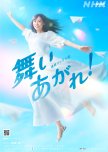
"Mai Agare" is the 23rd asadora I've completed. Like a lot of people, the negative comments about this asadora made me hesitate to watch it. I don't think the comments are unwarranted. "Mai Agare" actually really reminds me a bit of "Mare" and "Hanbun, Aoi," which both have similar storylines (and caused me frustration at times). However, both of these asadoras are beloved in this community so I think "Mai Agare" should also be given some slack. Major spoilers follow!The first two weeks of "Mai Agare" featuring the childhood of our heroine, Mai, are hands down my favorite part. I really loved the child actress who played Mai and I was very happy that they brought her back briefly to play Mai's daughter in the final episode. The first half of the asadora I think is very strong. It shows Mai developing a passion for airplanes and then deciding to go to flight school. It starts to go down for me when Mai decides to help her family's factory instead of becoming a pilot. I personally wasn't particularly fascinated with the 'look how screws are made' thing at first, though I started to like the factory part later on. Thankfully, the plot starts to pick up when Mai and her second love interest, Takashi (Akaso Eiji), get together. From there, I really liked the asadora again. Mai discovers her real passion and even gets to complete her original dream.
I saw some comments about people not liking the actress, Fukuhara Haruka, who played Mai. Of course, that's their opinion, but I personally really liked Fukuhara as Mai. She played a bright, almost too positive character perfectly. Anytime she was slightly annoying was really the plot's fault not hers (lol). I also just really liked Mai's personality, which made me want to continue watching even when I was getting frustrated.
Sadly, the side characters don't really stick out for me besides Mai's family and some of her friends, particularly childhood friend Kurumi (Yamashita Mizuki). I wasn't a fan of her brother's, Haruto (Yokoyama Yu), "arc." I did really like Mai's flight school friends, Rinko (Yamazaki Hirona) and Kashiwagi (Meguro Ren). The latter being her first boyfriend as well. However, once flight school is over, you maybe see them a handful of times from then on. I think this is another big problem of "Mai Agare." Only Mai herself, Kurumi, and Takashi have satisfying arcs (and to a certain extent her family). No one else really does, which is a shame. I will say that my favorite character is definitely Mai's grandmother Shoko (Takahata Atsuko). I love her so much.
In conclusion, "Mai Agare" is not a masterpiece asadora but I still enjoyed it. It had a solid first half. I'm sure everyone who watches it will love the flight school part in particular. And it has a very solid, full-circle ending which made me cry. Though some parts were frustrating, I realized that "Mai Agare" never got away from its theme of taking flight. I even ended up liking the secondary focuses on small-town factories and Takashi's tanka poems. (Honestly, the poems were so pretty). I'm really happy I completed this asadora after all and it helped me through a difficult loss in my life at the time.
My Asadora Ranking: https://mydramalist.com/list/LAlqpp21
Was this review helpful to you?
This review may contain spoilers
"First Penguin"
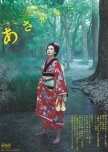
"Asa ga Kita" is the fifteenth asadora I've watched. While watching the last six weeks of episodes, I realized that the story sounded familiar. Naturally, I looked up the woman whom Shirooka Asa (played by Haru) is based on. Her real name was Hirooka Asako by the way. Finally, it clicked and a pulled out the book, "Anne's Cradle: The Life & Works of Hanako Muraoka." This book serves as the basis for the 2014 asadora, "Hanako to Anne," which was also my first asadora. The author dedicates a few pages to Hirooka Asako, whom Hanako met when Asako was in her sixties and she apparently influenced some of Hanako's feminist leanings. I'll include this quote by Asako, which influenced Hanako and others Japanese women of the time:"From here on, politics will be crucial. Unless we raise up female politicians active in governing this country, true emancipation for women can never be achieved. We must start by obtaining the right to choose our leaders, the right to vote, just as women in other countries have done. You must work together for the same goal."
Another Japanese feminist, Hiratsuka Raicho, who appears in the final week of "Asa ga Kita," is also mentioned in this biography. I'm including this in my review not just because it's interesting but to highlight that "Asa ga Kita" is one of the more overt feminist asadoras. It doesn't exactly "go there." For example, there's no mention of women's right to vote. And, as much as I wish it had gone there, my hat goes to it for even touching what it does. You could argue that all asadoras are feminist, but in a more sanitized way in my opinion. "Asa ga Kita" highlights the strength, problems, and progress of women during the Meiji era, a much more oppressive time period than when most asadoras are set.
Speaking of time period, "Asa ga Kita" begins in 1857 and is set mostly during the Meiji era. This is a very interesting time period for Japan and really laid out the groundwork for what modern day Japan is. Also interestingly, this is the earliest time period for an asadora. (NHK appears to reserve this time period for their taiga dramas instead.) The asadora starts off with traditional kimono and topknots, and by the end there are dresses and cropped hairstyles everywhere. It's an interesting dichotomy and serves as a good example for the changes of the era. Moving on from history...
The best part of "Asa ga Kita" are the characters, of course. Haru plays the pioneering businesswoman Shirooka Asa, a tomboy who questions why women can't learn certain things. Miyazaki Aoi plays her sister Hatsu, a traditionally feminine girl with a hidden strength. Hatsu is often the secondary main character, but the narrative smartly recognizes when her story isn't as interesting as Asa's and we sometimes won't see her for a while. Nevertheless, we follow her throughout her life and her romance with her husband Sobei (Emoto Tasuku) is very compelling. Next, we have Asa's husband Shinjiro, a man who prefers to indulge in his various hobbies instead of participate in the family business. Even though, he sounds like a "useless" man, he is played perfectly by Tamaki Hiroshi, giving him both humor and humanity. As a husband, he is always supportive of Asa which only makes him more endearing.
Asa's and Shinjiro's only daughter, Chiyo (Koshiba Fuka), comes off as very annoying at first, being the opposite of Asa but also not seeing the value of someone like Asa. I thought she was going to fall into the trap of other asadora children at this point. Thankfully, the writers have her come to appreciate Asa though Chiyo remains the complete opposite of her nonetheless. The final character I'd like to talk about is Godai Tomoatsu (based on a real figure and played by Dean Fujioka). He is what every second male lead should be. Someone who doesn't impose his feelings on the FL and just supports her from afar. Honestly, he had my heart beating fast at certain points. There are, as always, a plethora of other side characters who are all endearing in their own way.
"Asa ga Kita" surprisingly has four romantic couples to get invested in. Asa and Shinjiro are the best of course and are now one of my favorite asadora couples. Hatsu and Sobei are super sweet together despite their rough start. Kisuke and Fuyu seem kind of mismatched but I couldn't help rooting for them. I was a bit sad that Fuyu doesn't appear again after their marriage, but I suppose that Kiyohara Kaya ("Natsuzora", "Okaeri Mone") just appeared too young at the time. Lastly, there's Gansuke and Ume, a couple that doesn't need to be together to know that they love each other. Honestly, I felt very spoiled with the amount of couples in this one.
Okay, this review is getting too long so let's wrap it up. "Asa ga Kita" includes everything you could want in an asadora and then some. I recommend this to old and new asadora watchers alike. (I hope I didn't spoil it too much.) If you're looking for a next watch after this one, I recommend the 2024 asadora "Tora ni Tsubasa" which explores similar feminist ideas as "Asa ga Kita" but in a more "in your face" way. Happy watching!
My Asadora Ranking: https://mydramalist.com/list/LAlqpp21
Was this review helpful to you?
A word-for-word adaptation
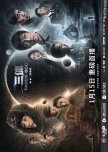
I read "Three Body Problem" earlier this year in preparation for the Netflix adaptation being released (though I haven't seen it yet since I'm waiting for my dad). I discovered that there was already a Chinese drama based on it and decided to check it out, though Chinese dramas aren't usually my favorite. I really wanted to like this drama since it got such good reviews on here... but the last five episodes almost killed me from boredom.What I didn't like:
1) The drama is essentially a word-for-word adaptation of the book. While I appreciate the production sticking close to the book, it got boring pretty quick once I realized that I was just *watching* the book this time lol.
2) The character of Mu Xing was added for the production and was just a plot device. They stuck so close to the book that they had a hard time actually adding anything new.
3) They removed the *MOST* pivotal scene from the book, probably because of censors. This is unfortunate as I think it justifies Wen Jie's actions a bit more, though thankfully doesn't mess with it too much.
4) The editing is strange like most Chinese dramas. It has to be shot almost like a movie so the episodes are kind of cut weird, particularly in the episodes where characters are telling long stories. The sound editing was also not up to par
What I did like:
1) The characters are given more personality than in the book. I've read others say that Liu Ci Xin's characters are a bit bland and I'm inclined to think the same. This drama thankfully gives more insight into characters like Wang Miao, Ding Yi, and Yang Dong.
2) The acting by everyone is fairly competent though Chen Jin and Wang Zi Wen deserve extreme praise for their role as Ye Wen Jie. They made me look forward to the backstory episodes even if the story became somewhat meandering.
3) I really liked the two scenes that set up the next season featuring "The Dark Forest" protagonist Luo Jie. I'm really looking forward to it since I think that book is a lot better than the first one.
4) The music was surprisingly really good and perfectly set the tone of the drama.
I recommend this drama to those who love sci-fi but have not read the book. Those who have read the book will not get much out of this sadly. I will watch the sequel if and when it is released. I think it has better potential than this one. I'm giving it a 7.5 because I did think it was worth watching for me personally and it was able to get across the ideas in the novel with simplicity.
Was this review helpful to you?
This review may contain spoilers
"People are like chopsticks..."
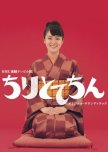
"Chiritotechin" is my 10th asadora. It is also the last one I'm watching before "Natsuzora," in which "Chiritotechin" lead Kanjiya Shihori also appears. "Chiritotechin" was a surprising gem from start to finish. I wished I had watched it prior to the two asadoras I recently finished, "Dandan" and "Manpuku." My gut isn't always right after all lol.Kanjiya plays Wada Kiyomi, a distinctive "negative" heroine for an asadora. By "negative," I mean that she's very pessimistic unlike the stereotypical hard-working, cheerful asadora heroine. Kiyomi's misery seemingly stems by her arrival in Obama, Fukui as a child to discover another girl with the exact same name as her. This begins Kiyomi's never-ending series of "tensai" (meaning a disaster from heaven). "Chiritotechin" finds humor in these "tensai," leading me to quite literally laugh through my tears. Humor is one of the central themes of the series since it's centered around the art of rakugo storytelling. I particularly liked the reenactments of rakugo stories as well as Kiyomi's daydreams.
Besides Kanjiya's great performance, the cast is full of several heavy-hitters. The most notable being Watase Tsunehiko (from "Oshin"!) as Kiyomi's rakugo teacher and Wakui Emi as Kiyomi's hilarious mother. There's also Aoki Munetaka as Soso, Kiyomi's love interest. And Katsura Kichiya, Shigeyama Motohiko, and Kato Toranosuke as her rakugo "brothers" Sogen, Kosojaku, and Shiiso. Kichiya is actually a real-life rakugo storyteller and Shigeyama is a Noh actor. Sato Megumi had a surprisingly nuanced performance of Wada Kiyomi "A" (aka "A-ko") in the second half of the series. I guess that's enough with praising the cast, just know that they are all great. The only character I ended up not liking was Soso's apprentice (played by Tsujimoto Yuuki), but I don't know how the writer expected us to like a pathological liar.
Traditional arts are another central theme of "Chiritotechin." Kiyomi's grandfather and later her father are lacquered chopsticks craftsman. This is where the quote "People are like chopsticks..." comes to play. Designs are put onto the chopsticks between layers of lacquer. Kiyomi's grandfather compares this to people's experiences through life, which turns into something beautiful despite hardships. Her grandfather is also the person who introduces her to rakugo, another traditional art. "Chiritotechin" emphasizes the need to preserve these arts for future generations. As a non-Japanese person, I was surprised to find myself invested in both of these arts.
Equals parts hilarious and heartwarming, "Chiritotechin" made me laugh and cry in turn over and over again. An unforgettable asadora that I will carry with me for some time. I would give it a ten but some of the weeks after Kiyomi's marriage feel like filler (though are enjoyable nonetheless). Speaking of her marriage, the culmination of her unrequited love and subsequent wedding are some of the most hilarious episodes I've ever seen on television. "Chiritiotechin" had somewhat low ratings for an asadora (I think due to the subject matter and the way the series isn't exactly easy to jump into), but attracted die-hard fans. To me, this encompasses the drama perfectly. It doesn't have universal appeal, but if you love it you'll LOVE it.
My Asadora Ranking: https://mydramalist.com/list/LAlqpp21
Was this review helpful to you?
This review may contain spoilers
"As long as we're alive, there's hope"
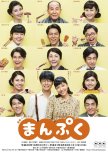
"Manpuku" is the 9th asadora that I've completed so far. I'd actually downloaded and started this drama early on during this journey, but I ended up putting it on hold because I was tired of WWII stories at the moment. Week 2 was also surprisingly heavy for this asadora being mostly a comedy. I was able to pick it back up pretty easily and honestly the WWII part wasn't as long as I was expecting. "Manpuku" was also one of the asadoras I watched for "Natsuzora" as Sakura Ando has a small voice cameo in it. Another note: Sakura Ando previously appeared in my [thus far] favorite asadora "Ohisama."Now on to the meat and potatoes. "Manpuku" is one of those "couple" asadoras, meaning that a couple are the lead characters instead having just a female lead. As such, I think the drama has a very different flavor to most other asadoras. Fukuko (Sakura Ando) doesn't have an aspiration like the traditional asadora heroine. Instead, she's there to support her wacky inventor husband Manpei (Hiroki Hasegawa). I don't think this is actually a bad thing but it's not what people are typically expecting from an asadora. As a couple, they're very cute together though Manpei irritates me a bit. While it's obvious how much he needs Fukuko, it's not exactly obvious why Fukuko needs him. But I suppose there's no logic in love [lol]. Anyway, what I'm trying to say is that the dynamic is one-sided. I've heard similar complaints about "Gegege no Nyobo", and ironically Nao Matsushita appears in both.
"Manpuku" is a fictionalized account about the inventor of instant ramen, Momofuku Ando. Everyone has eaten instant ramen and, being American, I didn't know for a long that there was a different way to eat ramen. I wasn't immediately sold on this premise, but I was surprised how I invested I got once we finally got around to it (a little over halfway through I believe). The process of inventing something was shown in the previous asadora "Hanbun, Aoi," but "Manpuku" really goes into it and several times over since Manpei gets involved in numerous endeavors. If you can believe it, I shed some tears at the end over the invention of Cup Noodles.
As for the side characters, my favorite is Fukuko's mother, Suzu-san (Keiko Matsuzaka). I love her so much. She in my opinion has the best comedic moments in the drama, particularly when she's paired with Fukuko or Manpei. The rest of the cast was also great, but by the last few weeks it seemed that the writers were unsure of what to do with them. For example, Fukuko's niece Taka (Yukino Kishii) graduates from college during the eight-year time skip but simply becomes a housewife and mother afterwards. There's nothing wrong with being a housewife but I just thought it was boring that we only see her and her mother Katsuko (Nao Matsushita), Fukuko's sister, just sitting around the TV. I also have a small complaint about Taka's sister, Yoshino (Mai Fukagawa). They made a big deal about which man she was going to marry, but didn't show it playing out. Instead, they just revealed it randomly after the final time-skip.
All-in-all, I don't have many complaints about "Manpuku." I think it's a solid comedic asadora and just an all-around good time. Not *the* best, of course. It's a little boring towards the end, and Manpei and Fukuko have just a few too many hardships. However, I believe most asadora fans will enjoy this one and it being a comedy makes it easy for a beginner to watch. A final bit of trivia: "Manpuku" ends in 1971 and mentions the Osaka world's fair and the previous asadora "Hanbun, Aoi" begins in 1971 and also mentions the world's fair.
My Asadora Ranking: https://mydramalist.com/list/LAlqpp21
Was this review helpful to you?
This review may contain spoilers
"Song of Life"
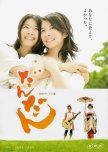
"Dandan" is my 8th asadora thus far. I chose it because of the twin angle as well as Mikura Mana appearing in "Natsuzora," which I'm planning to watch soon. "Dandan" has a harsh score of 6.7 [Edit: Now 6.3!] on MDL. To be fair, it's been rated by very few people but it doesn't feel very balanced in my opinion. "Dandan" isn't necessarily bad, but if you compare it to your favorite assadoras, it's not going to measure up. Simply put: Not bad, just just not the best asadora anyone has every seen.The premise for this asadora is basically "The Parent Trap" so it's a bit derivative to begin with. However, I enjoyed this sort of "reimagining" of the premise and it was initially what hooked me into watching it. Two girls, Megumi (Mikura Mana) and Nozomi (Mikura Kana), meet by chance as if fate is pulling them towards one another. Megumi is an ordinary high school student living in Matsue, while Nozomi is a maiko (apprentice geisha) living in Kyoto. I think both girls have interesting, realistic reactions to finding out that they're twins. Some of their family members reactions may seem harsh, but I also think it's realistic from the point-of-view of Japanese culture.
Megumi initially wants to become a professional singer, but then lands on deciding to be a caretaker [i.e. looking after the elderly at retirement homes]. She moves to Kyoto to go to college and starts living with Nozomi and their mother (Ishida Hikari). Ironically, this not only knocks Nozomi off her life's course, but also the story. After a lot of badgering from Ishibashi (Yamaguchi Shogo), the girls become twin singers in the same vein as The Peanuts (if you've seen "Mothra", you'll remember them). Strangely, their time as actual singers is very short compared to the build-up which is quite long. Megumi almost immediately disbands the duo as soon as it starts going in the wrong direction. Nozomi tries for a while on her own, but eventually goes back to being a maiko. As such, this whole middle section of the drama ends up feeling kinda pointless.
The last section of the drama was what they should've been doing with the whole drama in my opinion. Megumi decides to become a nurse on top of a caregiver. Her love interest, Ishibashi, also leaves music and decides to become a doctor. [Strange career direction aside.] Nozomi goes from being a maiko to a geisha to a proprietress. Her love interest is her former bandmate and manager, Kota (Kuboyama Tomohiro). His earnest admiration of her and willingness to watch to support her from afar is just sweet. I would've rather watch more of this even if it had the twins being in separate cities for most of the time.
Honestly, even the singing career path had its potential. What I'm frustrated with is the non-commitment to either storyline. "Hanbun, Aoi" comes to mind since it had a similar problem, but it was able to stick the landing better in my opinion thanks to the supporting cast. "Dandan" has some lovely side characters, but two of the male characters are particularly frustrating. Additionally, while I did cry, it wasn't able to hit all of those emotional notes I love so much in the last week.
Now that I'm done complaining. I will talk about its good points. Mana and Kana are wonderful as the heroines, though I preferred Kana's Nozomi to Mana's Megumi. Nozomi was just more relatable, strangely. Both heroines are played beautifully nuanced and I loved how their facial expressions perfectly encompassed their characters feelings at any given time. The female side characters were almost all amazing. I loved them all. I particularly found the girls' grandmother (Mitsubayashi Kyoko) to be poignant at this time for me. The girls' mother (Ishida Hikari) and Megumi's mother (Suzuki Sawa) were also stand-outs. And finally, the best point of the asadora is the music. It was all so good from the theme song to all of the songs that the girls sing throughout. "Ue o Muite Aruko," "Akai Sweet Pea," "M," etc.
So, in conclusion, I would argue that "Dandan" is worth watching, especially if you're an asadora enthusiast. I probably wouldn't recommend it to a beginner because it won't hook them in immediately and it might turn them off from asadora to be honest. Though it won't be remembered as a great asadora, I enjoyed my time with it and I will be singing the music it introduced me to for a long time.
My Asadora Ranking: https://mydramalist.com/list/LAlqpp21
Was this review helpful to you?


