



This review may contain spoilers
Clothing gives people hope
"Carnation" is my 14th asadora. I've wanted to watch it for a while since it kind of gives off the same vibes as my favorite asadora, "Ohisama" (which also aired the same year). I really liked "Carnation" overall, but it hits a stumbling block around week 17 that it never really recovers from. Well, for me, at least. Warning! Major spoilers follow~The heroine, Itoko, is played by Ono Machiko. She really deserves all the praise I've seen her get for this role. Ono was able to play the stubborn, somewhat pigheaded Itoko in such a way that she never becomes insufferable. She stays consistently funny and enjoyable, despite her bad traits. Kuriyama Chiaki playing Otoko's childhood classmate, Natsu, also sticks out in my mind as a stand-out performance. Her relationship with Itoko made me laugh until the very end. I also quite liked Natsuki Mari as an older Itoko. Definitely a great actress. I only wish that they had introduced her a tad sooner as I think the transition from Ono to her was a bit awkward. The rest of the supporting cast I could best describe as comforting. I just loved continuing to see the faces of Itoko's family, friends, and neighbors.
On to the minor things that I didn't like which resulted in me giving "Carnation" a 9.0 instead of a 10. First, her father. I hated him. This has nothing to do with the actor (Kobayashi Kaoru) as I think he acted him really well actually. Even if I sit and think about it, I can relate to the dad's feelings. But... I just find it inexcusable for a man to hit his child so much and just generally act like a tyrant to his family. [He's a father that's not much a provider either by the way...] I was really waiting for him to die, even if he had finally chilled out a bit by then lol. Second, I thought all of Itoko's children were annoying. Tbh this is an ongoing issue with asadoras set around the war. The children that grow up afterwards are almost always intolerable. Yuko is probably the most tolerable, but her fights with Naoko (the most annoying) are so hard to watch. And poor Satoko is just portrayed as an idiot. And the third thing...
Itoko doesn't have a decent love interest. I really liked her husband Masaru (played by Suruga Taro) until he goes off to war and she discovers that he was having an affair! After the war, she gets a new love interest in Suo (Ayano Go) but he has a wife! For me, this is where my interest started to wane. I don't really care that the show wants us to think that their love isn't "dirty." Whatever, he has a wife (who is suffering from the aftereffects of the atomic bomb) and children. They eventually come to their senses and part, but I can't help but think about how painful this affair was for everyone involved. This was around week 17 and I didn't particularly like the weeks that followed since they started to focus on Itoko's daughters. And I said before, I find them annoying.
However, "Carnation" is a pretty solid asadora until week 17. I loved the focus on dressmaking and fashion, and Itoko achieving her dream of owning her own shop. The weeks focusing on the war are also very good and don't focus too much on the tragedy of it all. Following the war, Itoko is able to refocus on her dream and I really liked the 1950s fashions. It was also funny for her to realize that she has a harder time relating to newer fashions now that she's middle aged. Then I also really liked the final four weeks with older Itoko and her storyline with her granddaughter. I was reminded of my own grandmother and definitely cried a lot. It was surprising that they showed Itoko passing away as this is only the second instance of a heroine that I've seen. Even though she died of natural causes, it was still very sad.
Interestingly, I looked it up and the real-life Itoko (her real name was Koshino Ayako) really was a fan of asadora and wanted her life put to screen. It was kind of meta that they actually put this into the plot lol, but I loved it. Especially seeing Natsu watching it at the end. *Cue tears.* That scene makes watching the whole asadora worth watching to the end hands down.
My Asadora Ranking: https://mydramalist.com/list/LAlqpp21
Was this review helpful to you?
This review may contain spoilers
"I'm Ume which will blossom even in the cold"
"Umechan Sensei" is my twelfth asadora and what a delight it was. [I've been very lucky with my last three picks; let's hope this continues~.] This asadora is set in Tokyo just after WWII like "Natsuzora," which I had just finished. It follows Umeko (played by Horikita Maki) as the somewhat hapless heroine of the story as she embarks on journey to becoming a doctor. Umeko is just a wonderful heroine. She's kind and warm, and her haplessness allows for some very funny moments. It's fun to watch her gradually develop into a responsible adult and get further in career, though her core character always remains. Her development also mirrors the redevelopment of Tokyo and Japan post-war.Besides Umeko, the other highlight of this asadora is the supporting cast. My personal favorite is Takahashi Katsumi as Umeko's father, Kenzo. He such a grump and a bit scary at first, but you eventually realize that he's just a teddy bear inside. My favorite moment of him is in the very last episode. Then there's Umeko's siblings Takeo (Koide Keisuke) and Matsuko (Mimura Rie), who both have their own arcs in the story. Umeko's mother (Minami Kaho) and grandmother (Baisho Mitsuko) could have had more to do in the story, but I loved them nonetheless. There's a part with Umeko's mother late in the asadora that I especially loved. And, of course, there are Umeko's classmates, colleagues, and neighbors. So many good characters that I can't name them all.
Interestingly, Umeko has two love interests which feels a bit rare for an asadora, especially because I couldn't tell who she was going to pick until it happened. I actually really liked both of them. One of them is fellow doctor Matsuoka Toshio (Takahashi Mitsuomi). He's just a fun character with his analytical way of thinking which often puts him at odds with others. His and Umeko's break-up was sad but I think fits with his character. The "real" love interest is Umeko's neighbor and childhood friend Yasuoka Nobuo (Matsuzaka Tori). He kind of goes under the radar for much of the asadora though he and Umeko have a couple of "moments" early on. Nobu starts to really shine once Matsuoka leaves. There were some really romantic scenes between him and Umeko, such as the proposal scene. Nobu also gets nearly as much character development as Umeko.
"Umechan Sensei" is a great asadora from start to finish. It becomes a little slow near the very end, but the final episode closes out perfectly so I'll forgive it. Some of my few complaints are that Umeko's siblings aren't given much to do once their arcs are finished, Yayoi's and Yamakura's story isn't finished [it appears that it continues in a special episode which I can't find :(], and I wish that the narrator was present more often. These are very minor complaints though. I'd recommend "Umechan Sensei" to anyone as I think this is a very appealing asadora to beginners and veterans alike.
My Asadora Ranking: https://mydramalist.com/list/LAlqpp21
Was this review helpful to you?

Impressive adaptation
After hearing that this series was coming out this year, I read the book and then watched the 1980 miniseries before sitting down to watch this. One of favorite things with adaptations of books and ones with multiple adaptations is comparing them. When I do this, I often find that there are things about each that I like and usually there is not one I would deem the "true" adaption. The 1980 and 2024 versions of "Shogun" are a perfect example of this.*The 1980 version I would say is more faithful to the book plot-wise, but the 2024 version I think captures the essence better. Watching the 2024 one, I reminded of why I liked the book so much and what made me keep reading despite it being 900+ pages long.
*One of the biggest differences is that the 2024 version subtitles the Japanese characters, while the 1980 one doesn't. The reasoning was that Anjin-san doesn't understand them so we shouldn't either. I think this was fine to a point, but they should've started subtitling towards the end when Anjin-san understood them. The 2024 version allows more of the Japanese characters to shine because of the subtitles and honestly there's no way they wouldn't have subtitled them anyway in this day and age lol.
*1980 Anjin-san (played by Richard Chamberlain) is stronger than 2024 Anjin-san (Cosmo Jarvis). However, I saw some good potential in the final episode and I have faith in him for season 2. Anna Sawai and Hiroyuki Sanada were just acting rings around him.
*The 1980 version cuts some scenes (possibly for logistics) that I felt should've been kept and 2024 version covered some of the scenes in question while also adding a lot of extra scenes not in the books. Ultimately, I think these scenes will work in favor for season 2 as they helped established lore that could be expanded upon later and show the potential for this series.
*Anjin-san's and Mariko's romance is underdeveloped in the 2024 version. However, as this was my least favorite part of the book and 1980 version, I didn't particularly care that much.
*Also, Tsuji-san didn't seem to play as big a part in the 2024 version. I hope his role is expanded in the next season.
So that was just some of my thoughts, I won't do an in-depth review since there's already plenty on here. Now which was the best? I watched this and the 1980 series with my dad and he preferred the older one. Me, personally, I liked both about equally though I'm slightly inclined to the new version as I liked the visuals better. I'll say that this was the first series I've watched from FX in years and I'm actually looking forward to season 2. I believe that they can pull it off as long as they keep the same standard of quality.
Was this review helpful to you?

This review may contain spoilers
A Fun Ride That Doesn't Stick the Landing
I started watching "Dolce Amore" right after finishing Enrique Gil's and Liza Soberano's previous project "Forevermore." In some ways, I feel like I set up "Dolce Amore" for failure in my mind. It was originally going to be my first Filipino telesyre but then I decided to watch "Forevermore." I anticipated it being better than "Forevermore." And it in some ways it does, but it in other ways it doesn't... For my "Forevermore" review, I mostly just summarized the drama. But for "Dolce Amore", I have more clear negative opinions so I'll skip the complete recap and just give a short one."Dolce Amore" has a great opening set-up that immediately draws you in. It starts by establishing the childhoods of Serena (played by Liza) and Simon "Tenten" (Enrique), both of whom are adopted but under vastly different circumstances, from different economic classes, and living in different places. Serena is from Italy and Simon the Philippines. After the childhood portion (about three episodes), the story falters just a bit when Serena and Simon meet as young adults. It picks up once the two become friends. Nearing the end of "Chapter 1" (first fifty-three episodes), Simon and Serena are now dating. (If I'm being honest, I find it hard to believe that Serena would fall in love with a man who acts so juvenile lol.) Now enter the conflict. Simon's brother, Binggoy (Kean Cipriano) decides to ransom Serena in order to raise money for their father's heart operation. This, of course, ruins Serena's and Simon's relationship. Though, she doesn't remember it, because, of course, she has memory loss.
Now going in "Chapter 2" (eps 54-106). Serena is back in Italy with her adoptive mother, Luciana (Cherie Gil), whom, of course, arranged the whole kidnapping thing. The shock of this revelation put Serena's adoptive father, Roberto (Ruben Maria Soriquez), into a coma. Why? Because Luciana wants her daughter to marry the rich Giancarlo de Luca (Matteo Guidicelli). Giancarlo has mostly been portrayed as a good guy though somewhat jealous so far. But *ding ding ding*, first red flag. Giancarlo goes along with Luciana's plan, and he eventually proposes to Serena after two years. After a woman, named Alice (Sunshine Cruz), claims to be her biological mother, Serena returns to the Philippines and meets her father, Uge (Andrew E.), and sister Angel (Sue Ramirez). Meanwhile, Simon has become a successful composer working with Angel who he has just started dating. Serena's return causes the truth to come out to Simon's parents, Dodoy (Edgar Mortiz) and Taps (Rio Locsin). Soon, everyone knows but Serena.
Finally, Simon admits the truth to Serena. She's mad and returns to Italy to b*tch out Luciana and Giancarlo, before coming back to the Philippines to find herself with Simon's help. Simon and Giancarlo then squabble for Serena's affections. It ends with Serena falling in love with Simon again. Giancarlo seemingly takes it well at first, but soon turns into the most cartoonish, mustache-twirling villain I've seen put to screen. Aided by his evil uncle Favio (Alvin Anson), Giancarlo demands for Serena to marry him instead of Simon. In the process, Binggoy is accidentally killed instead of Simon. His death and funeral, unfortunately, feels so unserious despite becoming the emotional current for the rest of the drama. Serena decides to go with Giancarlo to save everyone else. Fortunately, at the alter, Giancarlo and his evil uncle are murdered. *And the crowd goes wild*
Now time for "Chapter 3" (eps 107-137). It gets even more complicated from here. Simon is now working in business with his "real" mother, Vivian Dubois (Tetchie Agbayani). Serena and Roberto, now awake, are living on a vineyard. Her and Simon's paths cross when he buys her family's previous home. Wanting to preserve it, Serena goes to the Philippines in hopes of negotiating with him. Simon keeps her on the line in order to get what he wants: Luciana returning to the PH so he can prosecute her for Binggoy's death. She does eventually come after reconciling with Roberto. Luciana strangely professes her innocence, only to later reveal the truth to Vivian. She was inadvertently involved in Binggoy's death because she worked with Giancarlo to have Simon killed. However, it turns out that Simon is actually the children she abandoned over twenty years ago. So she had Giancarlo killed and gave all her money to Vivian to give to Simon. Oh my f*cking god, what the hell was that?
Turns out that Giancarlo's evil uncle Favio with a bad Italian accent didn't actually die. Just when Simon and Serena become a couple again, he reveals Luciana's role in Binggoy's death. Of course, this stops the engagement. You know, I really don't understand what Luciana was thinking was going to happen... Anyway, Simon eventually learns that Luciana is his real mother. He doesn't take it particularly well, though his parents encourage him to find it in his heart to forgive her. Simon asks Serena to run away with him, which they do for a while. I think I would've prefer they ended it this way. But no, they had to make it "legal." After the wedding, the drama ends with a stupid comedic scene where Serena finally gets her memories back and gets jealous over Simon and another girl from *way* in the past now. Underwhelming to say the least.
Okay, so perhaps you see a pattern. At the end of the first two "chapters," the drama does something incredibly stupid just to keep the main couple apart for just a little longer. I absolutely hated the plots concerning Serena's kidnapping and Giancarlo becoming an evil, mustache-twirling villain. I cannot understate how bad Giancarlo and his uncle are as villains. The uncle, in particular, has the worse Italian accent I've ever heard. He's two steps away from just adding an -a to every other word. Every time he pulled a gun out or something, I was just laughing my a** off. Giancarlo, on the other hand, was way overacting his role. It was so painful to watch him, though, ironically, he still succeeded in me hating him. Luciana was the only decent villain thanks to her actress, who tried her best to act with nuance because lord knows that the writing wasn't doing her any favors.
As for the good parts, I actually think that the first two chapters are mostly good. Enrique and Liza have a nice, comfortable chemistry though their characters are not always written consistently. The supporting cast consisting of their various family members and some hangers-on friends help to give the drama a lighter tone when it needs. By the end, I was living for all three sets of parents becoming the best of friends. It was so cute. The drama, unfortunately, fell off because of Giancarlo's turn as a villain. It picked up a bit at the beginning of "Chapter 3" but honestly the damage had already been done. They then crammed so much drama into the last ten episodes that the ending just doesn't seem feasible in my opinion. I was happy with "Dolce Amore" for a majority of the time, but it wasn't able to surpass "Forevermore" after all. Personally, I'm giving it a 7.5 for my list but the real score is 6.5 to 7.
Was this review helpful to you?
This review may contain spoilers
"All women are like the sun."
"Ohisama" is the fifth asadora that I have completed. The drama has been on my radar for a long time since it stars Mao Inoue, whom I love from the "Hana Yori Dango" series. However, I was always scared of the length of asadora series. Thankfully, I have gotten over that and quickly put "Ohisama" on my plan to watch list. I was actually surprised by how much I liked "Ohisama." It even rose to become my favorite asadora, beating out my beloved "Hanako to Anne" by a slight margin.The drama uses an interesting framing device similar to "Oshin" (which I was watching concurrently). It opens with a modern-day (2011) housewife, Fusako (Yuki Saito), meeting an elderly woman, Yoko (Ayako Wakao), who asks if she wants to hear her story. The story then frequently returns to present-day Yoko and Fusako as the drama unfolds. Ayako Wakao also provides the narration. I think both devices combined enhanced the story-telling experience, especially for a drama set during World War II. Subtle hints of the fate of characters were given either through the narration or a mention/appearance in the modern day. This helped keep the sometimes sad tone of the series down in my opinion.
Yoko's story starts in 1932 when her family moves to Azumino, a village in Nagano Prefecture. Her mother, Hiroko (Tomoyo Harada; whom I loved in "Hanbun Aoi") has long been sick and has chosen this place to die essentially. [Only the first week and I'm sobbing.] Yoko losing her mother at the young age of ten shapes the entire rest of the story, even to the final seconds. Her mother gives her advice to be "like the sun" (her name uses the character for the word sun). Yoko from then on frequently tries to be the sun for those around her. Older Yoko uses the quote "All women are like the sun" to Fusako much later in the drama and I just thought was such a beautiful thought.
The story then shifts to Yoko's high school days with her best friends, Machiko (Maiko) and Ikuko (Hikari Mitsushima). These two are some of the most important people in her life besides her father, elder brothers, and later on her husband, daughter, and in-laws. Yoko becomes a teacher after graduating (This will be her main ambition for the majority of the series). Unfortunately, it is now 1941, the year Japan bombed Pearl Harbor. If you're familiar with the Japanese retelling of the war, you'll see the typical "Japan cannot lose" rhetoric the common people were fed at the time. Yoko, unlike in the previous asadoras I've seen ("Hanako to Anne" and "Junjo Kirari"), is not even slightly politically inclined one way or the other. She is a little bit disturbed by teaching the children military tactics, but does as she is ordered. Perhaps paradoxically, I found the war easier to watch because of this. I would've been harder to watch Yoko fighting against the tide, really. Yoko represents the common people whom were simply there witnessing all of this.
Now addressing Yoko's husband, Kazunari (Kengo Kora). Their relationship is probably my favorite of the asadoras I've seen so far. These two are so sweet together and seeing them smiling at each other makes me want to smile. Their relationship starts from an "omiai" (arranged marriage meeting), but they feel totally natural with each other. The chemistry was so good. After he comes back from the war, I loved seeing them grow and learn together. Even up to the next to last week, they are becoming better at communicating with each other. I love to see such a healthy relationship in drama land. The way they tease each other is so cute too.
"Ohisama" has a lot of great supporting characters. I honestly loved them all and I can't even single one of them out because then I'll just start listing them all. Yoko's best friends are obvious contenders. The writers kept their lives consistently surprising. I wish Hikari Mitsushima had been given her own asadora; she was so good as Ikuko. Yoko's mother and father-in-law are like real parents to her and I love their constant banter. Likewise, Yoko's banter with her brother Shigeki (Kento Nagayama) never falls to entertain. His relationship with Ikuko was a surprise, but in hindsight, I should've seen it coming. They're perfect for each other. Then there's Yoko's father, brother Haruki, grandmother, Natsuko-sensei, Kayo-san and her husband, and all of her wonderful students. [Haha I did just end up listing them]. On a side note, "Ohisama" also features two future asadora heroines Tao Tsuchiya ("Mare"; also supporting in "Hanako to Anne") and Sakura Ando ("Manpuku").
The ending of "Ohisama" was bittersweet but not because anyone died. It's because I didn't want it to end. I've loved plenty of shows and books before, but there's very few I wish could go on forever. This one I would pick to watch on-and-on until the end of time. The finale, however, was still perfect so if it had to end, I'm happy it ended this way.
My Asadora Ranking: https://mydramalist.com/list/LAlqpp21
Was this review helpful to you?
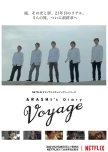
This Is Arashi
In October 2019, Arashi opened a YouTube account. Earlier that year, the band announced their intentions to go on hiatus after December 31, 2020. Honestly, I didn't pay too much attention to the announcement. I'm only a casual Arashi fan because of MatsuJun being in 'Hana Yori Dango.' However, a Johnny's band opening a YouTube account was unprecedented. I HAD to pay attention and discovered some new songs in the process. The following month, they made another surprise move by creating several social media accounts, including Instagram where I followed them voraciously.Next, came this documentary. When I watched the first episode, I thought it was going to be a one-off thing really. I'm surprised that I kept watching something I started on December 31, 2019! Throughout the series, I was most struck by Arashi's dedication to the fans and how they genuinely seem to care about them. These moments touched me so much that I cried. The episodes where Arashi is trying to break in to the US market are particularly poignant to me. It makes me wonder about so many things that would've gone different if coronavirus hadn't happen. I'm sure Arashi's planned concert here would've been amazing.
I recommend watching the first episode, and their respective "diary" episodes the most. I wasn't so interested in some of the behind the scenes stuff, though it's interesting to see just how much MatsuJun was involved with the concerts. Now after twenty-four episodes, I can say I'm a fan of Arashi and all five of its members. I never would've thought I'd connect with Ohno the most tbh. Now that they're on hiatus, I hope they enjoy themselves but I also hope that they remain close friends and will eventually come back to us as Arashi.
Was this review helpful to you?

Not the best from Kathryn and Daniel
My first Filipino movie was "She's Dating the Gangster" followed by "Can't Help Falling in Love." Now I LOVED these movies, though I felt SDtG had a couple plot holes. So I'm obviously going to have high hopes for any Kathryn Bernardo & Daniel Padilla movie. Unfortunately, "Crazy Beautiful You" did not live up to my hopes. Don't get me wrong, I thought it was enjoyable but it did not have any sort of brilliance that the other two films I mentioned had. This is just another run-of-the-mill rom-com full of plot inconsistencies.First, Kathryn and Daniel were great. Chemistry top-notch as always and I'm still looking forward to watching their other movies. However, the plot of "Crazy Beautiful You" is just all over the place. Kathryn's character Jackie has an about-face too soon into the movie. They should have played her being a rebellious brat more. Kiko's (Daniel) family dynamics are interesting, but handled too haphazardly. Once his annoying brother Marcus is introduced, Kathryn's character development in thrown out in order to focus on a pseudo-love triangle.
I think the overall message about the importance of family is great though the delivery is somewhat muddled. Additionally, I liked the way they handled being selfish/selfless. Selfishness is bad of course, for the most part others' feelings should be considered. However, being selfless is also bad but in different ways. No one should try to take everything on by themselves. This message I think was just as important in the movie. I recommend "Crazy Beautiful You" to all Kathryn & Daniel fans since I think they're great no matter what. But if this is your first Filipino movie, I suggest watching the two I mentioned up top first.
Was this review helpful to you?

A meh adaptation.
Since I'm watching all the Itazura na Kiss adaptations, I guess I'll review them all as well. Note: I've read part of the manga and seen the anime, so they are the only thing I can compare this drama too. Another note: my favorite part of this drama was probably the ending theme, which paid homage to the manga (so adorable!).I didn't hate this drama, only it left me disappointed at certain points that I felt the manga/anime did better. For some reason, Kotoko never annoyed me as in the manga/anime as much as she did in this drama. No offense to Sato Aiko, who was a bit screechy at times. I think it was mostly a writing issue. There is never a moment when Kotoko becomes just fed up with Naoki (God, I really wanted this moment). It's incredibly frustrating. On the other hand, I rather liked Kashiwabara Takashi as Naoki. I felt more sympathetic to him than Kotoko tbh. She really seemed like an "ordeal" to him and I kept telepathically telling him to run away.
As for the rest of the cast, I thought Asada Miyoko and Akashi Ryotaro were perfect as Naoki's mom and Yuki. I really enjoyed his voice-overs in the episodes. The majority of the other characters were good/okay but no stand-outs. I was disappointed in Kinnosuke's character. Though Aoki Shinsuke resembles him really well, they reduced his character to pure comic relief and he becomes a lot more annoying because of it. And lastly, I thoroughly disliked Ozawa Maju as Reiko (Yuko in the manga/anime). She was portrayed so evil in this drama with absolutely no sympathy at all. Ugh I really hated it.
The ending of this drama left me with mixed feelings, which I still cannot put my finger on. I've given it a rating of 7, only because I didn't absolutely hate it. If I was a professional reviewer, I would likely give it a 5 or 6. I think only die-hard fans should watch this (and even then y'all might not like it). Casual fans should beware, unless you're the type to skip scenes (alas, I'm not). Well, on from this meh adaptation to the next.
Was this review helpful to you?
This review may contain spoilers
"But even so they laugh and live on."
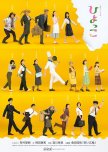
"Hiyokko" is the 36th asadora that I've watched. Early on, this one looked like one I would really like and I eventually chose it to be the last as I got closer to the end of this almost non-stop asadora binge that began in February of last year (2024). I had a good intuition about "Hiyokko" and I can confidently say that it's one of my favorite asadoras.Mineko (played by Arimura Kasumi) gets a lot of flack for not being an "ambitious" heroine. I know asadoras are mostly known for their heroines chasing a career path, but the "unambitious" ones have just as much charm in my opinion. [I'm using quotes because I think Mineko is ambitious in her way.] There's also nothing wrong with just having a job you like instead of having a career path you pursue. Anyway, Mineko is a very giving, hard-working, and family oriented person, which are pretty common traits in most heroines. In that way, she's kind of a low-key heroine like Jun-chan in "Jun-chan no Ouenka. This, however, does not make her any less fun to watch. I truly loved Mineko every step of the way.
In "Hiyokko," Mineko has two love interests which is a bit rare. Her first love interest is a rich college student Shimatani-san (Takeuchi Ryoma). He's very sweet but blunt at times. The couple come from different social circles, which ultimately leads to their break-up. While this was predictable, the writer was smart in how it was written and I still cried. All in all, I consider them a couple I liked and was sad to see end. Mineko's second love interest is Hide-san (Isomura Hayato), a chef who works at the same restaurant as her. Their relationship starts as a friendship and develops slowly over time into romance. Though we only see them together for a short time, I think this couple has become one of my favorite asadora couples. Hide-san is definitely one of the sweetest and most caring love interests.
As with most asadoras, the side characters are the real highlight of this series. Miyamoto Nobuko (from asadoras "Dondo Hare" and "Amachan) once again steals every scene that she's in playing the restaurant owner Suzuko. I also particularly loved Aiko-san (Wakui Emi from "Chiritotechin"), Setsuko (Kanno Miho from "Churasan"), and Saori (Ito Sairi, whom went on to lead "Tora ni Tsubasa"). From the previous sentence, you can guess that the asadora is populated by a lot of familiar faces and veteran actors. One thing I really loved about the supporting characters that new ones are introduced with every phase of Mineko's life. Many have their own arcs like Tokiko (Sakuma Yui) and Mitsuo (Izumisawa Yuuki), whom both come to Tokyo with her. Then there's the girls' dorm friends, Mineko's coworkers at the restaurant, and the residents of her apartment. There's so many characters to get attached to that I could go on and on.
Normally, I don't pay attention the crew behind asadoras... But, here I noticed that the writer Okada Yoshikazu also wrote "Churasan" and "Ohisama." While I didn't completely like "Churasan," "Ohisama" is one of my favorite asadoras. "Hiyokko" has my favorite elements of both of these asadoras, such as the close-knit community from "Churasan" and the easy, slice-of-life vibe from "Ohisama" among others. For "Hiyokko," Okada added a new element that being the mystery behind Mineko's father's (Sawamura Ikki) disappearance, which is the main storyline of the entire asadora. I'd like to thank Okada for writing these three asadoras and improving with each one.
"Hiyokko" only takes place over four years from 1964 to 1968, which is unique for an asadora. The series feels very firmly planted in the 60s and there's so many wonderful references like with The Beatles and Twiggy. My favorite reference is San Francisco being referred to by the song title "Be Sure to Wear Flowers in Your Hair." After finishing "Hiyokko," I realized that 156 episodes can feel so short. I very much wanted to stay in the world of "Hiyokko," which is why I immediately watched "Hiyokko 2" after.
My Asadora Ranking: https://mydramalist.com/list/LAlqpp21
Was this review helpful to you?
This review may contain spoilers
"The life we have now, that's all there is."
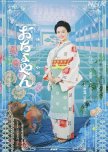
"Ochoyan" is the 27th asadora that I've completed. Before I was really even aware of asadora as a format, I wanted to watch this because I'm a huge fan of Sugisaki Hana. As such, I was really happy when Hpriest announced that they were subbing it. [Thanks again to Hpriest to subbing this asadora in its entirety.] For this reason, I feel that I'm very biased towards this asadora in particular and I think I was just destined to love it. Haha.Sugisaki Hana is really lovely in the lead role of Takei Chiyo, loosely based on the actress Naniwa Chieko. Her facial expressions tell a thousand words and she's able to communicate effectively through her body movements as well. I'd also like to praise Maida Nono for playing child Chiyo. Her delivery of "You're not abandoning me. I'm abandoning you!" has stuck with me particularly. I was happy that they brought her back to play Chiyo's niece. She's also good in "Tora ni Tsubasa". The entire cast deserves praise, including Tortoise Matsumoto, the dad everyone loves to hate lol. There's so many great performances here that I could be here all day. Just know that there's some great nuanced characters and many get their own fleshed-out stories. A special shout-out to Shigeyama Motohiko and Katsura Kichiya [narrator], whom I also really loved in the underrated "Chiritotechin."
To address some elephants in the room, this asadora might not be for everyone due to the parental abuse and infidelity storylines. I, myself, didn't really mind these storylines as they appear to be taken from Naniwa's life itself. I also thought it was kind of bold for NHK to portray terrible parents and infidelity in an asadora. These are topics they seem to steer clear from. Chiyo's father Teruo (played by Matsumoto) and stepmother Kuriko (Miyazawa Emma) are played to perfection and both are a great example about the power of forgiveness. Forgiveness is ultimately for yourself. Once Chiyo is able to let go of the things these two people had done to her, she is able to really live her life. It is also important to understand people and meet them where they are [but don't let yourself get walked all over].
As for the infidelity, I might've preferred the storyline be left out but it was ultimately important to include it to continue the asadora's message. The storyline probably elicited the most emotion out of the entire drama. I felt angry and devastated, and cried the most during those five episodes than any other asadora. It was just so horrible. After the storyline, I do wish that the drama had just dropped Ippei (Narita Ryo) as a character, though I acknowledge that they ultimately needed him for the conclusion. I just found his face annoying after that [lol].
"Ochoyan" shows many forms of entertainment from before and after WWII, including silent films, kigeki stage acting, and radio dramas. If the drama had been able to go on longer, it could've shown Naniwa's film career in the 50s and 60s which would've been interesting. It's too bad that the asadora was cut short by COVID-19. Anyway, in conclusion, I really loved "Ochoyan" and its themes of forgiveness, found family, and moving forward. I highly recommend this asadora.
My Asadora Ranking: https://mydramalist.com/list/LAlqpp21
Was this review helpful to you?
This review may contain spoilers
"In the beginning, women were the sun..."
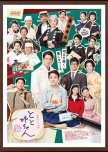
"Toto Nee-chan" is my 18th asadora and it quickly became one of my favorites that I've watched thus far. Takahata Mitsuki truly left a deep impression on me with her role as the heroine, Tsuneko. I really liked her in "Gochisosan" before but she really knocks it out of the park with this one. Her smile lights up the room and her subtle line deliveries tell you exactly how Tsuneko is feeling. I was impressed with Mitsuki's acting and how well the writer understood the character that they were writing.Nishijima Hidetoshi plays Tsuneko's father and, despite only appearing in about six episodes, makes yet another unforgettable impression. Before dying of tuberculosis, he asks Tsuneko to take his place in the family. She agrees and thus becomes "Toto Nee-chan." I appreciate that the finale, in which he appears via a dream, addresses what a heavy burden this is. However, I also understand why he would ask this of her, considering the very patriarchal society at the time. Thankfully, the unhealthy part of only lasts until Tsuneko's younger sisters are grown up. She then realizes that the entire family can support each other while she can still be the "head of the family" technically. At the end of the day, despite being a heavy burden, I think the promise gave Tsuneko a true purpose in life.
Tsuneko's sisters are Mariko (Sagara Itsuki) and Yoshiko (Sugisaki Hana & Irei Himena). These two are given strong characterizations and feel like co-leads with Mitsuki most of the time. Their mother is played by Kimura Tae. Another strong performance. I especially liked her storyline with her estranged mother Takiko (Daichi Mao). Unfortunately, by the end of the asadora, Tsuneko's sisters and mother feel somewhat pushed by the wayside. This is understandable since their storylines were mostly finished, though just a bit disappointing.
Besides Tsuneko, I think the second most memorable character is Hanayama-san (Karasawa Toshiaki). [I first saw Karasawa in the 1988 asadora "Jun-chan no Ouenka" and his acting skill has become so good since.] Tsuneko first meets Hanayama briefly before the war. They meet again and he agrees to become the chief editor of the magazine she's starting with her sisters. Hanayama seems like one of those typical mentor characters in asadoras. However, I feel their relationship goes deeper than that. To me, Tsuneko and Hanayama are a good example of how "soulmates" don't have to be romantic partners. I also enjoyed Hanayama's uncompromising nature, which is a good foil to Tsuneko who initially wants to please everyone.
To address the elephant in the room, Tsuneko doesn't get married or have children. She does technically have a love interest, Hoshino-san (Sakaguchi Kentaro). [He was also amazing in "Okaeri Mone."] He proposes to her just before the war, but she turns him down to stay with her family. They meet again fifteen years later and seemingly have another chance. However, the timing isn't right again and Hoshino makes the best decision for his children at the time. Their romance is very pure and heartbreaking. I would have loved for their relationship to have worked out, but I find it realistic and I respect the decision to have an asadora heroine not get married for once.
I also loved the music for "Toto Nee-chan," particularly the theme song "Hanataba o Kimi ni" by Hikaru Utada. Her songs for dramas always seem to capture the essence of the series. I could listen to this song for hours and I never got tired of it.
To close out this review: I absolutely loved this asadora. The writing was superb from start to finish with an endless amount of impressive characters and moments. The writer did such a good job closing out the drama with the last few weeks. The finale was also one of the best I've seen from an asadora so far. It was infinitely satisfying and I know I'll go back to watch it again very soon. An A+ asadora that I would recommend to everyone.
My Asadora Ranking: https://mydramalist.com/list/LAlqpp21
Was this review helpful to you?
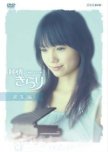
This review may contain spoilers
No Life Is Meaningless
At a glance, "Junjo Kirari" might seem like just another story about following your dreams. The story, however, grows along with our heroine Sakurako (played by the wonderful Aoi Miyazaki) as she discovers the meaning of life itself. For this reason, the drama starts off very light and fluffy which represents childhood and adolescence. As the Second World War looms, it quickly becomes about persevering through hardships. Then the post-war section is where Sakurako finds true happiness surrounded by her love ones.This is only my second asadora. The first being "Hanako to Anne." There are a lot of similarities between the two as both follow a heroine from a poor family living in a small town who goes to Tokyo to follow her dreams. And both also cover the war. I've knocked out a half a point from "Junjo Kirari" 's score because of some story elements I didn't really like. So let's cover those first.
1) I disliked Sakurako's engagement with Saito Sensei. I'm assuming that there's not much of an age difference, but still a grown man being interested in a seventeen-year-old will always give me the ick. I'd also like to point out that they have zero chemistry together. Thankfully, this storyline doesn't go on for long.
2) Fueko's character easily becomes one of the most inconsistent characters of the series, but I have mixed feelings about it. It might be natural for a woman to change after marriage and childbirth. I'm not really sure.
3) The war weeks were already going on too long, but they just had to have Sakurako fall in love with Togo (Fueko's husband). Nothing happens of course, but I still hate it.
Now these complaints are out of the way. "Junjo Kirari" has a lot of good points. The heroine is a lovely and fun person to follow as she follows her music dreams and makes sacrifices for her family. Sakurako is stubborn and strong-willed, but not in annoying way. There are some great supporting characters like Tatsuhiko (Sakurako's love interest), Togo (a wandering artist), Kane (Tatsuhiko's mother), Momoko (Sakurako's sister), and others. I will say I didn't feel as attached to the side characters in this series, but I think that's just because the focus is given more to Sakurako. The music is also nice in a calming sort of way.
My final comment is that though this drama has a tragic ending, I will not lower the score for that. Sometimes tragedy is called for at the end of a drama. That does not mean our time was wasted, just that sad things happen some time. I really liked this drama and had a nice time watching it.
My Asadora Ranking: https://mydramalist.com/list/LAlqpp21
Was this review helpful to you?

An interesting take on complicated feelings
This film's story seems cliche at first, but actually becomes interesting. Cali (played by Liza Soberano) has not forgave her ex Gio (Enrique Gil) for cheating on her a couple years prior. Suddenly, he is thrust back into her life when they have to work together. Now he has to convince her that he has changed. This description is simple, but where this movie shines is its portrayal of complicated feelings.For most of the movie, Cali struggles with whether to forgive Gio or not. She receives pressure from all sides. Some calling her "heartless" for still being angry with him, others yelling "Once a cheater, always a cheater." The thing is: feelings are not that simple. And that's why I liked this movie. It did a good job on showing how complicated feelings and relationships are. You are free to forgive or not forgive someone whom you felt has betrayed you. Your feelings are always valid. I love that a rom-com had me thinking this much.
I had some issues with a few plot details, but I won't include them here since I already made a rant in the comments section. Overall, I think this was a good movie. A little emotionally heavy, especially towards the end. I particularly liked the part where they visited Korea. It's fun to see the country from the eyes of Filipinos and it was a nice contrast from the rest of the movie. I recommend this to anyone who likes romance, but I suggest you avoid it if you hate cheating story lines.
Was this review helpful to you?
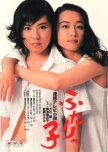
This review may contain spoilers
This shogi piece only moves forward...
"Futarikko" is my 37th asadora watched. After finishing "Hiyokko" in May, words can't express my happiness that there are still asadoras for me to watch. "Futarikko" is quite an interesting asadora, veering away from the set patterns of the time to tell a thoroughly modern story. It also brought asadoras out of a ratings slump at the time. This fact is no surprise when you watch it. Though most asadoras can be described as "addicting," I think this one embodies the word the most. One episode after the next. I never got bored watching it. Yes, there were storylines I didn't particularly like, but I was never bored and I just needed to keep watching.One of the core themes of "Futarikko" is finding happiness. Despite setback after setback, each character in this asadora finds happiness in their chosen path. Strangely, it took me until the next to final week to actually understand this. I was being a bit judgey, questioning why certain characters ended up where they were or how they made their choices. Happiness is hard to win. You may accomplish your dreams and find complete contentment in that. Or you may not accomplish your dreams, but you may find happiness in a different place. "Futarikko" highlights the different paths a person can take. I'll be summarizing this asadora a bit, because that's the only way I can talk about it right now.
Unconventionally for an asadora, it follows a pair of twins, Kyoko (Iwasaki Hiromi) and Reiko (Kikuchi Maiko). These two are played brilliantly in the first two weeks by child actresses Mikura Mana and Kana. The twins' personalities are perfectly established by Mana and Kana, before being taken over by Hiromi and Maiko. Kyoko is a slightly clueless tomboy whom becomes enamored with the game of shogi. Reiko is the intelligent honor student who secretly longs for a lavish lifestyle. The entire series changes with Reiko's decision to live with their rich grandparents, whom her mother has not seen in twenty years. Poor Kyoko, meanwhile, is terrible at school and decides to drop out. She apprentices for her father briefly, before deciding to pursue a career in professional shogi.
As with most asadoras, the love interests are usually one of the most interesting aspects. And boy is this part juicy in "Futarikko." Prepare yourself for major spoilers. Reiko's first boyfriend is Kaito Shohei (Yamamoto Taro), a rich boy she meets in college. She basically lies about her entire background and Kaito breaks up with her, which he later regrets. Reiko then becomes interested in Kaito's friend Moriyama Shiro (Uchino Seiyou), whom Kyoko is in love with. Moriyama seems completely uninterested in being in this love triangle [lol], though he does ultimately pick Kyoko. Reiko shows that she's a good sister after all by convincing Kyoko to follow her feelings. She then chooses ever loyal neighbor Masao (Ihara Tsuyoshi) to marry since he understands her twisted personality and doesn't judge her for it. Of course, the troubles don't stop here...
After the time skip, Reiko is shown to be taking Masao for granted. Kaito reenters the picture and apparently still loves Reiko. She nearly marries Kaito (in a sacrificial act actually), but stays with Masao and turns into an ordinary housewife. Her twins Remi and Mami (also played by Mana and Kana) mirror her and Kyoko's personalities. Much like herself years earlier, Mami judges Reiko's choices. In a powerful moment, Reiko declares that her dreams failed but that her current life has made her the happiest. Meanwhile, Kyoko has divorced Moriyama in order to focus on shogi completely and after a traumatizing event. I personally nearly tapped out at this point. However, I will concede that while I don't like it, what their relationship turns into is ultimately more meaningful than just being married.
One final note on Masao. He's one of those dumb idiotic childhood friends you'll often see in asadoras. I thought he was a little creepy at first tbh. However, I slowly warmed up to him. He doesn't ignore Reiko's feelings and seems to be aware that she's mostly using him (for rides, comfort, etc.). Masao accepts their relationship as is and doesn't expect more until Reiko proposes to him. This is a rare case where the dumb idiot earns the love of the heroine.
Okay, now to a storyline I greatly dislike even if it was entertaining. The twins' parents, Koichi (Danta Yasunori) and Chiaki (Tezuka Satomi), eloped twenty years before the series starts. Chiaki left her rich lifestyle to help Koichi with his tofu shop. Despite this, Koichi never seems to let go of his insecurities. And let me tell you, male insecurities are one of the most annoying things to watch. Of course, I sorta understand what eventually drove him to run away with another woman. But... that doesn't mean I like it at all. Especially when his wife swallows her pride but he ignores her... Anyway, part of me really wanted to hate Aurora Teruko (Kawai Michiko), the singer he left with. But, after hearing her story later on, it's hard not to feel sorry for her or blame her for seizing her happiness even at the expense of others. Of course, Koichi and Chiaki get back together though I wonder if it would've been better for them to stay apart. [Or maybe not drag the story so long...]
This review is already getting too long so I won't get into the plethora of wonderful side characters. I will say that some of my favorites were from the shogi side of the series, including Amamiya (Taguchi Hiromasa) and Hashiba (Shigeyama Motohiko).
"Futarikko" is an amazing experience. It's a look at a different kind of asadora, completely different from the asadoras of the last twenty or so years. The two heroines are so unique and I loved them even if I didn't always like them. I'm so happy we have subs for this series, even if they're incomplete. My tip if you're Japanese isn't good is to use the Google Translate app while watching the episodes and scenes missing subtitles. You'll get the gist of what they're saying.
My Asadora Ranking: https://mydramalist.com/list/LAlqpp21
Was this review helpful to you?
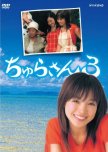
This review may contain spoilers
"My beloved child"
"Churasan 3" is the second sequel to the 2001 asadora "Churasan." As I stated in my review for "Churasan 2," it's rare for an asadora to receive a sequel and "Churasan" has three. From this, you can guess how popular the asadora was at the time. "Chursan 3" was an improvement upon "2" but was still loaded with problems from the original series.Set maybe a year after "Churasan 2," Eri (Kuninaka Ryoko) and Fumiya (Kohashi Kenji) are still living in Tokyo with plans to return to Kohama in the future. The stand-out plot of the sequel follows Eri, a traveling nurse, helping a patient and her daughter Aiko. Eri takes Aiko to live with her parents and grandmother in Naha for a short while, so we get to see more of Okinawa! The plot leaves it open-ended about whether Aiko's mother will die from her illness, though I think it's most likely that she will. The storyline has a lot of emotion to it, which automatically lifts it above "Churasan 2" to me.
However, "Churasan 3" is not without its problems. While Haruka's (Konishi Manami) character was assassinated in the previous installment, this time we have the character assassination of Keitatsu (Yamada Takayuki). [Side note: Haruka was returned mostly to old cool self in this installment, though I still think it's weird that she wants to live in that stupid boardinghouse.] The second big storyline of "Churasan 3" is Keitatsu abandoning his wife Shoko (Yamaguchi Ayumi) and their unborn child. Why? Because he's not ready to be father I guess. While his feelings are not implausible, it's unforgivable to leave your wife in this situation and only return once the child is born. This whole storyline was botched and may have been salvaged had Keitatsu returned sooner and more time been dedicated to it. Shoko giving birth to their child was still a powerfully emotional scene though.
Unlike "Churasan 2," I don't have as many petty complaints though the humor is still not my cup of tea. And, aside from Keitatsu's storyline, I actually really liked this sequel. The bright spots are the same; that being Eri's character development through helping her patients and Mariya (Kanno Miho) is still a favorite. If you've seen "Churasan 2" already, I recommend watching this sequel because this one is a lot better.
Was this review helpful to you?


