

 148
148 438
438 16
16 2
2 6
6 3
3 8
8 10
10 3
3 13
13 1
1 1
1 1
1 1
1 2
2 7
7 9
9 5
5 9
9


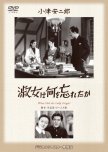
This review may contain spoilers
"I drink upon occasion, sometimes upon no occasion." Don Quixote
Ozu is one of my favorite Japanese directors/writers, but he missed the mark with What Did the Lady Forget for me. Not dramatic enough to be a drama and not funny enough to be a comedy, it languished in a dull middle ground somewhere lost in a mathematic word problem.I knew I was in trouble when for the first 20 minutes of a 70-minute film we were treated to a university lecture on Salmonella and junior high school boys dealing with mathematic word problems. I found myself wondering where Ozu had found the props and how hard the staff worked at polishing the sets to a shine as he required.
The premise of the story was a domineering housewife and a docile professor husband-a classic Ozu gender role reversal. Tokiko, the wife, insisted that her husband play golf each weekend which involved an overnight stay outside of town. The problem being, he didn't like to play golf, so he was always figuring out ways to make it look like he'd golfed but hadn't. Most women balk at a husband taking an overnight trip every weekend instead of encouraging it making this a very foreign concept. Maybe she wanted some peace around the house, but she wasn't doing anything interesting while he was away except gossiping with her friends.
In walked another of Ozu's standard story upheavals-a modern niece, Setsuko, who wore western clothes, smoked, drove, and drank. She and Komiya, the husband, became co-conspirators when he was staying with a male student during his aborted golf trip and they both showed up at the same bar. They had to hide where they had both been to Tokiko who was furious when Setsuko came home drunk after midnight and was brought home by Komiya's student. It actually sounds more interesting than it was, even a night out at a geisha house became a drag.
Setsuko began to berate Komiya for not being masculine enough and not wearing the pants in the family which after a fight between the three ended up with Komiya slapping Tokiko. Instead of throwing fuel on the fire, Tokiko was thrilled and felt like it showed her that Komiya loved her. She bragged about it to her friends and the role reversals were reversed and everything was put back into its proper patriarchal relationship. The cutest scene was at the end when Tokiko made a sweet move on Komiya which led to a night of bliss. It would have meant more to me if he hadn't slapped her to get it. That Setsuko was just as domineering as Tokiko and ordering Komiya about never seemed to occur to her or him. I'm guessing the title refers to Tokiko and how she had forgotten that Komiya was the head of the household and that is what would lead to harmony in their home.
This was supposed to be a comedy, but I didn't get it, if it was funny, it was far too subtle for me. I get that it was a classical farce set up, the situations just didn't come across as very humorous. Slapping Tokiko to put her back in her place ruined this film for me and for the most part I found it lacking in any emotional depth to begin with. The sets, costumes, and frames were attended to with the greatest care as is to be expected with Ozu, it just didn't feel like he developed the story with the same care.
10/3/22
Was this review helpful to you?
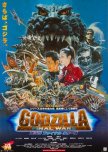
This was almost non-stop Kaiju battles as monsters from the previous 50 years showed up to do battle with Godzilla, including the abomination from the US Godzilla (1998). A who’s who of monsters from the Godzillaverse---Hedorah, Rodan, Kamacuras, King Ghidorah, Manda, the aforementioned Zilla and many others. Mothra even showed up to bat clean-up with Gigan.
There was a lot to love in this movie. The humans were the most interesting of any of the Godzilla movies I’ve watched. It had aliens and mutant humans and futuristic weapons. Kitamura Kazuki as a bad alien with even badder guyliner was over the top. He looked like he was having as much fun making the movie as I had watching it. Don’t expect Oscar worthy performances, it’s not that kind of movie.
How could I not love a Godzilla movie that included my second favorite niche genre-kung fu in it?
Yes, the story could be a bit of a mess, but was easy to follow. The director unashamedly included a lot of the science fiction fads from previous years, the Matrix, Star Wars, Independence Day, Alien, and Jules Verne, among others. Sometimes it worked, sometimes it didn’t. No doubt there were moments of pure cheese. They also must have spent most of their money on the monsters, sets, and CGI because the music sounded like some guy hitting random notes on a synthesizer. The non-stop action from beginning to end could be draining and there were times when Godzilla was absent during a lot of the action with other monsters and the aliens. However, when Godzilla did appear, he showed why he was a force to be reckoned with.
Godzilla: Final Wars features guys in rubber suits and miniaturized cities and vehicles, just as the Godzilla Genie intended them to be from this era. On Godzilla’s 50th anniversary and retirement, it was appropriate. Final Wars was a monster mash that was fun and entertaining from beginning to end.
April 12, 2021
Was this review helpful to you?
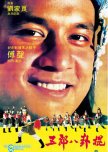
Famously known as the film Alexander Fu Sheng died while filming, in a car accident off set. The script had to be re-worked leaving him out of the final fight scenes.
The themes of loyalty, family, honor and betrayal are woven throughout the movie. Out of seven sons, only two survived a betrayal by a family friend and ambush. One was driven mad and the other hid in a Buddhist temple and refined his pole fighting skills. The mood is bleak and dark throughout the film as the surviving family members seek justice and revenge.
I look forward to movies directed and choreographed by Lau Kar Leung. His fights are always fast and creative. Brutal, too. Gordon Liu is a gifted fighter and with every film of his I see I am more and more impressed. The pole sparring session between Liu and Phillip Ko Fei is not to be missed. Not to be outdone, Kara Hui shines as the sister who has to fight through her own ambushes and entrapment on her way to find her brother. The final fight is a bit gruesome as the monks practice their non-lethal moves that extract an opponent’s teeth. The action is almost non-stop from the opening credits to the end.
The story didn’t move me as much as I hoped it would. The fight scenes were, however, spectacular and worth watching this movie for.
Was this review helpful to you?
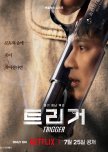
"Everyone has a trigger"
What is the trigger for a person that will cause them to throw away their future for a moment of vengeance wrapped in the cloak of justice? What is the tipping point for a society lured into self-destruction? Trigger challenges the angel on a person’s shoulder to do the hard thing even as the devil on their other whispers for them to do the thing that will feel good in the moment.Due to his violent military past, Officer Lee Do has given up on guns and only carries a taser when on patrol. He seeks to show compassion to victims and enforce the law with criminals. South Korea’s stringent gun and ammo laws are suddenly being flouted by everyday citizens as well as criminals leading to numerous deaths and causing panic to incur in society. Do is determined to discover the source of the weapons and the plans of the dealers before Korea falls headlong into gun culture.
Trigger asked pertinent questions and addressed timely problems. While there were criminal elements getting their hands on guns, the more sinister elements involved the stressed-out citizenry clandestinely led down the path to their own annihilation. Bullied children and adults, the daily slings and arrows of casual cruelty, mental illness, and corporate greed and corruption drove people to their trigger points. When there was no recompense, no justice, no recourse for the downtrodden, desperate people with little to lose turned to vigilante justice with a gun. Trigger asked the audience to contemplate whether guns made people safer or less safe.
The production values were high and the story kept a stringent pace. That’s not to say you won’t have to suspend disbelief on occasion. I was relieved a drama finally showed the drawback to the first bullet in an officer’s gun being a blank. Most of the acting was excellent. Kim Nam Gil can always be counted on for a strong performance. I prefer him with facial hair and a devil-may-care grin, but we all have to suffer for his art at times. Kim Won Hae gave a nicely balanced performance as Do’s supervisor and father figure. He was utterly heartbreaking in one scene. Kil Hae Yeon played another distraught and vengeful mother, knowing how to hit all the emotional beats. I quite liked the music as it was neither intrusive nor overly wrought. My biggest complaint was the lighting and makeup that showed every pore on people’s faces and often the theatrical makeup itself.
Lessons I learned: 1) Always check your horoscope. 2) When holding a gun on a person, never stand too close. 3) Never bring a boxcutter to a gun fight. 4) It pays to know who your employees are. 5) A sincere apology could save your life. 6) “You can’t justify your actions with some sort of grade school philosophy.” You can, but it might not work out so well.
Guns are like cockroaches. Once a home is infested you are never going to get rid of them even if you burn the place to the ground. When trust is lost and people live in a state of fear, they are capable of abhorrent actions. And at least in Dramaland, if reminded of their humanity and shown compassion, people in a broken and suffering world can choose a path to a brighter future. I found Trigger entertaining, though it did bog down near the end. I only hope these forms of entertainment can help societies make choices that result in their children never having to practice active shooter drills at school.
25 July 2025
Trigger warnings: Numerous shooting deaths even of children. Because when guns are plentiful, the most vulnerable all too often fall victim.
Several comely nekkid buns at a gangster sauna.
Was this review helpful to you?
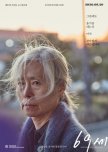
"If the victim was a young woman, would he be in custody by now?"
Director Im Seon Ae shone a spotlight on a topic rarely spoken about---sexual abuse of elders in An Old Lady. If rape is hard to prosecute with a young healthy woman, it’s even harder to prosecute with an “old lady.” There was nothing gratuitous in the film but Im made her point quite clear nonetheless.Sim Hyo Jeong is having a follow-up appointment after knee surgery. The casual conversation with the nursing assistant begins to make her uncomfortable and then the unthinkable happens. She later tells her live-in boyfriend, Nam Dong In, that she needs to go to the police. With some difficulty she fills out the paperwork to report a rape. With even more difficulty she endures a police interrogation where an officer quips that the nurse took “hospitality” too far. The investigation drives a wedge between her and Nam. While Sim handles the situation quietly and begins to distance herself from it as the prosecution shows disinterest, Nam ramps up his efforts to have the nurse arrested.
The film was set in 2012, apparently after a new law was enacted. The crux of the issue for the prosecutor was that who would believe a 29-year-old would rape a 69-year-old? Excuse me while I climb up on my soapbox. For all those sitting in the back: Rape is not a crime of desire, it is a crime of power and violence. Rapists don’t care how old or young a woman is, whether a woman is in a coma, or anything else. These are men who prey on the defenseless. They will prey on “friends”, the drunk girl at the party who passed out on the couch, a stranger, a small child, or old women in nursing homes. It doesn’t matter what a woman is wearing, her makeup or her sexual history. These men are predators plain and simple. The law in most countries barely protects obvious victims of violent sexual assault, much less ones with fewer physical wounds. And too often the law worries about “ruining” a man’s life disregarding the permanent wound in the woman’s.
Ye Soo Jung is an excellent veteran actress who brought quiet dignity and even quieter pain to the role of Sim. Ki Ju Bong as Nam, the widower and once poet, turned determined crusader for Sim also gave a powerful performance. If I have any quibbles, the transitions were wobbly at times, not explaining the changes in the characters’ lives clearly enough.
Despite my reservations about the vague transitions and revelations, this was an important film. Too often, the elderly are scuttled to the shadows so that people can forget them and their own mortality. 10% of people older than 69 suffer from some form of abuse-in their own home, a facility, or elsewhere. They may not be able to defend themselves physically, cognitively, or financially. I applaud Im Seon Ae for calling out the gross deficiencies in the social mindset and law enforcement for sexual abuse of older women. Sim found her own path to justice when the law let her down. Not as satisfying, but what she needed for peace of mind.
“The spring sun shines even on a teardrop.”
25 August 2026
Trigger warnings: Obviously, sexual assault. The assault was alluded to, but not shown graphically.
Notes: In my country it is important to go to a hospital immediately after a sexual assault so that a rape kit can be performed and evidence preserved. Even if you don't think you'll press charges, you might change your mind later and at least in this way you are covered. The rape kits are not always processed in a timely manner, and getting a prosecutor to bring charges is still hit or miss, but at least it boosts the chances of a conviction.
Unprofessional conduct note: The nursing assistant used the "she was asking for it" defense. He should have at least been fired for copulating on duty, even if admin didn't believe Sim's accusation. Try explaining that one in his next job interview.
Was this review helpful to you?
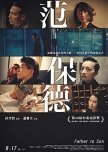
"Stories from the past you want to hear hide in the future"
Father to Son was another slow, meditative work by Hsiao Ya Chuan. Packed with colorful characters denied real life by shockingly short interludes, the film hinted at a deeper story that it could not fulfill. Yet there were still points to recommend from this film about fathers and sons and their complex life cycles.Van Pao Te/Ah Te is a sixty-year-old owner of a hardware store and has made a name for himself with his inventions. He and his wife aren’t close but he helps her campaign for a local office once run by her mother. His son, Fan Ta Chi, is gifted at coding and assists his dad with their business. One day while working in a hospital, Ah Te is seized with pain. An old schoolmate who is a doctor witnesses it and gives him an exam. The results regarding his pancreas are not promising. As Ah Te contemplates his future, the past bids him to call. His father had abandoned the family and moved to Japan when Ah Te was 10, never to be heard from again. Ah Te and Ta Chi take a business trip to Japan and then go in search of his father. Meanwhile, a young man from Hong Kong who is close to Ta Chi’s age visits Ah Te’s old flame.
Father and son relationships can be complicated especially when the primary source of demonstrating love was simply not walking out. Ah Te was a man of few words and fewer visible emotions though the scars from his childhood ran deep. Determined to not make the same mistakes, he sought to give his son an exit ramp from feeling obligated to stay and support his parents. Huang Chung Kun gave a quietly intense performance of a man grappling with a future receding from him and a past overcoming him. Fu Meng Po crafted a son who had come to understand his father’s sacrifice and faults, while gently caring for Ah Te as the illness chipped away at his health.
The cinematography and scene compositions were lovely. Several crucial incidents occurred during the time between 1987-1988. As I’m not a scholar of Taiwanese history, I’ll let better informed viewers seek out the symbolism. Circulation or cycles did play out in the film and it wasn’t hard to see how Ah Te sought to break the cycle his father created, yet still inadvertently may have effectuated his own offshoot of estrangement. The laundress’ niece, Nico, blew into town much in the way Yu Chin had years ago and Ta Chi was attracted to her as his father had been to Yu Chin. The film was slice of life slow with sparse dialogue and I would have loved to have gotten to know several characters and their stories better. My biggest complaint was that past events were intriguing and wished Hsiao had filled in more of their background. My other complaint was the ending which felt out of place in this glacially paced, yet life affirming film.
Father to Son wasn’t a reconciliation film, more like revelatory film. Questions to some answers remained an enigma, and the individual had to discover meaning out of the mist of memory, critical absences, and a flawed life lived with the best of intentions. Each generation had to work to break out of unhealthy cycles even as their eyes were opened to answers that must be experienced to be understood.
16 July 2026
Trigger warnings: Smoking. Brief nudity-both male and female in two different scenes. Vomiting.
Was this review helpful to you?
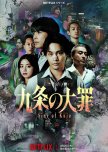
"Many people who can't be saved by the justice system are victimized by it instead"
Sins of Kujo is a law drama that focuses on Kujo Taiza, a defense attorney who specializes in cases involving the weak, the poor, and the wicked. Despite the fact that the judicial system promises representation for defendants, Kujo is treated as a pariah among other lawyers for the clients he takes on.Defense lawyer Kujo Taiza harbors dark secrets and takes on cases others shun. He lives in a tent on the roof of the building he works in having lost everything in his divorce. He has no visitation rights to his daughter and has been completely disowned by his own family. The straightlaced Karasuma Shinji applies to work in Kujo’s practice with secrets of his own. Shinji finds Kujo’s clients distasteful and his methods aberrant. Social worker Yakushimae Hitomi drops in occasionally to help with clients in need of public assistance. Mibu Kengo, a yakuza fixer, helps on the fringe, for good or bad remains to be seen.
One of the things that worked for me in this drama was that there were no meaningful court scenes. We were privy to the actions before court and the resolutions afterwards. No long, drawn-out, overly dramatic speeches with each case. It was also interesting to watch a law drama that covered the gray areas and people. Kujo told Shinji to not confuse morality and the law. His clients were not people anyone in polite society was going to invite to dinner but they deserved to be properly represented just like everyone else. Not that anyone seemed to believe that. Other lawyers, the police, and citizens on the street considered Kujo a crooked lawyer because he represented criminals. He was threatened with prison often, nearly every episode, which I found confusing. Unless he did something illegal, being a defense attorney was an important cog in the wheels of justice. How was representing crooks any less ethical that representing corporate raiders who bled people dry on a grand scale? At least once an episode someone would bang on about how awful he was, despite the fact he also worked tirelessly to help victims and didn’t charge exorbitant fees. He was definitely an unorthodox human rights lawyer at times.
The work relationship between Kujo and Shinji never gelled for me. The connection between Kujo and the tattooed Mibu was far more intriguing. The social worker tended to show up at mealtimes and spent most of her scenes with Shinji. There was an incredibly repressed and narrow-minded activist lawyer that was dangled as a possible love interest for Kujo. Neither female character was written very well.
There was obviously a sinister connection between Kujo, Mibu, the yakuza Kyoguko, and detective Arashiyama though a frustrating dearth of clues as to what their connections were. Kujo was playing a long game but the writers were silent on what that game was. Something you do need to know about this drama is that it ends on a cliffhanger without resolving any of the issues that were hinted at for 10 episodes***. If no season 2 appears on the horizon, I’ll be dropping my score. Up until the last episode I would have rated this drama an 8 merely for not retreading overused law cases and tropes. I’d honestly put off watching this drama until a season 2 has been confirmed.
13 July 2026
Trigger warnings: A long finger lopping scene, nekkid tattooed buttocks, smoking, torture scenes, sexual assault alluded to in a flashback scene.
Snack note: these lawyers and friends ate and drank often so if seeing food triggers you to hit the frig you might need to find an appropriate snack or mindset beforehand. XD
Spoilery thoughts below regarding the unanswered and unasked questions
***
***
***
***
***
***
***
***
Why didn’t Kujo have any visitation rights with his daughter? Was that his choice?
What is the dark secret connecting Kujo and Mibu? They both obviously want to take down Kyogoku.
Was Kujo that absurdly stupid to take and then give back Morita’s phone?
He said he wouldn’t leave it to the courts if a loved one of his had been murdered. Why did we never meet his wife?
Was Shinji’s dad truly into a shady business or was it just a salacious news story?
What really brought Shinji to Kujo?
What was the real reason Kujo was disowned by his family? That one case didn’t seem reason enough for such drastic action.
What is Kujo’s brother up to?
How did Kujo’s dad die?
How was the estrangement connected to Shinji’s family?
Usually, dramas drop a juicy clue before the cliffhanger. Not this one. Combined with not knowing if there will be a season 2, those are the real Sins of Kujo.
Was this review helpful to you?
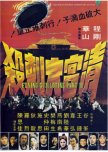
"I don't want their hearts, I only want the kingdom." Are you sure you don't want their heads?
Flying Guillotine 2 was the sequel to the 1975 film Flying Guillotine. Campier, bloodier, but less fun than the original, FG2 had a similar cast with people playing different characters because most of their characters were killed off in the first movie.The Qing emperor Yung Jing is furious that the ex-Flying Guillotine Ma Tang has not been found. Ma is not the only worry Yung has, rebels have been trying to assassinate him. The emperor has continued to have righteous officials and scholars murdered which does not sit too well with the surviving officials or the people. The rebels led by Hero Jin are planning to mass on Hsia Mountain. Before they can leave, the F.G. squad attacks. Most of the rebels survive because Ma Tang arrives with his Iron Umbrella that can defeat the spiraling death caps. Both sides accelerate their arms race in the hopes of defeating the other and being left with their bodies intact.
Ti Lung took over Chen Kuan Tai’s role as Ma Tang. With a huge cast, his time was shortened compared to Ma’s prevalent screen presence in the 1975 film. Shih Szu played Na Lan, the daughter of a minister, with a personal grudge who was determined to kill the emperor. And one of my faves, Ku Feng, brought the authoritarian threat to his role as the emperor. My other favorite, Lo Lieh, was stuck working with Wai Wang who had no idea how to play off another actor. I could see Lo trying to connect with him as Wai looked like he was thinking about what he was going to have for dinner.
There were substantially more and longer fights than in the first film all competently choreographed by Tang Chia. The problem with having such a large cast though is that the stakes were watered down. It was hard to care about 90% of the characters and whether they were separated from their heads. The flying guillotines, even with their upgrades, lost their spiky menace as they decapitated random characters too fast to process. The first film gave weight to the characters and corruption that added suspense and concern.
Flying Guillotine 2 aka Palace Carnage was fast paced with plenty of action, yet it felt strangely hollow with so few characters to connect with on a screen plastered with bodies. It’s worth a watch if you like the actors or the guillotines, if you come into the film with low expectations. As always, I rated it on a kung fu curve, and was probably being generous with a 7.0/10.
24 March 2026
Trigger warnings: Decapitations, of course. Arms chopped off. Two scenes with naked women for no other reason than it was 1978. A bird in flight was skewered with a sword.
Was this review helpful to you?
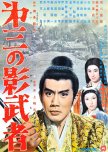
"In this world, the weak are playthings to the strong"
Third Shadow Warrior showed how man’s desire for carnage and power wasted the lives and resources of the land. Whether a farmer dreaming of being a samurai or a samurai lord desiring to rule everyone, the greed sank deep into the hearts of the sword bearing warriors.In 1564 the Hida area within the mountains escaped the large armies’ invasion. That didn’t stop smaller forces from desiring to rule the clans. Lord Yasutaka was winning the battles and close to being the ruler supreme of the Hida. A young farmer named Ninomiya Kyonosuke’s dream of being a samurai appears to be answered when Shinomura Saheita comes down from the castle to hire him. Ninomiya discovers he is to be one of Yasutaka’s three doubles, trained to exactly mimic the lord. Whatever troubles befall Yasutaka, befall the three doubles as well.
The message behind the film was strong. Samurai were not to be admired as they were blood-thirsty fighters who only desired more power and wealth never caring about anyone below them in stature or station. Each of the clans betrayed the other in order to move ahead. Betrayals were also rampant within the clans. Despite making strides forward, Ninomiya’s future burned around him with every step. Never clever nor ruthless enough, the farmer fell victim to others with more power. His own greed spelled his doom.
As much as I appreciated the bleak, disturbing story, the unfolding of the revelations felt perfunctory. I called out each disaster before they occurred. While I felt sorry for Ninomiya losing his identity, his impulsive actions also sealed his fate. His was not the sharpest katana in the drawer. The acting for many of the characters was also overly theatrical as if they were on a stage playing to the back row.
Third Shadow Warrior played out the ridiculous degrees of loyalty some samurai were called upon to enact. Not that the nobility and superiors were required to show the same loyalty, more often than not, those ranked below them suffered terrible consequences. Fate was not kind to those who did not understand their place and the sacrifices mandated upon them. Definitely worth a look if you enjoy anti-samurai or Jidaigeki films.
18 March 2026
Trigger warnings: Loss of eyes, loss of an arm.
Was this review helpful to you?
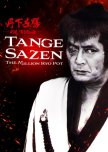
Tange Sazen Kenfu! Hyakuman Ryo no Tsubo
2 people found this review helpful
"See you never!"
Tange Sazen: The Million Pot Ryo is a famous tale. My first encounter with it was from the 1935 film with a similar title. While the 1935 film took a lighthearted approach, 1982’s was much grittier. Not an unexpected turn from director Gosha Hideo and star Nakadai Tatsuya.The “Shadow Shogun,” Gurako, convinces the shogun to have the Yagyu clan pay for the temple’s restoration. A sum of money designed to bankrupt them. Not to worry, the oldest Yagyu member of the clan knows of a treasure kept secret for emergencies, hidden within a vessel in the family vault. What he doesn’t know is that the walls have ears and now more than one interested party heads to find the vessel. When an orphan boy becomes embroiled in the mad chase, a one-eyed, one-armed ronin becomes involved…a problem for everyone seeking the fortune.
Tange Sazen had been unbeatable before the loss of his limb and eye. Even now, no one truly stands a chance against him. As cunning as he is skilled, Sazen manages to resolve the myriad of problems the treasure creates, though not how everyone else might want them solved. At 50-years-old, Nakadai still made for a compelling and fierce warrior. This Sazen was cynical, having been betrayed and maimed by people he trusted. Despite his missing arm and eye driving him back to his samurai life, he was still comfortable among thieves and prostitutes. The thieves Yokichi and Ofuji went from being adversaries to allies.
This made for television movie may not have been the highest quality project either Gosha or Nakadai worked on, but it was above average in entertainment as the different factions killed each other off in search for the treasure with Sazen always one step ahead or into his cups. Whatever he was up to, Nakadai’s Tange Sazen was fascinating to watch and worth a look at this older tv film.
17 March 2026
Was this review helpful to you?
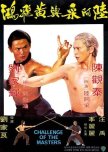
Wong Fei Hung’s friends all train with Master Lin. His father refuses to let him train because his temper is too uncontrolled. During the yearly firecracker contest, Master Pang’s students cheat and fight dirty to defeat Lin’s students. Officer Chuan Wing is hunting a thief and murderer who uses a lethal kick. During one of WFH’s many skirmishes around town he thinks he met the thief who resides at the Pang school. Chuan Wing convinces Master Lu Ah Tsai who had trained WFH’s dad to train the son as well. The cocky new student and teacher travel north to train for two years.
This version of WFH was insufferable. I kept hoping the arrogant toddler would get his butt handed to him over and over. Even with his new sifu he was hot headed and ready to fight at the drop of a hat. Maybe that would have been okay if the fights were good. There were really only two fights. Lau Kar Leung vs Lau Kar Wing and later Lau Kar Leung vs. Gordon Liu. Sadly, both fights were rather short. The two free for alls in the firework contests were just school yard brawls. Even the training sequences with Gordon vs a fortune in dishware were lackluster.
There was no mistaking who the troublemakers were going to be when Chiang Tao and Fung Hak On walked on screen. This WFH was just as bad as those characters at the start until he miraculously, and off screen, turned into a saint that could confer transformation with a look later in the film. Ugh.
Watching Wong Fei Hung throwing hissyfits was not entertaining for me. Watching the Lau brothers fight was. Quick and talented, I needed more of that and less of negative impulse driven characters swaggering around. The complete 180 of WFH and the Pang crew and murderer was unearned and irritatingly bad writing. Rated on a curve.
14 March 2026
Was this review helpful to you?
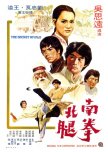
"One man alone can't fight injustice"
Don Wong, John Liu and Hwang Jang Lee all harbor secrets and are deadly Secret Rivals. This was a Hong Kong movie filmed in the RoK and used a number of Korean stuntmen and actors. The scenery was all in Korea as well.John and Don wander into the Prince’s city with different reasons for being there. The Prince is having a contest to hire the best fighter for his bodyguard. The fights are to the death. What the fighters don’t know is that the Prince and the Silver Fox stole a shipment of gold three years ago from the Chinese. They hope to pin the theft and a murder on the new bodyguard. Both John and Don fall for the lovely Ching Chin Chin who is the daughter of the inn’s owner.
The story was thin and the camera work not so great. What was good? If Hwang Jang Lee, Don Wong and John Liu are in a film there will be plenty of high-flying kicks which rarely used wires or undercranking. The Silver Fox had two of the best legs in the business. I didn’t really care much about the story, HJL flying without the use of wires, kicking high, hooking, and twisting, is always fun to watch. Of course, the stuntmen were called upon to do a few flips and somersaults here and there but the fights were largely au naturale.
The film was badly faded with white pock marks and green streaks. The only copy I could find was dubbed in English with grainy tin can sound. It’s the same guy who does all the male voice with a female actor doing all the women’s voices. No subtitles available. I tried to not let any of these things affect my review…too much.
If you like old kung fu flicks with creative kicks, this is one to try. Graded on a curve. Really missed HJL’s mom hair and 70’s stache.
8 March 2026
Trigger warnings: Lots of bodies, but no spewing blood
Was this review helpful to you?
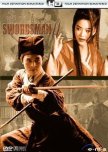
"As long as there are people, there will be grievances"
Swordsman 2 is a film I’ve wanted to watch for a while now. Jet Li and Brigitte Lin? Sign me up! Not quite so fast Butterfly. As someone who doesn’t like Hong Kong slapstick humor, I discovered I would have to sit through nearly 40 minutes of it before the fighting and story really kicked in. Once the story and fighting began in earnest, I was on board.After the betrayal in the first film, Ling Woo Chung and his junior sister Ngok Leng Saan/ The Brat are headed to meet up with their brothers and leave the martial life behind. Along his drunken way, they find themselves in the middle of a skirmish. Ling takes note of a beautiful woman involved. They travel on to the village where Ling’s lover, Ying Ying, lives to meet up with the others but find bodies instead and Ying Ying gone. Fearing she’s been kidnapped just like her father who is the head of the sect, Ling realizes he’s going to have to take a detour away from retirement mountain.
The first forty minutes were needlessly confusing and painfully slap happy. Japanese ninjas were wedged into the story and never properly elaborated upon. By the time the story set in and the characters settled down, I was honestly ready to check out, but I’m glad I stuck around. Brigitte Lin’s Invincible Dawn/Dong Fang Bu Bai was the best part about the film. She gave a complex and compelling performance, giving dignity to a character that was spoken about derogatorily due to a physical and mystical sex change which to make matters worse, left her not only without a penis but as a (gasp!) woman. Any time Invincible Dawn was not on the screen, the film suffered for it.
Dawn wanted to rule the country and make her people powerful and respected. While she was a villain, the sect leader she’d imprisoned was equally as bat sh*t crazy. Ling may have wanted to get away from it all but trouble was going to come calling no matter where he went. Jet Li was at his best when Ling stopped pouting about not having enough wine and got serious about dealing with the baddies. I’m not sure I bought him as a romantic lead, fortunately Brigitte was more convincing and I could forgive anything for her.
The fights were mostly swords and creative uses of sewing needles. Mystical skills were also utilized. Spinning, jumping wire-fu, undercranking, and blurred camera work often shot in the dark was dizzying. Some of it worked for me, while other times it felt like overkill. Speaking of killing, the bodies stacked high, at least what was left of them. I don't know if it was the style or the film has degraded but it had that gauzy effect where I worried I needed to have my glasses prescription checked.
Other than the first 40 minutes and the homophobic and sexist jokes, I enjoyed the last hour of the film. Again, largely due to Brigitte Lin. Swordsman 2 is a popular film from 1992 and I’ve always been upfront with not caring for this brand of humor so I’m sure others will have a much better experience with it than I did. If you enjoy older martial arts fantasy films and/or the stars, this is one to try.
7 March 2026
Housekeeping note: My 1200th review!
Trigger warnings: SNAKES. So many snakes in so many gruesome ways. I had to FF in a few places. Decapitations, dismemberments, exploding bodies, bodies and horses cleaved in half. Eye injuries. Suicide. Buckets and buckets of blood splashed and sprayed. Rats. Sexual content but suggested more than shown.
Was this review helpful to you?
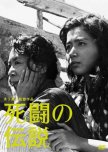
"It was a mad flood of frustration storming toward an outlet"
Watching “A Legend or Was It?” aka “Legend of a Duel to the Death” was the emotional equivalent of being dragged over railroad ties by a runaway train. Only eighty-three minutes long, every second rumbled with the pain of injustice, corruption, and mindless mob mentality. A thinly veiled criticism of Japan’s wartime atrocities and the mindset that led to it, this film was not for the faint of heart.The Sonobe family from Tokyo has been evacuated to a small northern village during the summer of 1945. The father and one son are MIA. The eldest, Hideyuki, has been medically released from military service. His sister Kieko is engaged to the mayor’s son, Goichi. When Hideyuki sees Goichi he recognizes him as the soldier he saw killing and raping Chinese women. No way was he going to let his sister marry the monster. Offended at the rejection, Goichi and his father begin framing the Sonobes for stealing and vandalism. The villagers already resent the outsiders and find it easy to blame them for any crime, indeed the failure of the military to succeed as well! When Goichi determines to re-enact his military crimes, the resulting actions cause the simmering village to explode.
The opening prologue was filmed in color displaying a beautiful mountainous area with friendly people laughing and helping each other out. In minutes, the color drained away and the narrator foretold, “Not a single person talks about what happened…these mountains still glow red under sunset clouds…Their souls feel quiet over the nightmares of bygone days.” Tragedy was creeping toward the Sonome family for no other reason than they were outsiders. That and the Takamori family ruled over the village like dictatorial medieval samurai lords. One did not tell them “no.” As events spiraled out of control, a gun wielding mob was enflamed by Takamori who burned down the rule of law and all reason.
The villagers had not had access to true war news and were fed what the government decided so when they heard how close Japan was to losing the war they were devastated. All the sacrifices in money, food, and sons, had been for nothing. Frustration, fear, and deep-rooted anger needed an outlet and more importantly…someone to blame. The alien Sonobe family was the perfect scapegoat for their hopelessness. “…the Japanese people woke up from the nightmare…They swore silence to their souls and would not speak of it.” Rather than justice or introspection, the villagers’ peace had been built on the blood of the innocent. All they had to do was shove the harsh truths down and pretend nothing happened. “One day, it will be told as a legend of a mountain demon.” After all, they were incapable of rape and murder and senseless actions. I’d say the film overexaggerated the mob mentality, but I’ve lived too long and know how it can crop up anywhere when sacrificial offerings are needed to calm the demons of fear and greed. Don’t think, don’t ask questions, just grab your weapon and kill the other. “A Legend or Was It?” was 83 tension filled minutes that were about as comfortable as a hair shirt, but also an important lesson. The loss of justice, reason, and compassion can cause people to carry out heinous actions against not only ‘the other’ but their own neighbors as well.
26 February 2026
Trigger warnings: Sexual assault, though nothing too graphic was shown.
Musical note: The film made use of a mouth harp during especially tense moments and it was quite effective.
Was this review helpful to you?
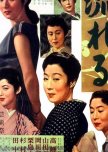
"What the future holds can't be known"
Flowing was a 1956 Naruse Mikio film with an all-star female cast. Centered on a failing geisha house and the women who worked there, it showcased their personal problems, debts, and loyalty.Otsuta is an aging geisha (39 IRL) whose house is diminishing. Once there were 7 geishas working there, now only 2 remain (one of whom is 50-years-old) and her bills are stacking up. Her daughter, Katsuyo, only lasted six months as a geisha and is now looking for work to supplement the family income. Otsuta’s lazy sister and young daughter reside in the house ever since she and her husband broke up. Rounding out the family connections, Otsuta’s step-sister helped her finance the house after Otsuta mortgaged it to give her lover money. The lover promptly left her after receiving the cash. Now she is saddled with heavy debt and a nagging, condescending sister. Into this mix walks in Rika, an older widow (45-years-old) who needs a job and is hired as the maid. Otsuta scrambles to obtain financing to keep her house open and also must confront an extortionist ex-employee. Life as a geisha is never easy.
To clarify, this was not one of those geisha films where the women slept with their customers, these geishas were for entertainment purposes only. The whole career field was languishing in light of modern amusements. Otsuta also wasn’t the most astute businesswoman or ethical. She had a habit of skimming the girls’ profits. Katsuyo felt like she was caught between the devil and the deep blue sea as the daughter of a geisha. She would feel “too small” if she married into another family and what man would marry into hers? Job opportunities for women were few and far between, with long lines around the temporary employment agencies. Rika provided the warmth of the film as she cared for the women calmly, insightfully, and nearly always with a smile. The film was based on a book written by a woman who had been a maid in a geisha house. Currently Tanaka Kinuyo is listed as supporting but she was every bit a main character and our avatar into this world.
It would be difficult to gather a stronger female cast---Tanaka, Yamada Isuzu, Takamine Hideko, Okada Mariko, and Sugimura Haruko to name but a few. It did create a few issues with the ages of the characters. Yamada at 39 was four years older than “older” sister Kahara Natsuko (35). Takamine was just 7 years younger (32) than her film mom! I was actually shocked to find the sisters were only in their 30s. Age discrimination was also shown as poor Rika had been turned away from other jobs for being too old at 45--well, clutch my pearls! And oddly Otsuta found the name Rika to be too complicated and foreign to say so she nicknamed her Oharu, the movie character Tanaka played in “Oharu” (1952).
Much like a river, Flowing, carried these women downstream in their lives, inexorably pulled by age, societal changes, and a need for love and acceptance. Loneliness was bred into their lifestyle despite spending their days entertaining men with song and shamisen. Relationships, like money, flowed in and out of their lives. Stability was a hard boulder to cling to as life rushed around them. I loved the cast and idea behind this film, yet I also found it overly long and repetitive. This is one of those films I desperately wished to enjoy more than I did. It was not a loss, for how could spending two hours with women displaying their polished craft ever be a waste? Even when my mind wandered, I was grateful to take a ride on the river of time with them.
19 February 2026
Was this review helpful to you?


