

 148
148 438
438 16
16 2
2 6
6 3
3 8
8 10
10 3
3 13
13 1
1 1
1 1
1 1
1 2
2 7
7 9
9 5
5 9
9


Pearl Chang Ling starred as Lu Du Shing AKA Lone Traveler Wu, the swords"man" in search of Peerless Swallow, a renowned swordsman. Poor Pearl was dressed in a wooly tunic for the length of the movie. She looked more like a vagabond than a skilled swordswoman. Violent and with a temper to match, she dispatched anyone who crossed swords with her, or just plain crossed her, ruthlessly. As per usual, everyone accepted her as a man until the shocking reveal late in the movie. Pearl did a good job playing the single-minded warrior who wanted to be free of her duty and was willing to slice her way through the kingdom to get there.
The plot was needlessly complicated by varying factions which didn't add anything to the main story. The plot revolved around Wu and Peerless Swallow's family histories and the dire consequences and burdens left to the children of swordsmen. Wu had sacrificed her entire life to become a swordswoman to fulfill her father's wishes. Chained to a sword for ten years, unable to free herself of it unless she fulfilled her mission or died trying. Ling Yun played Peerless Swallow, the object of Wu's scorn. He gave a suitably noble turn as a man who was tired of the swordsman code of endless fighting.
My Blade, My Life was shot in Taiwan. The sets were rudimentary, the costumes outlandishly bright at times. The score was forgettable except for the original Star Trek sci-fi sound effects during fights.
If they'd trimmed this movie to around 90 minutes and cut away much of the useless cast and story, I would have rated this movie higher. As it was, it dragged on too long when Pearl and Ling Yun were the heart of the story.
Was this review helpful to you?
Beast Stalker is a suspenseful thriller that felt like it could have been better than it was. Hampered by a shaky camera that looked like they were filming during an earthquake, erratic close-ups, and choppy editing, it was hard to follow some of the action scenes without feeling nauseated. The actual car crash scene was done quite well, choreographed by Bruce Law, even if you could tell they were the only cars on the road.
The acting ranged from adequate to good. Nicholas Tse did a fine job portraying a dutiful cop whose actions led to a tragedy and the shattering personal and professional fallout resulting from it. Nick Cheung played the scarred villain on a collision course with Tse's cop. I honestly felt if he had been able to bring more nuance to his role as conflicted as his character was, it would have made his story arc more powerful. I was most impressed with Wong Suet Yin who played Ling, the prosecutor's youngest child. The daughter was kidnapped to force her mother to capitulate to the Big Bad's demands. Wong beautifully portrayed a little girl who never gave up and was resourceful in trying to rescue herself despite numerous setbacks.
Overall, too many characters took away from the central core of the story for me. In a thriller like this, the fewer characters the better, and the better to develop those few fully.
The film displayed how a fateful accident drove people to drastic measures both for good and evil which brought up the age old question, "Do the means justify the ends?"
Beast Stalker is not a bad film, just remember to take your Dramamine before you start it.
Was this review helpful to you?
Three Kingdoms: Resurrection of the Dragon
2 people found this review helpful
Produced in China it took me a few minutes to adjust to familiar actors being dubbed. Having watched so many Cdramas I was able to fall into it pretty quickly.
I have only the most cursory of knowledge about this time period and will leave it to others to judge it on it's historical accuracy. As with all movies based on historical characters, I take them with a grain of salt knowing the makers have their own agendas. Fact, myth, and legend are often intertwined to tell a good story. The same goes true with costumes and armor, whether they are accurate or made to be pleasing to the eyes is not for me to decide.
Three Kingdoms was beautifully shot and scored. Costumes, sets, and locales were all well done and chosen. Mountains above the plains made for desolate places of battles.
All of the actors did a good job of portraying their characters, though most had very little time on screen. The great Ti Lung barely had any lines as one of the Five Tigers. Vanness Wu was in and out almost before I recognized him. Yueh Hua as the warlord and later emperor Liu Bei showed up long enough to make a small impact. The focus of the movie was on Andy Lau's Zhao Yun and Sammo Hung's Luo Pingan. The two were war buddies with Zhao's story told through Sammo's eyes and jealousy. Maggie Q also had a significant role as Cao Ying, the leader of the of the opposing forces in the final battle. Resourceful and ruthless, she made an excellent adversary for Zhao.
Three Kingdoms downfall for me was that there was no development of characters, no reason why they were continually at war, nothing much to hang onto. It was a series of violent battles over three decades bound by a thread of characterization between the two friends. The movie ended with me knowing little more than Zhao Yun was a tiger in battle and his friend envied his success. Andy and Sammo managed to imbue their characters with more than what they were given to play, a testament to their acting abilities and chemistry.
The short, creative battles are worth watching the movie for, as well as the pairing of Andy Lau and Sammo Hung. As long as you aren't expecting much more it's entertaining.
Was this review helpful to you?
The White Haired Witch of Lunar Kingdom
2 people found this review helpful
The no-name female lead was a Robin Hood who stole from the rich and gave to the poor. A brilliant fighter, she looked after her group of people and helped protect their small, somewhat peaceful island within a sea of deceit and battles. The new leader of the Wu Dang tribe stumbled across her on his way to deliver the curative red pills to the emperor. He promised to give her a name worthy of her beauty and skills. Along the way he was framed for murder, she was framed for murder and everyone ended up in the mountain fortress. As often happens, they fell in love and he gave her a name.
Trying to keep up with all of the plots and traitorous groups was difficult at best. Most of the time I was a bit lost as to who was supposed to be the bad guys. Except for Wu Dang and the mountain fort, the rest were duplicitous murderers. When the story stayed with the lovers, I found it to be engaging. Elsewhere, it tended to lose it's way, especially near the end.
The heart of this movie was the love story with all of the betrayals swirling around them for external conflict and to test their love and trust. The actors certainly looked earnest enough, though I wasn't completely sold on their chemistry. I'm really not sure why it was titled, The White Haired Witch. Zhuo Yi Hang had substantially more time on screen and development than Lian Nishang (the name he gave her). I was disappointed that she was given less time and character development for what could have been a much more interesting character. The titular character shouldn't be relegated to practically a supporting role in her own film.
The cinematography and costumes were beautiful and the natural scenery made for alluring settings. The movie did not disappoint in these areas. The CGI was disappointing when it came to people leaping around the mountains.
I thought many of the fight scenes were good. Most were fairly short and brutal. It was a wuxia which meant there was some flying around and special powers. None of that bothered me in the least. The only problem I had was when huge armies clashed with the view narrowed down to a few people making the battles small in scope.
The White Haired Witch of Lunar Kingdom had great potential, it was beautiful to look at but was let down by the muddled political plots and lack of meaningful evolution for the main character.
Was this review helpful to you?
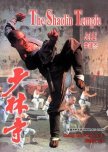
The plot is typical of a lot of kung fu movies. The father was killed by an evil warlord. The wounded son ended up at the Shaolin temple. He learned martial arts so that he could enact revenge. Killing was against the Shaolin way leading to conflict with the warlord and the monks. Anyone who watches old kung fu movies already knows this plot by heart.
If you are looking for a captivating story or character development you won't find it here. What you will find is a movie filled with real martial artists, including some champions instead of actors, meaning the fights were fast and used real moves with almost no wire work.
Disappointingly the martial artists did their own choreography with mixed results. Some of it was very good, other times it was awkward with people in the background jumping up and down with spears, interacting with no one. Jet Li was fast and furious and light on his feet, no complaints about his skills. Yu Hai, a real life Master, showed off a little of his Mantis form. The dialogue was kept to a minimum for the most part. With the exception of Jet Li's and Yu Hai's characters I wasn't emotionally invested in any of the rest as none of them were differentiated.
Fair warning there were several instances of animals being killed on screen and in another a family pet was "hilariously" accidentally killed and eaten. China could really use PETA.
The real temple and scenery around it were beautiful. The story was loosely based on an event in the temple's history. The movie started and ended with shots of the temple and surrounding area and bits about it's history from a narrator. At first I thought I was watching the wrong movie until the story obviously began. Though nice to hear about the history it was a strange way to begin a movie.
Shaolin Temple was enjoyable for me just to watch Jet Li when he was young. One particular set up of him training through the seasons sealed my score for this movie because I liked it so much. Most of the fights were engaging and creative if in need of an overlying guiding hand. If nothing else, Shaolin Temple is worth it for martial arts movie enthusiasts to seek out to see Jet Li launch his movie career.
Was this review helpful to you?
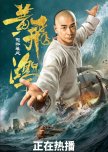
The story is fairly weak despite the aforementioned conflicts. Most of the intrigue introduced is an excuse to set up another fight scene. The movie's strength lies in it's numerous fight scenes. Summo wrestlers, ninjas, and your garden variety assassins show up from time to time to battle WFH and his merry band of kung fu warriors. Vincent Zhao does a good job as the high flying and noble Wong Fei Hung. His subordinates can be more of a detriment than an asset at times, both the characters and actors. The bad guys, even the femme fatale don't seem particularly menacing or much of a threat to WFH.
Warriors of the Nation is a perfectly enjoyable kung fu movie if you enjoy kung fu fights, don't mind a little wire-fu, and don't expect any character development or a cohesive storyline.
Was this review helpful to you?
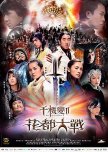
Honestly, this movie annoyed me so much it's hard to write a review. I may never get Charlene Choi's screaming out of my head.
The basic plot is that an evil queen ruled the land with an iron fist. It's fantasy kung fu land where people can shape shift and use special powers. Donnie Yen showed up in a small role to find The Chosen One and also to find Excalibur so that the rightful male king could kill the queen and rule as was proper. He didn't have much to do with the exception of one big CGI enhanced fight with Jackie Chan in an even smaller role. What was the name of the character Donnie play? Crouching Tiger, Hidden Dragon. Again with the complete lack of originality.
One of the main leads was Jackie's son, Jaycee Chan, who was as interesting to watch as a wet blanket. Wilson Chen played his buddy, Blockhead. Don't laugh, Jaycee's character's name was Charcoal Head. One of these two doofuses was future royalty, if I'd been Donnie I would have had to reevaluate how bad the queen really was. Jillian Chung played the cold Blue Bird, it would only take a man to warm her heart. The aforementioned Charlene Choi played the Dumbell/male slave seller out to make money. The women were supposed to be skilled in martial arts, but at the first sign of trouble screamed and hid behind the men. A feminist's dream this movie was not, ultimately if any good came out of a situation it was because a man handled the problem.
The four main characters simply could not carry this movie due to the actors' limited skills. It reminded me of cheaply made fantasy television show where all the actors had to do was look pretty and wait for the stuntmen/stuntwomen to jump in and do the heavy lifting for the fight scenes. The scenery and sets were beautiful and you could tell the producers had sunk some cash into them. CGI and wire work were used extensively in the fight scenes with mixed results. In 2004 the CGI should have been better.
I'm sure I wasn't in the age demographic this movie was aimed at which may explain why it was so irritating to me. Your experience may vary depending on how many Chosen One stories you've seen and whether you find the leads attractive or likeable. For me the only scene that I found remotely entertaining was the fight between Donnie and Jackie and five minutes out of 105 hardly made it worth it.
Was this review helpful to you?
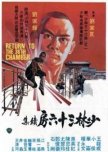
Scaffolding Kung Fu vs Bench Kung Fu!
Mantis, Tiger, Drunken, and Monkey kung fu…just when you think Lau Kar Leung might have run out of kung fu forms for choreographing martial arts scenes, he’s given the dream combo of Scaffolding kung fu vs Bench kung fu!Gordon Liu returned in this sort of sequel to The 36th Chamber of Shaolin. The third movie, Disciples of the 36th Chamber was actually a direct sequel to the original movie. This time he played a conman, Chao Jen Cheh, masquerading as Monk San Te in order to intimidate the new violent Manchurian overlords of the local cloth and dye factory. The Manchurians in charge bullied and beat their employees as well as reduced their worker’s pay to pad their own pockets. The only problem was, Chao didn’t know any kung fu and was soon found out which made the situation even worse for the workers. The people who had talked him into helping them begged him to go to the real Shaolin temple and learn kung fu so that he could come back and protect them.
Chao managed to maneuver his way into the Shaolin Temple but the real San Te saw through him instantly. After comic segments which went on too long for me, San Te put Chao to work building a scaffolding around the temple. Chao watched and learned from the monks as he practiced the drills while building the scaffolding, subconsciously developing his own form of kung fu. Three years later, he left the temple thinking he was a failure until he returned home. It turned out San Te’s covert method had taught him all he needed to know to handle the bullies. Admittedly his training smacked a little of Karate Kid’s “wax on, wax off” style of kung fu training but the final fights were entertaining enough to stretch my disbelief. It was only at this point that I started to enjoy the film. The fights were among some of the most creative, fun, and least deadly that I’ve seen. It was worth sitting through the rest of the film to watch Gordon Liu and Johnny Wang show their stuff.
I thought Gordon Liu showed a greater range of acting in this film. Chao not only learned kung fu, he also received the character development this unlikeable guy needed. Gordon Liu’s martial arts skills and moves were spectacular as always. I wait in anticipation for when he tears his shirt off and gets down to business. The less said about Hsiao Hou’s fake teeth and giant mole, the better. Johnny Wang only needed to look grim until it was time to fight, like a wrestler waiting to be tagged in.
Lau Kar Leung rarely disappoints with his direction and who would have thought bamboo ties could make such an effective kung fu weapon! Chao was faster than an elf wrapping packages for Christmas with his tying technique. While the great final act raised the score for me, it couldn’t completely erase the first half of the movie which dragged on too long for my taste. If you enjoy kung fu comedy you might enjoy this movie from beginning to end. If not, the last third of the film makes it worth watching.
Was this review helpful to you?
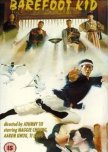
Dyeing to Know You Better
The Bare-Footed Kid started off sweet enough, turning darker with each new pair of shoes the shoeless youth acquired.Ti Lung played Tuan the noble, skilled fighter living undercover as a supervisor in a cloth dyeing shop. Maggie Cheung, Miss Ho, was the lovely owner of said shop with a secret dyeing technique and the den mother to her workers. These two had an underlying affection for each other that gradually made its way to the surface in a meaningful exchange. Tuan and Miss Ho were the heart of this film and the most compelling characters.
Aaron Kwok played Yuan, the titular character. Bare-foot, broke, and illiterate he came to town looking for his deceased father’s friend, Tuan. Yuan was naïve, but a ridiculously skilled fighter who couldn’t even write his own name which brought up some questions about how he was raised that are never answered. Enter Huang Lien as his love interest who was a teacher in her father’s school. Their budding romance had a rocky start and a rockier ending.
Yuan initially went to work for the kind Miss Ho, making missteps that landed him in the employ of the Big Bad. He earned a pair of stylish shoes, a pocketful of change and soon enough a heart full of regret.
The younger actors’ performances were fine as their characters went through life changes. Aaron Kwok made a sweet country bumpkin who was briefly led astray, his conscience weighing on him as reality sank in. Ti Lung and Maggie Cheung were a couple I never knew I needed as their subtle performances delivered an emotional impact that stayed with me.
Compared to older kung fu movies, the cinematography was excellent with beautiful scenery, lighting and colors. The score could be oddly synthetic at times but it wasn’t anything that distracted me much, I’ve heard much worse in these kinds of movies.
My biggest complaint, and what dropped the rating for me were the fight scenes. Ti Lung is a martial artist, one of those whose movements often needed to be slowed down for the camera. He also had a presence which made you believe he was nearly indestructible. I’m guessing Aaron Kwok’s skills, if he had any, were much more rudimentary, as his fight scenes included a lot of wire-work, possible doubling, speeding up, and blurry camera work, especially the huge concluding fight. One of my favorite martial arts choreographers, Lau Kar Leung, choreographed the fights. Whether he was compensating for the lead’s lack of ability, having an off day, or trying something new, I found the final fight to be hugely disappointing.
The Bare-Footed kid started out with some comedic moments ending as kung fu comedies often do, in heartbreak. Aside from the poor final fight which was brutal, this movie was entertaining. I could recommend it to kung fu enthusiasts with a few reservations.
Was this review helpful to you?
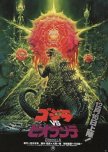
Godzilla vs a Giant Rose!
Godzilla’s biggest and most terrifying opponent is---- a giant rose bush? Breaking with the formula of Big G fighting his traditional opponents, the writers took a chance and invented Bolliante, the most creative Kaiju in the Godzillaverse.The biggest problem for me with this film was that it took a long time to gain any traction. The humans had a lot going on, dominating most of the story. One of the characters, a scientist, had fused Godzilla’s cells from a previous battle with a rose he’d already infused with his dead daughter’s DNA in hopes of keeping her soul alive, thus accidentally creating Bolliante. American terrorists and a Middle Eastern terrorist were running about killing people and trying to steal the Godzilla cells and super secrety secret nuclear energy eating microbes. In the process they free Godzilla from his volcano prison inside Mt. Mihara. Throw in a bunch of politicians who want to use all of the discoveries as weapons against Godzilla and their enemies and it’s a lot to take in. I can't forget the ESP students who can communicate with Godzilla and Bolliante. The young commander of the Super X-2 Godzilla fighting drone seemed superfluous most of the time with all the political maneuvering, scientists, terrorists, ESP folks, and agents running around.
None of the characters of this large cast were developed and the acting was lackluster at best. Without an emotional connection to the characters their deaths and decisions held little meaning. The military walking about and giving monotone orders wasn’t any more interesting than the spies chasing each other around.
What I liked about this movie---Big G looked good, I really liked this costume. Bolliante was a beautiful giant rose and then turned equally frightening. B was one of the more interesting and sympathetic antagonists for Big G. She was also the biggest and one of the most fearsome he'd ever faced. Historically speaking, Godzilla has had his hands full when facing a female opponent, Mothra for another example. This movie was darker and more violent than many other Godzilla movies. The fights were intimate and fierce, really well made using this technology.
The miniatures and pyrotechnics were spot on emphasizing the size and destructiveness of the great monsters tearing through the city. The music was best when using a few of Ifukube’s familiar Godzilla tunes.
Like a lot of Godzilla movies, this one had a moral to the story. This film focused on the hubris and greed of humanity and how man creates some of his own biggest problems. Godzilla and Bolliante weren’t the true monsters, it was the men and societies who created them. Plus, you’ll think twice the next time you walk into your garden.
Was this review helpful to you?
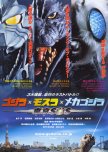
Godzilla X Mothra X Mechagodzilla: Tokyo S.O.S.
2 people found this review helpful
Godzilla: Tokyo SOS is a sequel to Godzilla X Mechagodzilla (2002) and a sequel of sorts to Mothra (1961). It's always good to keep in mind that Mothra is the only Kaiju to actually defeat Godzilla and kick him out of Japan before.
Kiryu, or Mechagodzilla, was badly damaged in the fight against Godzilla in the last movie and is still under repair. The military story was tepid at best. Yoshito is part of Kiryu's maintenance crew and dreams of one day piloting the Mechagodzilla. I missed badass pilot Akane Yashiro from Godzilla X Mechagodzilla. She is one of my favorite characters from all of the Godzilla movies. None of the new pilots measured up.
I thought the new fairies did a good job and loved that they were able to sing the Mosura song.
Professor Shinichi Chujo, played by Hiroshi Koizumi, from the original 1961 Mothra, makes a return and is the one the fairies come to visit early on. He and his grandson play a big role in summoning Mothra for help when Godzilla comes calling. And come calling he will as Mothra warned, because Kiryu is made from the bones of the 1954 Godzilla and Big G is drawn to it. Because of the original Godzilla's DNA in Kiryu, the giant metal monster is somewhat sentient making him a wildcard in the fight to come.
This is not one of my favorite Godzilla suits. Big G looks a little like a cobra or a Cardassian from Deep Space 9. Be that as it may, he's still wounded from the previous fight, Mechagodzilla needs more repairs, and Mothra is near the end of her life cycle. Not a three-way fight for the ages but spectacular enough.
Godzilla: Tokyo SOS is entertaining, no great moral to the story for this Godzilla aside from --- always listen to the Shobijin.
Was this review helpful to you?

When none of his children come for the annual summer vacation at the family home after his wife’s death, he goes to surprise each one of them in the different cities where they live. All of their responses are less than enthusiastic for each is hiding a secret life. As the truth is revealed in the separate locales, they all repeat the same mantra they learned from the mother about concealing the truth from him so that he wouldn’t worry.
Most of the acting was very good in this film. Zhang Guo Li as the bewildered father who still sees his sons and daughters as small children in his mind did a superb job going from a rosy world to a more truthful reality. Shawn Dou, as the son who feels he was always the screw-up gave a heartfelt performance as well. The Swan Lake stop with the daughter who danced ballet was particularly poignant.
The only detraction from this movie were a few propaganda moments, especially a disparaging comment about Tibet.
Overall, I enjoyed this movie. The father learned the valuable lesson that when someone says they are fine, it usually means they are not, but don’t want to talk about it. The title truly sums up this family’s interactions with their father, but by erasing the façade and coming to terms with the fact that not everyone is fine, it opened the door to healing and closer relationships.
17 July 2021
Was this review helpful to you?
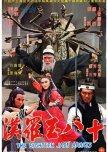
The story had a nice mystery thread running through it, but the main plot tended to get lost in the weeds in the telling of it. One of the huge problems was that the fight scenes were often shot in the dark or had choppy editing. The director loved to have intense close ups and pull back--repeatedly. Polly and her double kept the action moving and it looked like fists and feet were landing shots. Li's kung fu looked like he was fighting three feet away from his opponents much of the time. Li Lung Hua was only in 8 films and if this film was any indication of his acting and kung fu talent he probably did need to find another career. I have to say, I laughed a lot while watching this movie, though I'm sure the filmmakers didn't intend for the audience to do so.
Lung Fei made a guest appearance as an assassin and a personal favorite, Lo Lieh, played one of the suspects in the murder case. These two helped make the movie more interesting for me, especially Lo Lieh. If Polly seemed overly animated it might have been because she was trying to infuse energy into her scenes with her lethargic co-star. Unfortunately, in the dubbed version I had to watch the voice over actress gave her a whiney voice. I'm pretty sure one voice actor must have voiced all the men and he made some curious choices at times to try and differentiate the characters.
A few of the fight scenes were creative including a contest on large iron balls. There are a couple of twists in the story to make things more interesting. Overall, it wasn't enough. In a kung fu film if the fights are not inspired and the actors are lacking in charisma no amount of jade arhats can save it. Only for fans of Polly or hard core kung fu fans.
Was this review helpful to you?
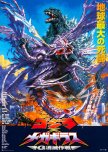
In this story, Godzilla didn’t die in 1954, only re-appearing in 1966 and 1996. It’s the same rubber suit from Godzilla 2000 though the stories don’t appear to be linked.
The scientists can’t figure out why Godzilla resurfaced after Japan went to completely clean energy sources eschewing nuclear and plasma energy. We as viewers know that Godzilla doesn’t come rampaging into town without a reason, but the afore-mentioned scientists decide to build a logic defying black hole weapon that is fired from space. I’m no scientist, but the “logic” behind a 2-meter black hole fired from a satellite would be enough to send real scientist Neil deGrasse Tyson on his own rampage.
I don’t need a rehash of Japan’s role in WW II and the US nuclear testing in the Pacific, but I do need a character to have a critical eye toward the bonkers deadly high tech they created to deal with Godzilla-a miniature black hole weapon fired from space that would contain him in another dimension? Forget Godzilla, think of the damage that such a weapon could cause to the planet or against other people, especially if something goes wrong or it’s enhanced. It’s the same dangerous hubris that caused Godzilla and his buddies to be created yet that point is completely ignored in this movie. Where is Dr. Serizawa when you need him? Godzilla didn’t come into town doing the Monster Stomp for no reason, better check out the secrety secrets going on with this version of the G-Force.
The miniatures were fine, there were creative miniature underwater scenes, and an aircraft that defied the laws of physics. The mix of regular scale, miniature scale, and CGI didn’t always transition smoothly but it was less jarring than other aspects in this movie.
One of the things I like about Godzilla movies is that there is usually a female character featured, sometimes sadly they are the reckless female reporter or someone added for scream affect. Kiriko was cold and emotionless and out for revenge against Godzilla, but a step up from said reckless reporter that has to be rescued type. Kudo, the tech geek was cute if not a great thinker outside of his inventions. I didn’t find the humans particularly interesting and honestly couldn’t root for them as they sought to kill Godzilla when it was their recklessness that caused him to attack in the first place. And any group stupid enough to unleash black holes as a weapon really needs to be eradicated. My loyalty is with Big G on this one.
A test black hole created a wormhole which let through Godzilla’s and Earth’s next foe---a giant dragonfly and/or egg. Again, no one asked whether the danger of using the weapon, letting something worse than Godzilla in, might be reason enough to not use it. While Megaguirus made a devious villain, the queen dragonfly didn’t get much screen time and neither did Godzilla. Her minions, the meganulon or smaller dragonflies made an appearance until Big G played Kaiju bug zapper to them. (They looked like the creatures from the original Rodan which killed a bunch of humans and also made a tasty treat for the hatchling Rodan.)
Aside from disregarding Godzilla’s past and the completely ridiculous pseudo-science, this movie made the cardinal sin of making me look at my watch wondering when it would be over. There wasn’t enough action or enough compelling human stories to keep my attention for much of the movie. Godzilla initially being swarmed by a bunch of the plane-sized dragonflies is annoying, I get it. How many times have I wished that I could fry mosquitos with my mind when they come after me? It took too long to get to the real menace and the real action. Once it did, the movie picked up but by then it was mostly over and the human’s smug use of an abomination of a weapon was all that was left.
Was this review helpful to you?
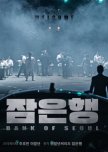
Bank of Seoul touches on the long hours salary men put into their jobs and how their lives, bodies, minds, and families suffer because of it. With the gift of not needing sleep and with the help of the Korean version of Red Bull he works around the clock to succeed and gain the promotion that had always seemed out of his grasp. Of course, the genie never gives a gift for free--what happens when the bill is due?
Most of the story centers directly on Seong Jae, played by Park Hee Soon. He gives a quiet performance of a man pushed to the edge of desperation and obsession.
The film is dark, both in mood and cinematography. Most of the shots are at night or under the cold glare of fluorescent bulbs.
Forty minutes was just about the right amount of time to tell Seong Jae's story as he and other sleep debtors strove to succeed and survive in a never ending night.
Was this review helpful to you?


