

 148
148 438
438 16
16 2
2 6
6 3
3 8
8 10
10 3
3 13
13 1
1 1
1 1
1 1
1 2
2 7
7 9
9 5
5 9
9



"Don't ditch when I get serious"
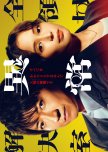
Two hot guys sizzling as they Waltz and do the Cha Cha Cha while staring into each other’s eye? That’s pretty much the plot of 10 Dance and yet the actors made it next to impossible to look away.Suzuki Shinya is the Japanese Latin dance champion while Sugiki Shinya is the Ballroom dancing champion. Both are competitive and seek to be the best. While Suzuki and his partner, Aki, are loose and have fun, Sugiki rigidly controls everything, never cracking a smile. Sugiki doesn’t hesitate to berate his partner, Fusako. “The Grim Reaper” puts forth a plan to Suzuki that they teach each other their different styles and compete in the 10 Dance that requires both Ballroom and Latin dance skills. Tentative at first, Suzuki agrees and the enemies become something a little more friendly.
I have not read the manga so I can only comment on what was shown on the screen. The plot was as thin as a sheet of music. I really wish we’d gotten to know more about the two characters than one was overtly rigid and the other enjoyed food, drink, and multiple women. Thankfully, the two actors were able to elevate their characters above the script. Takeuchi Ryoma gave a wonderful performance as the passionate Suzuki. He displayed a wide array of emotions, digging deep when he found himself falling for his cold rival. He also had a habit of taking his shirt off which I wasn’t mad about. Machida Keita as Sugiki had to work hard to convey his conflicted feelings in his character’s overtly disciplined body and mind. Just a shallow note, I miss his long hair from Glass Heart. Doi Shiori made the most of her screen time bringing the loyal Aki to life. Poor Ishii Anna’s character was mostly relegated to a pretty face.
I know nothing about ballroom dancing, but enjoyed the various dance styles and the rigorous training behind them. Most importantly, for a romantic dance film, Takeuchi and Machida’s chemistry was sensual and palpable. The ending seemed to leave room open for a sequel and I will certainly buy a ticket to watch these two dance again.
19 December 2025
Trigger warning: Nudity early in the film, nekkid buttocks and suggestive breast images
Was this review helpful to you?
AARO: All-Domain Anomaly Resolution Office
3 people found this review helpful
"I wasn't particularly planning on getting along"
AARO aka Zen Ryoiki Ijo Kaiketsu Shitsu was a shadowy organization occasionally used by the government when supernatural events were suspected. Working in tandem with the police department they investigated cases that appeared to go beyond the norm.Amano Koyume is pulled off her position in the PR department of the police department and assigned to the All-domain Anomaly Resolution Office aka AARO. With no investigation experience or knowledge of the occult she doesn’t appear to be a natural fit. Deputy chief Okitama Miyabi cuts her little slack as he pushes her along in their cases. The old god Hiruko seems to be making his presence known through social media and gruesome deaths gathering fear and members to his New Genesis plan. Okitama and Amano along with AARO colleagues work to track down and stop the source of the strange cases they encounter.
Supernatural investigators and creatures are nothing unique and AARO didn’t exactly break new ground. Despite strange goings on, there was a repetition of vengeful and jealous women throughout the drama. I kept waiting for Hiruko to be exposed as a female god who had been scorned and was taking it out on humanity instead of the people are horrible especially now that they have social media and must be reordered theme. Nearly every episode at least one person was kidnapped. The producers must have gotten a big box of zip ties on sale and decided they all needed to be used. Waste not want not.
The writing could be terribly uneven. Relationships were hinted at but never explored. Deaths of characters unknown to the viewers were mourned, while horrific mass deaths were scarcely mentioned. The acting was even more uneven, perhaps due to the writing. The last few episodes with the exception of the cliffhanger ending were more compelling and might have been even stronger if everyone hadn’t already been kidnapped or had their life threatened a half dozen times. I kept being reminded of Megamind regarding the frequent kidnapping card. “You of all people should know we discontinued that promotion.” While I’m on a rant, they overused the loud echoing footsteps. It was especially humorous when one character who weighed maybe 90 pounds/40kg was wearing rubber soled boots. One time is effective, four times not so much. I also haven’t seen fight choreography this bad in years.
Even taking my rants into consideration, AARO was an easy watch with entertaining moments. The sad thing is with better continuity and writing it could have been so much more. And 50% less kidnappings.
19 June 2025
Trigger warning: For people who are squeamish there were body parts shown and copious amounts of blood.
Was this review helpful to you?
This review may contain spoilers
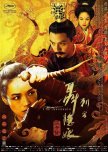
The Assassin breaks out of the standard martial arts mold. If you are looking for a fast paced, bloody, high flying wuxia film, this is not that film. Every shot is a breathtaking painting, lovingly lingered over to give you time to sink into it. Crickets and birds provide most of the natural soundtrack. The strength of this movie lies in the stunning cinematography and the slow, deliberate pacing.
While the times are complex, the main story arc is deceptively simple. Duty or morality? To kill or not to kill?
Nie Yin Niang (Shu Qi-So Close) has been trained for thirteen years as an assassin and is unmatchable. After refusing to kill an official in front of his son her teacher sends Yin Niang to her home province to kill Tian Ji’an (Chang Chen-Crouching Tiger, Hidden Dragon), the military governor, who also happens to be the man she had once been betrothed to before fate and politics changed her plan.
Yin Niang spends much of her time observing from rafters and in dark corners. Is she watching the life that once might have been hers? Or taking the measure of the man and situation to decide whether she can and should kill him?
Dialogue is sparse which can make this movie frustratingly enigmatic for those of us who are not familiar with this ancient tale. Yet I was never bored. Shu Qi gives an understated performance that is complex and compelling in its resolute silence. Yin Niang is no one’s victim and takes history into her own hands.
Fight scenes are often short with no complicated wire work. One scene in particular is beautifully shot among the trees. Yin Niang wields her curved blade confidently and dispassionately against her female opponent before walking off in the forest.
The costumes and sets are lush and a pleasure for the eye. Panoramic scenes of mountains and fields often take center stage. The attention to detail in every frame is captivating.
Yin Niang’s teacher says her heart lacks resolve because the way of the sword is pitiless. This assassin has plenty of resolve, she simply chooses what she wishes to fight for.
Was this review helpful to you?

"Good intentions don't always lead to good outcomes"
Genie Make a Wish was a fantastical and chaotic carpet ride that at times required a dose of Dramamine. Yet as weird and wild as it got, I wasn’t able to stop watching. Genies, angels, mythical creatures, immortals, unconventional friendships, greed, love, loss, murder, sacrifice, and forgiveness, Genie Make a Wish ran the bases and the bleachers trying to hit as many plot points as it could. (Seriously mixing my metaphors! Lol)Ki Ka Young leads a rigidly scheduled life with rules largely set down by her grandmother. Her mother abandoned her because she was “difficult.” “Difficult” in this sense was having “anti-social personality disorder.” Ki’s life is boring to her but she maintains it to keep her grandmother happy. On a trip to Dubai, she visits the desert on a tour and literally stumbles across a lamp. A genie appears saying he will grant her three wishes. Unimpressed she leaves the genie with his mouth agape and his hair flowing about. Ki finds it’s not so easy to be rid of a magical being intent on not only granting her wishes but killing her as well. What the genie doesn’t know is that their connection is deeper than he realizes and other forces are at work against him.
What worked for me:
I loved the female relationships. Though Ki wasn’t able to feel the same way, her bestie-Min Ji, and her grandmother were devoted to her even when she could be trying. She was also devoted to them, her love strong enough as she would say to kill for them. There were villagers ready to accuse her of every crime committed in the area and yet others ready and willing to come to her aid when needed.
Characters were complex, comprising the best and worst of human nature. Some leaning in one direction more than the other. The question was also asked, “Is evil innate or a choice?”
Iblis and Ejlael were not confined to their job descriptions. Iblis, much like the original accuser/adversary from my book was capable of more than just corrupting people. Ejlael had spent too much time on Earth accumulating wealth after having discovered the hell of poverty. Both would learn that winning was not the point and both were in need of redemption.
For a television drama, the CGI and cinematography were unexpectedly good. The night tour of Dubai was especially beautiful.
Writer Kim Eun Sook dropped Easter eggs from her other dramas such as Goblin, Mr. Sunshine, and The Heirs.
I enjoyed the adversarial relationship between Iblis and Ki. It had a slightly different flavor than many Kdrama romances. Sade, the mythical beast was a nice touch as well.
Daniel Henney and Kim Ji Hoon’s microplot was strange and sadly heartwarming.
I enjoyed the comedy and actually laughed out loud several times.
What was more problematic:
I was uncomfortable with Ki’s abuse of Iblis. Had the roles been reversed it would not have been filmed. At the same time my first thought was that there was a lot of feminine repressed rage at the male dominated society being given a safe space to spew out. Kdramas do like their barely in check “psychopaths”.
The story was uneven and as could be as chaotic as Iblis with numerous micro black holes where plot elements disappeared. The whole choice about the grandmother was not well thought out for someone who was supposed to be smart.
This was one of those dramas where the essential story wrapped too early and the last episode dragged on too long.
To sum up:
Humans are unpredictable when offered anything they want, with the exception of raising the dead or going to the future, of course. There are those who make wise choices and those who choose selfishly. Wishes like choices often come with a price and unexpected consequences. Love can involve both growth and sacrifice, joy and heartache. GMaW was addictive and I devoured it easily, though like a third wish I may forget it soon after.
16 November 2025
Trigger warning: A few decapitations
Was this review helpful to you?

Love is a battlefield
The Prisoner of Beauty was uneven and had a thin plot, but it was also quite entertaining and humorous at times. Despite a bloody beginning and ending, the vast swath of it played out like a Shakespearean marital comedy.The Wei family led by resting grumpy face Wei Shao have it in for the Qiao family in Yan for failing to come to their aid during a terrible battle leading to the deaths of three generations of men in their patriarchy. Fourteen years later, Grandma Wei and Grandpa Qiao decide the two families need to mend fences and match their grandchildren in marriage. To say that the bridal negotiations and first days of marriage between Wei Shao and Qiao Man were rocky would be an understatement, not including a battle over a city, raging fire, and near genocide. Nothing a couple of princess carries and a piggyback ride couldn’t cure. And a prolonged discussion of and implementation of… canal systems. Outside forces don’t like the Weis and Qiaos cozying up or the idea of better transportation options and drought/flood control and set to breaking up the couple.
The newlyweds not only had to work through old family grudges and loyalties, they also had to deal with other family problems that arose. Despite being a cold, military man with very little, actually no, practical information about or experience with women or relationships, Wei Shao was mostly respectful of his despised wife until he learned what a valuable asset he had in her. Being spoiled with head massages, afternoon sweets, and proper fitting footwear began to soften his heart and mood. Aside from her annoying habit of whispering while everyone else spoke at a normal volume, Qiao Man Man ended up being his not-so-secret weapon. She kept her promises to her grandfather to restore the Wei family’s fortunes and to take care of Shao. She faced few problems her wits could not overcome, benefitting not only herself and the Qiaos but most certainly the Weis.
The strength of the drama for me was in the relationships. The four generals had a fun camaraderie, especially Qu and Liang. Shao and his men suffered through figuring women out together. I loved the teasing, blossoming relationship between Liang and Man Man’s maid, Tao. Advisor Gongsun not only had words of wisdom, but humorous quips, too. The women weren’t left out when it came to friendships. Man Man had a strong bond with her maids and also with her cousin. Grandma/Lady Xu was one wickedly smart dowager who loved her grandchildren and knew when to put her foot down. Little went on that she didn’t know about.
Just a note for their fans who have not seen this drama: Xuan Lu and Liu Duan Duan are currently listed as mains which is stretching things. Their characters didn’t show up until 10 eps in and disappeared for large amounts of time. While their characters may have been important to the wonky plot, other supporting characters had a lot more time.
Things I learned: 1) At 49, Peter Ho still has some of the best guns in Cdramaland. Yowza! 2) Just like bullets, a sword will go through two as easy as one.
Public service announcement from your old auntie Butterfly: Historical Cdramas love MLs to choke the FLs for some perverse reason. For young ones who do not know this and think it’s sexy, a man using strangulation to control or frighten a partner is a clear sign to pack up and leave. He is a considerable threat to your physical and mental safety. Unrestrained jealousy is also NOT attractive and a glaring, clanging warning sign. Wei Shao may have straightened up and turned into a heart-eyed puppy but real-life men do not change so easily or ever. Okay, off my soapbox.
A Prisoner of Beauty may have begun and ended with horrific deaths, but as I said much of it played out like a marital comedy. It did something few dramas can do, it literally made me laugh out loud numerous times. If I had magical editing powers, I would have cut the episode count and tightened several plot points, but overall I enjoyed this drama, largely due to the relationships mentioned above.
“I would love to be your spear and shield, to fight for you, to guard your path, and to make your every wish come true.”
5 August 2025
Trigger warning: A prominent character sustained a “flesh wound”. Two suicides.
Was this review helpful to you?
"Money is power"
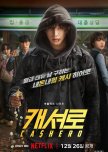
Ca$hero gave a slightly different twist to the superhero genre. The titular character was given a super boost by having Lee Jun Ho portray him. He imprinted on me with Rain or Shine/Just Between Lovers early in my drama experience with that scratched up, beaten face so this portrayal hit that sweet spot with me. Was it perfect? No, but most superhero dramas and tv shows aren’t and I’ve watched my fair share. I found it watchable despite numerous plot holes and dangling story lines.Kang Sang Ung and Kim Min Suk have been together for 9 years. Kim decides it’s time to get married for a variety of reasons, not least of which is in order to fair better in the apartment lottery. Housing is expensive and cash is king in real estate and life. When Kang’s father calls him home, he passes on the family inheritance—superhero powers. Giving his son only the sketchiest of guidelines, Kang wanders home confused and perturbed. The biggest drawback to having powers? Every time he uses them, he loses money and they only work with money in his pocket. Practical Kim is not pleased. A disgruntled fiancé is the least of his worries as he discovers a dark syndicate working against the supers.
The premise was interesting, if confusing. Kang meets two other supers. One has to drink alcohol to activate his powers, the other has to eat. I thought there might be a stronger societal commentary on the three sources other than—money, alcohol, food must be used in moderation. With the RoK’s housing and employment issues, the money aspect felt like it became downplayed as the drama went on. The dangers of the drinking culture were completely glossed over as was the pervasiveness of women being held to rigid definitions of beauty and weight. I was also disappointed that the other supers were not given, if not more, better use of their screen time. The villains were thinly drawn. Rich family evil. Got it. Though in today’s political climate I’m more willing to accept that.
Jun Ho managed to convey the shakily written concept of a man going from not truly caring about the people around him to being willing to sacrifice for others. Kim Hye Joon as Kim Min Suk had the rather thankless job of being the partner who planned ahead and knew what needed to be done to succeed in life. While Kang didn’t give much thought to finances, Min Suk knew they’d have to save every penny/won in order to attain better living conditions. She also had to have a lightbulb moment in order to embrace their new lifestyle. Sadly, the chemistry wasn’t very strong between the two, partly due to the writing.
My biggest complaint in the drama was Kang’s dad. He handed over the powers without any real guidelines and the advice he did give only led to more problems. I was hoping for more resolution to their rocky relationship, but found myself disliking the dad more as it went along. *
As I mentioned before, despite the plot holes and dangling story lines I enjoyed this drama for the most part. At least the hero didn’t need episodic pep talks and forget he had powers when chasing down bad guys. And at heart, I have a soft spot for cheesy stories about people with super powers who are willing to sacrifice for the greater good even when they (and the writers) stumble.
31 December 2025
*Spoilery comments below
The pernicious gods who handed out these powers punished heroes if they didn't use their powers and if they used their powers. Not exactly a paradigm I was fond of. I was truly hoping that Kang's dad at his retirement would get a financial karmic rebound regaining all the wealth he lost with interest. Why he never told his wife was a mystery that bothered me. And his whole situation with the loan shark...could have used a few sentences to clear that up.
Was this review helpful to you?
"Blood flew!"
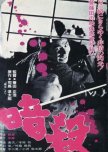
Assassination aka Assassin was a film by Shinoda Masahiro about the real life enigmatic ronin, Kiyokawa Hachiro. This is important to know because I was off balance for much of the film not realizing I was dealing with an historical figure who wasn’t nearly as clever as he believed himself to be. I kept waiting for the typical enigmatic ronin who knows how to strategize and despite a crusty exterior has a heart of if not gold, silver. That would not describe this shady and at times, cowardly and duplicitous character.It's 1853 and the Shogunate is in its waning years while the Imperial Court is ascending. Conflict between the two for power is thrown into turmoil when Admiral Perry and his four warships anchor in the harbor. Both sides struggled with how to deal with the foreigners---make a deal or attempt to slaughter the better armed enemy. Men working for the Shogunate decide to hire Kiyokawa Hachiro to train men to do their bidding. He’s been attached to Imperial ronin, but after murdering someone seems to be willing to change loyalties. Hachiro is a well-educated, low class ronin that the elite samurai hate. He goes beyond the fifty ronin he’s ordered to hire and gathers several hundred ronin instead. Whether he delivers them to the Shogun remains to be seen.
Any film that has 2 ½ minutes of prologue and takes nearly 15 minutes to introduce characters is setting the viewer up for confusion. There were numerous major and very minor players that popped in and out of the film like a popcorn machine gone awry. Flashbacks and flashforwards were not well advertised meaning it was difficult to know what order the events took place in. Hachiro was a schemer who betrayed friend and foe alike. He was also not nearly the genius strategiser he thought he was. When he created a dangerous situation through his impulsive actions, he left those who were devoted to him behind to take the fall. He also seemed to take delight in raping a woman. I kept waiting for him to be redeemed or to be smarter than he seemed, but that was not the case.
Even with a despicable protagonist, I could still enjoy a well-made film. The constant skipping around in time, confusing parade of characters, inability to lay out a clear-cut plot, and a lead whose motivation for vile actions was never revealed made this film barely watchable for me. If I had been familiar with Kiyokawa Hachiro perhaps this film wouldn’t have been as frustrating, so those who are may find it far more enjoyable than I did.
15 June 2025
Was this review helpful to you?

Young Joey plans a special meal for his mother at his father’s behest. Of course, Jollibee’s chicken plays a strong supporting character in this tear jerker commercial/short film.
If you have two minutes and thirty seconds and need an emotional release after a tough day, Date and little Joey can help provide it. Full of love and sadness, this short film might touch your heart and moisten your tear ducts.
16 December 2024
Was this review helpful to you?

"Happiness comes only through effort"
Late Spring was the first film by director Ozu Yasujiro I ever watched. I had no idea who he was or anything about films from this era. For the most part, I was unimpressed. After watching Late Autumn which was a loose remake of Late Spring, I decided it was time to revisit one of Ozu’s classics.The plot is deceptively simple. Noriko is 27 years old and on the cusp of being too old for marriage. She and her widowed father have a comfortable relationship neither wants to change. It is an aunt who shakes things up by insisting on finding her a husband.
Ozu often focused on this transitional part of family life-a child on the verge of leaving and an aging parent facing loneliness. Noriko's familiar routine started to ebb away as her father came to terms with what was necessary for her future which begat sadness and grief. Noriko had become too much of a surrogate wife and needed to become a real wife with a real husband which would require her to leave the nest as children do. Her father recognized he would not always be around and the only way to protect her and secure her happiness was to marry her off.
Though the mother had died some time ago, her presence felt tangible. Noriko showed great jealousy when her father mentioned he might remarry. She felt men remarrying was “filthy” and “indecent”. Apparently, older people no longer required companionship and intimacy. Noriko seemed overly involved and attached to her father. “I’m the only one who knows what he needs.” Was she upset for her mother’s sake or her own? During a Noh performance, her feelings shown through when she saw the perspective woman was also attending. Ozu’s astounding ability created a deeply emotional scene simply by cutting back and forth between the characters’ reactions to each other and the performers. During another evolutionary moment as daughter and father were lying side by side, Ozu focused on a vase for long seconds as Noriko processed her emotions and gave the audience the same meditative chance.
Ozu’s skill and his ability to compose exquisite frames was, as always, impeccable. Where I struggled with Late Spring is what caused me to stumble last time---Hara Setsuko’s performance. Her overly bright smile for the first half of the movie could be disconcerting. Sometimes a smile hides a person’s pain and sometimes it hides a vacancy sign. Smiling while riding a bike and enjoying the moment seemed natural, smiling when taunting the professor for being “filthy” seemed strange. She is a much admired actress and while I have enjoyed some of her darker performances, too often she over-relied on her smile. The second half had her character behaving petulantly and pouting which seemed out of place for a grown woman who had survived forced labor during the war.
As a modern viewer these plots were uncomfortable and I had to continually remind myself this was 1949. A woman was basically sent from her father’s house to another man’s house with little say as there weren’t many other options available to her. Noriko’s father complained that daughters were pointless. “You raise them and they leave. If they don’t marry you worry and if they do you’re disappointed.” Noriko worried her father would be helpless without her. Modern me thinks her father would learn to pick up the clothes he casually dropped on the floor himself and pour his own glass of water while brushing his teeth.
Despite my reservations, Ozu knew how to incorporate the most basic concepts of life and make them interesting. Noriko’s father, expertly played by Ryu Chishu, grasped that loneliness and death were a part of life and he wanted his daughter’s future taken care of. The plot might have been simple but Ozu was a master of teasing out the buried emotional details of changing family relationships. I rated this higher than my first watch and perhaps in the future, I’ll appreciate it even more. The father’s speech to Noriko was memorable then and now, one of the strongest from any Ozu film I’ve seen and still holds true today.
“Happiness isn’t something you wait around for. It’s something you create for yourself.”
14 February 2024
Was this review helpful to you?
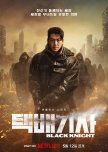
"Refugees are people, too. They live and breathe."
Black Knight didn't add anything new to the dystopian world genre, but it was an engaging and entertaining drama at the perfect length. It was long enough to give the viewer time to care about the characters and also didn't bog down and overstay its welcome. For a world short on oxygen, it knew just how many breaths to take.Kim Woo Bin as delivery man 5-8, in his oversized coats was perfect as the leader of the delivery people and refugee rebels. Having survived a massacre, he knew exactly what the Cheonmyeong corporation was capable of. The Chairman's son, Ryu Seok, wanted to eradicate the refugees and keep the status quo with the haves having all the oxygen and resources in their underground relative utopia while the refugees gasped for air and dealt with a lack of food, medicine, education, and jobs on the dusty surface.
Kang Yoo Seok as Sa Wol was the cocky young upstart mutant refugee who entered the fight ring in order to become a delivery man. Again, nothing new in the winner takes all fight to the near death or death to gain a dystopian prize, but the scrappy and sympathetic Sa Wol made it easy to care about him. Esom as Seol Ah, was the dutiful soldier who was not afraid to bend the rules by hiding Sa Wol in her house and raising him for a decade. As the story went on, she and 5-8 would have a different reason for going to the mountaintop, each taking their own road in order to bring Ryu down and save the refugees who were marked for death.
Kim Woo Bin did a great job as the delivery man who delivered more than food and oxygen, he delivered hope and justice. Song Seung Heon was elegantly despicable, proving why nepotism is a bad thing. The story had some lapses in logic and could have delved more into certain plot points, but the charismatic performances overrode the plot holes a delivery truck could have driven through.
Black Knight highlighted how the 1% in charge of resources was unwilling to share and capable of almost any atrocity against refugees that they didn't see as holding any value. It was in their best interest to keep the people divided into classes. The company and their lifestyles trumped any good they could have done for the surviving masses. For Ryu, the people were never grateful enough for the oxygen Cheonmyeong allowed them to breathe---those whom they decided were worthy to breathe.
"The only thing necessary for evil to triumph in the world is that good men do nothing." (Source debated) The politicians, military, refugees, and delivery people would have to decide what they were willing to do to build a world for all survivors. Black Knight could be dark at times and was unafraid of sacrificing characters in the deadly fights, but it also shone a light on the goodness of people as they fought to create a better world for everyone, not just for some. This might not have been a perfect drama, but it was perfect way to spend a few hours on a rainy day.
5/12/23
Was this review helpful to you?

This review may contain spoilers
You do not want to catch this rainbow
"Why must humans be so greedy?" Gamera vs Barugon brings that harsh lesson into focus showing how human greed causes as many problems as giant Kaiju.At the end of the original Gamera, the giant turtle was enclosed in a capsule and launched into space. This movie picks up with a meteor cracking open the ship and Gamera spinning his way home to Earth where he caused some damage feasting on hydroelectric power from a dam.
After Gamera takes off to parts unknown three men travel to New Guinea to retrieve a giant opal left hidden in a cave from WWII. The natives try to warn them off but they won't hear of it. Death and betrayal follow which is why we can't have nice things. The opal, as any Kaiju fan will have figured out by now, is an egg, not a stone. Next thing you know Barugon is on the loose with his giant tongue (whole new meaning to the term tongue lashing!), glowing tines on his back and a giant rainbow ray of death you do not want to catch. Gamera shows up and takes quite a beating from the new kid in town.
The humans, including a repentant thief and the native girl who came with him to Japan seek to stop Barugon. One of the other thieves cannot except the loss of the jewel and goes on a murder spree. As usual, most of their efforts are thwarted because this is Gamera's movie, not theirs, and it's up to him to have the marquee fight.
Though the movie starts slow, the humans are among the most interesting of any Kaiju movie. Hongo Kojiro made a believable humbled man trying to undo his mistake, knowing it would be impossible to repay the lives lost. Fujiyama Koji played the greedy and villainous thief well. Let's just say his character got the tongue lashing he deserved by human and Kaiju alike.
I didn't care for the original Gamera but his second outing was much more enjoyable and well done. It helped that there wasn't an annoying child talking about turtles non-stop. This Gamera was dark and excluding the usual Kaiju pseudo science, fairly coherently and cohesively written. It was beautifully shot and the fights were well done considering they were guys in cumbersome rubber suits. For a 1966 movie about a big turtle that can fly you couldn't have asked for much more.
(As usual these old niche movies are graded on a curve)
10/20/22
Was this review helpful to you?
This review may contain spoilers
"Love is a matter of time. It's no good meeting the right person too soon or too late"
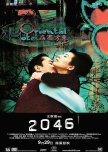
2046 returned to the world Wong Kar Wai built in his 2000 film, In the Mood for Love. Tony Leung Chiu Wah reprised his role of Chow Mo Wan, this time as a broken man who numbed himself with casual sex and used the lives of the beautiful women in the hotel room next door, room 2046, as inspiration for his story of the same name.Chow, now alone after the events in the last film, earns his meager living writing racy stories. He had moved to Singapore and has little money for airfare home. The Black Spider (Gong Li) comes to his rescue and after spending time together he asks her to go to Hong Kong with him which she refuses. Back in Hong Kong he helps a very drunk woman home one night. In a moment of narrative synchronicity, he finds a room available next door, room 2047. He would have preferred 2046 but the woman he helped home was later stabbed by a jealous lover in that room and there was some redecorating to do. For those who didn't see In the Mood for Love, 2046 was the number of the room in another hotel where Chow and Su Lizhen (Maggie Cheung) worked on a martial arts story.
Aside from the revolving door to his bedroom, the lonely writer becomes involved with various women at different times and different ways in the hotel. The landlord's daughter, Jingwen (Faye Wong), is in love with a Japanese man, something her father cannot tolerate and will not approve of. Bai Ling (Zhang Zi Yi) moves in and she and Chow "borrow" each other to occupy their nights. Both have their share of paramours but become intimately if not romantically involved. Though she would like more, he keeps his emotional distance. As he writes his dystopian story of a train to 2046 where people search for their lost memories, the women's lives offer fodder for his creativity.
For me, this film would have been more difficult to understand if I hadn't watched In the Mood for Love prior to it. Understand might not be the right word, sympathize would work better. Chow didn't come across in a very favorable light as he slept his way through Hong Kong. Knowing what happened between him and Su Lizhen aided in feeling sympathy for his case of terminal heartache as guilt and grief guided his self-inflicted pain.
There were also many call backs to ITMFL. The green noodle thermos made an appearance several times. Many of the sets and lighting were similar, even more so when the rain set in. A taxi ride where he at least subliminally tried to recreate a moment with Lizhen with another woman gave a glimpse into his mind. And every Christmas he visited the diner as Nat King Cole's Christmas Song played in the background.
With three of the women, he found that he was using them as a substitutes, something that did not bring him comfort for very long. He was told the ending to the story he had written was too sad. How does one write a happy ending when your heart is hollowed out and beyond repair? When loss and longing are your constant companions? At best the women in his bed gave him a brief sense of warmth but he found himself lonely even in someone else's arms. Passion could not replace what he was searching for. His heart was waiting on the only one who could break his solitude and give him a happy ending and he had let her slip away.
This film was visually stunning. The color palette leaned heavily on green, yellow, and red in lighting, sets, costumes, and props. The costumer set the bar too high with Maggie Cheung's cheongsams in the previous film but there were some gorgeous dresses, particularly on Zhang Zi Yi. I was pleased that the soundtrack was more diversified for this film, fitting the despondent mood perfectly. Tony Leung, Zhang Zi Yi and the rest of the cast gave superb performances. The neon train moved beyond metaphor to personal therapy as Chow worked through his feelings writing about others. In style, this film succeeded brilliantly.
Where the film let me down were the characters. Though attractive and complicated the characters were challenging to care about. Remote and difficult to read, most of them kept their feelings to themselves. And those that did reach out were often reprimanded.
2046 was a deeply melancholic look at love and regret, bordering on cynicism. By the end of the film all of the color had been drained out of the spectrum, leaving only the cold, dark mood of despair. For Chow, love was pain and "all memories were traces of tears." This film could be just like Chow-beautiful to look at but also mystifying and emotionally detached and completely irresistible to walk away from.
5/3/23
Was this review helpful to you?

"Had I not seen the sun, I could have borne the shade..." E Dickinson
Had I not Seen the Sun has been a difficult drama to rate and write a review for. Certain elements left me wanting and others I found completely engrossing. Also, given that we must wait until December for the second half to air, the drama ends on a cliffhanger meaning the story is not complete. I went out on a limb with my score hoping the writers bring everything to a satisfying ending.Li Jen Yao turns himself in, confessing to several horrific murders. A small film company receives permission to do a documentary on him. Their goal is to discover the one thing the police were unable to ascertain…the motive for the grisly killings. Chou Pin Yu is the young film assistant. She’s moved into a haunted apartment and begins to be possessed by someone with a connection to Li. Pin Yu is given a ghostly guided tour of the lives of Li and the ballerina he loved.
The present time escapades did not work for me largely because the actress playing Pin Yu is extremely inexperienced and she lacked the ability to give any depth or nuance to a complex role. I rarely comment on acting abilities as it’s very subjective, but I nearly dropped this drama early on because I could not connect with her performance. When the drama largely moved to the past I fell into the story. The narrative may not have been original and was overtly melodramatic, but I don’t mind a little drama mama action. I’m tempted to say the writers were heavy-handed with their butterfly metaphors but can’t bring myself to criticize their uses of my namesake.
“Moths (at night) keep going in circles mistaking lights for the Moon…Butterflies only appear under the sun and go anywhere they want to.”
I’m curious to see how the writers will resolve the mysteries of which there appeared to be many. If nothing else, this drama was a strong motivation for cameras in classrooms and child advocacy programs and more.** With the exception of one girl’s family, there were no people deserving of children in their lives in this drama. Most of the teens involved lived in the darkness. They either basked in the sun hoping to learn how to walk in the light or attempted to drag the light into the darkness with them. We'll see if anyone sees the sun by story's end.
20 November 2025
Trigger warnings: SPOILERY
-a violent sexual assault, numerous beatings, and glimpses of disturbing murders.
**Spoiler comment below**
**** There is also a need for better protections for sexual assault victims with the police, schools, and more public education that girls/women who are raped are NOT sluts or responsible for the vile acts committed against them and they are not tainted goods. The protection of boys is not more important than the welfare of their victims and the victims deserve justice though it is too often denied. Li Jen Yao should have aimed lower.
Was this review helpful to you?
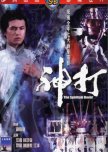
Hsiao Chen is separated from his master when Chi Keung was taken to jail. Hsiao takes over their spiritual charlatan business by accident and then purposefully. He’s saved from a group of thugs by cross-dressing Jin Lian who becomes his new “disciple” in the business. The two end up fleecing people even as they convince the villagers Hsiao is a medium for the gods. When Hsiao begins teaching the villagers kung fu to protect themselves from the local gangsters, the Big Bad calls in reinforcements that may be the end for the “spiritual boxer.”
I had high hopes for this film when the introduction included an exhibition match with Ti Lung, Chen Kuan Tai, and Wilson Tong. It went downhill from there. Wong had skills but lacked the star power to carry this film. The film had numerous familiar names as villagers and the Big Bad’s thugs. Lin Chen Chi in a wig that looked like combed out roadkill, did an adequate if not memorable job. Shih Chung Tien wasn’t exactly terrifying as the local crime boss Liu Deruei. Lee Hoi San and Ng Hong Sang did, however, bring the menace as Liu’s hired specialty killers.
The bookended fights were well choreographed as Lau Kar Leung (one of my faves) was both the director and martial arts director. This was only his second directorial effort so I’m willing to cut him some slack. Spiritual Boxer was the film equivalent of luke warm water, not awful, but not good either. Graded on a curve as usual.
31 October 2025
Was this review helpful to you?
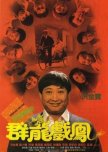
Lo Tung (“Fat Lo”), Mai Chien Tang (“Malted Candy”), San Cha (“Cake”), and “Rice Pudding” are four buddies who drive pedicabs. Mai meets a young woman named Hsiao Tsui when he runs into her and romance blooms. Lo begins a romance after threatening Ha Ping with a torch who happens to work in a shop in his auntie’s building. Despite the rocky beginnings, true love takes its course though conflicts arise. Hsiao has a dark past and the local triad boss (John Shum with a huge gold grill) wants Ha Ping.
The film begins with a big workers’ brawl and soon after has a car vs pedicab chase. The chase ends with the best fight of the film. Old school Shaw Brothers actor and martial arts director Lau Kar Leung and Sammo fight with fists, kicks, and Lau’s specialty---weapons. Lau was 53 and Sammo was pushing 40 but you’d never know it from their speed and agility. I found the choreography highly entertaining. The middle of the film sank into romantic melodrama before the murderous fights began giving Sammo a reason to clean house at the Triad lord’s. Sammo fought perennial baddie Billy Chow while Mang Hoi (criminally underused) took on Chung Fat. With Sammo, Mang Hoi, and Brandy Yuen choreographing the fights, none of them were disappointments.
There were things that did not work for me. The story was uneven, with characters disappearing and reappearing. Ha Ping’s boss pushed her hard for a romance. I don’t mind age gaps, but the nearly 60-year-old Sun Yueh constantly creeping on 28-year-old Nina Li (his employee) screamed “Me, too” moment of harassment. The camera focusing on women’s clothed bouncing breasts for long lingering minutes was uncomfortable. Ha Ping was pretty, with no other backstory or development, as if that created enough of a character to fight over.
This film, like so many Hong Kong kung fu comedies, started out light and fluffy then devolved into something resembling the Manson Family Christmas* before the final funny credits that erased the horror of the prior losses. Sammo Hung fans will likely not be disappointed as the big guy put on quite a kung fu show. As always, I rate these pre-1990s martial arts films on a curve.
29 October 2025
*Scrooged (1988)
Triggers: The final fights were bloody if you are squeamish
Was this review helpful to you?


