

 148
148 438
438 16
16 2
2 6
6 3
3 8
8 10
10 3
3 13
13 1
1 1
1 1
1 1
1 2
2 7
7 9
9 5
5 9
9


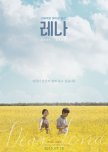
Lena is a descendent of Koreans who were forced to work for the Japanese mining coal in Sakhalin and then later trapped there after WWII. Their story would make an interesting film in and off itself as they fought for citizenship and many fought to go back to South Korea. They became second class citizens in Russia and those who made it home were less than in South Korea as well. Lena wants to bury her parents' ashes in South Korea and becomes a mail order bride to make the trip. This aspect is barely touched on and again, would have given more depth to the story to explore that process.
The male lead is a tea farmer in a remote area which lends itself to some lovely cinematography. He tries very hard to make Lena feel welcome and give her anything she needs. Lena in turn tries to help with different chores to show that she is invested in the relationship. She calls him ahjussi throughout the movie which seems to make their relationship an even further oddity. As she walks to the fields she makes friends with a photographer who is traveling through and begins learning to take photographs. Both the film's cinematography and her photos play a large role. Lena tends to be quiet, walking and taking pictures as she has much on her mind. I wish we'd been more privy to what was weighing so heavily on her.
The last thirty minutes or so give the movie the emotional thrust it sorely needed. While this was a beautiful, quiet movie, it could have been more meaningful if only the director had stirred the calm surface with the emotions running beneath.
Was this review helpful to you?
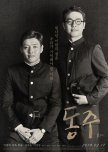
Dong Ju: The Portrait of a Poet is an eloquent story woven around the poet's own insightful words. Shot in black and white, the monochrome film beautifully fits the quiet, intense mood of the short lives of these two young men.
I will leave the historical aspect of this film to those who have a personal stake in it or are more well versed in it than I am.
This film is as much about Yun Dong Ju's cousin and revolutionary, Song Mong Gyu, as it is the poet. Their lives are intertwined, two different ideals in how to resist during a time of hated occupation. One willing to use a gun, the other a pen though at times those lines blur. Their friendship though challenged never waivers.
The story begins and ends with the young men in prison. The present takes place during Yun's interrogation by the Japanese. As Yun is questioned, the past is revealed to show the steps they took to end up in prison. Quoting Yun's poetry to the corresponding events paints the conflicted feelings he had over his role during the dark times and his attempt to find hope in the moment. The tripod of present, past and poetry is perfectly balanced.
Kang Ha Neul gives a restrained and poignant performance as Yun's younger self and later as the tortured prisoner knowing death is imminent, reflecting on his actions and inactions. All the performances are good but his stood out as the titular character.
Dong Ju is an elegantly filmed story of an inelegant and agonizing time told through the courage, defiance and beauty of poetry and a poet.
Prelude
Wishing not to have
so much as a speck of shame
toward heaven until the day I die,
I suffered, even when the wind stirred the leaves.
With my heart singing to the stars,
I shall love all things that are dying.
And I must walk the road
that has been given to me.
Tonight, again, the stars are
brushed by the wind.
-Yun Dong Ju
Was this review helpful to you?

The cinematography is dark and melancholic, reflecting the mood of anger, guilt, sadness, and regret. The score embraces those same feelings.
JDY gives a good performance as the angry son, Zhen Chen, who travels from China to South Korea to find his mother due to his dying father's wish. What he finds only deepens his anger and resentment. Lee's mother shows restrained emotions, a woman who has long dealt with sacrifice and hardships. The story deepens when a disappointed Zhen Chen on the return trip home finds the diary his mother left him and her long buried secrets and his are slowly revealed.
The film dips into the overly dramatic waters on occasions, but never completely sinks into them. Though not for everyone, and not a perfect movie, I found the struggles of this mother and son compelling.
Was this review helpful to you?
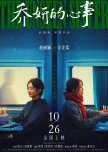
Qiao Yan is a successful actress with an overly clingy manager. She’s rigidly unhappy and desperately seeking her freedom from the life she’s living. Her manager has other plans for her future and is unwilling to take no for an answer. Into this abyss her pregnant sister from Myanmar walks in. Her sister is looking for her deadbeat husband who is trying to escape his gambling debts. Due to Qiao’s secret slipping out, a long list of people line up to extort an exorbitant amount of money from her. Qiao will have to decide how far she’s willing to go to protect herself.
The characters were thinly and inconsistently written. The old, “if I’d had the opportunities you had, I’d be a famous actress and wealthy instead of you,” trope was used because yeah, life just works that way. Anyone can become rich and famous. That petulant phrase was overused. The older sister’s emotions and ethics swung back and forth like a pendulum. Her husband was utterly vile and made me wonder why she stayed with him.
What actually intrigued me about this film was that the entertainment industry was shown to be a patriarchal, capitalistic den of iniquity where wealthy men thought they owned the talent and could do what they wanted with them. I’d heard rumors about this type of behavior for years, just never thought I’d see a Chinese movie airing that dirty laundry. (I write this knowing Hollywood has had its issues, too. It’s always a problem when people hold unchecked power.) They also showed the negative side of the “one child” rule. Another shocker.
The story itself was uneven and dragged on too long. The actors did the best they could with the material. The movie Qiao was shooting gave Zhao Li Ying more of a chance to shine than the actual movie she was in. The Unseen Sister was watchable, but could have been better.
20 August 2025
Triggers: Lots of smoking if that bothers you
Attempted Sexual Assault
Dismembered finger
Was this review helpful to you?
"Only the cloud knows the feather"
Spies, assassins, poison, sword fights, and a struggle for the leadership of one of the last sects not under the thumb of the evil Wufeng sect, My Journey to You attempted to cover a lot of ground. Populated with beautiful people and costumes, this drama was sometimes more stunning to look at than compelling.What drew me to this drama was the promise of not one, but at least two female “assassins”. This felt like a bad translation, as they were more spies than killers. Yun Wei Shan had real possibilities for a dark and intriguing character. Once the Gong male characters were introduced, it often felt like the Wufeng spies had little to do other than talking in whispered tones. When a double tragedy left the underachiever, Gong Zi Yu, as the only choice for Sword Wielder, I had to agree with the snide Gong Shang Jue. Zi Yu was pitifully unprepared for such a task. Of course, it was difficult to side with Shang Jue and his “brother” Yuan Zhi, as they could be insufferably contemptuous. Much of the drama focused on Zi Yu’s trials in the Three Realms of the Back Hill with some assistance from Yun. Shang Jue had his own undercover bridal spy to deal with as well.
At the beginning I was completely engaged with this drama. Then it began to rinse, lather, repeat for me one too many times. Zi Yu and Shang Jue kept being hauled before the elders where they could accuse the other of causing problems. At this point I felt like neither one deserved to be the Sword Wielder. The Back Hill provided some interesting characters and trials when the two Gongs weren’t arguing over who was prettiest. There were multiple attempts at humor, usually involving the overly dramatic and over acted role of Gong Zi Shang and her crush on Zi Yu’s bodyguard, Jin Fan. Which brings up the point, this was the martial world and only the “bad” girls knew martial arts. The Gong women all seemed to be rather defenseless. To quote Eowyn from LOTR: TT, “Those without swords can still die upon them.” The oldest surviving Chinese wuxia starred a woman! I was disappointed by the lack of Gong women wielding swords.
The beginning was strong and I enjoyed some of the middle until it became bogged down in recrimination after recrimination. The last part with the fights that had real consequences was more engaging. Then the big “twist” was almost a movie length of exposition. “I suppose you all wondered why I gathered you here today…” The acting varied from adequate to excellent. This drama should help Ryan Cheng graduate from web dramas for good. I also quite enjoyed Wen Zheng Rong’s performance as Lady Wu Ji. She was able to go from calculating to maternal in the blink of an eye.
Overall, I found this to be an entertaining and binge-worthy, if flawed, drama. Had it not been for my least favorite ending-the open end, I would have bumped it up to at least an 8. Maybe there will be a S2, maybe there won’t. If they develop a compelling S2 that coincides with this story well, I’ll revisit my rating. Even with the disappointing ending, this was a journey worth making.
1 July 2024
Was this review helpful to you?
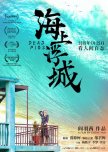
"You never miss the water 'til the well runs dry"
Dead Pigs directed by Cathy Yan connected several stories under the backdrop of a mass die off of pigs similar to the real-life deaths and dumping of 16,000 pigs in the Huangpo river near Shanghai. This film was not nearly as dire as that, instead it was focused on capitalist expansion at the expense of traditional neighborhoods with side stories of romance and comedy. Who knew Shanghai was a place where people could break into song as the bulldozers raged?Old Wang is a pig farmer who loses his life savings to a scam artist. To add insult to injury his pigs die. Loan sharks do not care about his predicament, they just want their money. He goes to his sister, Candy/Zhao Di, for a loan, but she refuses him. She’s fighting a development company who wants to build a large Spanish inspired apartment complex complete with a cathedral. Candy and her pigeons are the last holdouts. Wang Zhen has led his father to believe that he has been successful in business, but instead he is a waiter at a restaurant barely making ends meet. He falls for a bored, wealthy young woman who is surrounded by arrogant, social climbers. And finally, Sean Landry is the architect of the ostentatious apartment complex and charged with changing the Wangs’ minds.
The film was filled with people who believed they were not good enough. Old Wang’s life was a struggle which he managed to make worse. He envied the pigs’ life of leisure not taking into account the price they paid for it. Zhen hurt because he wasn’t able to help his father more. Xia Xia dealt with disconnection from family and friends. When she was hospitalized only a stranger visited her. Sean failed at architecture in the U.S. but had a second chance in China. Another ex-patriate gave him a side gig of playing various westerners for companies. In some ways he felt like the random white guy thrown into this film. And finally, Candy was supremely confident in herself but could not bear to leave her family’s home and neighborhood. Even though the neighbors had all been bought out she clung to her memories of what had been.
The porcine pollution highlighted how it was cheaper and more expedient to dump the pigs in the river than go through the proper government channels. Some farmers did not want to invite official attention into their businesses. It looked like they showed actual news footage of the clean up and real or fake pigs in the water. If you are sensitive to these types of images-beware.
The wealthy made life harder on the middle class and poor, able to buy whatever they wanted including their way of out trouble. Old Wang ended up with crushing debt in the desire to get rich quick. Sean tried to pitch that the new apartment complex was progress, making homes available to the people who needed them…the needy wealthy. The displaced could never hope to live in the luxury apartments. The cinematography and music along with solid acting made for an enticing film to watch. Vivian Wu gave an especially entertaining performance. My biggest complaint was that it was too long, numerous scenes were repetitive. “Important” themes don’t have to be repeated and film length doesn’t equate with quality.
I looked at this film through western eyes and likely missed much. Though gentrification and corporations buying homes are problems for all but the upper class here. Small family farms are a dying breed as multi-conglomerates gobble them up. Dead Pig’s stories were ultimately woven together, showing that greed can’t completely break the human spirit and that family and friendship mean something greater than things or property. And when you’re lucky a moment of spiritual triumph can be accompanied by song. (7.75 rounded up to an 8.0)
20 August 2026
Trigger warnings: Dead animals
Was this review helpful to you?

Shell-ebration of life and keeping the oceans clean!
Leave the Door Open is a short film by director Lee Ok Seop. This was ostensibly a Samsung commercial or at least funded by them. At six minutes long, there’s not much to review, especially since the English subtitles were not working in the version I watched, but I’ll give it a try.Kim Hyang Gi is traveling home with her new refrigerator in the back of a pickup truck when it comes to a screeching halt due to a scallop in the road. She has pity on the shell and takes it to the ocean only to see the waves bringing in copious amounts of trash. Instead of abandoning the scallop she takes it home and refrigerator magic happens bringing more than just whimsy into her life!
This was cute, surreal, and also had a message about cleaning the oceans even if you had to drag Neptune out himself! Worth 6 minutes just to watch the short story of a girl and her shell living their best lives.
18 August 2026
Was this review helpful to you?
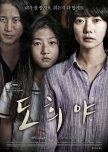
Lee Young Nam has been transferred from the Police Academy to a small coastal town to serve at the local police department as Chief. She discovers the town is hardly idyllic. The oyster farmers use illegal immigrants as underpaid labor brokered by Park Yong Ha. Park is also the “stepfather” of Sun Do Hee whom he beats every time he drinks which is daily. His mother is also an alcoholic who berates and beats Do Hee. After a particularly rough patch, Do Hee shows up at Young Nam’s door and the officer takes her in for the summer break. But Young Nam is hiding her own secrets.
A Girl at My Door was an ambitious low-budget film. Due to its content, July Jung could only secure $300,000 worth of funding. Bae Doo Na and Kim Sae Ron agreed to forgo their salaries. What was the terrible content? Young Nam was a lesbian. That fact alone seemed to be the reason the character was reassigned and treated as abnormal. The problem I had was that there were times the film came close to crossing the line with her relationship with Do Hee. Not because of sexual orientation but because of age. While the film attempted to show Yong Nam as only protecting Do Hee in a maternal manner, sharing a bath with a fourteen-year-old could be construed as inappropriate in any type of relationship, but especially one as a non-relative guardian. As a police officer she should have known better where to draw the lines regardless of her sexual orientation. Of course, when their relationship was called into question, everyone jumped to the homosexual equals pedophile conclusion which was rather infuriating, yet Young Nam knowing the state of homophobia still made questionable decisions as an officer of the law. Director July Jung seemed determined to blur lines which made it difficult to understand aspects of their relationship.
The film brought up the plight of illegal immigrants. How they were treated as less than, underpaid, overworked, and abused. Yong Ha’s actions were illegal. Yet nothing came of it. Yong Ha was known to beat Do Hee, something Young Nam warned him was a crime. Yet even after seeing the significant bruising on the child, she didn’t arrest him. Didn’t call child services. Do Hee was clearly a disturbed child after bearing daily emotional and physical abuse from Yong Ha and his mother. If anyone needed therapy it was this poor kid, yet none was ever offered. Do Hee made terrifying decisions that affected Young Nam and Yong Ha*. And finally, alcoholism was rampant in the scenic village. Young Nam drank at least 1.5 liters of soju every night. She managed to be a high functioning alcoholic, but it may have led to some of her questionable decisions. Maybe she should have focused on finding a therapist for herself and Do Hee.
There was a lot of pain, abusive behavior, mental illness, homophobia, racism, and alcoholism on display in this film. The adults made terrible decisions on a regular basis. Even Young Nam who tried to help Do Hee was guilty of leaving the child in a dangerous situation. As much as I wanted to root for Young Nam to be Do Hee’s surrogate mom, she really needed to hit rehab and get herself sorted out before dealing with an emotionally troubled child. Great performances by Bae Doo Na and the late Kim Sae Ron could not quite overcome the script’s shortcomings.
17 August 2026
Trigger warnings: Alcoholism. Physical abuse. Sexual situation with a minor.
Spoilery rants below:
*Do Hee’s final actions against Yong Ha were understandable as he had started to show sexual interest in her. She did what she had to do to survive. But no rape kit or hospital visit? And they just kicked an underaged “rape” victim loose to go home by herself? Where was the concern for her when Young Nam was seen to be the problem?
Also, I have very real concerns about an underaged actor being in sexual scenes and sexualized.
The interviewers seemed to be very interested in Do Hee when the concern was she had been molested by Young Nam, but they had zero problem sending her home to a drunken guardian who beat the crap out of her as well as emotionally abused her. So as long as it was just daily physical and emotional abuse by a heterosexual man, that was okay?
Do Hee’s jealousy and possessiveness were dangerous, but understandable given her living conditions. Again, she needed therapy to understand what she was feeling and how to gain control over her violent outbursts. I still cannot comprehend them sending her home to a vicious guardian after the molestation charges or to an empty house after Yong Ha was arrested. Where was the care she so desperately needed? Also, Young Nam seemed to have no problem sending Do Hee home for the school year knowing nothing had changed at home with Yong Ha.
No concern that Do Hee could also be a murderer? Might have been self-defense but the film never said.
Lastly, the local police department didn’t seem to have a problem with having a woman as chief. They had no problem arresting her, even though they refused to arrest Yong Ha for his many crimes because he was integral to their local economy. At least the jerks who interrogated her apologized to her. This film could give a person whiplash.
Was this review helpful to you?
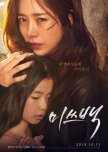
"I've got nothing to give you, but I'll stay by your side"
If you choose to watch Miss Baek, best be warned that it can be a tough watch. The film unflinchingly showed the story of child abuse. It also showed the fallout from abuse when an adult carries those wounds with them through the years.Miss Baek has a rocky relationship with her police detective boyfriend Jang Seop. Baek refuses to let anyone get too close. As a teenager, she’d protected herself from her rapist and was the one who ended up in jail. Now with a criminal record she works numerous part-time jobs. Her depressed and alcoholic mother beat her and eventually abandoned her. When she sees 9-year-old Ji Eun shivering in the street, she feeds her trying to ignore the bruising she sees. When she eventually intervenes, the abusive guardians attempt to have her arrested. As a single woman with a record and not related to the child, the police refuse to hear her out. Ji Eun is once again sent home with her tormentors.
These types of films always walk a fine line between revealing reality and being exploitive. The sad truth is that every year, regardless of country, children are beaten, sexually abused, and killed by people who are supposed to love and protect them. I take issue with the word abuse, because too often in cases I’ve been familiar with the correct term would be torture. If one did the same acts to an adult prisoner, that’s what it would be called. And too often authorities are slow to act and innocent lives are taught the meaning of pain and distrust. For people who have never experienced familial terror, it can be hard to believe that such gruesome acts take place in “polite” society. Sometimes, it takes film to shine a light into the darkness to inform and also to confirm to the harmed that abusive actions are not and never were acceptable. They are heinous crimes.
Miss Baek told the story of two people who understood each other because of similar experiences. One person who lacked education, finances, and connections stepped up refusing to let a child suffer any longer regardless of the consequences. The third act had some issues, but overall, it was a strong effort by writer/director Lee Ji Won with Han Ji Min and Kim Si A giving excellent performances.
8 August 2026
Trigger warnings: Based on a true story-physical abuse of a child. Attempted murder of a child. Child endangerment. Smoking. Sexual assault off screen.
Age note: The main characters had an age gap on screen, but the actors did not (3 years). The supporting actors had a 7ish year gap.
Housekeeping Note: 1300th REVIEW
Was this review helpful to you?
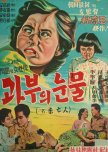
"A man is like butter, the husband is the bread"
The Widow is one of those movies I’d love to rate highly as it was the first film directed by a woman in South Korea. Park Nam Ok was treated so poorly that she never made another film. As best as I can tell, the script was also written by a woman. Thank you, ladies, for attempting to break through that iron ceiling. A heads up, the film is missing sound in the last ten minutes and the final part of the last reel is missing altogether. Now to the story…Lee Shin Ja is a widow raising her young daughter Ju. Strapped for cash she meets with her husband’s wealthy friend, Mr. Lee (no relation) accepting money on occasion. Mr. Lee’s wife visits her and tells her to stay away from her husband, thinking the two are having an affair. Shin Ja’s hardscrabble neighbors drive the hoity toity woman off. When Shin Ja takes her daughter to the beach on the weekend, she discovers that Lee’s wife has her own secrets. Ju nearly drowns and Mrs. Lee’s lover, Taek, saves the girl. And before you can say “a man is like butter” we’ve got a love square going on. But wait! There’s more! Taek’s presumed dead lover comes to town. Make that a pentagon. At that point everyone should have heeded the warning sign and stopped.
Shin Ja was referred to as noble and she acted very demurely. She was graceful, spoke quietly, wore traditional clothes, and didn’t drink. She also dressed up and met with men in secluded places to talk and cajole money out of them. Why would a wife think that was suspicious? After meeting one of the men who was only dating a woman for the cash, they fell instantly in love and decided to marry. She then kicked her daughter out to be raised by the odd single dude two doors down. Ju nearly drown because Shin Ja was completely oblivious to the danger of a child in strong ocean surf by herself. If she said, “she’s such a burden” one more time I was ready to throw Shin Ja in the water. The 50s were a tough time for a single woman, especially a widow with a child. I could overlook her wheedling money out of men and looking for a husband. Abandoning her daughter to an older widower for a man was inexcusable. The movie completely lost me at that point. When her lover/common law husband hooked up with someone else, who cared? If this had been a comedy it might have made more sense, as it was, I began to laugh at the ridiculousness of the situations.
To sum up. Five stars to Park Nam Ok for having the strength to create this film, especially when she was blocked from entering the post-sound studio. I cannot imagine what she had to endure from every level of the craft to get this movie finished. I know how I would like the movie to finish ideally and it didn’t include the gigolo artist or company president but rather Shin Ja discovering she could take care of herself and her daughter by herself. Or if it went in a more realistic direction, Ju probably snapped and murdered everyone in their sleep after being shuttled about, ignored, and told what a burden she was. Like I mentioned, I really wanted to like this film, but discarding a child because she hampered romance was something I could not tolerate. I wish I could have said, "better luck next time Park Nam Ok", but she never received that chance. Truly the saddest thing about this film.
6 August 2026
Musical Note: At one point, two characters broke into song, reminiscent of the 1930s duets of Jeanette MacDonald and Nelson Eddy. Because why not, with all the crazy shenanigans going on.
Was this review helpful to you?
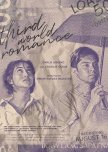
"I'm a bagger, I can carry anything. Even you."
Third World Romance was a romance set during the waning days of Covid’s terror on the world. Service professions were hit hard with many people losing their jobs. As people were able unmask it was a scramble to become employed again. During this time, two people struggling to pay their bills met and found a possible road to happiness.Alvin and Bree meet on a rainy day while standing in line for government food assistance when Bree commandeers him and his umbrella. After raiding a truck and escaping, the two swap shoes and names. When Alvin helps facilitate a job for her at the grocery where he works, the two begin to spend more time together. Alvin’s main concern is being happy and getting along with people. Bree is more concerned about making her rent payment and how to bring her mother home after being left stranded jobless in Oman. Bree also challenges her bosses for taking advantage of their employees. Happiness is not high on her list and Alvin intends to change that.
Third World Romance was a rarity for the Filipino films I’ve watched. For the most part it was just two ordinary people hustling to make ends meet and having to deal with corrupt bosses. Bree’s fight for workers’ rights was put to the test when desperation drove her. Alvin had an unconventional home life which was part biological family and part found family that included a trans woman and gay brothers that was shown as loving and normal. As in most romances there was the typical dark moment when Alvin and Bree’s love and dreams were tested that pushed the limits.
TWR was a break from interfering families, ex-lovers, amnesia, overt comedy, melodrama, and infidelity. This film focused on showing the strain debt and financial fears placed on a budding romance. The strain could make one person feel burdened and the other indebted when help was offered. Alvin would have to work overtime to convince Bree that love was possible and dreams attainable if they stuck together and supported each other. Not a strong film, but enjoyable largely due to the performances and different perspectives on a familiar genre.
6 August 2026
Notes: There was an eleven-year age gap if that is concerning. Not sure what age Alvin was supposed to be but Carlo was pushing 40. The gap didn’t bother the actors as they were married in 2024.
F Rated Note: This film was directed by a woman-- Dwein Baltazar who has a good sized film catalog.
Was this review helpful to you?
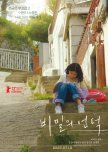
Oh, what a tangled web we weave when first we practice to deceive!" *
The Hill of Secrets was another tender coming of age story by a female director. This time Lee Ji Eun took us back to 1996 as Lee Myeong Eun struggled to understand what family meant and how to traverse class distinctions. Her chosen route of lying led her down a path that became filled with quicksand.With the new school year starting, everyone in Eun’s class is required to divulge what their parents do for a living . Eun is too embarrassed to say that her parents run a salted fish stall. She thinks up a lie on the spot and declares that her father is a salaryman and her mother is a housewife. Looking for more validation, she ingratiates herself to her teacher and runs for class president which she wins. Her mother tells her to quit as she has neither the time nor money to help her. Eun doggedly keeps the position, creating a secret box where students can write their concerns or suggestions. As the school year progresses, keeping her secret, becomes more daunting. Especially, when a new student, Hye Jin arrives and creates competition for her.
Being twelve-years old as puberty hits is difficult enough. Most kids are embarrassed by their parents but in a class sensitive society, being the child of salted fish dealers took confidence to accept. Something Eun did not possess. Eun’s journey of self-discovery began as she entered several writing contests and had success. She researched her topics rigorously, still navigating the lies she had told. In order to maintain the façade of the “acceptable” middle class family she yearned for, Eun had to go to extreme lengths with the stress building minute by minute. Eun was not alone in the fibbing department. “Everybody lies,” the saying goes. Eun’s uncle lied when he donned a suit to pick her up from school. Her teacher and principal also lied. There were times lies protected others but more often the lies were self-serving.
Writing brought Eun more popularity and more problems. When Hye Jin bested her, she became jealous, lashing out in passive-aggressive ways. Hye Jin’s mother ran a brothel which she didn’t even attempt to hide. Hye Jin and her “sister” did almost no research for their essays, only writing their truth which the judges appreciated. Through Eun's writing and developing friendship with her rival, she began to recognize the costly lies around her and within her. Some of her classroom behaviors driven by jealousy were deceptive and unkind. Her mother’s drive to earn money held secrets Eun had not been privy to. When Eun finally wrote her truth, she discovered it was based on hidden lies, leaving her in a lurch with her family. Regardless of how she felt about them, she wasn’t prepared to unleash public pain and humiliation on them.
While Eun's mother was not the cuddly type, she worked hard to provide for her family and extended family. Her motto to “Take nothing, give nothing,” was born out of too many wounds and losses. One of the saddest moments for me was when the mom was working in her vision journal, posting pictures of the dream house she greatly desired and would likely never afford due to all the hands outstretched to her. As much as I wanted her to hug Eun and praise her successes and hard work, she likely could not give something she’d never been given.
Overall, this slow film was entertaining. My biggest criticism is that it was too long. Grade school coming of age films like kung fu films, should not run longer than 90 minutes. The Hill of Secrets rested firmly on Moon Seung A’s slender shoulders and for the most part she carried the film well. There are times when lies are gentler than the truth. And there are times when a person has to accept who they are and where they are from and own those things. Lee Myeong Eun was not perfect, she was a pre-teen desperately looking for acceptance and belonging with no roadmap of how to achieve either. She lied, she was overly competitive, and increasingly arrogant. Yet she was also sensitive, intelligent, creative, and hard-working. Eun wanted what most people want--to be loved and appreciated. Watching her grow and evolve and gain confidence in who she was, was rewarding.
31 July 2026
* Quote Note: Sir Walter Scott ("Marmion")
School Note: Why would the teachers have the students talk about their parents’ jobs? It was a sure way to set up a pecking order, especially when according to Kdramas and Kfilms, schools are rife with bullying. I was delighted to find that there was no overt bullying in this drama. There was some typical grade school gossiping, but nothing awful. Hye Jin may have had a pessimistic world view, yet by being honest about her life, the students came to accept her which was refreshing. Eun’s jealous overreactions were the closest thing to villainous behavior.
Director Note: I would love to see more women directing in SKorea and in a wider variety of subjects. So many times they are relegated to coming-of-age stories. Same type of problem in my country. : /
Was this review helpful to you?
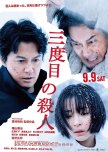
"No one here tells the truth"
I’ve enjoyed most of Koreeda Hirokazu’s films that I’ve watched but The Third Murder was more of a challenge. Fukuyama Masaharu and Yakusho Koji gave powerful performances in a glacially slow courtroom drama where nothing was as it seemed and everyone lied. Right to the bitter end.Attorney Shigemori Tomoaki has been assigned to a case where the defendant has already confessed to the murder of a factory owner. Because he is a repeat offender and robbery was involved, he’s likely to be sentenced to death. If Shigemori can convince the jury robbery wasn’t the motivating factor he can likely get the sentence reduced to life in prison. A grudge related murder is somehow less damaging than robbery (selfish). Shigemori doesn’t care to understand Misumi and the truth is irrelevant. All he needs is an argument to reduce Misumi’s sentence. The victim’s daughter becomes involved in the case muddying the waters as does her mother. Despite his trained instincts, Shigemori begins to question their planned defense and seeks to understand the truth behind the murder.
“We’re all on the same ship called Justice.” Well, buddy, that ship was sinking fast. Neither side of the courtroom was interested in the truth. Schedules had to be kept, reputations had to be protected, judicial economy was important, and cases had to be won. And it didn’t help that the defendant’s story changed from day to day. What was one to believe? This film also touched on the ways "good citizens" harmed each other every day by pretending to not see injustice and crimes and who abused and took advantage of the vulnerable.
As much as I love Koji’s acting, this film belonged to Masaharu. Watching Shigemori go from cocky, strategic planner with no emotional attachments to his clients to a man completely ensnared by Misumi and Sakie’s stories was mesmerizing. That’s saying something given how slowly and repetitively the film moved. Koji, of course, knew exactly how to play his character to draw both Shigemori and the audience in. The acting was superb and well worth the time to watch these two actors play off each other in a life and death dance.
The Third Murder had great potential, especially with the acting as I just mentioned and the cinematography was excellent. Koreeda’s esoteric dream board of themes-free will, justice, truth, control, judgement, predestination, and understanding—was never fully served by the film. Worst of all, the characters and story were too enigmatic to care about. If the writer/director wasn’t committed enough to answer the most basic questions of who did what to whom and why, why should the viewer care? If you enjoy either of the leads or mysterious films that leave all the details to the audience to decide upon, it’s worth a watch.
"Do you believe that story?"
22 July 2026
Koji Murder Movies Note: Under the Open Sky (2020) was a better film starring Yakusho Koji as a lifetime criminal.
Ratings Note: I rarely go by the MDL suggestion as rewatch rating and music rating play almost zero roles in my ratings. This time I filled out the stars and let MDL choose the rating as I was torn between a 7.0 and 7.5, largely influenced by the acting skills over film satisfaction.
Was this review helpful to you?
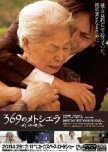
"What exactly have I been waiting on"
The Neighbor was an odd story of orphans, loss, and found family. A four-hundred-year-old missing treasure complicates the lives of Takeda and Setsu, but never overshadows the bonds being created.Government worker Takeda Shunsuke lives in a “don’t ask, don’t tell” existence he has created. Orphaned at a young age, he refuses to create any new relationships. He asks no questions about others and expects the same courtesy in return. Though he tries to keep people at a distance he takes in a “gay, suicidal, drug addict.” Initially complaining about his octogenarian neighbor’s late-night singing, he eventually befriends Isumi/Sanada Setsu who believes she has waited 400 years for him to marry her. Takeda also forms a bond with a mute orphan who has created problems for the orphanage he’s been assigned to. For a guy who doesn’t want anyone close to him, he manages to take in all the strays in his vicinity.
A historian believed that Setsu was the missing “princess” from his uncle’s mountain village and knew where a four-hundred-year-old treasure of gold was hidden. He planned to take custody of her so that the remaining villagers and their heirs would receive the treasure after her passing. When Takeda worked to make Setsu’s vision come true he ran into a mountain of bureaucracy trying to “protect” Setsu though they’d never done a thing to help the older women in her 60 years of isolation.
Takeda’s life changed as he reached out to the people around him. In the process he and Setsu began healing their traumas and pain. The “treasure” was unimportant to Takeda and Setsu, yet each unearthed gifts worth far more than gold as they stopped waiting and started living.
24 June 2026
Trigger warning: Suicide
Genre/tag notes: This was not a Mystery or Investigation in the typical way. Takeda did some research to better understand Setsu to help her, but nothing like a treasure hunt or criminal investigation or mystery. This was a story of healing old wounds and creating meaningful relationships.
Acting note: Ogaki Tomoya played Takeda Shunsuke. I only say three cast listings for him.
Minor spoilery thought below:
The “treasure” ended up being reminiscent to the treasure discovered in the old folk song “One Tin Soldier.”
Was this review helpful to you?
"Because I'm old I'm supposed to stay out of sight until I die?"
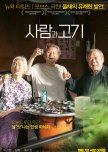
In a country where 50% of the people over 76 years old live below the poverty line, meat can become a distant memory. In People and Meat three elderly citizens brooch civility and the law by dashing and dining in order to eat well.Park Hyung Jun (80), Jang Woo Shik (78), and Baek Hwa Jin (72) are struggling financially. Despite their age, Park and Jang supplement their very meager incomes by collecting cardboard boxes. Baek sells vegetables on the corner. One day in a kerfuffle over the boxes, the three meet and later share a bowl of homemade soup. Park suggests going to a pork belly BBQ restaurant, his treat. While the food cooks, they can’t move as their eyes take in the largess before them and their mouths drool. As they finally partake of their meal, for the first time in a long time, they are satiated and full. But when the bill comes, Jang tells them he has no money and gives them the strategy to exit without paying. The three bond over their thievery and a friendship blossoms. Unfortunately, the law does not look so kindly on people dining and dashing.
I found this film to be more stressful than any heist story. Devising ways to stay ahead of the waiters giving chase over their food theft made me very uncomfortable. The focus shifted to the thrill they found from their actions rather than actually filling their stomachs. Though Jang of the three needed the meals, he was sharing a carton of milk with his cat on his limited resources. Food scarcity stopped being the motive as the antics continued. The story darkened as the consequences of their actions caught up with them. Yet they never brought up the dire circumstances for seniors when they achieved a level of notoriety.
People and Meat benefited from three veteran actors who knew how to sell their roles. And I loved the friendship that slowly developed through their misdeeds. Friendship made their lonely lives more bearable. However, the film struggled with its identity. Was it an indictment on a failing social safety net? A criticism of sweeping the elderly into the shadows? Or was it a comedic food heist film? It tried to be all three, and while I enjoyed the film, it missed the chance to pack more meaning into the finale. The film is still quite worthy of a try as it does shine a light on a segment of the population that many wish would simply disappear.
“I long to dissolve into laughter
So I dissolve into tears instead
Too fed up with living and dying
Forgetting the azure sky
Wings flutter aground
Heart full of unspoken words
I forget my hunger…
Shall I start a fire to warm my cold heart?”
19 June 2026
Was this review helpful to you?


