

 148
148 438
438 16
16 2
2 6
6 3
3 8
8 10
10 3
3 13
13 1
1 1
1 1
1 1
1 2
2 7
7 9
9 5
5 9
9


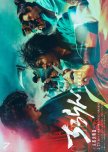
Song of the Samurai: Fateful Showdown in Kyoto
6 people found this review helpful
"I smell violence on you"
Song of the Samurai: Fateful Showdown in Kyoto was a raucous sword swinging, foot stomping, unhinged samurai drama based on a manga that was based on real world people and events during the waning days of the Shogunate. The names and places were familiar even if the purple hairstyles were not.In 1912, an old man recounts the tales of Hijikata Toshizo to a curious young woman. The viewer is transported back to 1859 when the reckless, "thorny brat" Toshi, joins the poverty stricken Shieikan dojo. Kondo Isami is the leader and protects his disciples like a mother hen. Most of the young men are kind and view each other as family. They hope to find a patron lord or government job during the tumultuous era when the Shogunate was headed for the exit door as the Imperial Court was ascending. The even more reckless and unhinged ronin, Serizawa Kamo, enters the picture with his two minions. With spies and assassins lurking in the shadows or in narrow crawl spaces, life becomes precarious for the Shieikan crew.
Toshi’s main goal was to become the strongest man in Japan. He wasn’t terribly bright and was always ready to fight, inwardly rejoicing when he jumped impulsively in over his head. The only time he truly felt alive was when he was brandishing his sword against a stronger opponent. The flipside of the coin was the flamboyant Serizawa who reveled in women and booze, but his “blood boiled” only when meeting a worthy adversary. Props to Ayano Go for uttering his lines and fighting with a cigarette constantly dangling out of his mouth! Neither Toshi nor Serizawa were concerned with politics or the standard samurai life. Though the apolitical Serizawa could see where the life of the samurai was headed.
The majority of Kondo’s group weren’t highlighted much. The charismatic Saito Hajime had his moments to shine, strategist Yamanami Keisuke played a vital role, and the young Okita Soji had a nice fight. The others came to the forefront as needed for reaction shots or in a crisis. The Grim Reaper didn’t darken the screen until the next to last episode. Kondo was regaled as an uncommonly fierce fighter yet he never really had a chance to prove his metal. The flashiest fights were nearly all Toshi’s. So, if you are a Yamada Yuki fan, you will be in for a real treat.
The challenges were full body, gravity defying fights. Ronin flipped, spun, rolled, kicked, and punched as much as they sliced and diced. Shout out to the amazing stuntmen who sold the action in the battle scenes. Since it was based on a Manga there were ridiculous weapons involved on occasion. And even more ridiculous characters. There was no shortage of “cuckoo for Cocoa Puffs” people on the Shogunate and Imperial sides. This was also a world where women did not exist, except for the geisha Oume. I’m still not completely convinced that the young woman in the intro wasn’t a figment of the old man’s imagination.
Song of the Samurai was bloody, fast paced, and took historical liberties for entertainment purposes. The characters and weapons were campy, often over the top. I couldn’t help but root for Kondo’s Kids as they were brave and loyal to each other (for the most part) and ready to take on any challenge regardless of the odds. “Certainty of death, small chance of success…what are we waiting for?”* My biggest complaint was the ending. After paying for an enormous cast of handsome faces, the finale felt like they ran out of film and just had to stop. Hopefully, there will be another season to wrap things up. Overall, it was a fun romp, never slowing down long enough to get boring.
“To bloom in battle and fall in battle. Samurai are flowers that bloom in full splendor, unafraid to fall. The Shinsengumi were the last flowers to bloom in the dying twilight of the Bakumatsu Era”
18 June 2026
*Gimli, LOTR Return of the King
Trigger Warnings: Dismemberments. Spewing blood. Smoking. Some really dreadful hairstyles
Easter Egg: Watch for the 47 Ronin throwaway comment that was not a great foreshadowing for our motley crew
~~~Slightly spoilery comment below:
**If there was a prequel, maybe there will be another season to wrap up what will be a devastating ending for our spunky group of swordsmen. Was really hoping they would show the clash with Serizawa and just epilogue the rest of it. History is history and was not kind to the feisty group which will be heartbreaking.
Was this review helpful to you?
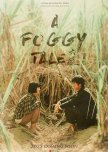
"You must be brave. Bravery is all we have."
A Foggy Tale took place in 1953 Taiwan during the period of the White Terror. The story focused on a young girl traveling from her rural community to Taipei to retrieve her beloved brother’s body after he was executed for his ideas. The trek was harrowing as she faced numerous challenges in her desire to bring her brother home.Huang Chih Yue has been secretly bringing food and water to her brother Yun who has been hiding in the sugar cane fields. He gives her his watch, telling her that with it she can travel forward in time and imagine better days when the going gets too rough. The young artist is chased down, arrested, and later executed. Yue is determined to bring his body home instead of letting the government dump it in a mass grave. When she arrives alone in Taipei she is overwhelmed by the sheer size of it. She’s quickly set upon by traffickers, but luckily enough rescued by a rough and ready pedicab driver. The two make an awkward pair and whether Chao Kung Tao is there as a helper or to help fleece her remains to be seen.
Caitlin Fang and Will Or gave strong performances as the odd couple scrambling to keep putting one foot in front of the other on a broken beam. This film was primarily Yue’s and Caitlin’s, following the young girl’s trials in the complete unknown of Taipei. Aside from navigating the large city under martial law populated with human traffickers and thieves, Yue’s primary obstacle was money. The fees for retrieving the body of an executed prisoner were astronomical for a poor girl from Chiayi. Yue also had no plans for how she would pay to transport Yun home. All she had was her bravery and perseverance. Chao’s interventions were at times beneficial and at others disastrous. He had an interesting skill set. Chao had been a soldier and learned to curse in several languages and dialects during his time in the military. A skill he frequently displayed. He also had a traumatic past having run afoul of the KMT merely by army associations. Terrifying agent Fan Chun dropped by on occasion to menace Chao and to try and gather information from his former prisoner on wanted men.
MDL currently has 9m88 listed as a lead, but she was in the film less than 30 minutes if you are a fan and wanted to watch this for her. She played Yue’s older and absent sister, Chiu Hsiu Hsia. Due to the family’s poverty, Hsiu Hsia had been adopted out as a child to a family in Taipei. 9m88 was given a three-minute song and dance routine on her introduction which seemed to be overkill for the supporting character, especially since she wasn’t seen again until near the end of the film. I don’t know the name of the actor who played the Robin Hood styled thief, Kao Chin Chung, Kao’s brief appearances were welcome levity in the film.
The film glanced over much of the terror that went on with the KMT despite the number of people who had been killed in the film by the secret police. Money was extorted and/or confiscated, especially by the police. Poverty was omnipresent in the rural and urban areas. Sometimes a finger was all a person could afford to pay for in regards to their deceased loved one. Chao was so broke he could only buy one cigarette at a time. Scarce jobs were lost at the whisper of an agent looking for a person. Yet food was still shared and grace offered.
If I have one complaint it’s that the flow of the story could be stilted at times with characters on the periphery distracting from Yue and Chao’s narrative trajectory and making the film unnecessarily longer.
A Foggy Tale contained moments that were tense, heartwarming, heartbreaking, and gently humorous. The unlikely alliance of Yue and Chao strengthened Yue’s resolve and brought out the bravery in Chao he believed he’d lost. Sparks of human kindness gave glimpses of light in the grim darkness all around. Friends and random strangers rendered unexpected support in a sea of people doing whatever it took to survive and get ahead. And nestled in Yue’s quest were her brother’s words of hope that in the future there would be peace. That there would be a day where people would not be killed for their ideas. Unlike Yun’s watch, time could not be sped up, Yue had to face what lie before her one minute at a time with most of that time used well.
(8.25 rounded up to an 8.5)
29 May 2026
Awards note: A Foggy Tale won the Golden Horse Award for Best Narrative Feature (2025)
Housekeeping note: This was my 100th review for 2026
Cutie Pie note: If you are a Tseng Jing Hua fan, despite being on the poster, he is primarily shown in a few flashbacks
Was this review helpful to you?

"You can see the world anyway you like"
Daughter does in eight minutes what longer films fail to do in two hours. Ostensibly an advertisement for the iPhone 11Pro, it was far more than that. Phones played no part except for the fact that it was supposedly shot with an iPhone. Theodore Melfi directed the film and Lawrence Sher was the cinematographer, both Academy Award Nominees.Zhou Xun plays a mother estranged from her own mother. She drives a taxi and takes her daughter to work with her for which she is often criticized. The little girl, Dou Dou, entertains herself with a homemade telescope, viewing the world with a few accessories from the window of the cab. Not everyone complains about sharing the backseat with Dou Dou offering themselves up as temporary surrogate “parents.” New Year’s Eve and a desire for dumplings and to share dumplings offers a chance for healing.
Zhou Xun gave a wonderfully complex performance in this short film/commercial as the daughter who refused to fit into the mold her mother made for her and also as the mother of her own daughter. The little girl was adorable which helped seal the deal. “Daughter” had a compelling ending that made this old Butterfly tear up. Definitely worth 8 minutes, especially for daughters who both need their mothers and their own identities separate from them.
5 May 2026
Was this review helpful to you?

Monstrously bad
It has been a long time since something irritated me as badly as Hoshi 35. Ostensibly billed as a kaiju flick, it underperformed in that manner epically. The kaiju was on screen for less than five minutes--in all forms. The rest of the film was a disturbing tale of human sacrifice, brain washing, and murder. If that sounds more exciting…it wasn’t.1000 years ago, in a remote village near the Tengen Mountain, a young woman is sacrificed to the Beast of the Star. Whenever the meteor appears in the future, young women are sacrificed to keep the Beast happy. Two geology employees studying the crater stumble upon the deadly and very creepy secret. They manage to escape when the villagers decide the outsiders are too big a risk. Thirty-five years later when a meteor approaches Earth headed for the mountain, the two return to the village hoping to save the villagers and keep another tragedy from happening.
Why are young women always sacrificed and not the village elder, warriors, or virgin boys? And in this case also offered up as some sort of companions? The film started turning into a village horror story but didn’t commit to that angle. Instead, it came across as misogynistic religious rites gone very wrong. After a bloody beginning it strayed into very boring territory.
A rubber costume was created, so why not use it more? Aside from the lack of a kaiju presence, because dear goodness I was truly wanting the villagers to be stomped on, the biggest transgression was in regards to the actors. Many of the older actors had been in numerous kaiju films. Odaka Megumi who played Aki starred in multiple Heisei Era Godzilla films. They even wasted Moll (Kobayashi Megumi) one of the Elias from the Mothra Rebirth trilogy. Almost no kaiju scenes and Godzilla/Mothra alums being relegated to this dreck-monstrous.
24 April 2026
Was this review helpful to you?
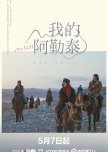
"Even if life is bumpy, you must live vibrantly!"
I love these kinds of dramas and films set in extraordinarily beautiful and remote places where people have lived to their own rhythm and nature’s for generations. To the Wonder did an excellent job of showcasing the scenery and people as they moved from their winter homes to summer ranches.What I liked:
The different people with different languages and religions communicating, negotiating, and also showing great hospitality. Separate cultures bonding through marriage and friendship.
Respect for nature.
The stunning vistas and grass ranges.
The sharing of games and celebrations.
The burgeoning writer element.
The love for horses.
Ba Tai didn’t have much character development, but he was pretty to look at.
What didn’t work as well for me:
Going to be an unpopular opinion, Li Wen Xiu felt like a character copied and pasted from a high school or college romcom Cdrama. My least favorite Cdrama FL stereotype---described as clumsy, stupid, bad at math, lazy with homework, but creative. Apparently, it is not possible to be competent and creative. How many times could she be covered in poop or water? She was also emotionally rash which resulted in dire consequences.
To the Wonder brought forth the age-old dilemma regarding changing times, as the older generations lamented their ways of life disappearing, the younger generation had to determine what was right for them. What to keep, what is lost, what is gained? I honestly could have done without the “fish out of water” character that became an avatar for more urban viewers and just reveled in the mountains, fields, and herds as the families navigated the land and changing social and political environment.
9 April 2026
Was this review helpful to you?
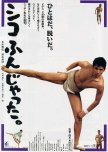
"It's a mawashi, not a jock strap"
Sumo Do, Sumo Don’t was a funny, lighthearted story of young college men finding something they were missing through a failing sumo club. “The players are pink giants,” with lots of skin showing and a determination to win and maintain age old traditions, well, at least some of them. And none of these boys were giants.Yamamoto Shuhei is called into Professor Anayama’s office. Due to his absences, Shuhei is going to fail and not graduate unless he joins the sumo club, just until the first tournament to keep the club open. Shuhei and the club leader, Aoki, search for new recruits. They manage to field a team with a guy wanting to impress a girl, another who can’t pay his rent and needs a place to live, and finally someone who just desperately desires friends. Unimpressed with the ancient art of sumo, Anayama’s losers may not be able to do enough to keep the club open.
Sumo Do, Sumo Don’t was the Bad News Bears of sumo. No one was really invested in sumo, but the more they competed the harder they worked at training. I did feel like Masayuki left out crucial moments that led to the boys’ decisions to dedicate themselves to the discipline of the sport and the respect for the ancient traditions. Most of their hardcore training was off-screen.
The film was funny, but not usually in a slapstick manner, more born out of the conditions the wrestlers found themselves in. I actually laughed out loud numerous times, a rarity for me with films. There were also deliciously heartwarming moments.
Sumo Do, Sumo Don’t was an entertaining, at times even rousing, sports film. Given that it was made for less than $1 million (USD), writer/director Suo Masayuki got a lot of bang for his buck. It was impossible for me to not root for this group of likeable underachievers. Each member of the team discovered something in himself through the rigors of sumo and the gift of friendship. Definitely worth a try if you enjoy sports or unexpected friendship films.
28 March 2026
Trigger warnings: I’ve seen other sumo fare and maybe the mawashi were ill fitting, but there was a lot of unkempt pubic hair exposed. Also, diarrhea gags.
Surprising note: I’m not sure how prevalent it was in the 1990s but this school had an American style football team complete with cheerleaders.
Was this review helpful to you?
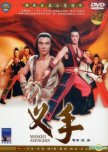
The Good Guys led by Qi Shan Yun are searching for a band of masked killers for hire who have been plaguing the area. While staying at an inn, Zeng Jun thinks the cook is paying too close of attention to the goings on. After the cook saves their lives, Zeng goes out of his ways to befriend the prickly, secretive man. The Good Guys’ numbers continue to dwindle at the hands of the trident wielding murderers leading them to believe that someone within is a traitor.
It’s been a while since I’ve watched a Chang Cheh film so I pulled out my handy-dandy CC checklist:
No discernable female presence. Check. Usually, older actresses like Got Ping or Mama Hung were in a background somewhere. In this film a sister had a couple of minutes of air time. Might be a new record for this period
Bare oiled up chests and fishnet “shirts”. Check and check. Shirts were optional in his homoerotic atmosphere.
Sado-masochistic murders. Check. He went out of his way to kill people in torturous new methods.
Buckets O’ Blood. Check. Though he was rather restrained with his artery spewing extravaganzas. The body count was typical for one of his films. Don’t get emotionally attached to anyone.
Drama Queen Bad Guys. Check. Check. And Check. All the baddies made entrances like on a corny game show in the spotlight. “When he’s not murdering people for hire, he enjoys oiling his weapon and walks along the beach.”
Not necessary, but often included when the Venoms were involved: Mutton chops. Some very serious sideburn action going on.
The story was thin with the requisite hidden identities. Though one look at the cast list tells you all you need to know. I was disappointed Lo Meng couldn’t join Philip Kwok, Chiang Sheng, and Lu Feng for the reunion. But I was pleased with the addition of Chin Siu Ho. Also, the English title is misleading. The bad guys wore the masks. The Venoms and Chu Ko acted as martial arts directors. They sped things up this time around, no kung fu posing. The fights were fast and furious and the final fight gave an appropriate just deserts to the villain.
Because it was a Shaw Brothers production, it has been maintained through the years and still looks sharp. I’m not a huge Chang Cheh fan with his exclusion of female characters but his films from this era were always a spectacle to behold. Rated on a curve.
9 March 2026
Trigger warnings: A chicken was skewered. Numerous impalements and lots of blood. Drinking of “blood”. Sexual assault off-screen.
Was this review helpful to you?
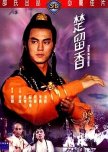
"Love can be used to trick people"
Clans of Intrigue was another bonkers whodunit extravaganza from Chor Yuen, Ti Lung, and Gu Long. Maybe not a cast of thousands, but certainly a large and unwieldly who’s who among Shaw Brothers staples wandered onto screen only to be murdered soon thereafter.Chu Liu Xiang, the ethical thief, is accused of stealing the Tianyi Divine Water poison and killing four clan leaders. Kung Nan Yen from the Divine Water Palace gives him a month to find the real killer or his life is forfeit. Chu crisscrosses the area hunting down clues and thwarting murder attempts on himself. The renowned swordsman will discover that enemies may be allies and allies might be enemies as he seeks to uncover the truth while trying to stay alive.
Ti Lung shone in this role. He seemed to take delight in the light-hearted, skilled thief and swordsman. Ling Yun would have a larger role in Legend of the Bat but made the most of his sword for hire role here. Nora Miao, Li Ching, and Betty Pei Ti all played swordswomen with Chu in their sights for various reasons. Tien Ching and Yueh Hua’s characters had their own secrets to bear. This was one of Yueh’s stronger roles. He could be rather stiff in other roles so it was fun to watch him exercise his acting muscles in this one. Ku Feng showed up at a clan’s gambling den, another interested in party in who killed the chiefs.
This film was a wuxia detective story as Ti searched for clues with killers on his trail. I’m always amused when the bad guy wears an unassuming bright red costume. To quote My Cousin Vinny, “Oh, you blend.” There were surprising twists and turns for a 1970s martial arts movie.*** I’m finding that Tang Chia and Huang Pei Chih worked well together as martial arts directors. The action was fast and acrobatic. As much as I love Ti, he could border on kung fu posing at times and this choreography seemed to suit him.
If you enjoy old kung fu flicks and don’t mind a rapid release of characters and information, this is one to try. I’m disappointed that I’ve watched all the Ti Lung and Ling Yun “buddy” movies, they had a nice bromance. As always, I rate these films on a curve.
6 March 2026
Triggers: An arm ripped off. Suggested sexual encounters off screen. Suicide.
***The film had a lesbian relationship without making it too weird. A major feat for the time.
***Spoiler comment below:
There was also an “intersex” character which at first made me nervous because I feared the character might be shown in a derogatory manner. Thankfully, this character was also not ridiculed. It was a “gotcha” moment but for 1977 they didn’t get gross in their language about the character. The situation was simply accepted matter of factly which was a nice surprise even if it might have pushed the bounds of realism.
Was this review helpful to you?
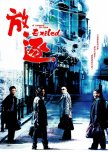
"I'll check the shark fins"
Johnnie To’s Exiled was a thrill a minute ride with four gangster friends + 1 exiled ex-gangster friend who had to choose between triad loyalty to the boss or to each other. Throw in a wife and new baby making the stakes even higher.Wo left the gang years ago after an assassination attempt on the boss. He came back to Macau with his wife and new baby where four old friends are waiting on him. Two are determined to protect him and the other two are assigned to kill him. After a gun fight in his apartment which led to moving furniture and dinner, friendship won out but that left them all in a precarious position with not just one gang, but two.
This is one of those films that I rated on the genre as well as the film itself. The gangster genre can be a lot of lather, rinse, and repeat with double crosses and triple crosses. I was pleased that the friends’ bond was stronger than their triad bond. Of course, that meant copious amounts of blood and flying lead and bodies. The cinematography, music, and lighting were all well above average. The acting was perfect for the characters. Anthony Wong reined in his scenery chewing abilities as did Francis Ng while still making their characters edgy, unique, and decidedly human. Roy Cheung with his gorgeous long hair and Lam Suet made for loyal backseat friends. Given their profession, all of the characters had made acquaintances with Death and found the gallows’ humor in their strange situations.
Wo’s wife played by Josie Ho had an important role to play as did Ellen Chan’s “Hooker.” Simon Yam came to life as the ruthless crime boss. Benz Hui’s retiring cop showed up occasionally to inject humor into scenes and explain why the police never swarmed the buildings being torn apart by gunfire and littered with dead bodies. A Red Bull product placement might have been the best commercial for it ever as that can definitely proved it had wings. The fight choreography was often highly stylized and at other times straight forward yet always highly effective.
I loved the look and feel of the film but it was the friendships that sold me. I had no illusions about how this film would end but still cheered when Ng closed the door. If you enjoy bloody buddy adventures and a different approach to a gangster flick this might be one to try. Probably an 8.0 but I enjoyed it to the end so I gave it an 8.5.
28 February 2026
Trigger warnings: Sexual content, brief nudity, graphic operating scene, lots of blood and violence.
Was this review helpful to you?

The Human Condition III: A Soldier's Prayer
6 people found this review helpful
"That kind of thinking justifies anything"
Rarely do I find every film in a trilogy compelling. Even more rare is when the whole is greater than the parts. The Human Condition III: A Soldier’s Prayer brought the total of 579 minutes to a proper and fitting ending for a devastating and insightful story.Kaji and two other survivors of the Soviet onslaught, struggle to find their way out of enemy territory. When they enter a seemingly endless forest, they discover a handful of Japanese evacuees. Kaji shares their meager supplies with the starving people. “It’s like meeting Buddha in hell.” The little troop dwindles as starvation and suicide whittles away at their numbers. After Kaji’s crew finally escapes Fangorn Forest, they stumble across a group of soldiers and are rebuked for surviving the annihilation of their squad. The men must later face Chinese armed militia and Soviet soldiers on the road home, even literally jumping through fire to survive.
Nakadai Tatsuyo, like Kaji, carried this trilogy on the back of his extraordinary performance. Throughout the films Kaji fought for all people to be treated with respect regardless of which side of the barbed wire fence they were on. Nakadai immersed himself in Kaji’s hope, determination, resiliency, flaws, and desire. This trilogy would not have succeeded so well in the hands of a less talented actor. Outside of Black River’s ensemble this was his first real main meaty role and he devoured it without overacting.
In the first film, Kaji dealt with how the Japanese inhumanely treated their prisoners. In the second film, Kaji sought to overcome the Japanese military culture of violence on Japanese soldiers. In this final film, the humanity lesson came full circle only this time it was foreign violence perpetrated on Japanese prisoners. Regardless of the power structure in charge, Kaji never backed down from demanding fair and humane treatment for everyone. His idealistic views were shattered when he discovered that the Soviet’s “promised land” of socialism was every bit as capable of inequality, cruelty, and exploiting prisoners as slave labor. Kaji came to understand that socialism being better than fascism wasn’t enough to keep his men alive. The only thing keeping him alive was Michiko and his promise to return to her. “I’m still walking on.”
The film was based on an autobiographical novel that resonated with director Kobayashi’s own view of the military and war. If you are planning on watching it strap in, as with the first two, there were no moments of levity. Although I did take perverse pleasure when Kaji gave the sadistic Kirihara a graphic demonstration of Jayne Cobb’s (Firefly 2002) chain of command philosophy.
Kaji found that whatever political or social philosophy one adhered to, human nature was the great contaminator. Wherever he went the strong preyed on the weak, and the weak did whatever was necessary to survive. Starvation and desperation drove people to lose sight of societal norms. How would they ever return to their old way of life after the ethical compromises made? “We’re all ruined.” The Human Condition films were long and harrowing, exploring what it meant to be human when the veneer of civilization had been stripped away and brutality was rewarded. Could one still find ways to be kind, show respect, and have courage in a pit with the merciless? What did it truly mean to be human? This was an extraordinary trilogy that grew stronger as it progressed with the message that ultimately, war has few winners and the price for most is catastrophically high.
26 February 2026
Trigger warning: Corpses with bugs, suicide, and rape off-screen.
Happy place note in a trilogy centered on pain and deprivation: Favorites Ryu Chishu and Takamine Hideko led a group of refugees in a Japanese settlement. Poor Ryu was only 57 but they made him up to look like 87.
Was this review helpful to you?
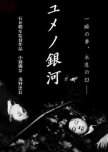
"In my boring life a chance for adventure has arrived"
There are some films that resonant not because of extraordinary acting or a compelling story, but rather the way the director wields his brush and paints a film alive with deft and mysterious strokes. Such was Labyrinth of Dreams for me.Tomiko is jarred when her friend Tsuyako, a bus conductor like herself, is killed in a tragic accident. Tomiko and her other friend, Chieko, do not believe it was an accident. Rumor of a bus driver who is a serial killer has been making the rounds for some time. When he tires of a conductor romantically, he kills her, making it look like an accident. When Niitaka Tatsuo is hired at Tomiko’s bus line, Tomiko becomes determined to avenge her friend. The only problem is…she falls in love with the handsome, and possibly deadly driver.
The movie was filmed in black and white and based on a story written in the early 1930s. Due to the clothes, hairstyles, and bus model, the setting was ambiguous, but suffice to say it was set in the days of yore. Much of the “dialogue” was in letter writing form between Tomiko and Chieko and prior to her death between Tsuyako and Tomiko. A young Asano Tadanobu played the enigmatic Tatsuo. A man of few words he was served up as a sizzling sexy entre with a side order of menacing eyes. Seventeen-year-old Komine Rena wasn’t as strong in the acting department but did her best as the bored conductor who had a sexual awakening in the dangerous arms of Tatsuo. As Tomiko said, “Life was miserable and lonely. I wrestled with fate until the end.”
Director Ishii Gakuryu created a gauzy dreamlike film often obscuring the audience’s view with darkness, rain, clouds, even forest leaves. Blurred frames swirled the changes of scenes. The film was filled with symbolism. Battered moths struggled to free themselves from a vase or were attracted to a hot light impotently bashing their wings against it. There was little music and what there was of it was simple. Most often the natural sounds of rain, wind, or surf filled in for the lack of score. Several times complete silence or a blank screen were used to jar the viewer. Ishii kept the audience guessing whether Tatsuo was a cold-blooded killer or a figment of an overactive imagination.
Labyrinth of Dreams was an odd story of love, lust, and the intoxication of danger. Dreamily shot, the monochrome format only added to the mystery and claustrophobic atmosphere. This art house film will not be for the broader audience, but if you enjoy a film that is more experience than narrative it might be one to try. I’ll be looking for more of Ishii’s films to be sure.
“If both held their courses, then they would collide in 9 seconds and catastrophe would be inevitable.”
6 February 2026
Was this review helpful to you?
This review may contain spoilers
Black River aka Kuroi Kawa reminded me of one of my least favorite Kurosawa Akira films, The Lower Depths. Like Lower Depths, this film is centered in a decaying tenement filled with unlikeable people. The underlying theme of the society decaying as well after WWII became lost for me in the toxic “love” triangle and reprehensible view of women. Please forgive me if I change up my normal review style for diary writings of the main characters. Warning-A disturbing event that happens early in the film is mentioned.Dear Diary,
I recently moved into a slum with a cranky landlady. She’s probably that way because only one tenant pays the rent. The local communist tries to talk the tenants into paying their fair share of the electricity bill and poop removal, but no one seems very interested in it. I just want to be left alone with my books while I’m studying civil engineering. Holes in the wall and nosy neighbors make it difficult. The house husband next door constantly bothers me. His wife works at a “salon” and is always coming onto me in her slip. I think she might be a prostitute. In fact, most of the women wander around in their slips and are either hitting on me or watching others have sex through the holes in the walls. Thinking I might be living in a house full of perverts. I have fallen in love with a beautiful waitress who picked up one of my books that had fallen in the street. New entry-she ditched a date we had for her to “borrow” some books to hook up with the local gang leader, Joe the Killer. Heartbroken, will continue to focus on my studies. Believe one of my pervy neighbors is stealing my things.—Nishida Kenzo
Dear Diary,
Work as a waitress is going well. I take the same route every day with my parasol. I picked up a book a fellow dropped and kismet! I think I’m completely in love. I have a date to “borrow” more books. Latest development-last night on my way to see the student, I was roughly kidnapped by a group of men. Another man beat them off and saved me! Then he threw me on the ground, declared his love for me, and brutally raped me. I, of course, went to him the next day and demanded he marry me. Joe the Killer laughed at me. Guess I’m stuck with this loser after losing my virginity to him. What a ridiculous name for a gangster, must get him to change it. Maybe Joe the Delusional Rapist? Will play the part of a tart and dress more seductively. I should leave him but I am strangely attracted to his brand of violent affection…Think I will write a love letter to that book nerd to keep my options open. Love, Shizuko
Dear Diary,
Things are going my way. Have talked the crooked landlady into hiring me to drive out her tenants so that we and my business partner can build a “Love Hotel.” Last night I wooed the good girl in town and convinced her that violence is how I show affection. Women are so stupid. I also take particular delight in tormenting her and that idiot student she loves. Everything is great! Yay me! –Joe the Killer
Black River had some important insights into life after WWII outside an American military base that became uselessly bogged down in the “love” triangle. Rape as foreplay will never sit well with me. Despite strong performances from Nakadai Tatsuya and Arima Ineko and a somewhat satisfying ending, the whole triangle premise left a bad misogynistic taste in my mouth.
1 February 2026
Trigger warnings: Implied rape and sexual situations though nothing shown. Physical abuse of women which was shown.
Was this review helpful to you?
"If the sky falls, the tall will hold it up"
I stumbled across Forget You Not and to my utter delight found a hidden gem dealing with the joys and pitfalls of family, friendship, marriage, and work. Hsieh Ying Xuan and Chin Han gave beautifully realistic performances of a daughter and father distanced through their own faults and misunderstandings. Every chapter was meaningful and gave insight into their lives and loves. As only Taiwanese dramas can do, the characters were flawed and real, relatable guides on this journey into aging and life.Cheng Le Le’s life is shaken when her marriage falls into trouble and her “unreliable” father is diagnosed with dementia. Her rocks are her two best friends and her job as a stand-up comedian.
Each chapter in Forget You Not focused on a different aspect of Le Le’s life-her father, the mother who abandoned her, her friendships, her husband, and circled back to her father as his illness progressed and he became completely reliant on her. The episodes wove flashbacks with the present, never wandering afar and always giving insight into everyone involved. Aside from Le Le, we also peer into the stress of Zhang Kai’s privileged life, Cheng Kuang Chi trying to provide for his family working aboard ships, and Hsiao Fang’s pressure to raise a child largely alone.
The writing was thoughtful, showing people’s strengths and foibles. As in real life, marriage was a work of balancing expectations and needs, some not always fulfilled. Friendships were forged with people who were imperfect and faced their own crisis at times. As people aged, they suffered the loss of friends and family, whittling down their social circle we all depend upon. Parents were fallible, some capable of the job, others not. Children, even adult children, focused on themselves often shuttling parents’ needs aside. And ultimately, some children came to be caregivers of aging parents reversing the roles of a lifetime.
Forget You Not never shied away from the difficulties in relationships and caregiving. One of the most thankless and difficult jobs is caring for a loved one, often without any help. Even when done out of love and familial responsibility, it can bring a person to the breaking point physically, mentally, and emotionally. And financially. It is consuming and exhausting with the person always haunted by guilt with the questions of, “Am I doing enough?” Often followed by, “Will this ever end?”
This drama was heartbreaking and heartwarming. Following Le Le on her journey of self-discovery and a new relationship with her father was a deeply emotional journey for her and me. I tend to call out dramas that work too hard to manipulate the audience through cheap tricks and maudlin music. Forget You Not had absolutely gut-wrenching moments earned through authentic storytelling and nuanced acting. It was not all sorrow, for there were moments of levity, joy, and laughter. Sometimes when it seems the rain will never end, all you can do is dance in it.
28 January 2026
❤PSA-If you know a caregiver, please drop off food, ask to run errands, or find a way to relieve them so they can rest, shower, get out of the house/hospital for even a small amount of time. Anything so that they know they aren't alone. Sometimes caregiving takes a terrible toll on people's physical and mental health.
Was this review helpful to you?

"Unified desperation"
The lure of a female serial killer played by Go Hyun Jung was too much of a lure for me to avoid. Jang Dong Yoon as her estranged detective son was the final bait to make me sit down and watch Queen Mantis.Serial killer Jung I Sin was given a sweetheart deal in exchange for her confession. She lives her life in relative luxury for someone on death row. Everyone but a handful of people think she died in prison. So when a copycat begins using her playbook to gruesomely off their victims Choi Jung Ho cajoles Cha Su Yeol into joining his investigative team, as I Sin will only to talk to the feisty detective, who also happens to be her son.
The format felt overly familiar and parts of it were reminiscent of Alias when Spy Mama was incarcerated and would only talk with Sydney or Silence of the Lambs, etc. “I’ll only talk to…” is a worn-out trope. If you are going to use a classic recipe, execution is key. This was where QM was hit or miss. I Sin was hands down the most compelling character and her screen time was limited in the first 6 eps. I wasn’t heavily invested in the side characters or the numerous scenes of Cha yelling or crying. There was a great deal of repetition which could have been fixed by tightening the script.
The drama served up a whole can of red herrings which diluted the intensity. Despite the numerous killings, QM lacked urgency. Keeping Cha’s past a secret seemed more important than hunting down the killer(s). The cops’ feelings and abilities were often fickle. And Cha’s marriage only served to offer up more man pain, with Lee Jung Yeon being particularly underdrawn. The lovely Lee El’s Kim Na Hui was a basket of contradictions. She couldn’t just be a competent cop, she also had to be alluded to as a bad mom numerous times and unable to stand up for herself when passed over for a promotion.
QM attempted to show how traumatic abuse and sexual assault are often ignored by society leading to broken people who keep the torturous cycle spinning. Authority characters made excuses for men beating and sexually assaulting women and children, because isn't there always an excuse? In this drama, I Sin became judge and executioner, a grotesquely twisted super hero for the weak and unheard.
7.5/10.0 is my rating for an average drama. Watchable but nothing too memorable. What will be memorable was Go Hyun Jung’s understated performance. She wasn’t afraid to go “ugly”---no noticeable makeup or hair styling. Because she was often seated at a table or shackled, she couldn’t gesticulate with her hands or go the glam route with hair acting. She conveyed a wealth of feelings subtly and meted out her emotional explosions when they made the most impact. I Sin was smart, resourceful, and badly damaged--- a lethal mantis---capable of attacking cruelly without remorse or pity. Not a role model by any means, but fascinating to watch.
25 January 2026
Trigger warnings: Severed body parts and heads. Torture. Child abuse. Sexual assault alluded to and in its most cruel form. Bugs in the form of beetles if you are super sensitive to them.
Was this review helpful to you?
"What kind of place this?"
Kyojo 2 had a new crop of recruits studying to become police officers under the watchful eye of Kazama Kimichika. Kimura Takuya returned as the no-nonsense Kazama who seemed to know everything happening in his purview.Once again Kazama had to deal with students who shouldn’t have been able to pass a psych eval or physical fitness test in order to get this far. He ferreted out their secrets and exposed their weaknesses. Some would be allowed to continue, others were shown the door.
Kazama was extra hard on his students because of the death of an unprepared graduate that also resulted in the loss of his eye. This fact alone made it harder for me to understand why certain students were allowed to stay in the program. **Minor spoilers to continue this thought are below the date. **
Kimura Takuya, the silver fox with the worst prosthetic eye since the wooden one from Pirates of the Caribbean, is always compelling to watch. Unfortunately, for me at least, most of the students were completely forgettable or memorable for all the wrong reasons. Kazama’s past had a small reveal, the biggest reason I watched this second part. If you enjoyed the first Kyojo, it’s likely you’ll enjoy this second one as it followed much of the pattern of the first.
17 December 2025
Minor spoilers below:
**
Steal a computer mouse? You’re out! Steal the ingredients to make a bomb? All is forgiven. Lie to a superior? No prob. Can’t tell time? No problem. Sexual harassment? No problem. Bullies are okay. Skittish students are okay. I dropped my score when near graduation a student at the firing range was so delighted at hitting the target they actually looked down the barrel of their loaded gun! To quote Zootopia, "You're dead bunny rabbit!" No wonder they have to have a constant flow of new students!
Was this review helpful to you?


