

 19
19 38
38 8
8 1
1 1
1 1
1 1
1 1
1 6
6 2
2 3
3 1
1 1
1 1
1 3
3 1
1 3
3


Worth the Loop
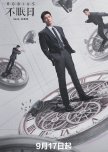
I have to admit, I only started Mobius because I saw Bai Jing Ting wearing a black t-shirt. That alone was enough to get me through the door. Thankfully, the drama turned out to be much more than just good visuals.Mobius follows Detective Ding Qi, a detective with a rather unconventional advantage. Every so often, he can rewind time and relive the same day up to five times, turning each loop into another chance to crack cases that would otherwise remain unsolved. But when a mysterious killer known only as squid announces a murder in advance, Ding Qi realizes he's no longer the only player bending the rules of time. What begins as a battle of wits soon spirals into something far more unsettling, with a shadowy genetic research group at the center of an ever growing web of secrets. As allies become suspects and those closest to him are pulled into the storm, Ding Qi finds himself trapped in a Mobius strip of fate where every answer leads to another question, and escaping the cycle may be the hardest mystery of all.
As someone who almost never watches sci fi dramas, especially those involving time loops, I found Mobius surprisingly approachable. This is not the kind of show that gives you a headache trying to connect twenty different timelines with red strings on a corkboard. The story presents its concepts in a very digestible way. It constantly moves between the past, the present, and Ding Qi's five possible loops, but the structure is so consistent that it never feels overwhelming. Almost every episode opens with flashbacks before returning to the current timeline or current loop, allowing the audience to slowly piece everything together. By the time you reach the first half of the drama, you already have a solid understanding of what is happening without feeling like you just attended a crash course in quantum physics.
The mystery is strongest in the first half. Watching Ding Qi carefully navigate each loop to solve cases kept me genuinely invested. The second half does become more predictable, and there is a good chance you will figure out the identity of Squid before the reveal. Strangely enough, that never became a problem for me. The fun shifted from asking "who" to asking "how." I was curious to see how everything would unfold and how the drama would connect all the pieces together. It still managed to sprinkle in enough light twists to keep things engaging even when the destination became easier to see.
The drama also deserves credit for never taking itself too seriously. One of its biggest strengths is how naturally it blends comedy into an otherwise suspenseful story. Whether through Ding Qi's unexpectedly ridiculous actions, witty dialogue, or perfectly timed background music, the humor lands remarkably well without disrupting the tension. Even the romance works as a nice breather between the intense investigations.
Then there are the product placements, which somehow became some of my favorite scenes. The drink advertisement was already funny, but the iQIYI product placement completely caught me off guard. Imagine a serious moment suddenly turning into Ding Qi talking about iQIYI subscriptions and Detective Conan before they start humming the Detective Conan theme. It felt so shameless that it looped right back into being hilarious. That is probably one of the very few product placements I genuinely enjoyed watching.
Of course, Bai Jing Ting carries a huge part of the drama's charm. He completely nailed Ding Qi. His action scenes were clean, polished, and incredibly satisfying to watch. Maybe a little too polished because every punch somehow looked effortlessly cool. His comedic timing, however, completely stole the show. His raised eyebrows, awkward body language, facial expressions, and line delivery were comedy gold. On top of that, the styling team clearly knew what they were doing. The hairstyle, the outfits, the toned physique... the man practically had smell o vision. I could almost smell the perfume through the screen.
One thing that pleasantly surprised me was hearing different dialects throughout the drama. I am not a native speaker, but it was interesting noticing the variety in how people spoke. Bai Jing Ting attempting the dialect was especially hilarious, while some supporting actors looked like they were fighting for their lives trying to switch between accents. It added an unexpected layer of fun and pain to the viewing experience. The other cast did a solid job overall, especially Janice Man. I was also pleasantly surprised by Li Qing Kuan as Fang Lu. Her English sounded remarkably natural, even more convincing than another character who was supposedly raised in America.
Visually, the drama is quite good. The action sequences are well shot! I also notice that the production uses lots of bold blue, pink, purple, and green lighting, particularly during scenes inside the laboratory, which made the scenes look more stylistic than immersive. The soundtrack and background music fits the atmosphere nicely, complementing both the suspense and the lighter moments without becoming distracting.
Still, the ending left some things hanging. There are also some logical leaps here and there. By the end of the drama, I was left with a couple of unanswered questions, one of which is how could something done to one person cause a time loop that affects everyone? Then again, if you examine every time travel rule under a microscope, you will probably find cracks. But Mobius is not trying to be the final boss of time loop fiction. It keeps things simple, entertaining, and easy to follow. Sometimes, that is exactly what a story needs.
Overall, Mobius was an enjoyable sci fi thriller that balanced mystery, comedy, action, and just enough romance to keep the pacing fresh. I came for Bai Jing Ting in a black t-shirt, stayed for Bai Jing Ting being effortlessly funny, and ended up having a genuinely entertaining time along the way. Sometimes the shortest route to enjoyment is not a straight line. It is a Mobius strip.
Was this review helpful to you?
This review may contain spoilers
A Beautiful Misunderstanding
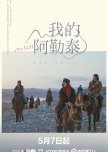
To the Wonder feels less like a drama and more like a season of life that you happen to inhabit for a while. In an era where most stories are propelled by urgency, whether through career ambitions, romantic endgames, or carefully engineered conflicts, this series moves at the pace of wind crossing a grassland. It is interested not in what happens next, but in what it means to pay attention. Nothing dramatic appears to be happening, and yet everything is. Dreams, ambitions, loss, longing, belonging, and difficult choices unfold not through spectacle but through observation. The result is an immersive viewing experience that quietly settles into your emotions and stays there long after the credits roll.Adapted from Li Juan's celebrated prose, the drama follows Li Wen Xiu, a young Han Chinese woman who returns to her hometown in Altay after professional setbacks derail her literary aspirations. On paper, the premise sounds deceptively simple. In practice, it unfolds with the depth and patience of a literary novel. Rather than rushing viewers from one plot point to another, the series invites us into a state of heightened perception. Faces, silences, weather, animals, and landscapes all become part of the storytelling. It asks us to linger, observe, and gradually learn to see the world as Wen Xiu herself begins to see it.
Wen Xiu is one of the most quietly compelling protagonists I have watched. At the beginning, she measures her worth through the unforgiving standards of urban success. She is awkward, insecure, and uncertain of where she belongs. Returning home initially feels like a retreat, but it slowly becomes an opportunity. Through her spirited mother, her growing connection with the Kazakh herder Batay, and her immersion in nomadic life, she transforms from someone desperately trying to write about life into someone learning how to live it. Her journey is not about becoming extraordinary. It is about becoming present.
The drama is also a subtle reflection on creativity itself. Wen Xiu dreams of becoming a writer, but the series never treats writing as a matter of talent alone. Instead, it suggests that writing begins with attention. Before one can tell stories, one must learn how to see. The grasslands become Wen Xiu's greatest teacher, and her artistic growth becomes inseparable from her personal growth. She becomes a writer not by escaping life, but by witnessing it more fully.
Many viewers approach To the Wonder expecting a romance, and certainly the relationship between Wen Xiu and Batay provides some of the drama's most luminous moments. Yet this is far more than a simple love story. The deeper romance is between Wen Xiu and existence itself. One line from the drama stayed with me: "Men seni zhaksy koremin, I see you clearly." The locals believe that love and friendship begin with being seen, and that idea quietly becomes the emotional foundation of the entire series. Batay is not merely a love interest. He is a doorway into another way of being. He moves through life with an ease that seems inseparable from the grasslands themselves. Wen Xiu's attraction to him is intertwined with her fascination with the world he represents. At times, he almost feels allegorical, as though the landscape itself had taken human form.
Some of my favorite moments come from their conversations. When Wen Xiu looks at a horse skull hanging from a tree and remarks that it resembles witchcraft, Batay gently corrects her: "There's no witchcraft, only nostalgia." He explains that horses are companions, and when one dies, its memory remains in places people frequently pass. It is such a simple explanation, yet it reveals an entire philosophy toward grief. Loss is not hidden away. It becomes part of the landscape. In another scene, Batay explains that Saykhan means "splendid" in Mongolian, while in Mandarin it sounds like "rainbow." He then smiles and calls it "a beautiful misunderstanding." That line perfectly captures their relationship. They come from different worlds, yet beauty often emerges through those differences.
Their romance is tender, playful, and refreshingly sincere. The teasing, the small nudges behind her grandmother's back, Batay's nervous hesitation before trying to kiss her, and the vulnerability hidden beneath his confidence make their connection feel achingly real. One moment that particularly stayed with me was when Batay, caught between family expectations and his own desires, quietly asks Wen Xiu, "Will you still like me?" The uncertainty in his voice could disarm even the most committed anti-romantic. Yet what makes To the Wonder remarkable is that it never reduces itself to whether these two people end up together. Instead, it consistently returns to a larger and more profound idea: the freedom of accepting our own smallness.
Contemporary culture constantly insists that we must become exceptional, visible, and unforgettable. To the Wonder proposes something quieter. When Wen Xiu asks her mother, "Although I'm clumsy, I'm still useful, right?" Her mother replies, "What do you mean by useful? Did I give birth to you so you can serve others? Look at the trees and grass on the grassland. They are useful if people eat and use them. But if no one uses them, it's perfectly fine for them to simply exist. They are free, aren't they?" There is something deeply comforting in that philosophy.
While Wen Xiu searches for meaning, her mother already possesses an intimate understanding of life's unpredictability. She knows that plans fail, money disappears, and people disappoint, yet she continues forward with humor, resilience, and grace. In many ways, she embodies the drama's central belief that life does not need to be perfect to be beautiful. Compared to city life, where achievement often becomes a measure of worth, Altay offers a radically different proposition. The mountains do not care about your résumé. Horses do not ask for credentials. The wind grants no awards. Nature's indifference becomes a source of comfort. Freed from the exhausting need to prove herself, Wen Xiu gradually discovers a more durable sense of belonging.
I know the ending has divided viewers, but I find myself among those who appreciate it. My initial reaction mirrored many others. The tonal shift felt abrupt. However, the more I sat with it, the more essential it became. Until that point, viewers can still lean into a somewhat romanticized vision of the grasslands. The landscape is beautiful. The people are resilient. Batay is charismatic. Even hardship arrives wrapped in poetry. Then Snowshoe's death shatters that illusion. Altay ceases to be a pastoral fantasy and becomes something more honest. Nature is beautiful, but it is also indifferent. Love exists, but so do consequences.
Batay's impossible split-second decision is not a choice between love and companionship. It is a choice to do what is right in a terrible circumstance. Snowshoe is not merely a horse. He is a companion, partner, and extension of Batay's life. The drama spends enough time establishing that bond that the tragedy lands with devastating force. What struck me most was not only the loss itself, but the immediacy of Batay's response as he ends Snowshoe's suffering in front of everyone, including Wen Xiu. From that moment onward, nothing can return to what it was before.
The hardest part is that nobody is truly at fault. Wen Xiu never intended harm. Batay never wanted to lose Snowshoe. Snowshoe did nothing wrong. Yet tragedy happens anyway. In a more conventional drama, there would be a villain to blame. To the Wonder is interested in something less comforting but more truthful: sometimes lives change because people are imperfect, distracted, inexperienced, or simply unlucky.
What makes the ending so impactful is the aftermath. Snowshoe's death is not merely an accident. It is a sacrifice. The question is not whether Wen Xiu is guilty, but whether she can live with the knowledge that her actions contributed to a loss she never intended. Whether Batay blames her or not becomes almost irrelevant. Grief settles between them like an unspoken presence. What remains is not resentment, but irreversibility. Some experiences cannot be undone. No apology can bring Snowshoe back. No explanation can restore the innocence that existed before. Their relationship now contains a ghost. Not a ghost of blame, but a ghost of memory. Every glance carries the knowledge of what happened. Every interaction carries the absence of what was lost.
For me, this becomes a catalyst for Wen Xiu's growth. She learns that you can love someone and still hurt them. You can mean well and still cause damage. One small mistake can alter another person's life forever. Snowshoe's death shatters her romantic idealization of the grasslands and transforms her from a visitor into someone emotionally entangled with this place and its people. The cost of loving something is that its suffering eventually becomes part of your own story. That is why the ending feels mature rather than tragic. It understands that some wounds do not heal cleanly. They become part of who we are, like scars. It also understands that the purpose of love is not always permanence.
While some viewers wanted more romance, more happiness, or a cleaner resolution, I think the ending beautifully dismantles the fantasy of closure. After everything that happens, the story focuses on what truly matters: Wen Xiu's ability to appreciate, witness, and be present. Batay is never reduced to a romantic reward waiting at the end of her journey. He remains fully himself, with a life that extends beyond the heroine's narrative. The tragedy is not that Wen Xiu loses him. The tragedy is realizing that some beautiful things cannot be kept without destroying the very qualities that made them beautiful in the first place. This is why I do not consider the ending sad, even though it carries melancholy. Sadness wants reality to be different. Melancholy accepts reality while grieving its beauty. The Portuguese word saudade comes to mind: a longing for something precious that is absent, accompanied by gratitude that it existed at all. The ending exists in that emotional space.
The visuals deserve special praise. The landscapes are breathtaking, but the cinematography never treats them as postcards. The camera understands that beauty is not something to admire from a distance but something to live within. You can almost feel the chill of the morning air, hear livestock moving across the plains, and sense the immense silence stretching beyond the horizon. Even the controversial sequence in the final episode impressed me. The shift in color, atmosphere, and expression creates an emotional weight that lingers long after it ends.
The casting is equally outstanding. Every actor feels completely at home in this world. Yu Shi, in particular, disappears into Batay. His dedication is visible in everything from his command of the local language and dialect to the physical demands of the role. The horseback riding, dancing, singing, and stunts never feel performative. They feel lived in. What I loved most, however, were the tiny details: the awkward laughs, the soft chuckles, the thoughtful hums. Those small moments make Batay feel like a real person rather than a character. The local actors are equally memorable, bringing a lived-in realism that grounds the entire drama.
In the end, To the Wonder is a poetic, introspective, and deeply immersive experience. It shifts one's perspective from the relentless pursuit of achievement toward gratitude for life, presence, and even smallness. It encourages us to see clearly, to pay attention, and to appreciate what is right in front of us. I came for the romance and the beautiful scenery, but I left with something much harder to articulate. After watching it, the world feels a little larger, a little quieter, and infinitely more worth noticing.
Was this review helpful to you?
I’ll Jump with You, Even Without the Sun
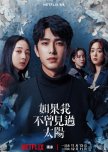
Had I Not Seen the Sun (Part 1) is not an easy watch, and it never pretends to be. It is raw, dark, and emotionally heavy, weaving together love, hope, trauma, and violence in a way that can feel almost too real at times. Consider this a gentle warning, because some moments are deeply triggering. But if you are willing to sit with discomfort, the story offers an immersive experience that lingers long after the credits roll.The drama opens with a striking premise. Li Jen Yao turns himself in, calmly confessing to being the infamous Rainstorm Killer. He recounts his crimes in chilling detail, yet refuses to explain why he did them. He then agrees to an interview with journalist, Chou Pin Yu. Their initial encounter is unforgettable. A simple glance between them becomes charged with tension and curiosity, almost like time pauses just to let that moment breathe. Tseng Jing Hua brings a quiet magnetism to Jen Yao, balancing a smirky charm with something warmer underneath, while Chiang Chi’s wide-eyed, searching gaze makes Pin Yu instantly compelling. That first meeting alone was enough to keep me seated.
From there, the narrative begins to blur lines between reality and something more elusive. After meeting Jen Yao, Pin Yu starts experiencing vivid dreams and unsettling visions involving him and a mysterious schoolgirl. These sequences are eerie and intentionally disorienting. The lighting choices, often tinted in pinks and purples, feel a bit dated and occasionally take you out of the moment, but they still contribute to the overall sense of unease. Some of her visions, especially the more intimate ones, are strange to watch, yet they reinforce the central mystery. You are not always comfortable, but you are always curious.
As the story shifts further into the past, the emotional weight deepens. Jen Yao’s life is defined by chaos and pain. His father’s gambling addiction and violence cast a long shadow over his childhood, while his mother clings to false hope that things will change. You can feel his frustration, his helplessness, and the quiet desperation of wanting to escape a life that offers no light. And then Chiang Hsiao Tung enters, almost like sunlight breaking through a storm. Played with effortless charm by Moon Lee, she embodies warmth, innocence, and possibility. Her presence softens Jen Yao’s world, giving him something he has never truly had before.
The drama leans heavily on symbolism, particularly through the imagery of moths, butterflies, and the sun. Hsiao Tung, like a butterfly, represents freedom and lightness, moving through life with joy and curiosity. Jen Yao, like a moth, is driven by intense emotions, drawn to light even if it risks burning him. Between them is the sun, a symbol of hope and purpose, something bright enough to guide them both. It is a simple metaphor, but the drama uses it effectively to deepen their connection.
Their relationship unfolds with a tenderness that feels almost fragile. The closer they get, the more you start to worry about what might happen next. And that sense of dread is not misplaced. When Ouyang Ti enters the picture, the tone shifts sharply. His obsession and cruelty push Jen Yao into a corner, forcing him into situations that are difficult to watch. By this point, the drama becomes emotionally exhausting in the best and worst ways. It demands your attention, but it also tests your limits.
A brief escape to Taipei introduces a quieter chapter, where Jen Yao, Hsiao Tung, and Lai Yun Chen share moments that feel like a pause before everything falls apart. Yun Chen is a complicated presence. Her coldness toward Jen Yao can be frustrating, but it gradually reveals itself as a form of protection, rooted in her own pain and her love for Hsiao Tung. This arc feels almost peaceful, yet there is an underlying tension that makes it clear this calm will not last.
Episode 8 marks a turning point that is both beautiful and devastating. The intimacy between Jen Yao and Hsiao Tung is portrayed with such care that it makes what follows even harder to bear. When Hsiao Tung confronts Ouyang Ti in an attempt to help Jen Yao, her courage is heartbreaking because it is also naive. What happens next is brutal. Even within the limits of censorship, the drama does not hold back. The violence is depicted in a way that feels disturbingly real, leaving a lasting impact not just on the characters, but on the viewer as well.
What lingers even more are the quiet moments that follow. Jen Yao walking Hsiao Tung home, her refusal to blame him, and the minimal words exchanged between them carry an emotional weight that is hard to describe. It is in these small, restrained scenes that the drama truly shines. The aftermath is just as difficult, especially in how Hsiao Tung’s parents respond. Their reactions feel misguided and frustrating, adding another layer of pain to an already devastating situation.
Despite everything, the story finds moments of fragile comfort. One of the most striking comes when Hsiao Tung admits she once considered ending her life. Jen Yao’s response is simple yet profound. He does not try to stop her or offer empty reassurances. Instead, he tells her that if she jumps, he will jump with her. It is not a solution, but it is companionship in its most absolute form. In a drama filled with darkness, that line feels like a small, flickering light.
The ending of Part 1 is bittersweet in the most painful way. Jen Yao spends years in juvenile detention, missing a promise that meant everything. Yet Hsiao Tung keeps her side of it, leaving behind traces of a love that refuses to fade. It is a quiet, devastating conclusion that feels both complete and incomplete at the same time.
This drama took me a long time to finish, partly because I needed breaks to process what I was watching. It is not something you casually binge. It demands emotional investment and, at times, emotional endurance. Saying that I enjoyed it does not feel quite right. But I can say that it moved me, unsettled me, and stayed with me. If you are looking for something light, this is not it. But if you are drawn to stories that explore love and trauma with unflinching honesty, Had I Not Seen the Sun (Part 1) is an experience worth having.
Was this review helpful to you?
Survived Earthquakes but Not a Conversation
Fireworks of My Heart brings us the classic tale of love rekindled after years of separation, set against the backdrop of high-pressure careers in the fire and medical fields. The story follows Song Yan and Xu Qin, once high school sweethearts who were torn apart by their families' disapproval, only to be reunited a decade later in their adult lives as a fire chief and an emergency doctor. It's the kind of drama that promises emotional fireworks, with a sprinkle of nostalgia, but does it really ignite all the right sparks? Let’s dive in.From the get-go, the drama’s premise feels like a Cinderella fairytale, except here, the “prince” is a firefighter with emotional baggage and the “princess” is a surgeon who’s more conflicted than her scalpels at times. Their reunion is full of tension, yet the path to rekindling their romance is as fiery as the very fires Song Yan fights daily. There’s undeniable chemistry between the leads, Yang Yang and Wang Chu Ran, but some parts of their story feel a little too rushed or underdeveloped, especially in the early stages.
The most glaring issue for me was the narrative’s inconsistency. For instance, in episode one, when the fire team heads out for a rescue mission, Xu Qin, the emergency doctor, conveniently appears with zero explanation about why she’s not in an ambulance. Sure, it’s a plot device to get these two back on screen together, but come on – where’s the logic? As much as I want to suspend disbelief, that moment had me questioning the writers' dedication to realism. It's like everyone just happens to be in the right place at the right time for the sake of the reunion.
And speaking of that reunion, let's talk about Song Yan’s backstory. I get that he has deep feelings for Xu Qin, but the reasoning behind his persistent attachment is a bit murky. Was it really love at first sight, or was he just in a constant state of puppy-dog confusion? The flashback scenes don’t do much to flesh out his initial infatuation, leaving me scratching my head about why he clung to her for a whole decade without more tangible reasons. For Xu Qin, her gradual fall for Song Yan feels more believable, especially given how much effort he puts in, but for him? Not so much. The emotional build-up could have been written stronger to make us feel more invested in his 10-year wait.
The family drama, too, doesn’t always add up. The Meng family’s influence feels like the stuff of legends—so powerful, yet they send Xu Qin to a school where she meets Song Yan, a guy from a different social stratum. It feels like the drama wants to have it both ways, making the Meng family seem impossibly controlling and influential but still letting their daughter mingle with people from "lower" social statuses. And let's talk about Xu Qin’s decision to break things off with Song Yan. I get it: she's a realist, and she doesn’t want to jeopardize her position in the Meng family. But the execution of that decision leaves much to be desired. The way she cut him off without a word? Ouch.
In terms of character growth, I was surprised at how much I ended up rooting for Xu Qin. She begins as this timid, somewhat naive character, but by the time we get to episode 10, it becomes clear that she’s been living for Song Yan all along. Her transformation from viewing surgery as just a job to realizing it’s a calling is one of the best arcs of the show. And when she chooses to leave Song Yan to save another patient, you can feel the weight of that choice. She’s grown into someone who understands her professional responsibilities and isn’t just a love-struck woman trying to keep her man. That scene really hit me hard—like, yeah, she’s a surgeon now, not just someone playing a part in someone else’s story.
On the other hand, Song Yan’s character is a bit of a paradox. He has all this pride, but his actions often speak to a guy who’s terrified of abandonment. You can see the signs early on: his father’s sudden death, his mother’s abandonment, and of course, Xu Qin’s unexplained departure from his life. It makes sense that he holds a grudge, but the back and forth with Xu Qin becomes almost exhausting. Their "will-they-won’t-they" dynamic could have been cut down a bit, because honestly, after a while, you just want them to get together already. But once they do, it’s like the floodgates open. The chemistry between them finally bursts forth in passionate (yet awkward) kisses. And, let’s be real, Fireworks of My Heart has a way of making even the smallest kiss seem like a grand spectacle.
As for the secondary characters, some are more fleshed out than others. Jiang Yu and Zhai Miao are both delightfully endearing sidekicks, providing much-needed humor and support to our main leads. Meanwhile, characters like Ye Zi and Meng Yan Chen are more divisive. Ye Zi’s presence brings a sense of anxiety and distrust to the plot, especially when she tries to manipulate people around her. I get why the drama put her in the story, but she’s the classic "villain" who stirs up unnecessary drama. Meng Yan Chen, on the other hand, provides a bit of grounding, even though his relationship with Xu Qin is tested by the ever-looming threat of the Meng family’s control.
Now, let’s address the elephant in the room: the overall pacing. There are moments that feel a bit too slow, especially in the middle episodes when nothing much is happening except for emotional push and pull. The focus on the relationship dynamics sometimes overshadows the action, like when the rescue operations take a backseat to the love story. It's great that Song Yan and Xu Qin are deep in their emotions, but I wish the show had balanced that with more urgency around their jobs. These two are professionals, after all.
By the time we reach the finale, all the pieces come together, and I’ll admit, I was satisfied with the closure. Sure, there were some hiccups, especially with character motivations and the way the family drama resolved itself, but overall, the ending felt earned. After all, this is a show about overcoming personal and familial obstacles to find happiness, and when it finally happens, it’s worth the wait—despite all the missteps along the way.
To sum it up: Fireworks of My Heart delivers the emotional beats you want, but the execution isn’t always perfect. Although their expressions could have been improved, the chemistry between Yang Yang and Wang Chu Ran is undeniable. Unfortunately, the plot sometimes sacrifices logic for dramatic moments. Still, for fans of epic love stories that overcome the odds, this one hits enough of the right notes to keep you invested through all the fiery ups and downs. Just be prepared to roll your eyes every now and then.
Was this review helpful to you?
This review may contain spoilers
Oh. My. Dragon.
Betrayed and dismembered by the woman he once loved, the ancient dragon Tianyao is reborn with one goal: collect his scattered body parts and take back what was stolen from him. His heart protection scale ends up inside Yan Hui, a seemingly ordinary but spirited girl who unknowingly becomes the key to breaking his seal. Tianyao approaches her with a plan to use her, retrieve his bones, and exact revenge. Yan Hui, sensing danger, tries to run but fate has other plans. As they travel together, secrets unravel, truths about Yan Hui’s origins surface, and somewhere between revenge and survival, love quietly grows.Three episodes in, I was like, okay… this is decent. Not the kind of drama that grabs your collar and screams “YOU MUST BINGE ME,” but also not the type that makes you scroll your phone mid episode. It held my attention just enough. A comfortable start, like dipping your toes into dragon fire and realizing it is warm, not scalding.
Hou Minghao and Zhou Ye carried those early episodes on pure charisma. Hou Minghao as Tianyao exudes this quiet, mature power. He is charismatic without trying too hard, restrained yet intense. Not shameless like Ji Bozai, not a love fool like Lu Jiang Lai. This dragon king is composed, aloof, and surprisingly simple minded in emotional matters. He feels deeply but guards it like national treasure. Zhou Ye as Yan Hui is the perfect contrast. She is loud, bright, skilled in martial arts, and yet there is that “I am just a girl” softness in her expressions. They complement each other beautifully. Also, her dry hair ends distracted me a little at first, but that is a minor battle in a war of dragons.
Baby dragon Tianyao is ridiculously cute. Hou Minghao switching from dignified Dragon King to jealous baby dragon is range. His big eyes, his expressions, the subtle difference in styling between adult and baby dragon forms were well done, though the chin makeup could have been cleaner in some shots.
The CGI is a 50 50 situation. Some scenes are stunning, others feel like the green screen is waving hello. But the costumes? Chef’s kiss. I especially love how the spirits retain animal features on their heads. It gives off Disney Halloween energy and I mean that in the best way possible.
The fox incense arc in episodes 5 and 6 had me nervous. Love potion plots can easily spiral into frustration city. I was worried Yan Hui would fall in love under a spell and we would be stuck in that loop for ten episodes. Thankfully, the drama said nope. The resolution was quick, clear, and digestible. Wang Peng Yuan explained everything with Tianyao present, antidote delivered, spell broken before my anxiety could fully bloom. I appreciate a drama that knows when to exit a trope.
Then comes Dragon Valley. Oh. My. Dragon. This was peak fangirl territory for me. The little elves, especially the tiny girl, Yan Hui bickering with them, Tianyao’s soft gaze as if he adopted a whole kindergarten overnight. It felt like one big found family. The set design was adorable and matched Tianyao’s charming aura. The jealousy threads were delicious too. Bai Xiaosheng playing cupid, then regretting it. Bai Xiaosheng falling for Yan Hui. Tianyao being quietly jealous. It was chaotic, fluffy, and I was seated with popcorn.
There was one hair brushing scene in Dragon Valley that could have been smoother. A leaf falls on Yan Hui’s hair, Tianyao removes it, she panics, he brushes her hair and she says in her world only husbands can brush their wives’ hair. I understand the intention, but the leaf setup made it feel awkward. Still, that payoff later in episode 27 when he repeats the line and she kisses him? Butterflies activated. When Yan Hui hugged him and repeatedly confessed “ wǒ xǐhuān nǐ,” I was giggling like a teenager. Their chemistry was chemistrying.
Bai Xiaosheng deserves appreciation. A gray character done right. He starts as cupid for his own gain, falls in love with the girl he tried to push toward someone else, and ends up risking everything to keep her alive. Even placing her under the control of the Lord of Dark Aura to save her life. The fact that Yan Hui does not hate him for it shows her emotional maturity. She understands intention. Also, her slapping the Lord of Dark Aura’s head repeatedly for hurting her heart was comedy gold. Our girl stays bright even in darkness.
Now we need to talk about the heart stab. When Tianyao forcefully took back the heart protection scale and stabbed Yan Hui, I was speechless. The betrayal mirrored what Suying did to him. I was angry. Yes, the scale was originally his. Yes, he wanted to save his elves and avenge innocent lives. But communication, sir. A simple explanation might have changed everything. The fact that he did it when they were already close made it worse. If he had done it in the early episodes, I would have shrugged. But at that stage? Emotional damage.
What satisfied me though was how the aftermath was handled. Yan Hui did not magically forgive him overnight. She was scared. Truly scared. Not cold on the outside but secretly longing. She was traumatized. That felt real. And Tianyao did not force forgiveness. He apologized, realized the depth of her fear, and stepped back. He helped her quietly, gave her space, and even considered playing cupid for her and Bai Xiaosheng if that meant her freedom from the Lord of Dark Aura. That maturity is so rare in male leads. Growth king behavior.
The marriage plot for the Ghostly Eulogy translation gave me mixed feelings. I am not a huge fan of forced proximity when the emotional wounds are still fresh. Tianyao looked delighted. Yan Hui treated it as an act. It felt slightly unfair to her. I would have preferred if the marriage happened after she willingly opened her heart again. That said, Tianyao preparing dowries and taking it seriously was very on brand for his sincere nature.
The logic surrounding the nine stars, heart protection scale, and dark flower magic was confusing at first, but I will give the drama credit. Just when I thought there was a plot hole, the next scene usually clarified it. Tianyao giving Yan Hui his nine stars to redirect fatal damage to himself, planning ahead for her safety, softened my anger toward him. Again, communication could have saved everyone a lot of tears.
The antagonists shift throughout the drama. I initially thought Suying would be the ultimate villain, but then we get the Lord of Dark Aura and Chanlang. The transition felt a bit like two dramas stitched together. Suying’s obsession with Lu Musheng remains questionable to me. For such a powerful Taoist, she is unbelievably obsessed over Lu Musheng for reasons that do not feel proportionate to what we were shown. A brief childhood rescue and a thermal jug reunion does not justify world burning madness. Her revival arc later felt unnecessary and anticlimactic.
The Taoist clan frustrated me more than any demon. Hypocrisy levels were high. Watching them corner Yan Hui without listening was infuriating. I was especially disappointed in Lingxiao. Which made it incredibly satisfying when Yan Hui mastered the Ghostly Eulogy, became the Lady of Dark Aura, and casually overpowered everyone at Chengxin.
As for the ending, I have mixed feelings. The scale of Yan Hui sacrificing herself to eliminate the Lord of Dark Aura was grand, but the execution felt rushed. The villagers following her to Misty Village did not add much. Tianyao slicing air dramatically while she did the heavy lifting was… a choice. And then the final minutes. Everyone else gets closure and screen time. Yan Hui appears briefly, offers Tianyao baozi, and that is it? I needed more. Do they remember everything? What changed? Give me answers, not just buns.
Despite the uneven CGI, the questionable villain arcs, and an ending that left me with more questions than the Ghostly Eulogy itself, this drama grew on me. It made me laugh. It made me anxious in a good way. It gave me a mature male lead who understands space and accountability, and a female lead who does not forgive just because love exists. Their chemistry is chemistrying. Dragon Valley lives rent free in my head.
Back From the Brink may not be perfect, but it gave me butterflies, baby dragons, and a heroine who slaps dark lords in the head. And honestly, that is already entertaining in my book. This drama is messy at times, but its emotional core is strong enough to carry it.
Was this review helpful to you?

This God Really Said “Let the World Burn”
Born into the immortal realm, Shen Li is a formidable general who refuses to be bartered away in a political marriage. Her escape goes wrong, leaving her injured and trapped in her phoenix form, tumbling straight into the human world. There, she is unexpectedly purchased at a market by Xing Yun, a sickly yet sharp minded man whose quiet life is anything but ordinary. What begins as a strange cohabitation slowly ties their fates together. As love blooms across realms, ancient evil stirs, betrayal cuts deep, and Natural Law itself is challenged. With the balance of the Three Realms at stake, Shen Li and Xing Yun must decide whether love is their greatest strength or the one taboo that could destroy everything.The drama wastes no time pulling you in. It opens with Shen Li on the run from a forced marriage, and right away you understand who she is. Powerful, independent, adaptable, and carrying the weight of responsibility like second nature. Her inner monologue as a phoenix is both revealing and hilarious. Watching a mighty general struggle with the daily inconveniences of being a bird is comedy gold. Enter Xing Yun, gentle, strategic, witty, and looking like a stiff breeze might knock him over. The fiery phoenix and calm human pairing is a classic combo, and here it works like magic. That early mortal realm arc had me fully seated, snacks forgotten.
As the story moves forward and Shen Li regains her body while Xing Yun completes his mortal tribulation and returns as Xing Zhi, the last surviving ancient God, the romance levels up. One thing I genuinely love about this drama is how mature it feels compared to many Xianxia stories. These are not impulsive teenagers playing at destiny. Shen Li is a demon general, Xing Zhi is a God burdened with maintaining balance across the Three Realms. Duty is not a suggestion, it is the rulebook. Xing Zhi is forbidden from worldly attachments, and Shen Li understands this better than anyone. Instead of manufactured misunderstandings, their main conflict comes from responsibility, restraint, and knowing exactly what loving each other could cost.
Their push and pull is delicious. Shen Li keeps trying to shove Xing Zhi out of her life for his own good, and he keeps calmly, persistently finding his way back in. She radiates independent woman energy, yet he somehow coaxes out her softer side without ever undermining her strength. The vibe is very much “I know you can do it, but let me do it for you.” Xing Zhi’s deadpan humor deserves its own fan club. He regularly leaves Shen Li flustered or speechless, and I found myself laughing out loud more than once. The humor fits perfectly, dry, understated, and never forced.
Li Geng Xin brings a quiet charisma to Xing Zhi that really elevates the character. His godly, mature visuals help, yes, but it is his control and expressions that sell the role. His biggest strength as a character is his emotional impulsiveness when it comes to Shen Li. Unlike other godly protagonists who talk big but hesitate, this man is absolutely willing to let the world burn if it means saving her. Heaven’s wrath be damned. Shen Li, on the other hand, is often the cautious one, which makes it even more impactful when she finally goes “screw it” and boombayah with him, even when she knows better. Their existential crisis flavored romance is tension inducing in the best way, never exhausting.
Zhao Li Ying is perfection as Shen Li. Her glittery round eyes and petite frame do nothing to diminish her presence as a demoness and general. This was my first time watching her and Li Geng Xin together, and their chemistry is seriously tight. It feels natural, layered, and earned, easily one of the drama’s biggest strengths. The ensemble cast also deserves praise. Each supporting character has a purpose, whether for comedy, emotional support, or romantic complications, and none of them feel out of place or annoying. They add flavor without overpowering the main dish.
Visually, this drama is a feast. The sets are beautiful, the special effects are dreamy, and Xing Yun’s mortal realm house is honestly iconic. The CGI can lean a bit cartoonish at times, but it still works within the fairytale tone. Costumes and makeup are heavenly, pun fully intended. The ending was as sweet as dessert too, giving us a full episode of much needed closure.
Overall, I went into this drama out of boredom and came out completely in love. The Legend of Shen Li has officially earned its spot as my favorite mature Xianxia drama to date. If you like seasoned characters, restrained but powerful romance, and a love story that challenges fate without screaming about it, this one is absolutely worth your time.
Was this review helpful to you?

This review may contain spoilers
Healing Is Loud in a Silent House
Set in 2007, Reborn follows sixteen year old Qiao Qingyu and her family as they flee their small county town of Shunyun and resettle in the provincial capital, Huanzhou, after cruel rumors surrounding the death of her older sister, Qiao Beiyu. Determined to reclaim some sense of normalcy, Qiao Qingyu, with the support of her classmate Ming Sheng, uncovers what truly happened to Qiao Beiyu. As fragments of the truth slowly surface, Qiao Qingyu is forced to confront the injustice her sister suffered and finds herself walking a painful path toward truth, reckoning, and justice.Reborn opens quietly, almost deceptively so. The Qiao family’s move from Shunyun to Huanzhou is framed not as a fresh start full of excitement, but as a fragile hope stitched together by exhaustion and grief. Their faces are tight, the music subdued, and right away the drama makes its promise clear. This is not a story about forgetting the past. It is about carrying it, surviving it, and maybe, if luck allows, healing from it. Loss hangs in the air, societal pressure presses down from all sides, and yet there is still a soft glow of hope flickering beneath the sadness.
From early on, it is not hard to guess that Qiao Beiyu’s story is darker than the rumors suggest. The “pretty sister who took her own life” narrative feels too convenient, too cruelly simplified. The details remain hidden, but the unease is enough to keep you glued. As the Qiao family settles into Huanzhou, each member grieves differently. They try to perform normalcy, but it is painfully obvious that none of them have truly moved on. Qiao Qingyu, especially, lives permanently in her sister’s shadow. Even in death, Qiao Beiyu’s name follows her everywhere. As a teenager burdened by rumors about her sister suffering from AIDS and moral corruption, Qiao Qingyu becomes an outcast without ever doing anything wrong. Her blank stares and quiet stillness speak volumes. She feels numb, like someone who has already endured too much and no longer knows how to react.
School becomes both a relief and another source of anxiety. I genuinely held my breath when Qiao Qingyu first stepped into her new classroom, bracing myself for bullying or worse. Thankfully, her first day goes relatively smoothly, accidental pool fall included. What struck me most was how stoic she remains in situations that would have sent me spiraling. It feels like she has already survived worse back in Shunyun, so everything else barely registers. That emotional numbness becomes one of the most heartbreaking aspects of her character.
Then there is her mother. A walking textbook of conservative Asian parenting, complete with taboo views on sex education and an unhealthy obsession with reputation. Watching her scribble over a school issued sex ed book was infuriating. The moment Qiao Qingyu fires back that maybe Qiao Beiyu would still be alive if she had been given sex ed was cathartic in the most painful way. Boom. The family’s tendency to cover up what happened to Qiao Beiyu only adds another layer of suffocation. And yet, despite all that, the parents are not portrayed as monsters. Small moments of care, like immediately checking on Qingyu after she breaks bowls at the restaurant, remind us that love exists here, just deeply warped. Qiao Qingyu’s bond with her brother Jinyu is a rare pocket of warmth. They bicker, they conspire, they protect each other. The kind of ride or die sibling energy that makes everything hurt a little less.
Then there is Ming Sheng, wrapped in mystery and soft menace. His connection to Qiao Beiyu, his childhood history with Qiao Qingyu, the piano, the dance, all of it feels like pieces of a puzzle deliberately scattered. I will admit, something about him teasing Qiao Qingyu and dangling clues about her sister’s death felt infuriating and thrilling at the same time. It is a familiar trope, the boy who toys with curiosity before realizing he has crossed a line. Episode three confirms it when Ming Sheng reflects on his actions, guilt written all over his face. That quiet remorse gave me flutters.
As the story progresses, Qiao Qingyu’s mother becomes increasingly volatile, reacting to anything Qiao Beiyu related with anger or avoidance. Beneath that fury lies guilt so thick you can almost taste it. It keeps you seated, waiting to see when it will finally spill over. The drama does an excellent job showing how trauma mutates into control, especially in the way Qiao Qingyu’s mother polices her daughter’s every move while simultaneously criticizing her for being a loner. The irony would be funny if it were not so painful.
Ming Sheng’s world is not much brighter. His fractured family dynamic, marked by parental selfishness and misdirected blame, explains much of his guardedness. Watching him slowly realize that adulthood means responsibility, not just resentment, is quietly satisfying. His attempts to make amends with his father are awkward, understated, and incredibly human. Bonus points for him playing accidental cupid and saving his dad from a medical dispute like an overachieving king.
Qiao Beiyu’s story, however, is where Reborn truly tightens its grip around your heart. Revelation after revelation paints a picture of a girl starved of love, raised in a toxic family system that favored sons, protected abusers, and blamed victims. Her relationship with Qiao Jinrui is exposed not as romance but as betrayal on a systemic level. The dinner table confrontation after Qiao Qingyu learns the truth is one of the most rage inducing scenes I have watched in a long time. Every adult at that table fails her. Her father avert his eyes, elders rewrite history, and the family that should have protected Qiao Beiyu becomes complicit in her destruction. It is sickening, and it is devastatingly realistic.
The camcorder in episode nineteen delivers the final blow. Qiao Beiyu speaking directly to us, recounting her life with quiet honesty, was both beautiful and unbearable. From being unwanted at birth to being taken away from her parents, to believing she deserved abandonment and abuse, her words linger long after the episode ends. The cruel irony that her AIDS diagnosis finally earned her parents’ undivided love is something I still cannot fully process. I was not crying. I was just sitting there, stunned.
Amid all this darkness, the relationships between the younger characters shine like small lanterns. Qiao Qingyu’s friendship with Wang Mumu is tender and honest, built on shared wounds rather than competition. Ming Sheng’s friendships feel equally grounded, full of unspoken loyalty. And then there is Ming Sheng and Qiao Qingyu. Their relationship unfolds with a realism that feels almost rare. He teases before he understands his feelings, cares without making a spectacle, protects without grand declarations. The bike rides, the borrowed shoes, the quiet defenses, the pouting jealousy, it all feels soft and earned. Their connection is less about fireworks and more about warmth slowly spreading through frozen fingers.
The later episodes shift in tone, and while the brighter atmosphere is welcome, it does feel abrupt. Conflicts resolve quickly, parents soften almost overnight, and the narrative leaves several questions hanging in the air. The romance takes center stage, sometimes at the expense of the heavier themes that made the earlier episodes so powerful. The reunion is sweet, but restrained. For a couple built on so much longing and pain, one hug and one kiss feels criminal. We deserved more.
Still, despite its imperfections, Reborn is a drama that lingers. It is messy, frustrating, tender, and painfully human. It speaks about justice, family, gender, and societal cruelty without sugarcoating the damage they cause. It reminds us that healing is not linear, that love often arrives late, and that sometimes rebirth is not about starting over, but about finally being seen.
I came for a mystery. I stayed for the ache. And I left with a heart that felt heavier, but somehow fuller too.
Was this review helpful to you?

Logged In for the Cast, Logged Out for Sanity
Fresh out of college, Gu Xun and Qian Ling unexpectedly cross paths again when they land jobs at the same gaming company. Qian Ling is bright, sweet, and has been quietly crushing on Gu Xun for years, so when she finally gathers the courage to confess, his blunt rejection hits hard. What she does not know is that Gu Xun is already smitten with someone else, a sharp-tongued, fearless female gamer known online as Nuo Mi Xiao Ma Hua. The twist? That legendary gamer is actually Qian Ling herself, living her boldest, sassiest life behind a screen. As the lines between the virtual world and real life start to blur, Gu Xun is about to discover that the girl he admires most has been right in front of him all along.Everyone Loves Me is one of those dramas that hooks you with a cute premise and gaming romance, then slowly tests your patience with character choices that make you want to pause the episode and talk to the screen.
Let’s start with Qian Ling. I genuinely liked her feisty side, especially when she is in her gamer persona, confident, sharp, and unapologetic. Unfortunately, that energy barely exists in her real life at the beginning. Watching her relentlessly pursue Gu Xun after he has repeatedly made his disinterest clear was painful. The secondhand embarrassment was real. The public rejection alone should have been enough for her to draw a hard line and walk away, yet she folds almost instantly. The moment she softens because he is building a dog house in the rain had me going, girl, be serious. Her inability to hold a grudge and how quickly she caves to Gu Xun made her character frustrating despite her otherwise likable traits.
Gu Xun did not help matters. He treats everything far too lightly, especially emotions that deserve more care. He pushes Qian Ling away without explanation, humiliates her with a public rejection, and then seeks forgiveness in a way that feels more whiny than sincere. Instead of owning his mistakes, he skirts around them, hides behind half truths, and continues concealing his identity so he can remain her emotional safe space. When the truth finally comes out, he still pressures her to forgive him instead of putting in real effort. It often felt like he expected grace without earning it.
That said, one thing I appreciated about Gu Xun was his professionalism at work. No matter how messy his personal feelings were, he stayed focused and competent on the job. This grounding quality gave his character some much needed charm and honestly made the drama more watchable. If he had been careless professionally too, the experience would have been unbearable.
In terms of acting, Lin Yi’s performance felt a little flat at times. His expressions rarely shifted, which made emotional moments fall short. Zhou Ye, on the other hand, is very expressive, but her delivery occasionally tipped into cringe territory, especially when she spoke in an overly demure tone or softly called out names. It clashed with the stronger sides of her character and pulled me out of scenes more than once.
The drama also struggles with tone. Episode 18’s “Marry Me” moment was peak cringe, whether intentional or not. It did not land the way it should have and instead felt awkward and overdone. The final conflict was another weak point. Dropping it so late in the story made it feel unnecessary, and the way it was resolved only added to the awkwardness. Even knowing Gu Xun was scheming, the reveal and Qian Ling’s reaction still made me cringe rather than feel satisfied.
Despite all this, the drama is not without its charms. The gaming elements, workplace setting, and flashes of strong chemistry keep it afloat. While the ending could have been handled better, at least every character received closure, which softens the blow.
Overall, Everyone Loves Me is a mixed bag. It has a fun concept and moments of genuine charm, but it is weighed down by frustrating character dynamics, excessive cringe, and conflicts that did not need to exist. If you can tolerate secondhand embarrassment and a female lead who forgives far too easily, you might still find it an entertaining watch.
Was this review helpful to you?
A Classic!
Loved the Korean adaptation and definitely enjoyed the original Chinese version as well!I was bored and suddenly thought of Moon Lovers: Scarlet Heart Ryeo. Since I've rewatched the Korean adaptation a lot of times and was also bored of Korean dramas, I remembered that it was an adaptation of a Chinese drama. I decided to watch Scarlet Heart with no expectation and ended up finishing it in 2 days.
Released in 2011, the production quality was definitely outdated. The story, however, was well-written to the point that it kept me hooked even if I already know, more or less, how it goes as I've watched the Korean adaptation first. I do have to applaud the actors though. Honestly, the only ones I was most familiar with were Liu Shishi and Li Gengxin. However, as expected from seasoned actors, everyone did an incredible job and exceeded my expectations. Nicky Wu and Kevin Cheng definitely left a lasting impression on me. Nicky Wu's charismatic aura as the fourth prince and Kevin Cheng's portrayal of quite strength and vulnerability just got me so immersed. Liu Shishi also did an amazing job at portraying the cheerful and bubbly Maertai Ruoxi turned weak, apathetic, and helpless. Li Gengxin was also great at portraying the loyal, kindhearted, and affectionate fourteenth prince. All the actors definitely did an amazing job! I have to say, their use of older actors, the men especially, for the main characters gives the characters a different sense of charismatic, manly appeal compared to newer costume drama these days.
That said, this drama is definitely worth watching, especially if you've watched the Korean adaptation. I wish we could see more new costume dramas featuring older, seasoned actors like this one.
Was this review helpful to you?
This review may contain spoilers
Promising Start, Disappointing End
Why was Jing Tao Hua so stylish, with a full hairdo, even after she went through a disaster?!I started this drama due to the hype and arranged marriage plot and I admit, the first half was promising. The actors did well in acting out their roles and the story kept me hooked, up until the leads were chased and ended up going to that village.
Okay, I gave it a chance and continued watching because maybe that part is needed for the plot and for character development. However, amnesia?! I’ve aways hated and felt disturbed whenever there’s an amnesia plot and that did not change in this drama. The amnesia plot was definitely unnecessary.
Now comes my next ‘huh’ moment.. In episode 31, the characters went through a disaster, the explosion and debris kind of disaster, yet while all the other characters were dressed simple covered with dusts and debris, Jing Tao Hua had full on makeup, hairdo, and a stylish dress. The only thing that lacked color was her lips because she was supposed to be low on energy lmao. Girl, please.. that was cringe.
Due to these questionable moments that built up towards the ending, the open ending did not really affect me as I already had no hope for this drama. However, although the second half of the drama was not for me, others might still find it amusing. So give it a try!
Was this review helpful to you?
What Is Going On?!
I may need to give this another try but based on what I’ve seen so far, I’m dropping it for now.The actors were great, especially Liu Xueyi in the first few episodes. He was captivating as Murong Jinghe. However, I got so confused at the story and thought it was just not for me. After giving it a chance, I decided to stop in the middle of episode 25 because.. what is going on?!
Was this review helpful to you?
Bloom Once, Explain Never
Blossoms of Power is a tale where revenge blooms in the unlikeliest of gardens. After surviving the massacre of the Gu family, Gu Qing Zi returns under the identity of Shen Xi He, the Princess of the Northwest, trading innocence for steel and resolve. Across the political chessboard stands Crown Prince Xiao Hua Yong, physically frail yet always several moves ahead of everyone else. As ambition collides with loyalty, the two form a formidable alliance, navigating a court where every smile conceals a dagger and power belongs to those willing to outplay fate itself.The opening immediately grabbed my attention. Watching Qing Zi orchestrate her own death to frame another family already tells you everything you need to know about her. She is intelligent, calculative, ruthless when necessary, and always thinking several steps ahead. Her death also leaves Prince Xin, her husband, devastated. Forced to oversee the Gu family's massacre despite wanting to spare her, he is left helpless as she chooses death on her own terms. Then, almost immediately, the story shifts to the real Shen Xi He, a gentle and refined princess travelling to the capital for an arranged marriage. She falls into the water after an assassination attempt by one of her own maids, a mysterious double moon appears, and suddenly everything changes. That is also where my biggest issue with the drama begins.
Considering China's restrictions on resurrection, transmigration, and time travel stories, I was genuinely curious about how the drama would handle this premise. Instead of explaining it, however, the narrative simply leaves everything hanging. There is also a three year gap between Qing Zi's death and Xi He falling into the water, making the situation even more confusing. My own interpretation is that the double moon temporarily opened some kind of path between souls. Qing Zi's body had already died while her soul remained in limbo, whereas Xi He's body was still alive but somehow inherited Qing Zi's memories, skills, and personality while retaining her own memories. That explanation at least allows me to believe Xi He herself never truly disappeared. It makes the situation feel less unfair than having her body completely stolen.
The problem is that this is only my interpretation because the drama never confirms anything. It asks viewers to fill in the blanks themselves. Even stranger, Xi He wakes up with almost no confusion whatsoever. There is no existential crisis, no struggle adapting to a completely different life, and barely any reaction to such an unbelievable supernatural event. She simply wakes up and continues living as the fierce strategist we knew as Qing Zi. The people around her notice her dramatic personality change, but those concerns are brushed aside almost comically. Even her father and brother eventually conclude that the capital simply changed her. It almost feels as though soul swapping is just another Tuesday. For the rest of this review, I will simply refer to both Qing Zi and Xi He as Xi He.
Unfortunately, this habit of withholding explanations continues throughout the drama. Blossoms of Power often drops important details in passing or hides context within blink and you'll miss it shots. It almost feels like the drama is challenging viewers to solve a puzzle rather than simply telling its story. Sometimes that is rewarding, but other times it becomes frustrating because missing one tiny detail can leave an entire plot point feeling incomplete.
After Xi He survives her fall, Crown Prince Xiao Hua Yong discovers her unconscious and gives her a rare medicinal plant that he had risked his own life obtaining. He could have used it to treat himself, but instead chooses to save a woman he has just met. It sounds like love at first sight for Hua Yong. As he accompanies her journey to the capital, his admiration and respect only grows. He quickly recognizes Xi He's intelligence and strategic mind, seeing her as someone who can stand beside him rather than behind him. He is then determined to make her his Crown Princess. Now, Hua Yong deserves his own paragraph because shameless might as well be his middle name.
This man has absolutely no concept of subtlety. His flirtation is direct, relentless, and almost weaponised. Every other episode had me shrinking into my chair from second hand embarrassment because of another cheesy line or another overly confident romantic gesture. At first I genuinely questioned whether I could survive dozens of episodes of this. Strangely enough, somewhere along the way, I became desensitised. I ended up reacting exactly like Xi He herself, smiling, shaking my head, and quietly accepting that this hopeless romantic was simply being himself. Like eating overly spicy food, eventually your tongue gives up resisting.
That said, the drama occasionally mistakes exaggeration for spectacle. The most absurd example has to be Hua Yong climbing an icy mountain to retrieve another medicinal plant for Xi He. As an isolated romantic moment, it certainly looks impressive. In context, though, it made me question every law of physics. His experts fail to find the plant, naturally he succeeds, and then he somehow jumps off a cliff only to throw a rope back onto the very same cliff and climb it again. Unless I completely misunderstood the geography, I spent more time wondering why he did not simply climb down normally than appreciating the romance. It felt less like survival and more like an opportunity to farm aura points. Younger me probably would have swooned. Current me just stared at the screen wondering what exactly I had witnessed.
Despite Hua Yong's overwhelming devotion to Xi He, I was pleasantly surprised that his character never became one dimensional. I usually find characters whose entire world revolves around their love interest rather shallow, but Hua Yong avoids that trap. Before becoming Xi He's biggest supporter, he is first and foremost someone worthy of becoming Emperor. He genuinely cares for his people, takes his responsibilities seriously, and possesses intelligence equal to Xi He's. His playful exterior hides someone remarkably capable, which gives his character far more depth than his endless flirting initially suggests.
Ironically, despite all that effort, I never fully bought into the chemistry between Hua Yong and Xi He. Throughout most of the drama, Xi He remains emotionally guarded while Hua Yong does almost all the emotional heavy lifting. Their relationship often felt less like two people falling in love together and more like one person running a marathon while the other politely walks behind. Even after marriage, when they finally became more affectionate, I still found myself appreciating them more than actually feeling butterflies. Hua Yong's affection is certainly entertaining, but it often felt so excessive that I struggled to fully believe it as genuine love.
Ironically, the supporting couple completely stole the show for me. Bu Shu Lin and Cui Jin Bai had the chemistry I was searching for all along. Shu Lin disguises herself as a man in order to inherit her family's position, and Fan Shuai Qi absolutely sells the role. She is easily one of the most convincing female crossdressers I have seen in a Chinese costume drama. What begins as a scheme involving Jin Bai slowly develops into genuine affection, with Jin Bai hilariously questioning his own identity long before discovering Shu Lin is actually a woman. Their relationship develops naturally, their interactions feel believable, and by the time romance finally blossoms, I was fully invested. It is just unfortunate that censorship noticeably limited their romantic scenes, especially during the latter half of the drama.
The supporting cast in general is one of the drama's strongest assets. Lai Wei Ming was fantastic as Prince Lie and honestly had me wishing his character received a happier ending. Xu Zheng Xi once again proves that yearning is practically his speciality. Ever since Love of Nirvana, it feels like he has mastered the art of looking emotionally exhausted. It suits him extremely well, although I also hope future roles allow him to showcase different sides of his acting. I also have to give special praise to Lin Zi Ye as Tian Yuan. Every expression he made whenever Hua Yong unleashed another shameless line was comedy gold.
The main cast, however, is more of a mixed bag for me. I still cannot decide whether I actually liked He Yu's performance as Hua Yong. There are moments where he fits the role perfectly, but there are just as many where something feels missing. I actually preferred him in previous roles where he played colder and more reserved characters. Here, he strangely gives off supporting male lead energy rather than carrying the screen as the main lead. Outside of Hua Yong's outrageous flirting, I never felt especially emotionally attached to him, particularly during scenes that required heavier emotional delivery.
Meng Zi Yi left me similarly conflicted. Her naturally doll like appearance suits Xi He's composed and calculating personality beautifully. Unfortunately, that restraint also carries into scenes requiring stronger emotional expression. Her emotional breakdown near the end particularly disappointed me. Without the context of the scene, I genuinely might have mistaken it for someone rolling around in the snow with severe stomach cramps. Crying scenes need messy expressions. Furrowed brows, trembling lips, strained muscles, anything that convinces me the character is breaking apart. Instead, she often looks more concerned about maintaining a flattering camera angle than completely letting herself go emotionally. I actually enjoyed her performance in Blossom, but Princess Gambit simply did not work as well for me.
Visually, Blossoms of Power clearly aims for elegance. While certain locations such as the East Palace flower garden are genuinely beautiful, along with the colorful fireworks sequences, the overall presentation never feels particularly groundbreaking. Most of the cinematography falls into familiar territory. Even so, the production consistently looks polished and luxurious enough that I still appreciated the effort. The soundtrack also deserves praise. None of the songs have stayed on my playlist afterwards, but within the drama itself they always elevate the mood of each scene perfectly.
As the story approached its conclusion, however, the writing once again fell back into its old habit of leaving important questions unanswered. Prince Xin became the biggest emotional roller coaster in the entire series. I disliked him, sympathised with him, hated him again, then somehow liked him once more. While his final revelation attempts to tie everything together, it ultimately feels more convenient than convincing. It almost seems as though the writers decided his redemption at the last minute simply because every major character needed closure. The Emperor, on the other hand, genuinely surprised me. He feels remarkably human, and saying anything more would spoil one of the better aspects of the story.
[SPOILERS]
The ending itself also feels like the writers handing viewers a neatly wrapped gift while quietly hoping nobody asks too many questions. I appreciate that the drama chose a happy ending, I really do, but it never fully explains what actually happened to Hua Yong. His future after his son becomes Emperor also remains rather vague. Perhaps the bedtime story he tells his son reflects his desire to live peacefully among ordinary people while continuing to care for them from afar. That interpretation makes emotional sense, but practically speaking, I still have many questions. Is he simply going to remain inside the palace while pretending politics no longer exists? Your guess is honestly as good as mine.
[SPOILERS END]
Overall, Blossoms of Power is a decent watch that had me alternating between smiling, cringing, and scratching my head. One episode had me hiding behind a pillow from second hand embarrassment, while the next had me pausing to question the logic of what I had just watched. Watching it as an ongoing series with one or two episodes each day probably helped smooth out some of those frustrations. At the end of the day, this is neither an outstanding masterpiece nor a disappointing failure. It sits comfortably somewhere in the middle. If you're willing to embrace its shameless romance, overlook a few logic gaps, and accept that not every mystery will receive an answer, Blossoms of Power still offers an entertaining journey. Sometimes a flower blooms beautifully even when its roots are a little messy.
Was this review helpful to you?
Down Bad Dynasty
My Royal Nemesis is a rom-com that puts a delightfully chaotic spin on fate, reincarnation, and second chances. When the spirit of Shin Seo Ri, a notorious Joseon-era seductress sentenced to death centuries ago, awakens in the body of a struggling actress, she finds herself navigating a world completely different from the one she once knew. Armed with the confidence, wit, and cunning that helped her survive in the past, Seo Ri crosses paths with Cha Se Gye, a cold chaebol whose life becomes increasingly entangled with hers. What follows is a romance filled with bickering, longing, and enough sparks to light up a palace.Unfortunately, this is one of those dramas that started incredibly strong only to lose momentum as it went on. The first half gave me a kind of rom-com euphoria that I have not felt in a long time. Every episode left me excited for the next one, and I genuinely looked forward to seeing where the story would go. Then came the second half. The excitement slowly faded, the pacing began to drag, and I found myself losing the motivation to immediately continue watching after each episode.
A huge part of what kept me invested was Cha Se Gye. Heo Nam Jun once again proved why he is one of the rising actors constantly catching my attention. His portrayal of Se Gye was ridiculously charming. His eyes, his smiles, the way he delivered his lines, and even his ad-libs were enough to make me blush. Sure, there were moments when his expressions carried a slight "he knows he's handsome" energy, but his performance was so charismatic that I could hardly complain. Some of Se Gye's lines would honestly sound cheesy on paper, yet Heo Nam Jun somehow delivered them in a way that made my heart flutter instead of cringe. Special mention must also go to his bath and shower scenes because, well, the man clearly did not skip upper body day.
As a character, however, Se Gye is fairly straightforward. He is essentially a typical chaebol with a backstory attached to him. While his personal struggles serve their purpose, I never found them particularly intriguing because they felt familiar and predictable. Seo Ri, on the other hand, was the character wrapped in mystery. After surviving death as Kang Dan Shim in Joseon and awakening as Shin Seo Ri in the modern era, she becomes determined to live differently. Rather than allowing herself to be defined by love or sacrifice, she wants to prioritize herself for once.
One of the lines that perfectly introduced her character was:
“I am filled with profound gratitude simply to be alive thus, rather than dead. No, this is not a curse. Let me think of it as a rebirth. Not a punishment, but a second chance. It may be wretched, but I survived. So in this life, I shall live as I please. And consider this a reward.”
That monologue immediately made me interested in her journey. Im Ji Yeon was completely convincing as both the Joseon-era Kang Dan Shim and a Joseon woman reborn in the 21st century. Her speech patterns, mannerisms, and line delivery felt natural throughout. However, I do think the drama missed a golden opportunity with Seo Ri's adjustment period. We get glimpses of her fascination with modern life, but the drama rushes through most of it. I would have loved to see her learning how to use a phone, reacting to elevators, figuring out modern fashion, or dealing with countless everyday things that would seem like sorcery to someone from Joseon. Instead, the story quickly skips ahead and presents a version of Seo Ri who has already adapted surprisingly well. The few Joseon touches that remain are entertaining, but I cannot help feeling there was a lot of comedy and character development left on the table.
The writing also suffers from a few inconsistencies. Early on, the drama establishes that Seo Ri possesses an ability to sense impending misfortune, showing examples from both her past and present lives. Yet after she saves Se Gye from the mannequin that crashes onto his car, that ability practically vanishes from the narrative. It felt like the writers introduced an interesting concept only to quietly forget about it later.
As for the romance, it is both one of the drama's strengths and one of its frustrations. The dynamic between Seo Ri and Se Gye is undeniably cute. I enjoyed watching Se Gye openly pursue her while Seo Ri remained determined to focus on herself rather than immediately jump into a relationship. In a genre filled with emotionally constipated male leads, Se Gye was refreshingly honest. He never hid his feelings, never played games, and never hesitated to admit how much he loved Seo Ri. The man was down bad, and he wore it like a badge of honor.
One of my favorite aspects of their relationship was how respectfully Se Gye treated Seo Ri's unusual circumstances. He never mocked her when she failed to understand modern concepts. Instead, he patiently explained things to her and even embraced her traditional way of speaking. Seeing him call himself "서방님" was both hilarious and adorable. More importantly, his affection never felt possessive. He showered Seo Ri with love, but it always came across as sincere rather than overwhelming. Even lines like "I will never let you go" felt less like a threat and more like a promise that he would remain by her side as long as she wanted him there. The wrist kiss scene deserves its own mention. To me, it felt like the final request for consent before taking the next step, which made the moment surprisingly sweet and memorable. Green flag enthusiasts, this one is for you.
My biggest issue with the romance lies with Seo Ri's side of the relationship. Initially, I liked that she remained firm in her decision not to pursue love. It aligned perfectly with her second chance philosophy. The problem is that this internal conflict dragged on for far too long. Seo Ri constantly moved one step forward and two steps back. Every heartwarming moment seemed to be followed by her distancing herself again due to worries she created in her own mind. After a while, it became frustrating rather than compelling. There were moments when it genuinely felt like Se Gye loved Seo Ri far more than Seo Ri loved Se Gye.
The historical storyline also had mixed results. Since the drama constantly shifts between past and present, the early episodes can feel somewhat confusing. Over time, the timeline becomes easier to follow, though some questions remain. An example is how I never fully understood how Dan Shim's journey from servant to concubine unfolded so quickly. If the King had already cast aside the Grand Prince, what exactly was the purpose of making Dan Shim a concubine? Certain motivations felt underexplained.
For most of the drama, I assumed the past and present storylines were connected in a very specific way. Then came the twist. While I appreciate the attempt to surprise viewers, the execution left me with more questions than answers. The reveal felt like information being dumped all at once rather than something carefully woven into the story through breadcrumbs and subtle hints. Because of that, the twist landed more as confusion than revelation. Once everything was exposed, I found myself becoming even less invested because the ending became fairly easy to predict. Personally, I think the story could have comfortably wrapped up in 12 episodes instead of 14.
Beyond the leads, Jang Seung Jo deserves praise for his performance as Choi Mun Do. Although his performance was great, unfortunately, the writing did not do his villain role justice. He felt like an average, so-so villain who's one bad day away from completely snapping. He is sometimes infuriating and sometimes I just felt indifferent. His schemes felt predictable. That said, I occasionally questioned why he spent so much time personally staking out Seo Ri's home instead of simply sending his people to do it. Even villains deserve better time management. The other supporting cast was generally solid, though a few emotional moments failed to resonate with me. Seo Ri's grandmother's final bus scene, for example, felt like it was trying very hard to be moving, but I personally felt very little while watching it.
One area where the drama consistently impressed me was its visual presentation. Some of the visual effects were genuinely creative and charming. I loved how the lights behind Se Gye transformed into heart shapes while he read Seo Ri's poem. I also adored the transition from the candle scene to Se Gye's adorably annoyed expression, where the candles appeared reflected in his eyes. Small touches like these gave the drama personality and elevated many scenes beyond what was written on the page.
In the end, My Royal Nemesis is a drama that perfectly demonstrates how important consistency is. It began with a fascinating premise, lovable leads, strong performances, and enough romantic tension to keep me hooked week after week. Heo Nam Jun and Im Ji Yeon carried the story with undeniable chemistry, while Jang Seung Jo added weight whenever he appeared on screen. Yet despite all its strengths, the latter half struggled to maintain the same momentum, introducing pacing issues, frustrating character decisions, and a twist that felt underdeveloped. Even so, the drama never completely loses its charm. If you enjoy reincarnation romances, persistent green-flag male leads, and a heroine determined to rewrite her fate, there is still plenty to enjoy here. It may not stick the landing perfectly, but the journey, especially in its first half, was enjoyable enough to make the ride worthwhile.
Was this review helpful to you?
A Killer App in Every Sense
Would you dare trade your life for a wish that comes true, no fine print except the ultimate cost? That is the Faustian bargain at the heart of If Wishes Could Kill, a high school thriller that spins temptation, fear, and friendship into one very bloody cautionary tale. It all begins at Seorin High School, where five close friends stumble upon an app called Girigo. The pitch is simple and dangerously alluring: make a wish, and it will be granted. The catch is even simpler. You will die soon after. Cue the moral dilemma, the paranoia, and the slow unraveling of a friend group that was already hanging by a thread.Before the app even enters the picture, the story quietly sets up a web of secrets and unspoken tension among the five. Yu Se Ah is secretly dating Kim Geon Woo, fully aware that Im Na Ri has feelings for him. Geon Woo plays the classic “I see nothing, I know nothing” card, even though he probably does. Na Ri keeps chasing him anyway, while also judging Hyeong Uk behind his back for his otaku interests. Hyeong Uk, for his part, carries that insecurity like a shadow. Then there is Kang Ha Jun, silently liking Se Ah despite her relationship. It is less “best friends forever” and more “recipe for disaster,” just waiting for a spark. Girigo becomes that spark, and then some.
When Hyeong Uk uses the app to ace a math test, nobody takes it seriously at first. It feels like your typical urban legend, the kind you would laugh about over instant noodles. That disbelief shatters the moment the curse reveals itself through his chilling death. His final moments are unsettling enough to send shivers, and credit goes to Lee Hyo Je for making that descent into something eerie and memorable, even with such limited screen time. His death hits the group hard, though not uniformly. Se Ah is deeply shaken, especially as she witnesses it firsthand, triggering memories of her parents’ death. Geon Woo and Ha Jun are left reeling from the sheer horror of it. Na Ri, however, feels like a question mark from the very beginning. The nail biting, the restless eyes, the fact that she was not there when things went south. Something about her screams “there is more to this story.” That is where casting does some heavy lifting. Having Kang Mi Na as Na Ri adds a layer of assurance. The role demands a careful balance of vulnerability and secrecy, and she delivers that quiet tension convincingly. While many of the younger cast are relatively new faces, her presence anchors the emotional undercurrent, especially when the narrative starts peeling back its layers.
As the stakes rise, the story expands beyond the school setting. In an attempt to save Se Ah after she makes a wish, Ha Jun brings her to his sister Ha Sal’s secluded mountain home. Ha Sal, or Haetsal, is introduced as a powerful shaman figure, someone so overwhelmed by her own abilities that stepping outside her domain could literally kill her. It is a compelling concept on paper, but the execution feels undercooked. Despite Jeon So Nee having proven her range in other works, Ha Sal ends up feeling more like a plot device than a fully realized character. The gravitas you would expect from someone holding that kind of power just is not quite there, and the writing does her no favors. Interestingly, the character who leaves the strongest impression is not one of the central five, but Bang Wool. Played by Noh Jae Won, Bang Wool walks in with charm, comedic timing, and just enough eccentricity to steal scenes without trying too hard. He brings a refreshing energy into an otherwise tense narrative, like a splash of color in a grayscale world. There is something oddly endearing about him, to the point where emotional investment sneaks up on you. It does make you wish the script had explored his backstory and the mystery around him a bit more, because there is clearly untapped potential.
Back at the core group, the performances are a mixed bag. Jeon So Young as Se Ah shines more in darker, emotionally heavy moments than in lighter scenes. There are times when her expressions feel a bit restrained, which, combined with the writing, makes her presence as the central lead less impactful than it could have been. Visually though, there is a moment during her search for the phone where her look oddly echoes Usagi, which is a fun little déjà vu for fans of survival thrillers. Baek Sun Ho fits Geon Woo’s archetype perfectly, the handsome, devoted high school boyfriend who only has eyes for one person. With limited screen time, he still manages to convey Geon Woo’s loyalty and affection convincingly. Hyun Woo Seok as Ha Jun, on the other hand, struggles to leave a strong impression. Part of it is the writing. Ha Jun is impulsive, loud, and often frustrating, the kind of character who feels like a ticking time bomb but not always in a compelling way. There is a particular moment involving a very questionable decision that might make you want to yell at your screen. You will know it when you see it.
Structurally, the drama starts strong. The first half builds tension effectively, pulling you into the mystery of Girigo and the race against time. It is less about the gore and more about the suspense, the constant feeling that something is about to go very wrong. Even if you are not a fan of horror, the show has a way of keeping you hooked. The jump scares are there, and while most are predictable, they still serve their purpose. You brace yourself, and then it happens anyway. The second half, however, feels like it loses some of that momentum. There is an entire episode dedicated to explaining the origin of the app and the curse. While the intention is clear, the execution feels oddly anticlimactic compared to the buildup. Instead of a slow drip of revelations, the story opts for a full info dump, which does not quite match the tone established earlier. The ending follows a similar pattern. It feels rushed, leaving several threads dangling and raising more questions than it answers. If you are the type who enjoys neat resolutions, this might test your patience.
On the production side, the drama initially gives off a modest, almost web drama vibe. But as it progresses, the quality of editing and CGI stands out in a good way. The visuals, especially during the more intense sequences, are polished enough to elevate the experience. The soundtrack and sound effects also do their part, sometimes even sneaking in a bit of unexpected humor amidst the tension.
At its core, If Wishes Could Kill is not reinventing the wheel. The cursed app concept has been explored before, but what keeps it engaging is the interplay between desire and consequence, wrapped in a suspense driven narrative. It is the kind of show where you do not overanalyze every detail. You sit back, let the tension do its thing, and enjoy the ride, plot holes and all. In the end, it is a quick, gripping watch with enough thrills to keep you entertained, even if it does not stick the landing perfectly. A solid 7.5 feels just right.
Was this review helpful to you?

The Bourne Paternity
Some pasts fade with time. Others wait patiently for the perfect moment to strike. Manager Kim has spent years trading covert missions for a quiet life as a bank employee and single father, believing he had finally escaped the shadows of his former life as a top spy. But when his daughter, Min Ji, disappeared, fate calls his bluff. To save her, Kim must dust off the skills he buried long ago and face the enemies who never forgot his name. After all, old habits die hard, especially the dangerous ones.Agent Kim Reactivated tells a story that is as familiar as comfort food. The "my dad is secretly a cool spy" premise is hardly original, but it is one that I almost always enjoy unless it is executed terribly. What immediately separates this drama from many others is its cast. It gathers some of Korean drama's most iconic ahjussis, and watching them share the screen is already half the fun. The narrative constantly shifts between the present and flashbacks, gradually revealing who Manager Kim used to be. It first introduces him as an incredibly patient and ordinary man who works at a bank. He swallows his pride, apologizes to unreasonable people, and even accepts punches if it means avoiding unnecessary conflict. Watching him repeatedly lower his head while doing his best to provide for Min Ji is honestly painful. It almost feels like watching a tiger willingly pretend to be a house cat.
Min Ji's life is no easier. Because she and her father move frequently for reasons she does not understand, she struggles to build lasting friendships. She quietly endures being used by her only friend at school and eventually becomes the target of school bullying after catching the attention of a boy who happens to be the bully's crush. She continues to stay silent until the insults begin targeting her parents. That is the breaking point. The bullying escalates, both families are called to school, and Manager Kim kneels to apologize for something that was never Min Ji's fault simply because he desperately wants to stay unnoticed and keep a low profile. It is a heartbreaking moment, made even worse by Min Ji's disappointment in him. Things spiral even further when the bullies violently attack Min Ji, leaving behind nothing but bloodstains and uncertainty. The moment Manager Kim discovers that blood on the ground, the quiet bank employee disappears. Agent Kim is officially reactivated.
Because the first episode spends so much time showing us an almost powerless and passive father, his transformation into the ruthless agent carries incredible weight. Those opening episodes are absolute fire. They are thrilling, intense, and packed with adrenaline. Agent Kim tears through everyone standing between him and his daughter without hesitation. At the same time, the flashbacks slowly reveal his past, making the action feel even more meaningful.
We learn that Agent Kim endured brutal training in North Korea, earned the code name 73, and later inherited the prestigious code name 66 after the death of his closest friend, Park Yeong Gwang. On that same day, he surrendered to South Korea and became a double agent. Eventually he fell in love, married, and desperately wanted to leave that life behind. It was only after his wife died giving birth to Min Ji that he finally forced the SMD to release him. Some of the most touching moments are not the action scenes but the quiet flashbacks of Kim learning how to become a father. They are simple yet incredibly warm. I only wish the drama had explored his relationship with his wife a little more. It did not need an entire subplot, but even a few scenes showing how they met, how she reacted to learning about his past, or how they built their relationship would have added another emotional layer. The drama functions perfectly fine without it, but it leaves behind a few unanswered questions.
The action itself rarely slows down. Blood flies, bones crack, knives slash, fists land, and the fights just keep coming. So Ji Sub was perfectly cast as both Agent Kim and Papa Kim. One detail I particularly appreciated was how his body actually reflected the scars and wear of someone who had lived through countless battles instead of looking unrealistically pristine. His action style also felt very recognisable. I am no martial arts expert, but his movements reminded me a lot of Mercy for None. The way he handled firearms and coordinated every situation carried an effortless charisma that made every action sequence enjoyable. Yet despite all that, he was equally convincing as an awkward father who unintentionally guilt trips while somehow mastering that uniquely Korean dad energy that is both frustrating and oddly comforting.
Fortunately, Agent Kim is never alone. His two former special forces friends, Seong Han Su and Park Jin Cheol, are easily among the highlights of the drama. Choi Dae Hoon and Yoon Kyung Ho bring both excellent action and perfectly timed comedy. Choi Dae Hoon continues proving that he is one of Korea's true chameleon actors. Every role he takes somehow feels completely different, and Han Su is no exception. His calm personality, sharp intelligence, and subtle comedic timing constantly made me laugh. Yoon Kyung Ho perfectly complements him as the loud and energetic Jin Cheol, whose solution to almost every problem seems to involve overwhelming punches and firepower. His exaggerated reactions, constant bickering with Han Su, and surprisingly solid action scenes made him endlessly entertaining. Together with Agent Kim, the three create a wonderfully loyal trio.
I loved that all three have now settled into ordinary lives as fathers who wear glasses and work regular jobs. One runs a bank, another teaches taekwondo, and the third works as a security guard. Yet beneath those peaceful lives remain soldiers who instinctively trust one another with their lives. Their yearly reunion unintentionally exposes Kim's survival, drawing the attention of both South and North Korea. Since Kim had faked his own death to disappear, both sides now consider him a threat, creating multiple groups chasing him while he continues searching for Min Ji. It turns the story into complete chaos in the best possible way.
The problem is that the more the drama expands its world, the more its logic begins asking for blind faith. I found myself wondering whether Min Ji could realistically recover so quickly after suffering such severe injuries without proper treatment. I also kept asking why none of the pursuers thought about targeting Han Su's or Jin Cheol's children much earlier if their goal was to reach Agent Kim. Eventually I decided this was simply not the kind of drama that benefits from overthinking. Sometimes you have to switch off the analytical part of your brain and let the adrenaline do the driving. Even when I could predict almost every twist, my heart still raced during the action scenes. It is like riding a roller coaster you have memorised. You still know exactly when the drop is coming, but it remains fun anyway.
That said, I do think the pacing could have been tighter. For a ten episode drama, it introduces quite a few characters and moving pieces that never fully justify their existence. Joo Sang Wook's Ju Gang Chan initially appears to be an intimidating major villain, but by the end he feels surprisingly underused. His downfall happens so quickly that he loses much of the menace he spent the early episodes building. Characters like Golden Teeth also feel less like complete individuals and more like narrative tools used to amplify someone else's cruelty. Similarly, Kim Sung Kyu's role as Park Gang Seong kept me anxious throughout the chase, but once everything concluded, I found myself questioning how necessary his character really was. The drama is filled with talented veteran actors, all of whom perform well, while the younger cast, especially the actresses playing Min Ji and Ju Hye Ri, also leave strong impressions.
Personally, I think the main conflict could have wrapped up around episode seven before jumping to the heartwarming ending. Much of episodes eight through the beginning of ten feels like additional conflict for the sake of extending the runtime. Instead of repeating similar confrontations, I would have preferred the drama using that time to explore its characters further or answer some of the lingering questions.
Visually, there is nothing particularly groundbreaking, although the action scenes occasionally receive stylish comic book inspired touches that fit the tone beautifully. One of my favourite shots was an overhead silhouette sequence during a fight, along with a night vision perspective from an NPC. Some viewers thought certain sequences looked AI generated, but honestly I was too invested to notice. The cinematography successfully captured the intensity of every fight, while the soundtrack consistently elevated the tension.
The final episode mainly focuses on tying up loose ends. It delivers exactly the ending I expected because this drama was never trying to fool anyone. It was always heading towards a happy ending. Even the subplot involving Han Su's and Jin Cheol's children finally appears only at the very end, almost as if the drama remembered it had one last card left to play. Since it arrives so late, it feels more like comedic relief than genuine suspense. I think introducing that conflict earlier would have made the final stretch significantly more impactful.
The climax itself remains highly predictable. It is obvious that Manager Kim and his friends will eventually outsmart Ju Gang Chan together, and thankfully the drama fully commits to giving everyone a clean and satisfying ending. The father and daughter moments in the finale genuinely touched me. When Min Ji says that her father is just an ordinary ahjussi until someone messes with her, it perfectly captures the entire heart of the drama. It is both funny and surprisingly emotional. Watching how far Kim is willing to go for his daughter also left me strangely bittersweet because it made me think about my own relationship with my father.
The ending does introduce one mysterious new character whose overwhelming influence left me both curious and confused. As someone who has never read the webtoon, I could only wonder why someone capable of bringing down Ju Construction so easily never entered the picture earlier. I assume the favour Kim owes him will eventually involve contract killing or another dangerous mission, but that remains speculation. Even the ending raises a few logical questions, but by then I had already accepted that logic was never this drama's strongest weapon.
In the end, I enjoyed Agent Kim Reactivated for exactly what it is. The story is simple, predictable, and occasionally careless with its details, but the combination of charismatic veteran actors, exhilarating action, hilarious comedy, and heartfelt father and daughter moments makes it incredibly entertaining. It made me laugh, got my adrenaline pumping, and occasionally made me scratch my head in confusion. Sometimes that is more than enough. Not every drama needs to reinvent the wheel. Sometimes it just needs to put the wheel on fire and let So Ji Sub drive it.
Was this review helpful to you?


