


 19
19 38
38 8
8 1
1 1
1 1
1 1
1 1
1 6
6 2
2 3
3 1
1 1
1 1
1 3
3 1
1 3
3


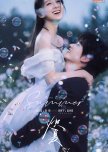
The Long Way to Love
I have a love hate relationship with Never Ending Summer. At first glance, it looks like another sunshine girl meets midnight rain bad boy romance, a trope I will happily sign up for every single time. Instead, the drama takes a different route. Zhou Wan is an eighteen year old girl carrying responsibilities far beyond her age. Faced with her grandmother's mounting medical bills and abandoned by her estranged mother, she resorts to getting close to Lu Xi Xiao, the rebellious son of the man her mother is about to marry, hoping to pressure her mother into helping. What begins as a desperate plan slowly turns into genuine love, setting the stage for a story overflowing with longing, sacrifice, and heartbreak.The problem is that this heartbreak often feels self inflicted. I understand why Zhou Wan makes many of her decisions. She grew up learning to rely only on herself, afraid of burdening others and terrified of being abandoned again. Her entire world revolves around saving her grandmother, so it makes sense that she loses sight of everything else. But there were so many moments where honesty could have solved half the problems. Xi Xiao despises his future stepmother just as much as Zhou Wan does, and he clearly cares deeply about her, yet she keeps choosing the most complicated path possible. It almost feels like the drama follows the philosophy of "why take the easy road when the scenic route has more suffering?" The result is misunderstanding after misunderstanding, with Zhou Wan fighting battles alone while Xi Xiao spends most of his time trying to piece together what she refuses to tell him.
That is what makes the angst so exhausting. The drama stacks angst on top of angst until it starts feeling less like emotional storytelling and more like a factory assembly line. In theory, repetitive misunderstandings can still work if each one raises the emotional stakes, but here many of them feel entirely preventable. Even stranger, the emotional consequences rarely linger. Xi Xiao is remarkably forgiving, Zhou Wan softens rather quickly, and the relationship often recovers faster than the drama itself suggests it should. It creates this odd disconnect where the journey feels painfully drawn out, but the aftermath barely leaves a mark.
Just when I thought the story had finally found its footing after Zhou Wan's biggest burden was lifted, the drama pulled out another classic card: a ten year separation. Honestly, that part was fine. Xi Xiao gets hurt because of her, his family wants her gone, she leaves out of guilt. It is textbook melodrama, and I had already accepted it. What completely caught me off guard was their reunion. After ten years apart, I expected plenty of emotional push and pull before any reconciliation. Instead, they practically skipped to the kissing. I genuinely had to pause and ask myself, "Wait... what just happened?" Oddly enough, it also felt believable. These were two people who had never truly stopped loving each other, so perhaps the years never mattered to them. Even so, something about the transition into their adult relationship left me feeling strangely uncomfortable, though I still cannot fully explain why.
Ironically, I found the adult conflicts more reasonable than the high school ones. Unfortunately, their buildup felt incomplete. It almost seemed as though the drama simply needed an excuse to make Zhou Wan live with Xi Xiao without making either of them look like walking red flags. Xi Xiao initially forces her to stay with him as a condition for joining his team, only to later tell her she can leave because he does not want her staying out of guilt or pity. I understand the emotional reasoning behind it, but the execution made me scratch my head more than once. After being apart for a decade, they settle into domestic life almost immediately, acting like a young married couple who simply forgot to renew their marriage certificate. The adult romance is undeniably sizzling. Those kiss scenes deserve all the applause, and yes, I never expected to see a Spider Man style kiss in a Chinese drama. But as enjoyable as those moments are, the surrounding context never fully convinced me.
The final conspiracy surrounding Xi Xiao's father also felt random and unnecessary. Zhou Wan's pursuit of justice lacked the emotional impact I expected, making the climax feel more like another obstacle than a satisfying payoff. However, I did appreciate the revelation that Zhou Wan had loved Xi Xiao long before he ever fell for her. It completely reframed her decision to use him in the beginning. It was never manipulation born from malice. It was desperation from someone forced to sacrifice the person she loved most in order to save the person who raised her. That revelation added a layer of tragedy that I wish had been emphasized earlier.
Jiang Yan is another character who feels like wasted potential. He is Zhou Wan's childhood friend who quietly loves her, yet the drama barely explores those feelings. Most of what we see is him getting jealous whenever Xi Xiao is around, but because Xi Xiao is also his half brother, it becomes difficult to tell whether his frustration comes from romantic feelings, sibling rivalry, or both. He ultimately feels less like a fully realized character and more like a convenient plot device. Even the moment where he accidentally reveals Zhou Wan's location while drunk exists mainly to move the story forward and earn him hate from viewers.
Despite all my frustrations, credit where credit is due. The romance itself delivers. The runaway arc captures that exhilarating feeling of first love beautifully. Those scenes are filled with youthful energy that made me smile from ear to ear. The adult romance is equally memorable, just in a very different way. The chemistry between Zhou Wan and Xi Xiao never disappeared, no matter how questionable the surrounding circumstances became.
The performances also helped keep me invested. Bao Shang En was excellent as Zhou Wan. Despite her soft and beautiful appearance, she carried herself with remarkable maturity, independence, and quiet resilience. Her slightly deeper voice suited the character perfectly, and both her emotional breakdowns and crying scenes landed with genuine impact. She also looked fantastic throughout the drama, with hairstyles and outfits that complemented every stage of Zhou Wan's journey. Zhou Ke Yu was more of a mixed bag. He excelled in the playful, aloof, and romantic moments, and his height certainly worked in his favor whenever he stood opposite Zhou Wan. However, during the more intense scenes, particularly when Zhou Wan's life was in danger, his expressions occasionally looked as though he was trying not to smile. It unintentionally weakened the tension in moments that should have felt far more desperate. The rest of the cast performed their roles well enough.
Visually, the drama is gorgeous. The cinematography is crisp, the production quality is polished, and several sets stand out, especially the hide and seek sequence, which remains one of my favorites. Above everything else, though, the soundtrack is the true MVP. The OSTs are memorable, emotional, and the kind of songs that easily find a permanent place on your daily playlist.
In the end, Never Ending Summer is a drama I enjoyed more for its romance than its storytelling. The cute moments, heartfelt chemistry, beautiful visuals, and outstanding soundtrack kept me watching long after the plot started testing my patience. Unfortunately, when it came to the actual writing, many of the conflicts felt unnecessarily complicated, making it difficult for me to fully sympathize with the characters. Like its title, this summer certainly felt never ending. Whether that is a compliment or a warning depends entirely on your tolerance for preventable angst.
Was this review helpful to you?
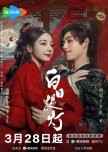
The Rise and Fall of My Expectations
I picked up Love Beyond the Grave out of pure curiosity rather than genuine interest in its premise. The pairing of Dilraba Dilmurat and Chen Fei Yu sounded intriguing on paper, almost like a “what if” experiment you don’t quite trust but still want to see unfold. The story introduces us to He Si Mu, a sovereign Ghost King who has lived through centuries, and Duan Xu, a young general whose presence immediately feels suspicious. Their initial encounters carry a quiet tension, like a chess match where both players are pretending not to know the rules. There is curiosity, restraint, and a hint of danger. For a moment, it feels like the drama knows exactly what it is doing.Unfortunately, that sense of intrigue fades too quickly. The mystery surrounding both characters is revealed early on, cutting off what could have been the drama’s strongest hook. Once the “who are you really” question is answered, the story struggles to replace it with anything equally compelling. What follows is a sequence of events that feels oddly stitched together: mortal world meetings, battlefield clashes, a detour into the void, separations, reunions, and then more separations for good measure. It reads like a grand epic on paper, but in execution, it lacks emotional weight. I kept waiting for a moment that would anchor me, but it never quite arrived.
One of the more unique elements is Si Mu’s inability to experience human senses and her reliance on Duan Xu to “borrow” them. The early arc where she experiences touch is genuinely charming. There is a childlike wonder in the way she reacts, and it gives Dilraba room to show both elegance and vulnerability. But as the story moves on to other senses, the magic wears thin. The arcs become shorter, less impactful, and sometimes feel like filler. The logic also raises questions. For someone who has never smelled anything, Si Mu somehow identifies scents with surprising confidence. And when Duan Xu loses a sense temporarily, the rules seem flexible at best. It is one of those “don’t think too hard” situations, except the drama quietly invites you to think about it anyway.
The worldbuilding adds another layer of confusion. Spirits, demons, and supernatural events appear frequently in the mortal realm, yet the humans barely react. It creates a strange disconnect, like watching a fantasy unfold in a world that refuses to acknowledge it. I kept wondering if I had missed an explanation somewhere, but the drama never really addresses it. Instead, it moves forward as if everything makes perfect sense.
If there is one aspect that genuinely impressed me, it is the early battle sequences. After the rather underwhelming action in Pursuit of Jade, this drama delivers a battlefield that feels alive. The scale, the smoke, the chaos, even the background soldiers all contribute to a sense of realism that is rarely seen. Chen Fei Yu shines the most in these moments. He throws himself into the action without hesitation, unafraid to look battered and raw. There is a particular infiltration scene that stands out as one of his best moments in the drama. Ironically, as the story shifts its focus toward romance, this sharp and compelling side of his character slowly fades.
Duan Xu as a character suffers from inconsistent writing. He starts off as a cautious and capable general, someone grounded by duty and suspicion. Then, almost overnight, he transforms into a lovestruck figure whose decisions revolve entirely around Si Mu. His transition feels abrupt, like a switch flipped without warning. The drama tries to sell his devotion as romantic, but it often comes across as excessive and, at times, awkward. It does not help that his role as a general becomes increasingly sidelined, stripping away the authority and presence he initially had.
He Si Mu, on the other hand, remains one of the more consistent characters. She carries herself with quiet authority, balancing power with an undercurrent of loneliness. Dilraba portrays her with a convincing mix of restraint and curiosity, especially during moments where Si Mu experiences the world in new ways. Visually, she fits the role of a ghostly sovereign almost too well. There is an ethereal quality to her presence that makes her feel distant, almost untouchable. Ironically, this works against the central romance. When paired with Chen Fei Yu, the gap between them feels more pronounced, not just in characterization but in overall aura. It becomes difficult to see them as equals within the same emotional space.
Chemistry is, unfortunately, another weak point. Despite the narrative insisting on their deep bond, I struggled to feel it. Their interactions often lean into forced intimacy rather than something that grows naturally. Oddly enough, Si Mu’s brief dynamic with Xue Chen Ying, played by Fu Bo Han, feels more genuine. There is a warmth and simplicity in those moments that the main pairing never quite achieves.
Then there is Yan Ke, played by Wei Zhe Ming, who initially steals the spotlight. His introduction is magnetic, with a commanding presence that perfectly complements his role as Si Mu’s right hand. The way he looks at her says everything without needing dialogue, and for a while, it feels like the drama is quietly setting up something more compelling than the main romance. But as the story progresses, his character leans heavily into obsessive territory, losing the balance that made him interesting in the first place.
Visually, the drama is a mixed experience. It leans into a gothic, eerie aesthetic that suits its premise, and some elements, like the void, look surprisingly majestic. The battlefield effects are particularly well done. However, other CGI moments feel dated and overly noticeable, pulling you out of the immersion. The purple jellyfish-like creatures, while unique, end up being more distracting than meaningful.
The music follows a similar pattern. The opening feels underwhelming, lacking a strong identity, while the ending themes and OSTs are far more memorable. They do a good job of enhancing the mood, even when the story itself falls short.
By the time I reached the end, the outcome felt predictable. Given the title alone, a fully happy ending would have been wishful thinking. Still, knowing what to expect does not necessarily make the journey more satisfying. In this case, it simply reinforces the sense that the story was always heading somewhere I was not emotionally invested in.
In the end, Love Beyond the Grave became one of those dramas I finished out of obligation rather than enjoyment. It has moments of brilliance, particularly in its action and initial character setups, but they are overshadowed by inconsistent writing, weak emotional grounding, and a romance that never quite convinces. I stayed until the final episode, though I am still not entirely sure why.
Was this review helpful to you?
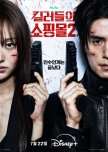
Listen Up, Babylon
A Shop for Killers Season 2 picks up where the first season left off, but instead of constantly throwing us into a maze of flashbacks and survival games, it spends more time asking a different question: what happens after you survive? Jung Ji An is no longer simply the girl trying to stay alive inside Murthehelp. With Jung Jin Man back in the picture, she has to figure out what kind of life she wants, what Murthehelp means to her, and whether there is any way for the Jung uncle and niece duo to exist without Babylon breathing down their necks.The season begins by filling in the missing pieces of what Jin Man was doing while the events of the first season were unfolding. We see what happened to him and his team before eventually arriving at his reunion with Ji An. From there, the story moves more firmly into the present, following their lives after that reunion. Compared to the first season, which was packed with action and flashbacks designed to build the mystery around Murthehelp, the second season feels more invested in the future. The first season kept me at the edge of my seat. The second season, meanwhile, made me more curious about where these characters would go next. And honestly, I enjoyed both seasons almost equally, just for different reasons.
After reuniting with Jin Man and the Murthehelp team, Ji An initially chooses to walk away. She spends three years trying to live a normal life in a small seaside town, working with the grandmas making fishing nets. On paper, it sounds peaceful. In reality, this girl is basically living like a paranoid cat. She keeps her profile low, sets traps around her house, and carries the psychological scars of everything she has been through. Even in a quiet village by the sea, she never truly feels safe.
I actually appreciated what this arc was trying to do, even though I think it went on longer than necessary. It gives us a glimpse of the life Ji An could have had if she were allowed to simply be a normal young woman. The problem is that the moment she finally warms up to the town and gets close to a local boy, her identity is discovered. Predictable? Absolutely. When it happened, I felt almost nothing emotionally. The chase itself gave me an adrenaline rush, but the emotional beats, especially the boat scene, did not land as strongly as the drama seemed to want them to. It also took three whole years for Ji An to finally open herself up to the people there, only for everything to be destroyed because the enemy's investigation happened to lead them to the village. Still, I can accept the arc because it functions as a giant "what if?" scenario for Ji An. What if she could really leave Murthehelp behind? What if she could live an ordinary life? The answer, unfortunately, is that her past is not done with her.
Meanwhile, Jin Man spends much of the season trying to get Babylon off their backs. His goal is surprisingly reasonable for someone running a deadly shopping mall: coexist peacefully. Babylon, naturally, says no. So Jin Man and his team resort to threatening them with classified information taken from Babylon's own server. Their efforts were genuinely fun to watch. The strategizing, infiltration, escapes, and cat-and-mouse games kept me invested, even if they rarely made me genuinely worried about whether Jin Man and his team would survive. I always had the feeling that they would find a way out somehow.
The action is a mixed bag. So Min Hye and Pasin continue to be absolute beasts. Their movements are agile, clean, and satisfying to watch, and their action scenes gave me exactly the kind of adrenaline rush I wanted. Bale is also entertaining thanks to his manic, almost psychotic presence. That man's ability to stare without blinking deserves its own award.
Jin Man, however, is a different story. I can see Lee Dong Wook's age through some of the action sequences, and the drama seems very aware of it too. A lot of Jin Man's fights are presented through dark environments, night-vision POVs, unusual camera angles, or heavy editing. The intention is obviously to make him look cool, but sometimes it felt less like stylish filmmaking and more like the camera was helping him pass the physical exam. The 360-degree corner angle used during his fight with Bale in the first episode amplified my migraine. I understand what they were going for, but I found it more nauseating than impressive.
That is not to say Jin Man himself loses his cool factor. In fact, the drama cleverly shifts his strength away from raw physicality. His real weapons are his experience, intelligence, equipment, and ability to escape situations that should be impossible to escape from. He looks like a man who has been doing this for decades, and that works for the character. Visually, Lee Dong Wook still looks ridiculously good as Jin Man, with a buff and fit physique that suits the role. More importantly, his performance sells the uncle part beautifully. There is awkwardness, guilt, innocence, protectiveness, and love in the way he looks at Ji An. Their relationship feels surprisingly realistic, especially for two people whose family bonding activities include guns, traps, and escaping assassins.
Kim Hye Jun's Ji An is also solid. I would not call the performance extraordinary, but there is nothing particularly wrong with it either. She genuinely feels like a niece trying to navigate the bizarre and dangerous world that her uncle has dragged her into. My biggest complaint is that I wanted more growth and charisma from Ji An. She has some genuinely cool moments, particularly when she dresses up and confronts Babylon herself, as well as during her martial arts and gun training with Jin Man's team. Those scenes gave her plenty of aura. Unfortunately, when she starts sitting at the table and strategizing with the experienced players, she sometimes feels like a kid trying to play chess with grandmasters.
That said, I cannot complain too much about that characterization because it makes sense. Jin Man and the others have spent years surviving in this industry. Ji An is still the newcomer. What matters is that her plans work, and watching her gradually take the reins of Murthehelp is satisfying. She may not yet have the presence of the big players, but she is learning how to become one.
The Babylon characters are another mixed bag. Kusanagi Jin, Q, and J from Babylon's East Asia Branch all leave very different impressions. Kusanagi Jin, played by Jung Yun Ha, is probably the one who annoyed me the most, which is also a compliment to the actress. She is manic, narcissistic, obsessed with hygiene, and generally the kind of person who makes you want to slap the screen. Jung Yun Ha commits to the psychotic energy so intensely that I genuinely wanted to throw something at her. At times, though, the character feels a little too cartoonish.
Q, played by Lee Hyun Ri, is much more interesting in terms of morality. She has her own principles and does not seem particularly interested in killing innocent people. She can show mercy, spare people who do not harm her, and has strong big-sister energy toward J. There is also a little spark between her and Jin Man, which I enjoyed. Unfortunately, her characterization does not go much further than that. I did not become deeply attached to her, although her pursuit of Ji An in the village was excellent. She was like a leech with a mission. Once she locked onto Ji An, good luck getting her to let go.
J, meanwhile, left an impression almost entirely because of Okada Masaki. I'm just a girl after all. Kidding. J is Q's younger brother and Kusanagi Jin's secret lover, and he is a very straightforward character. He follows orders and does what he is told without much fuss. Yet Okada Masaki gives him such expressive facial reactions that I found myself watching him whenever he appeared. His face practically speaks in full sentences. I became a fan.
Q's crew also adds some much-needed flavor, particularly Marco, who provides the comedic touch in an otherwise deadly cast. These little character dynamics help prevent the drama from becoming too grim and give the team a sense of personality beyond simply being people who are very good at killing other people.
The visuals, unfortunately, are where the drama sometimes tries a little too hard. There are plenty of genuinely good-looking scenes, but some of the camera work seems determined to remind us that the director owns a camera. The action between Jin Man and Bale in the first episode is the biggest example for me. The 360-degree treatment was technically interesting but physically unpleasant to watch. Other Jin Man action scenes use darkness or obstructive angles in ways that make it difficult to appreciate his actual movements.
Meanwhile, the action scenes involving So Min Hye and Pasin are allowed to breathe. We can clearly see their movements, which makes them feel more impressive rather than less. That contrast made me wonder whether Jin Man's camera treatment was partly designed to mask Lee Dong Wook's movement. If that was the intention, it worked. If it was not, then the coincidence is doing some heavy lifting.
Still, the drama has plenty of visual highlights. One of my favorite moments is when Kusanagi Jin walks past a room where clients are being killed. The scene has this unsettling, almost casual brutality that fits the world of A Shop for Killers perfectly. It understands that sometimes you do not need explosions to look cool. Sometimes a psychopath casually walking past a room full of dead bodies does the job.
And then there is the music. The OST, background music, and sound effects absolutely slay. The music is one of those things that can instantly elevate a scene from "pretty cool" to "damn, that has aura." The tracks are well chosen and woven naturally into the action, making the fights, confrontations, and dramatic moments feel much bigger. There were several moments when I found myself enjoying the music almost as much as the actual scene.
By the end, I did feel that some deaths were unnecessary. A few characters I liked were killed off, and while their deaths can be justified within the brutal logic of this world, I still found myself thinking, "You really could have let them live." Sometimes realism is not the same thing as satisfaction. There were also some loose ends about certain supporting characters.
The ending is probably the best example of the season's overall approach. If I had to describe it in one word, it would be smart. From an entertainment perspective, I found it anticlimactic. I wanted something bigger, louder, and more explosive. But from a storytelling perspective, Ji An's solution makes sense. It is the result of planning rather than brute force, and I cannot really argue with a plan that works simply because I wanted a bigger fireworks display.
It is also a very convenient ending, but perhaps that is what makes it smart. If A Shop for Killers ends here, the second season provides a conclusion that works. If the drama decides to continue with a third season, there is still enough room to move forward. The biggest question for me is what happens after the ceasefire. Will Jin Man and Ji An continue running Murthehelp together? Will they finally walk away from it? Can Murthehelp even exist peacefully after everything that has happened? I honestly would not mind either direction.
Overall, A Shop for Killers Season 2 is just as fun and entertaining as its predecessor, although it scratches a slightly different itch. The first season had the stronger sense of mystery and urgency, while the second season feels more like watching the surviving pieces of the chessboard figure out their next move. There are predictable story beats, unnecessary detours, questionable deaths, and camera work that occasionally made my head hurt more than the villains did. But the cast is fun, the action can be excellent, the uncle and niece relationship remains the heart of the story, and the soundtrack knows exactly how to make everything feel cooler than it already is.
It is not perfect, but neither does it need to be. A Shop for Killers remains a stylish, bloody, entertaining ride, and the second season does enough to make me glad I came back to Murthehelp.
Was this review helpful to you?
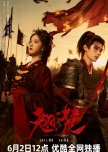
Game of Pretend
Ashes to Crown takes a familiar rebirth premise and places it in the middle of court politics, military ambition, and the pursuit of a second chance. Chu Zhao, armed with memories of her previous life, refuses to be a victim of fate. Instead, she actively reshapes her future, stepping into the center of political turmoil rather than running from it. Along the way, she crosses paths with Xie Yan Lai, an overlooked illegitimate son whose life has been defined by neglect and limitations. Together, they rise through the ranks of power and influence, making this a story that promises both personal growth and political intrigue. Unfortunately, the execution never quite lived up to that promise for me.From the very beginning, the drama felt more like a high-budget short drama than a full-length historical production. There is nothing wrong with short-form dramas, but Ashes to Crown often carries that same rushed, dramatic energy despite its longer runtime. The visuals contribute to that feeling. The palace set is drenched in shades of red to the point where it feels more like a carefully arranged studio backdrop than a living imperial court. Add to that the heavy beauty filters that leave everyone's skin looking porcelain-smooth and doll-like, and the overall presentation becomes more stylized than immersive. At times, I felt like I was watching an expensive wallpaper come to life rather than a historical drama.
The political storyline was where the cracks became impossible to ignore. Nearly every major political figure looks like they belong to the same graduating class, which made the court feel less like a seat of power and more like a group project gone terribly wrong. More importantly, the political logic often bends according to whatever the plot needs at a given moment. Characters frequently change their stance, goals, and beliefs based on personal feelings rather than consistent motivations.
One example perfectly captures my frustration. Chu Zhao leaves the young Emperor in the middle of a palace filled with enemies so she can visit her father, trusting Xie Yan Lai to protect him. Shortly afterward, Yan Lai abandons his post, hands an important token to his scheming brother, and runs off to protect Chu Zhao instead. The Emperor is essentially left unattended in what is supposed to be a deadly political environment. Moments like these made it difficult for me to take the political stakes seriously.
The drama also loves schemes. Normally, that would be a positive because I enjoy a good battle of wits. The problem is that Ashes to Crown stacks schemes on top of schemes until every setback eventually reveals itself to be part of Chu Zhao's master plan. After a while, every failure, every danger, and every apparent loss starts feeling like another inevitable reveal waiting around the corner. What should feel clever instead becomes repetitive and increasingly ridiculous. By the final episodes, I found myself rolling my eyes rather than feeling impressed.
The romance fares slightly better but still suffers from weak development. Xie Yan Lai's feelings for Chu Zhao are understandable. She changes his life, believes in him, and gives him opportunities no one else would. Chu Zhao's side of the romance, however, feels much less convincing. Her feelings seem to appear rather than develop naturally. One moment she is focused on securing her political position as Grand Princess, despite swearing not to marry or have children while holding the title, and the next she is openly flirting with Yan Lai to keep him by her side. The transition from strategic partnership to genuine love never feels properly earned.
Even the romantic scenes themselves often feel disconnected from the surrounding story. A typical sequence goes something like this: political conflict, dramatic confrontation, music stops, one character stands alone, the other approaches, they share a cute moment, and then everyone immediately returns to political chaos. Instead of feeling woven into the narrative, these scenes often resemble bonus clips inserted between plot developments. The chemistry is cute, but chemistry alone cannot replace emotional buildup.
The war sequences left me with similar feelings. Visually, they are beautiful. Narratively, they are surprisingly hollow. Battles feel brief, clean, and heavily staged. Sacrifices happen suddenly, characters appear exactly where they need to be, and resolutions often arrive through convenient plot developments. Even the final conflict loses much of its impact because events unfold in a way that feels more convenient than earned. The production clearly invested effort into making the battles look grand, but spectacle can only carry so much weight when the storytelling underneath feels thin.
That said, credit where credit is due: the soundtrack is fantastic. Almost every OST left an impression on me, and Liu Yu Ning's contributions were especially memorable. Long after finishing the drama, the music remained the one aspect I genuinely wanted to revisit.
In the end, Ashes to Crown was a drama that required determination and a generous amount of 2x speed for me to finish. The production places enormous emphasis on beauty, aesthetics, and presentation, but often neglects the logic, context, and narrative foundation needed to support them. Even as someone who enjoys romance, I cannot wholeheartedly recommend it on that front because the relationship itself lacks the buildup necessary to make it truly compelling.
For me, this was a classic case of style over substance. Beautiful to look at, pleasant to listen to, but far less satisfying once you start asking the story to make sense.
Was this review helpful to you?
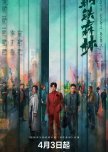
The Clues Made Sense, The Choices Didn’t
Five years after the haunting “8/17 Case” went cold, Sunsets Secrets Regrets wastes no time pulling us back into the shadows. New evidence surfaces by the Tong River, and with it comes Zhou Jin, a determined investigator carrying both duty and grief, and Professor Jiang Han Sheng, a criminal psychology expert who looks like he walked straight out of an academic daydream in his collared shirts and glasses. Alongside them, though often from a distance, is Jiang Cheng, the undercover officer who has spent years buried deep within the criminal world. What begins as a fragmented puzzle slowly reveals a larger, more intricate picture involving the elusive Old Scorpion and a network of buried truths.I would be lying if I said the beginning was easy to follow. The early episodes feel like flipping through scattered case files without tabs, leaving you slightly disoriented and struggling to connect the dots. It is not until around episodes eight to ten that the narrative finally clicks into place. Suddenly, everything starts to make sense. The cases intertwine, the history gains weight, and the mystery becomes genuinely gripping. From there, the drama finds its rhythm, though not without some bumps along the way. The investigations themselves are a mixed bag. At their best, they are sharp and exhilarating, driven by clever psychological analysis that makes you feel like you are solving the case alongside the characters. At their weakest, they drag, wander, and occasionally lead nowhere, testing your patience. Still, watching Han Sheng break down criminal behavior is undeniably one of the show’s highlights, and yes, the man makes profiling look stylish.
The undercover storyline, which should have been a major pillar, feels strangely detached from the main investigation. Jiang Cheng’s years of infiltration do peel back layers of the criminal organization, but when you step back, his contributions to solving the central mystery feel surprisingly minimal. The police, armed with new evidence and Han Sheng’s analysis, could have reached similar conclusions without him. His arc ends up serving less as a narrative engine and more as emotional fuel, particularly for the drama’s heavy focus on love, regret, and what could have been.
And that brings us to the romance, which is as central to the story as the crime itself. The relationship between Zhou Jin and Han Sheng is a slow burn that occasionally forgets it is supposed to simmer and instead jumps straight to boiling. Their sudden marriage, sparked by a life or death moment, feels absurd when you think about it. Agreeing to marry someone after only a handful of dates, without even remembering your shared childhood, is the kind of decision that makes you pause and go, really? Yet somehow, once the dust settles, their married life becomes one of the coziest parts of the drama. There is something almost slice of life about the way they navigate their relationship. Han Sheng, for all his intelligence, turns into a clingy, affectionate partner who just wants to be close to her, while Zhou Jin slowly learns how to open her heart. Their quiet domestic moments, filled with hugs and soft interactions, feel like warm sunsets after long, chaotic days.
Of course, the sweetness comes with its own layer of unease. Han Sheng’s long standing habit of silently watching over Zhou Jin, both as a child and as an adult, sits in a gray area between devotion and creepiness. It is framed as concern, especially given the danger surrounding her, but if you think too hard about it, it does raise questions. Even more puzzling is how Zhou Jin, as a trained police officer, remains largely oblivious to this behavior. Logic occasionally takes a backseat here, but if you are willing to let it slide, their chemistry makes it easier to accept.
The love triangle adds another layer of complexity, though not always for the better. Jiang Cheng’s reappearance brings tension and emotional weight, especially as his past with Zhou Jin resurfaces. At first, his jealousy and internal conflict are compelling, even a little addictive to watch. But as his story unfolds, the character becomes increasingly frustrating. He is both consistent and inconsistent in a very human way, having pushed Zhou Jin away in the past only to later reveal lingering feelings at the worst possible time. His actions blur the line between self sacrifice and self sabotage. While his pain is undeniable, much of it stems from his own choices, which makes it harder to fully sympathize. Over time, what started as an engaging dynamic turns into a cycle of regret that feels repetitive. Still, there is something satisfying about the eventual resolution, with Zhou Jin choosing Han Sheng and Jiang Cheng stepping back, finally accepting his place in her life.
The cast does a lot of heavy lifting in making these characters work. Jing Bo Ran brings a charming balance to Jiang Han Sheng, blending intelligence, awkwardness, and emotional vulnerability into a character that could have easily come off as overbearing. Instead, he feels oddly endearing, even when his traits lean toward possessive. Cai Wen Jing delivers a decent performance as Zhou Jin, capturing her inner conflict, though the character itself can be frustratingly naive and inconsistent. Meanwhile, Qin Jun Jie makes Jiang Cheng far more compelling than the writing allows. His portrayal, especially during the undercover segments, adds depth to a character that might have otherwise faded into the background.
Unfortunately, the ending does not quite stick the landing. After a strong and engaging middle, the final stretch feels rushed and oddly underwhelming. Key confrontations lack emotional impact, and certain scenes border on the absurd. The rooftop sequence, in particular, feels like it belongs in a different drama altogether, with its questionable logic and diminished stakes. What should have been a tense, high risk moment ends up feeling strangely hollow. The resolution of key characters, including Qi Yan and Jiang Cheng, is left ambiguous in a way that feels less like intentional mystery and more like unfinished business.
Despite its flaws, Sunsets Secrets Regrets remains an enjoyable watch. It is a drama of contrasts, confusing at the start, gripping in the middle, and uneven at the end. While it may not rank among the best in the crime thriller genre, it offers enough intrigue, emotional depth, and character driven moments to keep you invested. Think of it as a sunset that is not perfectly framed, a little hazy at the edges, but still beautiful enough to make you stop and watch until the very end.
Was this review helpful to you?
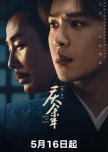
The Emperor’s Chessboard
Joy of Life Season 2 picks up right where the first season left off, in the most convenient and, frankly, ridiculous way possible. I remember thinking, what are the odds that belt would actually come into play? Yet somehow, it worked. I missed the crew, I was entertained, so I’ll take it. That pretty much sets the tone for the season. Joy of Life knows when to be clever, when to be absurd, and when to simply ask us to go along with it.If the first season was more character driven, with Fan Xian trying to balance his desire for a simple life against the expectations placed upon him, the second season leans more heavily into the plot. Fan Xian is now deeper in the game, fighting corruption, injustice, and an increasingly tangled web of political schemes. Many storylines from the first season continue to unfold, but the biggest elephant in the room is undoubtedly Fan Xian and Lin Wan Er.
The cat is finally out of the bag, and honestly, it hurt. There are so many things standing between Fan Xian and Wan Er that I sometimes wondered how these two could possibly make their relationship work. Yet this is one of the things Joy of Life does exceptionally well. It can move from comedy to something genuinely heartbreaking without making either feel out of place. The emotional moments hit because the story actually gives them room to breathe. There were deaths and sacrifices that genuinely made me cry, and when that happens, you know the drama has done its job. At the same time, I was very happy that the characters I desperately wanted to survive actually survived.
The second season also retains the series' signature way of wrapping depth in humor. This is not necessarily the kind of comedy that makes you laugh until your stomach hurts. It is more the kind that makes you shake your head with a smile and think, genius. The wit, sarcasm, ridiculous situations, and perfectly timed delivery constantly kept me entertained. Even when the story became politically dense, Joy of Life somehow managed to make it digestible. It is basically a bowl of complicated political noodles served with comedy on the side.
And at the center of all this remains Fan Xian, still one of the most likable protagonists around. He is witty, sarcastic, mischievous, clever, and just the right amount of troublesome. Zhang Ruo Yun also came back looking noticeably leaner, fitter, and more toned, and I have to admit, I loved the new look. His appearance in the first season was cute and charming, but this version of Fan Xian carries more gravitas. He looks like someone who has survived enough political nonsense to know exactly how much trouble he can cause.
Interestingly, there are fewer action scenes compared to the first season, but I did not mind. It actually fits the direction of the story. This season is more concerned with political maneuvering, relationships, and the consequences of decisions than with constant displays of martial arts. When the action does arrive, it feels more meaningful because the drama has spent time building up to it.
I particularly enjoyed Fan Xian's interactions with the Emperor. Watching these two challenge, test, and outmaneuver each other was fascinating. Honestly, I applaud Fan Xian, Chen Ping Ping, and every official in the room because I would have developed vertigo trying to figure out what the Emperor was actually thinking. The entire Qing court feels like the Emperor's chessboard, with everyone else moving according to rules they do not fully understand. There are schemes on top of schemes, plots on top of plots, and twists that somehow lead back to the Emperor's will. At some point, I just wanted to tell him, whatever you want, Your Majesty!
The political side of the story is also surprisingly fun because Fan Xian continues introducing modern concepts into ancient China. Treasury bonds, banks, intellectual property rights, and other ideas are explained so naturally that it feels like getting a free 101 course disguised as a historical drama. And somehow, I found myself getting excited whenever a modern-looking item appeared in ancient China. Oh, what this drama does to me.
Among Fan Xian's relationships, his friendship with the First Prince, Li Chen Ru, was probably my biggest surprise. I expected another difficult prince, but instead, the two actually get along rather well. They bond over their sense of righteousness, their connections to the same people, and, apparently, their ability to throw hands. I really enjoyed their friendship. Meanwhile, Fan Xian's relationships with the Crown Prince and Second Prince remain as complicated and politically charged as ever. Yet even these complicated dynamics are presented with enough humor and personality that they never became exhausting.
Wang Qi Nian also remains one of the highlights. His loyalty to Fan Xian is just as entertaining as ever, and I love this duo. Deng Zi Yue from the First Bureau is a welcome addition to Fan Xian's little crew too. He has a cute energy that fits nicely into the group.
But if there is one thing that made this season especially warm, it is the Fan family. Fan Jian and Liu Ru Yu continue to be wonderful parental figures, while Ruo Ruo remains adorable and proudly Fan Xian's number one fan. I also enjoyed seeing her learn medicine and surgery, especially because those skills eventually became useful. I am particularly interested in where her story with Wu Zhu will go, and I suspect that is something the third season will explore further. Fan Si Zhe also gets some interesting character development. He remains the cute younger brother, but there is more to him this season than comic relief. I am genuinely enjoying his growth and, more importantly, I hope the Fan family stays as warm and close as they are now.
The scene at the dock was especially meaningful to me. The revelations toward the end were not exactly surprising since the first season had already planted plenty of clues and, unfortunately, spoilers are everywhere. What I was more worried about was where those revelations would leave Fan Xian emotionally and where he would stand with his family. Seeing him reassure his parents on the dock completely got me. That Fan family hug was one of the happiest and most touching moments of the season, and yes, I cried. I am glad Fan Xian made that choice. As Wang Qi Nian would say, Fan Xian never disappoints.
One character I desperately wish had more screen time is Wu Zhu. Somehow, he appears even less than in the first season, yet he still manages to make me worry whenever he does show up. His story toward the end, together with the continued mystery surrounding the Divine Temple, brought back that same sense of curiosity I had in the first season. There is clearly something much bigger hiding behind all of this, and I am very much looking forward to seeing where it goes in Season 3.
Visually, the drama remains faithful to its established style. Some of the CGI is noticeably rough around the edges, but overall, the production still feels authentic and grounded. The color grading is soothing and easy on the eyes, the compositions are often pleasing, and the camera work is thoughtfully done. I especially enjoyed Wu Zhu's action sequence toward the end. The directing continues to be one of the show's strengths.
And then there is the music. The OST, background music, sound effects, and overall score add so much flavor to the drama. I genuinely enjoyed listening to it throughout the season. Even the use of yodeling somehow works. There were plenty of moments where I found myself completely absorbed in a scene simply because the music elevated it so well. Joy of Life understands that sometimes the soundtrack can be the secret ingredient that turns a good scene into a memorable one.
The ending is also very Joy of Life. Like the first season, it does not make a huge fuss about delivering a traditional grand finale. Instead, it simply keeps moving at its own pace and lets the story end where it naturally needs to end. Thankfully, unlike the first season, it does not leave me staring at the screen in existential despair because of a cliffhanger. There are still plenty of loose ends, but the season wraps things up neatly enough while teasing the next chapter in a straightforward, playful, and witty way. And honestly, I am ready. There are clearly many more stories to tell, so please speed it up!
In the end, Joy of Life Season 2 is just as witty, twisty, clever, layered, hilarious, poignant, and thrilling as its predecessor. It may shift from character driven storytelling toward a more plot heavy narrative, but it never loses the personality that made the first season so special. I enjoyed it just as much as Season 1, and now I am left with only one problem: waiting for Season 3.
Was this review helpful to you?
This review may contain spoilers
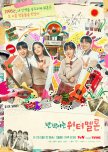
He Saved Everyone, But Who Saves Him?
Twinkling Watermelon begins with a premise that already sounds like a recipe for emotional chaos in the best possible way. In 2023, high school student Ha Eun Gyeol lives a double life. By day he is the perfect model student, but by night he secretly plays guitar and pursues his love for music. As a CODA, a child of deaf adults, Eun Gyeol grows up in a family where both his parents and his older brother cannot hear. He becomes the bridge between their silent world and the noisy outside world.One day, after discovering a mysterious music store, Eun Gyeol is suddenly transported back to 1995. There he meets his father, Ha Yi Chan, who is still a lively high school student. The problem is that Yi Chan does not recognize him and is currently infatuated with a cellist named Choi Se Gyeong instead of Eun Gyeol’s future mother, Yun Cheong A. Determined to restore the timeline and bring his parents together, Eun Gyeol joins Yi Chan’s band while trying to guide fate back onto its original path.
One of the things that touched me the most about this drama is Eun Gyeol himself. He is not just a good son. He is genuinely a good person. Growing up with deaf parents and a deaf older brother never made him resent the world or feel like his life was unfair. Instead, he accepts it with a maturity that is honestly heartbreaking at times. There is a moment where he says that if he does something wrong, people will criticize his parents twice as harshly. That line alone shows the weight he carries on his shoulders. Being the only hearing person in his family means he constantly connects their quiet world with the loud outside one. He translates conversations, helps his brother with Taekwondo practice, and quietly takes on responsibilities most kids his age would never imagine.
The end of the first episode introduces young Yi Chan, played by Choi Hyun Wook, and even though I already saw clips of the drama before watching it, that moment still made me excited to see where the story would go. Choi Hyun Wook did such a charming and entertaining performance as young Yi Chan. As expected, Choi Hyun Wook is able to bring out Yi Chan’s lively, fun, and kind side.
Of course, not everything is perfect. Episode four had a small logic slip that made me pause. Eun Gyeol has lived his entire life with a deaf family, yet when he wakes up at the guesthouse in 1995 he casually mumbles “Mom, give me water.” Realistically, that kind of habit should not exist because his mother would not hear him anyway. It is a tiny moment, but it felt like clumsy writing in an otherwise thoughtful show.
As the story moves forward, the time travel shenanigans get more interesting. When Eun Gyeol first meets Se Gyeong, the slow motion moment made me worried the drama was about to throw a love triangle at us. Thankfully, the story quickly reveals a twist. The short haired “Se Gyeong” is actually On Eun Yu, Se Gyeong’s daughter from 2023 who also time travels back to 1995. I suspected this early on because the real Se Gyeong’s daughter in the present timeline was never shown. Same face, totally different personality, and the way she knew the house so well were all big hints.
The show also uses a fun narrative technique where several episodes begin with different characters narrating their own stories. We hear from Eun Gyeol, Yi Chan, Se Gyeong, Cheong A, and later Eun Yu. These narrations help us understand each character from their own perspective rather than through someone else’s interpretation.
Musically, the drama has its charming moments too. I loved that the show used Ditto by NewJeans to symbolize Eun Gyeol’s connection to the present day. As a Bunny myself, hearing that song appear made me ridiculously happy.
The emotional core of the drama, however, always circles back to Eun Gyeol. The more episodes I watched, the more sympathy I felt for him. Ryeo Un delivers such a heartfelt performance that it is impossible not to feel for this character. Acting emotional scenes is already difficult, but doing it while also performing sign language convincingly adds another layer of complexity. He absolutely nailed it.
One of the most powerful moments happens in episode eleven when Eun Gyeol finally tells Yi Chan that he is from the future. For the first time, he admits how lonely he feels. All his life he has tried to be the cheerful son who takes care of everyone, but underneath that smile is a boy who feels isolated in a world his family cannot hear. When he hugs Yi Chan and cries, I cried with him. That scene felt like years of suppressed emotions finally spilling out.
Another relationship that I loved is between Cheong A and her father. Their bond is not perfect, but it is sincere. Watching him try to connect with his daughter by hiring Eun Gyeol to teach her sign language was incredibly sweet. The way his expression softens whenever Cheong A smiles at him is one of those small details that quietly warms your heart.
Episode fourteen might be the most emotional episode of the series. The scene where Cheong A teaches Yi Chan how to say names in sign language is beautifully filmed, with soft lighting that makes her look almost like a portrait. Yi Chan looking at her with those gentle eyes before kissing her is innocent and sweet. But the episode also delivers heartbreaking moments, especially when Eun Gyeol finds his mother locked in a room by her cruel stepmother. Watching him realize how much pain his parents went through when they were young is devastating. Sometimes as children we think our struggles are the hardest, only to realize later that our parents carried burdens we never saw.
Episode fifteen breaks the heart once again. Despite all his efforts, Eun Gyeol cannot prevent the accident that causes Yi Chan to lose his hearing. What makes it even more painful is that Yi Chan gets injured while saving Eun Gyeol. Fate can be brutally ironic. The moment when Yi Chan said that Eun Gyeol is like the father he never had almost brought me to tears. When he says that in the next life he hopes to be Eun Gyeol’s dad, it hits right in the heart.
In the final episode, when Eun Gyeol eventually speaks to Yi Chan in sign language, the moment carries a strange emotional weight. No matter how much he tried to change fate, the story still circles back to that connection between father and son.
The ending is technically a happy one, but to me it feels more bittersweet. Many characters receive better futures, but Eun Gyeol is the only one who remembers everything that happened. All the loneliness, sacrifices, and emotional weight remain with him. The weight he carried was too heavy that it leaves a dent even after it has been lifted off. Everyone else gets a clean slate, while he carries the memories of both timelines. His expression when he returns to 2023 feels more like relief than pure happiness.
There are also a few unanswered questions. The show does not clearly explain how Yi Chan and Cheong A reunited after she was sent abroad. We also do not see much about Eun Gyeol’s brother’s future or what Eun Yu’s life looks like after returning to the present. The final episode moves quickly to wrap things up, which makes the ending feel slightly rushed.
Still, despite those small gaps, Twinkling Watermelon remains an incredibly heartfelt coming of age story about family, sacrifice, and the complicated ways love shapes our lives. It mixes music, time travel, humor, and emotional storytelling into something that feels both nostalgic and deeply moving.
By the end of the journey, I was happy for the Ha family, but my heart still felt heavy for Eun Gyeol. Sometimes the person who saves everyone else ends up carrying the heaviest memories of all.
Was this review helpful to you?
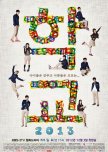
When the Bottom Class Teaches the Biggest Lessons
If high school were a pressure cooker, then School 2013 is the whistle that refuses to stay silent. Set in one struggling classroom at Seungri High School, the drama zooms in on the very real issues modern Korean teenagers face: bullying, school violence, academic pressure, private tutoring culture, broken homes, and the ever fragile line between teachers and students. Seungri High ranks near rock bottom among Seoul’s 178 high schools, and Class 2-2 sits at the bottom of the bottom. Jung In Jae, a warm but temporary Korean language teacher, becomes their homeroom teacher. Then there was Kang Se Chan, a star instructor from a famous Gangnam academy who transfers in and becomes her co homeroom teacher. With clashing teaching styles and a classroom full of students carrying emotional baggage heavier than their backpacks, the two teachers must learn to work together if they want their class to survive the year and move on to senior year.Out of all the School installments, School 2013 owns my heart rent free. I have lost count of how many times I have rewatched it, and somehow it still hits like the first time. What makes it special is the balance. It does not just focus on students or just on teachers. It gives us the messy, complicated ecosystem of a classroom. Teacher and student relationships, friendships that crack and heal, rivalries, quiet crushes, and emotional slow burns all simmer together in a way that feels painfully real.
Let us start with Jung In Jae. Portrayed beautifully by Jang Na Ra, she is not just a teacher. She is a parent, a friend, an older sister, and sometimes the only adult in the room who truly listens. While the school obsesses over grades and rankings, she cares about emotional survival. She sees her students as people first, statistics second. There is something incredibly comforting about the way she stands by them, even when they push her away. On the other hand, Kang Se Chan, played by Choi Daniel, starts off as her complete opposite. He is polished, professional, and emotionally guarded. His strength lies in academics. He teaches well, but he keeps a safe distance. At first, it feels like he is there to do a job and clock out. Over time, though, the walls crack. Small moments, like helping students reconcile with former friends, show that he is learning too. While his character did not leave as strong an impression on me as others, I appreciated his gradual shift from detached instructor to someone who quietly cares.
Now, the real heartbeat of this drama lies in two names: Ko Nam Sun and Park Heung Soo. Portrayed by Lee Jong Suk and Kim Woo Bin, this duo is nothing short of iconic. Years later, they still live in my head like a legendary K-drama folklore.
Ko Nam Sun is a mystery when we first meet him. Quiet. Bullied. Always taking hits without fighting back. Sleeping in class. Working multiple part time jobs. Caring for a drunk, neglectful father. Completely unmotivated. And yet, tiny cracks in the surface tell us there is more to him. When he unexpectedly becomes class president, it feels symbolic. Like the universe gently nudging him and whispering, please start living again. Lee Jong Suk delivers Ko Nam Sun with heartbreaking subtlety. Beneath the silence is a boy drowning in guilt. A former bully who ran away from the consequences of his actions. A self destructive kid who believes he deserves every punch thrown at him. His journey is not loud or dramatic. It is slow. It is painful. It is about learning that running away is not the same as moving on.
Then comes Park Heung Soo, entering at the end of episode three like a plot twist with legs. At first glance, he seems like the typical intimidating transfer student. Tall, strong, aloof, rumored to be a legendary fighter. But as layers peel back, we see the truth. He is not the villain of the story. He is another casualty of it. Once upon a time, Park Heung Soo had a dream and the talent to achieve it. That dream was shattered because of one mistake involving his best friend, Ko Nam Sun. The betrayal cost him everything: his goal, his reputation, and the friend he cherished most. Kim Woo Bin portrays Park Heung Soo with this restrained sadness that lingers in his eyes. He is constantly judged for his cold and distant looks. Blamed for fights he did not start. Feared for things he did not do. The irony is almost poetic. The so called victim of the past was Ko Nam Sun, while the supposed bully was actually the one trying to hold him back from going too far.
What makes their story unforgettable is the growth. Ko Nam Sun learns that he cannot keep running. He has to face Park Heung Soo, face his past, and face himself. Park Heung Soo struggles to forgive, to accept his new reality, and to let go of the bitterness. Their reconciliation is not instant. It is messy, hesitant, and deeply human. By the end, it is clear that no matter what, they are still best friends. Just two boys who got lost and found their way back to each other.
And can we talk about the subtle tension between Ko Nam Sun and Sung Ha Gyeong? Portrayed by Park Se Young, Sung Ha Gyeong is another character weighed down by expectations and family pressure. From the beginning, there is this quiet spark between her and Ko Nam Sun. It is not loud. It is not dramatic. It just exists. Both of them are too busy battling their own demons to fully explore romance, but that is what makes it work. They confide in each other. They share things others do not know. There is comfort in their conversations, like two tired souls taking a break together. When Park Heung Soo becomes slightly cautious around Sung Ha Gyeong when Ko Nam Sun looked at them, I will admit I was internally screaming. It was subtle, but it was there. That tiny hint of teenage jealousy was enough to make me kick the air. I do wish we got more of them, but maybe the restraint is what makes it feel innocent and real.
Beyond this trio, the rest of the class also shines. Each student carries a story. Some deal with family issues. Some with financial struggles. Some with identity and self worth. The friendships in this drama genuinely moved me to tears. Despite the fights, betrayals, and misunderstandings, loyalty runs deep. Even the most broken characters show up for their friends when it truly matters.
Now, about that ending. I am fifty fifty. On one hand, it is realistic. Life does not magically fix itself after one semester. The reconciliation between Ko Nam Sun and Park Heung Soo feels grounded. On the other hand, I am a little bitter. I wanted more. More glimpses into their futures. More closure for the side characters. The ending feels brief, almost like the final school bell rang too soon.
Still, despite the slightly dated production quality, this drama remains timeless for me. The emotions are raw. The characters are layered. The friendships feel earned. School 2013 is not just about grades or rankings. It is about survival, forgiveness, and the quiet courage it takes to grow up.
If nostalgia had a classroom, I would gladly take a seat in Class 2-2 all over again.
Was this review helpful to you?
This review may contain spoilers
A Well Balanced Mystery Forensic Drama and the Greenest Flag Male Lead
This drama tops all the mystery, crime solving dramas that I have watched. The story was well written and well paced, leaving no plot holes or unanswered questions. The plot centers around solving cases through forensics, along with romance on the side. I particularly love how there are no misunderstanding plots throughout the drama.The actors did really well in acting out their roles. Ao Ruipeng was great as Yan Chi and trust me when I say this, Yan Chi is the greenest male lead in Chinese dramas. The admiration, respect, understanding, and love that he has for Shen Wan was honestly, inspiring. Also, the scene of him falling for her at first sight in episode 1 was beautiful and definitely worth looking forward to!
Li Landi was also made for the role of Shen Wan. As a coroner, she was really set on solving cases through forensics and she was not afraid to correct the wrongs, even if it’s someone dear to her. I have to mention that her eyes were captivating. Not only the two leads, Yu Chengen and Shen Yujie also did well in their roles as Yan Li and Yue Ning, respectively.
All in all, this is definitely one of my favorite dramas that I have rewatched multiple times! The cases in this drama were also able to get me hooked and on the edge of my seat.
Was this review helpful to you?
A Poetic Script and Top Tier Acting
First, I need to mention that the script was beautiful. He Yan’s moon line when they danced, Xiao Jue’s confession to He Yan when he found out how she feels about him, and Xiao Jue telling the royals and officials how he feels about He Yan.. beautiful and so well-written. I myself was swooned and repeated those scenes multiple times.Unfortunately, if not for the poor execution, this drama could’ve been perfect. As a start, I don’t know why they named it Legend of the Female General. Throughout the story, the ‘female general’ was not spoken of, as everyone knew the General Feihong as He Rufei, a man. I guess, this title could’ve worked after it is known that General Feihong was He Yan, a woman, which does not get revealed to the world until later in the series.
Second, I wonder how He Yan managed to hide her identity as a woman back when she was General Feihong but have it be discovered easily and quickly when she entered Yezhou Garrison. Also, I love Zhou Ye for the role but her built was so feminine. The shoulders, waist, everything was definitely not a man’s. Not to mention, I question how there were times Xiao Jue saw He Yan in a mask yet did not seem to have any suspicion that she is He Rufei, or at least looked like him. I wish the producers and director could’ve executed this better.
Despite the poor execution, the actors did really well at portraying their roles, especially Cheng Lei. Cheng Lei stole the spotlight. His built is definitely made for general roles so in this sense, he was perfect to act as Xiao Jue. Moreover, his facial expressions are a masterpiece. His ability to act out emotions just through his gaze was amazing. We could clearly see whether he’s suspicious, concerned, jealous, in love, just through his eyes. We could also see the change in his feelings towards He Yan through his eyes. Also, his lowkey corner of the mouth smile towards He Yan.. lovely. I immediately fell in love and became his hardcore fan after watching him in this drama.
Zhou Ye also did a really great job at her role. Although the execution, could’ve been improved either through the story, makeup, etc, it’s a fact that Zhou Ye was great in acting out He Yan as an independent, tough, ambitious, patriotic, female general. Her chemistry and visuals were perfectly paired with Cheng Lei. I have to admit that I ship them so much proven by how I’ve rewatched this drama multiple times just to see their scenes and hear the lines in this drama. I hope they get to work on another project as main leads with a happy ending.
In terms of story, it was definitely entertaining to me. It mainly focuses on love, justice, and revenge, packed in a light tone so it was an ‘easy watch’. However, throughout the drama, we can obviously see scenes being cut that affected the flow of the story and taken away that extra ‘spice’. Furthermore, I was so annoyed by the last few episodes. They could've just given us more happy scenes instead of forcing that one crazy conflict, but on second thought, I guess it’s necessary to show the kind of love He Yan and Xiao Jue have for each other, as well as their responsibilities as Generals.
Despite the things that I think could be improved, this drama is definitely one of my favorites thanks to Cheng Lei and Zhou Ye, as well as the script.
Was this review helpful to you?

Love on Free Trial
Boyfriend on Demand follows Seo Mi Rae, an overworked webtoon producer whose idea of a perfect evening is staying home with a show rather than navigating the chaos of dating. With her schedule leaving little room for romance, her love life is practically nonexistent. By chance, she receives access to a subscription based virtual dating simulation called Monthly Boyfriend, a device that allows users to step into a carefully designed virtual world filled with ideal romantic partners. In this world, Mi Rae meets unrealistically perfect boyfriends who awaken feelings she thought she had long buried. Meanwhile in real life, she must deal with Park Gyeong Nam, a capable yet aloof colleague and rival producer who somehow manages to make her uncomfortable every time they cross paths. Known in the office for his competence and cold demeanor, Gyeong Nam appears indifferent on the surface, but he carries surprising secrets that slowly stir emotions in Mi Rae’s carefully structured life.It is almost a given at this point that Korean dramas tend to lead the pack when it comes to production quality, and Boyfriend on Demand definitely carries that reputation with confidence. The visuals are crisp, high definition, and polished to a level that screams premium streaming production. The CGI is well executed and the technical quality is undeniably impressive. That said, the overall visual style often feels less like a drama and more like a glossy commercial or a music video. Everything looks too clean, too polished, almost like it is trying to sell you the fantasy rather than simply tell the story. Ironically, if a real life role play dating app existed, this drama would be the perfect commercial for it. While the virtual world being overly stylized makes sense since it is AI generated, the real world scenes also carry that same shiny aesthetic. Mi Rae’s apartment, office, and daily environment feel so tidy and structured that they lose a bit of the realism that the premise initially promises.
Speaking of premise, the concept itself is actually very interesting and quite relatable. A single woman living a routine nine to five life, preferring quiet evenings at home rather than social outings, suddenly getting the opportunity to experience romance through a virtual dating simulation. That setup alone probably resonates with many viewers, especially women in their mid to late twenties who might identify as introverts or functional introverts with a touch of hopeless romantic energy. The first episode in particular, where Seo Mi Rae narrates her daily routine, hit surprisingly close to home. Watching her go through the motions of work, home, and solitary comfort made me feel oddly seen. Unfortunately, while the idea feels grounded and human, the execution sometimes struggles to maintain that authenticity. The real world scenes occasionally feel rushed, with abrupt transitions that jump from one setting to another without much breathing room. A few simple establishing shots such as the exterior of her office, a restaurant, or a wedding venue could have helped the flow feel smoother and less like a montage.
Seo Mi Rae herself is a character many people may find relatable. She enjoys her alone time, does not place huge importance on having a boyfriend, and often escapes into daydreams. I admit that part of me recognized a little too much of myself in her habits. As someone who would also rather spend evenings at home watching shows than going out, her lifestyle felt very familiar. Portraying Mi Rae is Jisoo, who previously made her leading role debut in Snowdrop. Initially, her performance feels a bit understated. Mi Rae sometimes comes across as slightly bland compared to other characters around her. For example, her friend Lee Ji Yeon manages to stand out with a brighter presence, and even Park Gyeong Nam leaves a stronger impression despite being stoic and reserved. Seo In Guk, who plays Gyeong Nam, does an excellent job embodying the aloof, competent producer. With minimal dialogue and restrained expressions, he still manages to convey depth and curiosity.
Interestingly, as the story moves into episodes two and three, Jisoo grows more comfortable in the role. Her performance becomes more expressive and natural, and Mi Rae begins to feel like a genuinely human character rather than just a concept. Her styling also helps. The minimal makeup and natural look make her feel believable as a tired producer juggling work and life. One emotional scene where Mi Rae cries particularly stands out and shows that Jisoo can deliver the emotional beats when the script gives her space. That said, Mi Rae’s behavior inside the virtual dating program can occasionally lean into the cringey side. Still, it is a harmless kind of cringe that fits the slightly absurd charm of the show.
The virtual dating scenarios themselves become oddly entertaining. Sometimes they are sweet, sometimes awkward, and sometimes so cheesy that you cannot help but laugh. Yet there is something undeniably cute about them. The drama even sneaks in small romantic gestures and dating ideas that feel like perfect inspiration for anyone who enjoys daydreaming about romance. For someone who writes or enjoys imagining stories, these moments can be surprisingly fun.
One aspect I found particularly interesting is how the drama explores the subscription model behind the Monthly Boyfriend program. Seo Mi Rae initially receives a one month free trial that conveniently delivers two dating experiences tailored perfectly to her interests. The program requires access to her phone data, which explains how it knows what kind of scenarios she might enjoy. Predictably, the emotional satisfaction from these experiences leads her to subscribe once the trial ends. The plans are structured in a way that feels very familiar if you have ever used modern digital services. A basic plan gives her perks such as owning a house in the virtual world and keeping items purchased during dates, but revisiting past experiences requires the premium tier. It is textbook marketing strategy. The program hooks users emotionally first, then gradually places the most desirable features behind higher subscription levels. Kang Ho I, the program’s dating manager played by Yoo In Na, appears throughout the story to explain these mechanics, and her presence feels like a cheerful customer service guide walking viewers through the system.
The show also cleverly mirrors real world user behavior. During the free trial, Mi Rae’s experiences feel highly curated. Once she subscribes, the program becomes less tailored and she begins skipping several scenarios that do not quite match her taste. Anyone who has used a subscription service might recognize that pattern immediately. Free trials often feel perfectly customized, while the paid experience sometimes loses that magic. Then the show pulls a classic emotional marketing move. Right when Mi Rae’s subscription is about to end, she unexpectedly reunites with Seo Eun Ho, the virtual boyfriend from her free trial who affected her the most. Even Mi Rae acknowledges that it is clearly a tactic to get her to resubscribe, yet she falls for it anyway. Honestly, same girl. Same.
Mi Rae’s personal life outside the virtual world also hits some emotional notes. Watching her sit with her two close friends during what essentially becomes a double date highlights a quiet but familiar loneliness. It is not the loneliness of lacking a partner, but the feeling of being left behind while everyone else seems to be moving forward with someone by their side. That moment felt a little too real.
Meanwhile, the real world romance between Mi Rae and Park Gyeong Nam begins to develop in the most unexpected ways. One of the most memorable scenes comes when Gyeong Nam casually confesses his feelings at work with a simple “I like you.” No dramatic buildup, no grand gesture. Just a straightforward statement followed by him asking for a clear response. It is random, blunt, and oddly realistic. The dynamic between them becomes even more entertaining once Mi Rae admits she does not actually have a boyfriend. Gyeong Nam immediately decides he will pursue her openly, and suddenly this quiet, nonchalant man turns out to be surprisingly smooth. His confident remarks and subtle smirks deliver far more heart fluttering moments than some of the scripted scenarios in the virtual dating program. Ironically, the real man becomes more romantic than the AI designed boyfriends.
Another fun detail appears when Mi Rae unlocks the custom boyfriend feature in the program. Users can design a personalized partner based on their preferences, and the system generates a character called Gu Yeong Il by default. Both Park Gyeong Nam and Mi Rae’s customized boyfriend are played by Seo In Guk, but the show cleverly differentiates them with small visual details. For example, Gyeong Nam has a mole under his eye while Gu Yeong Il does not. It is a tiny touch, yet it shows the production’s attention to detail.
As the story unfolds, it becomes clear that Park Gyeong Nam actually fell first. What started as small coincidences gradually turned into curiosity and eventually affection. Watching that realization unfold is surprisingly satisfying. There are also moments of pure secondhand embarrassment. One scene where Mi Rae awkwardly walks toward Gyeong Nam only to slam into a transparent glass panel left me clutching my metaphorical pearls. The bruise on her forehead afterward only made the moment even more painfully embarrassing.
Despite the fun moments, the drama remains a relatively light watch overall. The narrative focuses heavily on Seo Mi Rae’s emotional journey and her perspective on relationships, while most other characters function more like supporting background pieces. Even Park Gyeong Nam, despite being the male lead, sometimes feels underdeveloped. The story hints at possible depth in his past, such as his career shift from artist to producer, but never explores it as deeply as it could have. Seo In Guk’s naturally intense expressions sometimes make it seem like there is a heavier backstory waiting to be revealed, but the drama ultimately stays within the boundaries of a light romantic fantasy.
Boyfriend on Demand is not a drama that aims to dissect relationships with profound depth. Instead, it delivers a playful exploration of romance, technology, and the little fantasies people indulge in when real life feels a bit too routine. The concept has more potential than what the show ultimately explores, but the journey is still entertaining in its own quirky way.
If you are looking for a fluffy watch filled with cute moments, virtual romance chaos, and a male lead who unexpectedly becomes smoother than the AI boyfriends, this drama might be worth adding to your list. Just do not be surprised if you finish an episode thinking that maybe, just maybe, the real world could use a pause button and a one month free trial too.
Was this review helpful to you?
This review may contain spoilers
3 O’Clock Snack
Kanbe Misa has spent most of her life playing the understudy in her own story. She puts everyone else first, trusts the wrong people, and keeps choosing kindness even when life gives her every reason not to. Then, in 2025, she discovers that her husband, Hirano Tomoya, is cheating on her with her so-called best friend, Esaka Reina. Before she can even process the betrayal, she is murdered by the very people she trusted. What makes the scene especially disturbing is that they actually have a moment when they could stop. They could rethink it. They do not and so Misa dies.The opening immediately sets the tone for what kind of adaptation this is. Like the Korean version, Marry My Husband begins with Misa's miserable first life before sending her ten years into the past. But while the Korean drama went for explosive emotions and high-octane thrills, the Japanese version feels much quieter, more cinematic, and almost psychotic in its restraint. I personally preferred Park Min Young's portrayal of Kang Ji Won during the original's opening because the anger and rage came through so strongly. Here, Koshiba Fuka's Misa feels more stunned by the sheer absurdity of what happened, especially when she realizes the insurance money is part of the plan. Somehow, that makes the whole thing feel even more unsettling.
One of my favorite transitions comes when Misa falls to her death and an orange falls at almost the same time, as though someone witnessing the scene was startled enough to drop it. Then Misa wakes up in 2015, with an orange sitting beside her. Having watched the Korean version first, I immediately understood what the scene was doing, but I still loved the visual storytelling. It is such a simple detail, yet it connects her death and rebirth, as well as who has always been there, without needing a single line of exposition. And from there, Misa gets what every wronged protagonist dreams of: a second chance. Except this time, she is not planning to be the nice girl who sacrifices herself for everyone else.
The core story and most of the major events remain very similar to the Korean version, but the differences become much more interesting when it comes to the characters. Misa gradually grew on me. She may not have left the same immediate impression as Park Min Young's Kang Ji Won, but I really appreciated how determined she was. She is not a love fool, she does not suddenly forget her plans because a handsome man walks into her life, and she does not spend her second chance waiting for someone else to save her. She knows what she wants and, for the most part, gets to work herself.
That said, Misa has one habit that nearly sent me into another dimension: she says her thoughts out loud. There were moments when I was practically hiding behind my screen from secondhand embarrassment. It is funny because she is otherwise so composed and calculating, only to suddenly verbalize her entire thoughts. It did make her feel oddly endearing, though, and perhaps that is part of why she became more lovable as the story progressed.
Then there is Suzuki Wataru, and honestly, this is where the Japanese version won me over. Satoh Takeru's Wataru is simply excellent. Compared to Na In Woo's Yoo Ji Hyeok, Wataru feels quieter, more natural, and more like an actual person rather than a perfectly engineered male lead. His charisma does not come from dramatic declarations or grand gestures. It comes from the way he listens, observes, and quietly shows up. The drama also takes the time to explore his own story, giving him an identity beyond simply being Misa's second-chance love interest.
And I definitely preferred the chemistry between Misa and Wataru here. The Korean version has that polished, romantic-drama chemistry, complete with love bombing and dramatic directing. The Japanese version feels much more natural. There are no fireworks every time they look at each other. No constant "I would do anything for you" energy. Instead, their relationship develops through small moments, hesitation, trust, and mutual understanding. It feels less like watching two characters fall madly in love because the script says so and more like watching two adults slowly realize that they have found someone they can rely on.
What I appreciate most is that Wataru never becomes Misa's shortcut to changing her fate. Misa still carries out her plans herself. Wataru is there to support and protect her if she falls, not to do all the heavy lifting for her. Even better, both of them are careful about confirming their relationship and feelings before they have actually come close to changing their respective fates. There is something satisfying about that restraint. Their romance does not distract from Misa's journey of taking control of her own life. If anything, it complements it.
The antagonists are another area where the Japanese version feels noticeably different. Esaka Reina is particularly fascinating because she is not simply a Japanese copy of Jung Su Min. Both occupy the toxic best friend role, but they are toxic in very different flavors. Su Min is the kind of toxic best friend who hides the poison under sweetness. Reina wears the poison on her face. You can practically smell the toxicity coming from her.
Reina is more complicated and, in some ways, more disturbing. I was genuinely surprised when she noticed Misa and Wataru becoming close and decided to go after Wataru herself. It made me feel that Reina's obsession is less about controlling Misa and more about beating her. Su Min's fixation was largely about Park Min Hwan and making sure Ji Won remained isolated and dependent on her. Reina feels more like someone who cannot stand the idea of Misa having something she does not. She wants to one-up her. Shiraishi Sei plays that instability well, especially if the transparency of Reina's emotions was intentional. Either way, she manages to make Reina feel openly toxic, disturbed, and difficult to look away from.
Hirano Tomoya, meanwhile, is almost impressive in how pathetic he is. Yokoyama Yu portrays him with such cluelessness and spinelessness that I found myself looking down on him almost immediately. Park Min Hwan in the Korean version has a sly, almost comedic stupidity to him. Tomoya feels more naive, easily influenced, and completely incapable of standing on his own two feet. He is the kind of man who makes you wonder how someone could possibly reach adulthood and still function like this.
Where this adaptation truly shines, though, is in its visual language. I loved the quiet and muted atmosphere. The color grading is easy on the eyes, the compositions are beautiful, and the camera work rarely feels like it is trying too hard to announce how beautiful a scene is. The directing has a very grounded quality to it. Even when something dramatic happens, the drama often lets the characters react like actual human beings instead of relying on exaggerated expressions, sound effects, or visual gimmicks.
There are so many small production choices that I appreciated. I loved how the sky gradually becomes darker when characters spend a long time in one scene, subtly reflecting the passage of time. I loved how surprise is often shown through genuine facial reactions rather than dramatic effects. The scenery of Japan adds another layer of comfort, while the food shots bring their own subtle flavor to the story. Pun absolutely intended. The result is a drama that feels cozy even when the plot itself is anything but cozy.
The OST was also a pleasant surprise. I kept recognizing Korean voices, only to discover that the drama's Korean and Japanese production collaboration extends into its music as well. While I would not say that any particular song stayed with me after finishing the drama, the OST did its job well. It enhanced the scenes without constantly demanding attention.
Then the ending arrives and suddenly the drama changes costumes. What began as a quiet revenge story with cozy suspense gradually turns into something closer to a psychotic crime thriller. Normally, this is the sort of genre shift that could have made me nitpick the entire ending. Surprisingly, I did not mind it as much as I expected. The directing maintained that same grounded, almost cozy quality even while everything around the characters descended into chaos. That consistency helped the final stretch feel more believable within the world the drama had established.
I especially liked how the ending brought the taxi detail back. It is a small thing, but I always appreciate when a drama remembers its own visual breadcrumbs instead of throwing them away after they have served their initial purpose. The ending also gives closure to the major characters, and more importantly, brings everything back to one of the story's central ideas: your life is yours to live. Misa's second chance is not simply about making her enemies suffer. It is about finally understanding that she does not have to keep living according to everyone else's expectations.
In the end, I enjoyed this version about as much as I enjoyed the Korean one, perhaps even a little more. The Korean drama still has the advantage when it comes to explosive emotions and that addictive, larger-than-life melodrama energy. But the Japanese version won me over with its natural chemistry, restrained directing, beautiful visuals, and quieter approach to storytelling. It feels less interested in shouting that a moment is important and more interested in letting the moment speak for itself.
Marry My Husband ended up being a surprisingly good gateway into Japanese dramas for me. It took a story I already knew and gave it a different texture, like hearing the same song performed acoustically after being used to the full studio version. The melody is familiar, but suddenly you notice different things. And after finishing this, I definitely want to see what other Japanese dramas have to offer.
Was this review helpful to you?

Look Ahead, Don’t Look Back!
The Long Season was a quiet surprise because it was eventually much bigger than a murder mystery. Set across 1997, 1998, and 2016, the story begins with a dismemberment case involving a bag of unidentified body parts found in Hualin. From there, the mystery gradually connects Wang Yang, Shen Mo, the old factory, and the lives of people who have spent nearly two decades carrying different versions of the same past. But as the story unfolds, the murder itself becomes almost secondary. It is the hook, the doorway, the excuse to look deeper. The real subject is time.The narrative centers around Wang Xiang, Gong Biao, and Ma De Sheng, three men who find themselves investigating a case that refuses to stay buried. Yet they are not simply trying to solve a crime. In their own ways, they are trying to understand what happened to their lives. Wang Xiang especially feels like a man who got stuck in one autumn for eighteen years. The factory that once gave people identity and security is disappearing, friendships have faded, families have become complicated, careers have vanished, and everyone has grown older while pretending they are still moving forward. That is where the title, The Long Season, becomes especially meaningful. Autumn is everywhere, both visually and emotionally. It is beautiful, warm, nostalgic, and quietly approaching its end.
I loved how the drama makes time feel like a character of its own. Years pass, people change, and the world they once knew disappears almost without ceremony. Watching that world disappear makes the story feel much bigger than the crime at its center. The murder happened in the past, but the consequences keep moving forward.
Interestingly, The Long Season is also much warmer and funnier than its premise suggests. You have murder, trauma, broken families, and some genuinely grim material, yet Wang Xiang, Gong Biao, and Ma De Sheng spend plenty of time bickering, joking, eating, drinking, flirting, and making questionable decisions. They could have been three miserable old men wandering through a bleak crime drama, but instead they feel like three ordinary guys who somehow wandered into a detective story. Their humor never felt like random comic relief to me. It feels more like a survival mechanism. Their world is changing, they are getting older, and many of the things they once understood are disappearing. So they laugh anyway. That warmth makes the tragedy hurt more, not less. There is something very human about people finding reasons to joke even when life has given them very little to laugh about.
The performances are another major reason this works so well. Fan Wei is fantastic as Wang Xiang. He does not play him like some tortured Sherlock Holmes who exists solely to solve the case. He feels like an ordinary working man who happens to be stubborn, observant, and completely incapable of letting go. That makes him much more affecting. His grief is not theatrical. It feels lived in. Qin Hao also surprised me with his portrayal of Gong Biao. Seeing him transform into the older version of Gong Biao was genuinely impressive. There were moments when I could barely recognize him, yet the transformation remained convincing enough that I kept looking for familiar facial traits and mannerisms. Chen Ming Hao was equally memorable as Ma De Sheng, especially when he suddenly pulled out those glamorous Latin dance moves. I was not prepared for that. The dynamic between these three men became one of my favorite parts of the drama.
I also really loved the visual language. The Long Season almost feels like sunshine noir. The story contains murder and melancholy, but the frames are often warm, golden, funny, and strangely alive. Huge cornfields, railway tracks, sunlight, ordinary streets, people joking around. It is a murder mystery that sometimes looks like a memory you would want to step into. And that contrast makes the sadness hit harder. The darkness does not replace ordinary life. It sits right beside it. People still eat, joke, fall in love, dance, argue, work, and ride trains while carrying enormous amounts of pain underneath. There is something quietly devastating about that.
The main challenge is the pacing. The opening is deliberately slow, and the episodes are not exactly short. If you come in expecting a conventional thriller with rapid twists and constant revelations, the first few episodes may leave you wondering what all the fuss is about. I started out wanting to know who did what, but gradually found myself much more interested in why these people became who they were, what they lost along the way, and whether it is possible to move forward when the past still has such a strong grip on them. The alternating timelines can also be confusing at first. Thankfully, I adjusted pretty quickly, and the drama eventually provides a clear chronological summary that helps put everything into perspective.
Without getting into spoilers, the final imagery brings the entire theme together beautifully. The younger Wang Xiang drives his train through the golden fields while the older Wang Xiang sees him and runs after him, telling his younger self to look forward rather than back. After everything we have watched, the simplicity of that moment is devastating. He is not really speaking to his younger self. He is speaking to himself. He cannot change what happened or become the person he was before his life fell apart. But perhaps he can finally stop living inside that moment.
"Look ahead. Don't look back."
That is why I ultimately do not see The Long Season as a dark drama, despite how dark some of its subject matter becomes. I see it as a story about learning to live after the worst thing has already happened. The past still matters. It shapes people, leaves scars, and explains why they become who they are. The drama is not asking us to forget it. It is asking how long we can keep living inside it before we finally have to turn around and move forward. The crime is the plot, but time is the real antagonist. Autumn is where these characters get stuck. If I had to sum it up in one line, The Long Season is a murder mystery wearing the clothes of a nostalgic, darkly funny story about people who survived their era but never quite escaped it.
Overall, this was a quiet surprise for me. I enjoyed it so much that I ended up finishing the entire drama in a day. The slow pace initially took some adjustment, but I was already locked in by the second episode. The story is tight, the characters feel real, the humor lands, and the emotional moments hit. More than anything, its exploration of time, change, grief, and memory stayed with me long after the mystery was solved.
Was this review helpful to you?
The Fei Ke Identity Crisis
Regeneration starts like a classic mystery invitation you don’t decline. Journalist He Shan witnesses the kidnapping of Fei Ke, only to later find herself summoned to his memorial and will reading. Alongside four strangers, she’s taken to a secluded island villa by Liu Mo, the supposed driver, and asked to share their personal stories about the man they all somehow knew. What follows feels like a storytelling séance, peeling back layer after layer of a man who seems to have lived multiple lives depending on who you ask. It’s a reminder that truth isn’t a straight line, it’s more like a kaleidoscope.As someone who enjoys a good Agatha Christie setup, this premise instantly clicked for me. A group of strangers, an island, and a mystery figure at the center. It gave me And Then There Were None vibes, minus the classic whodunnit panic. The first half is where the drama truly shines. Each story shared by Chen Shu Fa, Cheng Hao, Xuan Er, and Su Qian paints Fei Ke as a manipulative liar and scammer, and honestly, they make a strong case. I found myself nodding along, especially during Su Qian’s hotel sequence and Xuan Er’s entire arc. Yet there was always that tiny voice in my head going, “But is that the full story?” The drama does a great job of making you doubt everything while still pulling you deeper into the narrative.
A huge part of why Fei Ke works as a character is Jing Bo Ran. He doesn’t just play Fei Ke, he plays every version of him that exists in these conflicting memories. From charming to chilling, hesitant to ruthless, he glides through these shifts so smoothly it’s almost scary. And yes, the visuals are chef’s kiss. But beyond that, he brings an emotional complexity that makes you believe every version is real, even when they contradict each other.
Then comes the turning point. After the four guests finish their stories, the tone shifts faster than you can say plot twist. What initially feels like a redemption story suddenly leans hard into revenge territory. The moment Cheng Hao starts questioning He Shan’s identity, the calm storytelling session spirals into chaos. Instead of maintaining the intriguing tension, the drama cranks up the theatrics. By episodes 7 or 8, it starts to feel like the narrative forgot to pace itself.
He Shan’s perspective is meant to ground the story. Unlike the others, she knew Fei Ke before all the lies and schemes. Through her memories, we see a gifted student whose life unraveled after one wrong move, sending him down a darker path. It adds context and attempts to humanize him, but for me, it didn’t fully land. I could understand him, maybe even feel a bit of regret for how things turned out, but the emotional pull felt slightly forced, like the story was nudging me a bit too hard to sympathize.
The biggest eyebrow-raiser is the mastermind reveal. The whole setup being orchestrated by a dying man seeking revenge, very Murder on the Orient Express energy, sounds intriguing on paper but plays out messily. The logic gets shaky, motivations feel overcooked, and the moral weight is uneven. There’s something unsettling about someone pulling all the strings, dragging others into the fallout, while conveniently having an exit card due to their limited time left. It left a bitter aftertaste that overshadowed the earlier brilliance. That said, the star-crossed lovers subplot did manage to sneak in some genuine emotion amidst the chaos.
By the time the ending rolls around, the drama fully embraces its flair for dramatics. There’s a moment that feels straight out of Titanic, and while it aims for emotional impact, it borders on excessive. Still, I’ll give credit where it’s due. The story provides closure. We’re not left hanging in ambiguity, and we do get a sense of where each character ends up. It just feels like the journey to that closure could have been handled with a steadier hand.
Visually, the drama is decent, but let’s be honest, Jing Bo Ran carries a lot of that appeal. His styling, his presence, his ability to command the screen even in the most unsettling scenes makes every moment he’s in worth watching. The cinematography supports the mood well enough, but it’s the character work that keeps your eyes glued.
In the end, Regeneration is an engaging and addictive mystery thriller that starts incredibly strong. It hooks you with its layered storytelling and compelling character perspectives, even if it stumbles in the latter half with over-the-top drama and a slightly forced emotional core. It’s not perfect, but it’s definitely a ride worth taking. With a tighter grip on its final act, this could have been something truly unforgettable.
Was this review helpful to you?
Rage on the Farm: You Reap What You Scheme
I picked up Romance on the Farm as a palate cleanser, something like a cup of light roast coffee to balance out the heavy, emotionally taxing dramas on my watchlist. With only 26 episodes and a familiar “entering a game world” premise, I expected a breezy, no-brainer ride. The kind you watch with your brain on standby mode. Instead, what I got was a show that had me fuming, my patience tested, and my blood pressure doing interval training.The story follows Lian Man Er, who enters a virtual game and finds herself living as part of the chaotic Lian family in a rural village. Along the way, she meets Shen Nuo, and together they navigate family conflicts, farming ventures, small business ambitions, and some covert missions on the side. On paper, it sounds like a balanced mix of slice of life and light adventure. In execution, it leans heavily into family drama that feels less like storytelling and more like emotional warfare.
I went in telling myself not to get invested. Game world stories rarely stick the landing, and the awareness that everything is “just virtual” usually creates a layer of detachment. Ironically, that awareness made the frustration worse. Watching Man Er endure the Lian family’s relentless schemes while knowing she understands it is a constructed world made it all the more baffling. The household itself is pure chaos. Grandma Lian screams like it is her full-time job, the extended family schemes non-stop, and Man Er’s parents have the combined backbone of overcooked noodles.
The conflicts are not your typical petty family squabbles either. They are extreme to the point of disbelief. We are talking about forced marriage to become a burned widow for a dead man, intentional harm leading to miscarriage, and repeated attempts to ruin lives without consequence. What truly fuels the frustration is the lack of accountability. The elders constantly forgive these actions, brushing them aside in the name of family unity. Man Er’s father, in particular, is the embodiment of misplaced filial piety. He stays silent when his daughter is nearly sacrificed but suddenly finds his voice when his sister is wronged. The inconsistency is so glaring that it almost feels like unintentional satire.
Even after the family “separates,” they are still essentially living under the same roof, just divided by a wall. Predictably, the schemes continue, and so does the cycle of wrongdoing followed by easy forgiveness. Man Er herself adds to the frustration. For someone with modern awareness, her naivety is difficult to ignore. She rarely stays guarded, even around those who have harmed her before, and often falls into situations where she needs rescuing. It is a bit of a damsel in distress loop that grows tiring over time.
The drama places heavy emphasis on the sanctity of family, almost to an exaggerated degree. It pushes the idea that blood ties justify everything, no matter how extreme the wrongdoing. This makes the eventual harmonious ending feel staged and unearned. Character shifts, especially for figures like Grandma Lian, happen so abruptly that it feels like a switch was flipped rather than a journey completed. Some side characters show believable growth through consequences, but others seem to change simply because the script demands a happy ending.
The game premise, unsurprisingly, does not fully deliver either. The conclusion in the real world feels incomplete, almost like an afterthought. Without the special episode, the ending would have landed even flatter. Even then, it leans into the classic ambiguity trope, hinting at connections rather than committing to them. It is the kind of ending that makes you go, “That’s it?” rather than leaving a lasting impression.
There are also moments of questionable morality presented under the guise of justice. Shen Nuo, despite being one of the more likable characters, participates in actions that indirectly cause harm to Man Er, such as the wine incident that leaves her drowning in debt. While he later compensates for it, the situation highlights a double standard in how justice is carried out. It raises the question of how many others might have been collateral damage under similar assumptions.
That said, Shen Nuo does stand out as a character. His calm demeanor, intelligence, and steady sense of justice make him more compelling than most. His relationship with Man Er develops gradually, which is a refreshing change from instant love tropes. His quiet affection and composed approach to romance are easily some of the drama’s highlights. The way he handles love rivals with respect instead of sabotage is surprisingly mature.
Speaking of rivals, the second male lead, Wang You Heng, is almost too good for this world. He is thoughtful, patient, and genuinely supportive. His gestures, like lighting fireworks simply because it would make Man Er happy, add a layer of sincerity that hits harder than grand romantic declarations. Watching him stand there, holding those fireworks while witnessing Man Er’s turning point with Shen Nuo, is the kind of soft heartbreak that lingers.
The supporting cast is a mixed bag, leaning heavily toward frustrating. However, a few bright spots do exist, including the loyal Chang Feng, the kind-hearted cousin Lian Ye Er, and You Heng’s family. These characters provide brief moments of relief in an otherwise tension-heavy narrative.
One area where the drama truly shines is its production quality. The visuals are surprisingly polished, with well-balanced color grading and lighting that enhances the mood of each scene. The rural setting is captured beautifully, and there is clear attention to detail in costume and styling to distinguish between social classes and character progression. Even the action sequences are handled with care, adding a layer of visual engagement that keeps the show watchable despite its narrative frustrations.
In the end, Romance on the Farm feels like a misleading title. The romance exists, but it is not the main dish. It is more like a side garnish to an overwhelming serving of family drama. Despite all its flaws, it remains oddly entertaining in a “why am I still watching this” kind of way. If you go in expecting logic, consistency, or emotional payoff, you might come out disappointed. But if you treat it like a chaotic rollercoaster and keep your expectations in check, it can still be an engaging, if slightly rage-inducing, watch.
Was this review helpful to you?


