


 19
19 38
38 8
8 1
1 1
1 1
1 1
1 1
1 6
6 2
2 3
3 1
1 1
1 1
1 3
3 1
1 3
3


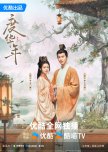
Not Loveless, Just Bad at Love
Li Rong and Pei Wen Xuan were married at eighteen for reasons that had nothing to do with love and everything to do with survival and ambition. She leaned on his powerful family to shield herself from danger, while he relied on her royal status to build his future. Somewhere along the way, she lost herself in indulgence and he drifted toward someone else. After twenty years of a marriage that seemed hollow on the surface, manipulation and misunderstandings pushed them into becoming each other’s greatest enemy, ending in a tragic death where both believed the other was the culprit. Fate, however, presses rewind. They wake up again at eighteen, back at the starting line. This time, Pei Wen Xuan seeks Li Rong out with a bold plan to marry her again, already thinking about how it might end in divorce.At its core, this drama sells itself as a second chance romance wrapped in political intrigue, but what it actually delivers is something a bit more ironic. It’s less about falling in love again and more about fixing a relationship that was never truly broken to begin with. The whole “loveless marriage” angle feels like a scam because the deeper you go, the clearer it becomes that Li Rong and Pei Wen Xuan did love each other. They just failed at communication so spectacularly that it cost them their lives. Tragic, but also a little “this could’ve been an email.”
That’s why the emotional reset at the beginning feels both intriguing and slightly off. You would expect resentment, anger, maybe even a proper enemies to lovers arc after what happened. Instead, the story leans into something softer almost immediately. Li Rong keeps her distance, but Pei Wen Xuan wastes no time slipping into what can only be described as devoted husband mode with a hint of jealousy on the side. It’s abrupt, yes, but the more you watch, the more it feels intentional. Their connection never really disappeared, it just got buried under layers of regret.
And honestly, once the two start interacting more, it’s hard not to get pulled in.
Their chemistry carries the drama in a way that feels effortless. They bicker like an old married couple, trust each other like long time partners, and slowly relearn how to love each other without the baggage of pride and misunderstanding. There’s something very comforting about how natural they feel together. One moment they’re arguing, the next they’re sharing a quiet space like it’s second nature. It doesn’t feel like a new romance. It feels like muscle memory.
What makes it even more fun is their dynamic. Pei Wen Xuan is, for lack of a better term, a complete baby girl, affectionate, clingy, openly jealous, yet still incredibly smart and capable. Li Rong, on the other hand, is the definition of a girlboss with a sharp tongue and zero tolerance for nonsense. She leads, protects, and calls people out when needed, but she also softens in subtle ways around him. It’s an unconventional pairing that somehow works perfectly. He supports her without losing his strength, and she dominates without overshadowing him. It’s equal, just… flavored differently.
Of course, their relationship doesn’t exist in a vacuum. The world around them is messy, and the drama makes sure you feel that.
The political storyline is straightforward in concept but dense in execution. At its heart, it’s a power struggle between the emperor and the noble families, but the way it unfolds is anything but simple. Schemes stack on top of each other, alliances shift constantly, and every decision has consequences that ripple outward. It’s engaging, but also exhausting at times. Not because it’s confusing, but because it rarely slows down. You’re always in the middle of something, and missing a single detail feels like a risk.
What’s interesting is how the drama eventually reveals that the real villain isn’t just a person, but the system itself. The obsession with power, control, and legacy creates an environment where trust is fragile and love becomes collateral damage. The deeper you get into the story, especially when past life events are fully unpacked, the more suffocating it feels. Everyone is trapped in a cycle that almost guarantees tragedy.
That context makes the second chance element more meaningful. Li Rong and Pei Wen Xuan aren’t just trying to save themselves. They’re trying to navigate and possibly outplay a system that already destroyed them once.
And then there’s Su Rong Qing.
He enters the story with an air of quiet suspicion, the kind of character who feels important before the plot even confirms it. When it becomes clear that he’s more involved than he lets on, especially with his connection to the past, he adds a layer of tension that initially works well. There’s a melancholic undertone to his relationship with Li Rong, something filled with regret and unresolved feelings.
But the longer the story goes, the more that intrigue fades. His role expands significantly, almost to the point where it feels like the drama forgets who its main leads are. Instead of becoming a compelling antagonist, he becomes frustrating. His actions feel repetitive, his motivations less impactful, and despite how much time the story gives him, he doesn’t leave a strong emotional impression. It’s a strange imbalance where he dominates the narrative without truly elevating it.
Still, the drama has its strengths in how it handles emotional payoff.
Moments of confession, jealousy, and vulnerability hit well because they are backed by history. When Li Rong and Pei Wen Xuan choose to trust each other, it feels earned. When they express their feelings, it carries the weight of everything they lost before. Even the softer, fluffier scenes work because they are not just cute for the sake of it. They are a form of healing.
Pei Wen Xuan’s character shines particularly in this aspect. His intelligence and strategic thinking make him reliable in high stakes situations, but it’s his emotional openness that makes him stand out. At the same time, that same love can become his weakness, pushing him into impulsive decisions. It’s a nice balance that keeps him from feeling too perfect.
Visually, the drama is undeniably beautiful. The golden tones, the soft lighting, the overall richness of each frame all contribute to a very polished look. The opening sequence alone sets a strong impression. That said, the commitment to aesthetics occasionally comes at the cost of consistency. There are moments where lighting and time of day don’t quite match, which can pull you out of the scene if you notice it. It’s not a deal breaker, but it’s there.
Pacing is where the drama struggles the most. Forty episodes is a lot, and you feel it. Some arcs drag longer than necessary, and certain plot points lean too heavily into dramatics. There are also scenes where the writing dips, especially when intense situations suddenly shift focus in a way that feels out of place. It doesn’t ruin the experience, but it does make parts of it feel slower than they need to be.
By the time you reach the final stretch, the story becomes heavier, darker, and more emotionally draining. The full picture of the past is revealed, and it’s honestly a lot. Betrayals, sacrifices, and choices that spiral into tragedy all come together in a way that makes you understand why these characters were given a second chance in the first place.
The ending, thankfully, delivers a sense of closure. Not everyone is redeemed, and that feels appropriate. Some characters face consequences, while others move forward in quieter ways. Li Rong’s final position feels well earned, and the overall resolution reflects growth rather than perfection.
Performance wise, the cast does a solid job bringing these characters to life. Zhao Jin Mai captures Li Rong’s balance of authority and vulnerability, making her feel both powerful and human. Zhang Ling He brings charm and emotional depth to Pei Wen Xuan, making his more affectionate traits feel endearing rather than excessive. Together, they create a dynamic that keeps the story engaging even when the plot wavers.
In the end, this is a drama that thrives on its characters more than its plot. It’s messy, occasionally frustrating, and definitely longer than it needs to be, but it also has heart. When it focuses on Li Rong and Pei Wen Xuan, it’s genuinely compelling. It’s the kind of story where you might roll your eyes at certain choices, question the direction at times, but still keep watching because you want to see these two get their second chance right.
Was this review helpful to you?
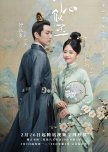
Stitched with Duty, Threaded with Feelings
Set in the Ming Dynasty, The Sword and the Brocade tells the story of Xu Ling Yi, a respected general, and Luo Shi Yi Niang, the daughter of a concubine who is chosen to marry him in order to save her declining family. Despite her low status, Shi Yi is far from meek. She is independent, outspoken, and dreams of building a life beyond the confines of the household through her embroidery skills. Initially met with resistance from the Xu family, her sincerity and optimism slowly win their trust, while her relationship with Ling Yi evolves from a duty-bound arrangement into something much deeper. Together, they navigate family conflicts, personal ambitions, and external threats, supporting each other through every storm that comes their way.Going into this drama, I honestly expected a full-on “red flag parade” situation. After watching clips and reading the synopsis, I thought Ling Yi would be another emotionally unavailable man collecting wives like Pokémon cards. Think The Story of Yanxi Palace vibes, but with less wit and more frustration. I kept postponing this drama because I was mentally preparing myself to dislike him. Plot twist: I didn’t. Not only did I not hate him, I actually liked him. That alone deserves a slow clap.
Xu Ling Yi, played by Wallace Chung, is a general and the head of the Xu family, already married with concubines when the story begins. Yet instead of being a romantic tyrant, he comes across as… lonely. Like a man trapped in a system he didn’t design but has to uphold anyway. His relationships with his existing wife feels more like mutual respect contracts than love stories. So when Shi Yi enters his life, you don’t get instant sparks. You get curiosity, distance, and eventually something that quietly blooms. Their relationship follows the classic marriage-first-love-later trope, but what makes it special is the pacing and respect. Ling Yi tries, yes, but he never crosses the line. He teases, he tests boundaries, but he always pulls back when Shi Yi isn’t ready. The man really said “consent is king” in the middle of the Ming Dynasty, and I respect that. Watching him slowly tone down his advances from attempted kisses to soft cheek pecks felt oddly wholesome. It’s giving patience. It’s giving growth.
Shi Yi, portrayed by Tan Song Yun, is easily the heart of this drama. She enters the marriage with her own agenda, determined to uncover the truth behind her mother’s death and then leave. Romance is not on her to-do list. And I love that for her. She doesn’t get swept away by Ling Yi’s status or subtle charm. Instead, she stays focused, grounded, and independent. Her dream of building an embroidery business might sound simple, but in that era, it’s basically her version of a startup hustle. What makes Shi Yi so refreshing is that her innocence doesn’t equal naivety. She’s inexperienced in love, sure, but she’s sharp, observant, and emotionally intelligent. She handles household politics like a pro, mends relationships, and even helps Ling Yi with his work. Watching her switch between elegant head of the Xu household and free-spirited dreamer is honestly chef’s kiss. Also, can we talk about her hairstyle evolution? Because that alone deserves its own character arc.
The real magic of this drama lies in their relationship. Not individually, but together. Wallace Chung and Tan Song Yun might not scream “power couple” at first glance, but their dynamic? Oh, it sneaks up on you. From strangers to partners to something deeper, their journey feels organic. This is slow burn done right. No unnecessary fireworks, just a steady flame that grows warmer over time. Of course, no historical family drama is complete without chaos, and the Xu household delivers. The scheming, the alliances, the betrayals… it’s like chess, but everyone thinks they’re the queen. Some characters are easy to hate, some surprisingly redeem themselves, and some just make you question humanity. The concubines, in particular, bring layers of conflict. From obvious schemes to subtle manipulation, the drama keeps things interesting.
And then there’s Madame Xu. She is honestly the kind of character that makes your blood pressure rise. Fickle, easily manipulated, and deeply rooted in conservative beliefs, she represents the very system that harms everyone around her. I hated her to the core. Her rigid views on societal norms feel like the driving force behind many of the broken relationships in her son’s life. What frustrates me even more is her sudden shift near the end. Out of nowhere, she becomes protective and appreciative of Shi Yi, praising her sacrifice for the Xu family. It feels completely out of character. This is the same woman who never tolerated anything that could potentially harm the family, so her change of heart comes across less like growth and more like a forced redemption arc that the story didn’t quite earn.
That said, not every character arc hits the mark. Some feel rushed, others oddly resolved. There are moments where motivations make sense emotionally but fall apart logically. And then there’s the underlying frustration with the era itself, where marriage is treated like a transaction and women are positioned as strategic assets. It’s historically accurate, yes, but still deeply unsettling. One standout subplot that completely stole my attention was the relationship between Fu Lin Bo and Dong Qing. Their dynamic is soft, innocent, and honestly adorable. Sometimes I found myself more invested in their scenes than the main couple. Add in Zhao Ying playing full-time cupid, and you’ve got a delightful side dish to the main course. When it comes to peak drama moments, the misunderstanding arc delivers. Jealousy, guilt, emotional tension, it’s all there. I was ready for angst, for longing, for that delicious emotional turmoil. And while it does deliver to some extent, it resolves a bit too quickly for my taste. Ling Yi being sulky, though? Unexpectedly cute.
Now, let’s talk about the ending. Or should I say… the lack of payoff. The build-up to the climax is solid, but the resolution feels like someone skipped a few pages of the script. Major events happen off-screen, and you’re left piecing things together like a detective. It’s less “grand finale” and more “oh, we’re done?” The final scene doesn’t carry the emotional weight you’d expect. It feels like just another episode instead of a conclusion.
Visually, the drama leans towards a more traditional style. Nothing groundbreaking, nothing particularly immersive. Some sets stand out, but overall it feels a bit dated. There are also minor logic gaps here and there that might make you raise an eyebrow, but nothing completely derails the experience.
Despite its flaws, The Sword and the Brocade is a surprisingly enjoyable watch. It subverts expectations in subtle ways, especially through its male lead and the central relationship. It’s not perfect, but it has heart, and sometimes that’s more than enough.
Was this review helpful to you?
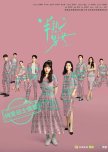
Well Orchestrated Chaos
If love is a battlefield, then In Between is the no man’s land where everyone gets hit at least once.This modern urban drama follows a group of young adults trying to find love, stability, and themselves in the middle of career pressure and emotional chaos. He Zhi Nan longs for romance, Han Su prioritizes survival and ambition, Qu Yi Peng is laser focused on climbing out of poverty, and Gao Peng, born into wealth, wants to prove he can carry real responsibility. When emotion clashes with reason, when practicality shakes hands with passion, every choice creates a ripple. They stumble, they cheat, they grow. And in the end, each of them discovers a different version of what “winning” in life really means.
Episode one threw us into the deep end. Names, traits, relationships, dynamics. Info dump galore. I had to clutch my popcorn and my attention span at the same time. Ironically, despite all the chaotic introductions, the cinematography and dialogue made it feel almost slow. I was this close to boredom, but something about the tension kept me seated. From the very first episode, you can smell it in the air. Cheating. Emotional instability. The calm before the storm.
He Zhi Nan’s wavering loyalty annoyed me instantly. One handsome stranger smiles at her and suddenly her seven year relationship looks like a limited time trial version. Gao Peng was not any better. Distant, inattentive, the classic “busy boyfriend who forgot he has a girlfriend.” And then there was Qu Yi Peng. My first impression? Gold digger with WiFi. Calculative, observant, always scanning for opportunity. The only one I felt no irritation toward was Han Su. Career driven, proactive, ambitious. Girl was focused. I related.
As the episodes progressed, the layers thickened. Qu Yi Peng’s relationship with Han Su was a walking red flag factory. She stayed up finishing his work. He played games. She built networks. He built excuses. Yet somehow, their dynamic was painfully complicated. He depended on her financially and emotionally, yet his pride and insecurity constantly leaked out in small, ugly ways. When Han Su decided to move to Hong Kong, I supported her like I was her campaign manager. She deserved better.
Then we have Sun Han Han and Zhou Bin. The hunter and the hunted. Except sometimes the hunted thought she was the hunter. Sun Han Han wanted to marry rich. No shame in wanting a better life. But Zhou Bin was operating on master level manipulation. Act of service here, emotional bait there, wife hidden in the background like a plot twist waiting to explode. Their arc felt like a cautionary TED Talk on why you should Google a man before dating him.
One of the most unique storytelling choices was the theatrical skits inserted as epilogues. At first, I found them peculiar. Like, is this drama or stage play? But slowly I started loving them. The metaphor about men being better actors than women hit harder than it should have. The “Hunter and the Hunted” skit. The one about heartbreak and savings. Stylish, witty, sharp. These scenes were like poetic commentary on the chaos we just witnessed.
The emotional highlight for me was Han Su and Qu Yi Peng’s breakup dinner. That scene was art. Calm voices. Controlled expressions. Underneath, an emotional earthquake. She outgrew him. He felt abandoned. He loved her in his own flawed, transactional way. For a materialistic man to choose a hardworking woman who struggles alongside him says something. Their love was real, just misaligned. When they confronted each other’s insecurities at that table, I held my breath. When they cried separately and then wiped their tears and moved on, it felt brutally realistic.
Meanwhile, karma delivered its package when Qu Yi Peng realized the “rich heiress” was not He Zhi Nan. His stunned face? Chef’s kiss. Yet somehow, even after being ghosted, He Zhi Nan kept spiraling between passion and security. Gao Peng matured significantly once he took over the family business. Suddenly reserved, responsible, attractive. Character development glow up unlocked.
The heart of this drama, however, is the female friendship. He Zhi Nan and Han Su going from romantic rivals to genuine best friends was my favorite arc. Their friendship breakup in episode seventeen hurt more than any romantic split. Friendship breakups hit different. When they reconciled, I felt relief like I personally survived something. Watching the three women have happy hour together later gave pure women empowerment energy. Messy love lives aside, their bond felt real.
Yes, the drama leans heavily on infidelity. Almost every thematic road leads back to cheating. Insecurity, poverty, falling out of love, materialism. All roads somehow pass through Betrayal City. It is convincing, sometimes uncomfortably so. I did find it frustrating that love driven women were portrayed as naive while career driven women were painted as controlling or intimidating. Realistic perhaps, but the pattern becomes noticeable.
The second half had some awkward cuts where conflicts escalated and resolved a bit too quickly. Emotional beats did not always get enough breathing room. I wanted to sit longer with certain feelings before being pushed into the next twist.
Casting wise, they nailed it. Tian Xi Wei made He Zhi Nan frustrating yet lovable. When she cried, I felt it. Zhou Yu Tong as Han Su was magnetic. Elegant, composed, strong. I became a fan through this drama. Xi Yun Lai portrayed Qu Yi Peng with just the right amount of charm and toxicity. Yuan Wen Kang made Zhou Bin so convincingly annoying I wanted to throw my slipper at the screen. Zhang Zhe Hua’s evolution as Gao Peng was satisfying to watch. And the green flag duo, Wang Zi Lu and Luo Ma, were refreshing breaths of air in a room full of red banners. I only wish we had more backstory for them. Good men deserve depth too.
I loved how this drama explored all the different perspectives and complexities of the six characters. All the characters had fully explored personalities. The OST also deserves a mention. Warm, nostalgic, sentimental. The kind of songs that play and suddenly you are staring out the window contemplating life.
By the final episode, everyone ends up exactly where they need to be, not necessarily where they first wanted. Careers prioritized. Toxic ties cut. Growth acknowledged. The airport scene where He Zhi Nan faces her past self felt symbolic and earned. They stumbled, they messed up, they hurt each other, but they grew.
In Between is messy. Tangled. Sometimes frustrating. But it is also addictive and strangely relatable. It explores not just romance, but ego, pride, insecurity, survival, and the quiet fear of being left behind. I was hooked episode after episode, constantly asking myself why these characters made such terrible decisions and why I sometimes understood them anyway.
Well orchestrated chaos with a side of emotional damage. And honestly? I loved the ride.
Was this review helpful to you?
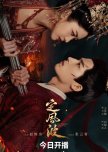
Every Genius Is a Little Guilty
In the world of The Wanted Detective, justice wears a fugitive’s cloak. Xiao Bei Ming, once hailed as the best detective in Qi, is forced to flee after being accused of being a serial killer. Three years later, he returns to the capital, determined to clear his name. Reuniting with his junior Zhong Xue Man and joining forces with Feng Qing Zhuo, Huo Dai Rong, Tong Shuang, and the ever competitive Zhuge Kong Yun, he dives into a string of bizarre cases. Each mystery pulls them closer to the truth behind Night Evil, the unrest shaking Qi, and the shadowy tragedy of Haiya. Saving the world? Casual. Clearing your own name while doing it? Now that is multitasking.I did not expect this drama to hook me with its intro OST. It has this stylish hip hop vibe that made me sit up and think, wait, are we solving crimes or dropping a mixtape? Either way, it worked. And then came Xiao Bei Ming doing what he does best: flexing his brain cells like they are Olympic gold medalists. His deductive skills are almost too good. Sherlock Holmes would probably raise an eyebrow. But brilliance, when mixed with unchecked confidence, can quickly curdle into arrogance. For me, Xiao Bei Ming often crossed that line. His condescending and at times misogynistic remarks toward Zhong Xue Man, disguised as protectiveness, were particularly disappointing. Genius is attractive. Smug genius who underestimates his partner? Not so much.
That said, credit where it is due. Wang Xing Yue plays Xiao Bei Ming with mischievous precision. His line delivery is sharp, and when the script gives him fiery speeches about justice and truth, he absolutely devours them. Goosebumps were had. My disconnect lies not with the actor, but with the character’s personality. I admired him more than I liked him.
I had high hopes for the romance between Xiao Bei Ming and Zhong Xue Man. Visually, they are stunning together. Childhood friends to lovers is usually my jam. Yet the chemistry never quite sparked. It felt less like fate and more like proximity. They love each other because the script says so, and because they have always been there. The flutters? Missing in action.
However, Zhong Xue Man herself is a delight. Xiang Han Zhi may still be honing her craft, but she captures the fiery determination of a young woman desperate to break free from societal expectations. Her Zhong Xue Man is smart, brave, and adorably intense. She genuinely looks like an angry bird when she is riled up, and I mean that in the most affectionate way possible. Unlike the usual slow motion flailing we sometimes see in period fight scenes, she moves with speed and purpose. When she throws a punch, you feel it.
If Xiao Bei Ming is the brain and Zhong Xue Man is the heart, then Zhuge Kong Yun is the glitter cannon of chaos. He constantly turns investigations into a competition, trying to outshine Xiao Bei Ming at every corner. Yet beneath that rough, boastful exterior lies a genuinely kind and principled man. He is also low key cupid, nudging the main couple along while pretending he is above such trivial matters. Deng Kai clearly understood the assignment. From the bombastic braids to the dramatic outfits and theatrical bravado, he almost steals every scene he is in.
One of the drama’s greatest strengths is its teamwork. This is not a one man genius show. Xiao Bei Ming, Zhong Xue Man, Feng Qing Zhuo, Huo Dai Rong, Tong Shuang, and even Zhuge Kong Yun in his own way, function as a unit. Each member brings distinct skills, perspectives, and emotional baggage. Their mini arcs explore trauma, loss, and personal grievances that shape their moral compass. They make good decisions. They make questionable ones. They argue, banter, and support each other. It is this imperfect humanity that kept me invested.
He Luo Luo shines as Tong Shuang, delivering a charismatic and empathetic performance, especially in his bromance with Xiao Bei Ming. There is an emotional undercurrent to his character that adds depth to the group dynamic. Zhang Nan does well with Huo Dai Rong, though the script does not give her enough room to truly soar. Chen You Wei’s Feng Qing Zhuo is credible, steady, but not particularly scene stealing. Still, as an ensemble, they work.
The cases unfold in a case within a case structure, each mystery revealing fragments of the larger conspiracy tied to Haiya. There are mild fantasy elements woven in, adding an eerie, almost gothic chill to the proceedings. Every new revelation deepens the dread. What really happened in Haiya? Who is Yesha? And what is the endgame?
The writing plays fair. There is misdirection, yes, but attentive viewers can piece together the puzzle. Clues are scattered in plain sight, even in fleeting expressions and throwaway lines. At one point, everyone feels suspicious, which is exactly the point. Yesha is not just a person, but an idea. Anyone consumed by injustice and pushed to extremity could become Yesha.
As an antagonist, Yesha is surprisingly tragic. While Xiao Bei Ming believes in pursuing justice through light, Yesha fights darkness with more darkness. They are two sides of the same coin, shaped by pain but choosing different paths. It raises uncomfortable moral questions, especially surrounding the Haiya case. Is vengeance ever justified when the system fails?
I will admit that somewhere in the middle, between layered cases and Xiao Bei Ming’s increasingly frail poisoned state, my attention wavered. The pacing dipped. But I pushed through, and I am glad I did. The narrative regains momentum and builds toward a satisfying conclusion. The final reveal makes sense, and the drama resists the urge to overexplain everything in a tedious monologue. No excessive tropes, no random plot devices thrown in for shock value. Most threads tie back neatly, coming full circle.
The ending does lean into something more personal than I expected, when it could have stayed focused purely on Haiya. Still, it does not derail the impact. In the end, The Wanted Detective delivers a solid blend of mystery, moral complexity, teamwork, and just enough flair to keep things stylish. It may not have given me butterflies in the romance department, but it definitely kept my inner detective on high alert. Case closed.
Was this review helpful to you?
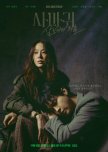
Mother of a Twist!
Jung I Sin is a convicted serial killer known as the Mantis. Twenty years ago, she brutally murdered five men and shocked the nation. Her son, Cha Su Yeol, grew up hating her and everything she stood for. Now he works as a police officer, determined to stand on the opposite side of crime. But when a new murder case surfaces and mirrors the Mantis killings, Su Yeol is forced to seek help from the one person he despises the most. His mother. To catch a copycat, the hunter must team up with the original predator.And that is when the madness begins.
Queen Mantis is the kind of drama that grabs you by the collar and whispers, “Trust no one.” From the very first episode, my brain was in detective mode. Who is Jung I Sin really? Is she truly a monster? Is she protecting her son? Did someone else commit those murders? Was Lee Jung Yeon involved? Every episode added new layers, new flashbacks, new clues. Just when I thought I cracked the case, the drama said plot twist and pulled the rug out from under me. It is twist on twist on twist. A full Inception experience but make it crime thriller.
What makes it addictive is not just the mystery but the emotional undercurrent. Go Hyun Jung as Jung I Sin is simply phenomenal. In the beginning, she carries this eerie, almost supernatural aura. The way she stares, the way she smiles slightly, it feels like she knows ten secrets you do not. I kept asking myself if she was evil or just misunderstood. As the story unfolds, we see what truly drives her. Her son. Suddenly the devil horns start looking suspiciously like angel halos. It becomes a powerful reminder that you can never judge a book by its cover and that everyone has their own scars and silent battles.
The chemistry between Go Hyun Jung and Jang Dong Yoon is chef’s kiss. Their relationship evolves from cold resentment to something painfully tender. You can feel the years of anger, betrayal, and longing in every scene. Watching Cha Su Yeol slowly confront his past and his feelings toward his mother was deeply satisfying. It was not just a crime investigation. It was emotional therapy wrapped in a thriller.
Kim Bo Ra as Lee Jung Yeon, however, left me a little puzzled. She definitely earned a spot on my suspicion board more than once, but beyond that, her impact felt limited. I kept waiting for a bigger narrative purpose. Still, she did her job in keeping me paranoid, so perhaps that was the point all along.
The dynamic between Jung I Sin and Choi Jung Ho also had me tilting my head. Are they allies? Old friends? Is there unresolved tension? Or is it simply detective and convict with complicated history? Their gray area added another intriguing layer to the story, even if it never spelled things out clearly.
What I loved most is how this drama makes you suspicious of almost everyone. No character feels entirely clean. No one feels entirely guilty either. It plays with your moral compass and dares you to decide who deserves redemption.
And that ending. Oh, that ending. Revenge completed. Truth revealed. Justice served. The good people finally smiling. I was genuinely happy that Jung I Sin received her form of peace, especially with her son standing by her side. After all the darkness, it felt earned.
Overall, Queen Mantis is a genius blend of mystery, emotion, and psychological tension. It keeps you hooked, guessing, and emotionally invested until the very last minute. If you are a fan of crime thrillers that mess with your head while quietly breaking your heart, this one is a must watch. Consider yourself warned. Once the Mantis locks in, there is no escaping.
Was this review helpful to you?
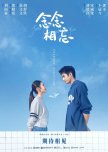
Long Story Short, It Was Just For Meeting You
Xu Nian Nian and Yang Yi met at the most beautiful age of their lives and shared the kind of moments that feel like they will last forever. Youth gave them laughter, misunderstandings, little heartbreaks, and big dreams. Yet, like most high school memories tucked away in dusty yearbooks, it is also a chapter that time will eventually blur and soften.Just For Meeting You is what I would call a comfort snack of a movie. It is light, easy to chew, and requires zero brain calories. There is no explosive conflict, no dramatic plot twists that flip tables, and no earth shattering climax. It simply retells a familiar story of youth, first love, and chasing dreams. Cliché? Absolutely. But sometimes clichés exist for a reason. They work.
The pacing feels like listening to a friend say, “Long story short, this was my first love in high school,” and then proceed to tell you everything in under two hours. It moves quickly, almost too quickly, leaving little room to sit and marinate in heavy emotions. Strangely enough, that actually works in its favor. High school romance often feels like that. Fast, fleeting, intense in the moment, and suddenly over before you fully process it. The film captures that blink and you will miss it quality of youth quite realistically.
I found myself smiling more than I expected. There is something undeniably charming about watching two teenagers bicker their way into affection. Liu Hao Cun, this being my first time watching her, completely won me over as Xu Nian Nian. She is not just pretty and youthful; she brings a surprising amount of nuance to such a light character. For a movie that does not dive very deep, she somehow creates depth. Her cool girl aura is strong. Maybe it is because she transfers schools often, but she carries that effortless girl crush energy. Smart, sporty, good at games, friendly without trying too hard. The kind of girl you would want to sit next to in class and maybe secretly admire a little. I walked in neutral and walked out a fan.
Song Wei Long also fits perfectly as Yang Yi, the mischievous yet lowkey intelligent troublemaker. He plays the classic kind bully turned admirer trope, and he does it well. Yang Yi is playful, occasionally annoying, but importantly, he owns up to his mistakes. The broken jade pendant incident could have been dragged into unnecessary drama, but instead it was resolved in a simple, almost anticlimactic way. Honestly, that felt real. Not every teenage conflict needs thunder and lightning.
Their relationship follows the beloved bicker turned lover formula. It starts with a misunderstanding, some playful teasing, and a lot of back and forth. What I liked is that Xu Nian Nian is not a passive target. She gives as good as she gets. She enjoys the banter and sometimes serves Yang Yi a taste of his own medicine. Their dynamic feels natural, like two classmates who slowly realize that the person who annoys them the most might also be the one who understands them best. Classic? Yes. Cute? Also yes.
Part of me wishes this story had more room to breathe. It could easily stretch into a twenty episode drama exploring more of their high school days, their university phase, and what happens after confessions are made. The foundation is there. Still, even in this compact format, it remains entertaining. The enemies to lovers energy carries the film, and the chemistry between the leads does most of the heavy lifting.
And that little plot twist near the end? Cute. Just cute enough to leave you with a soft smile.
Just For Meeting You will not change your life. It will not redefine the romance genre. But if you are in the mood for something sweet, simple, and sprinkled with youthful nostalgia, this one might just be your cup of milk tea. Sometimes, meeting someone at the right time is all the story you need.
Was this review helpful to you?

This review may contain spoilers
A Love Story With Missing Pages
Born as the daughter of a concubine, Yan Xing grows up under the guidance of the Ministry of Justice’s chief inspector, sharpening her mind and developing skills for uncovering truths hidden within evidence. After successfully passing the examination to become a female official, she sets her sights on exposing criminals and defending justice. Her plans take an unexpected turn when her third sister escapes an imperial marriage arranged by the Empress Dowager, forcing Yan Xing to step in as the bride to protect her family. Her reluctant husband turns out to be Shen Du, the feared and formidable head of the imperial guard. As strange cases begin to plague the capital, the two are drawn into working together. Through danger, investigation, and reluctant partnership, their bond slowly deepens as they uncover a massive conspiracy threatening the peace of Xiang’an City.Right from the very first episode, Shen Du commanded attention. Dark, aloof, cold, intimidating, and honestly kind of terrifying. Pair that with Yan Xing, who lives and breathes investigations, got me hooked. This was exactly my kind of setup. A scary man with secrets and a girl who refuses to stop asking questions. Even better, I am a certified fan of the bad guy good girl trope, and this pairing delivered that vibe immediately. Shen Du treats Yan Xing with ice cold indifference at first, and I loved it. Their energies clash in the best way. On the surface, they feel like night and day. He is quiet, shadowy, and sharp edged. She is bright, stubborn, and driven by justice. But the more you watch, the more you realize they are strangely alike. Both are loyal to a fault, emotionally guarded, and shaped by their pasts and experiences.
Speaking of the past, this drama teases us with a shared childhood connection. Yan Xing remembers. Shen Du does not. Yan Xing probably sees him as an old friend, maybe even a source of comfort from her younger days. Shen Du, on the other hand, seems to have buried those memories somewhere deep. I always felt like Yan Xing was a light during his darker years, and that feeling lingered even when he forgot her. I was actually glad he only remembered after he had already fallen for her. That made the love feel earned, not something fueled by childhood nostalgia. Still, this past connection is one of those tropes that gets mentioned early, disappears for ages, and then suddenly comes back like a dramatic surprise guest.
The first half of this drama was genuinely entertaining. The chemistry between Yan Xing and Shen Du carried the story. I loved their cold bickering slowly turning into concern, jealousy, and affection. Watching intimidating Shen Du get worried and jealous over Yan Xing was extremely satisfying. Yan Xing taking care of Shen Du felt natural and sweet, because kindness is one of her core traits. Then came the second half. And oh boy. I hated it. I absolutely hated the fake divorce plot. It was unnecessary, frustrating, and drained all the momentum from the story. What made it worse was how easily Yan Xing forgave Shen Du at the end. After everything that happened, it felt rushed and undeserved.
I think the biggest mystery for me is when did these two fall in love. I am not joking when I say this question still lives rent free in my head. One moment they are agreeing to stay married for three months and then divorce. The next moment, they are deeply in love. Where was the turning point. Where was the moment. I could not find it. I do not think Yan Xing fell for Shen Du when they were young. She probably saw him as a friend. Shen Du probably fell for her back then, but since he did not remember, that should not count. So when did it happen. The fact that I cannot pinpoint it oddly irritates me, even after multiple rewatches.
Now let us talk about Yan Xing, because girl. I was honestly annoyed. I admire her passion and courage, but she acts first and thinks later way too often. She throws herself headfirst into danger without considering the consequences, and if Shen Du was not constantly there to save her, she would have died very early on in this drama. Her strong personality was not the issue. It was the repetitive cycle of reckless investigation followed by needing rescue that drove me up the wall.
Shen Du himself started off with so much potential. He was introduced as this dark, charismatic, and intimidating presence. But as the story progressed, that edge slowly disappeared. Suddenly he was being teased by Yan Xing’s friends and even a random kid. His darkness just melted away. I tried to give the drama the benefit of the doubt and tell myself this was the classic she changed me plot. But honestly, I wish he had stayed closer to his original characterization. That intimidating aura was one of his strongest charms. Not to mention, his night blindness. I know I should not overthink it, but I did. Yan Xing easily figures out a solution involving consuming some truly disgusting things. Are we supposed to believe Shen Du never tried that and just decided to live with all the lights on forever. It felt either careless or clearly written just to serve the plot.
The ensemble cast was a mixed bag. Lu Chui Chui was entertaining at first, and her relationship with Lai Luo Zhi was intriguing when he was still the mysterious masked man in the graveyard. Once he revealed himself, his personality did a complete turn. He became obsessive and confusing. He clearly had feelings for Lu Chui Chui, yet rarely showed them in front of others and mostly acted indifferent. I could not tell if this was bad writing or intentional characterization. I liked Lu Chui Chui’s bubbly personality early on, but her naivety became irritating later. Still, I was glad she got a happy ending.
Ding Yuxi and Deng Enxi delivered strong performances and undeniable chemistry. Even if the writing did not always do their characters justice, they worked beautifully together on screen. Ding Yuxi nailed Shen Du’s intimidating and dark traits, while Deng Enxi brought Yan Xing’s intelligence and warmth to life. Her eyes were especially captivating. And thanks to Yan Xing constantly calling his name, Shen Du has officially become one of those unforgettable Chinese drama character names.
Despite all its flaws, unanswered questions, and my endless complaints, this is a drama I genuinely enjoyed. I have rewatched it multiple times, although I stop before the story goes downhill. That probably says everything.
In the end, Melody of Golden Age is messy, frustrating, charming, and addictive. Just like many dramas we complain about but still cannot let go of.
Was this review helpful to you?
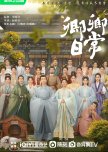
No One Saw These Women Coming!
A marriage selection brings young women from different regions to Xin Chuan, where the low-profile sixth young master, Yin Zheng, meets Li Wei, a practical girl who hopes to avoid selection and live a quiet life. Their unexpected pairing gradually turns into a genuine partnership as they navigate daily life together. Through shared challenges, official duties, and simple moments across changing seasons, they grow closer while forming a warm family alongside others of different personalities and fates.New Life Begins is a lighthearted historical satire that playfully critiques feudal patriarchy through a modern lens. Set in the fictional state of Xin Chuan, the story follows a bride selection system that brings young women from eight regions into a rigid, male-dominated court. What begins as a traditional arrangement quickly turns into a challenge to the very values Xin Chuan is built upon. Despite hints of potential conflict or drama, most problems are resolved quickly and without major consequences, giving the story a surprisingly light tone.
At the center of this quiet rebellion is Li Wei, a food-loving and practical girl from Ji Chuan, where equality and monogamy are the norm. Alongside women like the clever Hao Jia, the fierce Shangguan Jing, and the ambitious Yuan Ying, she navigates the suffocating rules of the inner palace with wit and solidarity. Their shared journey highlights one of the drama’s greatest strengths: its focus on sisterhood and the idea that women become strongest when they support one another. Despite the historical setting, the themes feel distinctly modern and intentionally idealistic. It is touching and heartwarming to see the female characters stand up for one another. In this drama, there is no hierarchy of concubine versus legal wife, only women supporting women. When else do you see a concubine and a legal wife becoming best friends, or a legal wife smiling while watching her husband interact with his concubine? As someone who loves stories about women’s empowerment, this drama genuinely made me smile and feel warm and fuzzy inside.
The drama benefits greatly from a strong ensemble cast and humor. Not all princes are villains, though many make terrible husbands. I found Prince An, his wife, and his twenty-four constellation girls to be particularly amusing. Yin Qi and his relationship with Shangguan Jing steal the spotlight. Their dynamic is chaotic, heartfelt, and deeply entertaining, with banter and emotional growth that feel earned. Though imperfect and often struggling, their happiness feels genuine. While most subplots are light and brief, Hua Jia’s storyline stands out for its darker tone. The antagonists themselves are fairly simple, reinforcing the idea that the true enemy is the feudal system rather than any individual character. I also loved how the drama uses colors to distinguish couples and regions, and how each couple’s personalities and dynamics are so distinct. Some of the most memorable moments include Yin Zheng’s birthday dinner in episode 40 and the final rooftop scene with all the couples gazing at the moon. It was wonderful to see how the colors differ for each couple and how their interactions and positioning also reflect their unique dynamics.
The romance between Li Wei and the unfavored sixth prince, Yin Zheng, is wholesome and comedic, particularly through their opposing attitudes toward food and life. Bai Jing Ting and Tian Xi Wei share natural comedic chemistry and handle emotional moments well. However, their relationship feels somewhat unrealistic. While it is clear how and why Li Wei falls in love with Yin Zheng, the buildup on Yin Zheng’s side is lacking, which makes his feelings for her feel underdeveloped. Even now, it remains unclear how or when he truly fell for her. Given how they first met, I expected more bickering or tension between them, but once he chose her, it was as if the kitchen incident never happened. That said, a special shoutout goes to our cupid, Su Shen. Without him, who knows how long it would have taken for these two to figure things out. He was the spice that both the couple and the audience needed to make their relationship more engaging. Ultimately, the drama feels more invested in women’s stories than in romance, which is not necessarily a weakness.
The drama is also somewhat anticlimactic: moments that feel like they might lead to big conflicts are often resolved quickly and without major consequence. While this keeps the pacing gentle and enjoyable, it can sometimes make the drama feel plain, particularly toward the ending, which felt a bit rushed and left me wondering why certain solutions weren’t considered earlier. Everything remains light and easygoing. Some viewers may want more dramatic tension, but for me, it only added to the charm.
Overall, New Life Begins is a visually charming, warm, and entertaining drama centered on women’s struggles, growth, and solidarity, with romance as a supporting element. While it lacks depth and can be slow at times, its humor and ensemble performances make it a highly enjoyable watch.
Was this review helpful to you?
This review may contain spoilers
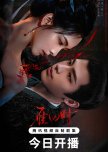
A Life Lived for Vengeance
The Glory features the intriguing journey of Zhuang Han Yan who was hell-bent on revenge. Abandoned right after birth, Zhuang Han Yan grew up facing constant abuse by her foster parents and local kids from the neighborhood. It was not until her foster father attempted to assault her that she killed him and returned to her family in the capital city. Upon her return, she met Fu Yun Xi, a deputy minister with a mysterious illness an an agenda of his own. The story then follows her journey as she attempts to rekindle her relationship with her mother and works with Fu Yun Xi to plot revenge against the people that wronged them.This drama is the type of drama that gets you hooked from the beginning until the end as you watch with anticipation as to how the story unfolds. Although the writing was a bit sloppy towards the end and the ending felt a bit rushed, it was enough to say that this drama was well-written. This story in this drama centers on Zhuang Han Yan's revenge, which later ends in a bittersweet glory. Zhuang Han Yan was never an innocent, virtuous, or righteous lady. Abandoned as a baby, she has lived a hard life ever since she could remember. She is cunning, resilient, tenacious, and will stop at nothing to get what she wants. She is a survivor and will always fight back. Despite her tough personality, there is also a vulnerable side to her. Due to her lack of social support, she was always skeptical against new people. She would also go on emotional outbursts and make impulsive decisions when something doesn't go as planned or when something unexpected happens. Regardless of her unfortunate upbringing, she knows how to be grateful and is loyal to the people who are kind to her. She would do anything she can to protect the people who are nice to her, even if it means sacrificing herself and her revenge. She is a very well-written character in this story that definitely leaves a lasting impact. Seeing how she has lived and her journey on getting revenge just makes you want to pat her back and hug her. Casting Chen Du Ling for the role of Zhuang Han Yan was the right decision. Chen Du Ling brought life to Zhuang Han Yan, exuding vulnerability and resilience. Chen Du Ling's visual and thin figure were also befitting for the character of Zhuang Han Yan considering the character's upbringing.
The male lead, on the other hand, was a disappointment. Fu Yun Xi is written as a master of political warfare with a calm exterior and impactful depth. With his cool facade, he bears great responsibilities in addition to being chased by time. He is a character integral to the story as he aids Zhuang Han Yan in her revenge. Sadly, his character did not leave a lasting impact due to poor casting. Xin Yun Lai definitely has the charismatic and cool visual befitting for the role of Fu Yun Xi. It is a shame that his acting was far from expressive. Throughout the drama, the only expression he had was a straight face. It was like he just woke up. The only part when he showed expression was when a prince was flirting with Zhuang Han Yan. Even then, he only gave side eyes. I couldn't feel anything from him.
Although the Fu Yun Xi's character could've been improved, the casting of other characters were great. I would give a special shoutout to Wen Zheng Ron playing Ruan Xi Wen, Zhuang Han Yan's mother. Not only did she resembles Zhuang Han Yan, she also exudes the beauty, charisma, vulnerability, endurance, patience, and intelligence of Ruan Xi Wen's character. Her expressions were definitely above par and she definitely managed to leave a lasting impact!
The ending was okay in a way that Zhuang Han Yan got her revenge and Fu Yun Xi got what he wanted. Despite the symbolism trickery in the end through the alive and dead characters' blocking, as well as their outfit colors, I wish they made it clear whether or not Fu Yun Xi ended up dying in the end, hence the bittersweet glorious ending. All in all, this drama is definitely in my recommended list for those looking for a revenge plot.
Was this review helpful to you?
A Light Watch of a Cliché Plot
Youthful Glory is a drama about Jiang Xu, Prince of Dingbei, and Ming Tan, a general's daughter, who agreed to do a contract marriage for political reasons but ended up falling in love as they work together to fight corruption.With its simple and rather cliché plot, this drama has a high entertainment value. It has a good blend of romance, family, politics, and action. Although the writing was a bit sloppy at times, the pacing was great! I finished all 30 episodes in one sitting without ever feeling bored. I admit I had some prejudice before watching this drama. I saw the preview and thought that Ming Tan would be a cute but dumb character who constantly relies on the male lead however I was proven wrong. It turns out she was not only beautiful but also very smart, tactical, strategic, and independent. All the characters were well written, even the supporting characters were memorable.
The actors did a great job at bringing their respective characters to life. Bao Shang En was perfect for Ming Tan. She was able to portray her as a beautiful and intelligent young lady. Her styling and makeup were also great at supporting her character's personality and characteristics. Song Wei Long also did a great job at portraying the vigorous Jiang Xu. Although I think that his standing posture lacks the aura of a martial arts expert.
One thing that was a minor miss but left a huge impact on me was during the scene when Jiang Xu rescued the king, we can see that the figure actors acting as the army in the back were just softly clashing their weapons with one another. Some did not even fight. It gave me the cringe and ever since I saw that, I began to pay attention to the figure actors in the fight scenes of other dramas as well.
Despite so, I really enjoyed this drama. If you're watching for a light drama that you can watch after a long day, this drama would be the perfect option to go for. Youthful Glory will make you smile, squeal, addicted, and kick your feet against the air!
Was this review helpful to you?

Got Me Jealous of Sang Zhi
Started to watch this because of the hype it got. This whole drama was very light yet it was so hard for me to watch mainly because I was jealous of Sang Zhi’s life. She did not face any major hardship and had a supportive family, which is basically what every girl wants. Not to mention falling for your big brother’s friend.. typical chick flick plot.All the actors were great in their roles, although I question why they had to use a child actress when Sang Zhi was still in elementary and paired her with Chen Zheyuan. I wish they could’ve just styled Zhao Lusi differently or hire a male child actor to play young Duan Jiaxu and Sang Yan.
This drama has no major conflict apart from Duan Jiaxu’s so it was a very light watch, which made me bored. However, I did finished watching it but nothing memorable to be honest.
Was this review helpful to you?
This review may contain spoilers
Perception vs. Reality: A Mind-Bending Crime Mystery That Hooks You From Start to Finish
This gripping drama follows An Yun Su, an art teacher whose peaceful life collapses when she is accused of her husband’s murder and sent to prison. There, she forms a tense and dangerous alliance with Mo Eun, a mysterious inmate rumored to see into people’s minds. As their hidden secrets begin to surface, principled prosecutor Baek Dong Hun investigates the case, testing his morals and sense of justice, while Yun Su’s tenacious lawyer, Jang Jeong Gu, fights relentlessly to uncover the truth and prove her innocence. The Price of Confession is a flawlessly crafted crime mystery drama that challenges our perceptions of others while exposing the prejudices and assumptions held by those in authority.This drama takes you on a journey to uncover the truth, where everything is connected and every detail matters. From the very beginning, you may find yourself forming your own judgment of one of the main characters, An Yun Su. The way she responds to her husband’s death, how she behaves at the crime scene, and how she dresses and reacts during questioning all shape your perception of her, much like they shape Jang Jeong Gu’s view as well. It was also interesting to see the scene at the end of the first episode, which serves as a visualization of what Jang Jeong Gu, and perhaps the audience, believes happened during An Yun Su’s husband’s murder. I initially tried not to form any biased judgments about her, but after seeing that scene, it almost convinced me that it might reflect the truth of what happened.
Then come Mo Eun’s crime and interrogation scenes. At first, they made me perceive her as a sadistic, cold-blooded, psychopathic killer. Yet her decision to surrender made me question her true motives, and I found myself genuinely curious about her. On top of that, her attempt to approach and communicate with An Yun Su in prison completely caught me off guard—everything seemed so well planned, it was surprising! Moreover, the way the show repeatedly focuses on that particular scene during Mo Eun's flashbacks suggests that she didn’t start as a psychopath but became one as a result of a very traumatic past.
I found Jin Yeong In's role to be quite suspicious from his very first appearance. That’s because he seemed too good to be true. Compared to Jang Jeong Gu, a nameless lawyer with a clear reason to defend An Yun Su, Jin Yeong In’s background and motives for defending Mo Eun felt almost unreal in today’s world. That’s why I wasn’t too surprised by how the story progressed. I was, however, surprised by his motive. I had been expecting a huge conspiracy or cover-up, but it turned out to be something so trivial—so trivial that many of us might have experienced it, yet never taken it to such an extreme. I was honestly mindblown by the ending; it really shows what can happen when a mental illness is enabled. That said, this well-written, complicated story wouldn’t have achieved its success without the well-developed characters and the excellent performances of the actors portraying them.
Jeon Do Yeon as An Yun Su
As a renowned actress who has portrayed diverse roles, I couldn’t imagine a better choice to play the quirky and eccentric An Yun Su. Beyond her overall appearance, which suits the artistic An Yun Su perfectly, Jeon Do Yeon delivered an excellent performance in bringing out her emotions. Her grief, the way she tries to stay strong for her daughter, her fear and confusion upon entering prison, her desperation to prove her innocence, her anxiety—everything was perfectly conveyed through Jeon Do Yeon's facial expressions and body movements.
There is one question I still have about her character—maybe it was unanswered, or maybe I missed it.
[Spoiler]
Baek Dong Hun said that when An Yun Su was a child, she intentionally pushed her friend, causing injuries, simply because she didn’t like how her friend smiled so brightly in a photo for milk packaging. Is that story true? Was it just an impulsive mistake that children sometimes make, or does it suggest something darker wired within her?
Not to mention the scene where An Yun Su is looking at paintings made by her students. One painting, in particular, stood out: it showed her as if she were about to devour smaller humans. That scene made me suspicious of An Yun Su. However, I realized I might have brushed it off if I didn’t already know she was a convicted killer. As an artist, it’s perfectly normal to pause and take in a painting—but in this case, my knowledge of her past made me form a biased judgment.
[Spoiler Ends]
Despite her well-written character, she wasn’t without flaws. As someone who watches a lot of CSI, I found that her attempts to investigate and go unnoticed were sloppy at times. She wears an electronic ankle tag and knows its purpose, yet she doesn’t even manage to cover her tracks, making it seem like she’s just revealing her alliance with Mo Eun to the police. Also, burying evidence in her own backyard was a questionable choice. Maybe it’s sloppy writing, or maybe it’s the writer showing us that despite An Yun Su being an avid CSI watcher, she’s just a careless woman and mother who wouldn’t hurt a single fly.
I do give credit to the hair and costume stylist. Her long, curly hairstyle and eccentric look really bring An Yun Su's personality to life! Additionally, the large tattoo of her husband on her back was such a nice and artistic touch.
Kim Go Eun as Mo Eun
Wow! For such a complex character, Kim Go Eun delivered an outstanding performance. Beyond her appearance, which somehow complements Jeon Do Yeon's look, her facial expressions were top-tier. She perfectly portrayed a good and selfless girl who develops a deep grudge and a strong motive for vengeance against those who wronged her family. I particularly applaud the scene when she is lying down, seemingly helpless, yet her heart is raging with fury—you’ll know what I mean when you see it. I honestly felt like aiding her.
I do wonder about the reasoning behind her hairstyle, though. Okay, the short hair I get—maybe she cuts it to mark the next (and final) chapter in her life: revenge. But I don’t understand why she approaches the Ko family with her original long hairstyle. Then again, this doesn’t really affect my experience; it’s just a curiosity.
An Yun Su and Mo Eun's chemistry is something to anticipate! I even find An Yun Su's chemistry with Mo Eun stronger than her chemistry with other characters, including her husband. That’s not to say romantically—just chemistry in general. An Yun Su’s grief over the loss of her husband felt somewhat casual to me; she seemed to bounce back quickly, treating it as if he were just out on a trip. Yet with Mo Eun, there’s more than just loss—there’s regret, sympathy, and even a sense of holding onto Mo Eun in her memories as she moves on with her life in the end.
Park Hae Soo as Baek Dong Hun
Park Hae Soo delivered a great performance as Baek Dong Hun. Baek Dong Hun is an upright and persistent character who only believes what he sees. Throughout the series, Park Hae Soo did an excellent job bringing out the annoying side of Baek Dong Hun—almost making me want to smack him on the head to get a grip and put the puzzle pieces together. Honestly, at first, the romance-lover in me thought he might develop romantic curiosity toward An Yun Su, but I was proven wrong. He was just curious about her as a person. However, I admit that if I were in his shoes, I would also relentlessly pursue An Yun Su, perceiving her as the killer because all the evidence and my observations point to her.
Jin Seon Kyu as Jang Jeong Gyu
Jin Seon Kyu was perfect as Jang Jeong Gyu. He brought the character's persistence and upright personality to life. Honestly, if it weren’t for Jang Jeong Gyu, An Yun Su's life would have been much harder. Unlike others, Jang Jeong Gyu consistently gives An Yun Su the benefit of the doubt despite evidence pointing toward her. He is like her loyal sidekick who always has her back. Jin Seon Kyu's expressions and overall presence were perfect for this role.
Baek Dong Hun and Jang Jeong Gyu are like polar opposites in their opinions and behavior toward An Yun Su. While Baek Dong Hun always believes she’s a killer, Jang Jeong Gyu believes she is innocent and wronged. Baek Dong Hun is persistent in proving himself right, while Jang Jeong Gyu is persistent in proving An Yun Su’s innocence. Their chemistry is interesting, to the point that it occasionally comes off as humorous.
The Price of Confession is a series that will keep you hooked. You become fully involved in the characters’ pursuit of the truth. This is a well-written work with twists and turns that leave you genuinely mindblown. It is not a light watch, as it will keep you thinking and questioning throughout. Highly recommended if you want a gripping crime-mystery drama!
Was this review helpful to you?

This review may contain spoilers
From Bunk Beds to Heartbeats: Love Story in the 1970s
Love Story in the 1970s takes us back to an era where life was simple on the surface but complicated underneath. The story follows Fei Ni, a hardworking young woman at a textile factory who dreams of changing her fate through education. In a time when university opportunities are rare and often depend on recommendations, Fei Ni keeps striving for a chance to study despite repeated rejections. Her path crosses again with her junior high school classmate Fang Mu Yang, who becomes known as a local hero after getting injured while saving people. Feeling responsible and hopeful that good deeds might help her earn a university recommendation, Fei Ni takes the initiative to care for him. Life, however, is not that simple. Pressures keep piling up, especially when Fei Ni’s family faces housing problems and her brother needs a place for his marriage. In a moment that feels both practical and a little absurd, Fei Ni proposes a fake marriage to Fang Mu Yang so they can secure a house. What begins as a convenient arrangement slowly turns into a life together. Sleeping in bunk beds in a tiny home, facing hardships, encouraging each other’s dreams, and stumbling through everyday struggles, the two gradually discover that love can quietly grow even in the most ordinary moments.Going into this drama, I was basically a tourist in the 1970s. Episode one starts with a slow pace and drops us straight into that era without much explanation. I had so many questions in my head. Why does Fei Ni need a recommendation letter for university? Why does she keep getting rejected? What exactly is re education? The show does not really spell it out, so I spent the first episode slightly confused while trying to figure out the rules of that world. At first I even found the characters a little dull. Fang Mu Yang looked especially pitiful with his worn down appearance, though credit where it is due, Chen Fei Yu’s styling and tan complexion really sold the look of a poor and struggling young man. Still, the story slowly picked up momentum after the early episodes and once it did, I found myself surprisingly invested.
Fei Ni’s journey is honestly one long emotional roller coaster. This girl cannot catch a break. She keeps getting rejected from university recommendations, her living situation is unstable, and even her kindness often makes her life harder. Watching her volunteer to care for Fang Mu Yang while already struggling financially gave me secondhand anxiety. She is almost too kind for her own good. At times her naivety made me want to shake her and say girl please think of yourself for once. But the more the story progressed, the more I realized that her persistence and sincerity are exactly what make her character work. She does not suddenly transform into a powerful heroine. Instead she slowly gains courage, learns to stand up for herself, and even outsmarts the people who try to bring her down. Watching that growth felt incredibly satisfying.
Fang Mu Yang also went through a transformation that really changed my perspective on him. I will be honest, the early version of Fang Mu Yang drove me nuts. The clingy behavior, the helpless vibe, the memory loss trope, it was a lot. But once he regained his memory around episode six, everything started to click. Suddenly he became more proactive, more mature, and far more charismatic. He began working hard to secure a stable life for Fei Ni and their relationship started to feel like a true partnership rather than a one sided support system. By the middle of the drama, I found their dynamic genuinely sweet. Their love is innocent in a way that feels refreshing. They read together in the library, quietly support each other’s dreams, and even their romantic moments are shy and pure. Their confession scene in front of Fei Ni’s family and their tiny peck of a first kiss made me grin like an idiot.
That said, the couple who completely stole my attention was Fang Mu Jing and Qu Hua. Their relationship had all the ingredients I love in a drama pairing. Pride, tension, misunderstandings, slow emotional growth, and enough unresolved feelings to power a small city. Fang Mu Jing is one of the most fascinating characters in the drama. She is ambitious, rational, and incredibly guarded. Life forced her to become independent to the point that she rarely shows warmth, yet deep down she still cares deeply for her family. Qu Hua enters her life with his own emotional baggage, including the painful truth that he initially married her because she resembled his lost love. That revelation could have easily destroyed their relationship, and honestly I would not have blamed Fang Mu Jing if she walked away. Instead their story slowly evolves through pride battles, subtle gestures, and emotional breakthroughs. Watching them gradually open their hearts to each other was both frustrating and thrilling. When they finally confessed their love in episode twenty, I was practically cheering at my screen.
Of course, no drama is complete without characters who make your blood pressure rise, and this show delivers that through Feng Lin and Ling Yi. Feng Lin in particular felt like a walking stress generator. Her constant scheming, manipulation, and petty jealousy made me want to reach through the screen and personally escort her into a ditch. Yet I have to admit the character served her purpose well. She was the kind of antagonist who feels frustratingly real. The satisfaction of watching her face the consequences of her actions later in the story was truly chef’s kiss.
One thing I really appreciated about this drama is how it handles conflict. There are many obstacles throughout the story. Career struggles, family tensions, banned books, earthquakes, workplace politics, romantic misunderstandings. Yet none of these conflicts drag endlessly. Most issues are resolved within an episode or two, which keeps the pacing engaging. Instead of milking drama for the sake of it, the story moves forward and focuses on how the characters grow through these challenges.
The production also deserves praise for its attention to detail. The sets, clothing, and even small props help bring the 1970s atmosphere to life. I loved noticing little things like Fei Ni’s simple ponytail tied with a rubber band or the contrast between older and newly maintained buildings. The casting was also excellent. The child actors playing the younger versions of the characters genuinely resembled the adult cast, which made the flashbacks feel believable. Even the opening title sequence had a clever detail. A paint palette slowly fills with color throughout the episodes, and by the finale all twenty nine slots are complete. It is such a small creative touch but it reflects the journey of the story beautifully.
By the time I reached the final episode, I realized how attached I had become to these characters. Episode twenty nine gives everyone a realistic and heartfelt ending. The return of university entrance exams offers a fair chance for the younger generation, Fei Ni finally achieves her long awaited academic dream, and Fang Mu Yang decides to pursue university alongside her. Fang Mu Jing and Qu Hua continue building a future together while supporting each other’s ambitions. The finale feels warm, hopeful, and grounded in the idea that happiness does not arrive all at once but grows through shared struggles.
Love Story in the 1970s ended up being a drama that surprised me. It started slow and confusing for someone unfamiliar with that historical period, but once the characters found their rhythm, the story became deeply engaging. It is a tale about perseverance, family, and the quiet romance that blooms in ordinary lives. Sometimes love does not arrive with fireworks. Sometimes it grows between bunk beds, shared books, and small acts of support. And honestly, that kind of love story hits differently.
Was this review helpful to you?
This review may contain spoilers
A Novel Way to Ruin a Life
I went into Notes from the Last Row completely blind. All I knew was that it revolved around a mentor and his protégé in the world of literature. That premise alone did not exactly grab me, and I even considered skipping it altogether. Thankfully, curiosity got the better of me. Before long, I found myself pulled into a story that thrives less on shocking twists and more on the unsettling feeling of knowing something is wrong without fully understanding why. Every episode left me eager to uncover the next page, even when I could already see where the story was heading.At its heart, Notes from the Last Row is less about writing and more about the price of genius. It follows Heo Mun Oh, a washed up novelist turned Korean literature professor, whose stagnant life is upended when he notices Lee Kang, the quiet student tucked away in the last row with a gift for storytelling that borders on the sublime. Seeing a spark he believes he can nurture, Mun Oh takes Lee Kang under his wing. But what begins as mentorship soon becomes a Faustian bargain, as admiration curdles into obsession and the pursuit of literary greatness blurs the line between creator and creation. In this psychological tug of war, ambition becomes both muse and monster, proving that some stories are powerful enough to rewrite the people who tell them.
The drama wastes little time setting this dynamic in motion. Mun Oh spends his days trapped in creative paralysis, unable to write his long awaited second novel and taking out his frustrations by harshly criticizing his students' work. Then comes Lee Kang, who quietly stands out by correcting Mun Oh during class and submitting a story assignment that immediately catches his attention. From that point onward, the mentor and protégé relationship begins. Yet it is obvious almost from the start that Lee Kang has motives beyond simply learning from Mun Oh. The more he subtly manipulates Mun Oh into helping him, the more the narrative shifts from asking what is happening to asking why.
That "why" is what kept me watching. The mystery itself is fairly predictable. It does not take long to distinguish reality from fiction or to understand the direction of the major twists. Instead, the real hook lies in how the story chooses to reveal those truths. It constantly teases the possibility that another twist might be hiding around the corner, making you second guess whether what seems obvious is actually the full picture. It is less about solving the puzzle and more about watching the dominoes fall.
As Lee Kang continues writing and Mun Oh eagerly reads, the story inside the story starts bleeding into reality. Characters like Mun Oh's longtime rival Kim Su Hun and his first love Ahn Eun Ju begin appearing in Lee Kang's narrative, each one carefully crafted to poke at Mun Oh's deepest regrets and insecurities. What starts as Lee Kang's fictional story gradually becomes Mun Oh's own imagination taking over. Mun Oh unknowingly begins directing where the story should go, while Lee Kang happily follows along, quietly steering him further into obsession. Watching Mun Oh slowly lose his grip on reality while Lee Kang calmly pulls the strings is where the drama is at its strongest. It almost feels like watching someone willingly walk into quicksand because they are too fascinated to notice themselves sinking.
By the end, the inevitable finally arrives. Reality and fiction completely blur for Mun Oh, while Lee Kang succeeds in dismantling his career, marriage, and sense of self through the very thing Mun Oh once loved most: stories. Even though I could predict most of the major developments, I still found myself constantly wondering if the drama had one more trick hidden up its sleeve.
My biggest issue, however, lies with Lee Kang's motivation. We eventually learn that twelve years earlier, when Lee Kang was an orphaned child, Mun Oh visited his orphanage. The two briefly bonded over storytelling, leaving young Lee Kang inspired and eager for more. Unfortunately, for Mun Oh, it was nothing more than a fleeting encounter he had no intention of continuing. That rejection left a lasting scar on Lee Kang, motivating him to spend the next twelve years orchestrating an elaborate plan to feed Mun Oh stories until they ultimately destroyed him.
I understand what the writers were aiming for. A single encounter can absolutely shape someone's future, especially a lonely child searching for connection. It is also clear that Lee Kang has psychological issues that amplify his obsession. Still, for a plan that took twelve years to execute, the emotional foundation felt surprisingly brief and underdeveloped. I wanted a stronger buildup that truly sold the weight of his resentment. As it stands, his backstory explains his actions, but it never fully convinces me that it justifies such an extreme level of planning. It is one of those moments where the ingredients are there, but the dish could have used a little more time in the oven.
Thankfully, the performances carry much of that emotional weight. Choi Min Sik is phenomenal as Heo Mun Oh. He perfectly captures a man who has long lost his creative spark, from his lifeless eyes to his sluggish posture. Then, as obsession slowly takes hold, every subtle shift in his expression and body language makes the transformation believable. It is the kind of performance that reminds you why he is considered one of Korea's finest actors.
Choi Hyun Wook is equally impressive as Lee Kang. What makes Lee Kang fascinating is not that he is outwardly dangerous, but that he is terrifyingly good at manipulating people while maintaining the image of an ordinary, talented student. Depending on whose perspective we are seeing, Lee Kang almost feels like two completely different people. Choi Hyun Wook navigates both sides effortlessly, making the psychological battle between mentor and protégé consistently engaging. Their chemistry is easily the drama's biggest strength.
The supporting cast also deserves plenty of praise. With so many seasoned actors and actresses involved, nearly every character feels convincing and grounded. My only complaint would be the younger versions of some characters. The child actors neither resembled their adult counterparts particularly well nor delivered performances that matched the rest of the cast. It is understandable, but noticeable enough to mention.
Visually, the drama does not rely on flashy cinematography. Nothing particularly stood out besides Mun Oh's distinctive bluish gray hair. Surprisingly, what stayed with me more was the soundtrack. The playful, Pink Panther-esque background music often lightened the atmosphere just enough to make the psychological tension feel oddly entertaining. It created an amusing contrast that somehow worked better than I expected.
Overall, Notes from the Last Row is a story that succeeds not because it constantly surprises you, but because it keeps making you question whether your predictions are complete. While I was disappointed by the underwhelming payoff behind Lee Kang's motivations, I was thoroughly entertained by the psychological tug of war between him and Mun Oh. It is an engaging, suspenseful, and easy binge that explores obsession, creativity, and the dangerous power stories can hold over both their readers and their writers. Sometimes, knowing the ending is not what matters. The fun comes from watching how the author chooses to write the final chapter.
Was this review helpful to you?

From Daydream to Drama
Speed and Love follows the lives of two siblings whose paths split early and collide again years later. Jiang Mu, affectionately called Mu Mu, grows up sheltered and adored, while her brilliant older brother Jin Zhao, affectionately called Zhao Zhao, is forced to grow up fast. When Mu Mu is nine, their parents’ divorce sends Jin Zhao and their father to Thailand, effectively severing the bond between the siblings and placing them on two very different life tracks. Years later, Mu Mu learns a life-altering truth: Jin Zhao is adopted. Determined to reconnect, she travels to Thailand alone, only to discover that the elegant, gentle boy she once knew has transformed into a rough-edged young man shaped by street life, underground racing, and boxing. His world is fast, dangerous, and wildly unfamiliar to her.Instead of backing away, Mu Mu steps forward. With her natural warmth, empathy, and quiet determination, she gradually integrates into Jin Zhao’s life and their father’s new family. As Jin Zhao’s co-pilot and emotional anchor, Mu Mu becomes his perfect navigator, both on the road and in life. Seeing him trapped in a cycle of danger and self-destruction, she resolves to pull him out and bring him home. Fate, however, has other plans. An accident separates them once more, forcing Mu Mu to shoulder responsibility for the family while carrying forward their shared aerospace dream. Years later, after graduation, Mu Mu returns to China, where destiny gives the siblings one final reunion in Nanjing—this time as changed adults, shaped by love, loss, and longing.
Let’s get one thing out of the way first: the chemistry is chemistry-ing. From the very beginning, Speed and Love thrives on its leads’ electric dynamic. The cute, heart-fluttering moments between Mu Mu and Jin Zhao were plentiful and dangerously addictive. Every smile, lingering glance, and quiet moment felt intentional, making it impossible not to root for them. Add in a surprisingly lovable ensemble cast, and the drama quickly becomes something you emotionally settle into. Visually and stylistically, the drama delivers. The fighting choreography and racing scenes were exciting and well-shot, giving Jin Zhao’s world an edge that contrasted nicely with Mu Mu’s softer presence. Costume, makeup, and hair were consistently on point, and I especially loved how the outfits subtly evolved to reflect different phases of the characters’ lives. Thailand-era Jin Zhao and China-era Jin Zhao almost feel like two different brands of masculinity, each with their own charm and appeal.
What makes this contrast even more compelling is why Jin Zhao feels so different in these two phases of his life. Growing up poor, his body was his only asset, his pride, and his means of survival. In Thailand, Jin Zhao’s sense of masculinity was rooted in physicality through racing, fighting, and endurance. When the accident took that away from him, it did not just leave him injured. It stripped him of his identity. Losing his strength meant losing the one thing he believed made him worthy, which explains both his physical and emotional withdrawal and why he chose to leave Mu Mu for six years. In his mind, he had become something broken and unfit to stand beside someone as pure and promising as her. What makes Jin Zhao’s character arc especially satisfying is how he rebuilds himself afterward. In China, he forms a new identity through intellect and stability by continuing his studies, opening a café, and creating a future that no longer relies on brute strength. His masculinity shifts from body to mind, from survival to purpose. Thailand Jin Zhao was defined by what his body could endure, while China Jin Zhao is defined by what his mind and heart can sustain. Once you see this shift, his choices feel less frustrating and far more tragic.
That said, the Thailand setting itself was… questionable. The city often looked overly staged, almost theatrical, which broke immersion at times. Supporting characters also felt oddly out of place, with an overwhelming number of Western extras when Thai or more Asian-looking characters would have made the setting feel more authentic. There were also noticeable technical hiccups, like the camera slip in episode 10 during Lin Sui and Mu Mu's drifting lesson, and unnecessary lighting movements in certain scenes (looking at you, garage scenes). The editing didn’t always help either, with obvious skips that made the story flow feel jumpy.
Story-wise, let’s be honest: this drama is basically a y/n daydream turned live-action. One of Speed and Love’s biggest strengths lies in how perfectly Esther and He Yu embody two completely contrasting vibes, bringing Mu Mu and Jin Zhao to life. Much like Mu Mu, Esther feels like a ray of sunshine, radiating purity, innocence, youth, and quiet resilience. In contrast, He Yu mirrors Jin Zhao’s aloof, bad boy, street-hardened masculinity with effortless ease. This sharp contrast is exactly what hooks viewers, especially hopeless romantics who live for the bad boy good girl dynamic. It creates that addictive tension that keeps you watching episode after episode. Their personalities clash in the most delicious way, and the slow-burn pursuit in Thailand was peak tension. Both characters yearned deeply, just in different ways, and their love felt passionate, almost combustible. I found myself cheering Mu Mu on more than once, mentally yelling, “YES, YOU GO GIRL, GET YOUR MAN.” The romantic payoff? Worth it. Episode 15 was unbearably cute, with tension so thick it practically filled the room. The kissing scenes were filled with longing, desire, and raw emotion.
That is also why, personally, the latter half of the drama did not give me the same adrenaline-pumping fangirl energy as the first half. When Jin Zhao’s personality shifted from dangerous bad boy to more golden retriever energy, some of that edge was inevitably lost. I will admit, I came for the bad boy good girl trope. Still, I stayed because beneath the change, Jin Zhao remained hungry, aloof, and devastatingly soft only for Mu Mu, which kept their romance emotionally satisfying. Episode 26, right before that moment, deserves special mention. The push-and-pull, the hunger, the barely contained passion—absolutely feral. That pre-boom-boom scene rivals some of the best in recent C-dramas (yes, even that Wei Shao and Man Man scene).
However, the drama does stumble when you look too closely. Jin Zhao being in Mu Mu’s life since before she was born makes the romance slightly uncomfortable if you overthink it. Despite not being blood-related, the fact that they’ve been in each other’s lives since day zero makes them feel like siblings—but oh well. This is definitely a “don’t dissect too hard” kind of show, though ironically, dissecting individual scenes actually deepens your understanding of the characters’ emotional states. Mixed signals, but we move. Some creative choices were simply unnecessary. The bathtub scene felt random and incomplete, likely a casualty of censorship. Instead of enhancing intimacy, it felt awkward and out of place and would have been better cut entirely. The ending also felt rushed. After reuniting following a six-year separation, Jin Zhao is shown struggling physically, only to magically recover within two months and sprint like nothing ever happened. For a modern drama, that was a glaring realism issue. And for a story filled with nonstop yearning and timeless love, we really deserved a proper wedding celebration at the end.
One thing the drama absolutely nailed was its OST usage. Every track felt purposeful and iconic. You could practically predict the emotional tone of a scene based on which OST started playing—whether it was yearning, passion, ambition, or romance. Few dramas manage to assign musical identities to emotional beats this clearly, and Speed and Love deserves credit for that.
In the end, Speed and Love knows exactly what it wants to be: a fast-paced, emotionally charged romance driven by yearning, passion, and contrast. It isn’t perfect. It’s messy in places, rushed toward the end, and occasionally indulgent in fantasy. But its strength lies in its vibe, its leads, and the way it makes you feel. Sometimes, that’s more than enough. This is an easy-to-watch, kind of cliché drama that makes you fangirl, giggle, cry, laugh, and yearn. If the pseudo-siblings angle doesn’t make you uncomfortable, this drama is definitely recommended!
Was this review helpful to you?


